


Apostlebird
Grey Jumper, Happy Family, Lousy Jack · Struthidea cinerea
By the Birdfact teamChecked by Nathan Cope
On this page12 sections
How to recognise it
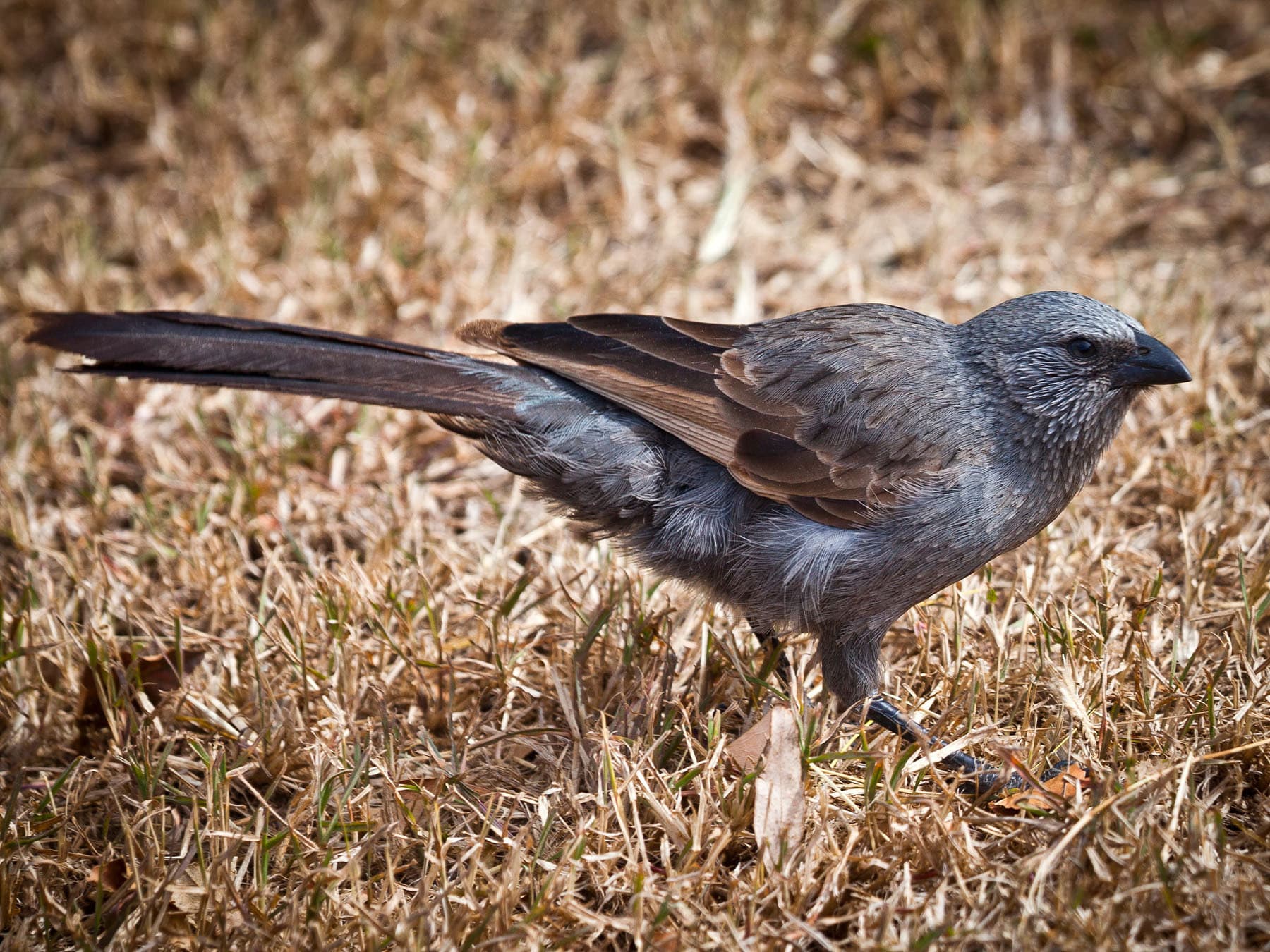
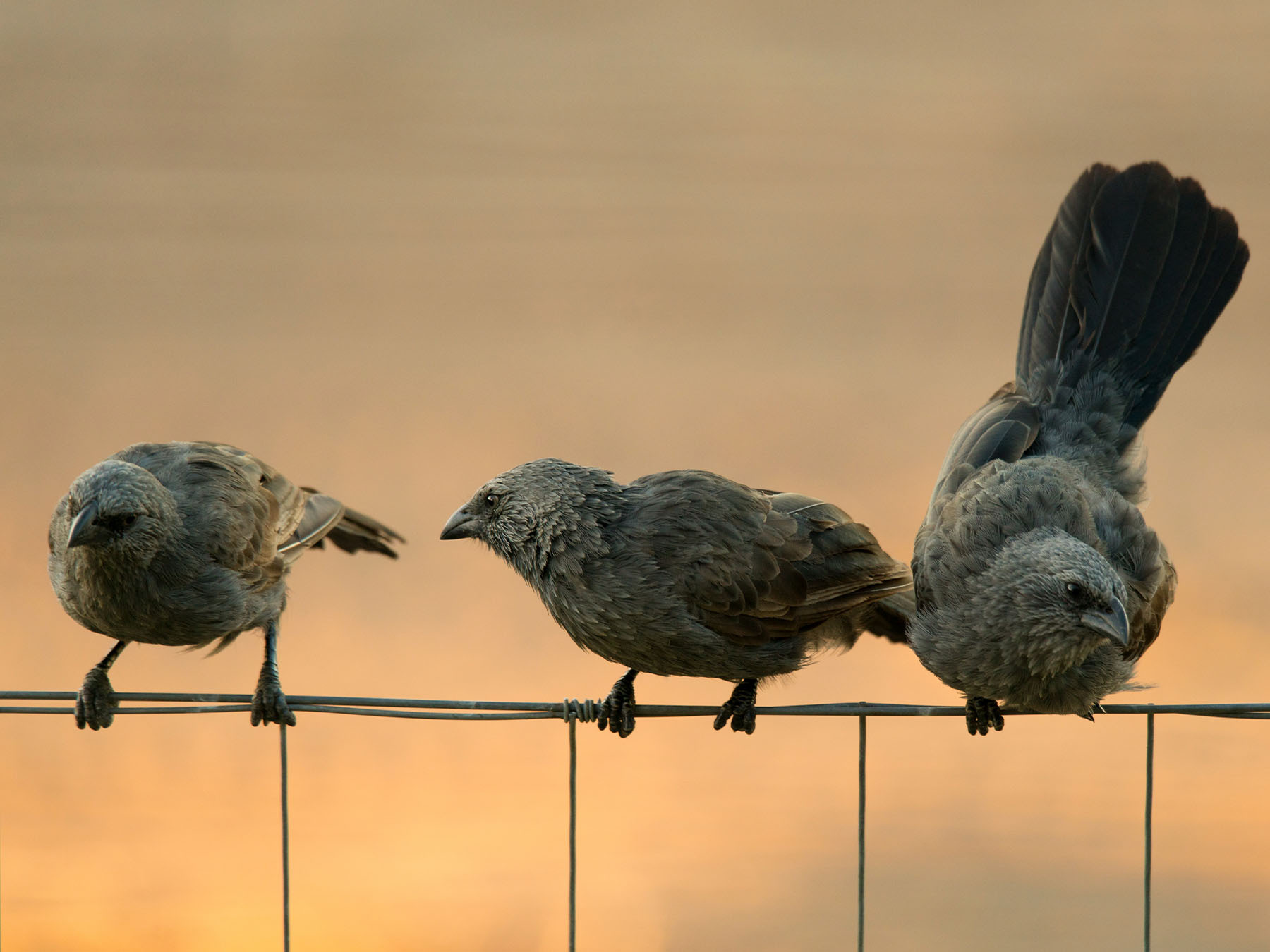
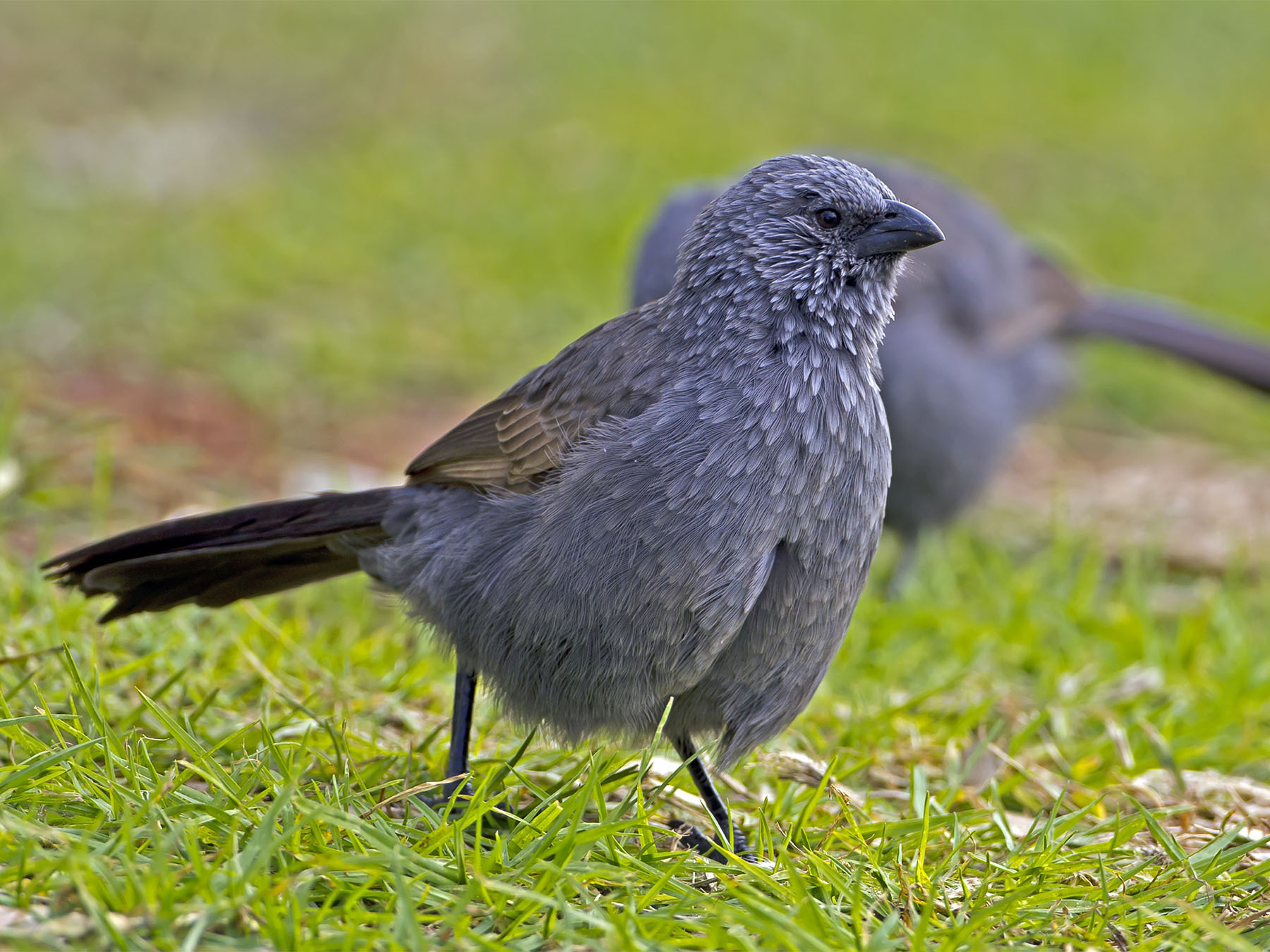
The Apostlebird is a medium-sized bird with predominantly slate-grey plumage, darker wings, and a long black tail. Its most striking features are piercing blue-grey eyes and a robust, slightly curved black bill. The bird's legs are also black, complementing its overall sleek appearance.
Both males and females share similar plumage, making them indistinguishable in the field. Juveniles closely resemble adults but may have slightly duller plumage and less vibrant eye colouration.
Its size
Adults- Length
- 29–33 cm
- Wingspan
- 48–52 cm
- Weight
- 120–140 g
Its song and calls
Apostlebirds are notably vocal, with a repertoire of harsh, grating calls. Their most common vocalisation is a loud, raspy 'cark-cark-cark' or 'kark-kark-kark', often given in chorus by the group. They also produce softer, chattering sounds during social interactions within the flock.
When and where to see it
The Apostlebird is not recorded regularly in the UK, Ireland, the United States or Canada.
Worldwide: recorded regularly in 1 country
Countries where it was recorded in at least 3 of the 6 years 2019–2024. Linked countries have their own bird list.
Oceania (1)
Data: EOD – eBird Observation Dataset (Cornell Lab of Ornithology), accessed via GBIF.org, CC BY 4.0. Records from 2019–2024, aggregated and filtered by Birdfact. How these lists are made
Tips for seeing it
- Look for noisy groups foraging on the ground in open woodlands or near human settlements.
- Listen for their distinctive, harsh 'cark-cark-cark' calls, often revealing their presence.
- Observe their cooperative behaviours, especially during the breeding season.
- In Australia, check parks and farmlands near water sources, where they're commonly found.
What it eats
Apostlebirds are omnivores, eating primarily insects, seeds, and small fruits. They forage extensively on the ground, using their strong bills to turn over soil and leaf litter in search of prey.
During certain seasons, they may also feed on nectar from flowering plants.
Nesting and breeding
Apostlebirds have a unique cooperative breeding system, typically from August to January. Pairs form within the larger group, but multiple birds contribute to nest building and chick rearing.
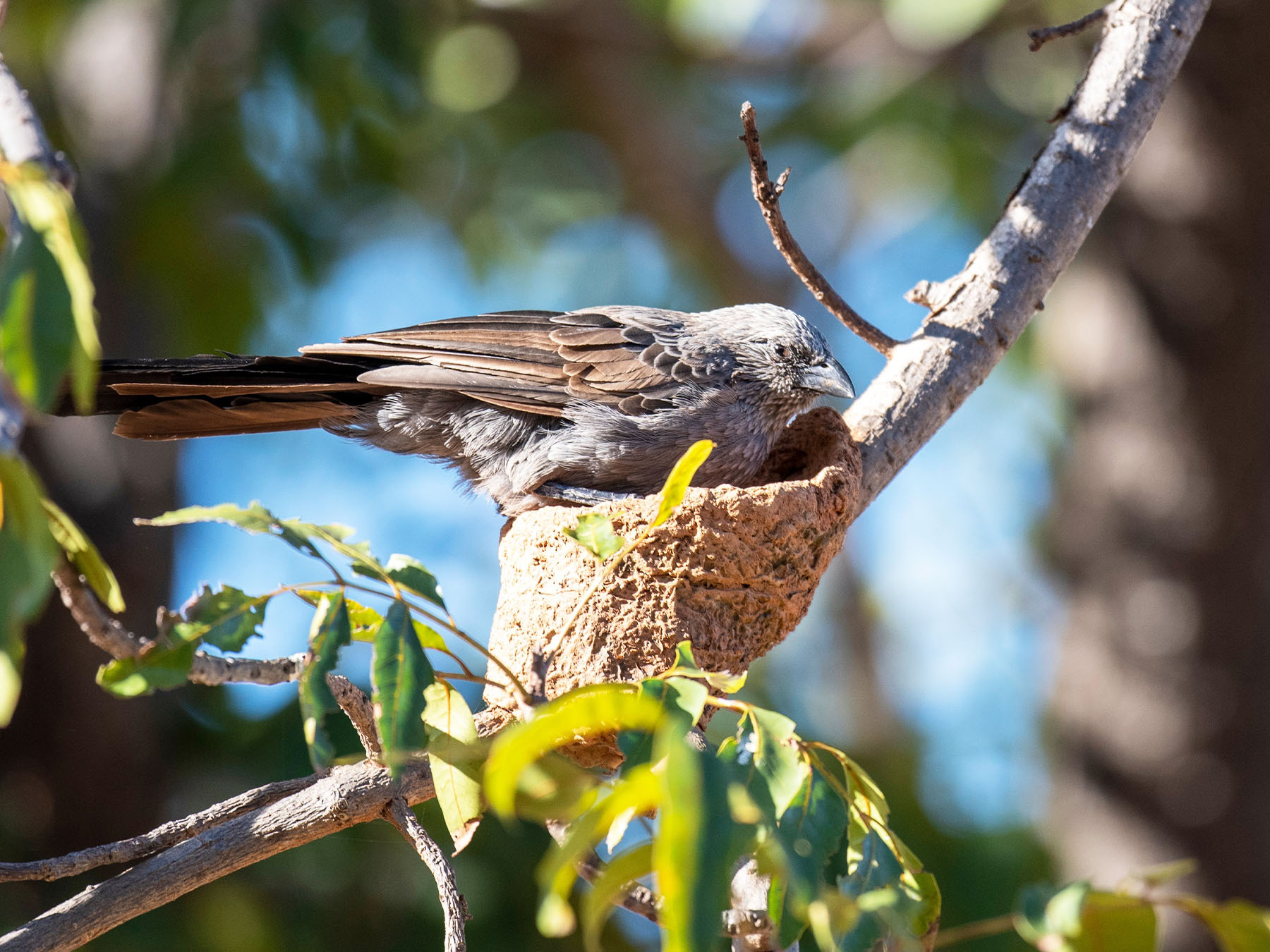
The nest is a large, mud-cup structure usually placed in the fork of a tree, 3-15 meters above ground. Females lay 2-5 pale blue or greenish-white eggs with brown speckles.
Incubation lasts about 16-18 days, with multiple group members taking turns. Nestlings fledge after approximately 19-23 days but continue to be fed by the group for several weeks after leaving the nest.
Behaviour
Apostlebirds are highly social, typically found in boisterous groups of 6 to 20 individuals, which gave rise to their common name. They are often seen foraging on the ground, using their strong bills to probe for insects and seeds.
These birds are known for their cooperative breeding system, where multiple birds assist in raising young, showcasing their complex social structure.
Conservation
While the Apostlebird is listed as Least Concern by the IUCN, localised threats include habitat loss due to land clearing and urbanisation.
Conservation efforts focus on preserving their woodland habitats and maintaining suitable corridors between populations to ensure genetic diversity.
Similar birds
Often mistaken for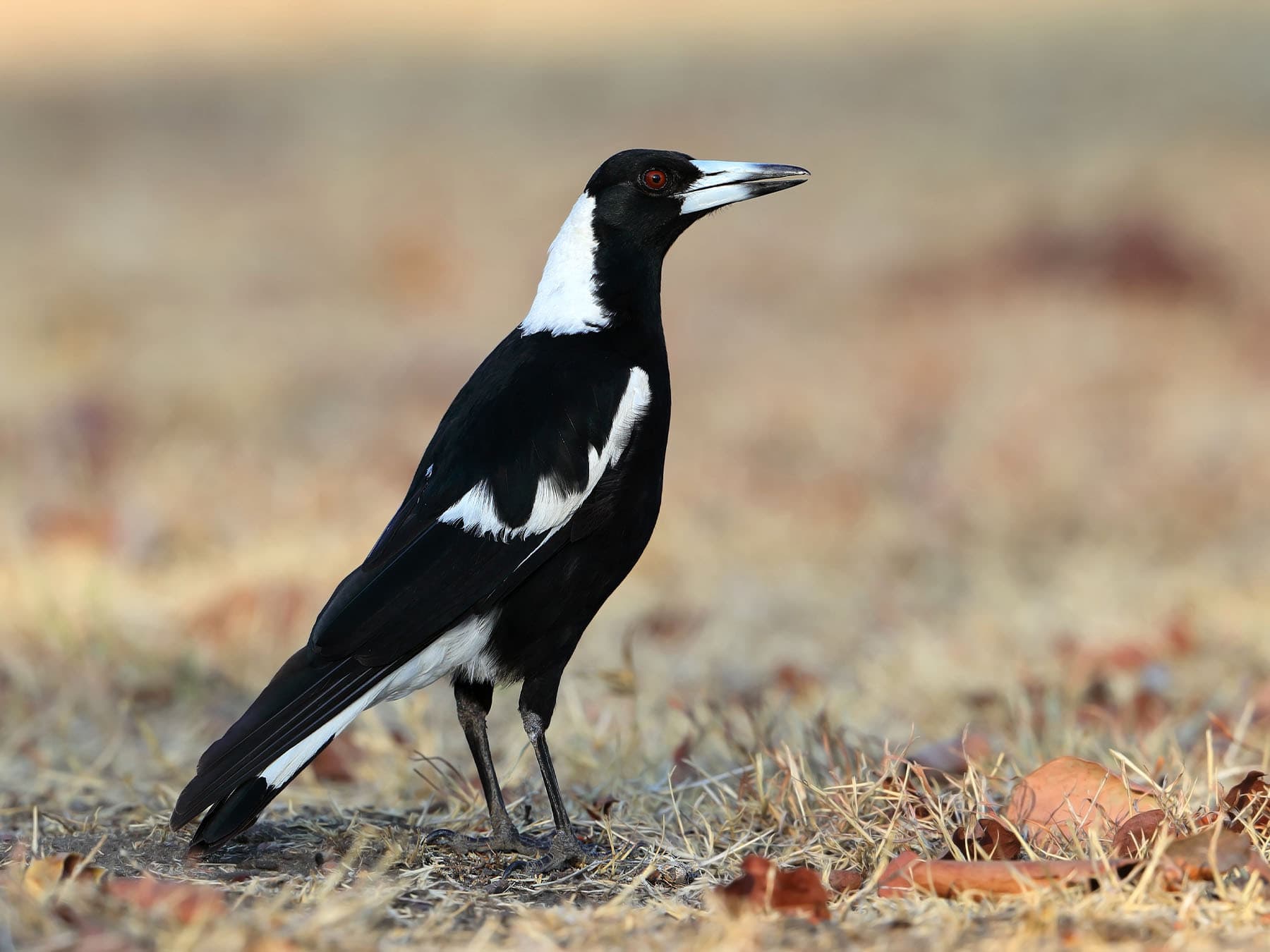
More photos
4 photos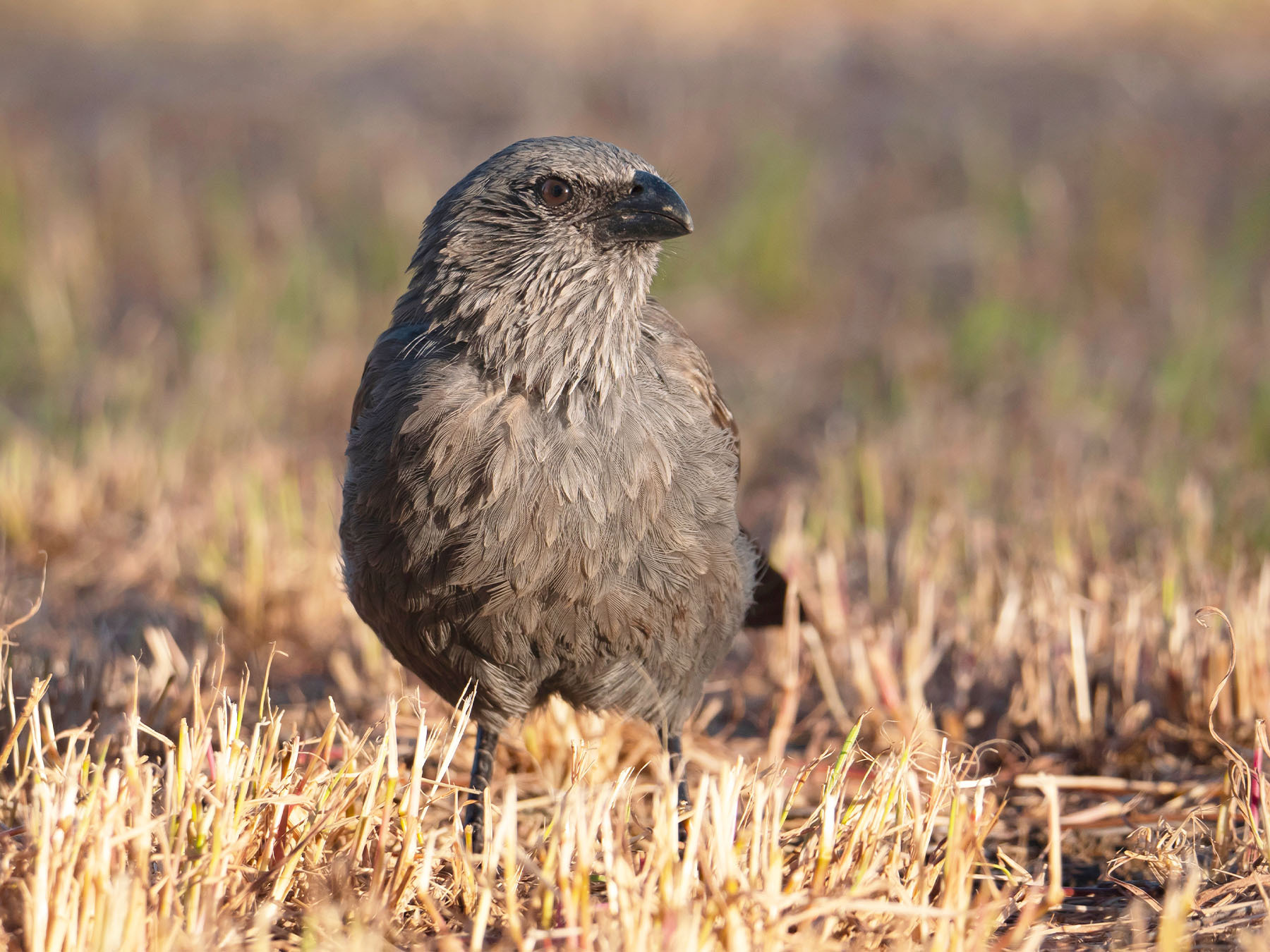
Quick facts
- Length
- 29–33 cm
- Wingspan
- 48–52 cm
- Weight
- 120–140 g
- Lifespan
- 10–15 years · oldest recorded 25 years
- Family
- Australian Mudnesters
- Migration
- Resident
- Global status (IUCN)
- Least Concern
- World population
- Unknown
- Population trend
- Population is currently stable
- Also called
- Grey Jumper, Happy Family, Lousy Jack
- Scientific name
- Struthidea cinerea
Sources
3- 1BirdLife International. 2016. Struthidea cinerea. The IUCN Red List of Threatened Species 2016: e.T22705385A94015903. Source (opens in a new tab)
- 2BirdLife International. 2016. Struthidea cinerea. The IUCN Red List of Threatened Species 2016: e.T22705385A94015903. Source (opens in a new tab)
- 3Flower, Furter notes on the duration of life in animals. IV. Birds, Proc Zool Soc London, Ser. A:195-235 (1938)

Checked by
Nathan Cope, founder and editor
Nathan founded Birdfact and leads its writers and contributors in the UK, the US and Canada. He has watched and studied birds for more than ten years, and checks every article and species guide before it’s published.