


Australian Magpie
Flute Bird, Piping Crow-shrike, Black-backed Magpie · Gymnorhina tibicen
By the Birdfact teamChecked by Nathan Cope
On this page11 sections
How to recognise it
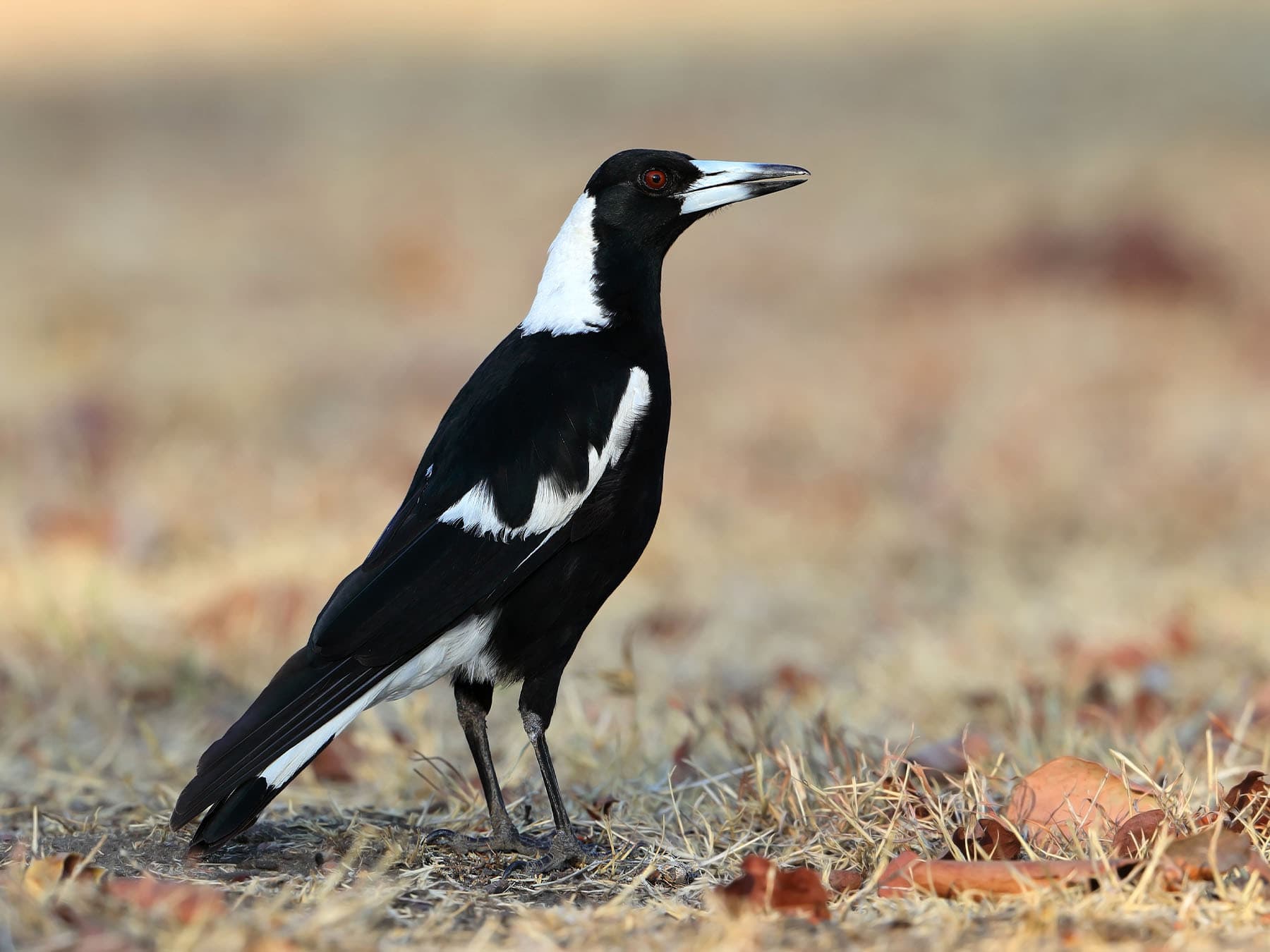
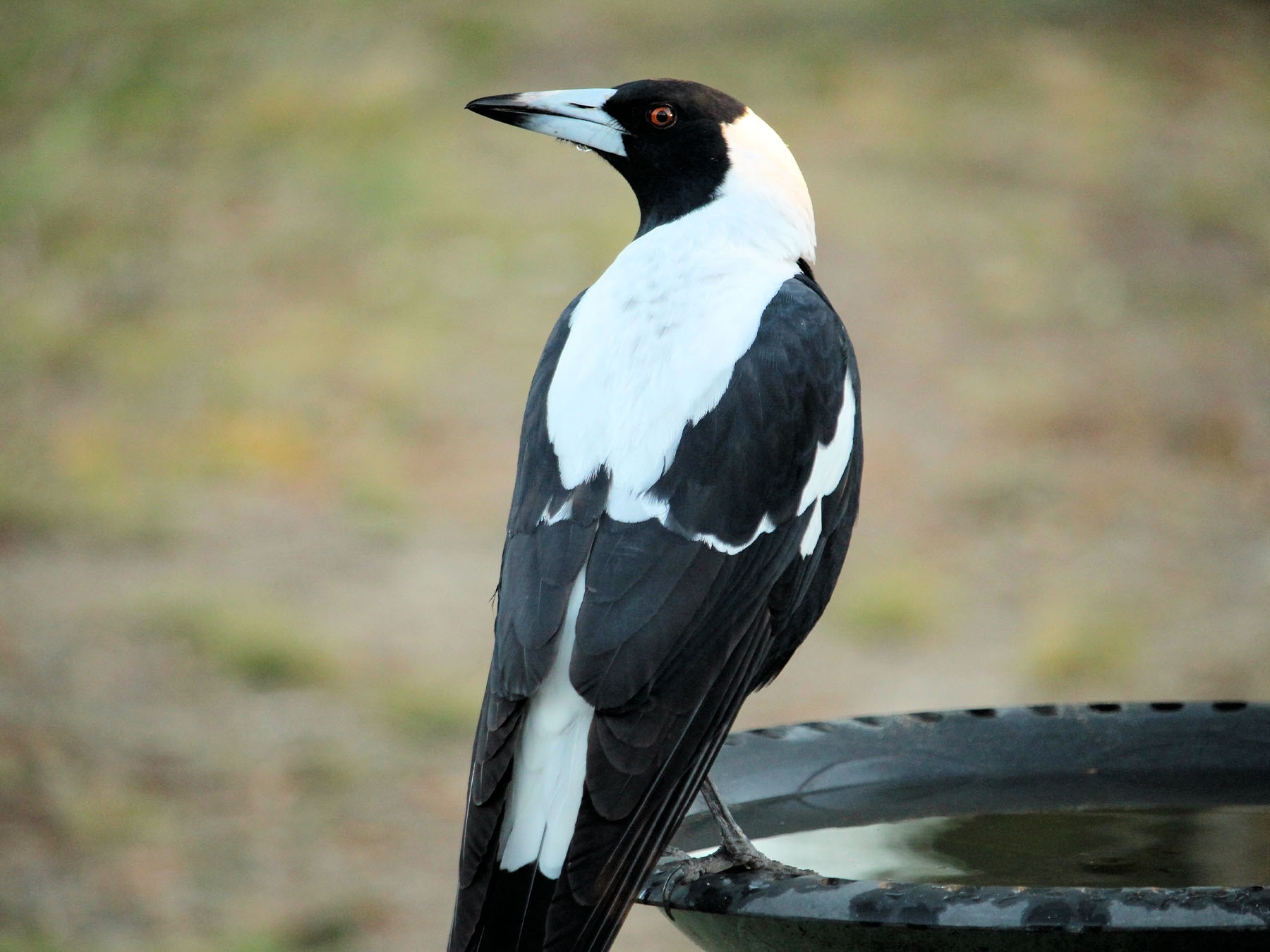
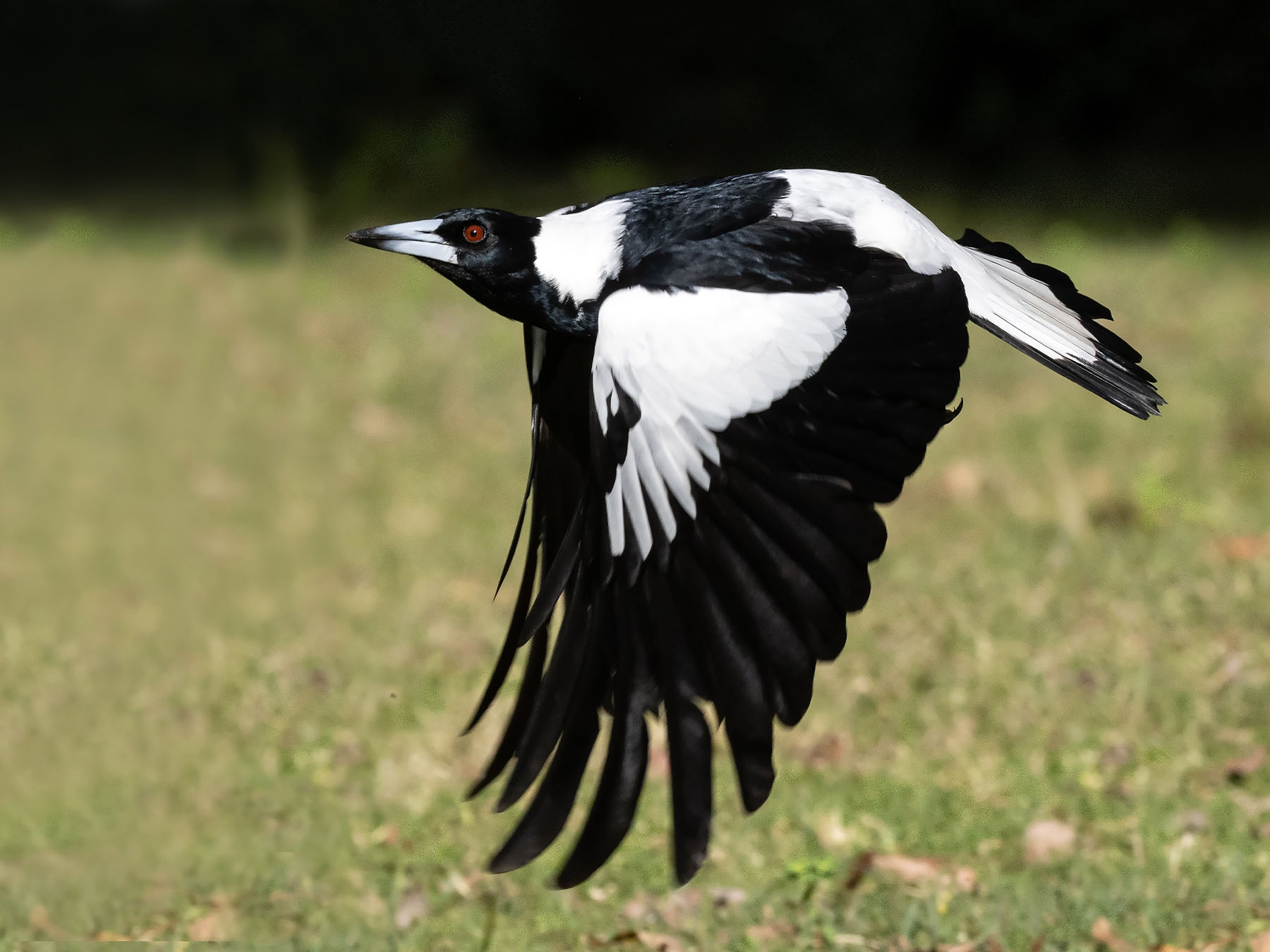
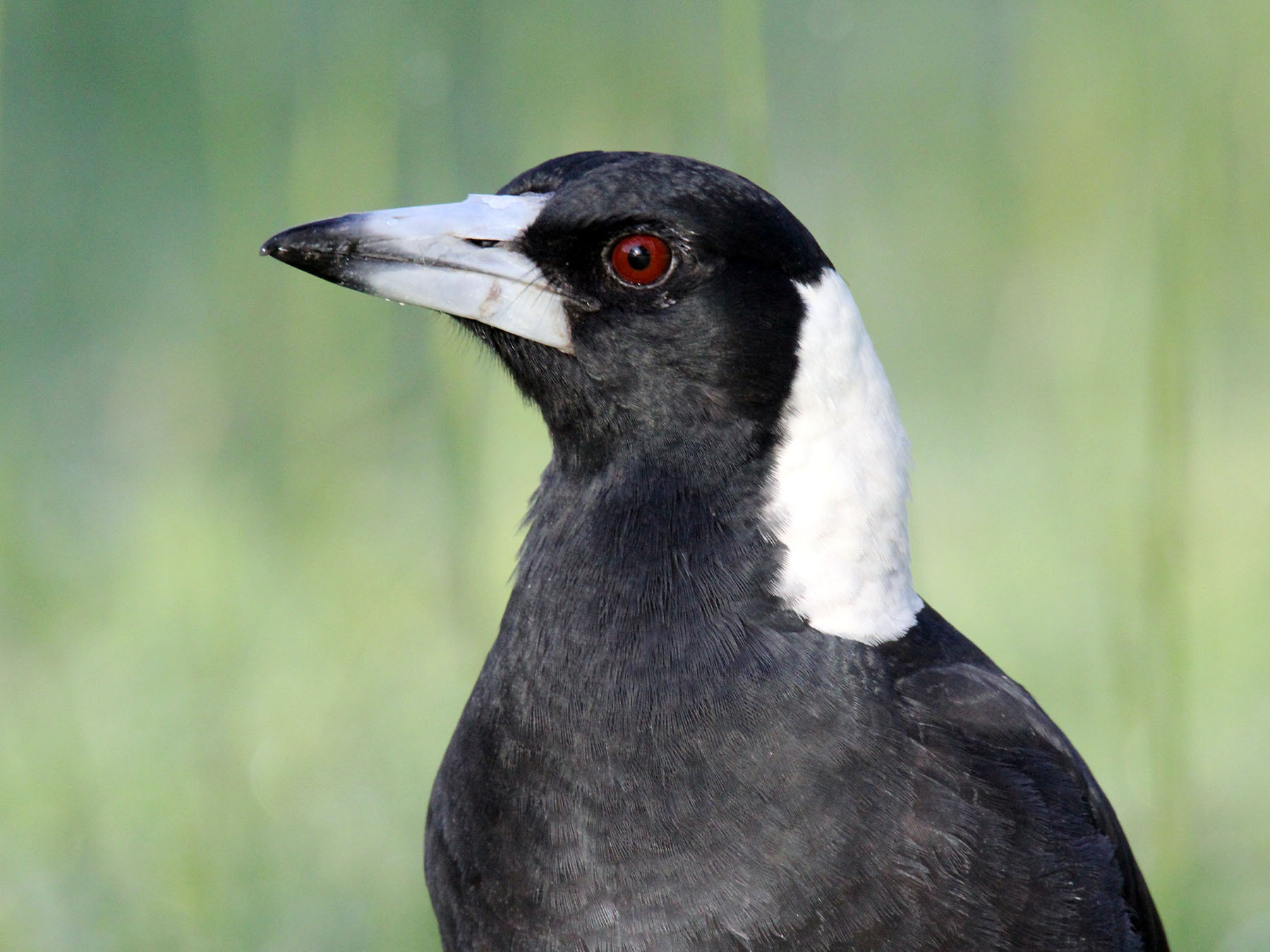
The Australian Magpie is a striking bird with a robust build. It measures 37-43 cm in length and has predominantly black and white plumage, with a solid black head, throat, and upper breast contrasting sharply with its white nape, shoulders, and underparts.
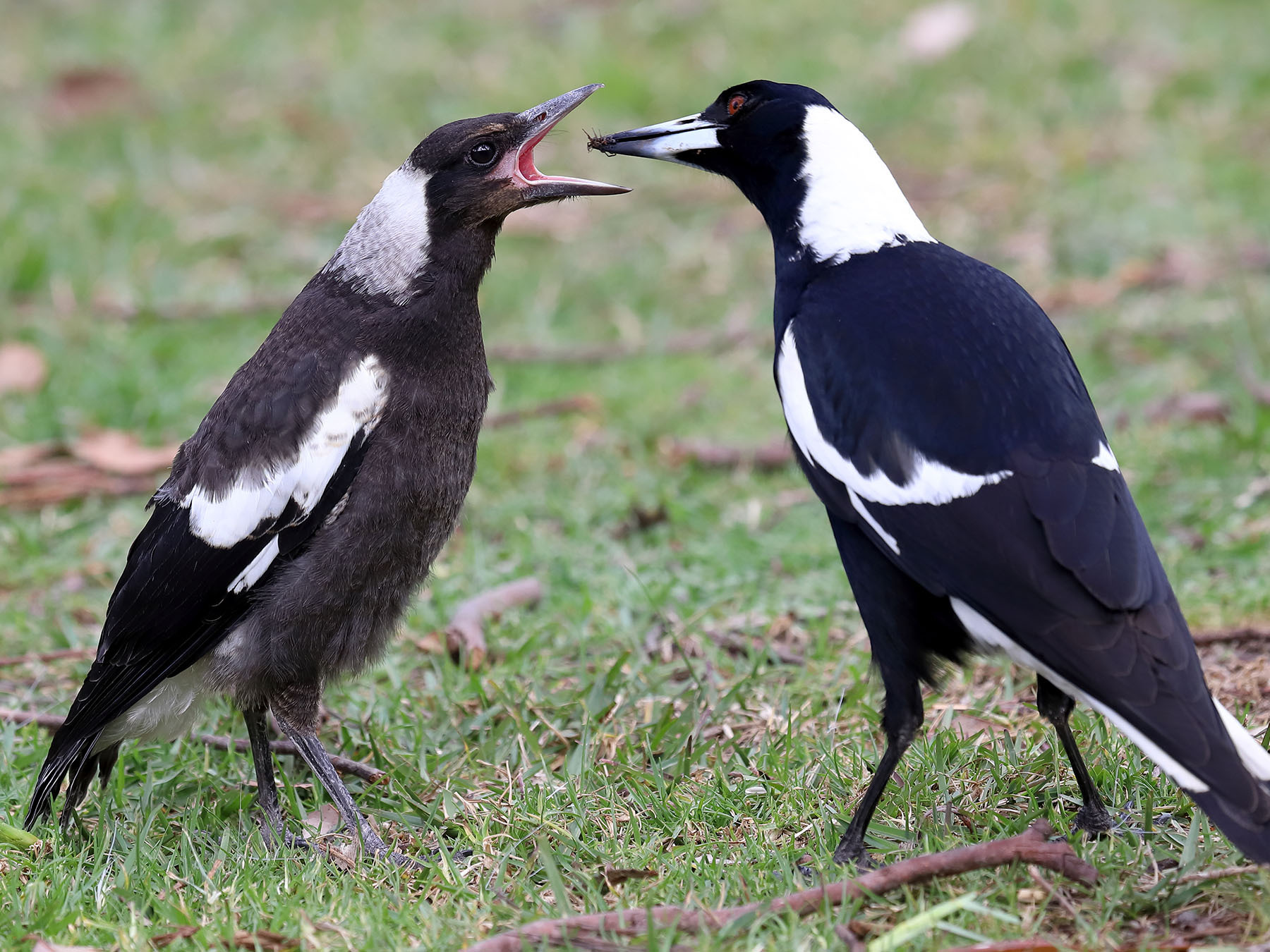
Males typically have a pure white nape and back, while females often display grey feathering in these areas. Juveniles are duller, with grey-brown plumage that gradually transitions to adult colouration over their first three years.
Its size
Adults- Length
- 37–43 cm
- Wingspan
- 65–85 cm
- Weight
- 220–350 g
Its song and calls
The Australian Magpie is renowned for its beautiful, flute-like carolling song, often described as one of the world's most complex bird calls. Their repertoire includes a variety of warbling, gurgling, and yodelling sounds, with regional variations across their range. The distinctive 'quardle oodle ardle wardle doodle' phrase is a common morning chorus.
- Song0:00 / 0:15
Recorded in West Coast Region, New Zealand · November 2025
When and where to see it
The Australian Magpie is not recorded regularly in the UK, Ireland, the United States or Canada.
Worldwide: recorded regularly in 3 countries
Countries where it was recorded in at least 3 of the 6 years 2019–2024. Linked countries have their own bird list.
Oceania (3)
Data: EOD – eBird Observation Dataset (Cornell Lab of Ornithology), accessed via GBIF.org, CC BY 4.0. Records from 2019–2024, aggregated and filtered by Birdfact. How these lists are made
Tips for seeing it
- Look for magpies in open grassy areas, including parks and sports fields.
- Listen for their distinctive carolling song, especially prominent at dawn and dusk.
- Observe from a distance during the breeding season (August to October) to avoid territorial behaviour.
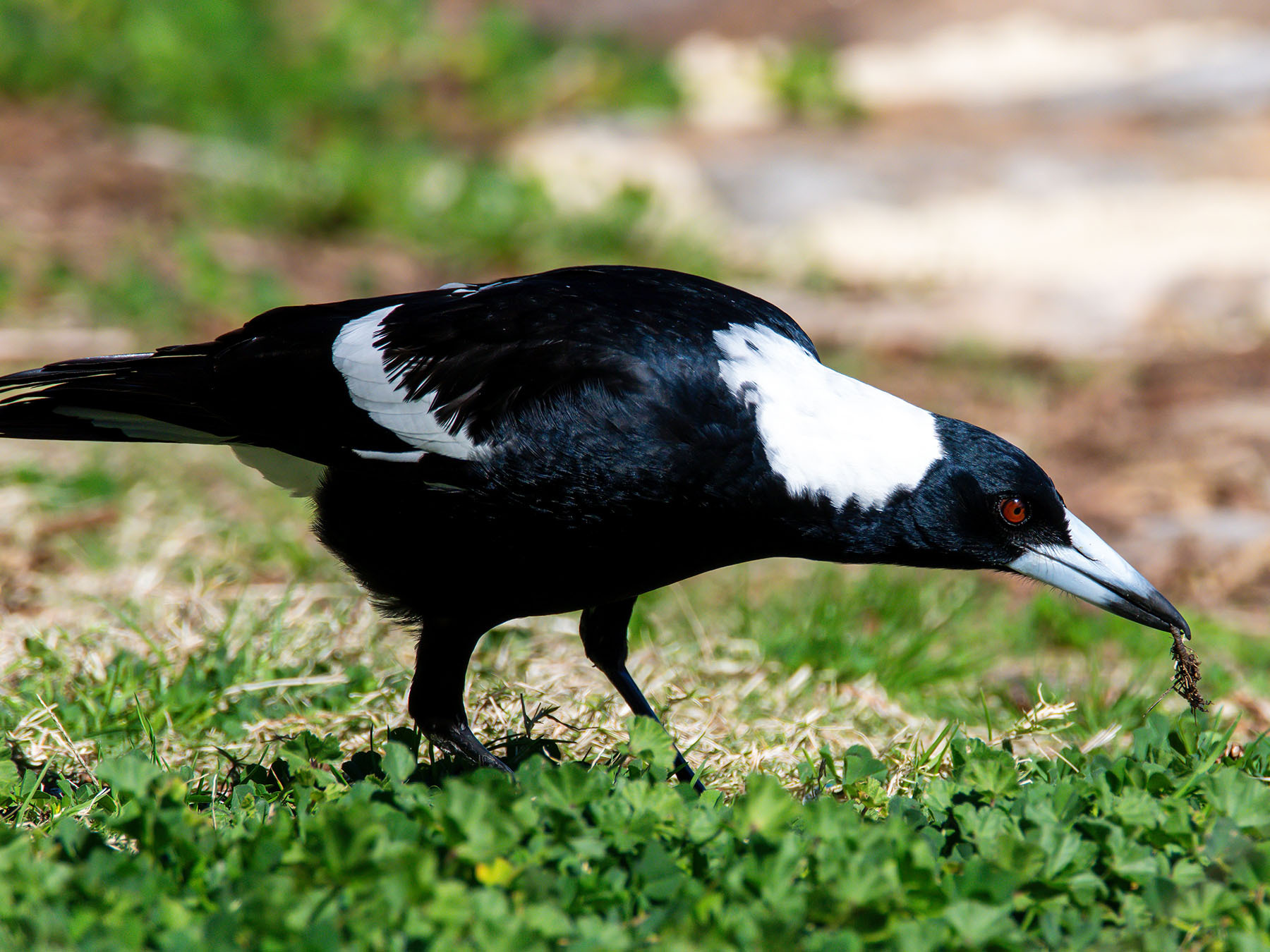
- Watch for ground-foraging behaviour as they search for insects in short grass.
What it eats
Australian Magpies are omnivorous, eating primarily invertebrates such as insects, worms, and larvae. They forage on the ground, using their strong beaks to probe the soil. Occasionally, they supplement their diet with small vertebrates, seeds, and fruits.
Nesting and breeding
Australian Magpies typically breed between August and October. Pairs are monogamous and often mate for life, defending their territory year-round.
Nests are constructed high in trees, usually 20-30 meters above ground. They are bowl-shaped structures of twigs, grass, and bark, lined with softer materials. Females lay 3-5 pale blue or green eggs with brown markings.
Incubation lasts about 20 days, and the female primarily carries out the process. Both parents feed the nestlings, which fledge after about four weeks. Young birds may stay with their parents for up to a year, helping to raise the next brood.
Behaviour
Australian Magpies are highly social birds, often seen in small family groups or larger flocks. They are known for their bold and curious nature, frequently approaching humans in urban areas.
During the breeding season, some individuals become fiercely territorial, occasionally swooping at passersby to defend their nests.
Conservation
The Australian Magpie is listed as Least Concern by the IUCN due to its large range and stable population. However, urban development and climate change may impact local populations.
Conservation efforts focus on maintaining suitable habitats and managing human-wildlife conflicts in urban areas.
More photos
6 photos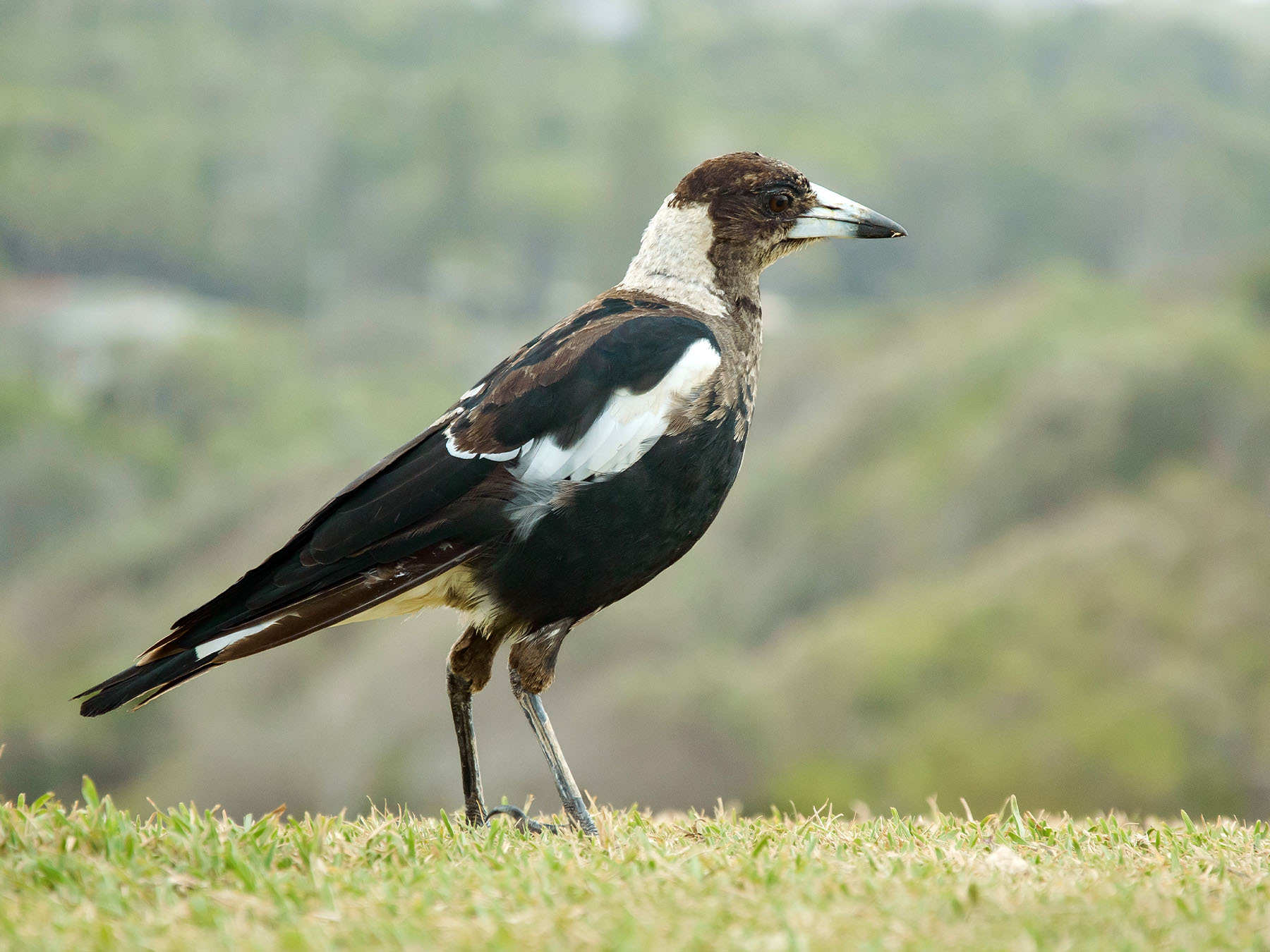
Quick facts
- Length
- 37–43 cm
- Wingspan
- 65–85 cm
- Weight
- 220–350 g
- Lifespan
- 20–25 years
- Migration
- Resident
- Global status (IUCN)
- Least Concern
- World population
- Not quantified, but common through its range
- Population trend
- Population increasing with help from creation of more grassy habitats
- Also called
- Flute Bird, Piping Crow-shrike, Black-backed Magpie
- Scientific name
- Gymnorhina tibicen
Sources
2- 1BirdLife International. 2018. Gymnorhina tibicen. The IUCN Red List of Threatened Species 2018: e.T22706288A131945700. Source (opens in a new tab)
- 2BirdLife International. 2018. Gymnorhina tibicen. The IUCN Red List of Threatened Species 2018: e.T22706288A131945700. Source (opens in a new tab)

Checked by
Nathan Cope, founder and editor
Nathan founded Birdfact and leads its writers and contributors in the UK, the US and Canada. He has watched and studied birds for more than ten years, and checks every article and species guide before it’s published.