Facts · Updated 9 Mar 2026
Can Peacocks Fly? Distance, Height, Speed & Flight Behaviour Explained
By the Birdfact teamChecked by Nathan Cope
On this page7 sections
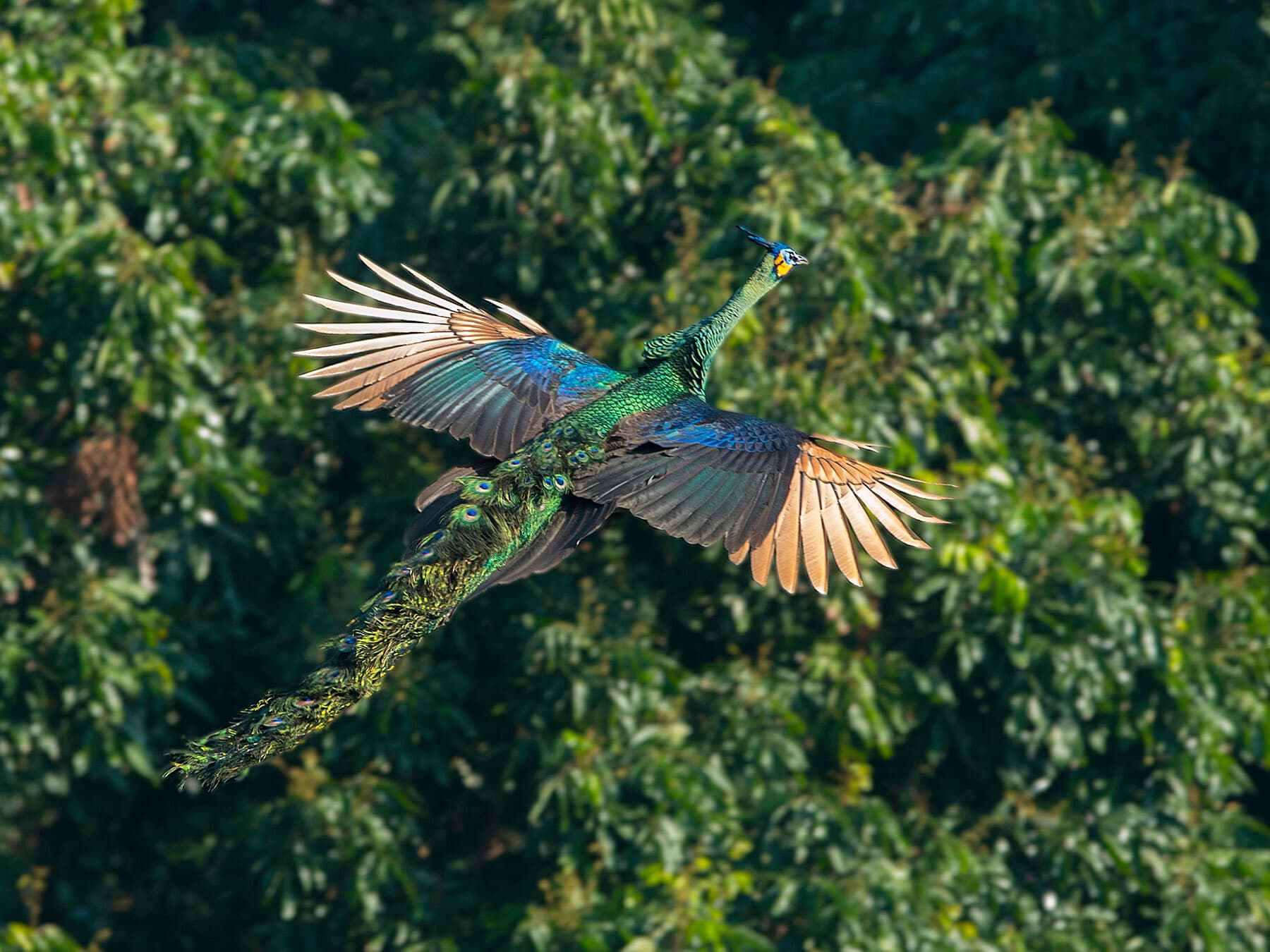
Seeing a fully grown peacock launch itself into the air is a jarring sight. Trailing up to 1.5 metres of iridescent feathers behind it, the bird looks far too front-heavy and cumbersome to achieve lift-off. Yet, despite their ground-dwelling habits and extravagant plumage, peacocks are entirely capable of flight.
They belong to the pheasant family (Phasianidae), a group of heavy-bodied birds built for explosive bursts of speed rather than sustained journeys. A peacock’s flight is loud, laboured, and usually brief, serving primarily as an emergency escape route or a ladder to a safe bed for the night.
The Mechanics of Peafowl Flight
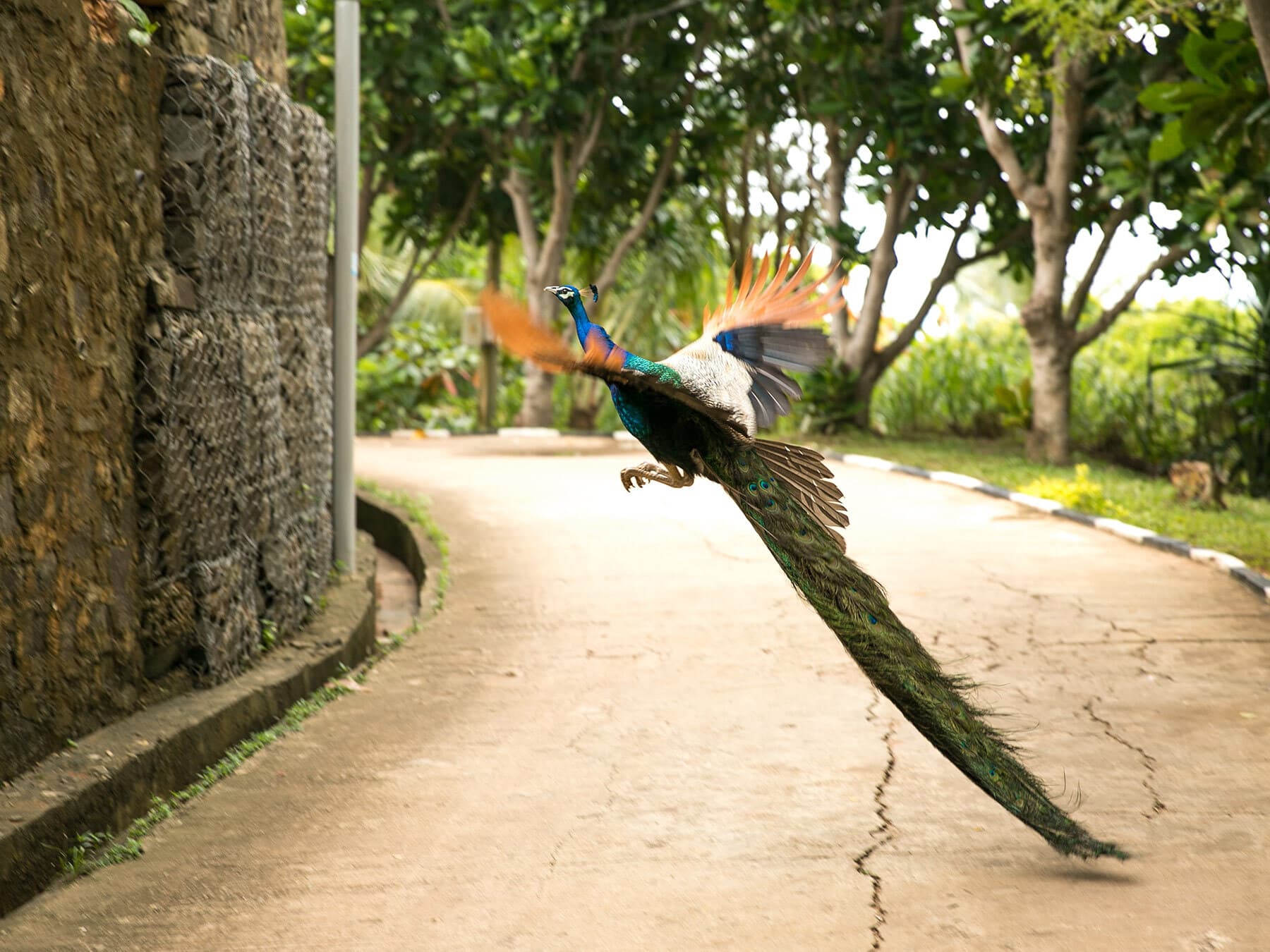
A peacock’s ability to fly comes down to immense leg power and rapid wing beats. They have high wing loading — meaning their body mass is large relative to the surface area of their wings. Birds with high wing loading cannot simply glide from the ground; they must generate massive amounts of thrust. To get airborne, a peacock jumps almost vertically, using its powerful legs to initiate the launch before the wings take over. The pectoralis muscles, which drive the downstroke of the wings, have to work exceptionally hard to lift a bird that can weigh up to 6 kilograms.
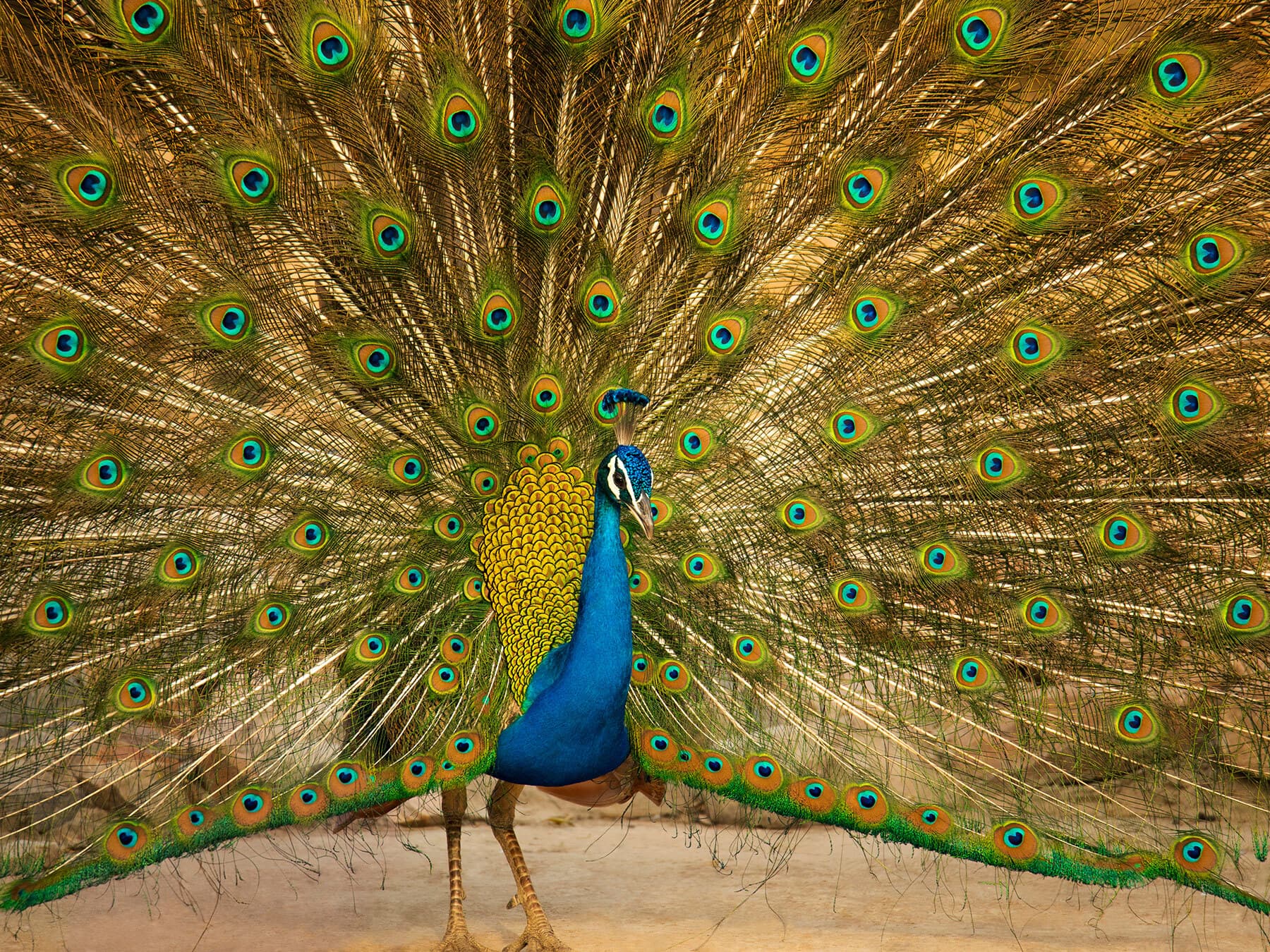
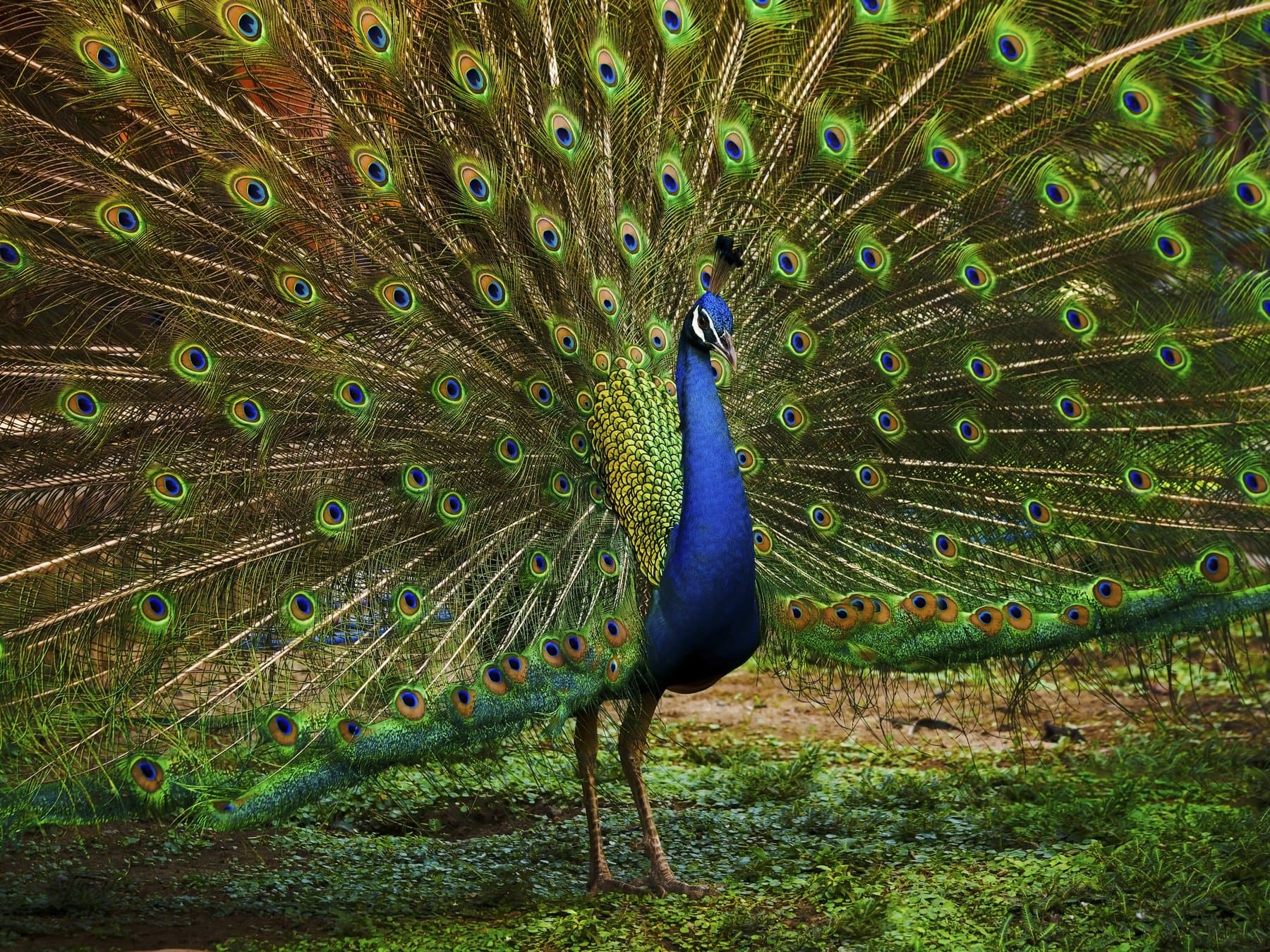
The bird's famous plumage is often misunderstood and frequently blamed for their reluctance to fly. The long, eye-spotted feathers are not actually the tail, but rather elongated upper tail coverts, collectively known as the train. The true tail feathers are much shorter, stiffer, and sit underneath the train to support it when the bird displays. In flight, the peacock straightens its neck, tucks its legs, and fans its true tail to provide aerodynamic stability, while the long train feathers stream out behind.
The sheer size of the train is a classic example of an evolutionary concept known as the handicap principle. The massive feathers make the bird more visible to predators and require extra energy to carry, effectively acting as a survival handicap. By surviving despite this burden, a male peacock proves his genetic fitness to observing females.
How Far, High, and Fast Can They Fly?
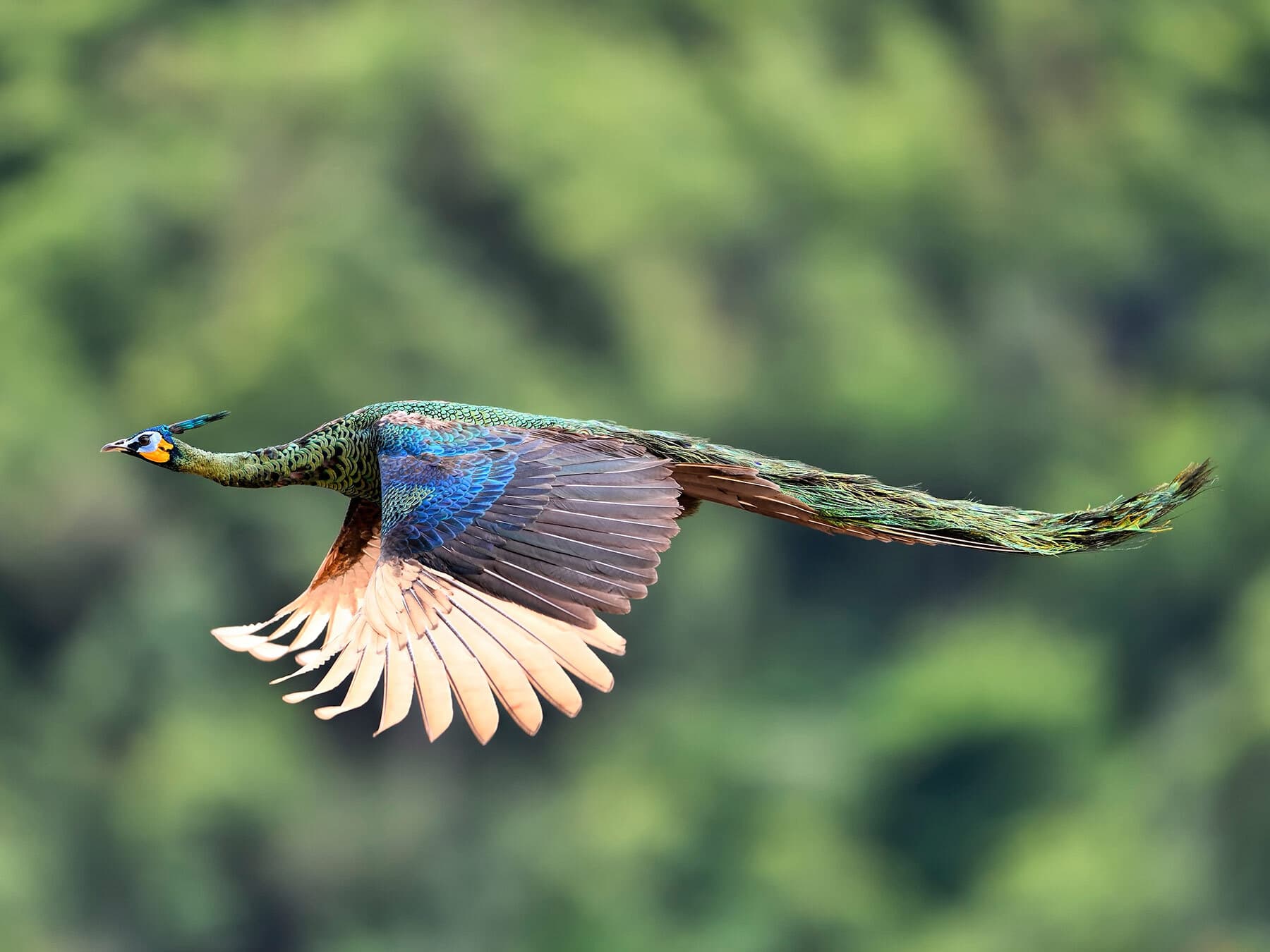
Peacocks are sprinters, not marathon runners. A typical flight covers a distance of just 100 to 150 metres — roughly the length of a football pitch. They rarely push beyond this limit, as their heavy bodies and rapid wing-flapping consume a massive amount of energy. Sustained flight is simply not in their anatomical repertoire.
When it comes to altitude, they usually aim just high enough to clear obstacles or reach a sturdy branch. Most flights peak at around 8 metres, though a motivated peacock can propel itself as high as 25 metres into the canopy if a predator is in close pursuit. Once airborne, they cruise at a relatively modest speed of around 10 mph (16 km/h). Compared to a racing pigeon that can sustain 60 mph, or even a wild turkey that can hit 50 mph in short bursts, a peacock’s flight is a slow, heavy haul.
Why Do Peacocks Take to the Air?
As natural foragers, peafowl spend their days patrolling the forest floor. A wild flock will easily walk three to four kilometres a day scratching for insects, seeds, fallen fruit, and small reptiles. Their powerful legs are perfectly adapted for a terrestrial lifestyle, meaning they only take to the air when walking is no longer a viable option.
The most common trigger for flight is the setting sun. Peafowl are highly vulnerable to ground predators like leopards, tigers, and feral dogs. To survive the night, they fly up into the highest available tree branches to roost. At dusk, you will often see them making short, successive 20-metre flights, hopping from lower branches to higher ones until they find a secure spot. The flock will often call loudly to one another during this process, coordinating their roosting positions. The only other time a healthy adult will fly is to cross a river, clear a ravine, or make a sudden, vertical escape from an ambush.
Comparing the Three Peafowl Species
Flight ability varies significantly across the three distinct species of peafowl, shaped by their specific environments and evolutionary paths. The Indian Peafowl, the species most commonly kept in parks and estates worldwide, is a heavy bird that rarely travels far from its established territory. The dense forests and scrublands of the Indian subcontinent provide plenty of ground cover, reducing their need for sustained flight.
The Green Peafowl, native to the tropical forests of Southeast Asia, is a much stronger flyer. It possesses longer wings and a slightly lighter train than its Indian cousin. Observers have recorded Green Peafowl flying across moderately wide river valleys and even making short island-hopping flights in coastal regions. They are far more willing to take to the air to navigate their fragmented forest habitats.
The Congo Peafowl, a secretive and much smaller species native to the Congo Basin in Central Africa, lacks the massive train entirely. Living in dense, dark rainforests, it relies on short, highly agile flights to navigate the thick understorey and reach its roosts. Without the drag of a two-metre train, the Congo Peafowl moves through the trees with a grace that the Asian species cannot match.
Male vs Female and Seasonal Changes
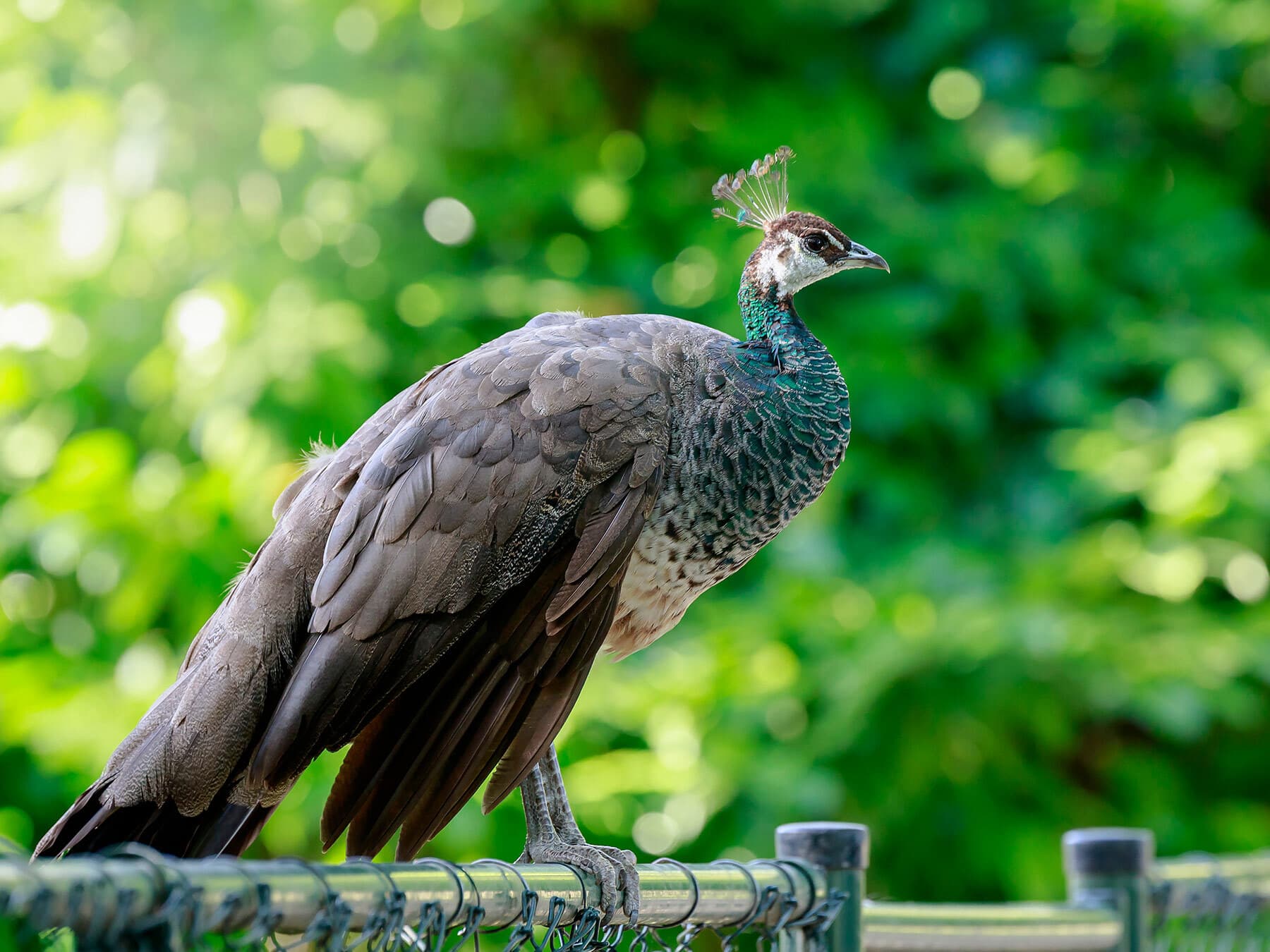
Female peafowl, known as peahens, lack the extravagant train entirely. Without the burden of carrying an extra kilogram of decorative feathers, peahens are noticeably more agile in the air. They can lift off with less effort, gain altitude faster, and navigate through dense branches with greater ease than the males. This agility is crucial, as peahens bear the sole responsibility of incubating eggs and guiding chicks away from danger.
However, the male’s flight dynamics change drastically throughout the year. At the end of the breeding season in late summer, peacocks undergo a complete moult, shedding their entire train over a period of a few weeks. From September until the new feathers fully develop in February, the males are significantly lighter. During these winter months, their flight becomes noticeably less laboured, and they can reach their roosts with far less effort. This seasonal shedding provides a much-needed break from the physical demands of carrying their spectacular, but cumbersome, display plumage.
When Do Peachicks Learn to Fly?
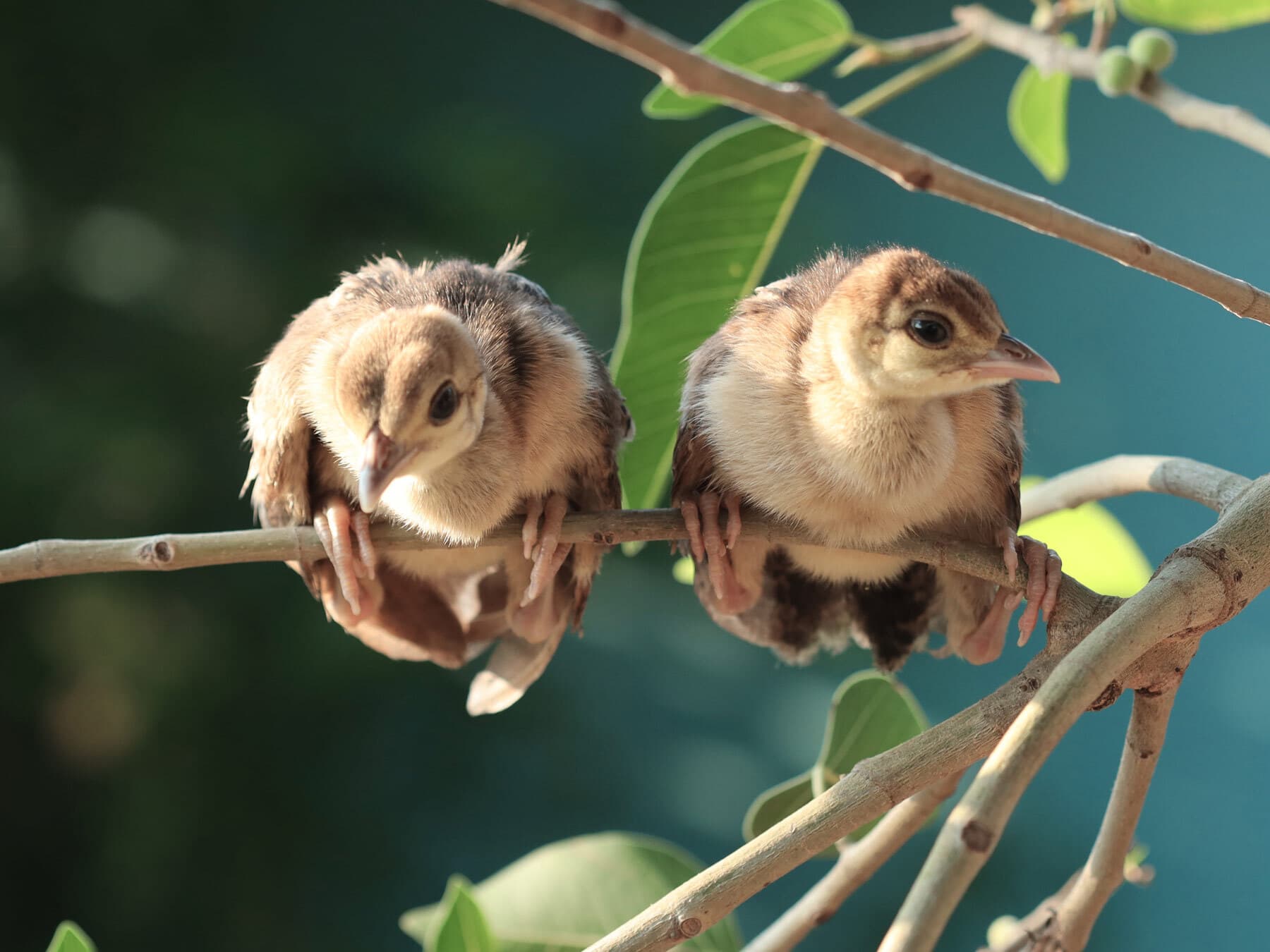
Young peafowl, known as peachicks, face a race against time to get off the ground. Ground-dwelling chicks are incredibly easy targets for foxes, snakes, and birds of prey, so their flight feathers begin developing almost immediately after hatching.
While they cannot fly at three days old — a common misconception — peachicks begin testing their wings at around one to two weeks of age. By their second week, they can flutter short distances and scramble up into low bushes. This early development is critical. It allows the chicks to follow their mother up into the safety of the lower tree branches to roost, rather than remaining exposed on the ground overnight. As they grow, their flight muscles strengthen, and by the time they are a few months old, they can easily follow the adult flock into the high canopy.
Domestication and Wing Clipping
In captivity, estate owners often clip the primary flight feathers of their peafowl to prevent them from wandering into neighbouring properties, damaging gardens, or walking into busy roads. Clipping is a painless procedure, akin to cutting hair, that disrupts the bird's aerodynamic lift by shortening the feathers that catch the air on the downstroke.
Yet, even with clipped wings, a peacock’s leg strength remains formidable. A clipped bird can still execute a standing jump of up to 8 metres to clear a fence or reach a low roof. For this reason, keeping peafowl confined requires exceptionally high fencing or fully enclosed aviaries.
Fortunately, peafowl are highly territorial and creatures of habit. Once a flock establishes a territory and learns where the most reliable food sources are, they rarely attempt to leave. They prefer to walk their daily patrol routes, foraging on the ground, and returning to the same familiar roosting spots every evening. As long as they have a safe place to sleep and plenty of food, even fully flighted domestic peacocks will generally choose to stay exactly where they are.