


Yellowhead
Mohua, Bush Canary · Mohoua ochrocephala
By the Birdfact teamChecked by Nathan Cope
On this page11 sections
How to recognise it
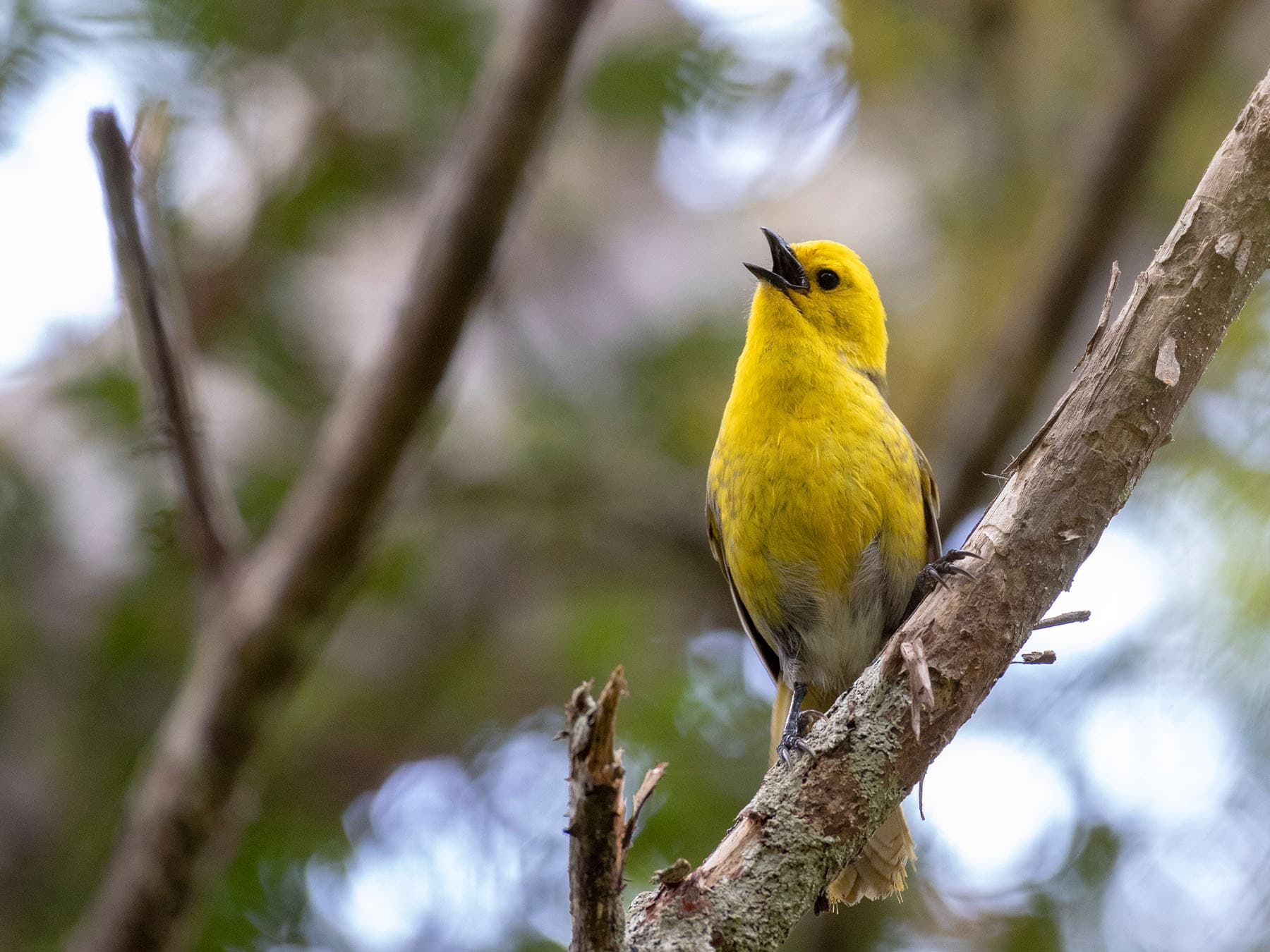
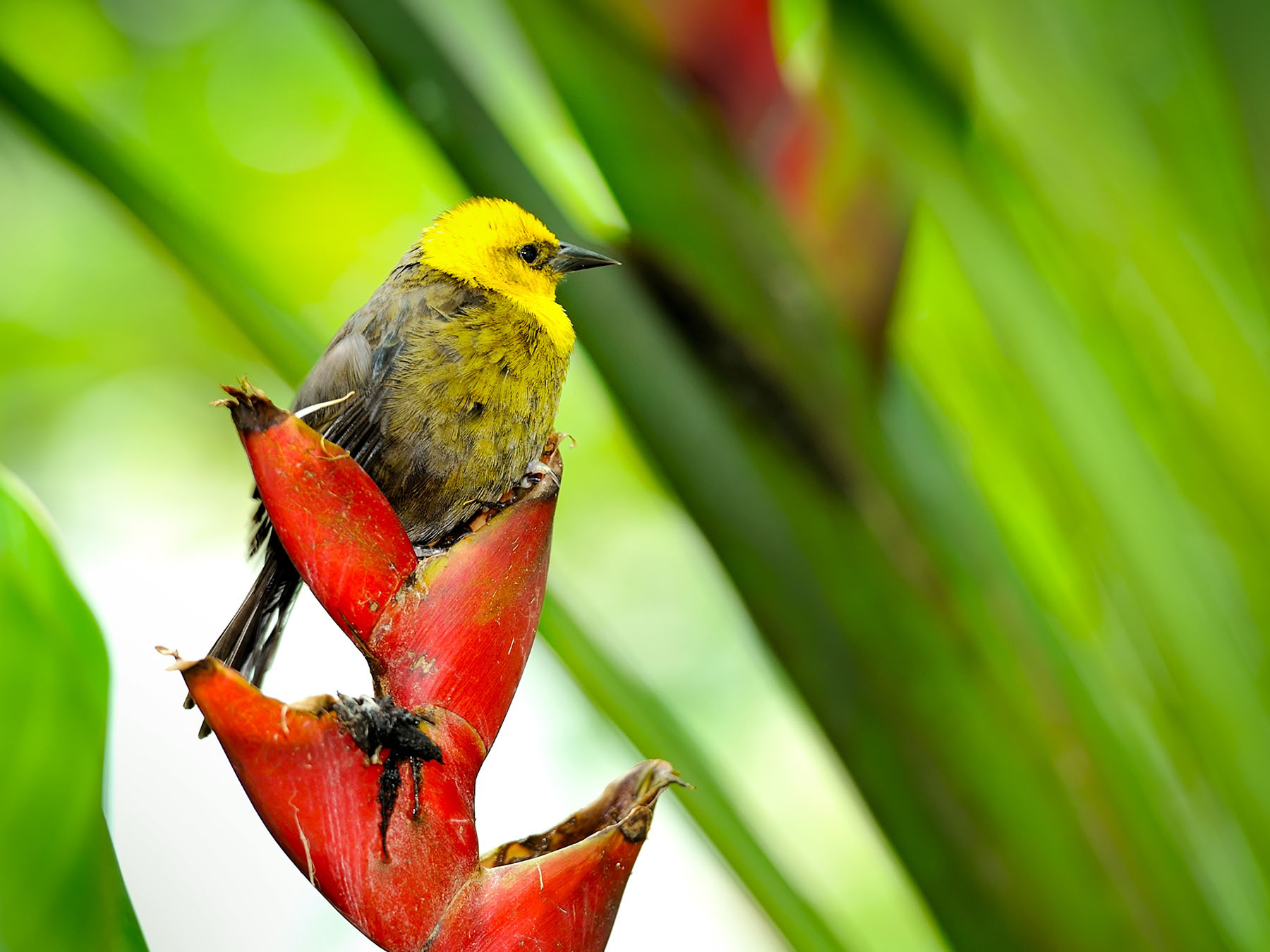
The Yellowhead, or Mohua, is a small, vibrant bird with a distinctive bright yellow head and breast. Its body is primarily olive-green, with brown wings and tail. The bird has a slender, slightly curved grey bill and brown legs.
Males display more intense yellow colouration on their heads and breasts compared to females. Juveniles have a duller plumage, with less yellow and more olive tones overall.
Its size
Adults- Length
- 15–16 cm
- Wingspan
- 20–22 cm
- Weight
- 25–30 g
Its song and calls
Yellowheads have a distinctive, high-pitched call often described as a repeated 'cheet-cheet-cheet'. During the breeding season, males produce a more complex, warbling song.
Their vocalisations are an important tool for locating these often elusive birds in dense forest canopies.
- Song0:00 / 0:32
When and where to see it
The Yellowhead is not recorded regularly in the UK, Ireland, the United States or Canada.
Worldwide: recorded regularly in 1 country
Countries where it was recorded in at least 3 of the 6 years 2019–2024. Linked countries have their own bird list.
Oceania (1)
Data: EOD – eBird Observation Dataset (Cornell Lab of Ornithology), accessed via GBIF.org, CC BY 4.0. Records from 2019–2024, aggregated and filtered by Birdfact. How these lists are made
Tips for seeing it
- Look for Yellowheads in beech forests, particularly in areas with mature trees
- Listen for their distinctive high-pitched 'cheet-cheet-cheet' call
- Observe tree trunks and branches carefully, as they often forage in bark crevices
- Visit South Island beech forests in New Zealand for the best chances of spotting them
What it eats
Yellowheads primarily feed on insects and spiders found in the bark and foliage of trees. They have a particular fondness for moth and beetle larvae.
During winter, when insects are scarce, they supplement their diet with small amounts of seeds and fruit.
Nesting and breeding
Yellowheads form monogamous pairs and breed from September to February. Males court females with soft, warbling songs and displays of their bright plumage.
Nests are typically built in tree cavities or among dense foliage constructed from twigs, moss, and feathers. Females lay 2-4 white eggs with reddish-brown speckles.
Both parents share incubation duties for about 18 days. Chicks fledge after approximately 21 days but may remain with their parents for several months.
Behaviour
Yellowheads are agile and active birds, often seen moving rapidly through tree canopies in search of insects. They frequently hang upside down from branches while foraging.
These birds are social and typically found in small family groups or mixed-species flocks outside the breeding season.
Conservation
The Yellowhead is classified as Near Threatened due to habitat loss and predation by introduced mammals.
Conservation efforts include predator control programs, habitat protection, and translocation to predator-free islands. These measures are crucial for the species' survival.
More photos
2 photos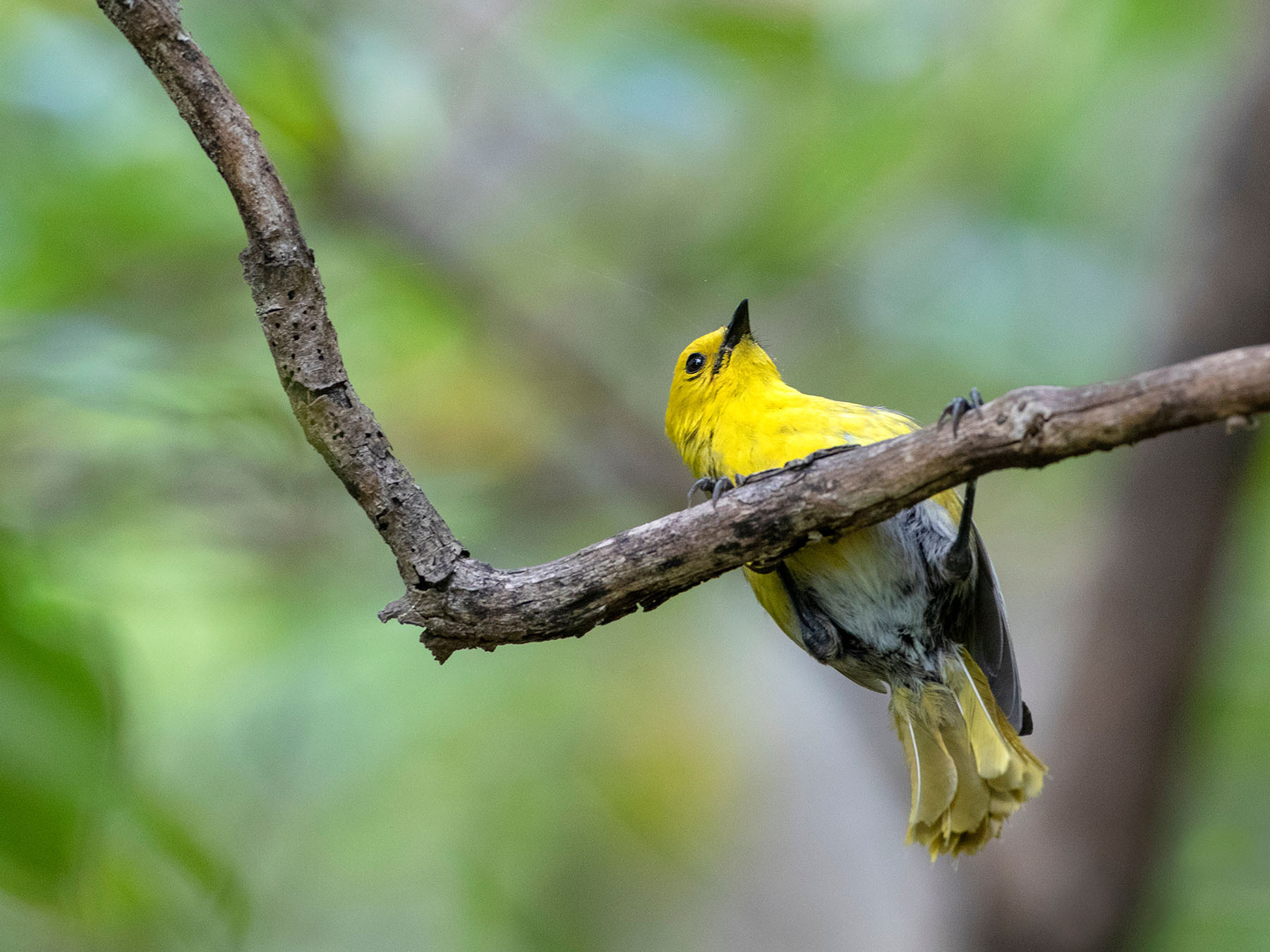
Quick facts
- Length
- 15–16 cm
- Wingspan
- 20–22 cm
- Weight
- 25–30 g
- Lifespan
- 5 years · oldest recorded 16 years
- Family
- Whiteheads
- Migration
- Resident
- Global status (IUCN)
- Near Threatened
- World population
- 5,000 - 10,000 mature individuals
- Population trend
- Overall population is decreasing
- Also called
- Mohua, Bush Canary
- Scientific name
- Mohoua ochrocephala
Sources
4- 1C. O'Donnell in litt. (1999)
- 2BirdLife International. 2022. Mohoua ochrocephala. The IUCN Red List of Threatened Species 2022: e.T22705397A209465053. Source (opens in a new tab)
- 3BirdLife International. 2022. Mohoua ochrocephala. The IUCN Red List of Threatened Species 2022: e.T22705397A209465053. Source (opens in a new tab)
- 4Heather and Robertson 1997, R. Hitchmough in litt. 2005, C. O'Donnell in litt. 2016

Checked by
Nathan Cope, founder and editor
Nathan founded Birdfact and leads its writers and contributors in the UK, the US and Canada. He has watched and studied birds for more than ten years, and checks every article and species guide before it’s published.