


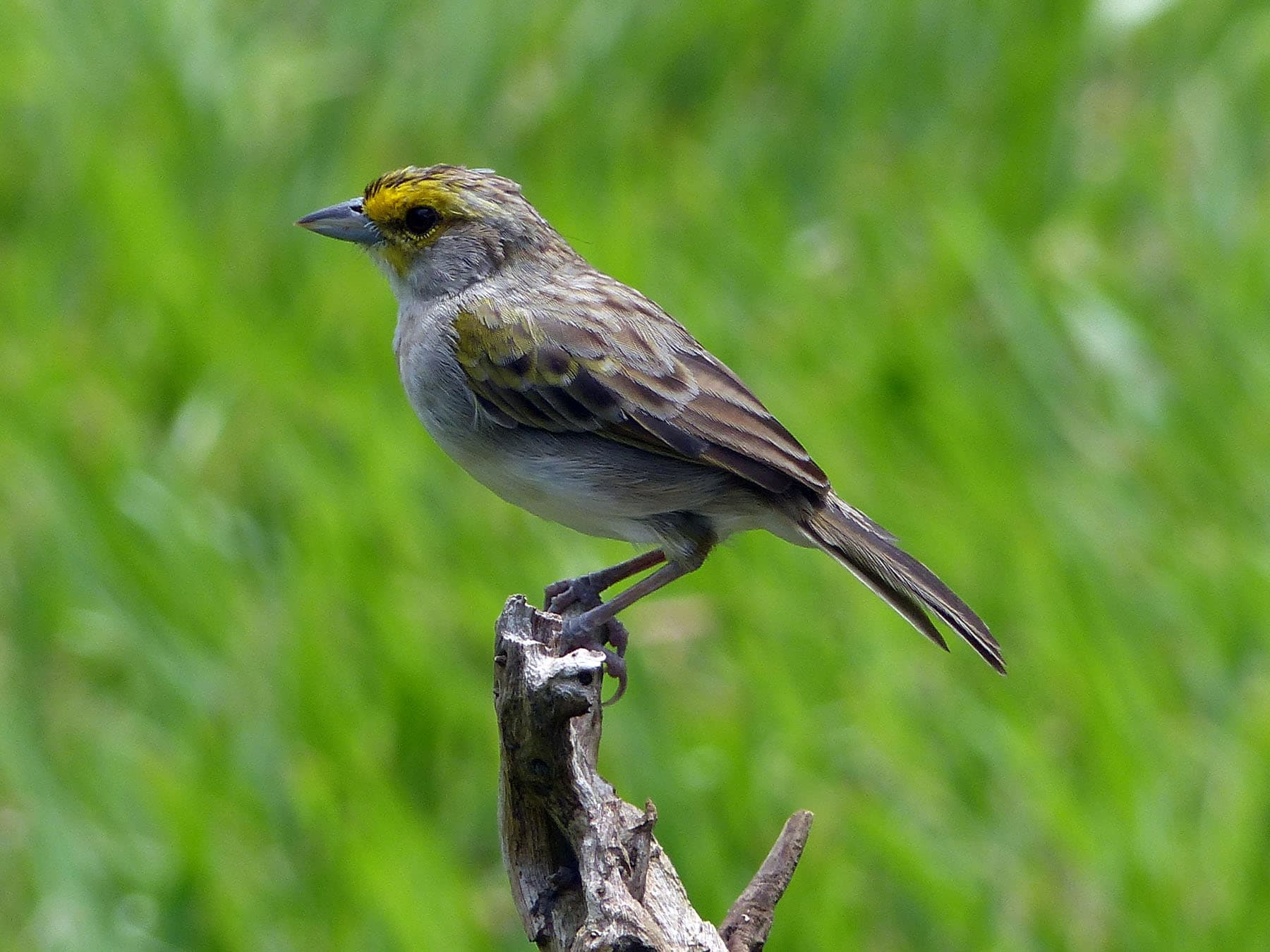
Yellow-browed Sparrow
Yellow-browed Brush Finch · Ammodramus aurifrons
By the Birdfact teamChecked by Nathan Cope
On this page11 sections
How to recognise it
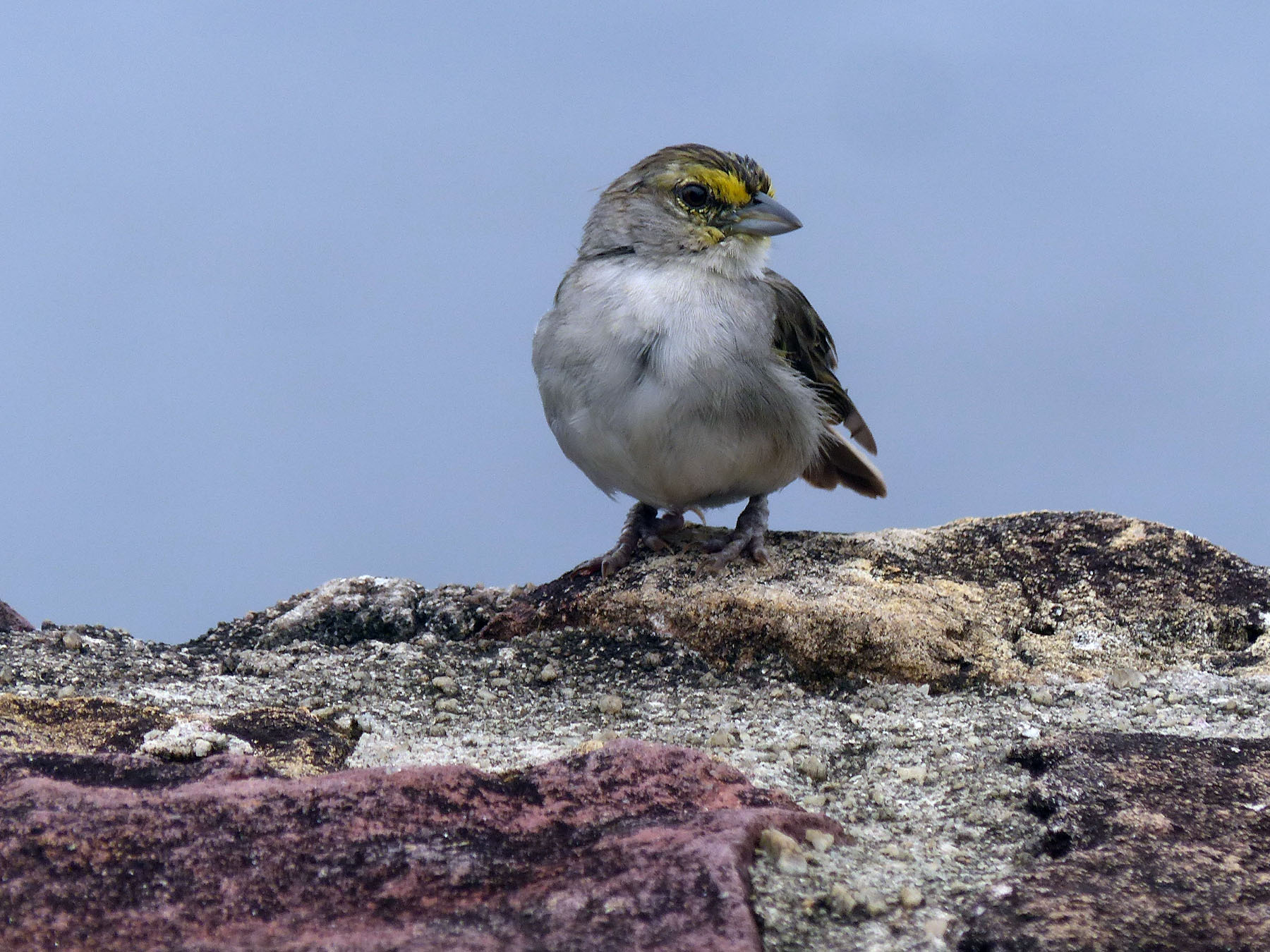
The Yellow-browed Sparrow is a short-tailed, long-legged sparrow with a relatively stout bill. Its most distinctive feature is a bright yellow eyebrow (supercilium) set against a grey head with fine dark streaking.
The upperparts are grey with darker streaking, while the underparts are primarily grey on the breast and flanks, becoming off-white on the belly. The wing shows yellow patches at the bend, visible when perched.
Both sexes look identical. Juveniles are similar but duller overall, with less yellow on the face and subtle streaking across the breast.
Its size
Adults- Length
- 12–13 cm
- Wingspan
- 18–20 cm
- Weight
- 14–18 g
Its song and calls
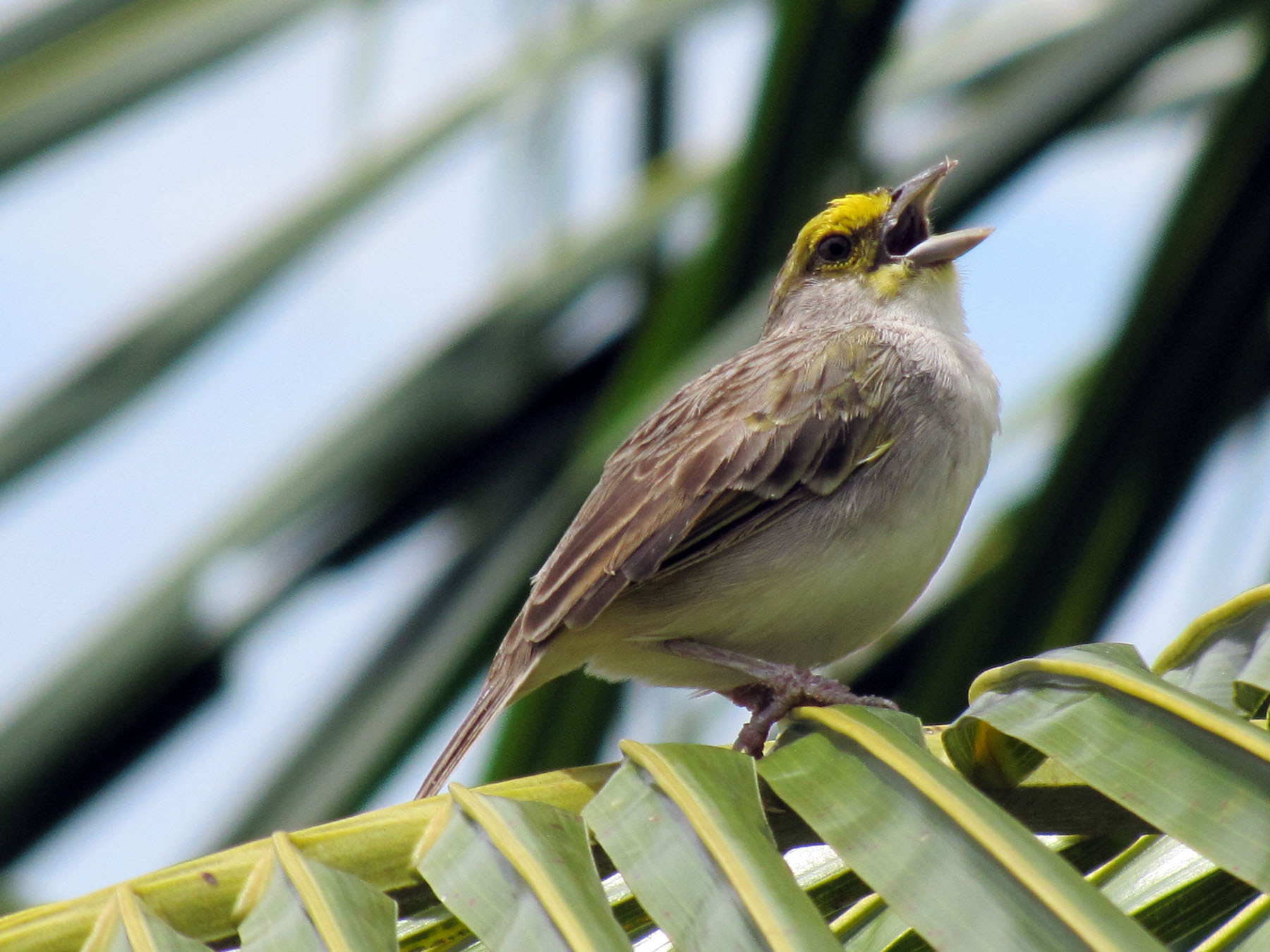
The Yellow-browed Sparrow's song is a series of high-pitched, buzzy notes, often described as 'tsee-tsee-tsee-tseee'. Their call is a short, sharp 'chip'.
During the breeding season, males sing from exposed perches to defend territory and attract mates.
- Song0:00 / 0:28
Recorded in Morona-Santiago: e-slope Cord, Ecuador · January 2002
When and where to see it
The Yellow-browed Sparrow is not recorded regularly in the UK, Ireland, the United States or Canada.
Worldwide: recorded regularly in 6 countries
Countries where it was recorded in at least 3 of the 6 years 2019–2024. Linked countries have their own bird list.
Data: EOD – eBird Observation Dataset (Cornell Lab of Ornithology), accessed via GBIF.org, CC BY 4.0. Records from 2019–2024, aggregated and filtered by Birdfact. How these lists are made
Tips for seeing it
- Look for them in grassy areas near forest edges or in open woodlands
- Listen for their distinctive high-pitched, buzzy song
- Observe early morning or late afternoon when they are most active
- Use binoculars to spot their characteristic yellow eyebrows
What it eats
The Yellow-browed Sparrow primarily feeds on seeds from grasses and other plants. They supplement their diet with insects, especially during the breeding season.
These birds often forage in small flocks, pecking at the ground or low vegetation.
Nesting and breeding
Breeding typically occurs during the rainy season, which varies across their range. Yellow-browed Sparrows form monogamous pairs during this time.
The female constructs a cup-shaped nest using grasses and plant fibres, usually placed low in dense vegetation or on the ground. The clutch typically consists of 2-3 pale blue or greenish eggs with brown speckles.
Incubation lasts about 12-14 days, primarily carried out by the female. Both parents feed the nestlings, which fledge after approximately 10-12 days.
Behaviour
Yellow-browed Sparrows are typically seen foraging on the ground or in low vegetation, hopping and scratching for food.
They are often found in small groups or pairs and can be quite secretive, quickly retreating to cover when disturbed.
Conservation
While the Yellow-browed Sparrow is currently listed as Least Concern, habitat loss due to deforestation and agricultural expansion poses a potential threat.
Conservation efforts focus on protecting their woodland and grassland habitats across their range.
More photos
3 photos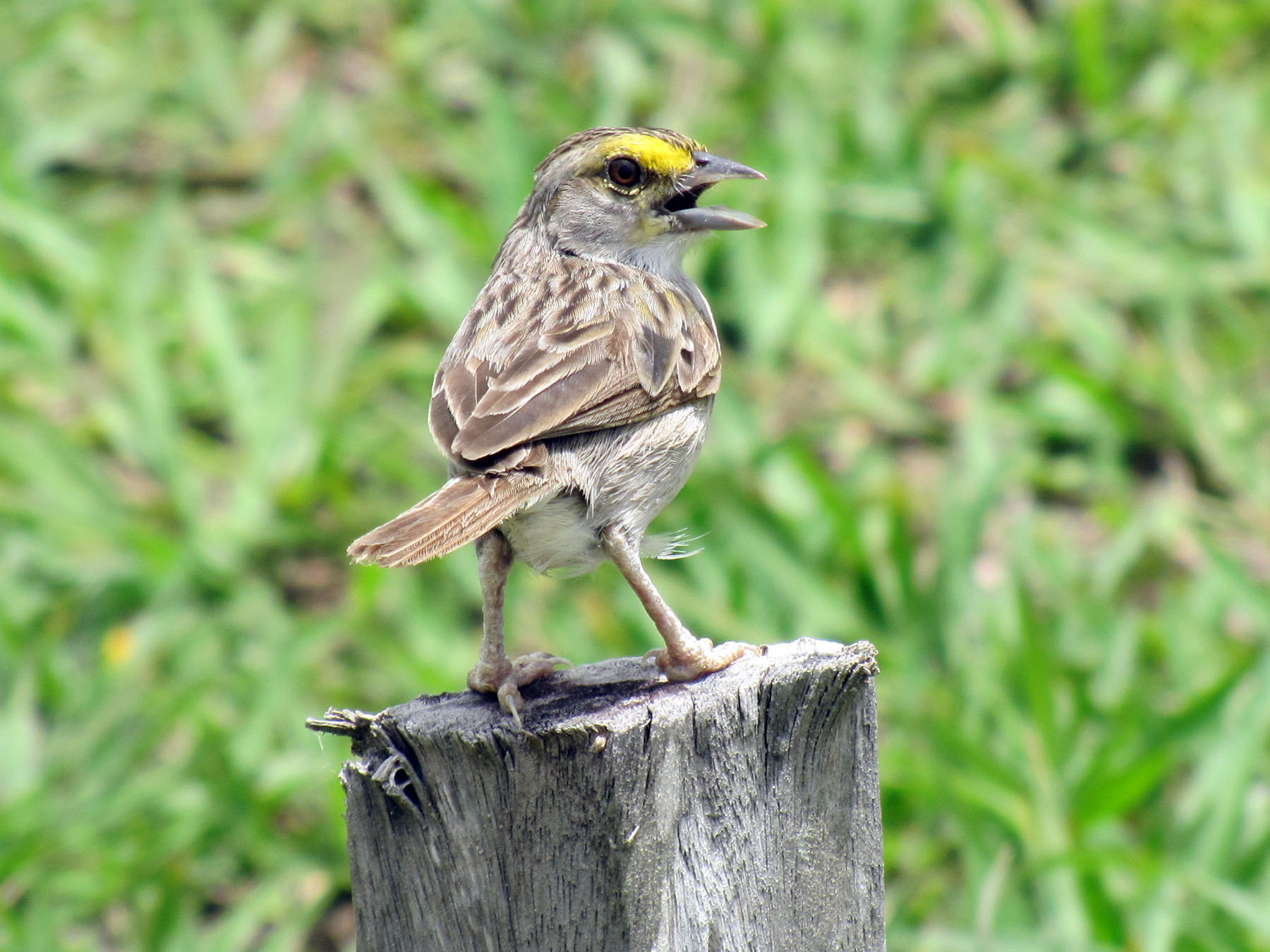
Quick facts
- Length
- 12–13 cm
- Wingspan
- 18–20 cm
- Weight
- 14–18 g
- Lifespan
- 3–5 years
- Family
- New World Sparrows
- Migration
- Resident
- Global status (IUCN)
- Least Concern
- World population
- Not quantified, but common throughout its range
- Population trend
- Stable
- Also called
- Yellow-browed Brush Finch
- Scientific name
- Ammodramus aurifrons
Sources
4- 1BirdLife International. 2024. Ammodramus aurifrons. The IUCN Red List of Threatened Species 2024: e.T22721150A263303831. Source (opens in a new tab)
- 2BirdLife International. 2024. Ammodramus aurifrons. The IUCN Red List of Threatened Species 2024: e.T22721150A263303831. Source (opens in a new tab)
- 3Stotz et al. (1996)
- 4Estimated lifespan based on similar species

Checked by
Nathan Cope, founder and editor
Nathan founded Birdfact and leads its writers and contributors in the UK, the US and Canada. He has watched and studied birds for more than ten years, and checks every article and species guide before it’s published.