


Willie Wagtail
Black-and-white Fantail, Wagtail Willie, Willy Wagtail, Willie-wagtail · Rhipidura leucophrys
By the Birdfact teamChecked by Nathan Cope
On this page12 sections
How to recognise it
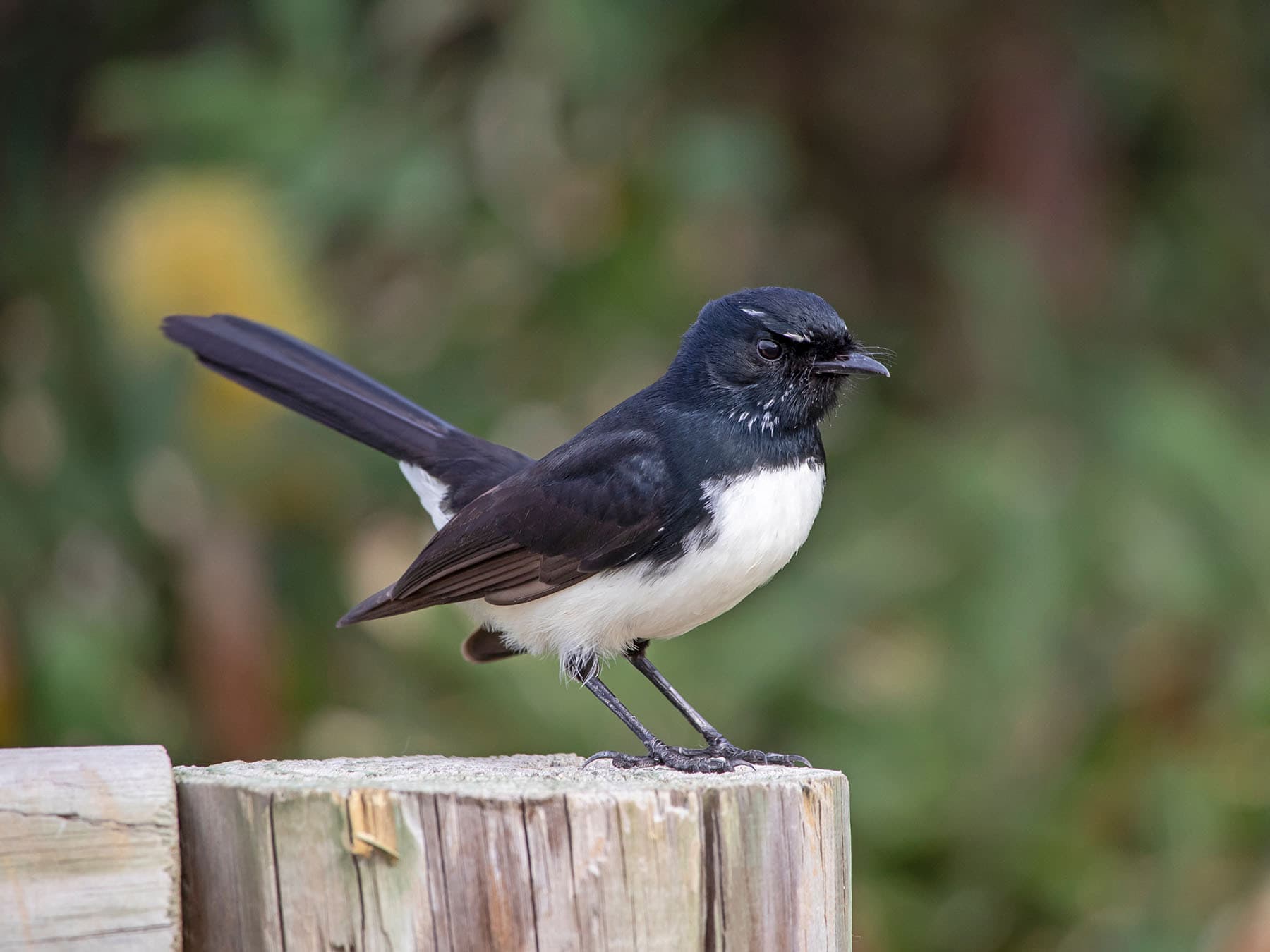
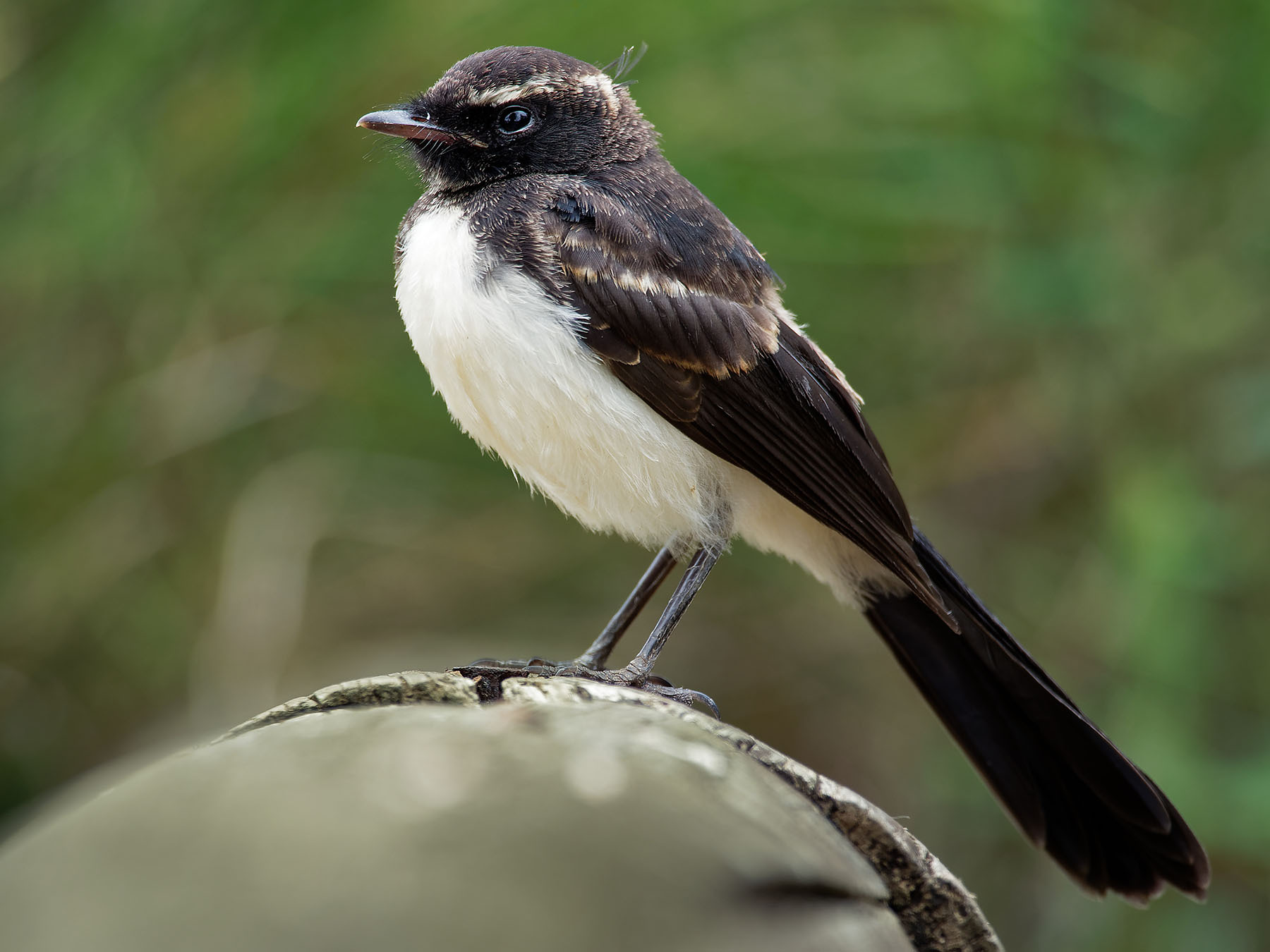
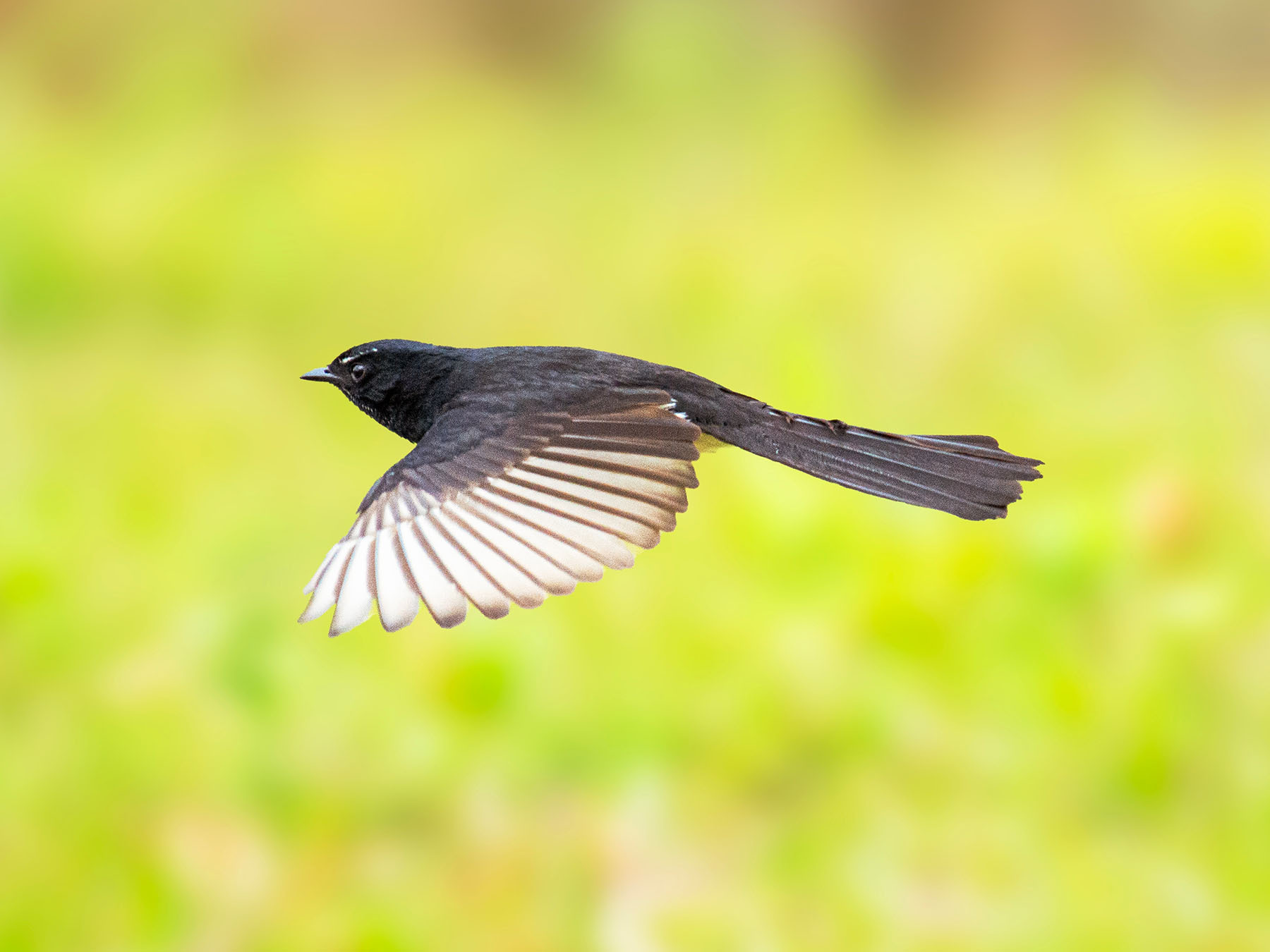
The Willie Wagtail is a striking small bird with bold black and white plumage. Its upperparts, including the head, throat, and breast, are jet black, contrasting sharply with its white eyebrows, belly, and outer tail feathers.
Both sexes look alike, with a slender black bill and legs. Juveniles are similar to adults but have a brownish tinge to their black feathers and may show some buff edging on their wing coverts.
Its size
Adults- Length
- 19–21.5 cm
- Wingspan
- 25–30 cm
- Weight
- 17–24 g
Its song and calls
Willie Wagtails have a varied vocal repertoire. Their most recognisable call is a sweet, musical 'sweet pretty creature' often repeated.
They also produce harsh, scolding calls when alarmed or defending territory. At night, they may emit a repetitive 'chid-chid-chid-chid' sound.
When and where to see it
The Willie Wagtail is not recorded regularly in the UK, Ireland, the United States or Canada.
Worldwide: recorded regularly in 4 countries
Countries where it was recorded in at least 3 of the 6 years 2019–2024. Linked countries have their own bird list.
Asia (1)
- Indonesia
Oceania (3)
- Australia
- Papua New Guinea
- Solomon Islands
Data: EOD – eBird Observation Dataset (Cornell Lab of Ornithology), accessed via GBIF.org, CC BY 4.0. Records from 2019–2024, aggregated and filtered by Birdfact. How these lists are made
Tips for seeing it
- Look for Willie Wagtails in open areas like parks, gardens, and farmlands
- Listen for their distinctive 'sweet pretty creature' call
- Observe their characteristic tail-wagging behaviour
- Watch for their bold interactions with other birds
What it eats
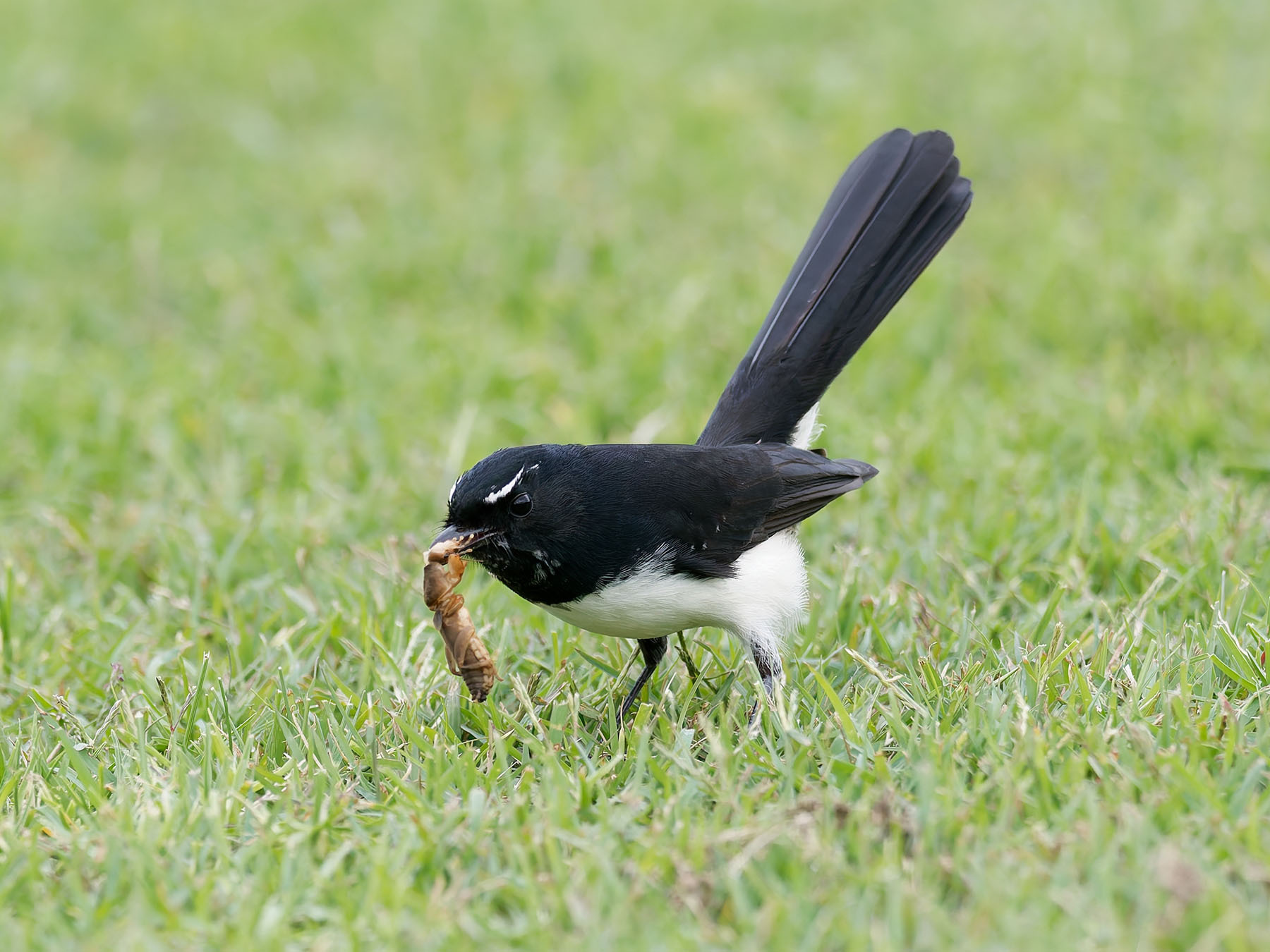
Willie Wagtails are primarily insectivorous, feeding on a wide variety of insects, including flies, beetles, moths, and spiders.
They employ a 'sit-and-wait' hunting strategy, perching on low branches or fences before darting out to catch prey in mid-air or on the ground.
Nesting and breeding
Willie Wagtails form monogamous pairs and breed between August and February in Australia. They engage in elaborate courtship displays, including aerial chases and wing-fluttering.
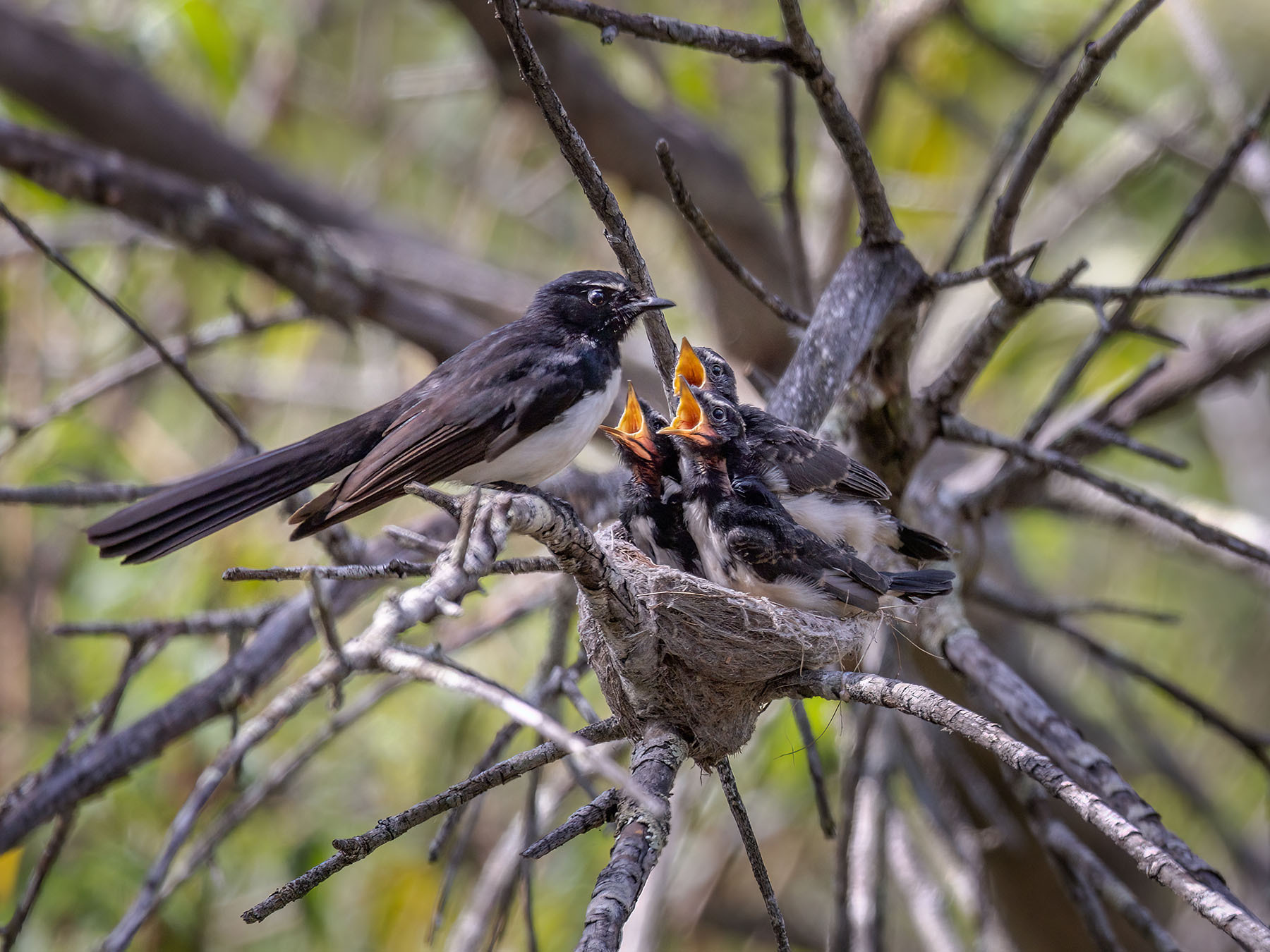
The nest is a neat cup made of grass, bark strips, and spider webs, often placed on a horizontal branch or human-made structure. Females typically lay 3-4 cream-coloured eggs with brown spots.
Both parents share incubation duties for about 14 days. The chicks fledge after 14-15 days but continue to be fed by their parents for several weeks after leaving the nest.
Behaviour
Willie Wagtails are known for their distinctive tail-wagging behaviour, often fanning their tails side to side or up and down.
They are highly territorial and fearlessly chase away much larger birds, including predators. These birds are often seen foraging on the ground, making quick dashes to catch insects.
Conservation
Willie Wagtails are listed as Least Concern by the IUCN due to their large range and stable population.
They have adapted well to human-modified environments, often benefiting from agricultural practices that create suitable foraging habitats. However, they can be affected by pesticide use in farming areas.
More photos
5 photos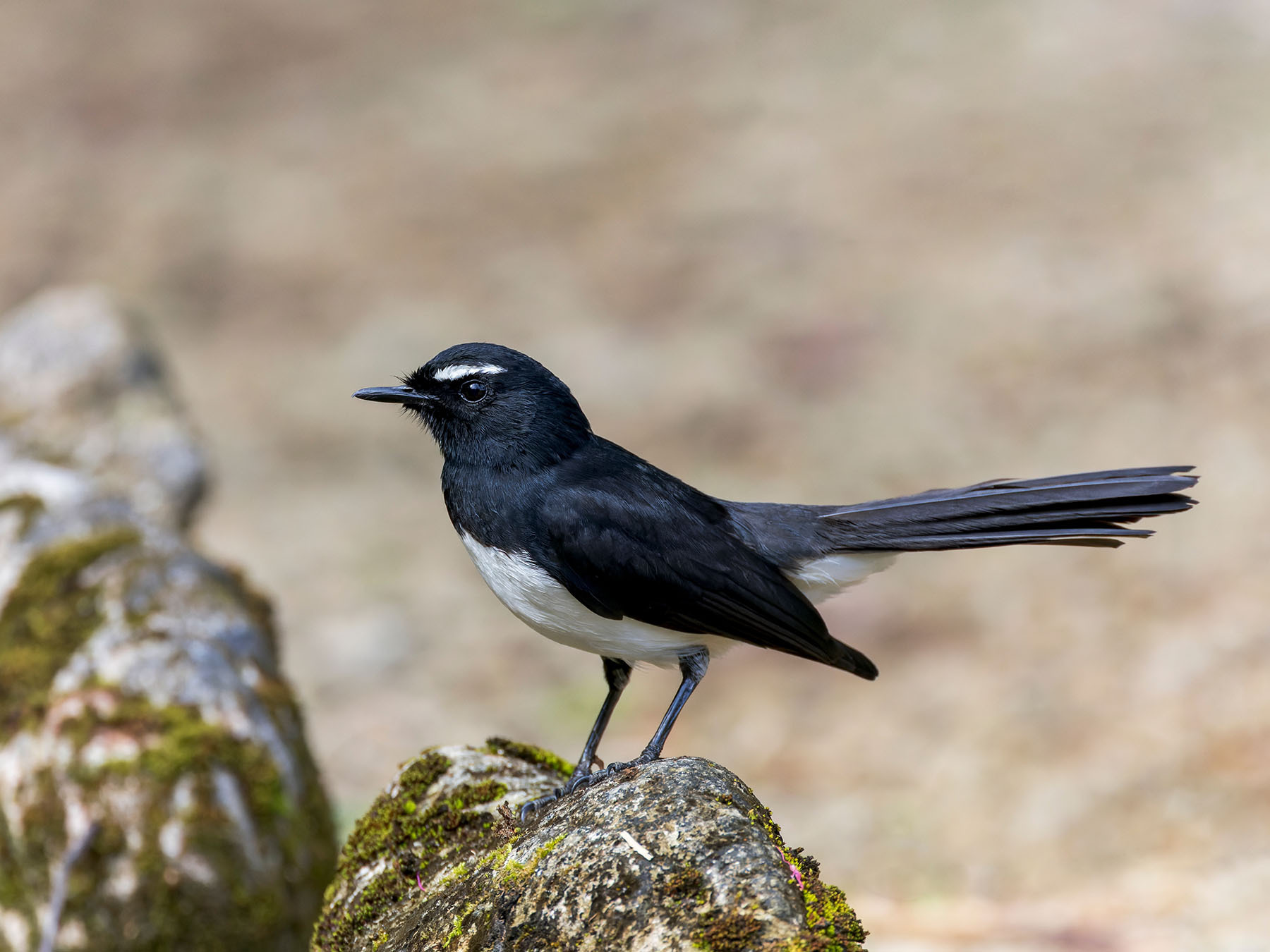
Willie Wagtail guides
2 guidesQuick facts
- Length
- 19–21.5 cm
- Wingspan
- 25–30 cm
- Weight
- 17–24 g
- Lifespan
- 6–8 years · oldest recorded 9.4 years
- Family
- Fantails
- Migration
- Resident
- Global status (IUCN)
- Least Concern
- World population
- Not quantified, but very common
- Population trend
- Increasing
- Also called
- Black-and-white Fantail, Wagtail Willie, Willy Wagtail, Willie-wagtail
- Scientific name
- Rhipidura leucophrys
Sources
4- 1BirdLife International. 2024. Rhipidura leucophrys. The IUCN Red List of Threatened Species 2024: e.T22706805A263897741. Source (opens in a new tab)
- 2del Hoyo et al. (2006)
- 3Coates 1990, Flegg and Madge 1995, Coates et al. 1997
- 4ABBBS - Australian Bird and Bat Banding Scheme Source (opens in a new tab)

Checked by
Nathan Cope, founder and editor
Nathan founded Birdfact and leads its writers and contributors in the UK, the US and Canada. He has watched and studied birds for more than ten years, and checks every article and species guide before it’s published.