


White-tailed Robin
White-tailed Blue Robin · Myiomela leucura
By the Birdfact teamChecked by Nathan Cope
On this page11 sections
How to recognise it
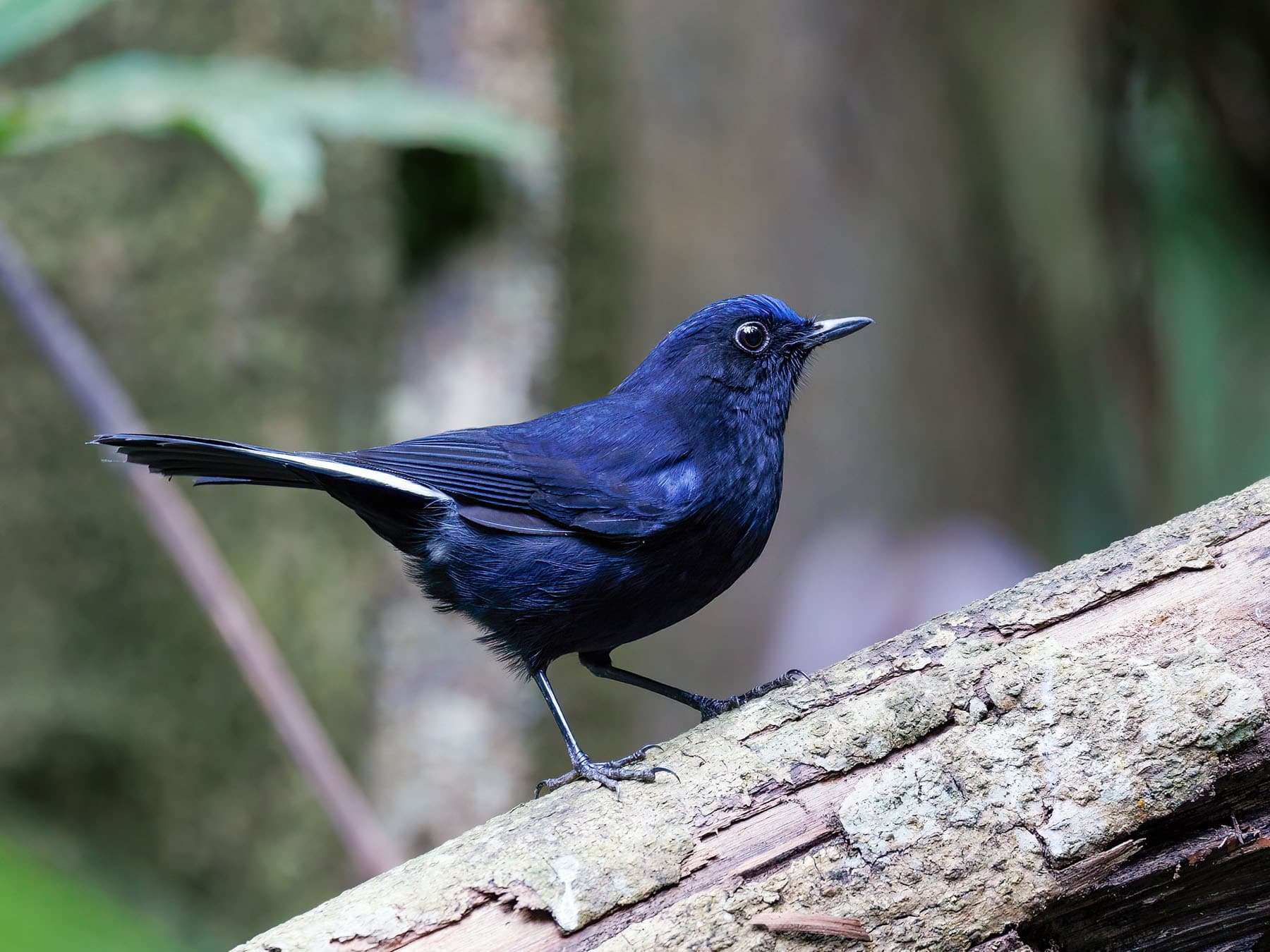
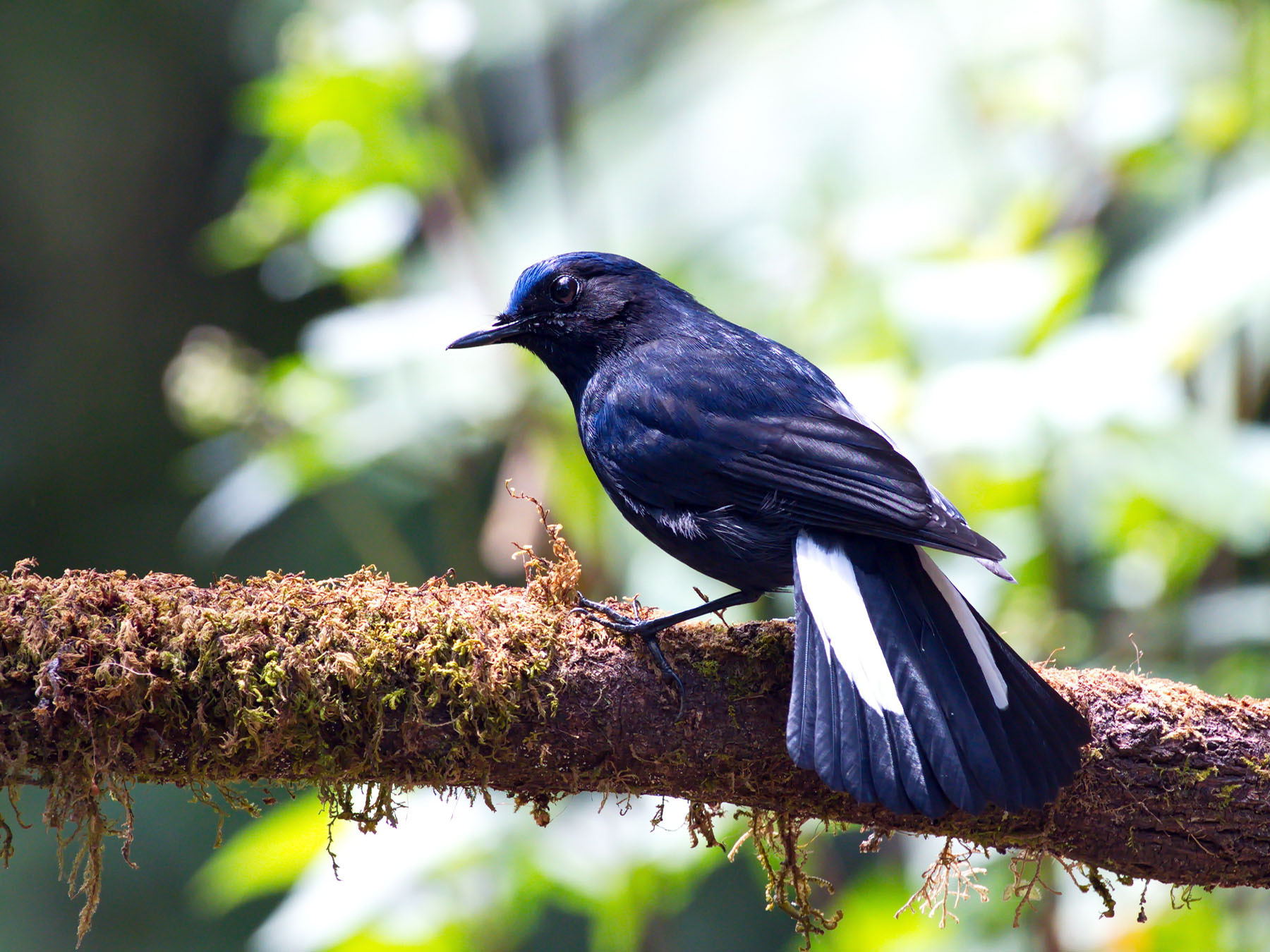
The White-tailed Robin has two distinct varieties. The standard variety's male has a striking bluish-black plumage with shiny mid-blue features on its forehead and shoulders, complemented by a distinctive white tail pattern that covers about two-thirds of the outer tail feathers. A small white neck patch is sometimes visible.
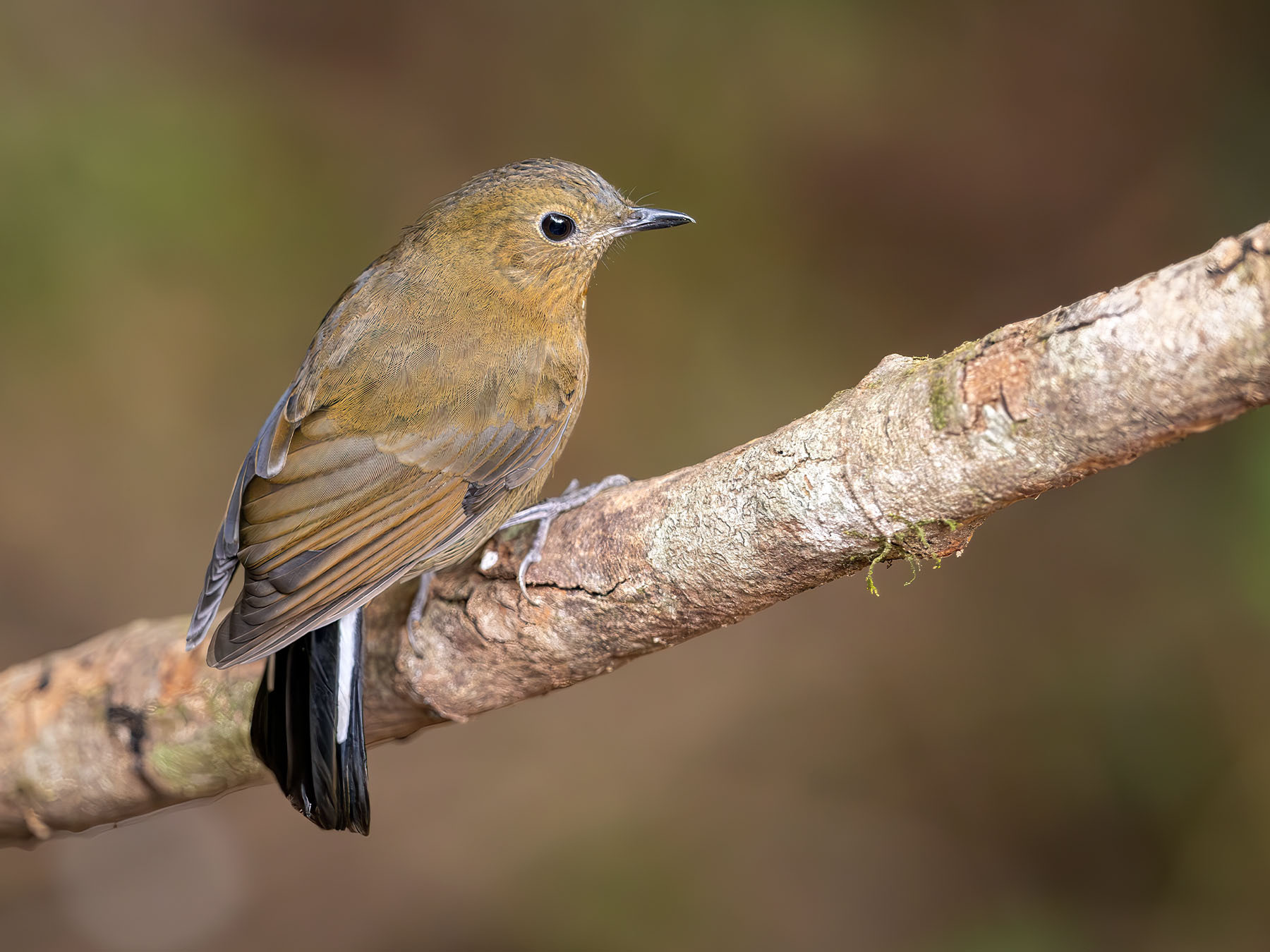
Females are quite different, appearing primarily mouse-brown above and buff-brown below, with the same white tail pattern as males. They also show a subtle white throat crescent. The Cambodian variety is similar but slightly smaller, with males appearing more slaty blue and females showing darker, more olive-toned colouring.
Both varieties share black bills and legs across all plumages.
Its size
Adults- Length
- 16–18 cm
- Wingspan
- 24–28 cm
- Weight
- 20–30 g
Its song and calls
The White-tailed Robin's song is a series of clear, melodious whistles, often described as 'tee-tee-tee-tew-tew'. Their calls include a sharp 'chik' alarm note and a softer 'tuk-tuk' contact call.
Males are particularly vocal during the breeding season, singing from exposed perches to defend territory and attract mates.
When and where to see it
The White-tailed Robin is not recorded regularly in the UK, Ireland, the United States or Canada.
Worldwide: recorded regularly in 14 countries
Countries where it was recorded in at least 3 of the 6 years 2019–2024. Linked countries have their own bird list.
Data: EOD – eBird Observation Dataset (Cornell Lab of Ornithology), accessed via GBIF.org, CC BY 4.0. Records from 2019–2024, aggregated and filtered by Birdfact. How these lists are made
Tips for seeing it
- Look for flashes of white as they flick their tails in undergrowth
- Listen for their melodious song, especially during breeding season
- Search in dense forest understory, particularly in mountainous areas
- Observe early morning or late afternoon when they are most active
What it eats
The White-tailed Robin primarily feeds on insects and other small invertebrates. They forage on the forest floor, using their sharp eyesight to spot prey among leaf litter.
Occasionally, they supplement their diet with small berries and fruits, especially during the non-breeding season.
Nesting and breeding
Breeding season for White-tailed Robins typically occurs from April to July, coinciding with the onset of monsoon rains in much of their range. Males establish territories and attract females with their melodious songs.
Nests are cup-shaped structures made of moss, leaves, and fine plant fibres, usually placed low in dense vegetation or tree hollows. Females lay 2-4 pale blue eggs with reddish-brown speckles.
Incubation lasts about 14 days, primarily carried out by the female. Both parents participate in feeding the nestlings, which fledge after approximately 12-14 days but remain dependent on their parents for several weeks after that.
Behaviour
White-tailed Robins are typically solitary or found in pairs, exhibiting a preference for foraging on or near the ground. They often perch low in undergrowth, making short flights to catch insects.
These birds are known for their habit of cocking their tails upwards, especially after alighting, which helps to display their distinctive white tail feathers.
Conservation
While the White-tailed Robin is currently listed as Least Concern by the IUCN, it faces localised threats from habitat loss due to deforestation in parts of its range.
Conservation efforts focus on protecting montane forest habitats, which are crucial for this species' survival.
More photos
3 photos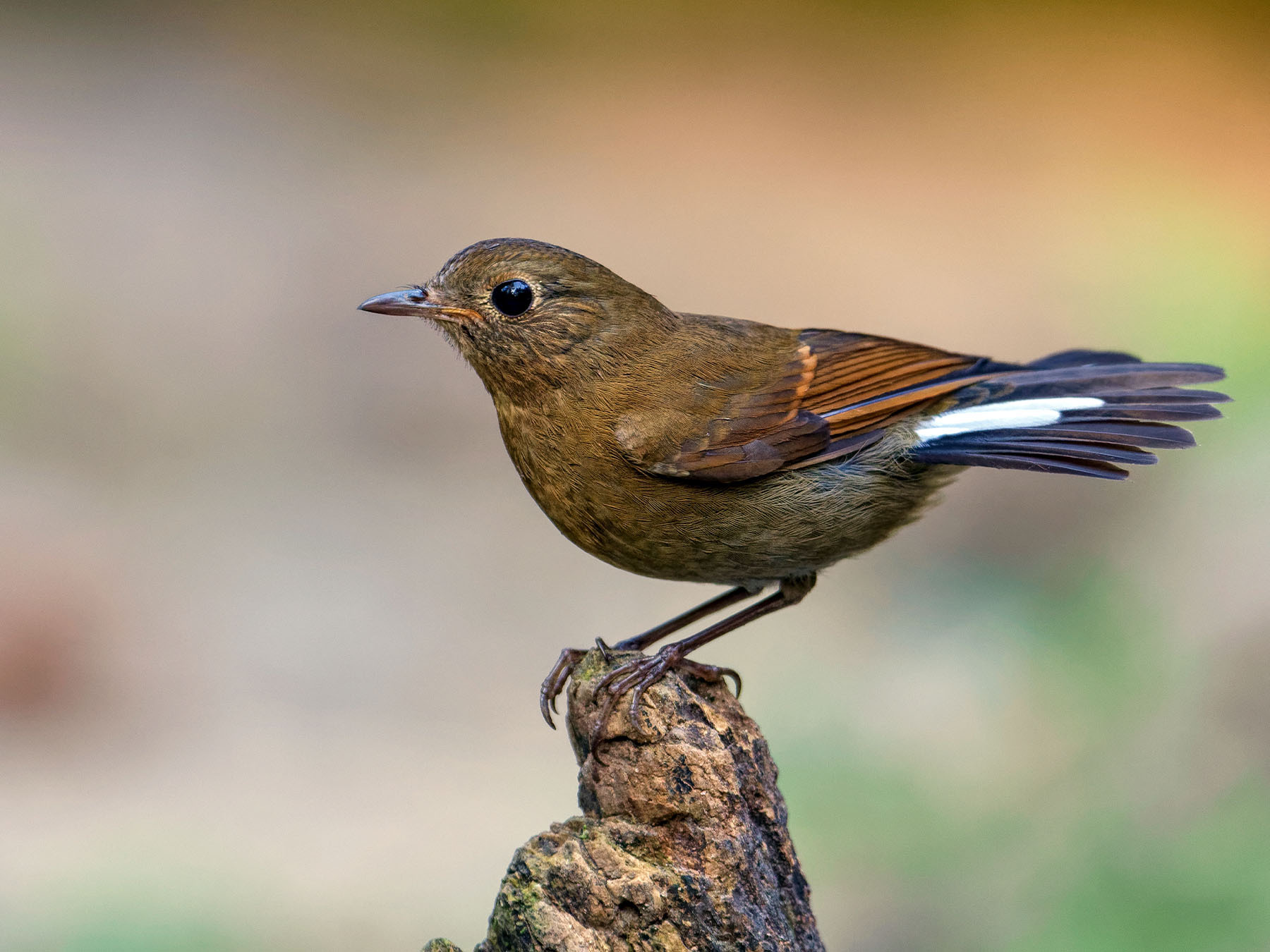
Quick facts
- Length
- 16–18 cm
- Wingspan
- 24–28 cm
- Weight
- 20–30 g
- Lifespan
- 5–6 years
- Family
- Old World Flycatchers
- Migration
- Resident
- Global status (IUCN)
- Least Concern
- World population
- Unknown
- Population trend
- Decreasing
- Also called
- White-tailed Blue Robin
- Scientific name
- Myiomela leucura
Sources
3- 1BirdLife International. 2024. Myiomela leucura. The IUCN Red List of Threatened Species 2024: e.T103768823A263830594. Source (opens in a new tab)
- 2BirdLife International. 2024. Myiomela leucura. The IUCN Red List of Threatened Species 2024: e.T103768823A263830594. Source (opens in a new tab)
- 3Lifespan estimate based on similar species

Checked by
Nathan Cope, founder and editor
Nathan founded Birdfact and leads its writers and contributors in the UK, the US and Canada. He has watched and studied birds for more than ten years, and checks every article and species guide before it’s published.