


White-headed Woodpecker
White-headed Carpenter · Picoides albolarvatus
By the Birdfact teamChecked by Nathan Cope
On this page13 sections
How to recognise it
What do White-headed Woodpeckers look like?
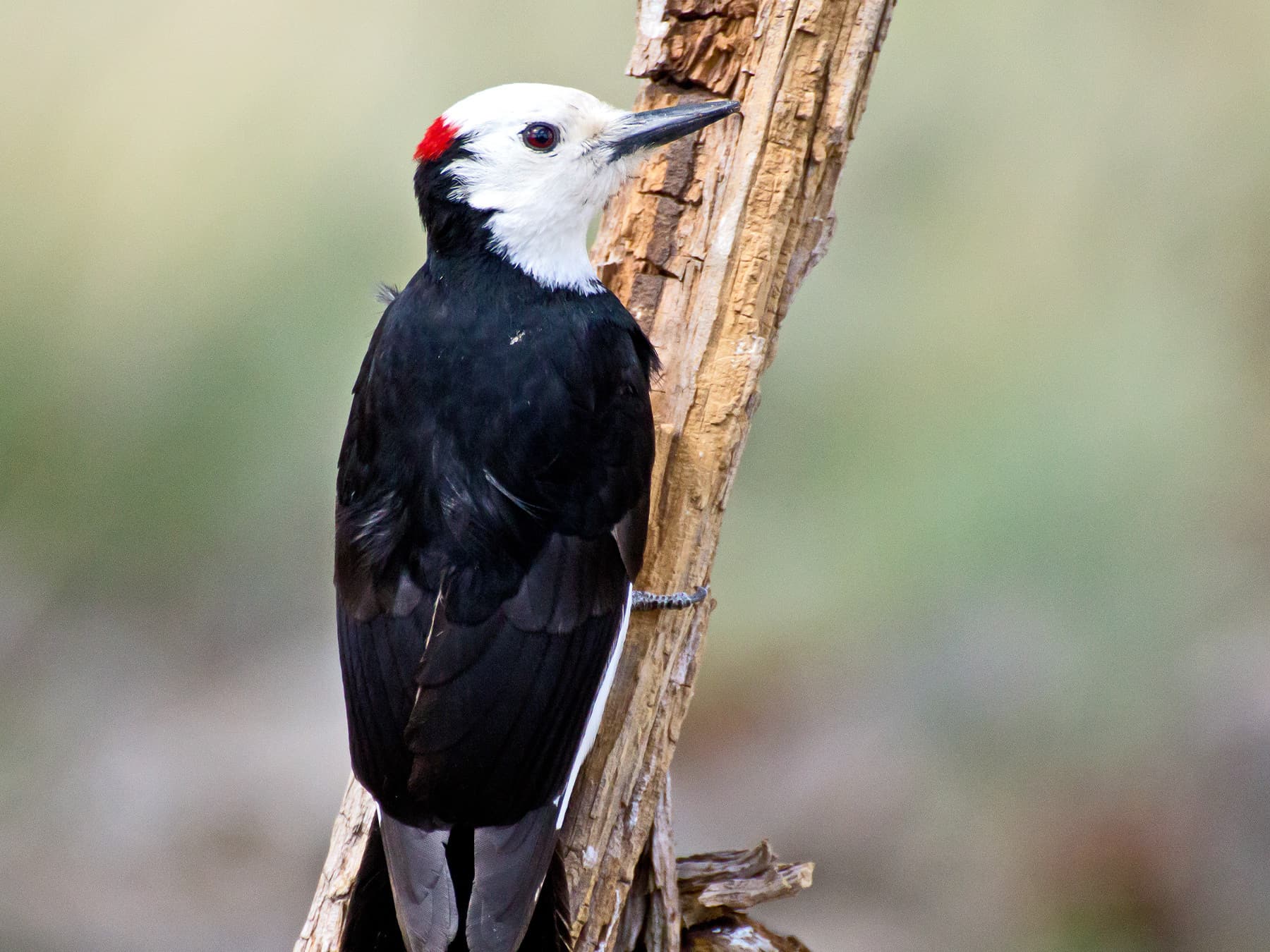
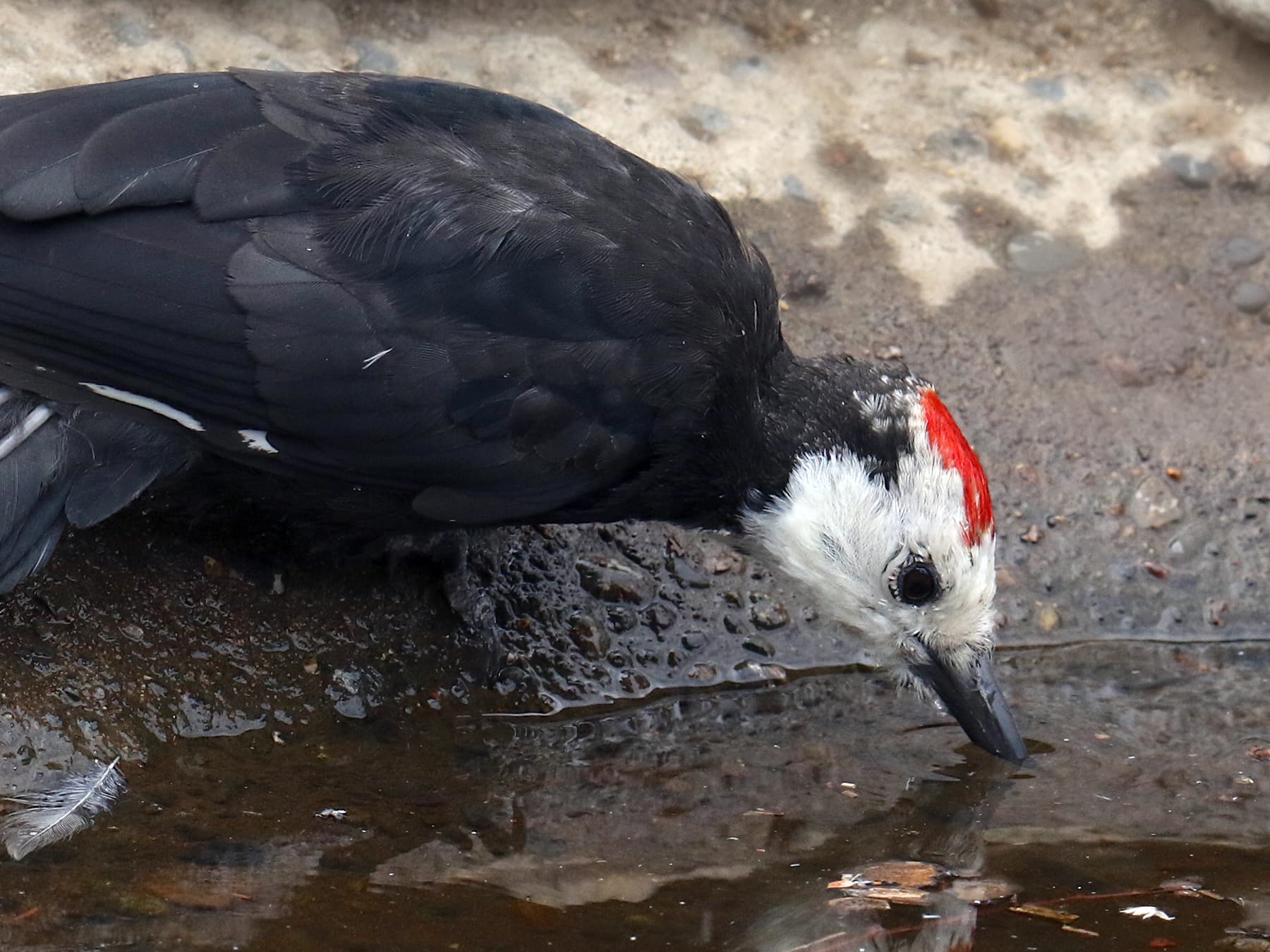
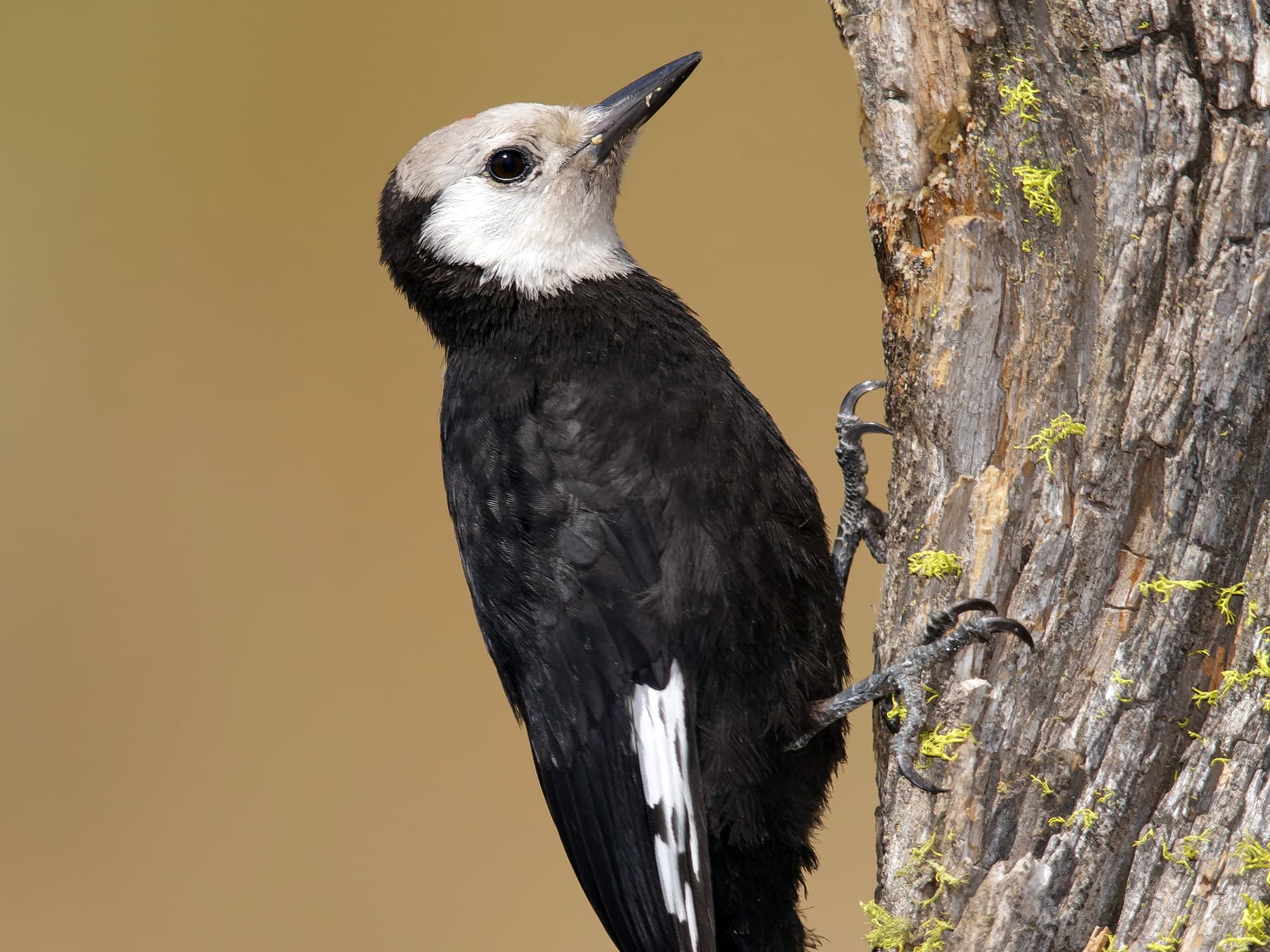
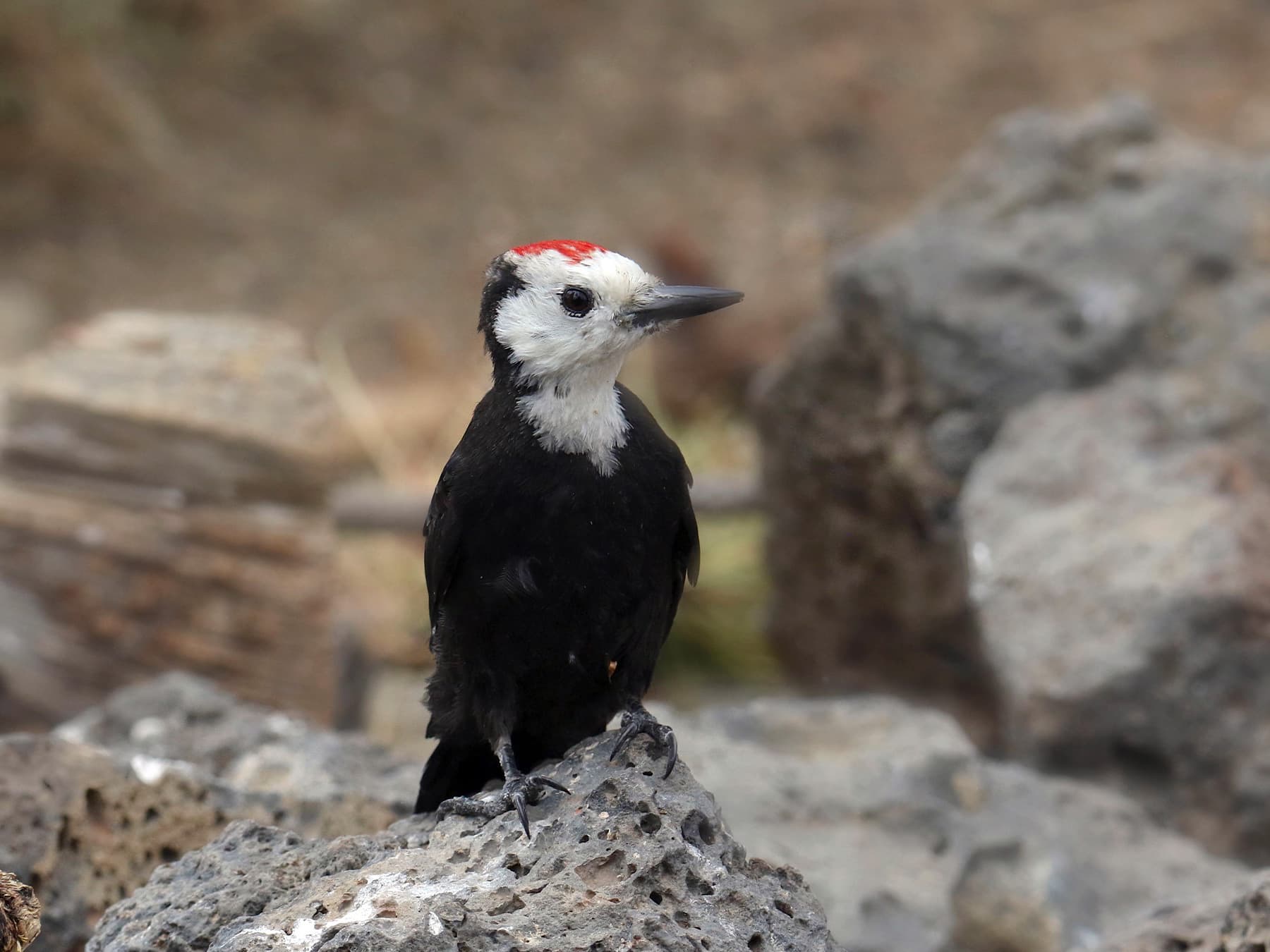
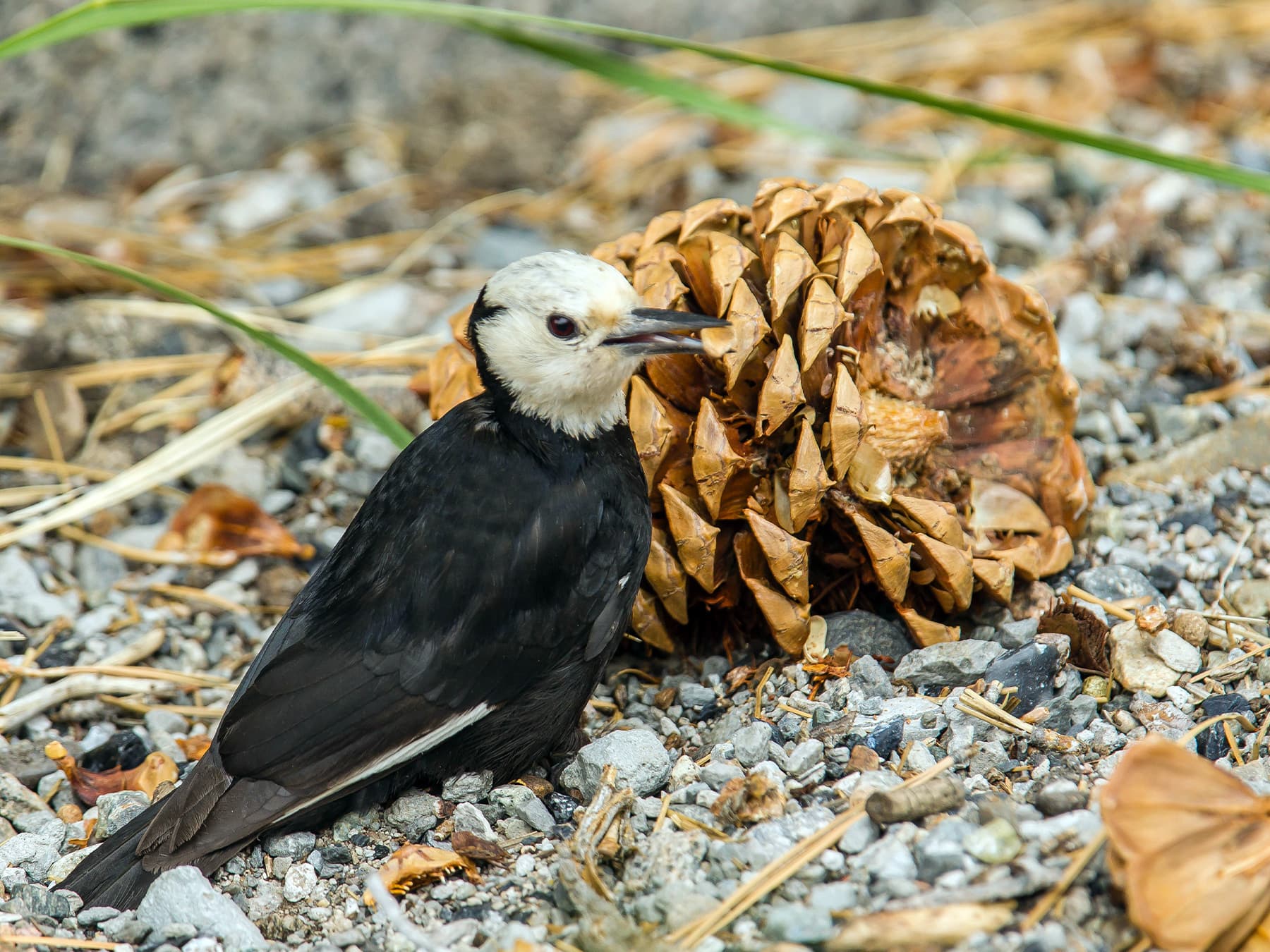
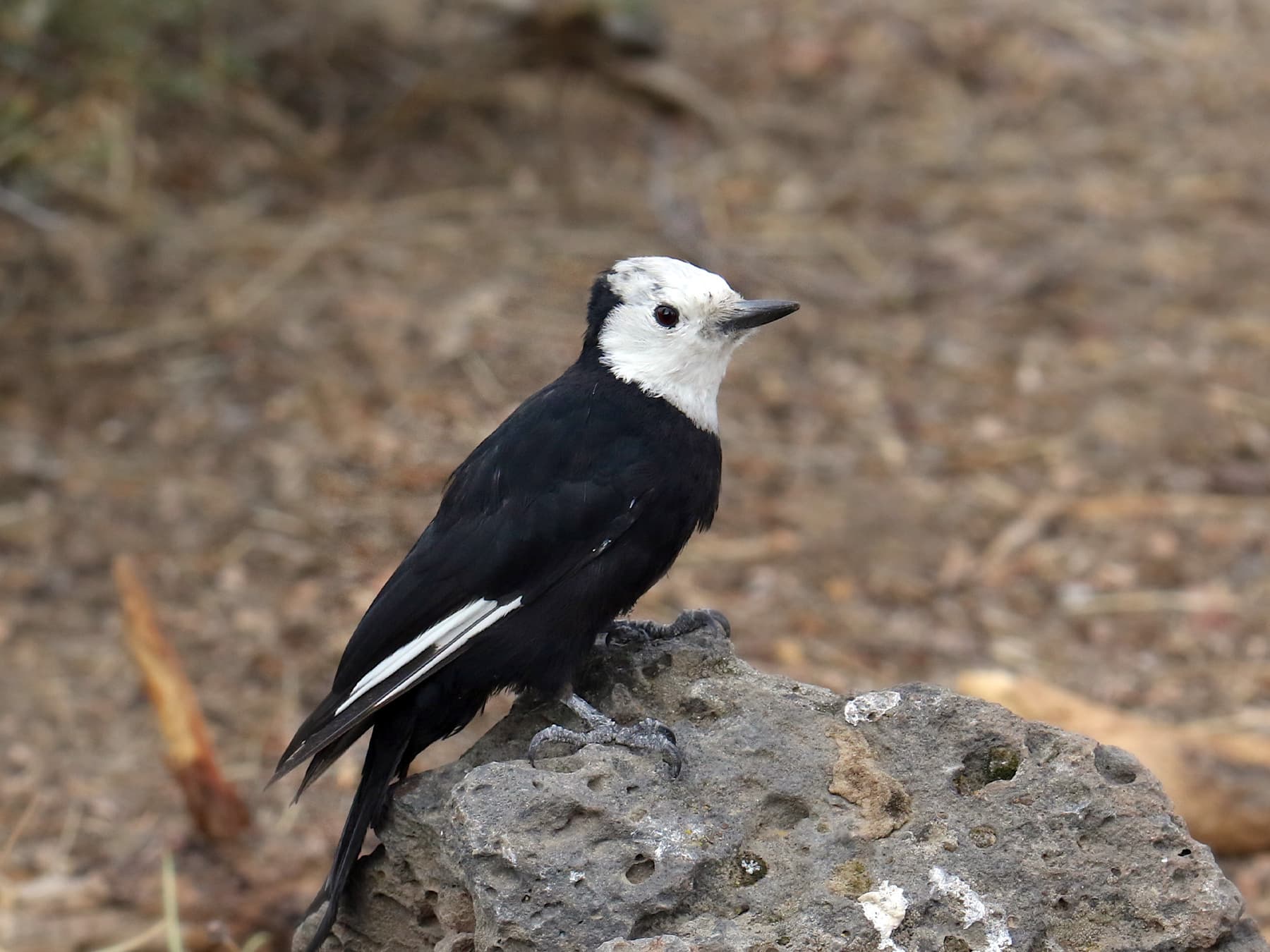
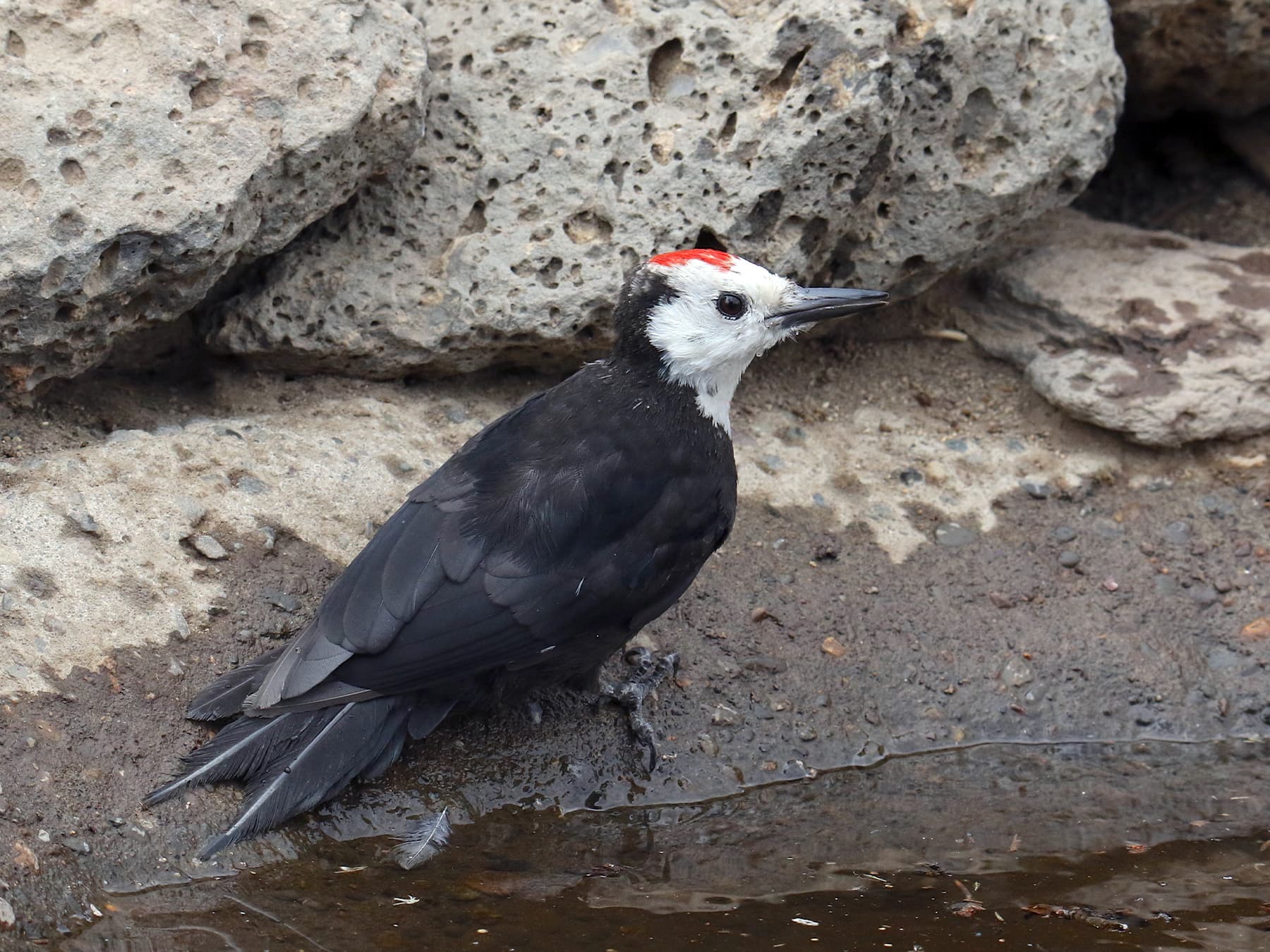
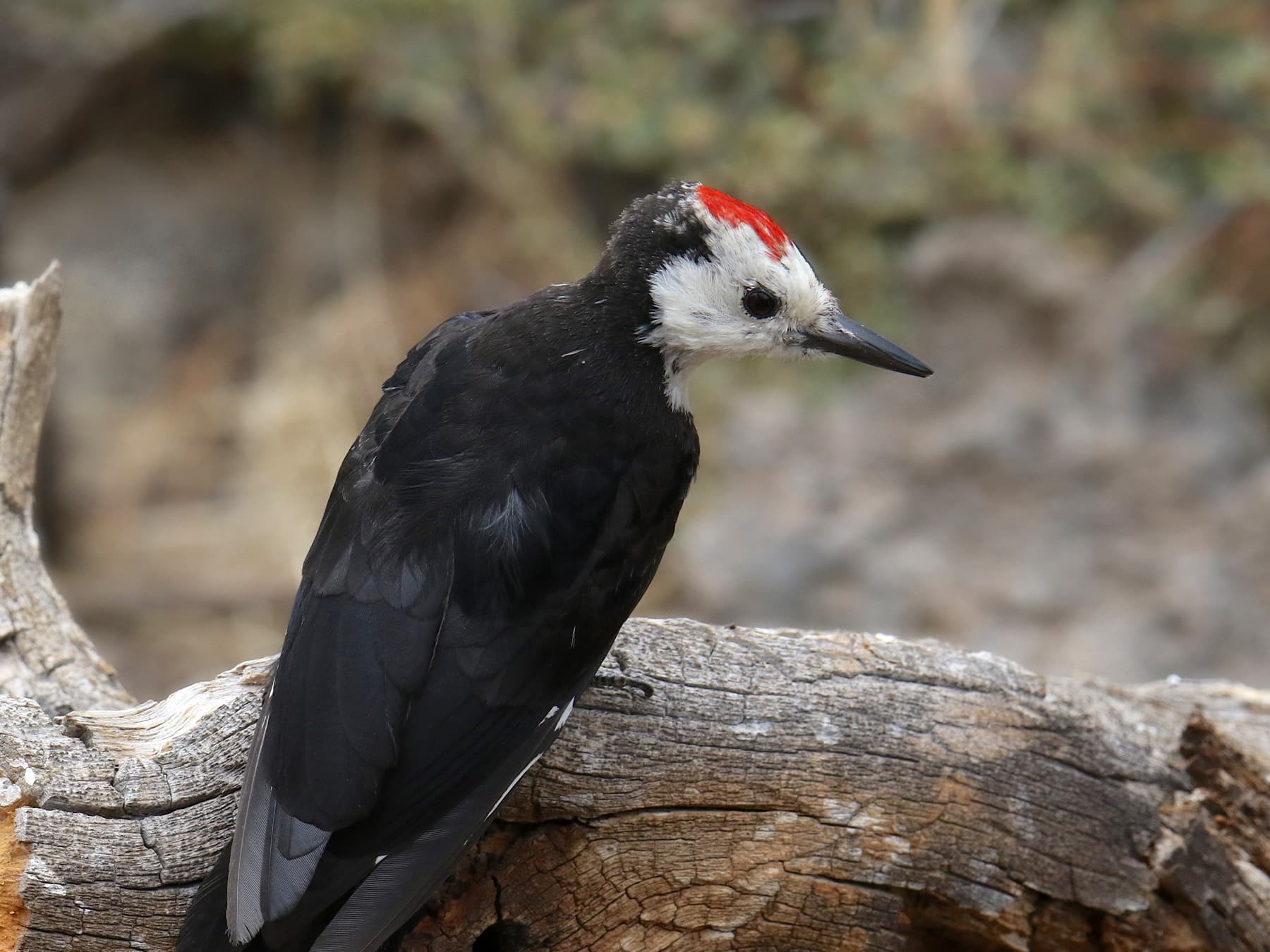
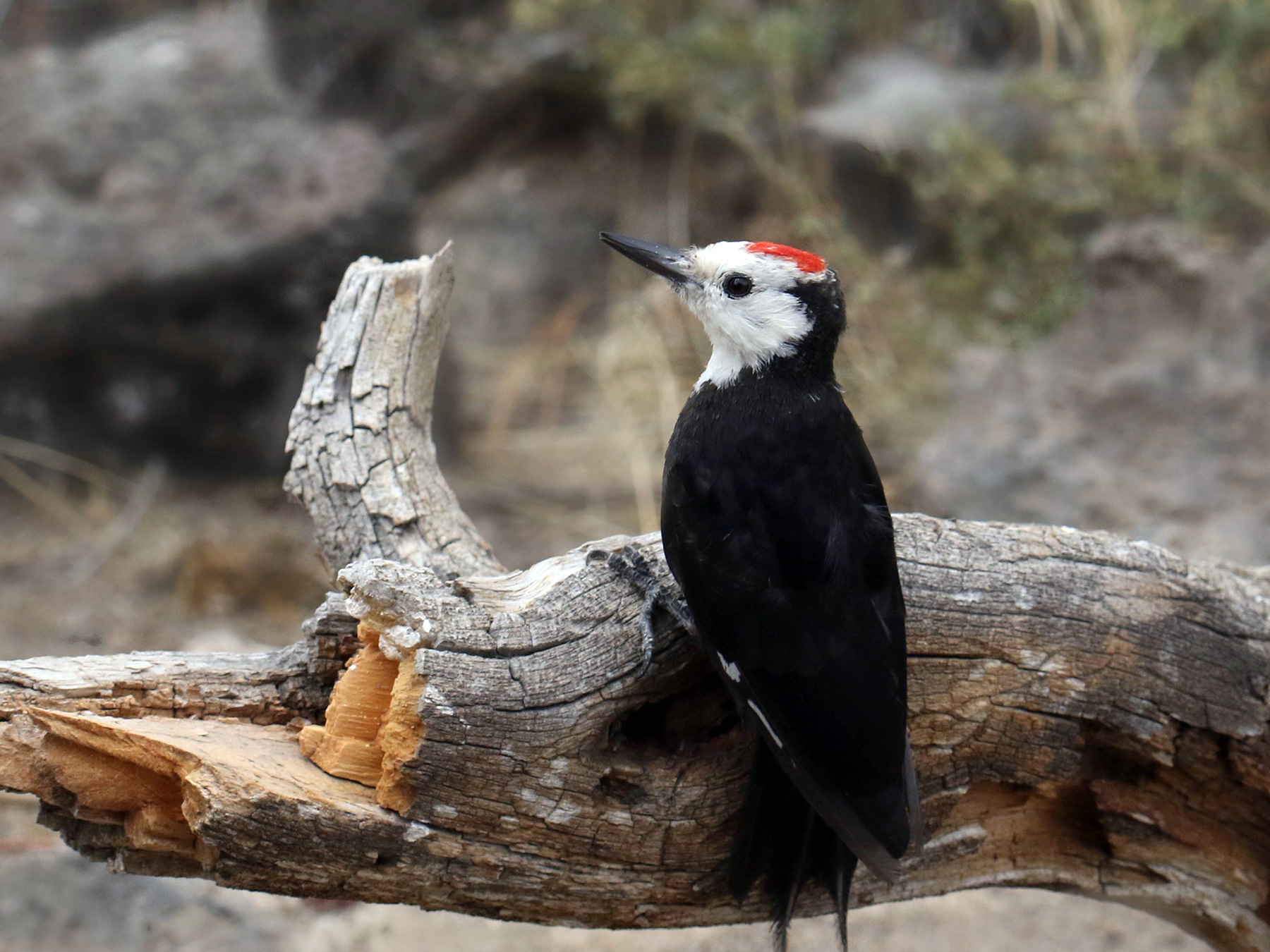
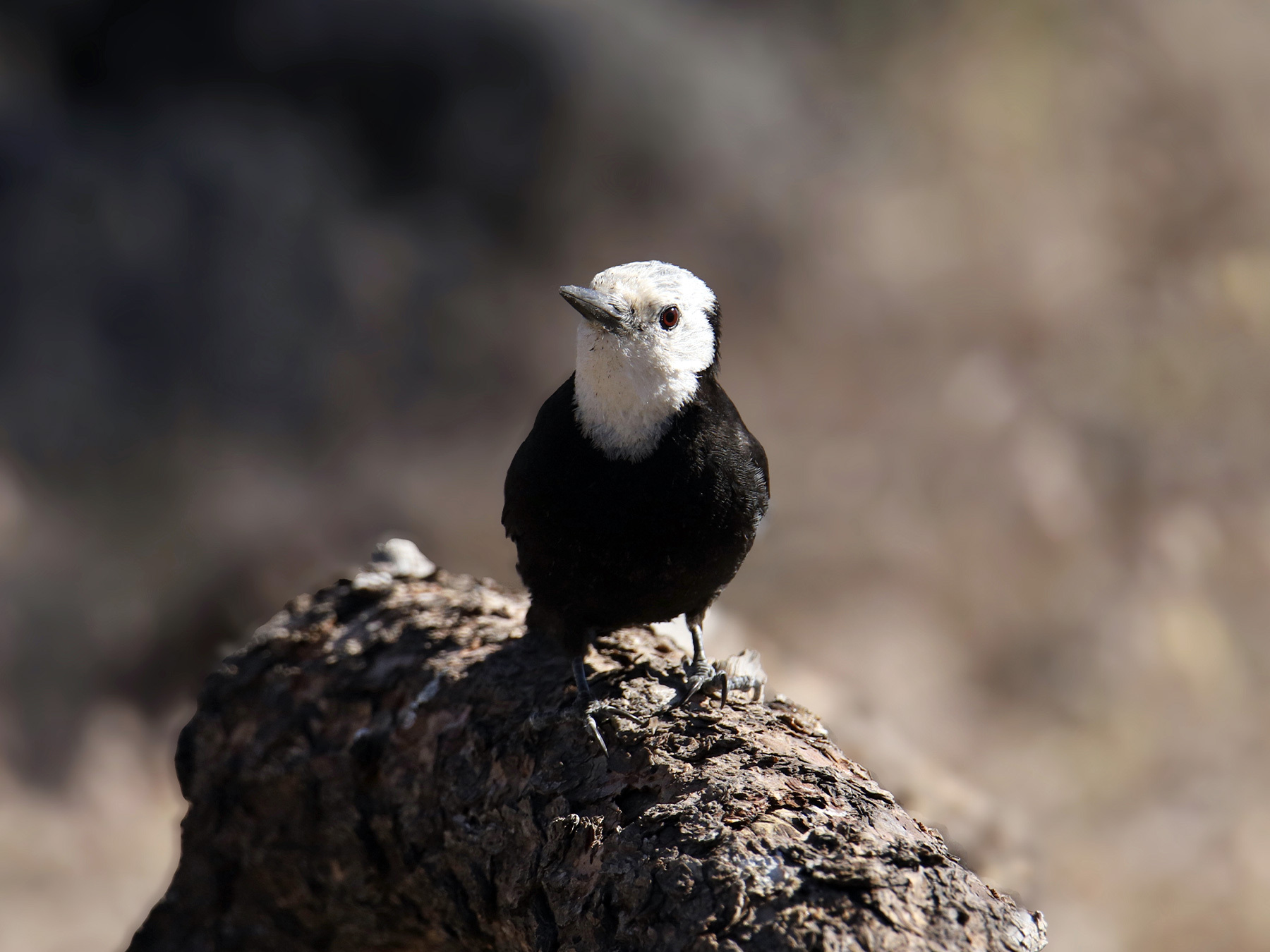
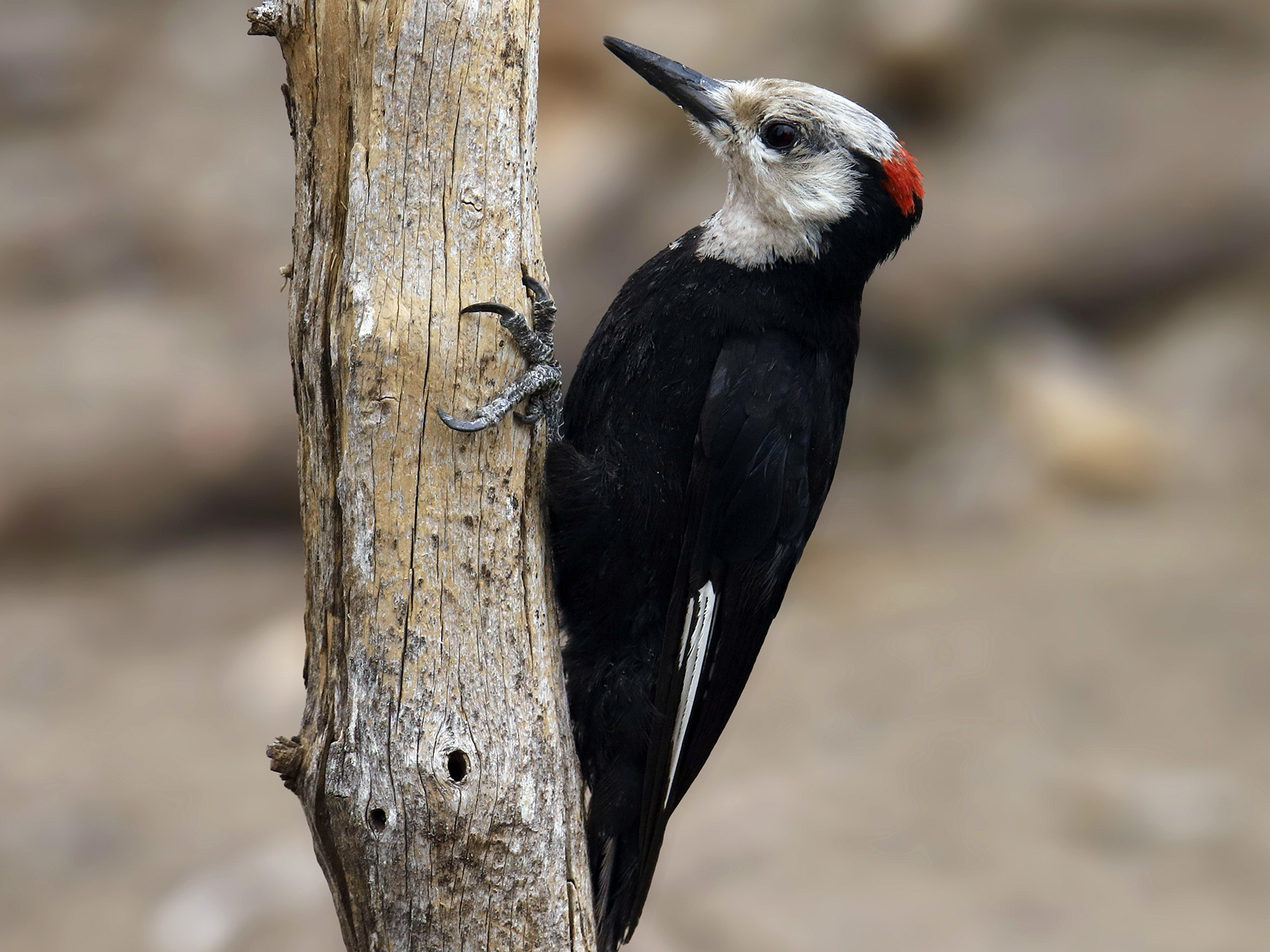
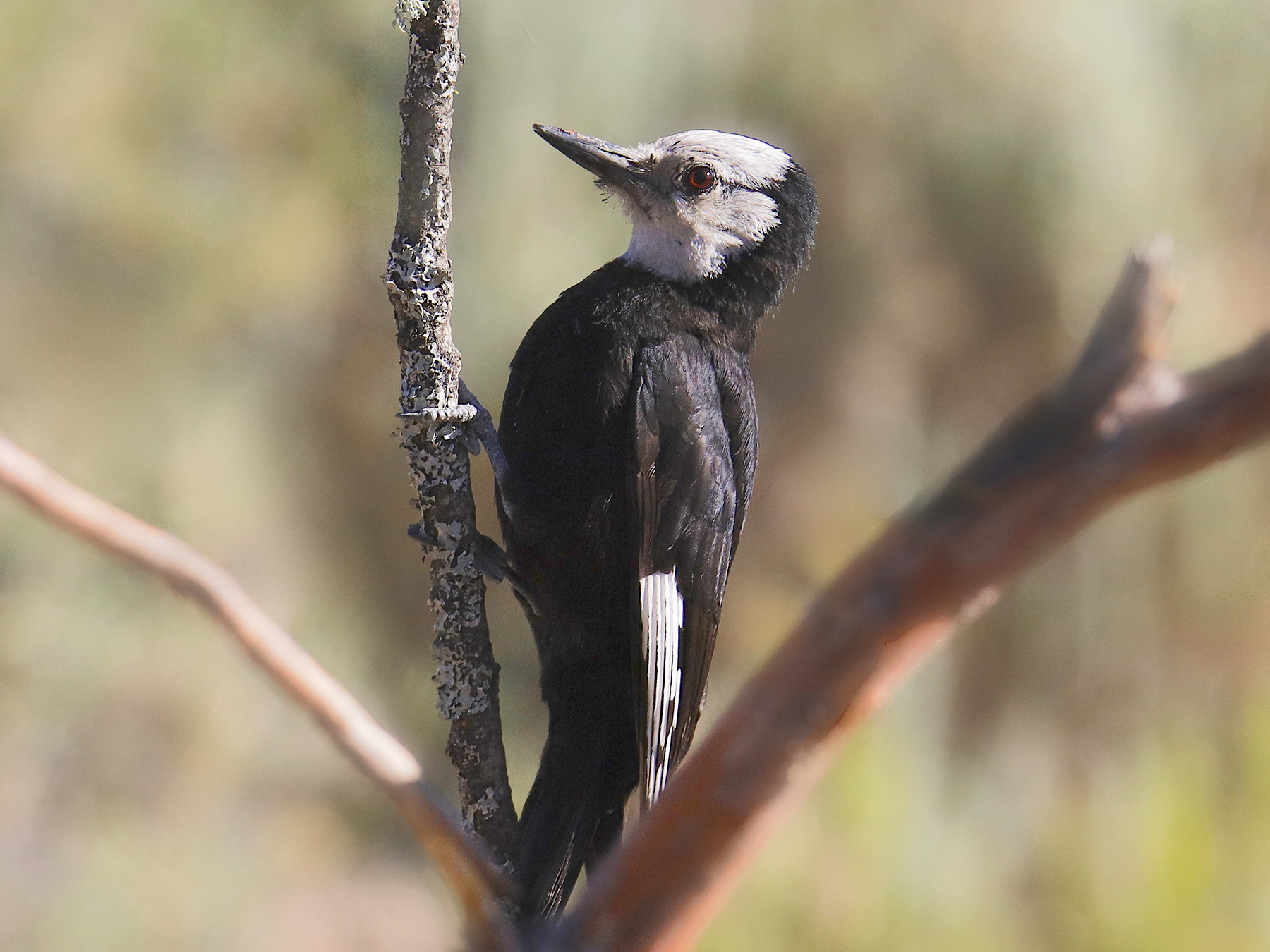
White-headed woodpeckers are mostly glossy black, with a boldly contrasting white face, chin, throat, and forehead. Males have a red patch on the rear of the head, and apart from this, the only non-black part of their plumage is white patches on the outer wing, which are most visible in flight.
Females lack the red head patch but are otherwise identical to males. Both sexes have deep reddish-brown eyes, a short, sharp black bill, and gray feet and legs.
In juveniles, the black plumage is less vibrant and looks more washed out. On the crown of younger birds, a small faint patch of crimson may be visible.
How big are White-headed Woodpeckers?
White-headed woodpeckers are relatively small members of their family, similar in size to a hairy woodpeckers. Males and females are roughly the same size, although males may be marginally heavier.
- Length: 21 cm to 23 cm (8.3 in to 9.1 in)
- Wingspan: 43 cm (17 in)
- Weight: 55 g to 65 g (1.9 oz to 2.3 oz)
Its size
Adults- Length
- 20–23 cm
- Wingspan
- 40–43 cm
- Weight
- 55–70 g
Its song and calls
What sound does a White-headed Woodpecker make?
White-headed woodpeckers’ calls are high-pitched and rapid, with a sharp pee-kik or pee-kik-kik commonly heard as a contact call. Longer rattling calls are also heard. Drumming is slower than in many other woodpecker species and is used between pairs as a form of communication while they are incubating.
When and where to see it
OctoberIn season
Most recorded in October
- 1. Nevadaunder 0.1%
- 2. Californiaunder 0.1%
- 3. Oregonunder 0.1%
- 4. Washingtonunder 0.1%
- 5. Idahounder 0.1%
Each dot is a county, state or province: the bigger and darker, the larger the bird’s share of that place’s bird records that month. Grey dots: no regular records. The ringed point is the centre of the bird’s records this month; the arrow shows how it moved since last month, and the dashed loop its path through the year. “Arrivals” colours places where it becomes regular this month (orange) or is in its last regular month (grey). GBIF eBird Observation Dataset, 2019–2024. Map data: Natural Earth, US Census Bureau; place centres © OpenStreetMap contributors.
In your area
See when the White-headed Woodpecker is recorded in your county, state or province.
How often the White-headed Woodpecker turns up in the United States through the year, from birdwatchers' records.
United States
Summer visitor · all year · most records in June
Show as a table
| Month | United States |
|---|---|
| January | 0.003% (regular) |
| February | 0.003% (regular) |
| March | 0.003% (regular) |
| April | 0.004% (regular) |
| May | 0.007% (regular) |
| June | 0.023% (regular) |
| July | 0.018% (regular) |
| August | 0.010% (regular) |
| September | 0.008% (regular) |
| October | 0.007% (regular) |
| November | 0.005% (regular) |
| December | 0.004% (regular) |
Worldwide: recorded regularly in 1 country
Countries where it was recorded in at least 3 of the 6 years 2019–2024. Linked countries have their own bird list.
North America (1)
Data: EOD – eBird Observation Dataset (Cornell Lab of Ornithology), accessed via GBIF.org, CC BY 4.0. Records from 2019–2024, aggregated and filtered by Birdfact. How these lists are made
What is the habitat of a White-headed Woodpecker?
White-headed woodpeckers have very specific habitat demands, and require an environment rich in conifers and with mountainous terrain, at elevations of between 900 m and 3000 m (3000 ft to 10,000 ft) above sea level.
Mature pine forests are favored, with dense plantations of ponderosa pine, sugar pine, white fir, red fir, Douglas fir, and California black oak. Tree species with smaller cones, for example, lodgepole pine, are not used as nesting sites.
What is the range of a White-headed Woodpecker?
White-headed woodpeckers are found in montane forests from south-central British Columbia, south through eastern Washington, eastern Oregon, and south into northern, central, and southern California. Small populations are present in western Nevada and western Idaho.
Where do White-headed Woodpeckers live?
Populations of white-headed woodpeckers become more concentrated further south into their range, with California home to the highest numbers. Populations are centered on the slopes of the Sierra Nevada, Rocky Mountains, and Cascade Ranges.
How rare are White-headed Woodpeckers?
With a population of only around 240,000 individuals, white-headed woodpeckers are one of the rarest North America woodpeckers, and their range is limited to mountainous pine forests, which are not the most inviting habitats for potential sightings.
California offers the highest densities per hectare, and in parts of the San Gabriel Mountains, they are far more common than in other locations further north.
Where can you see White-headed Woodpeckers in the US?
White-headed woodpeckers are only found in a limited number of locations in the western US, with California offering the best chances of sightings. Although still a reasonably rare species, the Sierra Nevada and San Gabriel Mountains are home to higher-than-average concentrations.
Where can you see White-headed Woodpeckers in Canada?
White-headed woodpeckers require a specialized habitat of montane pine forests and are only found in a very small region of Canada.
Canada’s population is limited to around 10 breeding pairs annually, found in British Columbia’s Okanagan Valley, in the south-central region of the province.
Migration
Do White-headed Woodpeckers migrate?
Although white-headed woodpeckers are generally nonmigratory, some wandering may occur after the breeding season, with individual birds dispersing a short distance from the nest site. Most birds remain in their territories all year round and return to the same breeding spots year after year.
Are White-headed Woodpeckers native to the US?
The vast majority of the global population of white-headed woodpeckers are native to the US, with only around 10 breeding pairs crossing the border into Canada. No populations are present south of California, and no migration occurs, with the breeding and wintering grounds of all white-headed woodpeckers within the US and Canada.
Tips for seeing it
- Look for them in mature pine forests, especially those with large ponderosa pines
- Listen for their soft tapping sounds, which are quieter than many other woodpeckers
- Scan tree trunks and large branches for their distinctive black and white pattern
- Be patient, as they can be less conspicuous than other woodpecker species
What it eats
What do White-headed Woodpeckers eat?
Pine forests provide all of the dietary requirements of white-headed woodpeckers, with a wide range of conifer seeds and invertebrates that thrive in such environments. Insect prey includes ants, termites, beetles, and their larvae. They use their bills to flake off strips of bark and then probe using their elongated tongue.
Pine seeds are particularly important in spring, especially those of ponderosa pine, Jeffrey pine, sugar pine, and Coulter pine. Acrobatic maneuvers may be required, as they grip the cone and prise into the crevices to extract the seeds.
In winter and also during the height of the nestling period, backyard feeders offering suet or even nectar for hummingbirds may attract an occasional visitor. However, white-headed woodpeckers remain in their mountain landscapes and do not stray to anywhere highly urbanized.
What do White-headed Woodpecker chicks eat?
Both parents bring food to nestlings, feeding them on a bolus of regurgitated insects and larvae, particularly ants and bark beetle larvae. Around 7 days before fledging, adult birds bring food to the cavity, but encourage young to feed from the chamber opening rather than going inside themselves, with items of prey gradually increasing in size to individual insects, caterpillars, and larvae.
Nesting and breeding
Where do White-headed Woodpeckers nest?
Nest chambers are drilled out in dead or partially dead conifers, in particular ponderosa pine and red fir. White-headed woodpeckers will frequently use low-level spots, including tree stumps and fallen logs, and chisel out their own nests, which can take up to 4 weeks. Artificial structures, including crevices in buildings and utility poles, may also be used.
When do White-headed Woodpeckers nest?
Nest excavation usually occurs in May, with eggs following within 5 days of the completion of the chamber. Incubation takes between 11 and 14 days, with males and females sharing the task. Males always incubate overnight, and remain in the nest cavity at night until all the chicks have fledged.
What do White-headed Woodpecker eggs look like?
White-headed woodpeckers lay white, glossy eggs, which may become speckled with dirt and grime as incubation progresses. A typical clutch contains 4 to 5 eggs, which measure 24 mm by 18 mm (0.9 in by 0.7 in).
Do White-headed Woodpeckers mate for life?
Pairs form early in the spring and then remain together all year round. They are monogamous during the breeding season and are strongly bonded, drumming to each other during the nesting period from inside and outside the nest chamber. There is no information available about the duration of these bonds from one season to the next.
Behaviour
Are White-headed Woodpeckers aggressive?
It is rare for any confrontations between white-headed woodpeckers to escalate to a physical level, although some drumming, chasing, and hostile posturing displays may be observed, particularly early in the breeding season and close to the nest cavity.
Where do White-headed Woodpeckers sleep at night?
During the breeding season, the male white-headed woodpecker roosts overnight in the nesting cavity until the young fledge. Roosting cavities are used all through the winter by individuals, and many white-headed woodpeckers continue to roost in an excavated chamber throughout the year, although roosting spots in crevices and against tree trunks may also be used.
Lifespan and predators
How long do White-headed Woodpeckers live?
The oldest recorded white-headed woodpecker, identified through a banding scheme, was at least 9 years and 7 months old. Breeding can occur from one year old, although successful breeding maybe later in males.
What are the predators of White-headed Woodpeckers?
Cooper’s hawks, northern goshawks, and American kestrels are among the most notable predators of white-headed woodpeckers. Nests may also be raided by weasels and squirrels.
Are White-headed Woodpeckers protected?
White-headed woodpeckers and their eggs and young are protected in the US under the Migratory Bird Treaty Act of 1918. In Canada, similar protection is offered by the National Migratory Birds Convention Act of 1994 as well as at a local level by the British Columbia Wildlife Act.
Are White-headed Woodpeckers endangered?
Currently listed as a species of least concern and not considered globally threatened, the white-headed woodpecker is rated ‘Imperiled’ in Idaho and ‘Endangered’ in Canada according to the Species at Risk Act.
Timber harvesting in pine forests has led to a contraction of habitats in many parts of the species’ range, and logging work after forest fires has also had a negative impact on available nesting sites.
Conservation
While currently listed as Least Concern, White-headed Woodpeckers face threats from habitat loss due to logging and forest management practices.
Conservation efforts focus on preserving mature pine forests and maintaining snags for nesting sites. Climate change may also impact their habitat in the future.
More photos
5 photos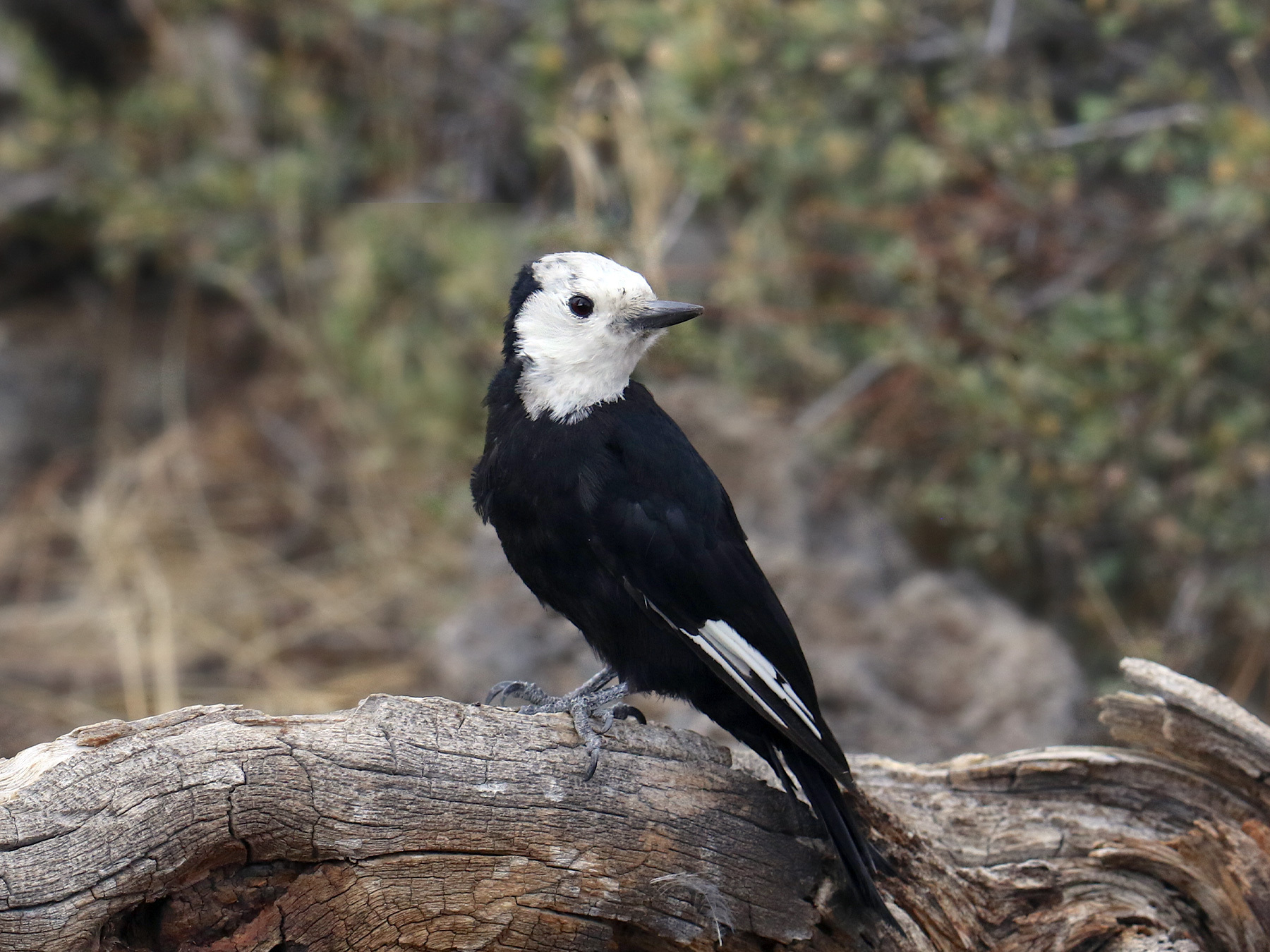
Quick facts
- Length
- 20–23 cm
- Wingspan
- 40–43 cm
- Weight
- 55–70 g
- Lifespan
- 5–8 years · oldest recorded 9.7 years
- Family
- Woodpeckers
- Migration
- Resident
- Global status (IUCN)
- Least Concern
- World population
- 240,000 mature individuals
- Population trend
- Stable
- Also called
- White-headed Carpenter
- Scientific name
- Picoides albolarvatus
Questions
4What attracts White-headed Woodpeckers?
Without the presence of well-established pine trees with plenty of large cones, you’d stand zero chance of attracting a white-headed woodpecker, as this food resource trumps everything.
What trees do White-headed Woodpeckers prefer?
Coniferous forests are the prime location for white-headed woodpeckers to nest and forage for their favorite pine seeds. Ponderosa pine is the preferred species, and sugar pine, Douglas fir, white fir, and incense cedar.
Do White-headed Woodpeckers harm trees?
White-headed woodpeckers frequently make their nest cavities in logs or fallen trees that have already died or been damaged to the point where they are no longer viable or healthy. In these cases, any harm caused by drilling is negative as the tree has already died.
Holes drilled by woodpeckers in tree trunks as cavities and in search of insects are usually not major enough to cause extensive damage, although they may contribute to weakening an already dying tree.
Do White-headed Woodpeckers go to bird feeders?
In residential areas that lie within mountain pine forests, white-headed woodpeckers may occasionally visit a backyard feeder for suet. They usually gain all their nutritional requirements from pine cones and seeds, without needing to look for supplementary food sources.
Sources
4- 1BirdLife International. 2016. Leuconotopicus albolarvatus. The IUCN Red List of Threatened Species 2016: e.T22681169A92895670. Source (opens in a new tab)
- 2Breeding Bird Survey and/or Christmas Bird Count: Butcher and Niven (2007)
- 3Partners in Flight (2022) Source (opens in a new tab)
- 4Longevity Records Of North American Birds. Version 2023.1 Source (opens in a new tab)

Checked by
Nathan Cope, founder and editor
Nathan founded Birdfact and leads its writers and contributors in the UK, the US and Canada. He has watched and studied birds for more than ten years, and checks every article and species guide before it’s published.