


White-crested Laughingthrush
White-crested Laughing Thrush · Garrulax leucolophus
By the Birdfact teamChecked by Nathan Cope
On this page11 sections
How to recognise it
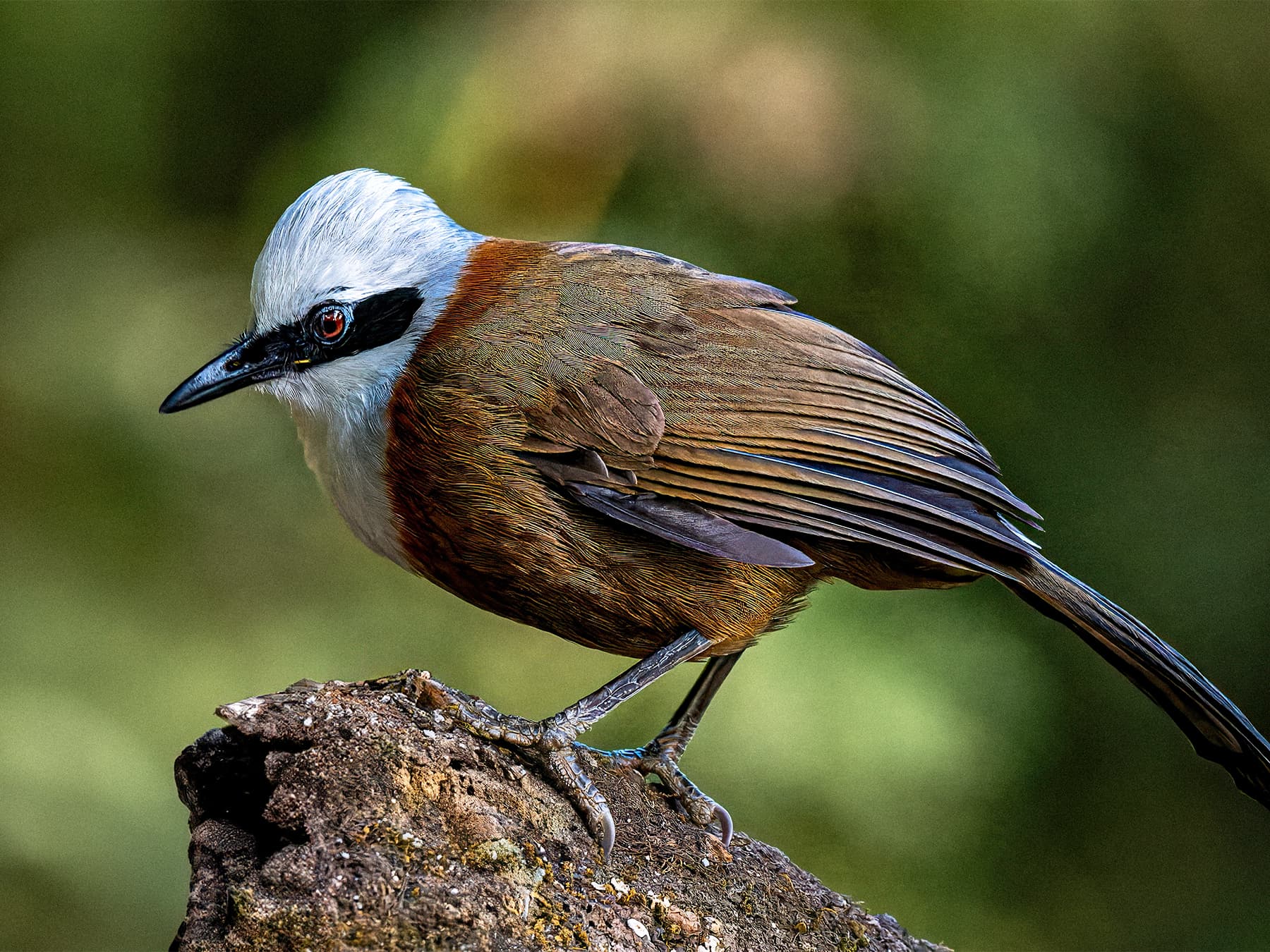
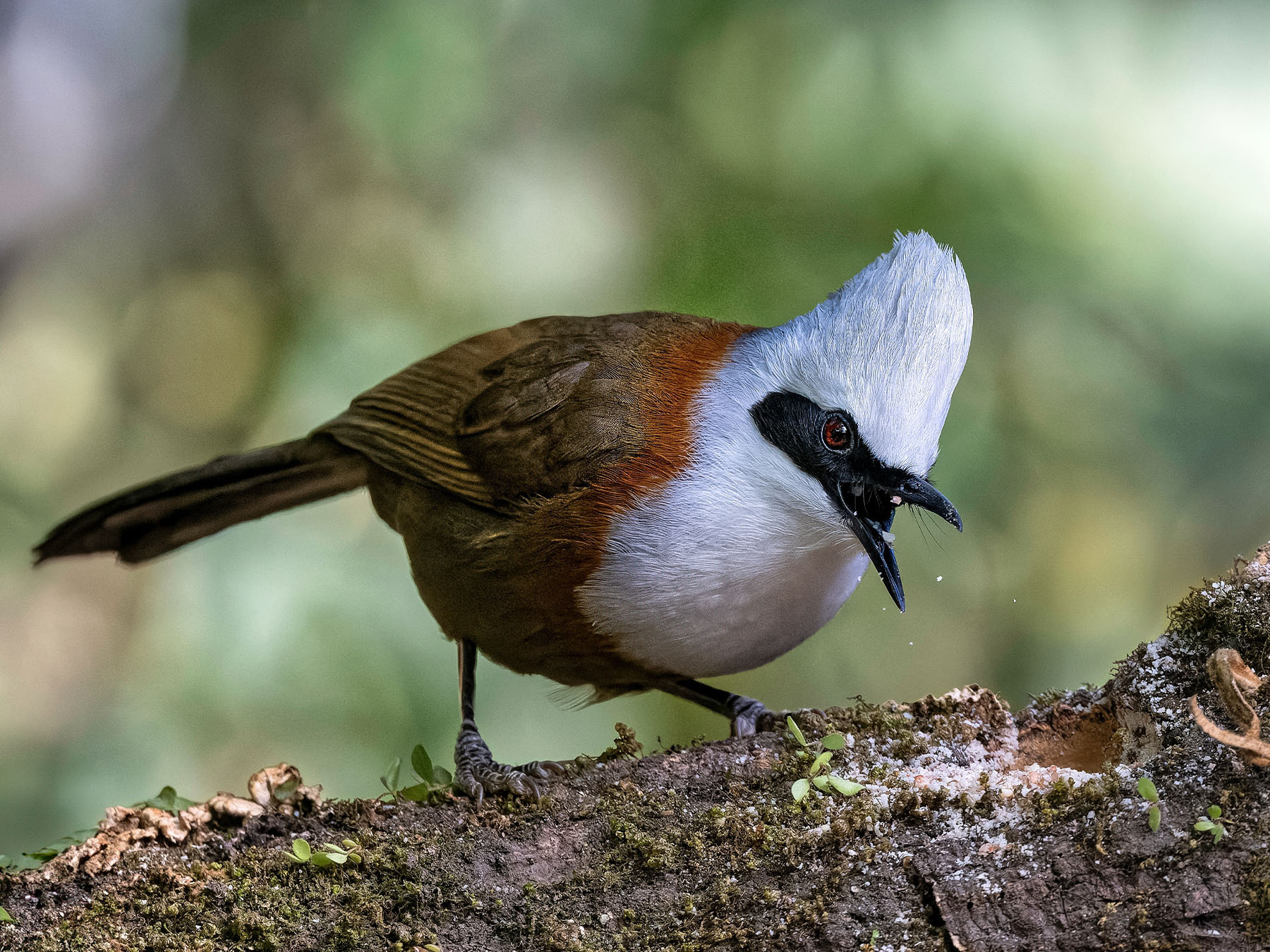
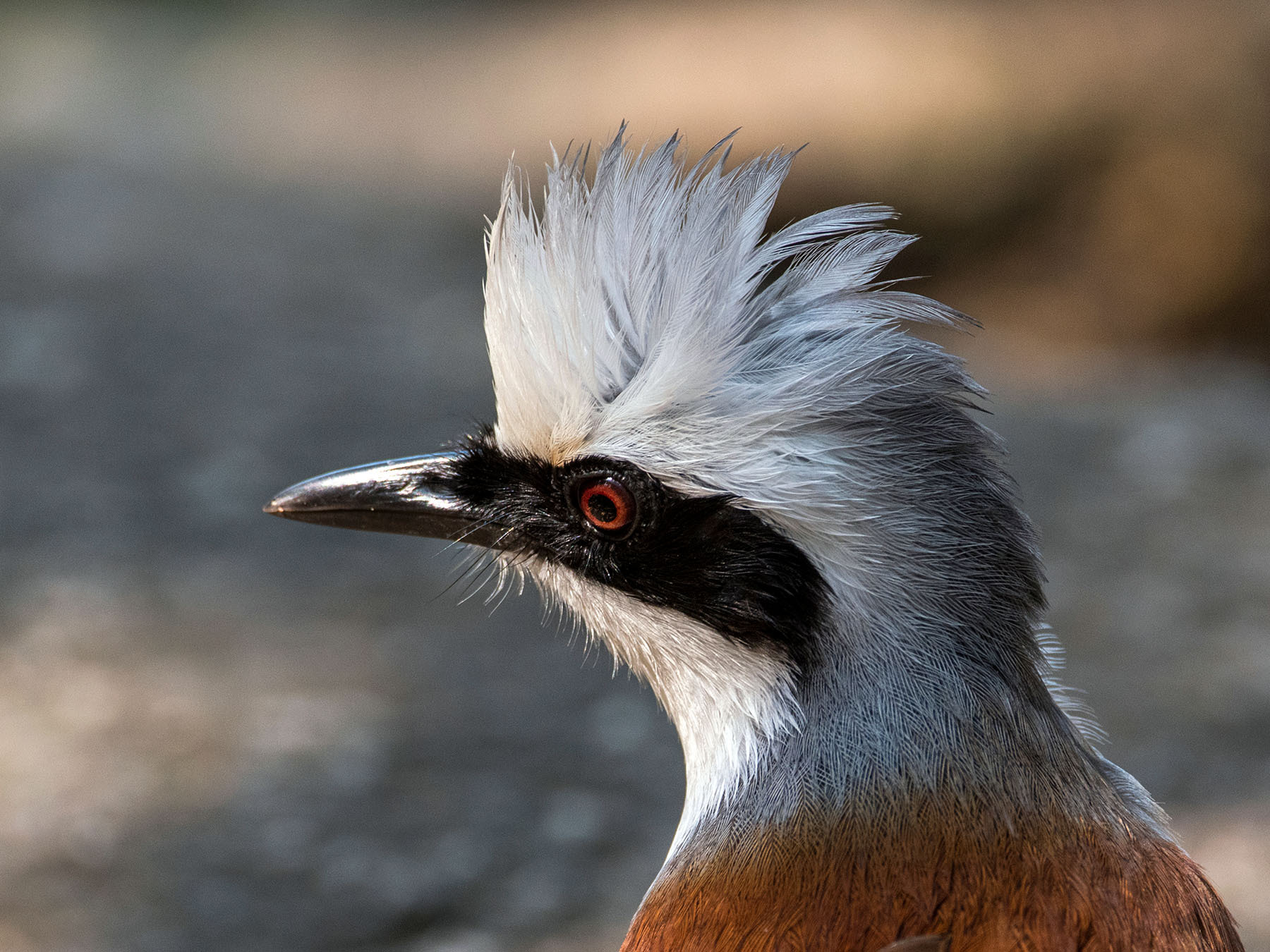
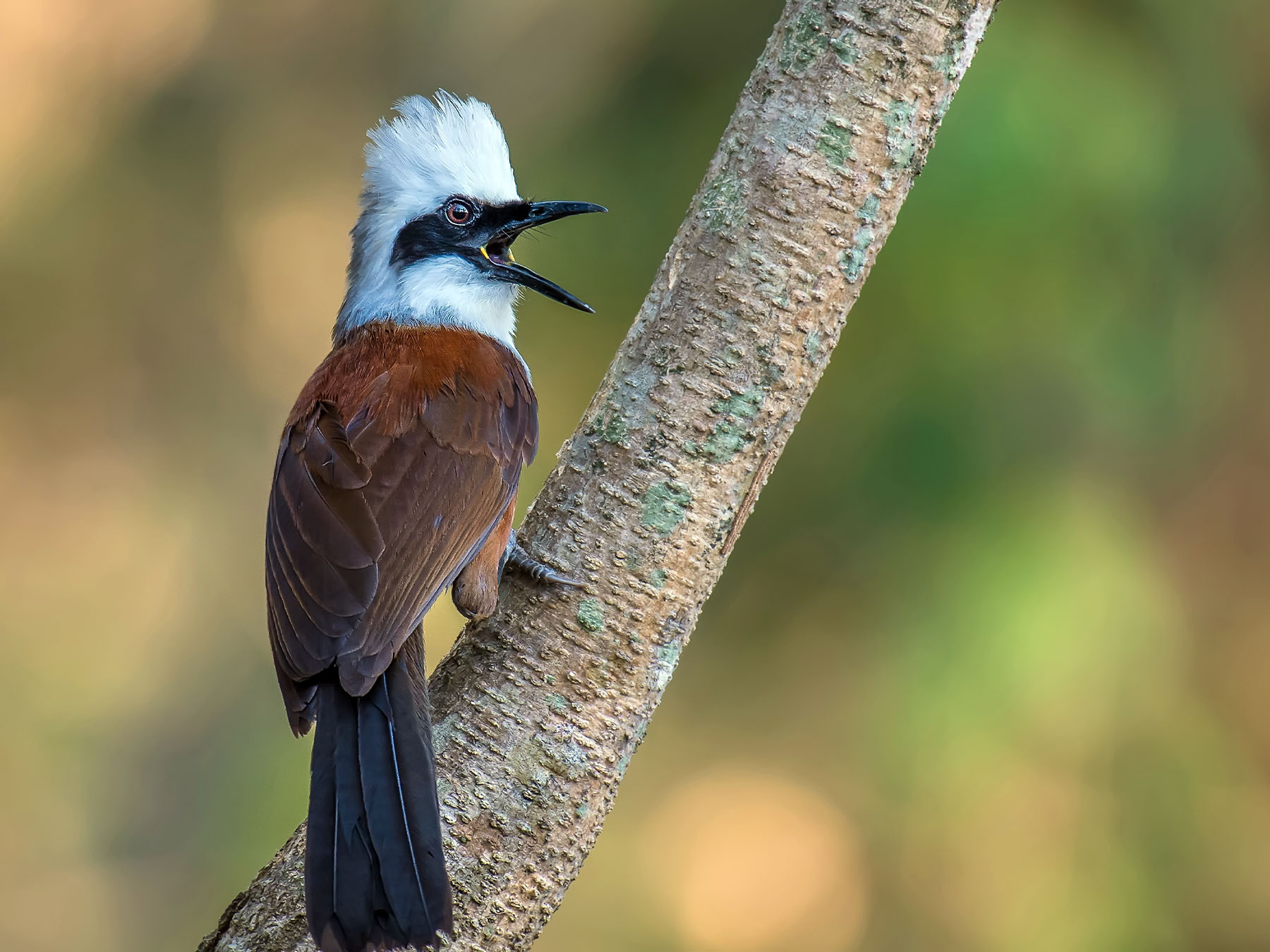
The White-crested Laughingthrush is a striking bird with a distinctive white crest atop its head. Its body is primarily chestnut-brown, with a black mask extending from the beak through the eyes, contrasting sharply with its white throat and cheeks.
The wings and tail display a deeper, rufous tone. Males and females are mostly similar, with females having smaller crests, duller mantles and greyer napes. Juveniles show a duller version of adult plumage and a less prominent crest.
Its size
Adults- Length
- 27–31 cm
- Wingspan
- 35–40 cm
- Weight
- 90–130 g
Its song and calls
The White-crested Laughingthrush is renowned for its varied and loud vocalisations. Their calls include a series of raucous, laughing notes that sound like 'haa-haa-haa-haa' or 'ko-ko-ko-ko'.
They also produce softer, melodious whistles and chattering sounds when communicating within their group.
- Song0:00 / 1:02
When and where to see it
The White-crested Laughingthrush is not recorded regularly in the UK, Ireland, the United States or Canada.
Worldwide: recorded regularly in 11 countries
Countries where it was recorded in at least 3 of the 6 years 2019–2024. Linked countries have their own bird list.
Data: EOD – eBird Observation Dataset (Cornell Lab of Ornithology), accessed via GBIF.org, CC BY 4.0. Records from 2019–2024, aggregated and filtered by Birdfact. How these lists are made
Tips for seeing it
- Listen for their distinctive, cackling calls to locate a group
- Look for movement on the forest floor, where they often forage
- Observe early morning or late afternoon when they are most active
- Check dense undergrowth and bamboo thickets in tropical forests
What it eats
The White-crested Laughingthrush has an omnivorous diet. It primarily feeds on insects, including beetles, ants, and caterpillars, but also consumes small reptiles, fruits, and berries.
They often forage in groups, using their strong bills to probe the leaf litter for food.
Nesting and breeding
Breeding season for White-crested Laughingthrushes typically occurs from March to August, coinciding with the monsoon season. Pairs form strong bonds and often mate for life within their social groups.
Nests are cup-shaped structures made of twigs, leaves, and grass, usually placed in dense vegetation 1-3 meters above the ground. Females lay 2-4 pale blue eggs per clutch.
Incubation lasts about 14 days, with both parents sharing duties. Nestlings fledge after approximately 14-16 days but continue to receive care from group members for several weeks after leaving the nest.
Behaviour
White-crested Laughingthrushes are highly social, often seen in noisy groups of 6-12 individuals. They forage on the ground, using their strong legs to scratch and turn over leaves in search of food.
These birds are known for their cooperative breeding behaviour, with group members helping to raise young.
Conservation
While the White-crested Laughingthrush is currently listed as Least Concern, it faces threats from habitat loss due to deforestation and agricultural expansion.
Conservation efforts focus on protecting its forest habitats and monitoring population trends across its range.
More photos
4 photos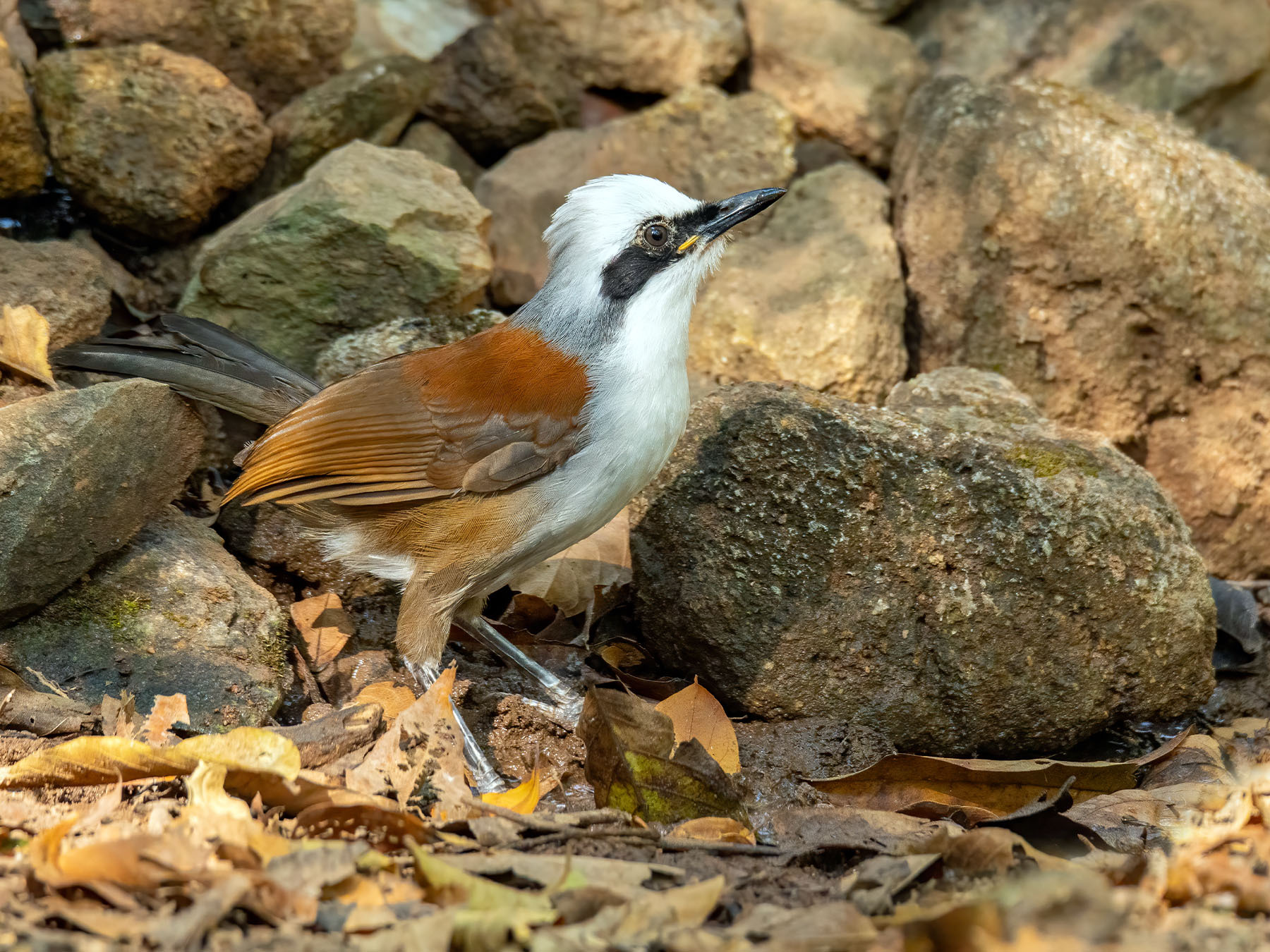
Quick facts
- Length
- 27–31 cm
- Wingspan
- 35–40 cm
- Weight
- 90–130 g
- Lifespan
- 8–15 years
- Family
- Laughingthrushes
- Migration
- Resident
- Global status (IUCN)
- Least Concern
- World population
- Not quantified, but common throughout its range
- Population trend
- Decreasing
- Also called
- White-crested Laughing Thrush
- Scientific name
- Garrulax leucolophus
Sources
3- 1BirdLife International. 2024. Garrulax leucolophus. The IUCN Red List of Threatened Species 2024: e.T22734757A264217858. Source (opens in a new tab)
- 2BirdLife International. 2024. Garrulax leucolophus. The IUCN Red List of Threatened Species 2024: e.T22734757A264217858. Source (opens in a new tab)
- 3del Hoyo et al. (2007)

Checked by
Nathan Cope, founder and editor
Nathan founded Birdfact and leads its writers and contributors in the UK, the US and Canada. He has watched and studied birds for more than ten years, and checks every article and species guide before it’s published.