


White-chinned Petrel
Shoemaker, Cape Hen · Procellaria aequinoctialis
By the Birdfact teamChecked by Nathan Cope
On this page11 sections
How to recognise it
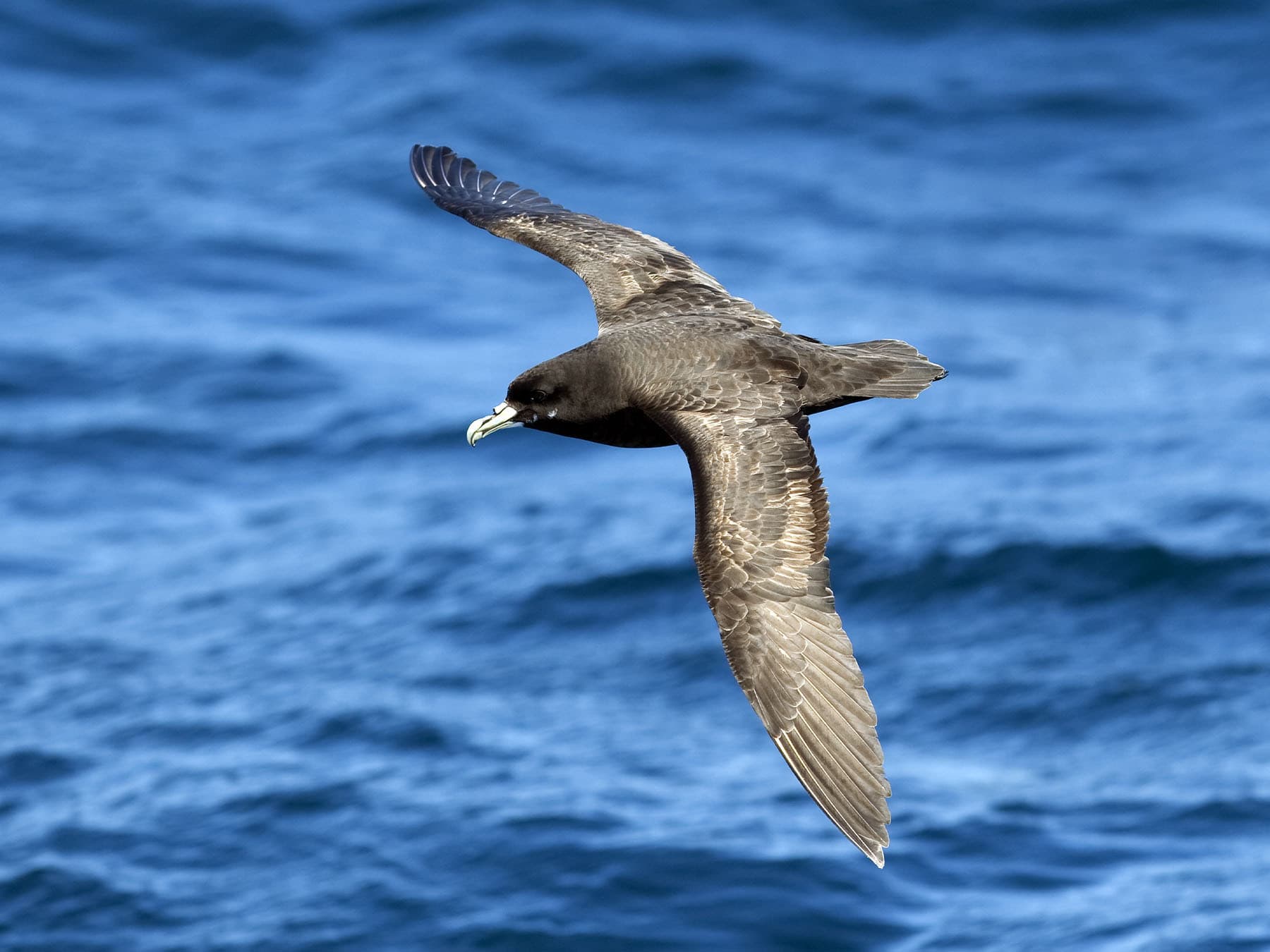
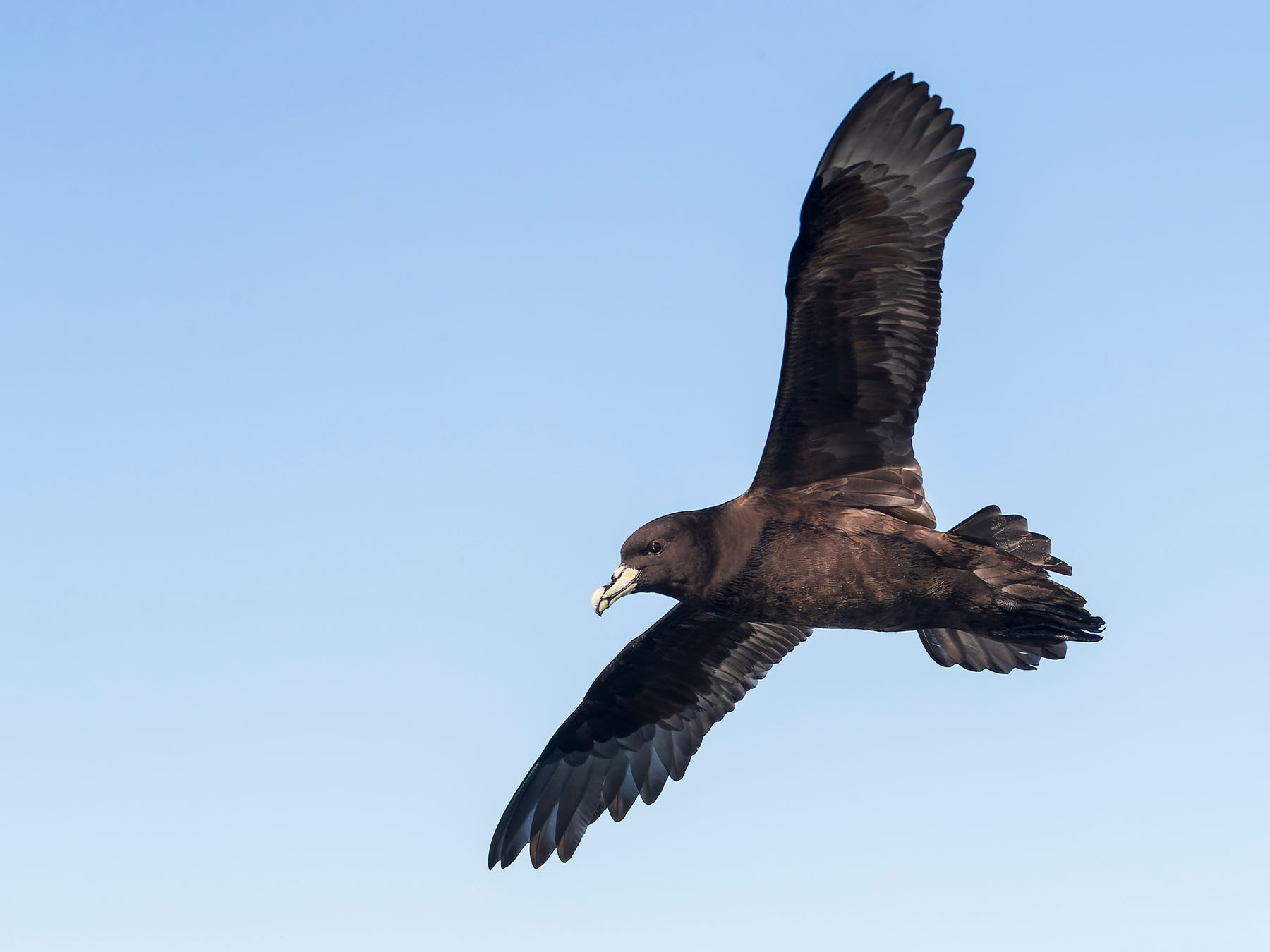
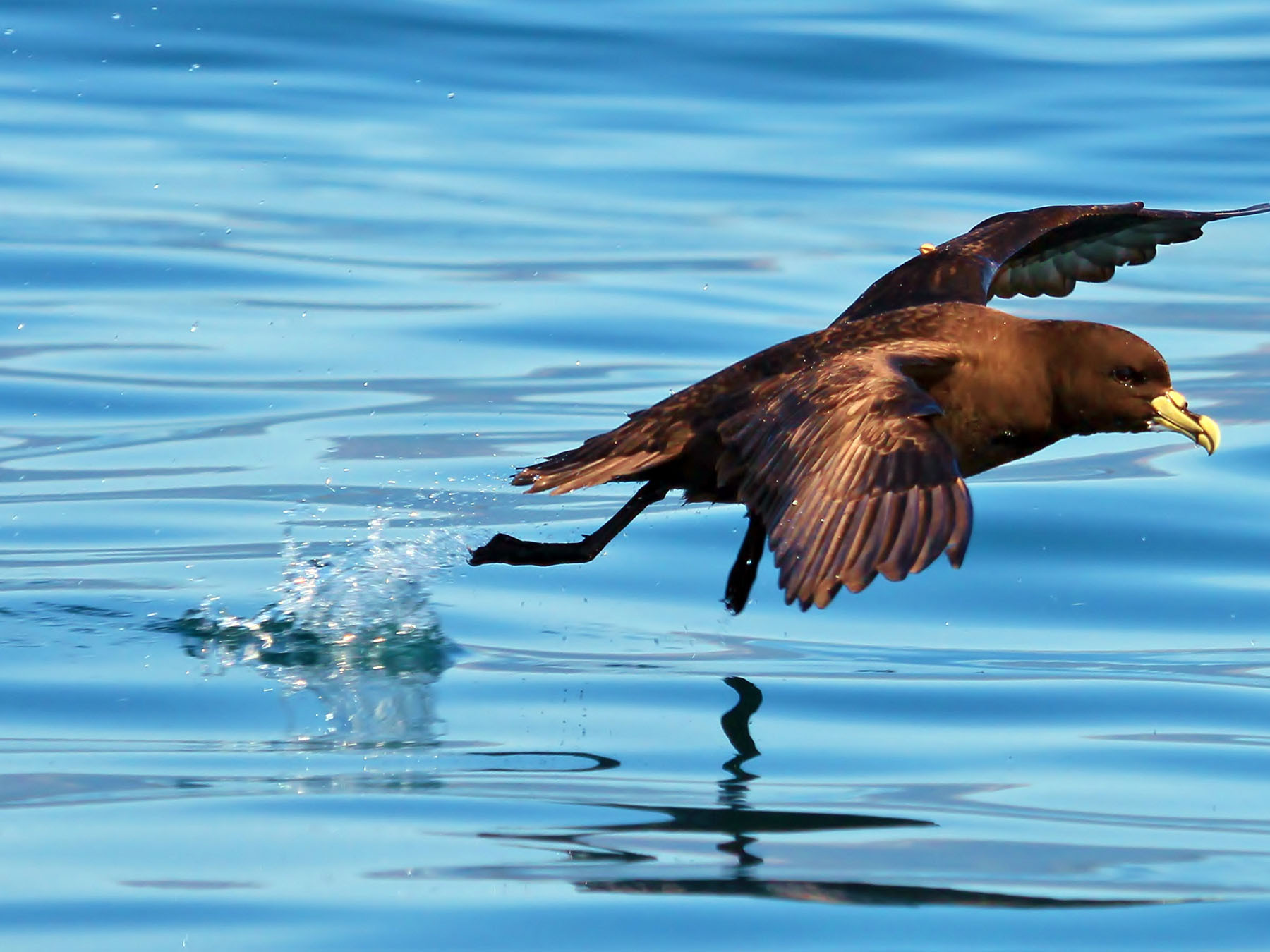
The White-chinned Petrel is a large seabird with predominantly dark brown to black plumage. Its most distinctive feature is a white patch under the bill, which varies in size between populations. The bird has a robust body, long wings, and a pale horn or yellowish bill with a black ridge on top.
Males and females look nearly identical, though females are slightly smaller. Juveniles appear similar to adults but can be distinguished by having fresh plumage when adults are worn or moulting.
Its size
Adults- Length
- 50–58 cm
- Wingspan
- 132–147 cm
- Weight
- 1000–1550 g
Its song and calls
White-chinned Petrels are generally silent at sea but become vocal at their breeding colonies. Their calls include a variety of harsh croaks, grunts, and wailing sounds.
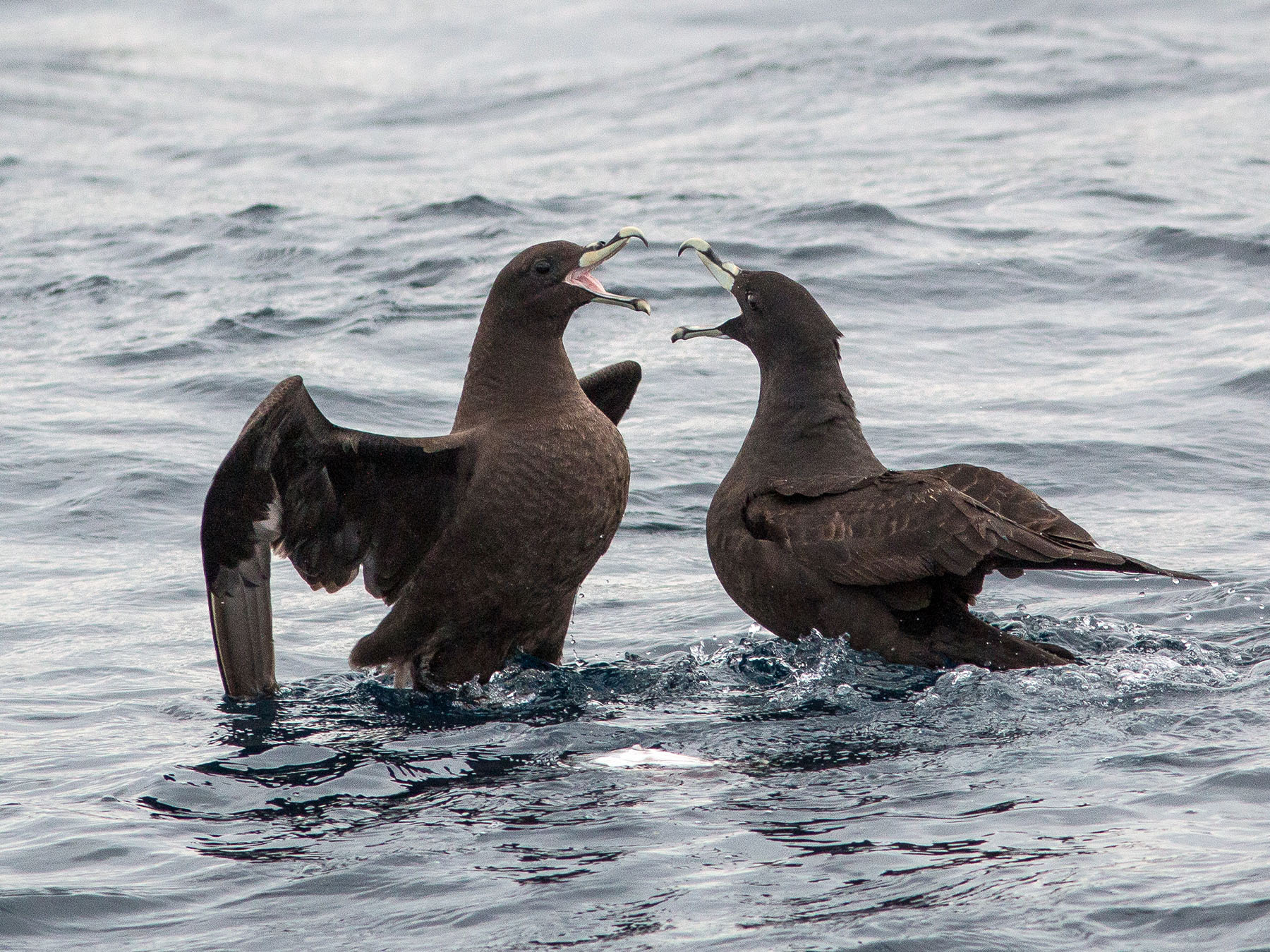
During courtship and nest defence, they produce a series of rapid, guttural 'grrr-grrr-grrr' calls, sometimes described as sounding like a creaky door.
When and where to see it
The White-chinned Petrel is not recorded regularly in the UK, Ireland, the United States or Canada.
Worldwide: recorded regularly in 14 countries
Countries where it was recorded in at least 3 of the 6 years 2019–2024. Linked countries have their own bird list.
Africa (3)
- Namibia
- South Africa
- St Helena
Oceania (2)
Antarctica (3)
- Antarctica
- French Southern Territories
- South Georgia & South Sandwich Islands
Data: EOD – eBird Observation Dataset (Cornell Lab of Ornithology), accessed via GBIF.org, CC BY 4.0. Records from 2019–2024, aggregated and filtered by Birdfact. How these lists are made
Tips for seeing it
- Look for White-chinned Petrels far offshore, especially in the Southern Ocean
- Watch for their distinctive white chin patch, which can be visible even at a distance
- Observe their flight pattern: low over the waves with stiff wings
- Check areas behind fishing vessels, where they often gather
What it eats
White-chinned Petrels primarily feed on squid, fish, and crustaceans. They often scavenge behind fishing vessels, consuming discarded fish and offal.
These birds are known to forage over vast areas of the ocean, sometimes travelling hundreds of kilometres from their breeding colonies in search of food.
Nesting and breeding
White-chinned Petrels form long-term pair bonds and return to the same breeding sites annually. The breeding season typically begins in October or November, with birds nesting in burrows or natural crevices on subantarctic islands.
Females lay a single white egg in a simple nest at the end of the burrow. Both parents share incubation duties, which last about 57-62 days.
The chick is brooded and fed by both parents for about 87-106 days before fledging. Young birds typically return to breed at their natal colonies after several years at sea.
Behaviour
White-chinned Petrels are highly pelagic, spending most of their lives at sea. They are excellent flyers, using dynamic soaring to cover vast distances with minimal energy expenditure.
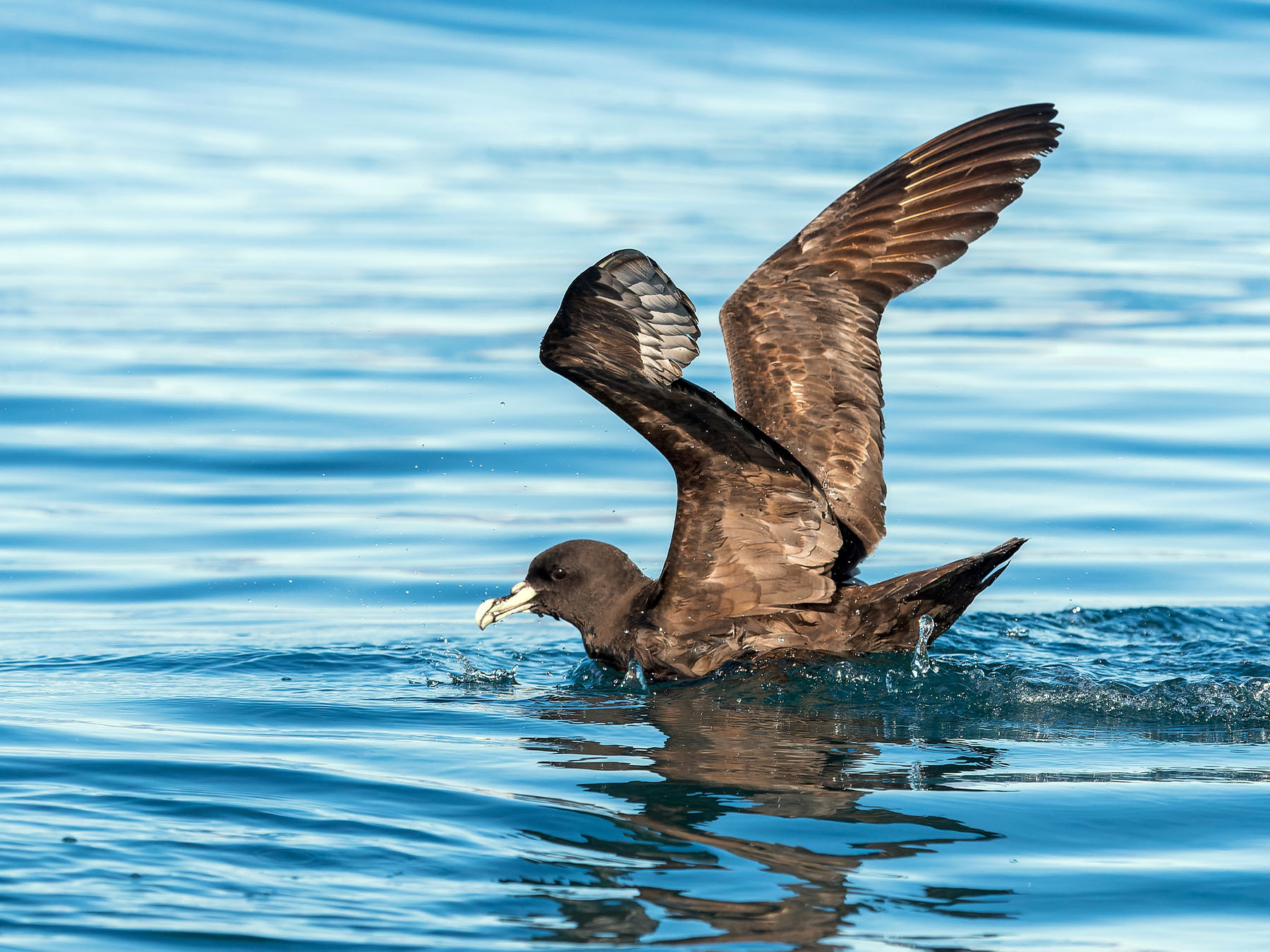
These birds are often seen following ships, attracted by fishing discards. They typically feed by surface-seizing but can also perform shallow dives.
Conservation
The White-chinned Petrel is classified as Vulnerable due to population declines. Major threats include accidental capture in longline fisheries, introduced predators on breeding islands, and marine pollution.
Conservation efforts focus on implementing seabird-friendly fishing practices and predator control on nesting islands.
More photos
5 photos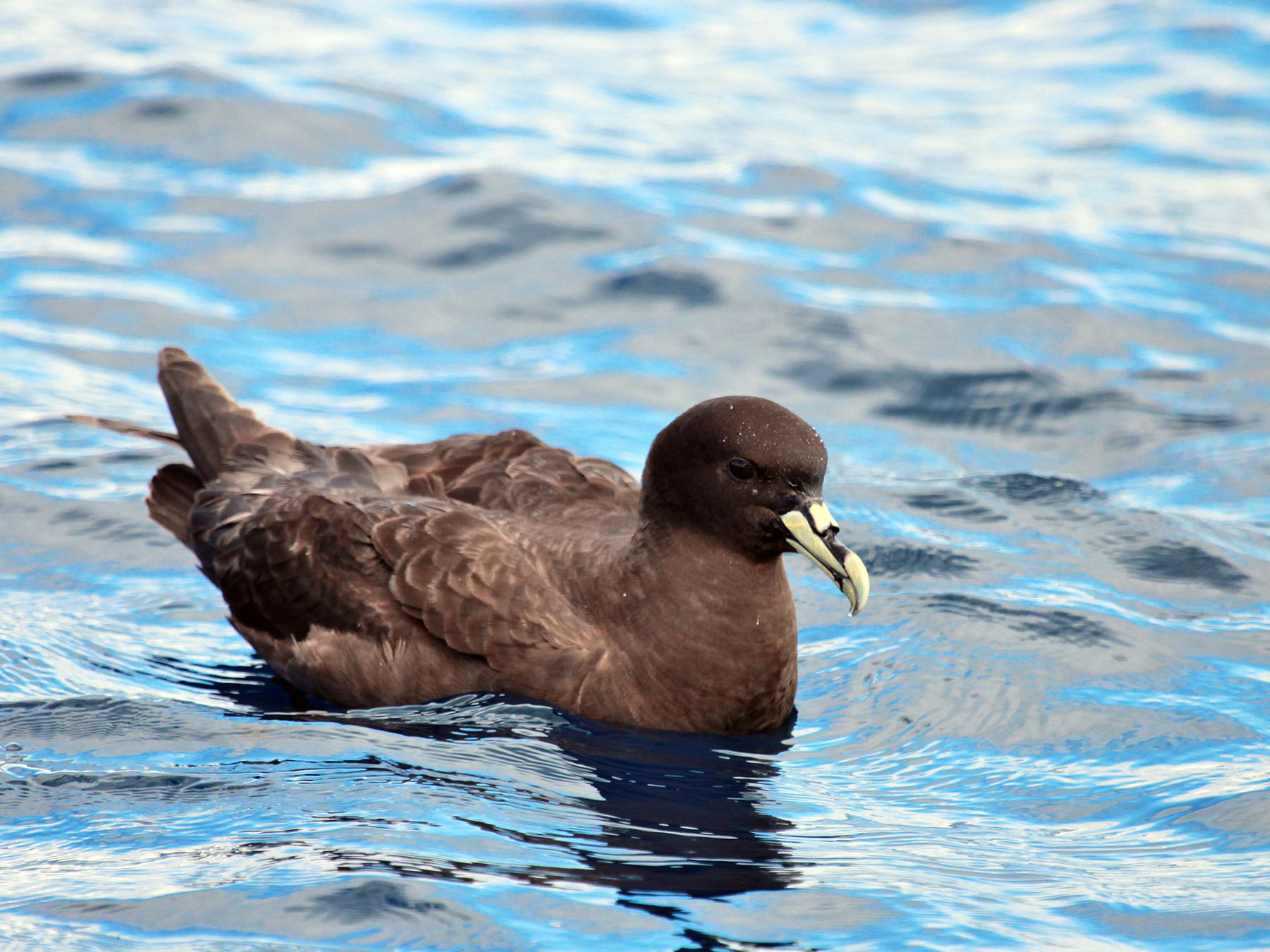
Quick facts
- Length
- 50–58 cm
- Wingspan
- 132–147 cm
- Weight
- 1000–1550 g
- Lifespan
- 20–30 years
- Family
- Petrels & Shearwaters
- Migration
- Long-distance Migrant
- Global status (IUCN)
- Vulnerable
- World population
- 3,000,000 mature individuals
- Population trend
- Decreasing
- Also called
- Shoemaker, Cape Hen
- Scientific name
- Procellaria aequinoctialis
Sources
3- 1BirdLife International. 2018. Procellaria aequinoctialis. The IUCN Red List of Threatened Species 2018: e.T22698140A132628887. Source (opens in a new tab)
- 2BirdLife International. 2018. Procellaria aequinoctialis. The IUCN Red List of Threatened Species 2018: e.T22698140A132628887. Source (opens in a new tab)
- 3Brooke (2004)

Checked by
Nathan Cope, founder and editor
Nathan founded Birdfact and leads its writers and contributors in the UK, the US and Canada. He has watched and studied birds for more than ten years, and checks every article and species guide before it’s published.