


White-cheeked Barbet
Small Green Barbet · Psilopogon viridis
By the Birdfact teamChecked by Nathan Cope
On this page11 sections
How to recognise it
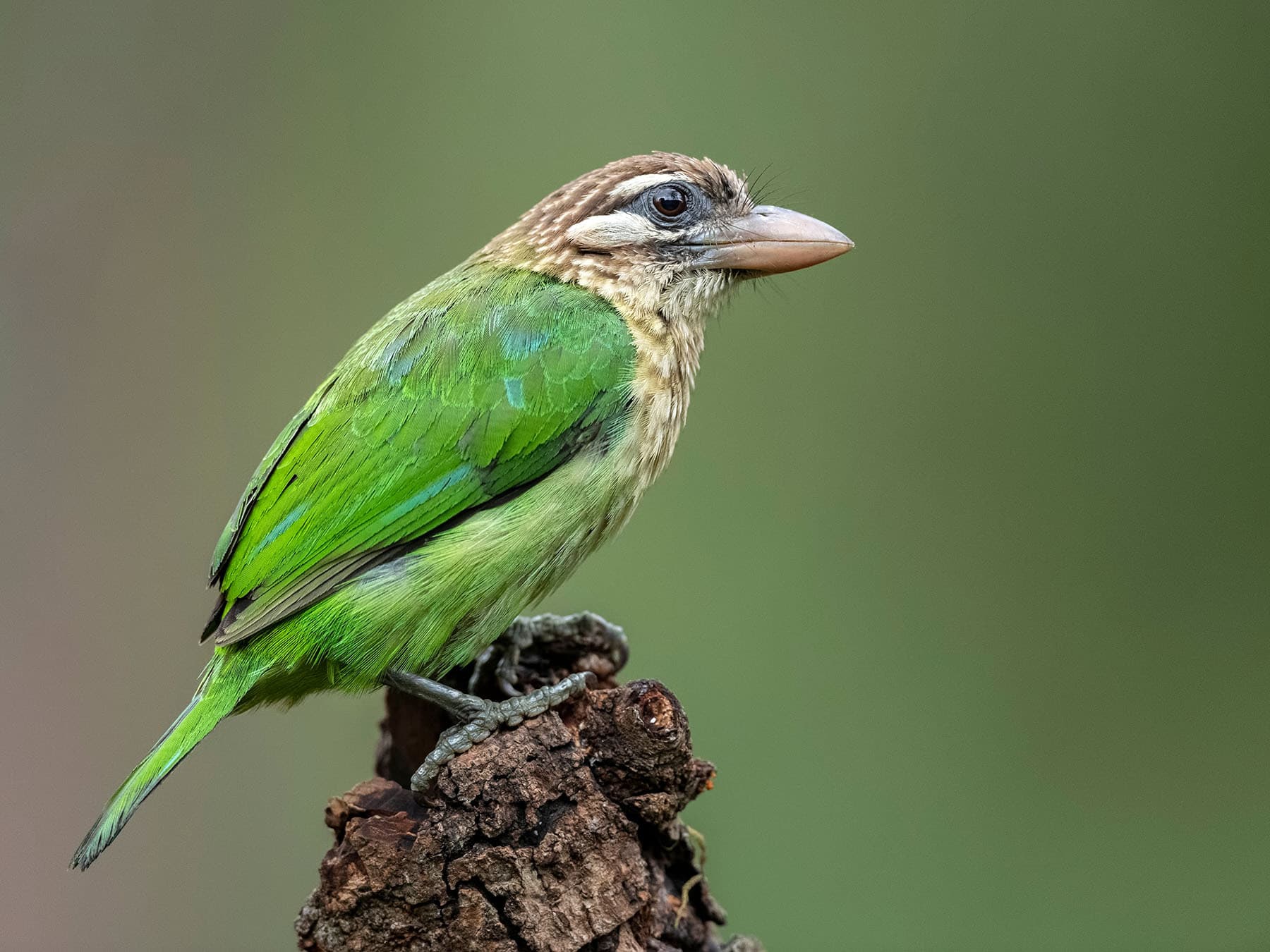
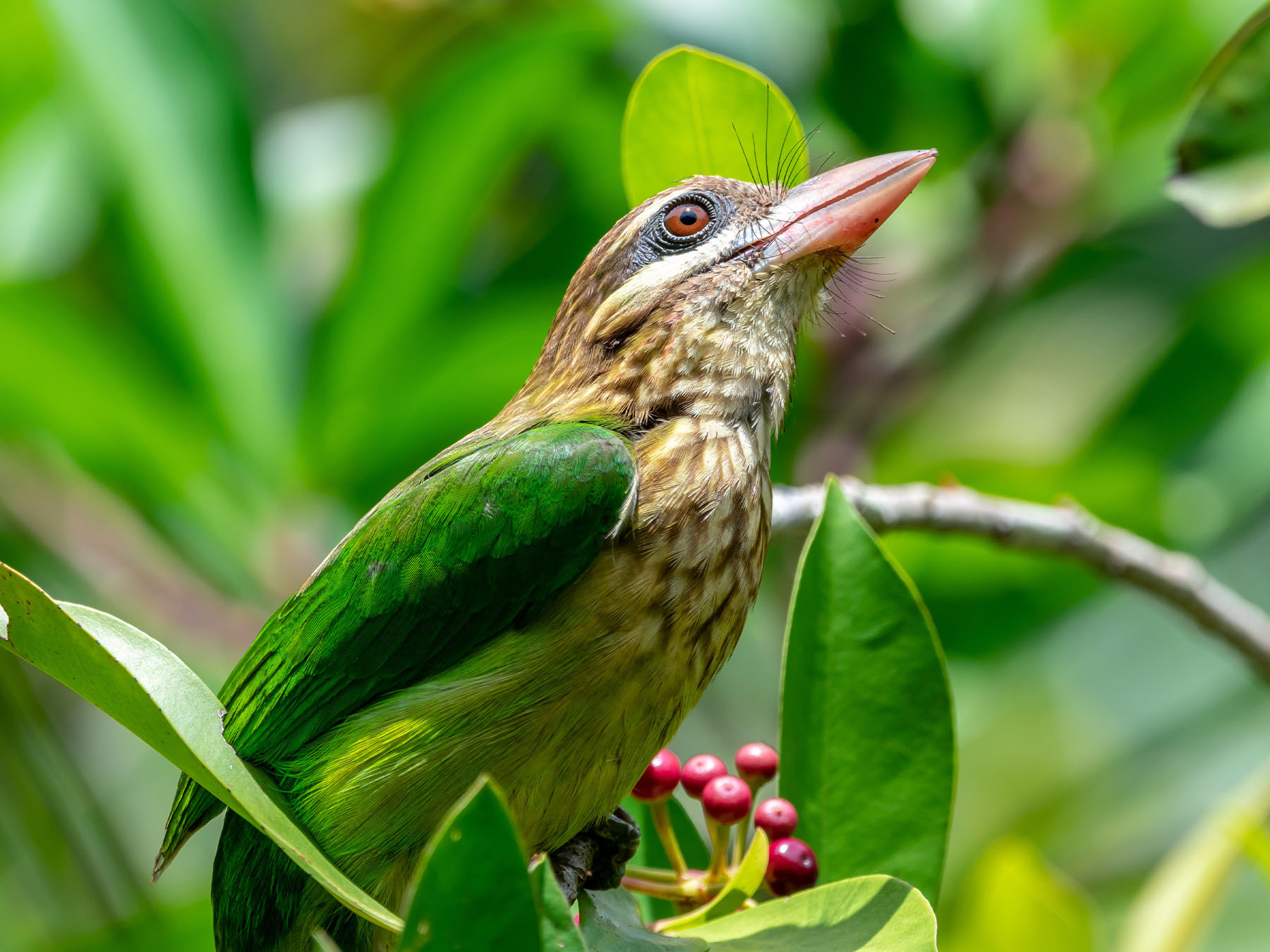
The White-cheeked Barbet is a medium-sized bird with predominantly green plumage. Its most distinctive feature is the white cheek patch, contrasting sharply with the brown crown and nape. The throat and breast are streaked with brown and white.
Both sexes look similar, with no significant seasonal changes in plumage. Juveniles resemble adults but may have duller colouration and less defined facial markings.
Its size
Adults- Length
- 22–25 cm
- Wingspan
- 35–40 cm
- Weight
- 75–100 g
Its song and calls
The White-cheeked Barbet's call is a distinctive, repetitive 'kot-roo, kot-roo' or 'kutroo-kutroo'.
This vocalisation is often heard throughout the day, especially during the breeding season. The call is loud and carries well through the forest canopy.
- Song0:00 / 0:39
Recorded in Kerala, India · February 2024
When and where to see it
The White-cheeked Barbet is not recorded regularly in the UK, Ireland, the United States or Canada.
Worldwide: recorded regularly in 1 country
Countries where it was recorded in at least 3 of the 6 years 2019–2024. Linked countries have their own bird list.
Asia (1)
Data: EOD – eBird Observation Dataset (Cornell Lab of Ornithology), accessed via GBIF.org, CC BY 4.0. Records from 2019–2024, aggregated and filtered by Birdfact. How these lists are made
Tips for seeing it
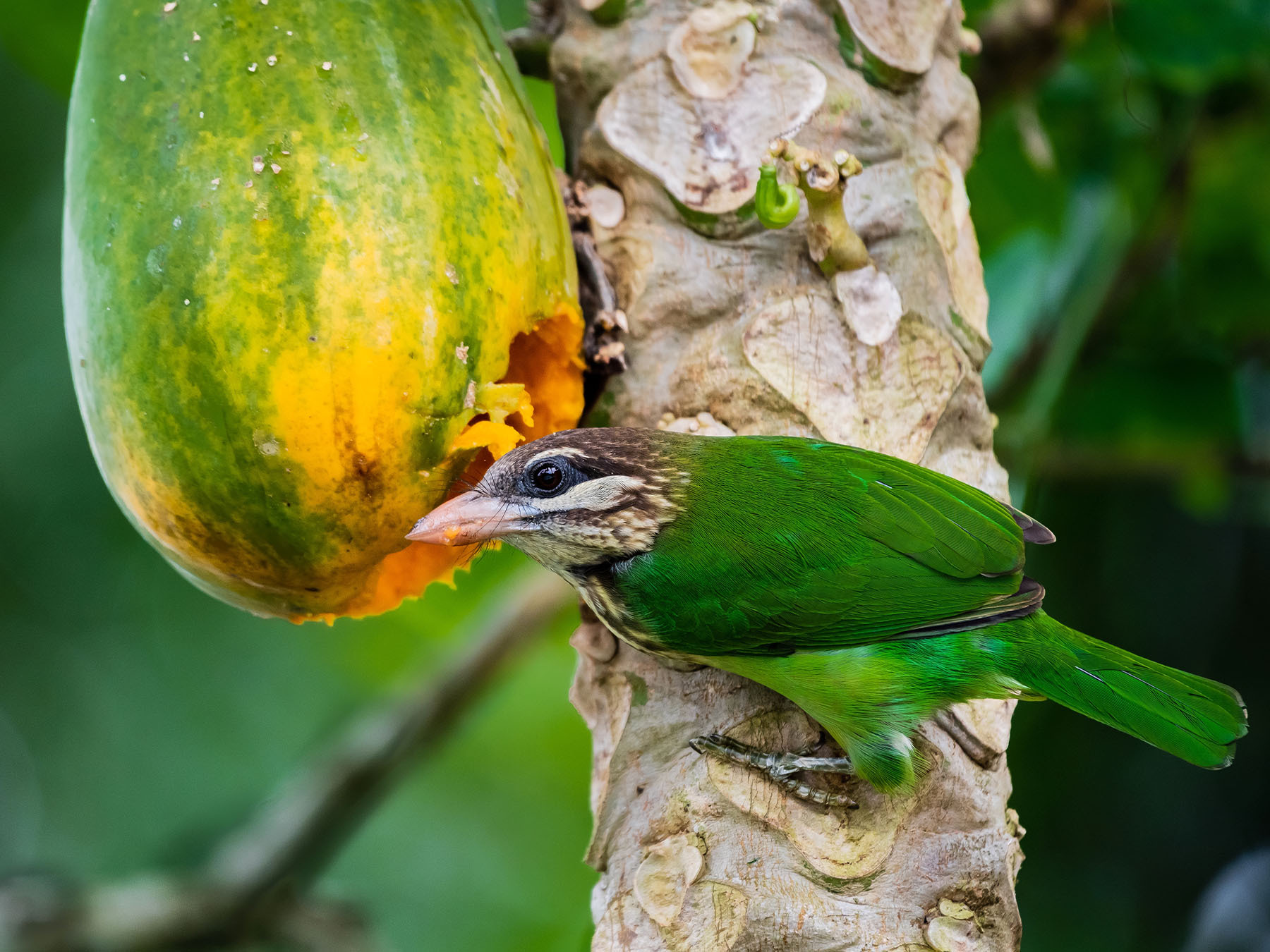
- Look for White-cheeked Barbets in fruiting trees, especially figs
- Listen for their distinctive call, which is a good indicator of their presence
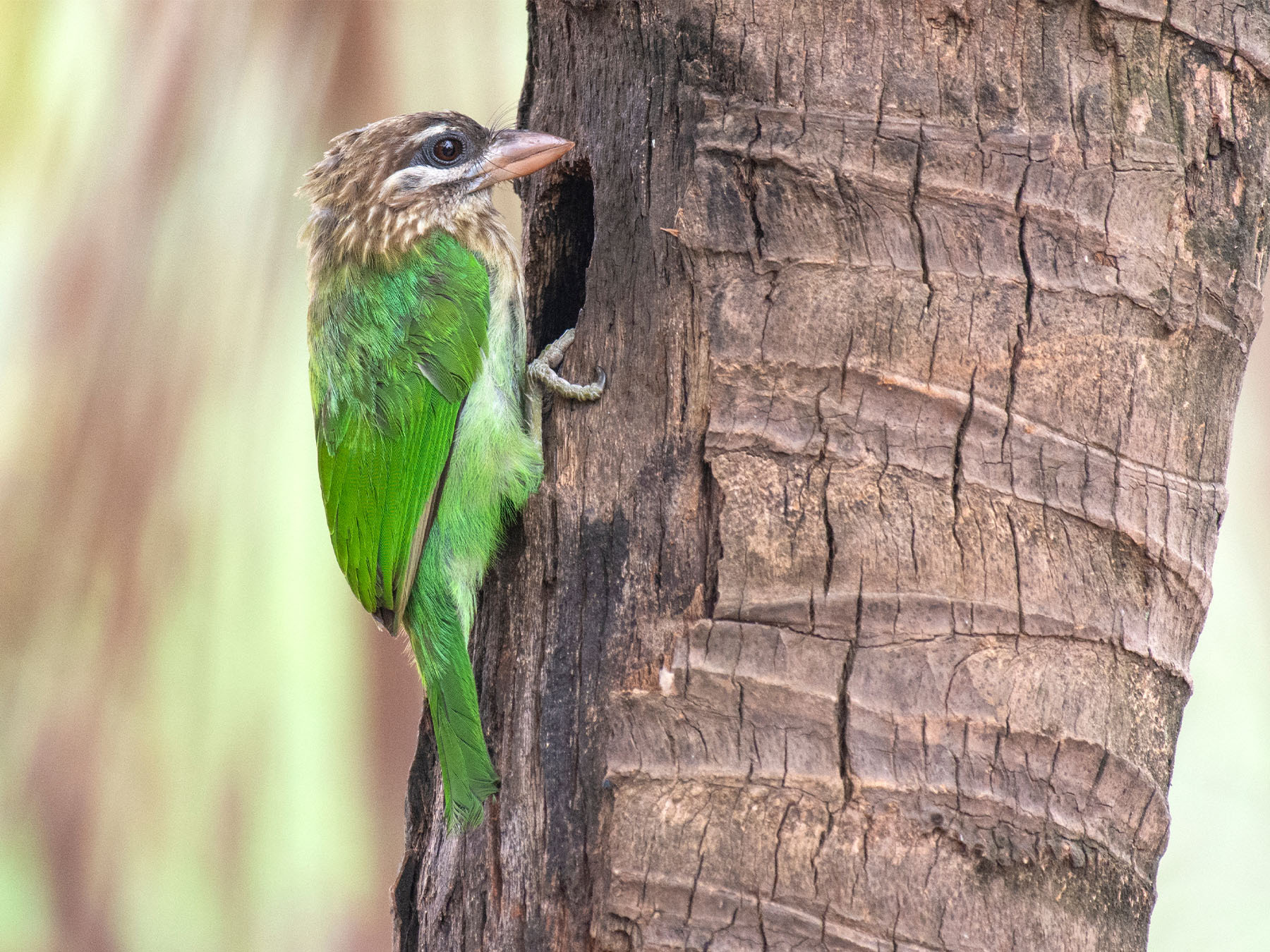
- Observe tree holes in forested areas, as they may be nesting or roosting sites
- Be patient, as they can remain still for long periods while foraging
What it eats
The White-cheeked Barbet is primarily frugivorous, with a strong preference for figs. They also consume other fruits, berries, and occasionally insects.
Their feeding behaviour involves plucking fruits while perched or sometimes hovering briefly to reach distant items.
Nesting and breeding
The breeding season for White-cheeked Barbets typically occurs between February and May. Pairs form monogamous bonds during this period, engaging in courtship displays that include head-bobbing and calling.
Nests are excavated in dead tree trunks or branches, creating a cavity about 30 cm deep. The female usually lays 2-3 white eggs, which both parents incubate.
Incubation lasts about 14 days, with chicks fledging after approximately 35 days. Both parents participate in feeding and caring for the young.
Behaviour
White-cheeked Barbets are primarily arboreal, moving through the canopy with short, direct flights. They are often seen perched upright on branches, scanning for fruit.
These birds are generally solitary or found in pairs but may form small groups at abundant food sources.
Conservation
While the White-cheeked Barbet is currently listed as Least Concern, it faces localised threats from habitat loss due to deforestation and urbanisation.
Conservation efforts focus on preserving its forest habitats and maintaining fruit-bearing trees in urban and suburban areas.
More photos
4 photos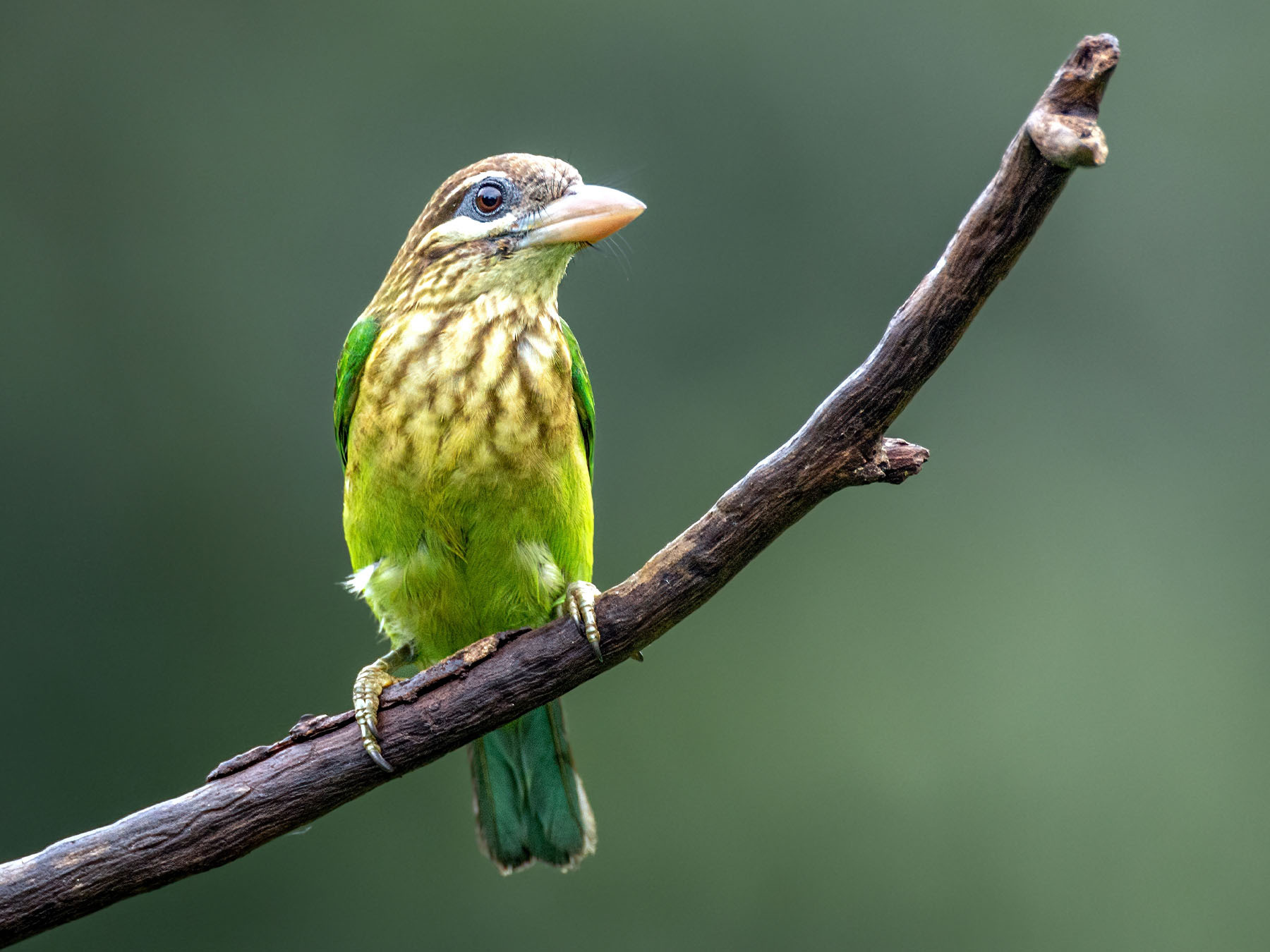
Quick facts
- Length
- 22–25 cm
- Wingspan
- 35–40 cm
- Weight
- 75–100 g
- Family
- Asian Barbets
- Migration
- Resident
- Global status (IUCN)
- Least Concern
- World population
- Not quantified, but common throughout its range
- Population trend
- Insufficient data to determine trends
- Also called
- Small Green Barbet
- Scientific name
- Psilopogon viridis
Sources
2- 1BirdLife International. 2016. Psilopogon viridis. The IUCN Red List of Threatened Species 2016: e.T22681603A92913200. Source (opens in a new tab)
- 2BirdLife International. 2016. Psilopogon viridis. The IUCN Red List of Threatened Species 2016: e.T22681603A92913200. Source (opens in a new tab)

Checked by
Nathan Cope, founder and editor
Nathan founded Birdfact and leads its writers and contributors in the UK, the US and Canada. He has watched and studied birds for more than ten years, and checks every article and species guide before it’s published.