


White-bellied Bustard
White-bellied Korhaan · Eupodotis senegalensis
By the Birdfact teamChecked by Nathan Cope
On this page11 sections
How to recognise it
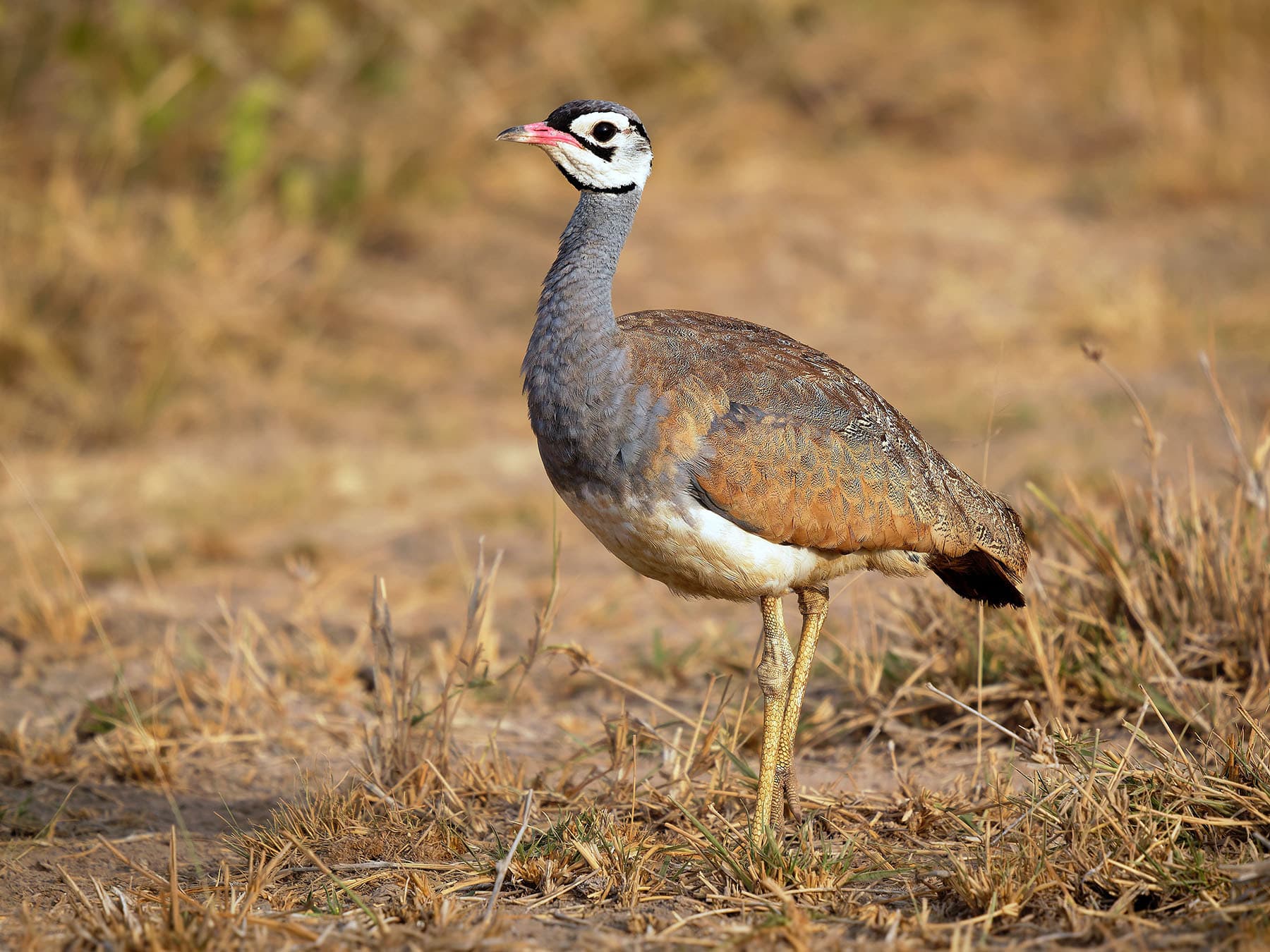
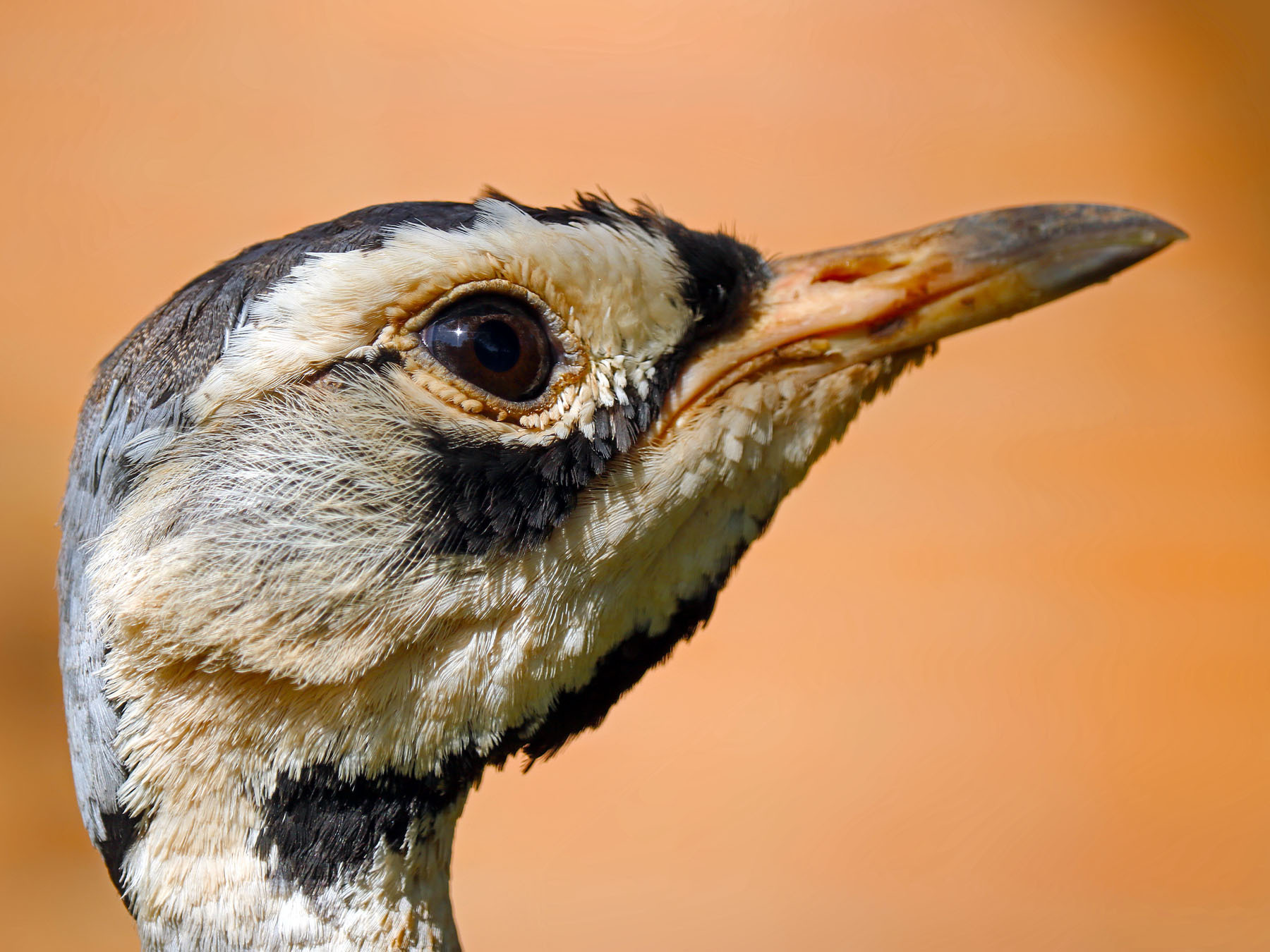
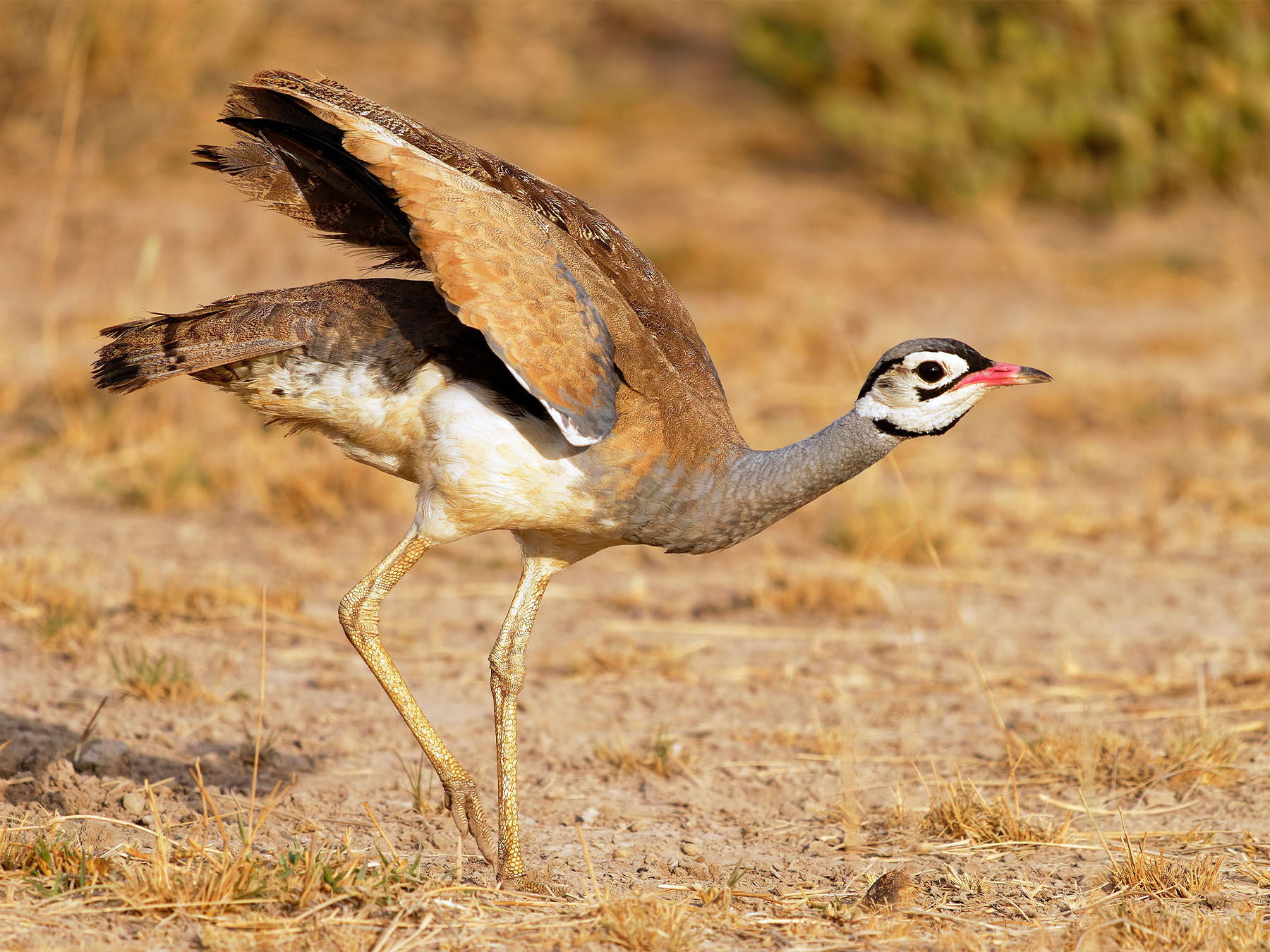
The White-bellied Bustard is a fairly small bird with a distinctive appearance. Males have a distinctive head pattern, greyish-blue neck, and tawny-buff upperparts that contrast with their white bellies. The wings show black flight feathers with some white on the inner parts and tawny-buff coverts.
Females are more subtly marked and have less distinct head patterning. Both sexes share the characteristic white belly that gives the species its name, though their overall colouring varies across their African range, with some populations considered possibly distinct species.
Its size
Adults- Length
- 48–61 cm
- Wingspan
- 110–120 cm
- Weight
- 1100–1400 g
Its song and calls
The White-bellied Bustard has a distinctive call, described as a far-carrying 'woop-woop' or 'whoop-whoop'.
Males often vocalise during courtship displays, producing a series of deep, resonant hoots that can be heard from a considerable distance across the grasslands.
- Call0:00 / 0:27
Recorded in Mara Region, Tanzania · April 2021
When and where to see it
The White-bellied Bustard is not recorded regularly in the UK, Ireland, the United States or Canada.
Worldwide: recorded regularly in 9 countries
Countries where it was recorded in at least 3 of the 6 years 2019–2024. Linked countries have their own bird list.
Data: EOD – eBird Observation Dataset (Cornell Lab of Ornithology), accessed via GBIF.org, CC BY 4.0. Records from 2019–2024, aggregated and filtered by Birdfact. How these lists are made
Tips for seeing it
- Look for White-bellied Bustards in open grasslands and savannahs
- Listen for their distinctive, far-carrying 'woop-woop' call
- Observe early morning or late afternoon when they are most active
- Use binoculars to spot their distinctive white belly against the grass
- Be patient and still, as they can be shy and quick to hide
What it eats
The White-bellied Bustard has an omnivorous diet. It primarily feeds on insects, particularly grasshoppers and beetles, but also consumes small reptiles, seeds, and plant material.
They forage by walking slowly through grasslands, picking food items from the ground or vegetation.
Nesting and breeding
Breeding season for White-bellied Bustards varies by region but often coincides with the rainy season. Males establish territories and perform elaborate displays to attract females.
The nest is a simple scrape on the ground, often hidden in tall grass or under a bush. Females typically lay 1-2 eggs, which are olive-brown with dark blotches.
Incubation lasts about 23 days, carried out solely by the female. Chicks are precocial and can leave the nest shortly after hatching but remain with the female for several months.
Behaviour
White-bellied Bustards are typically solitary or found in small groups. They are ground-dwelling birds, preferring to walk or run rather than fly when disturbed.
During the breeding season, males perform elaborate courtship displays, inflating their necks and making short, strutting runs to attract females.
Conservation
While currently listed as Least Concern, the White-bellied Bustard faces threats from habitat loss due to agricultural expansion and overgrazing.
Conservation efforts focus on preserving grassland habitats and reducing human disturbance in key breeding areas.
More photos
3 photos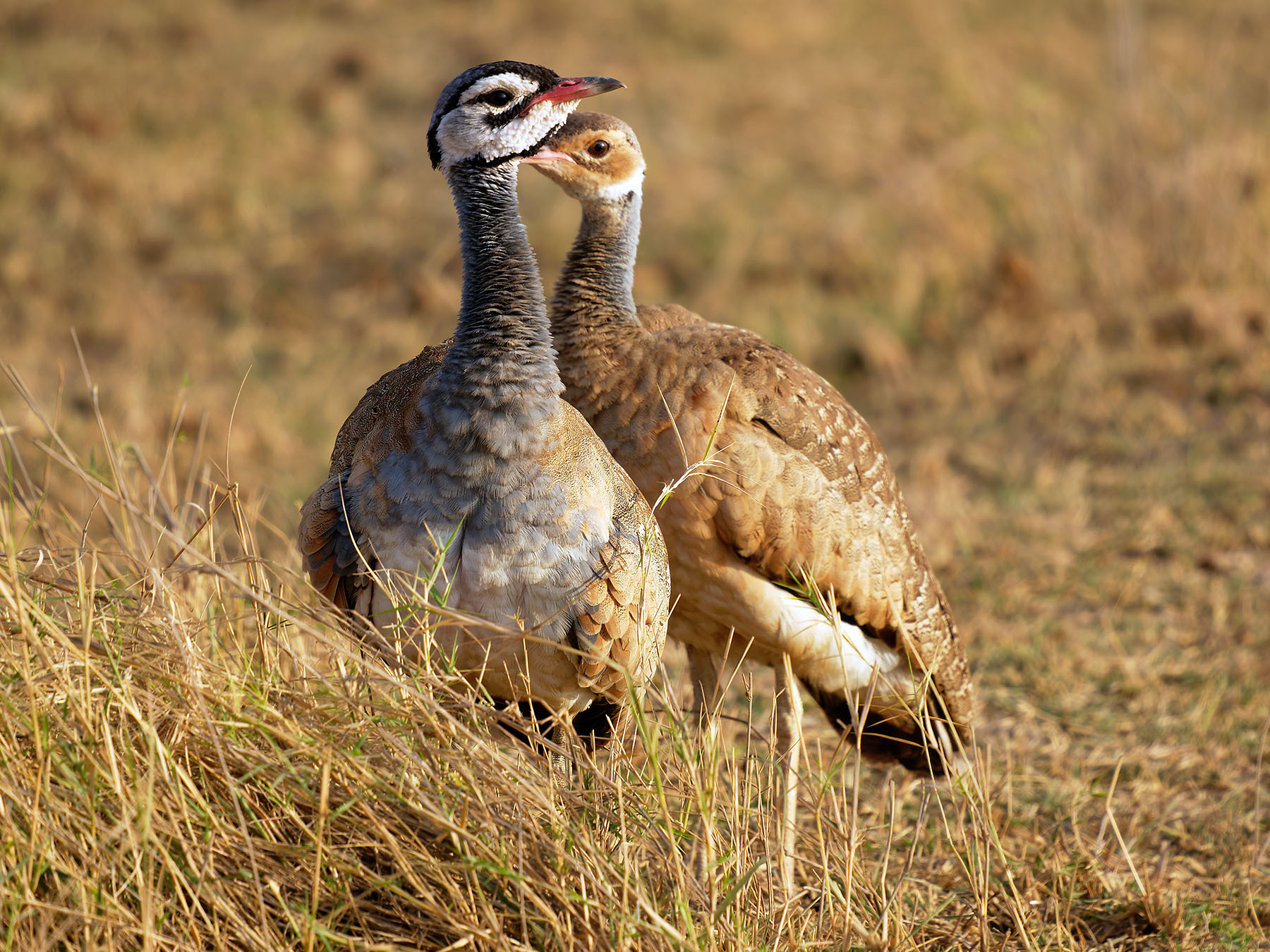
Quick facts
- Length
- 48–61 cm
- Wingspan
- 110–120 cm
- Weight
- 1100–1400 g
- Family
- Bustards
- Migration
- Resident
- Global status (IUCN)
- Least Concern
- World population
- Unknown
- Population trend
- Decreasing
- Also called
- White-bellied Korhaan
- Scientific name
- Eupodotis senegalensis
Sources
2- 1BirdLife International. 2024. Eupodotis senegalensis. The IUCN Red List of Threatened Species 2024: e.T22691996A263667271. Source (opens in a new tab)
- 2del Hoyo et al. (1996)

Checked by
Nathan Cope, founder and editor
Nathan founded Birdfact and leads its writers and contributors in the UK, the US and Canada. He has watched and studied birds for more than ten years, and checks every article and species guide before it’s published.