


Whistling Kite
Whistling Eagle, Whistling Hawk · Haliastur sphenurus
By the Birdfact teamChecked by Nathan Cope
On this page13 sections
How to recognise it
What do Whistling Kites look like?
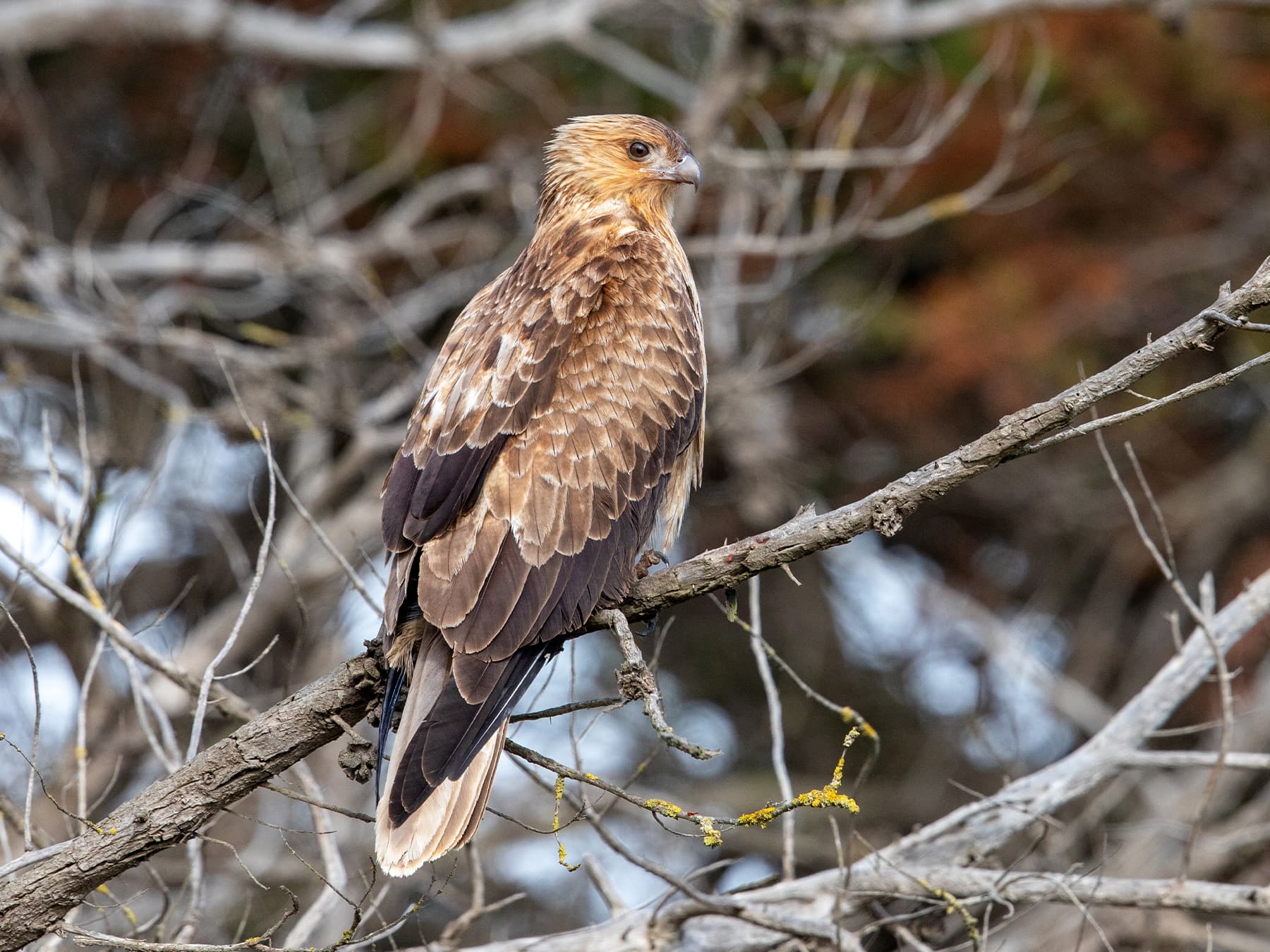
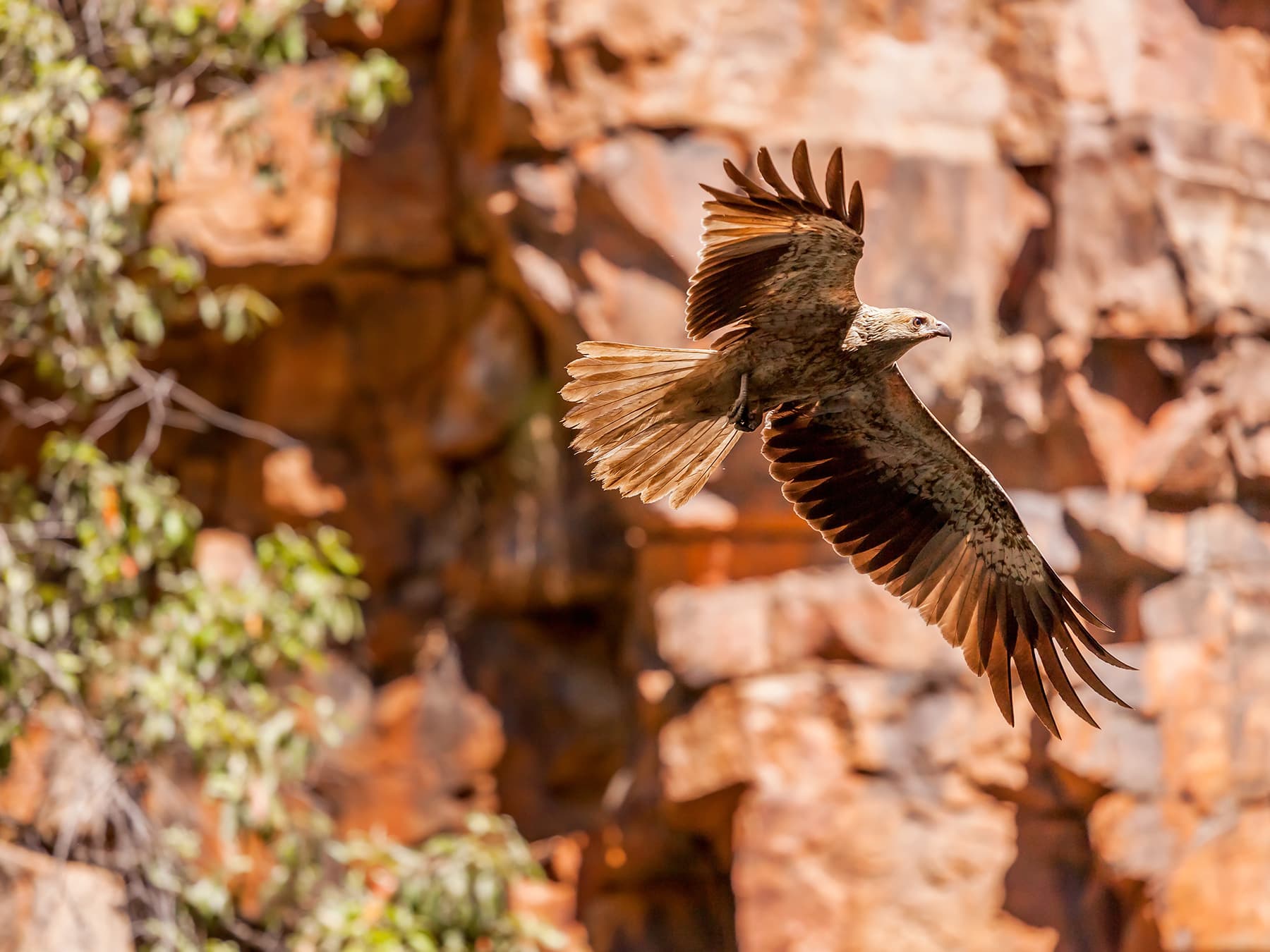
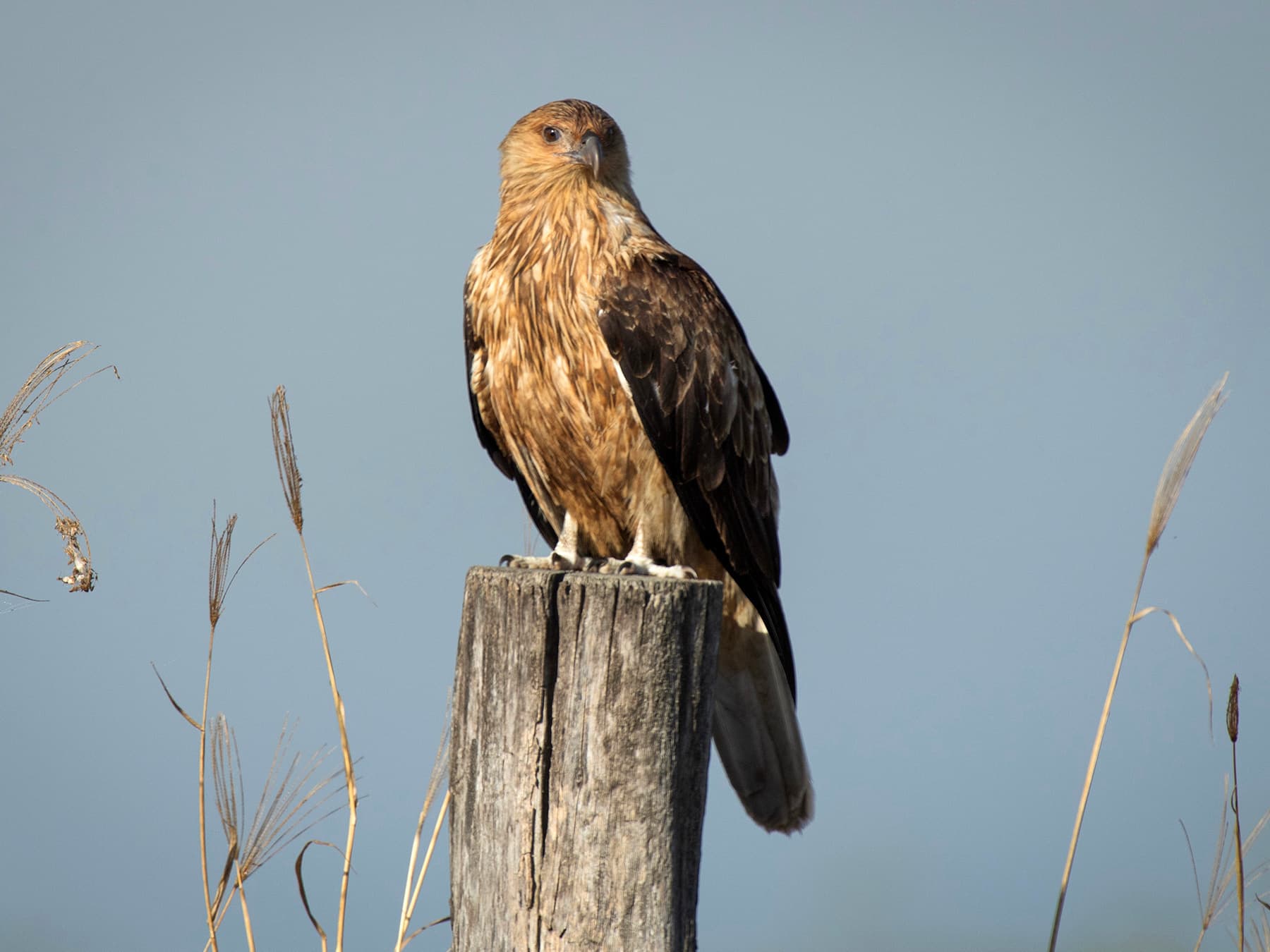
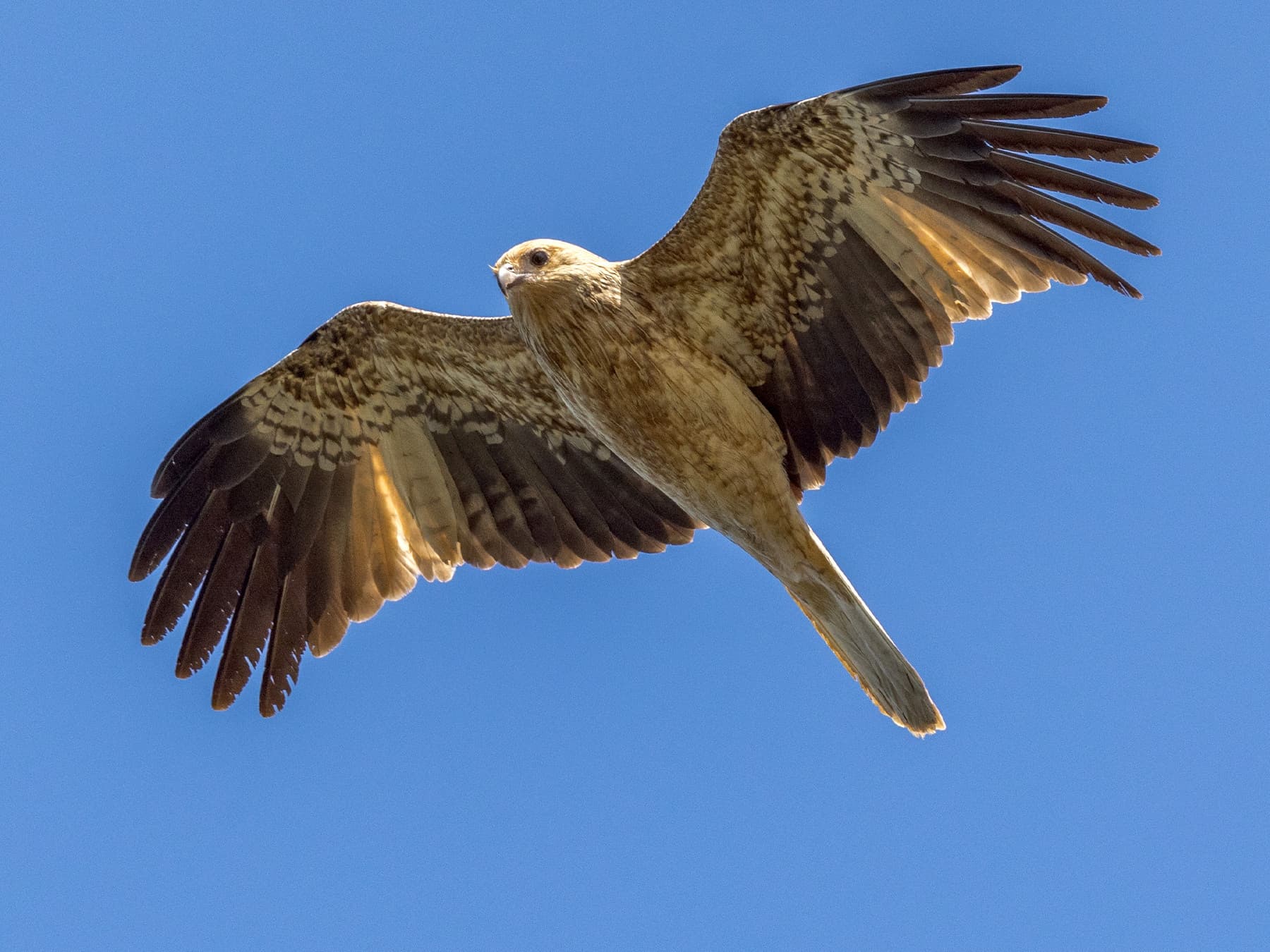
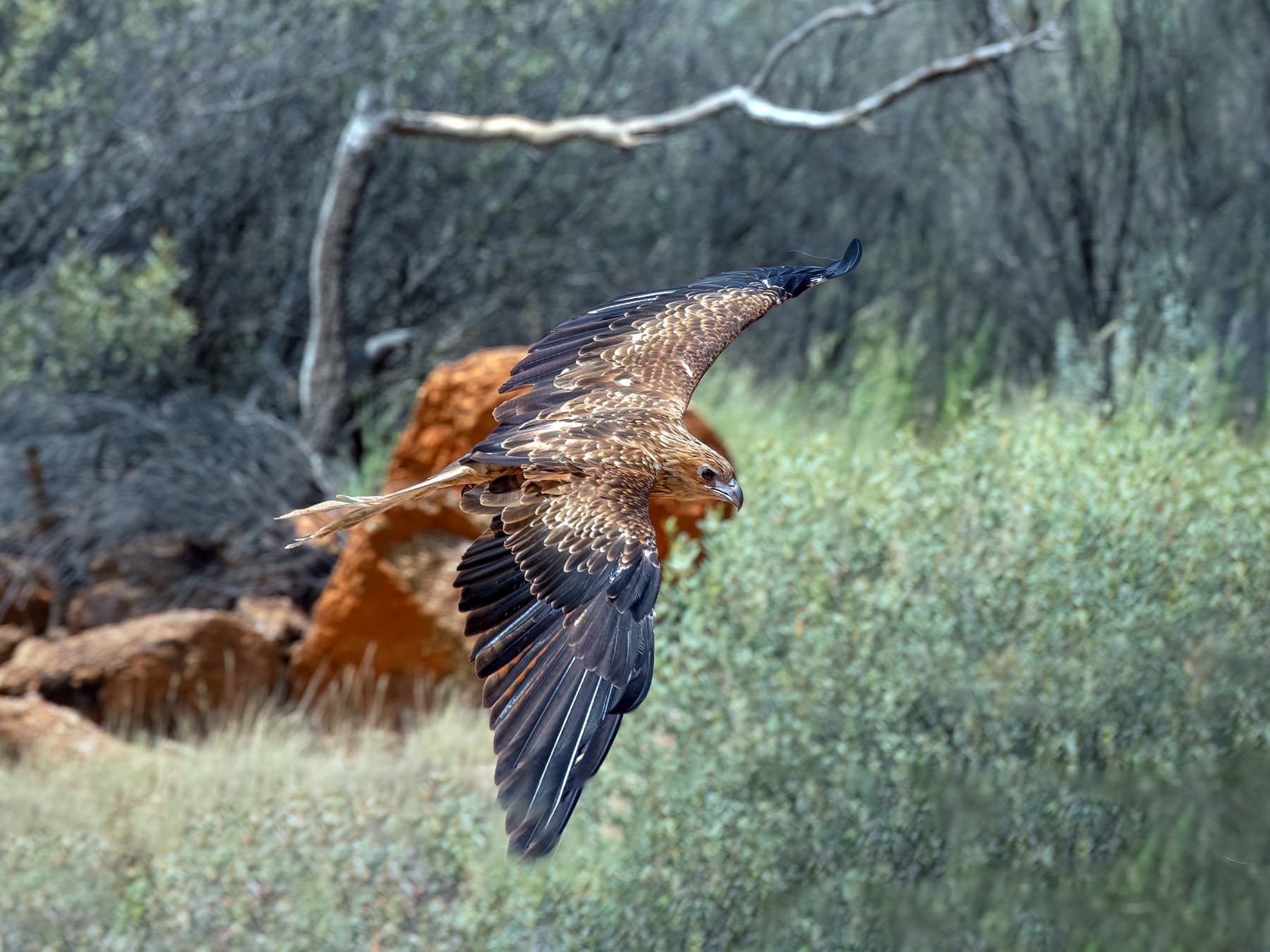
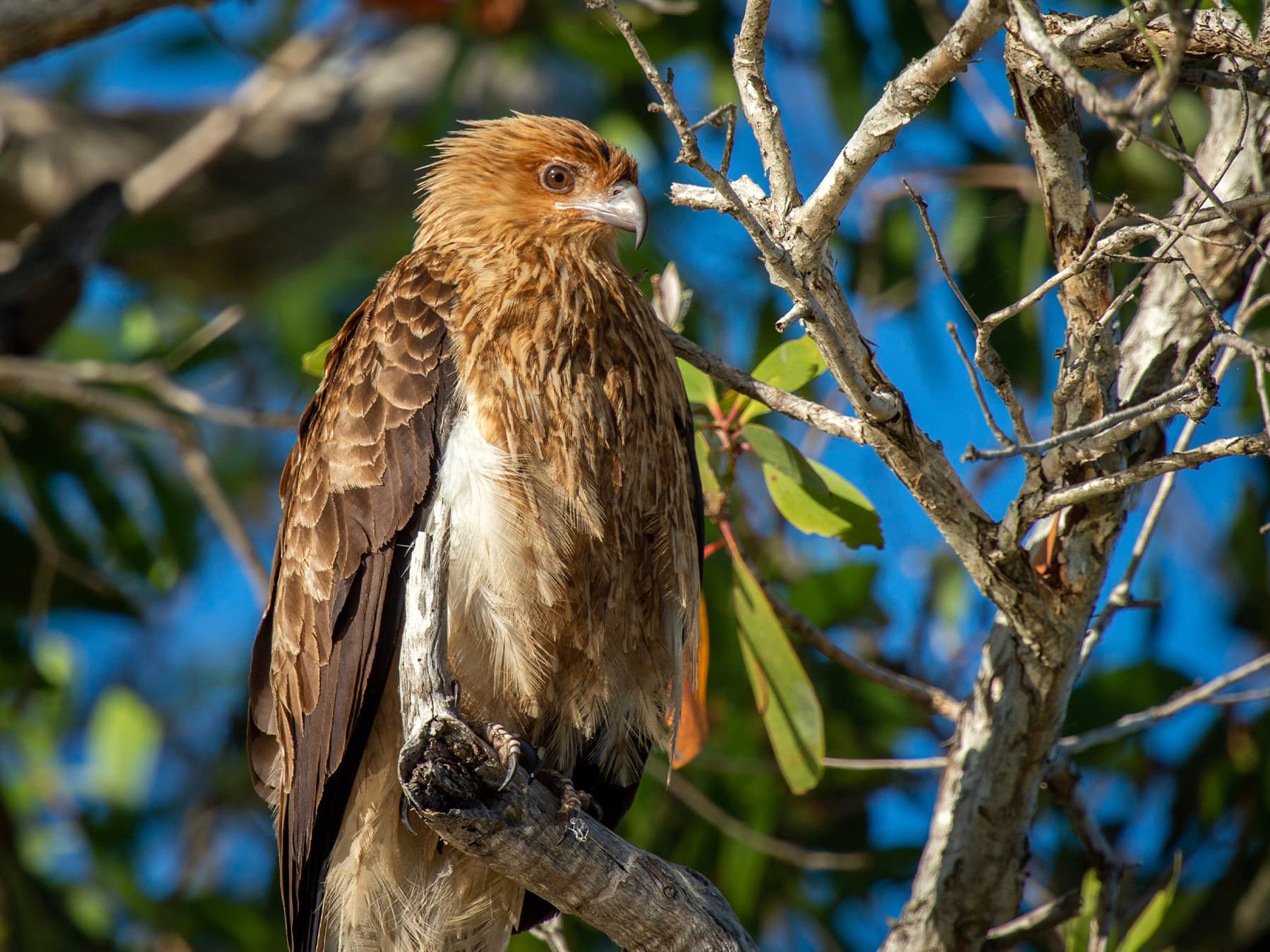
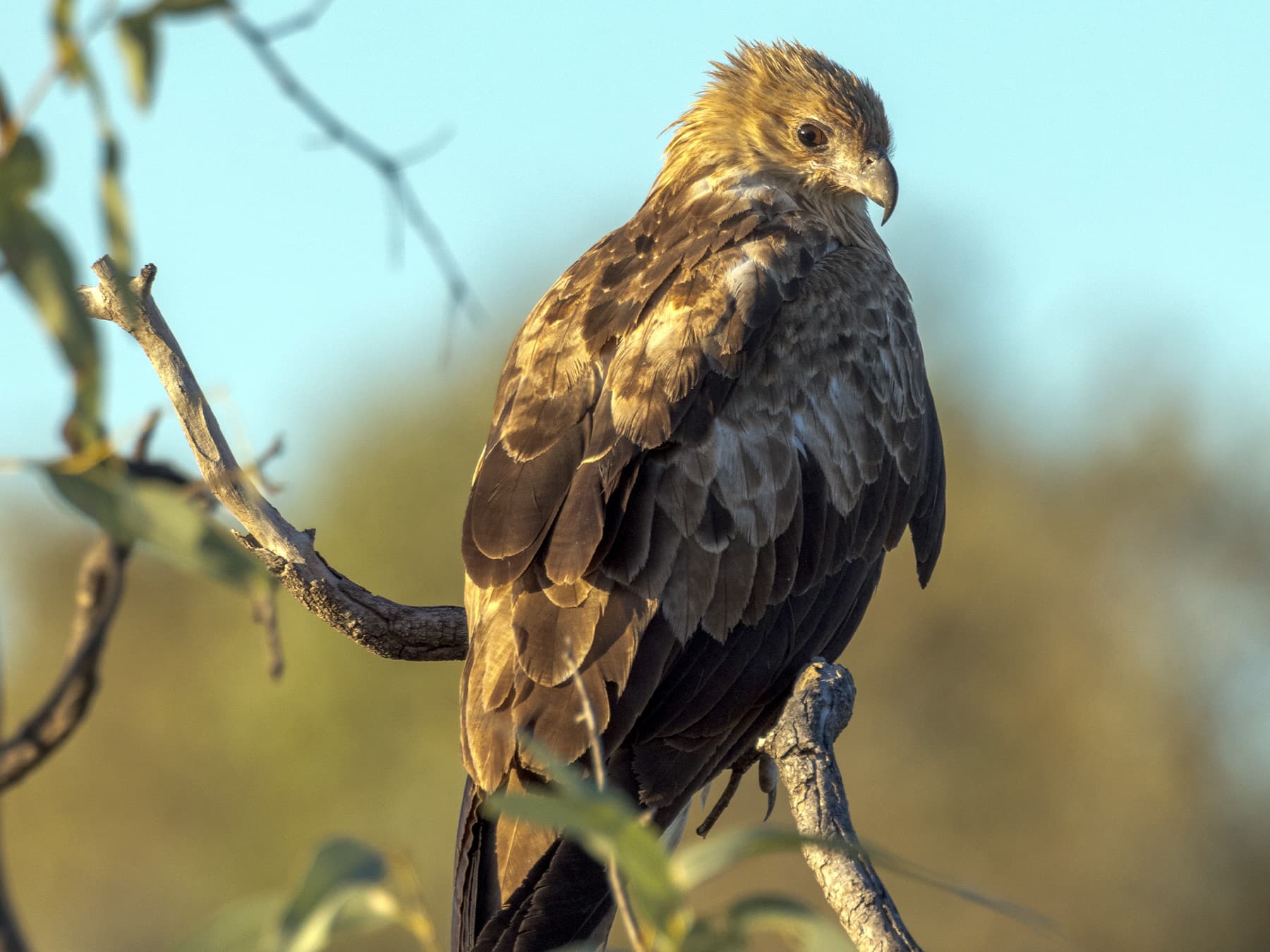
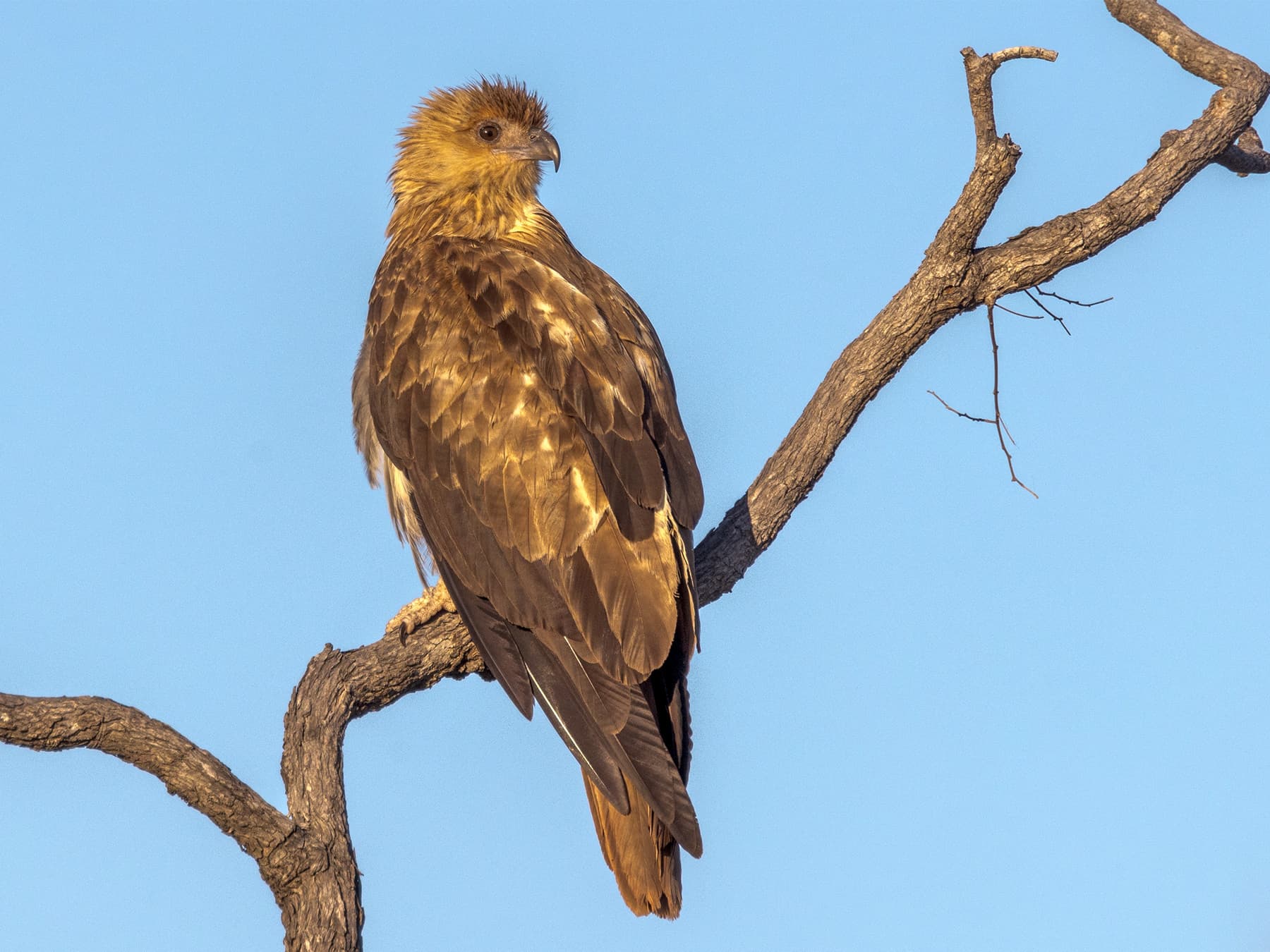
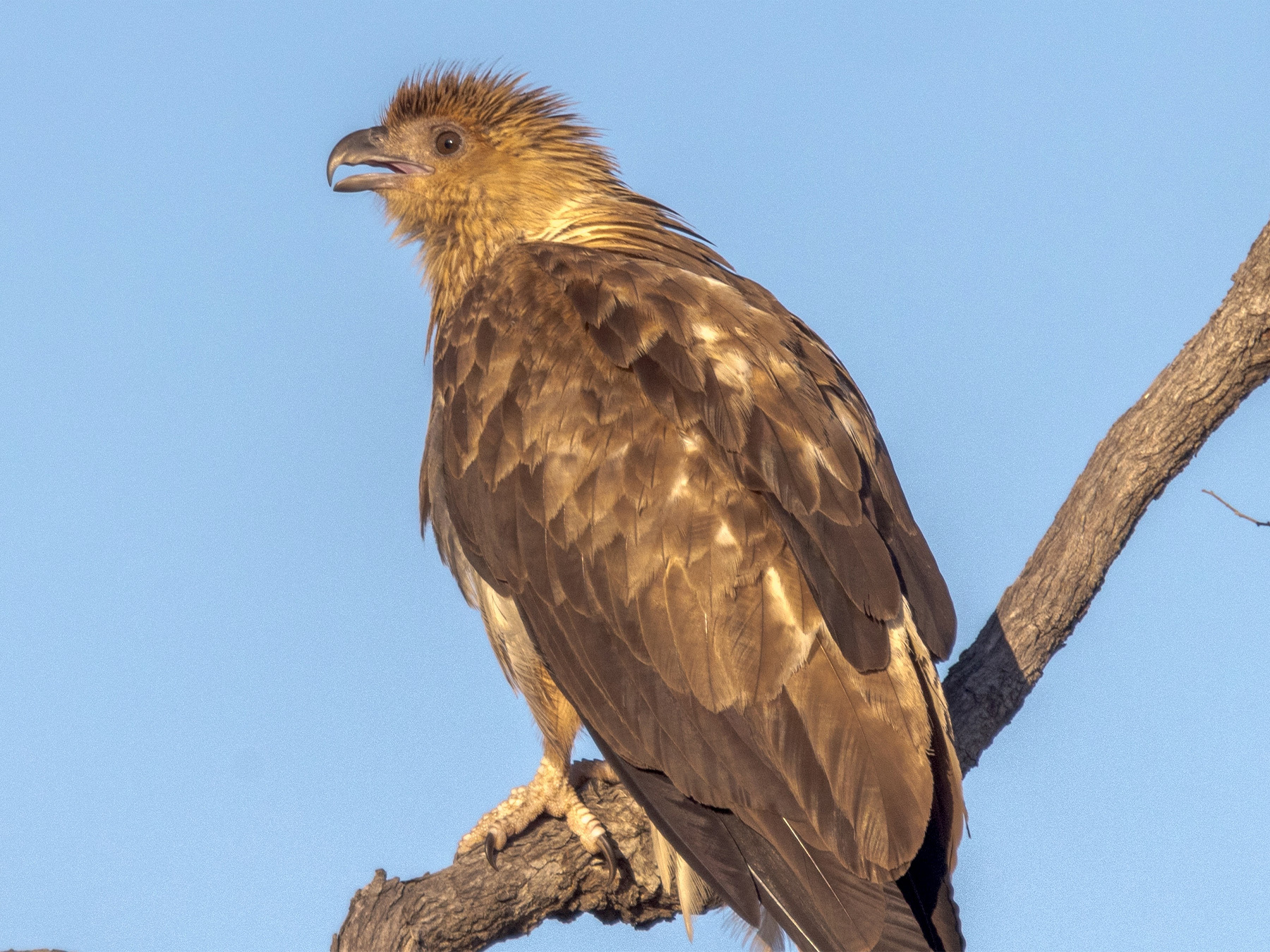
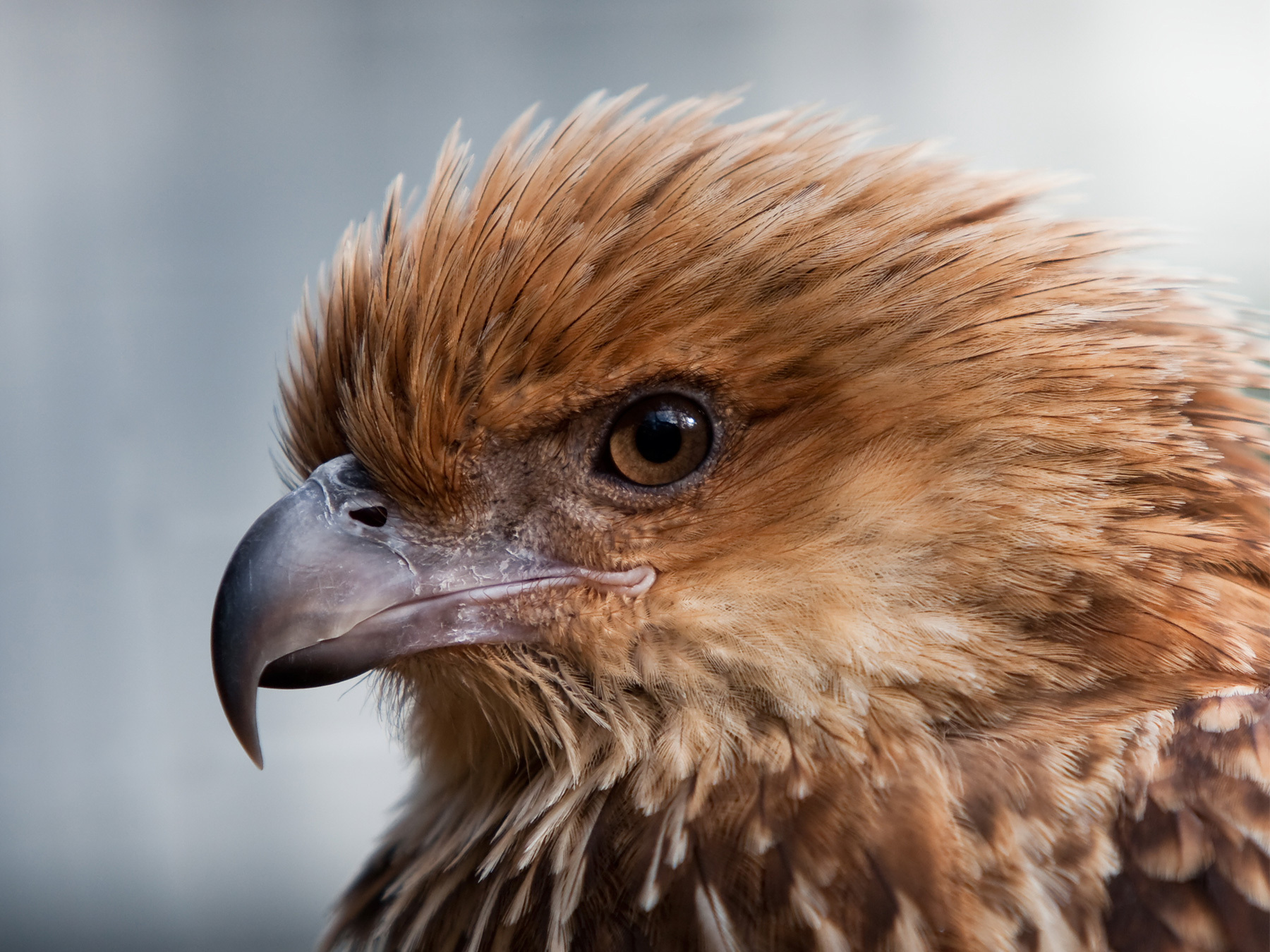
Whistling Kites are medium-sized birds of prey, with pale buff upperparts and heads and lighter brown underparts. Their wings are darker brown, with blackish outer wing feathers. The underside of the wings features a light-coloured ‘M-shape’, only visible in flight. They have an overall shaggy, ruffled appearance.
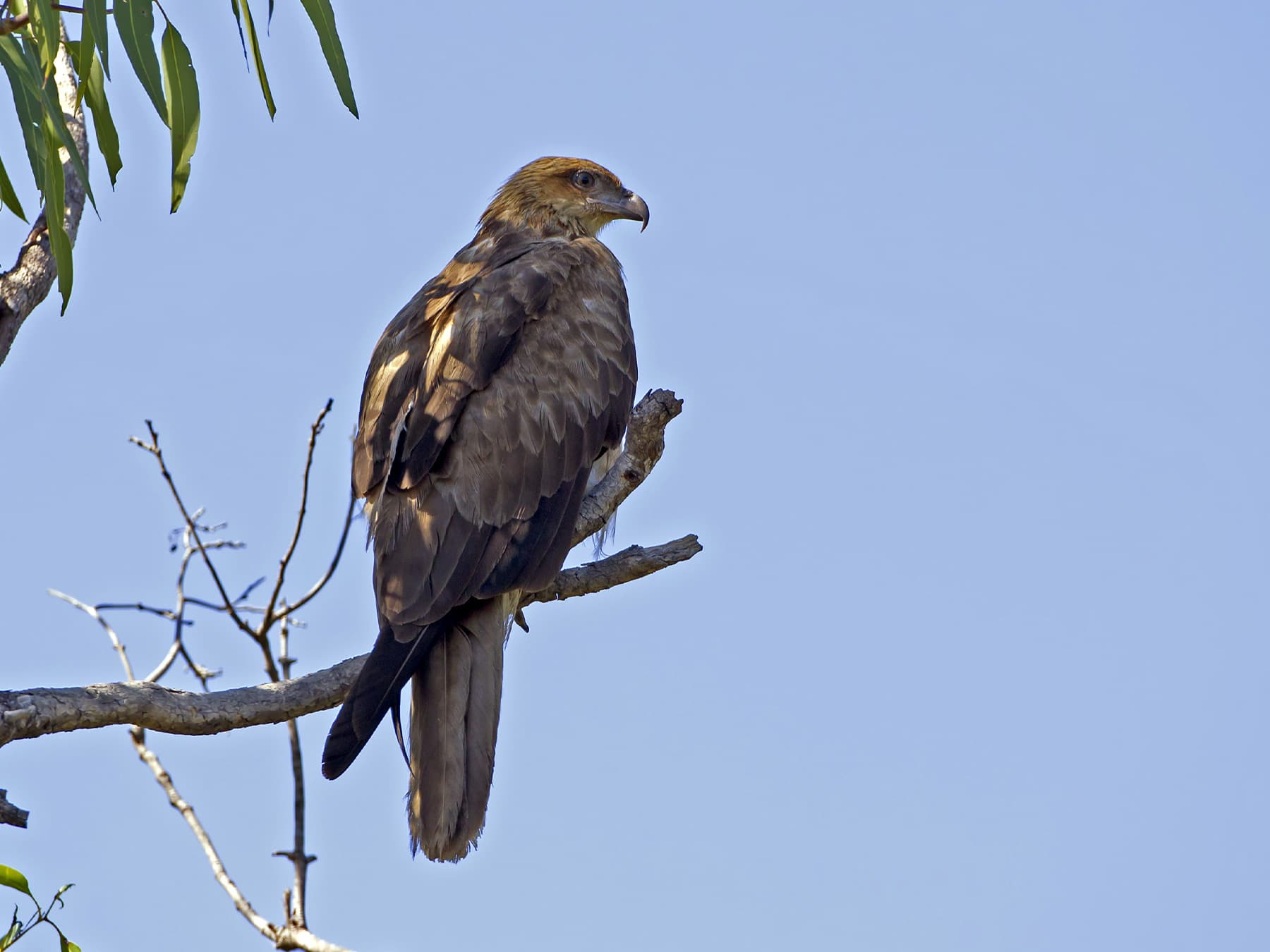
Whistling kites have long rounded tails and a wide wingspan. Their legs are short, featherless, and horn coloured. The beak is short and grey, with a distinctive hooked tip, and its eyes are black.
Males and females are alike in appearance, although females may be up to 42 percent larger.
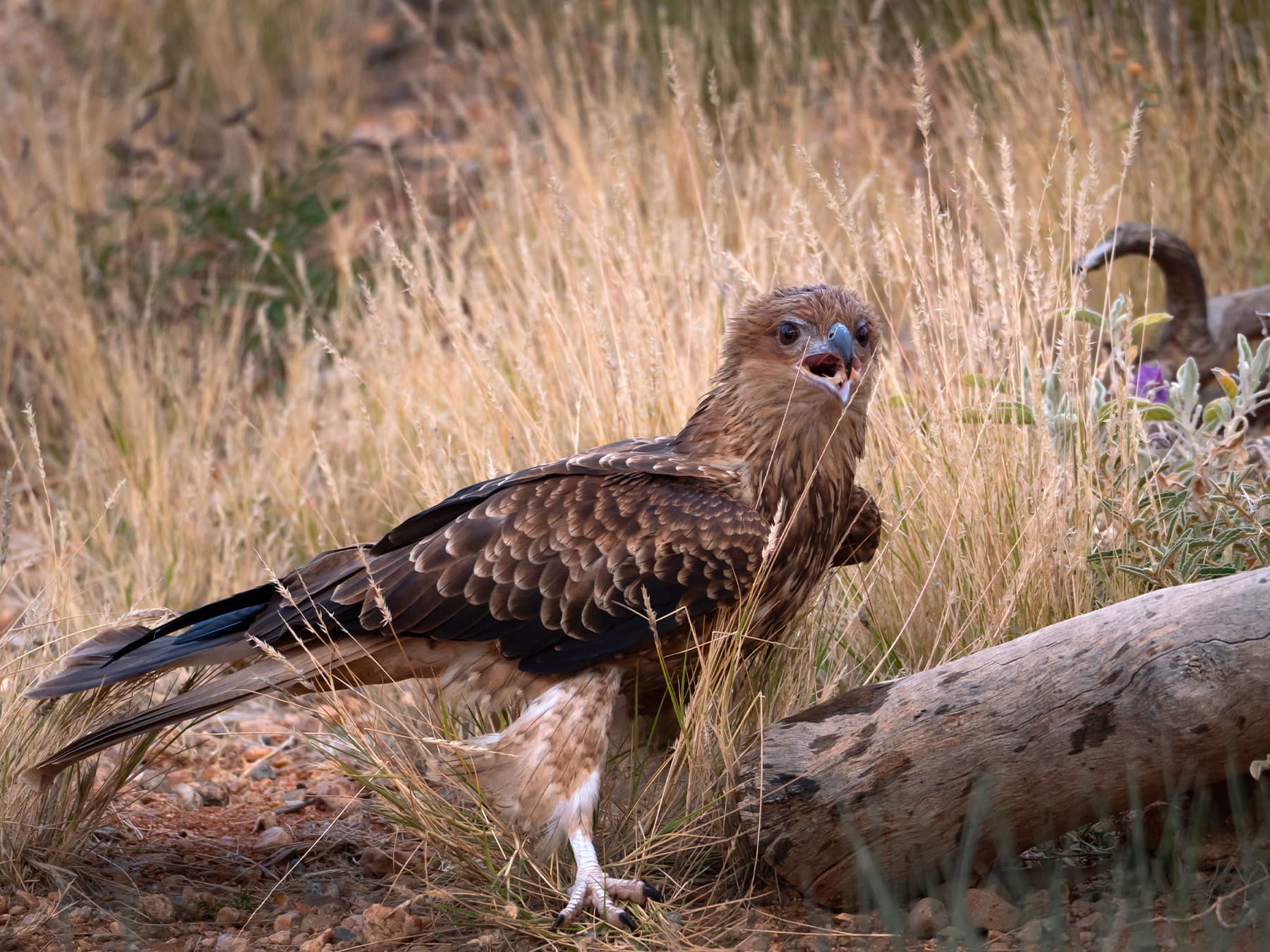
Juvenile whistling kites’ upperparts are speckled with buff and white, and their underparts are heavily streaked.
How big are Whistling Kites?
Female whistling kites are significantly bigger and heavier than males, although there may be some overlap between the smallest females and the largest males.
- Length: 51 cm to 59 cm (20 in to 23 in)
- Wingspan: 120 cm to146 cm (47 in to 57 in).
- Weight Male: 600 g to 750g (21 oz to 26 oz)
- Weight Female: 750 g to 1000 g (26 oz to 35 oz)
Its size
Adults- Length
- 50–60 cm
- Wingspan
- 123–146 cm
- Weight
- 380–1050 g
Its song and calls
What sound does a Whistling Kite make?
The main call of a whistling kite is clear and distinctive, with a piercing ‘seeeo’ descending whistle that may be followed by a series of rising notes and broken chattering sounds.
When and where to see it
The Whistling Kite is not recorded regularly in the UK, Ireland, the United States or Canada.
Worldwide: recorded regularly in 4 countries
Countries where it was recorded in at least 3 of the 6 years 2019–2024. Linked countries have their own bird list.
Asia (1)
- Indonesia
Oceania (3)
- Australia
- New Caledonia
- Papua New Guinea
Data: EOD – eBird Observation Dataset (Cornell Lab of Ornithology), accessed via GBIF.org, CC BY 4.0. Records from 2019–2024, aggregated and filtered by Birdfact. How these lists are made
What is the habitat of a Whistling Kite?
Whistling kites are found in wooded habitats and open landscapes, usually within a short distance of water. Tall trees, often eucalyptus and pine, are required for nesting, and nearby foraging grounds may include orchards, paddocks, farmland and roadsides.
What is the range of a Whistling Kite?
Whistling kites are not found outside of Australia and the nearby Pacific Ocean islands of New Guinea, New Caledonia, and the Solomon Islands. Within Australia, populations are widespread across the east of the country, but absent from much of the arid west and interior of the country.
Where do Whistling Kites live?
Whistling kites are found in a limited number of countries, with Australia having by far the largest share of the global population. The species occurs naturally in New Caledonia, the island of New Guinea, and the Solomon Islands.
How rare are Whistling Kites?
No data is currently available for a global population estimate for this species, although they are classified as of least concern, and are widespread throughout their range. They have adapted to live in a diverse range of habitats, and their diet is unspecialised, meaning they are able to survive in different environments and sightings are not unusual.
Where can you see Whistling Kites in Australia?
Northern regions of Australia have the highest concentrations of whistling kites, but the species is widespread and secure throughout much of the country, with the exception of Tasmania and the west interior where the arid conditions make survival a challenge for many wildlife species. Coastal areas and along rivers offer a good chance of sightings.
Migration
Do Whistling Kites migrate?
Some dispersal within Australia may occur at the end of the breeding season from colder regions in the south and south-east to warmer areas further north or towards the coast. In tropical regions, populations of whistling hawks are resident all year round.
Are Whistling Kites native to Australia?
Whistling kites are native to Australia, both breeding and wintering in the country and its offshore islands. The species is not present in much of the interior and west of the country, apart from coastal regions. They are also found in the Pacific islands of New Caledonia, the Solomon Islands and New Guinea.
Tips for seeing it
- Look for Whistling Kites soaring high in the sky, especially near water bodies or open grasslands.
- Listen for their distinctive whistling call, which is often given in flight.
- Observe them near recent bushfires or along roadsides, where they scavenge for food.
- In Australia, check coastal areas and inland waterways for the best chances of spotting these birds.
What it eats
What do Whistling Kites eat?
Whistling kites are not particularly fussy over what they eat, and their diverse diet includes mammals – particularly rabbits, birds, fish, reptiles, amphibians, crustaceans, insects and carrion.
In Australia, live prey is usually caught during most of the year, although in winter months carrion becomes more important. In New Guinea, they tend to be opportunistic scavengers, feeding on poultry, roadkill, offal and large carcasses.
In coastal and wetland regions, whistling kites are known for their habit of stealing prey from herons and ibises, forcing them to drop or regurgitate fish they have caught before taking it for themselves.
What do Whistling Kite chicks eat?
Adult birds bring food to the nest for their young until they fledge, tearing it into manageable-sized chunks until they are able to digest larger items of prey whole. Small mammals including young rabbits and rodents are among the most common prey. Smaller insects, including grasshoppers and larvae, are also offered to nestlings in the early days after hatching.
Nesting and breeding
Where do Whistling Kites nest?
Tall trees offer suitable nesting spots for whistling kite pairs, with eucalyptus trees being a popular species. Bulky platforms of twigs and sticks are built in forks of the upper branches by both parents, and a lining of fresh green leaves is added.
When do Whistling Kites nest?
Whistling kites have a long breeding season, coinciding with Australia’s dry season, with young being raised between July and December. Incubation lasts for 35 to 38 days, shared between the male and female although females take a larger share. Young whistling kites fledge after 44 to 54 days and parental care continues for a further 6 to 8 weeks.
What do Whistling Kite eggs look like?
Two to three blue-white eggs, often marked with reddish-brown blotches are laid by female whistling kites. On average, eggs measure 45 mm by 40 mm (1.8 in by 1.6 in).
Do Whistling Kites mate for life?
Long-term monogamous pairs are formed and mates remain together all year round. Pairs regularly return to their old nests in future breeding seasons if they have been used to raise young successfully, and will add extra nesting material with each season.
Behaviour
Are Whistling Kites aggressive?
Whistling Kites are generally solitary birds, and usually seen alone, in a pair, or occasionally as a larger group at overnight roosting sites. They are not typically an aggressive species, although if their nest and young are threatened, then they will challenge intruders with vocal alarm calls and defensive posturing.
Lifespan and predators
How long do Whistling Kites live?
On average, whistling kites live for around 8 years, although much older individuals have been identified through banding records, including one that reached 20 years and 4 months.
What are the predators of Whistling Kites?
Whistling kites have few natural predators in the wild. The main threats come from human hunting or accidental encounters with manmade objects or vehicles.
Are Whistling Kites protected?
Throughout Australia, whistling kites are federally protected against being killed, injured, captured, or traded.
Are Whistling Kites endangered?
Whistling kites are classified as a species of least concern, although some local declines have been identified in South Australia, thought to be linked to the drainage of wetlands and the resulting loss of food resources
Conservation
While the Whistling Kite is currently listed as Least Concern, it faces threats from habitat loss and degradation, particularly in coastal and wetland areas. Pesticide use and secondary poisoning from consuming poisoned prey also pose risks.
Conservation efforts focus on protecting key habitats and reducing chemical use in agriculture.
More photos
3 photos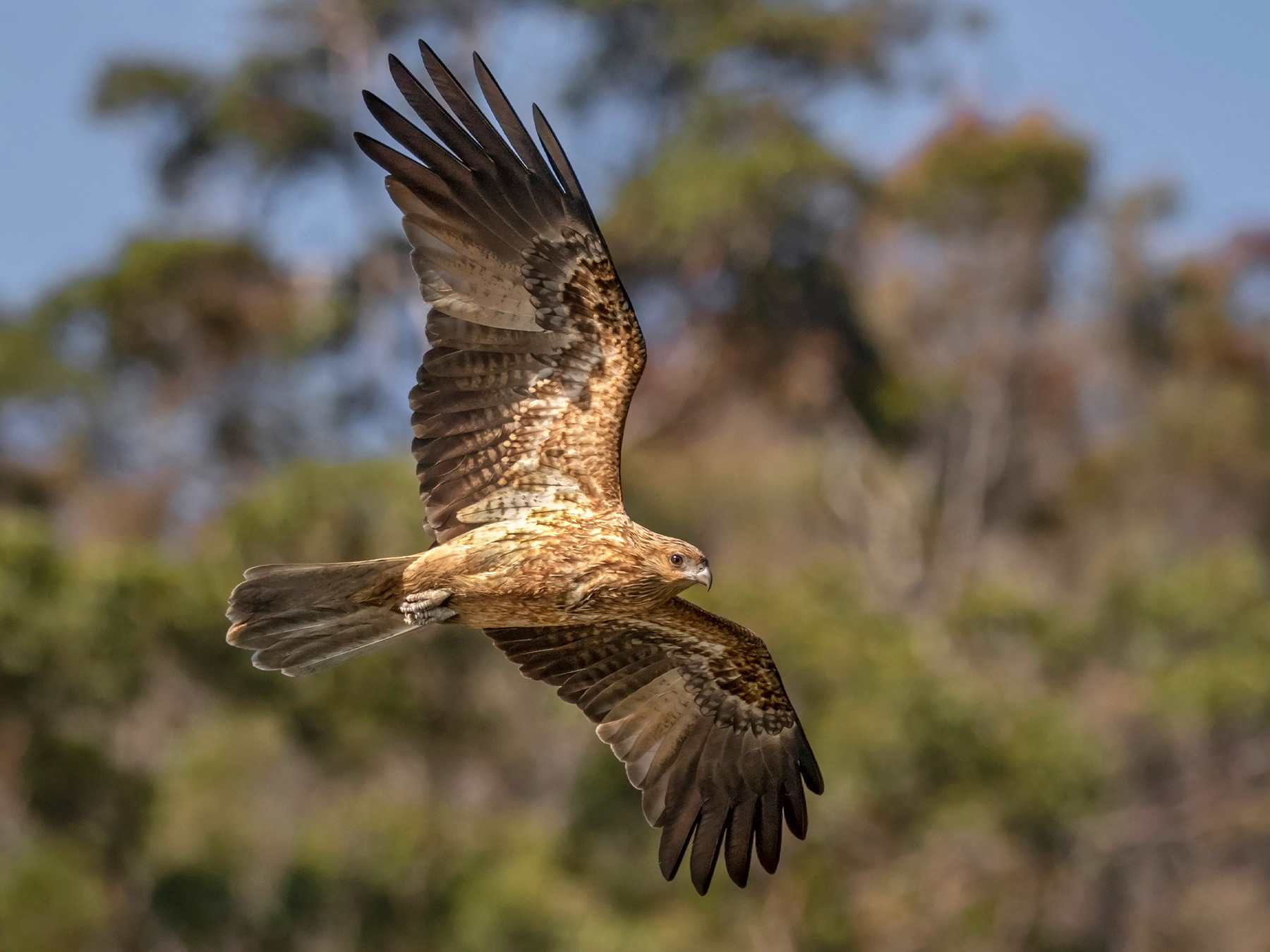
Quick facts
- Length
- 50–60 cm
- Wingspan
- 123–146 cm
- Weight
- 380–1050 g
- Lifespan
- 8 years · oldest recorded 20.4 years
- Family
- Hawks & Eagles
- Migration
- Partial migrant
- Global status (IUCN)
- Least Concern
- World population
- Not quantified, but widespread in their range
- Population trend
- Decreasing
- Also called
- Whistling Eagle, Whistling Hawk
- Scientific name
- Haliastur sphenurus
Questions
1Is a whistling kite an eagle?
Although it is sometimes referred to as the whistling eagle or the whistling hawk, the whistling kite is a separate species of raptor. Kites are smaller than eagles, and also faster and lighter, and they feed on different prey.
Sources
3- 1BirdLife International. 2016. Haliastur sphenurus. The IUCN Red List of Threatened Species 2016: e.T22695091A93488811. Source (opens in a new tab)
- 2Ferguson-Lees and Christie (2001)
- 3ABBBS - Australian Bird and Bat Banding Scheme Source (opens in a new tab)

Checked by
Nathan Cope, founder and editor
Nathan founded Birdfact and leads its writers and contributors in the UK, the US and Canada. He has watched and studied birds for more than ten years, and checks every article and species guide before it’s published.