


Vega Gull
East Siberian Gull, East Siberian Herring Gull · Larus vegae
By the Birdfact teamChecked by Nathan Cope
On this page11 sections
How to recognise it
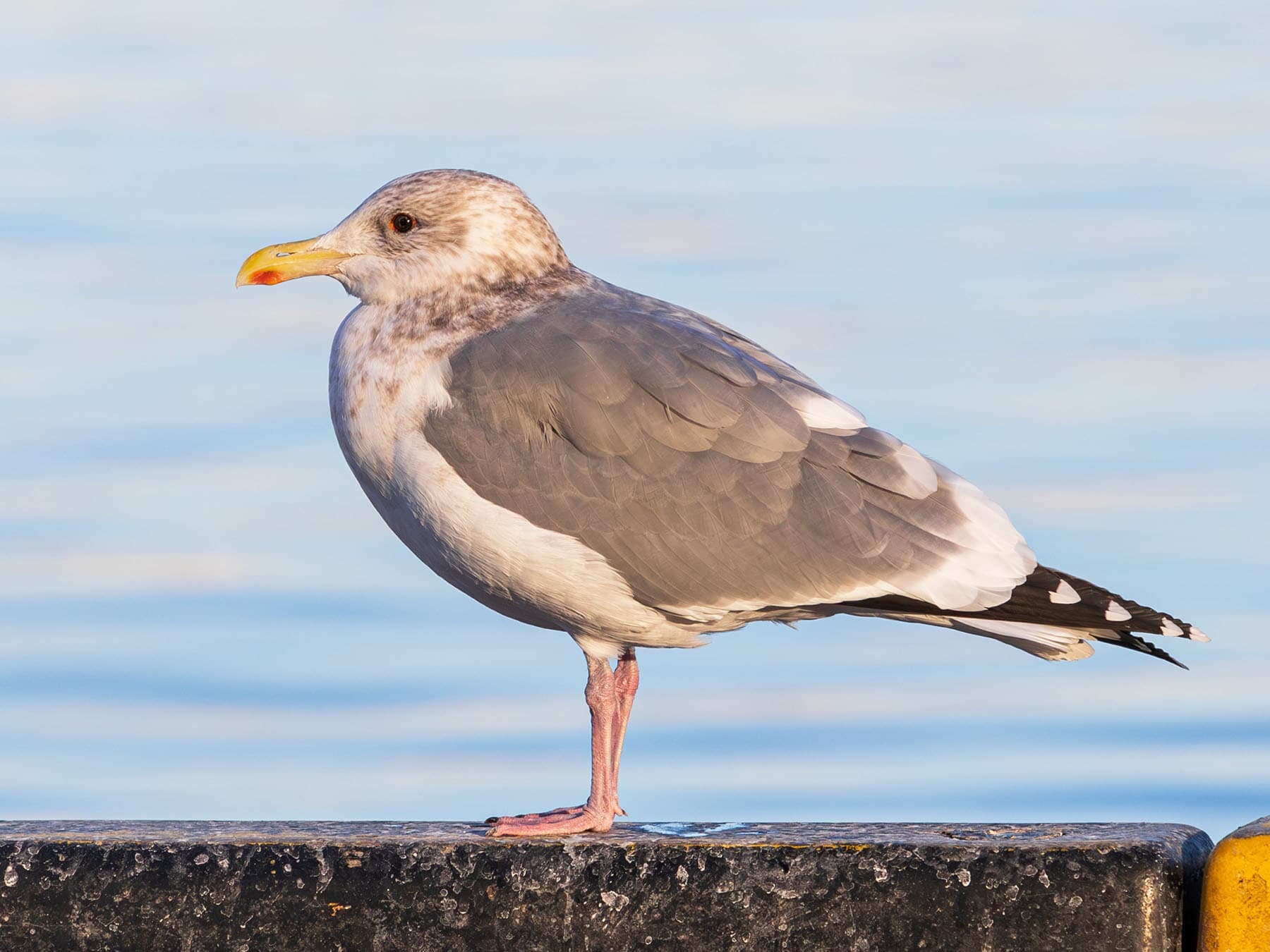
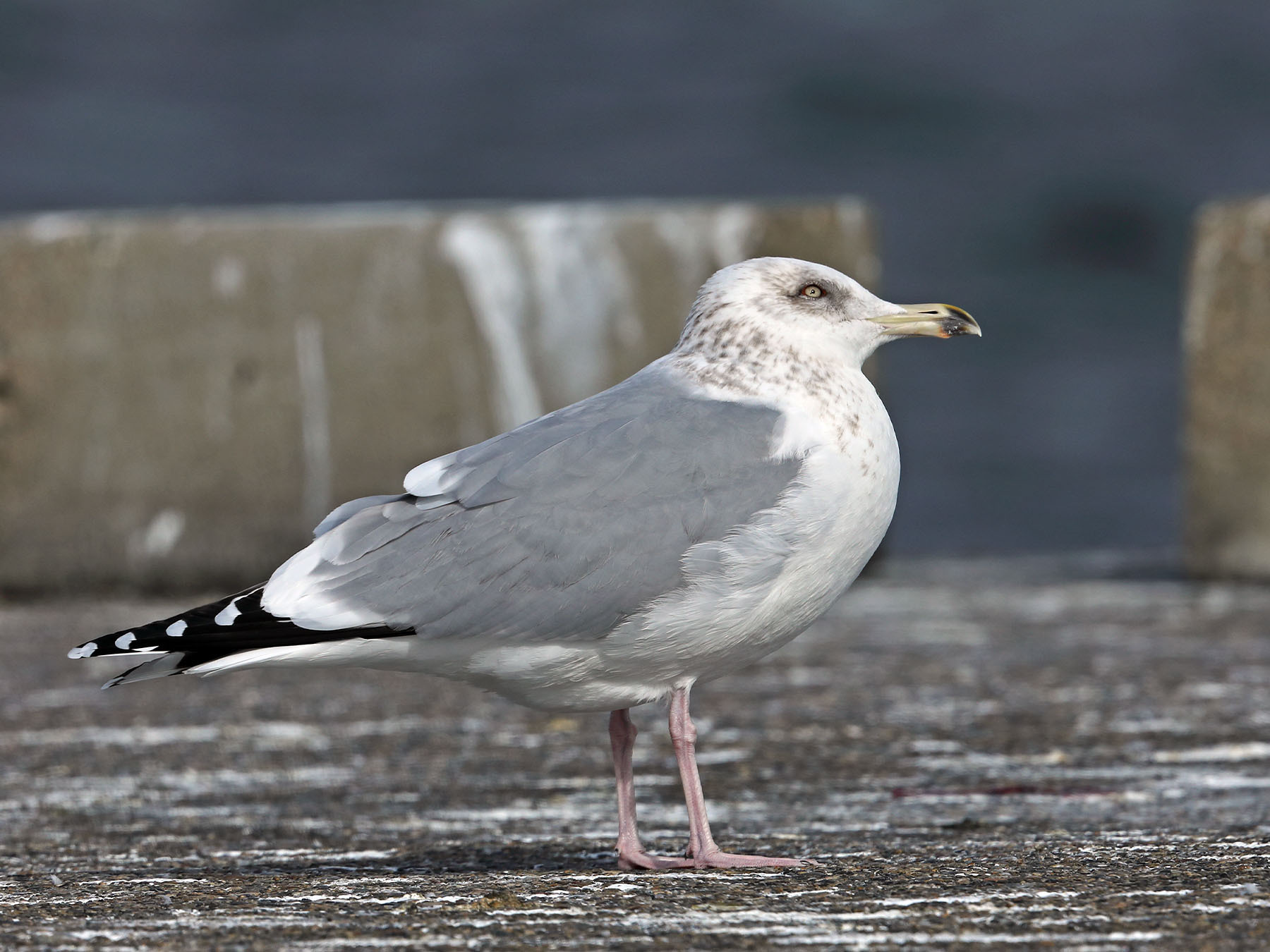
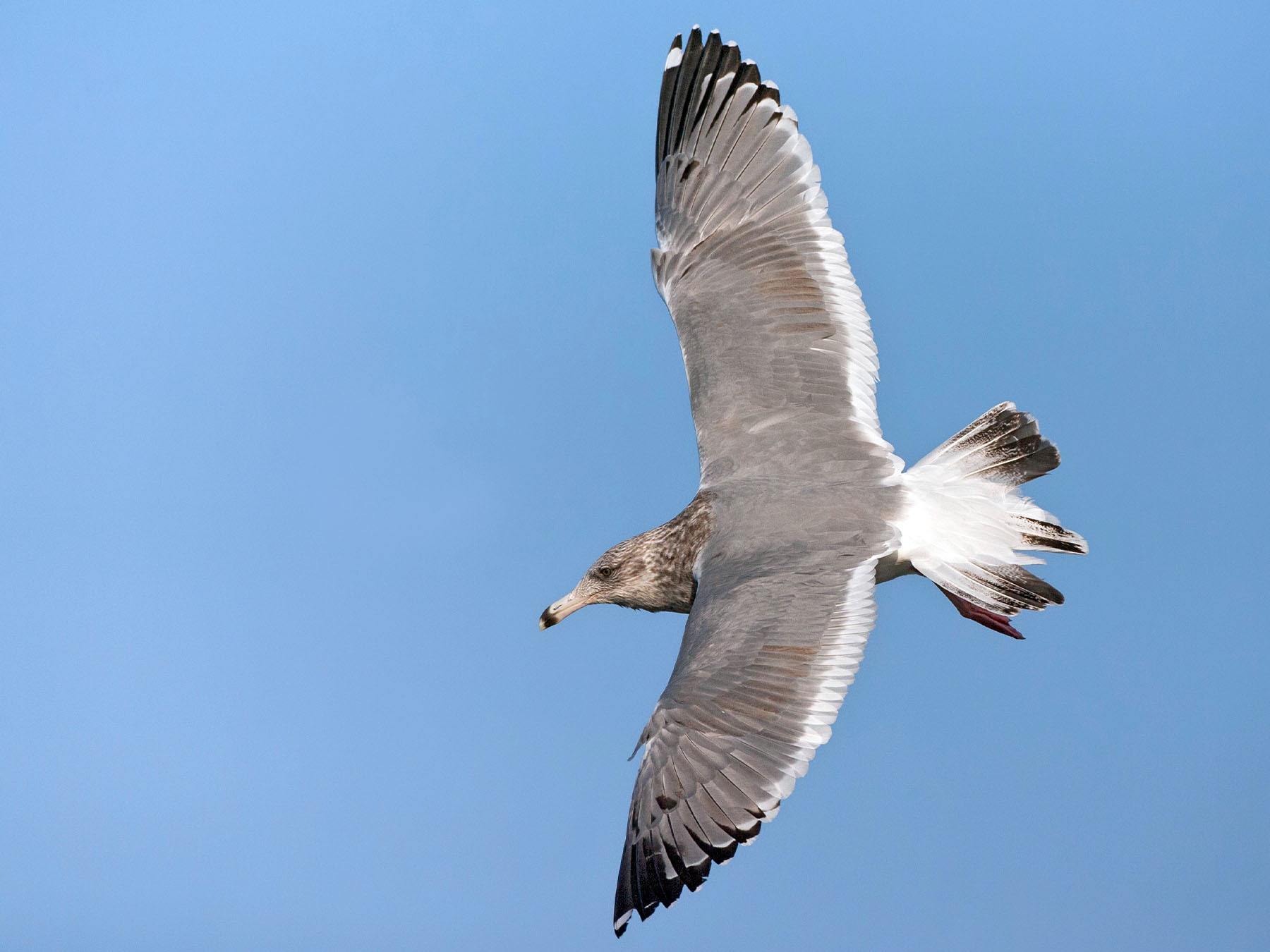
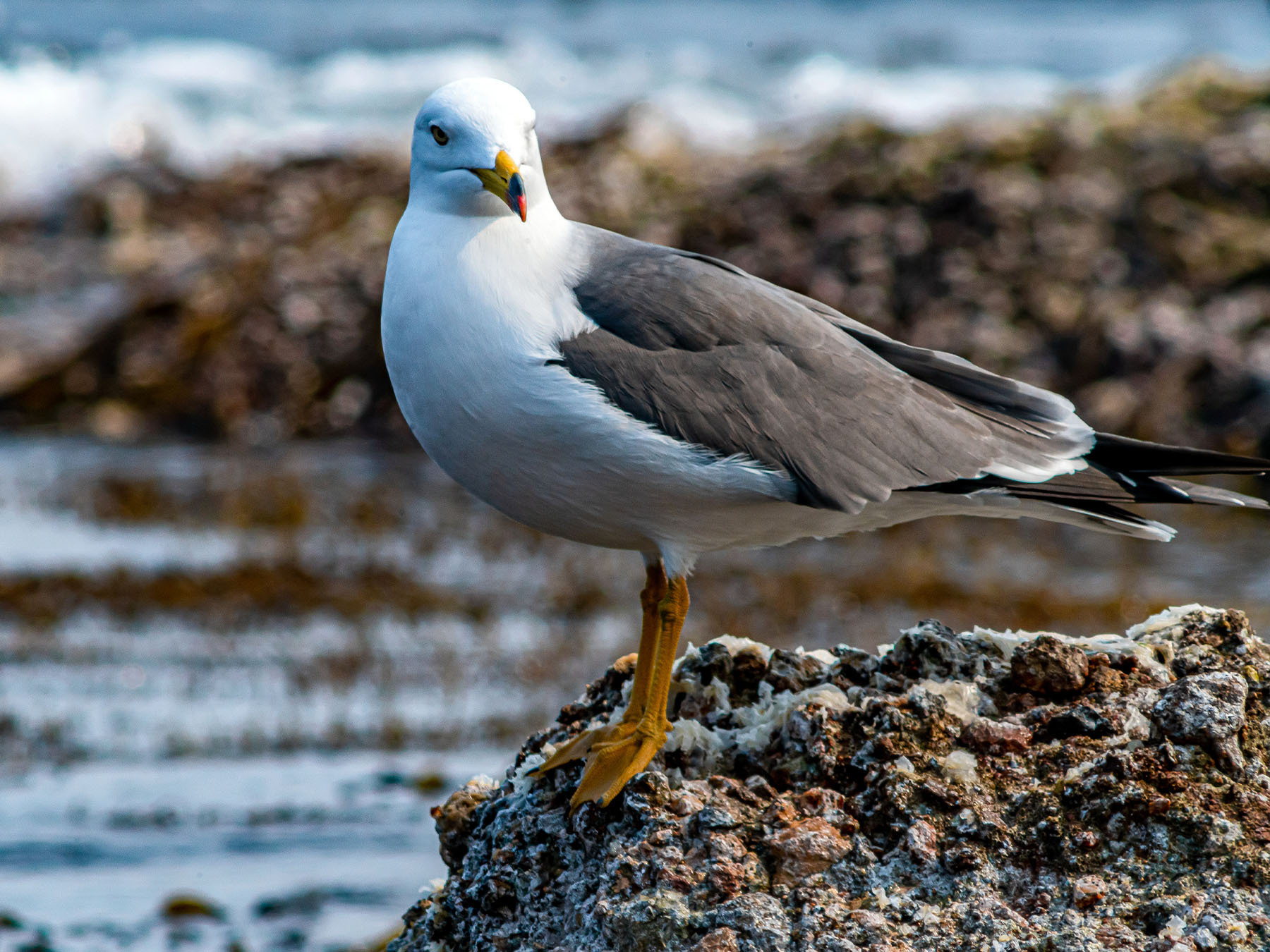
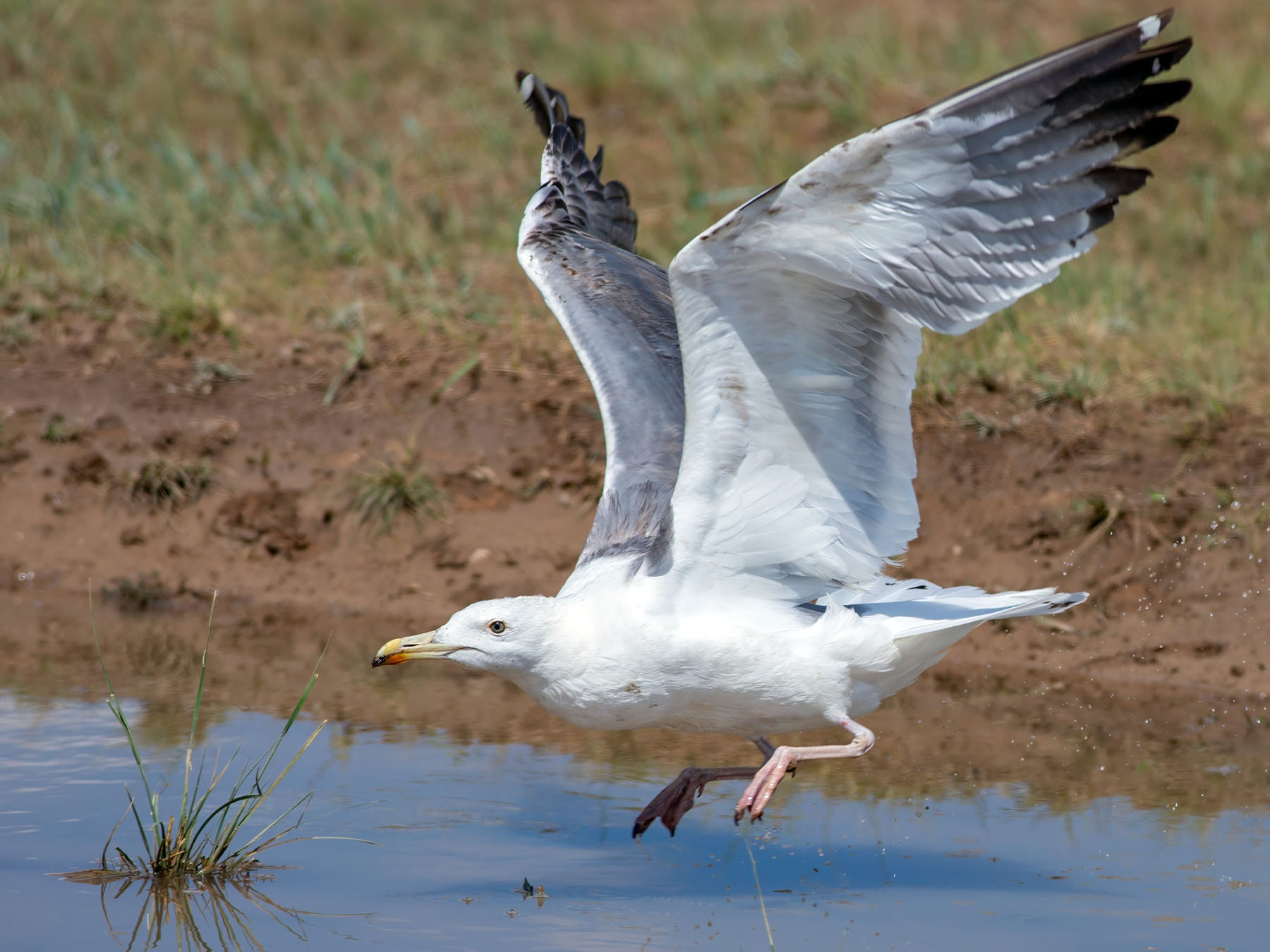
The Vega Gull is a large gull with a predominantly white body and pale grey upper wings and back. Its wingtips are black with white spots, and it has a yellow or light orange bill with a red spot near the tip. The legs are pink (sometimes yellow), and the eyes are golden with an orange-red ring around them.
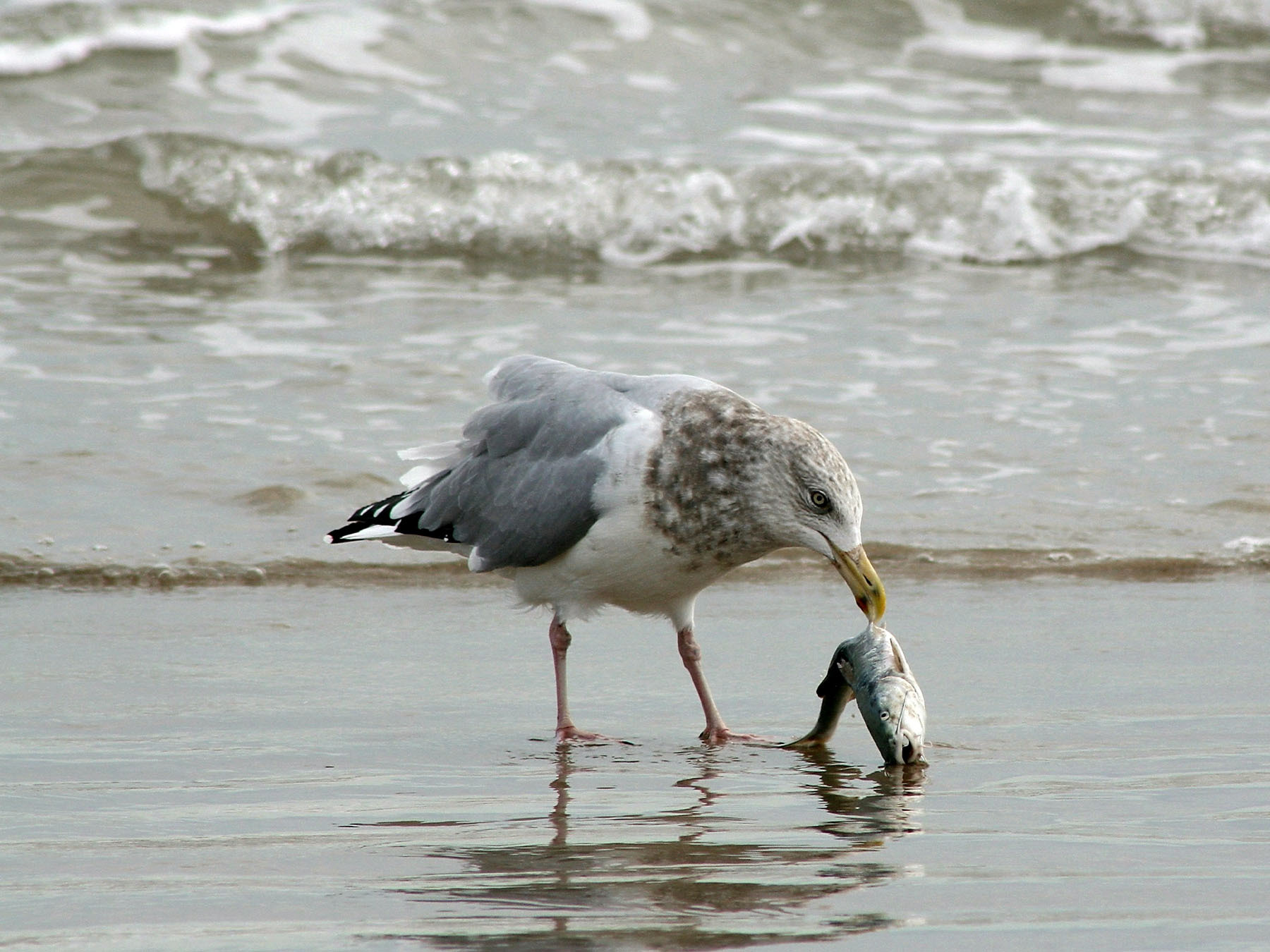
In winter, adults develop streaked grey-brown patterns on the head and neck. Juveniles are uniformly brownish, gradually transitioning to adult colouration over four years.
Its size
Adults- Length
- 55–67 cm
- Wingspan
- 125–155 cm
- Weight
- 1000–1400 g
Its song and calls
The Vega Gull's vocalisations are similar to those of other large white-headed gulls. Their most common call is a loud, harsh 'kyow-kyow' or 'kaa-kaa-kaa'.
During courtship and territorial displays, they produce a variety of mewing and choking sounds, often accompanied by head-tossing behaviours.
When and where to see it
OctoberLeaving
Most recorded in October
- 1. Alaska0.12%
- 2. Californiaunder 0.1%
Each dot is a county, state or province: the bigger and darker, the larger the bird’s share of that place’s bird records that month. Grey dots: no regular records. The ringed point is the centre of the bird’s records this month; the arrow shows how it moved since last month, and the dashed loop its path through the year. “Arrivals” colours places where it becomes regular this month (orange) or is in its last regular month (grey). GBIF eBird Observation Dataset, 2019–2024. Map data: Natural Earth, US Census Bureau; place centres © OpenStreetMap contributors.
In your area
See when the Vega Gull is recorded in your county, state or province.
How often the Vega Gull turns up in the United States through the year, from birdwatchers' records.
United States
Summer visitor · regularly May–Dec · most records in June
Show as a table
| Month | United States |
|---|---|
| January | <0.001% |
| February | <0.001% |
| March | <0.001% |
| April | <0.001% |
| May | 0.001% (regular) |
| June | 0.004% (regular) |
| July | <0.001% (regular) |
| August | <0.001% (regular) |
| September | 0.002% (regular) |
| October | <0.001% (regular) |
| November | <0.001% (regular) |
| December | <0.001% (regular) |
Worldwide: recorded regularly in 9 countries
Countries where it was recorded in at least 3 of the 6 years 2019–2024. Linked countries have their own bird list.
Data: EOD – eBird Observation Dataset (Cornell Lab of Ornithology), accessed via GBIF.org, CC BY 4.0. Records from 2019–2024, aggregated and filtered by Birdfact. How these lists are made
Tips for seeing it
- Look for Vega Gulls along coastal areas and large inland water bodies during migration
- Observe their distinctive pale grey mantle, which is slightly darker than that of Herring Gulls
- Listen for their loud, harsh 'kyow-kyow' calls, especially in breeding colonies
- Watch for their opportunistic feeding behaviour near fishing boats or in urban areas
What it eats
Vega Gulls have a diverse diet, primarily consisting of fish, marine invertebrates, and carrion. They also consume insects, small mammals, and birds.
These adaptable gulls often scavenge human refuse in coastal towns and follow fishing vessels to feed on discarded fish and offal.
Nesting and breeding
Vega Gulls typically form breeding colonies on coastal cliffs, islands, and tundra near the sea. Pair formation occurs in spring, with birds often returning to the same nesting sites each year.
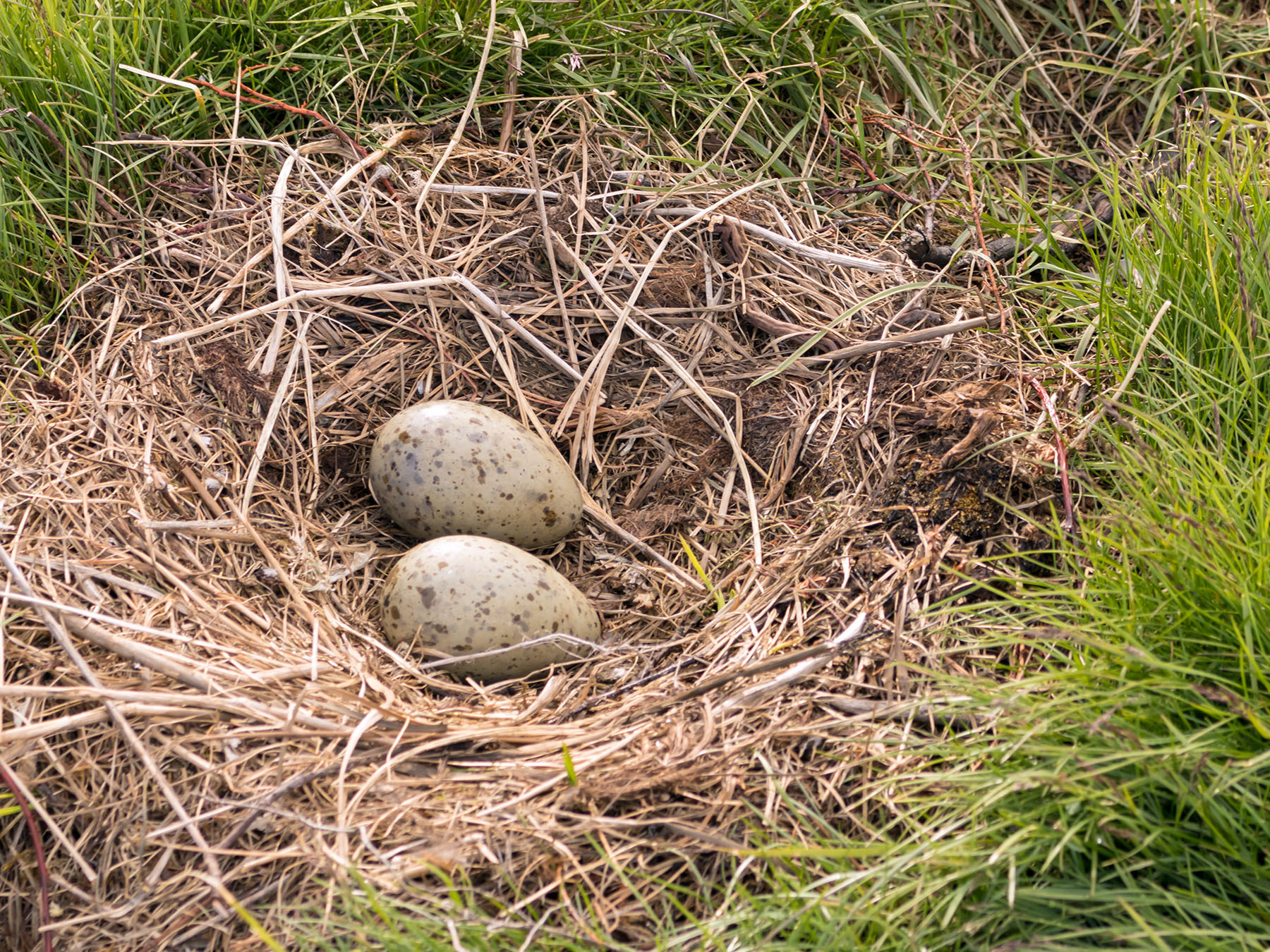
Nests are built on the ground, consisting of a shallow scrape lined with vegetation, feathers, and debris. Females usually lay 2-3 olive-brown eggs with dark spots.
Both parents incubate the eggs for about 27-29 days. Chicks fledge after 40-45 days but may remain dependent on their parents for several more weeks.
Behaviour
Vega Gulls are highly social, often forming large flocks during migration and in winter. They are opportunistic feeders, displaying adaptable foraging techniques, including surface feeding, plunge-diving, and kleptoparasitism.
These gulls are known for their aggressive defence of nesting territories, using loud calls and physical displays to ward off intruders.
Conservation
The Vega Gull's conservation status is listed as Least Concern. It's worth noting that this rating includes data combined with its close relatives, the Mongolian Gull and American Herring Gull, as they're often considered the same species in conservation assessments.
More photos
7 photos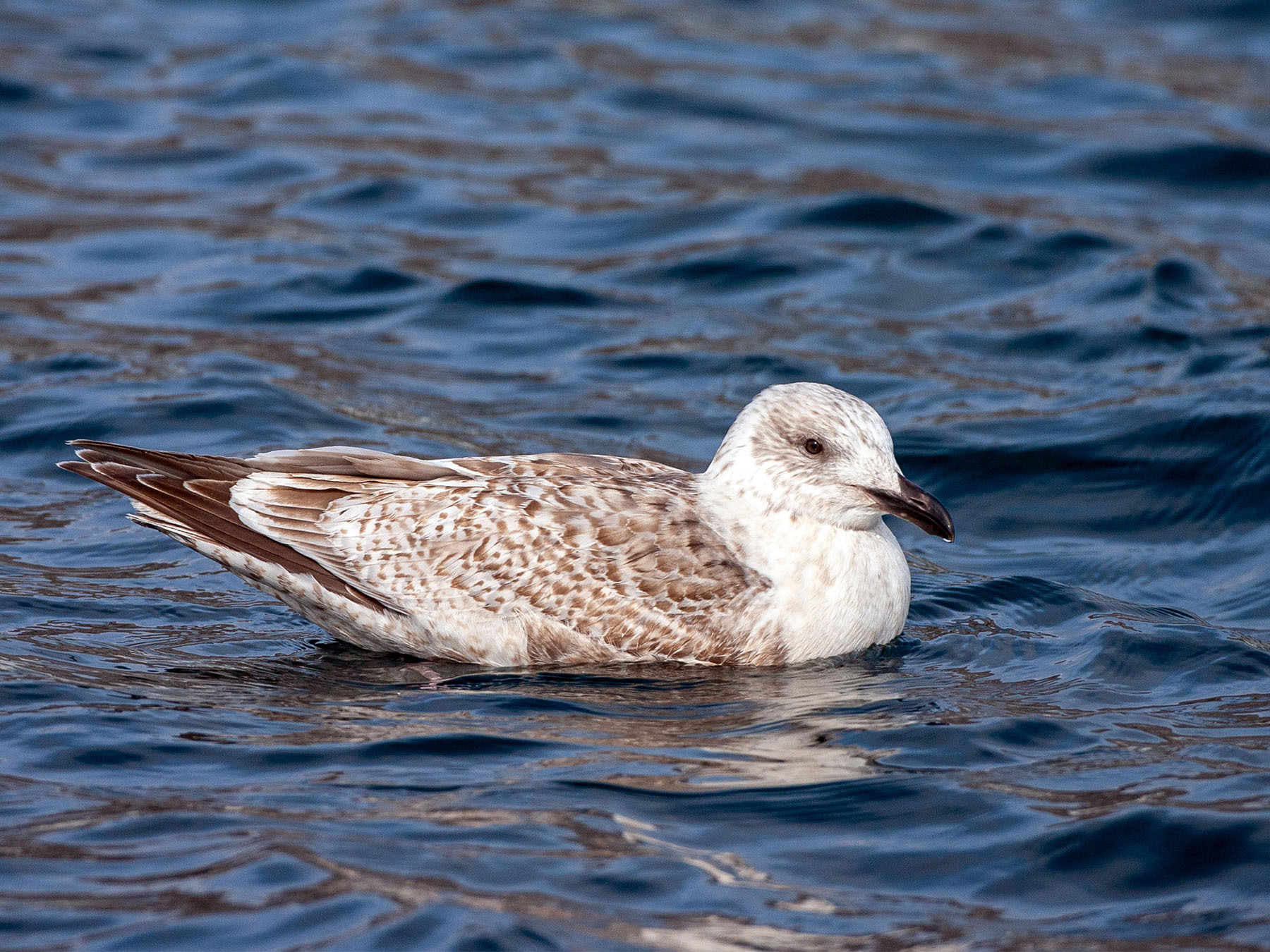
Quick facts
- Length
- 55–67 cm
- Wingspan
- 125–155 cm
- Weight
- 1000–1400 g
- Lifespan
- 12–15 years
- Family
- Gulls & Terns
- Migration
- Long-distance Migrant
- Global status (IUCN)
- Least Concern
- World population
- Unknown
- Population trend
- Stable
- Also called
- East Siberian Gull, East Siberian Herring Gull
- Scientific name
- Larus vegae
Sources
1- 1Estimated lifespan based on the Herring Gull

Checked by
Nathan Cope, founder and editor
Nathan founded Birdfact and leads its writers and contributors in the UK, the US and Canada. He has watched and studied birds for more than ten years, and checks every article and species guide before it’s published.