


Eurasian Teal
Common Teal, Green-winged Teal (Eurasian subspecies) · Anas crecca
By the Birdfact teamChecked by Nathan Cope
On this page14 sections
How to recognise it
What do Teal look like?
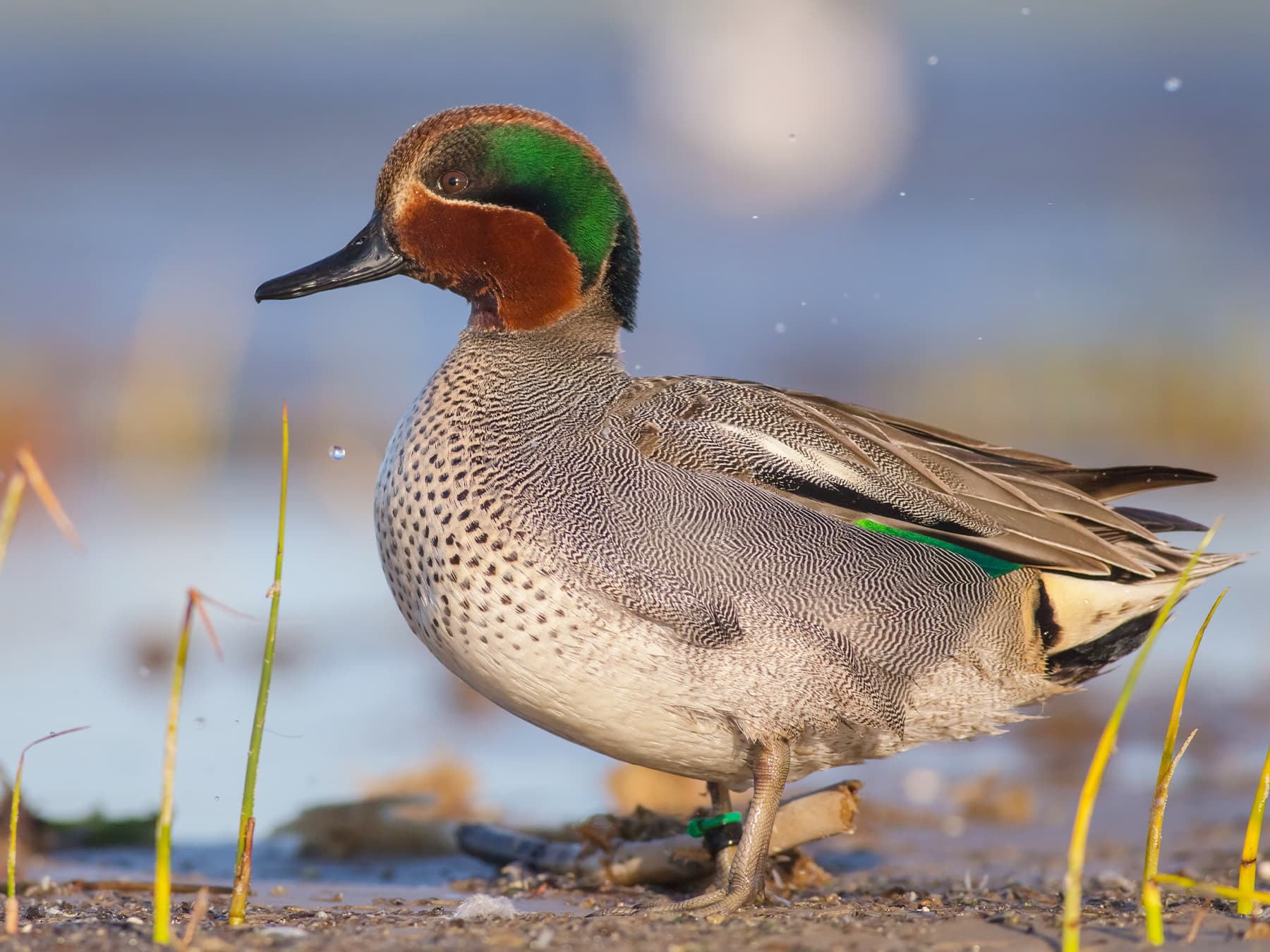
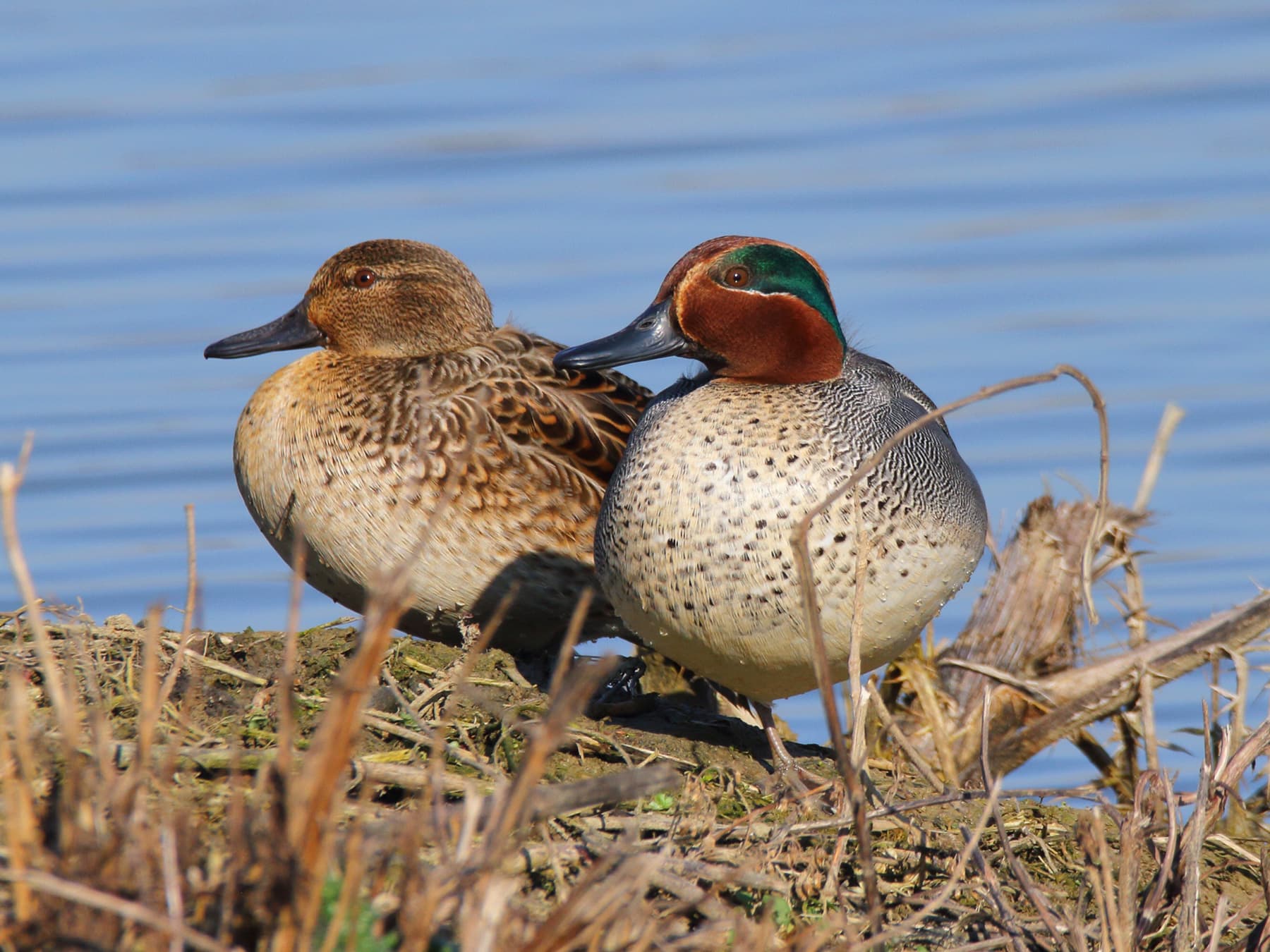
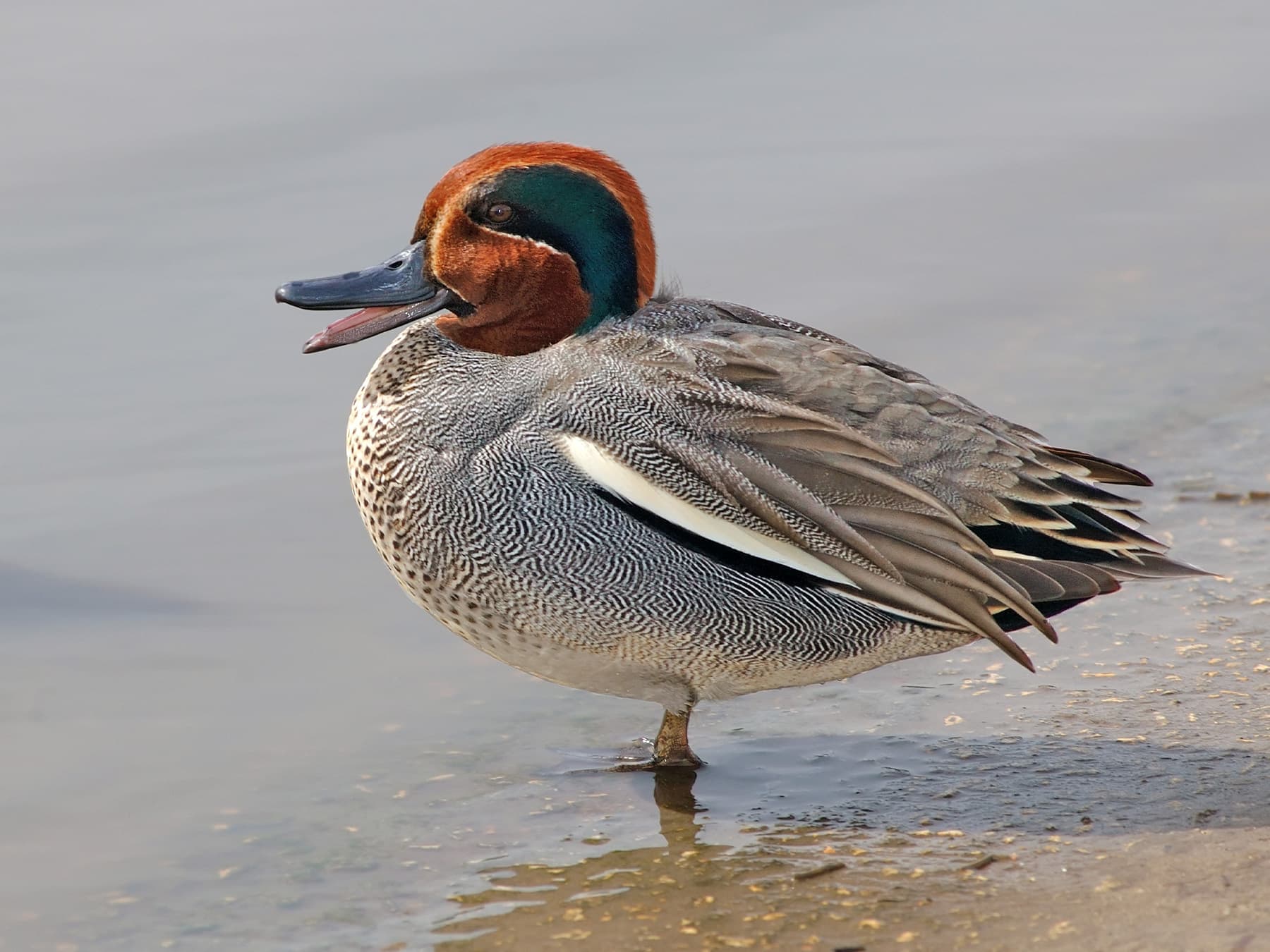
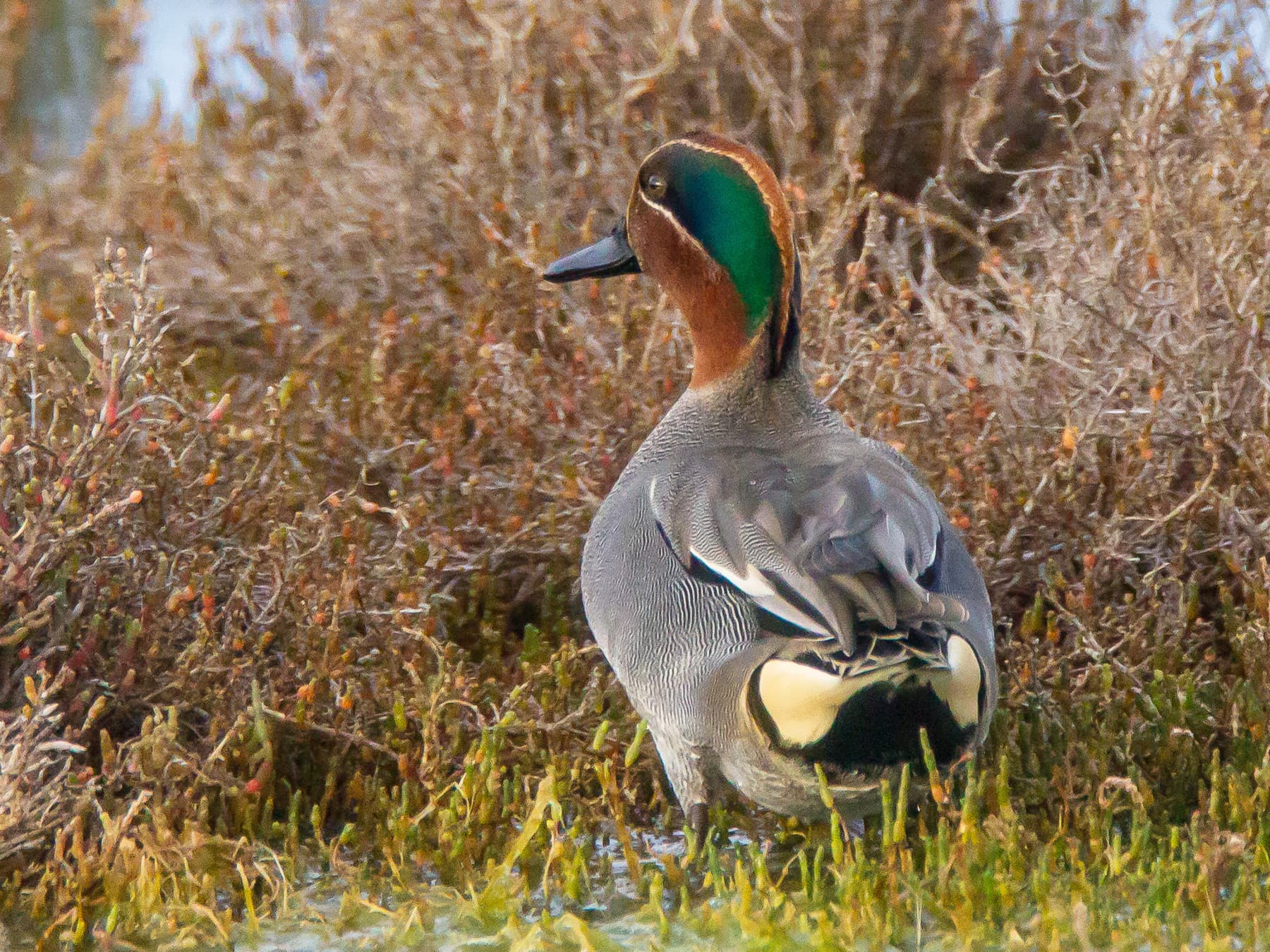
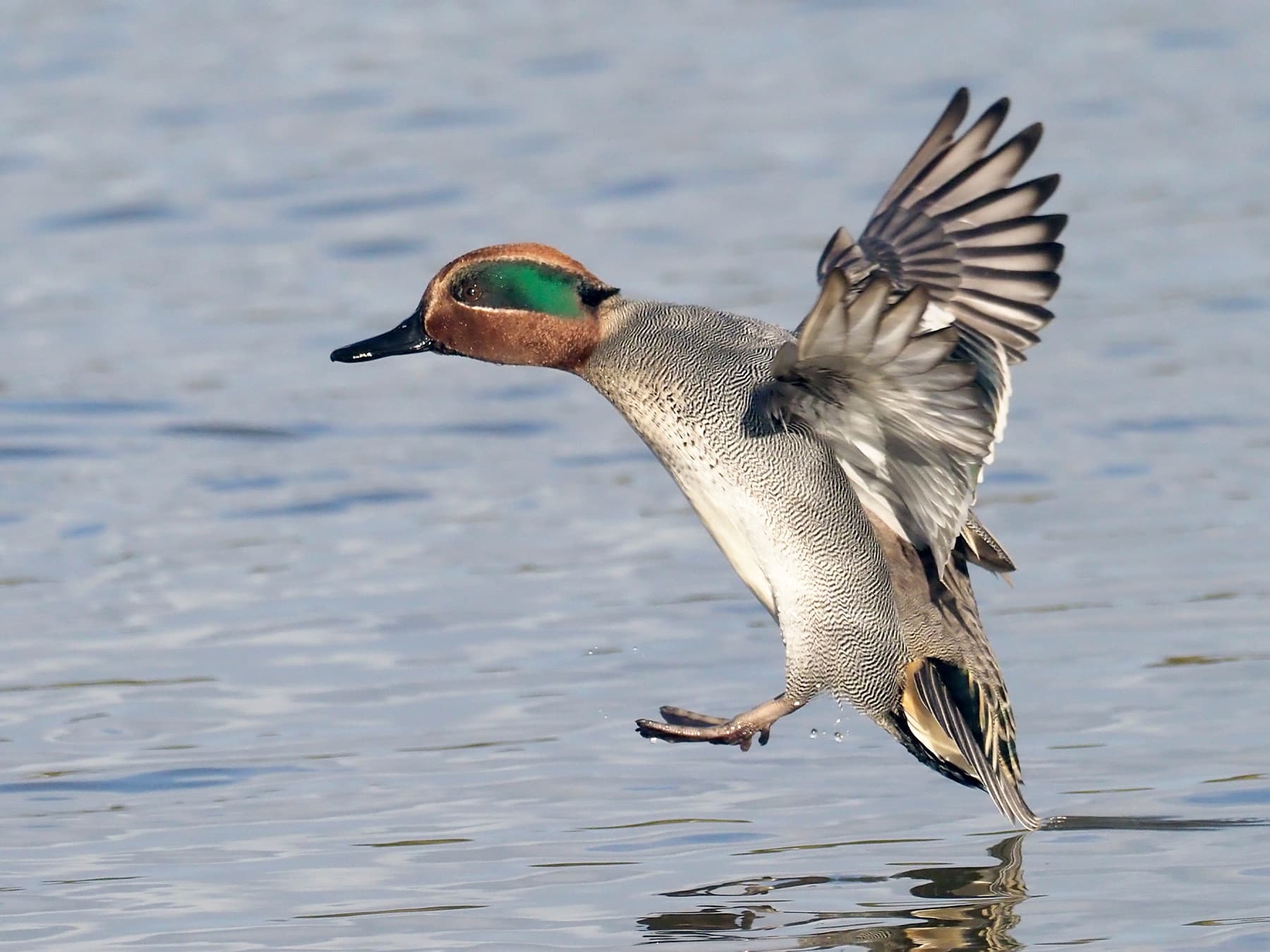
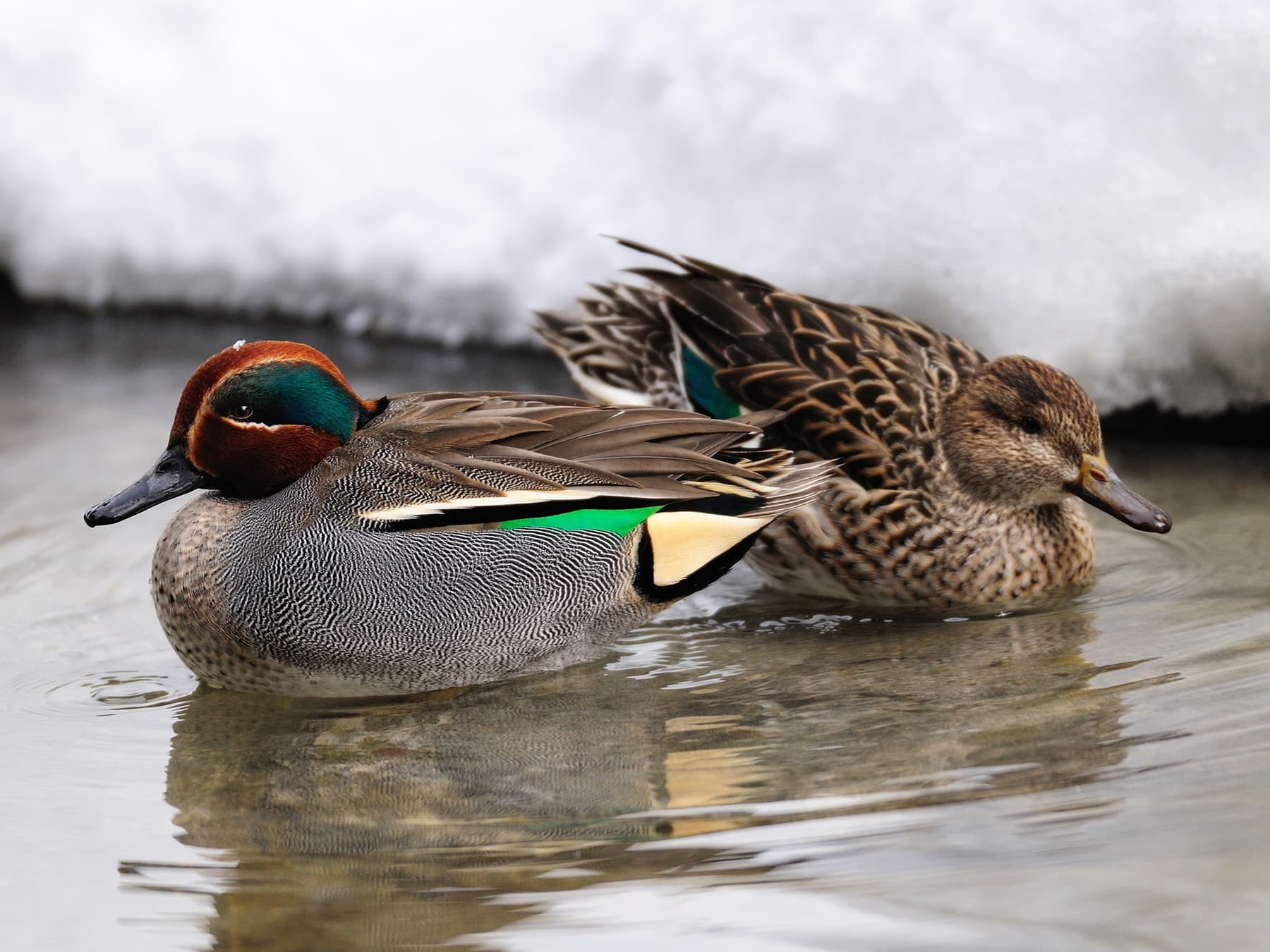
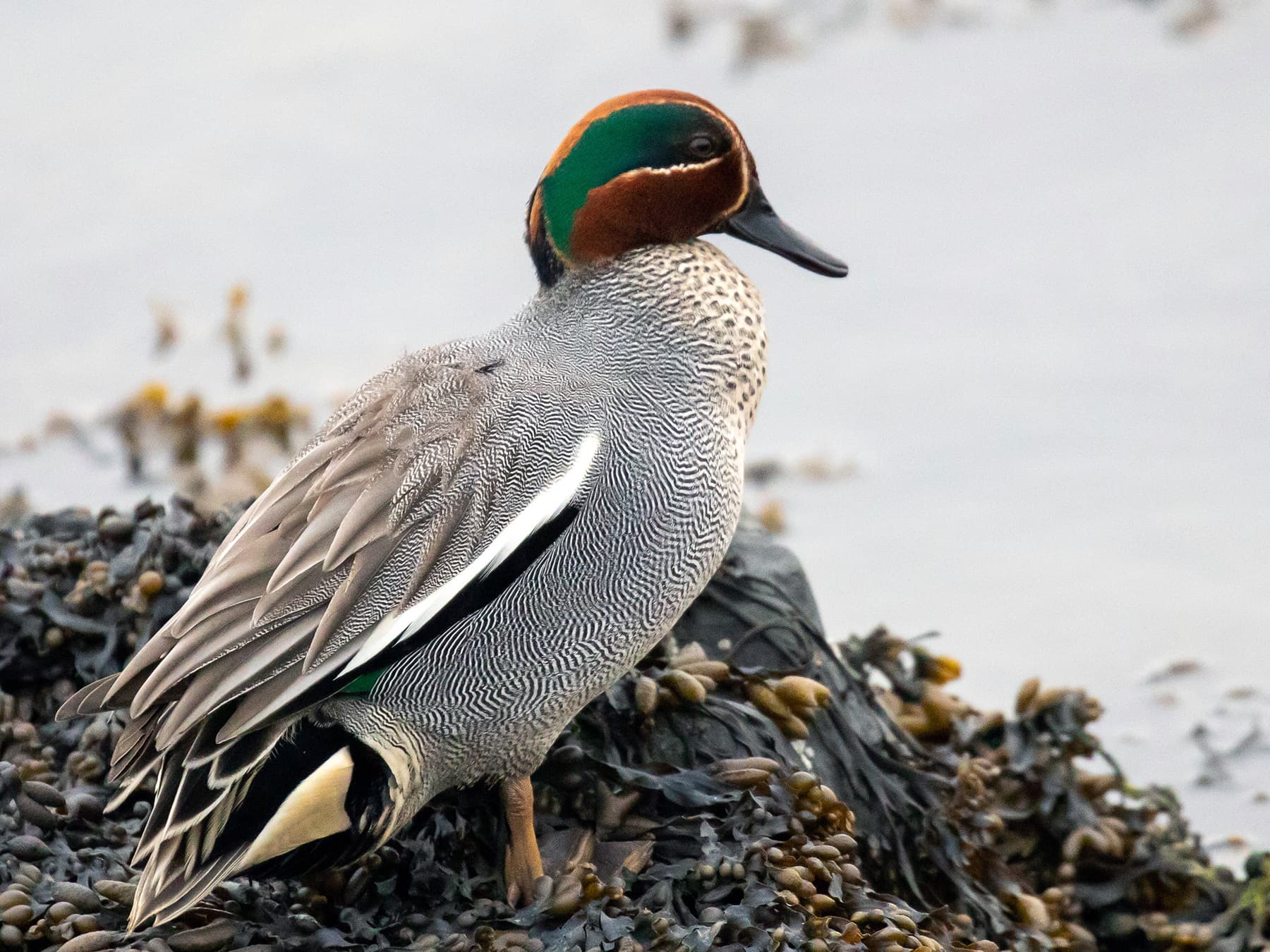
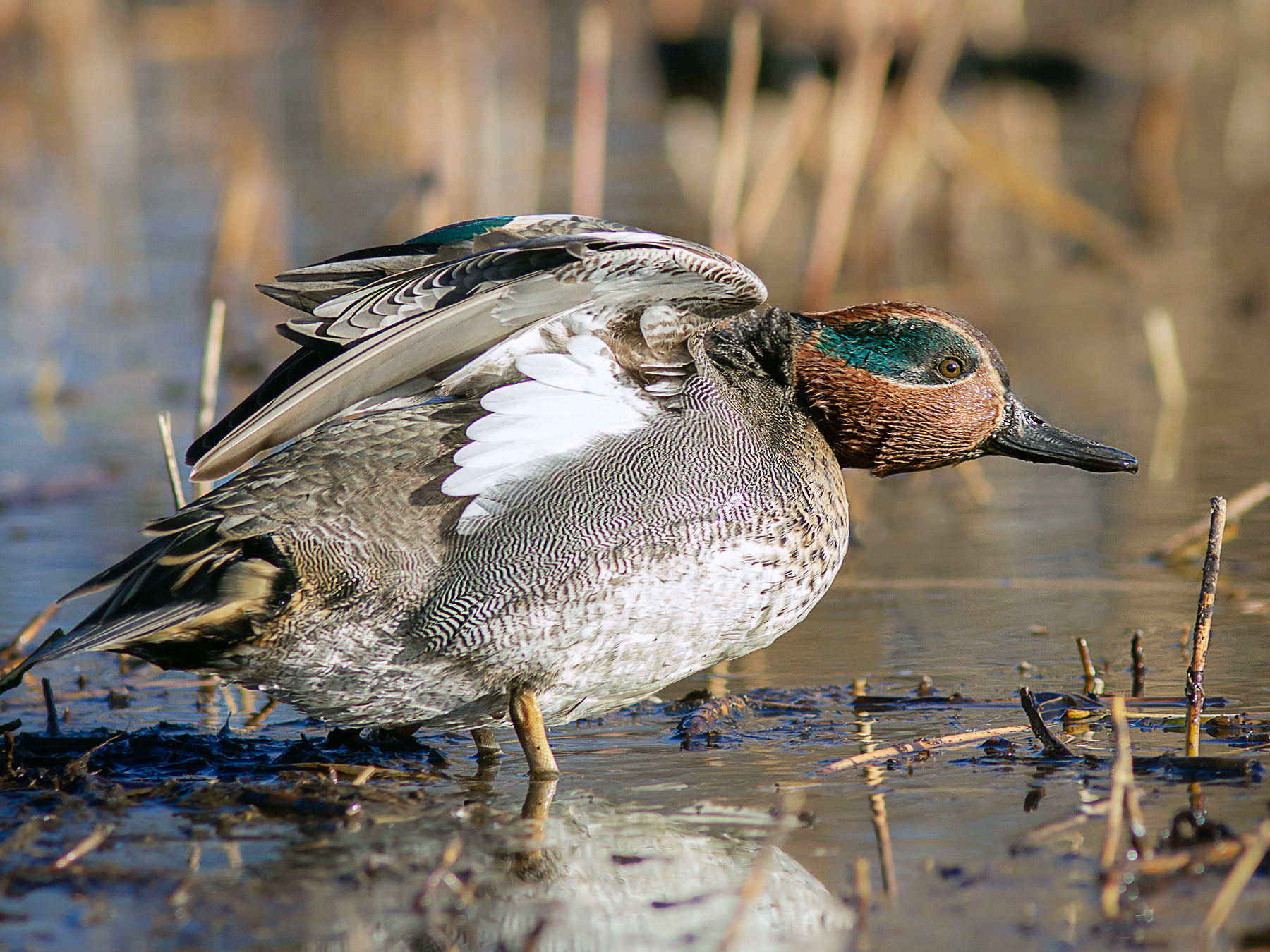
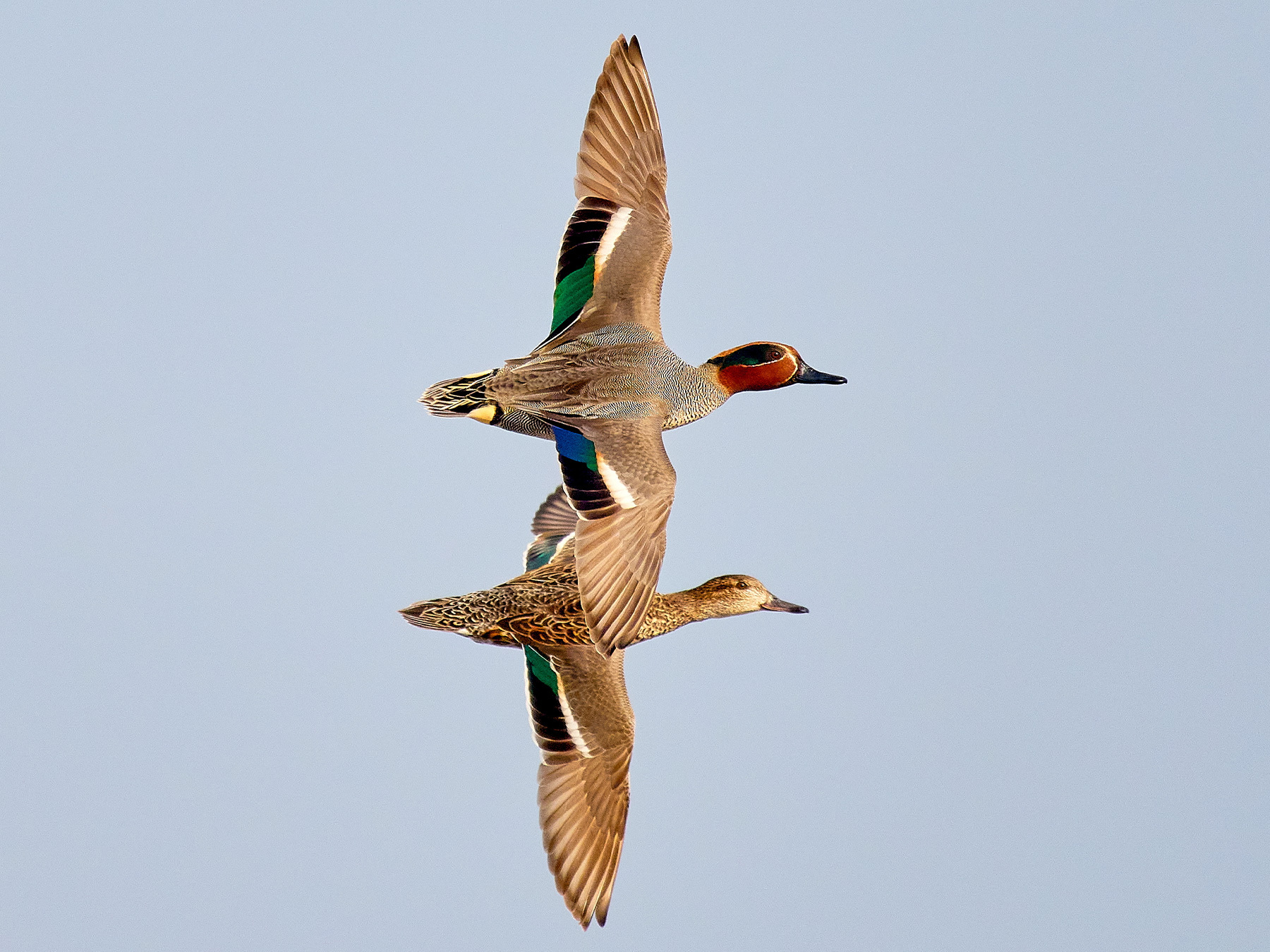
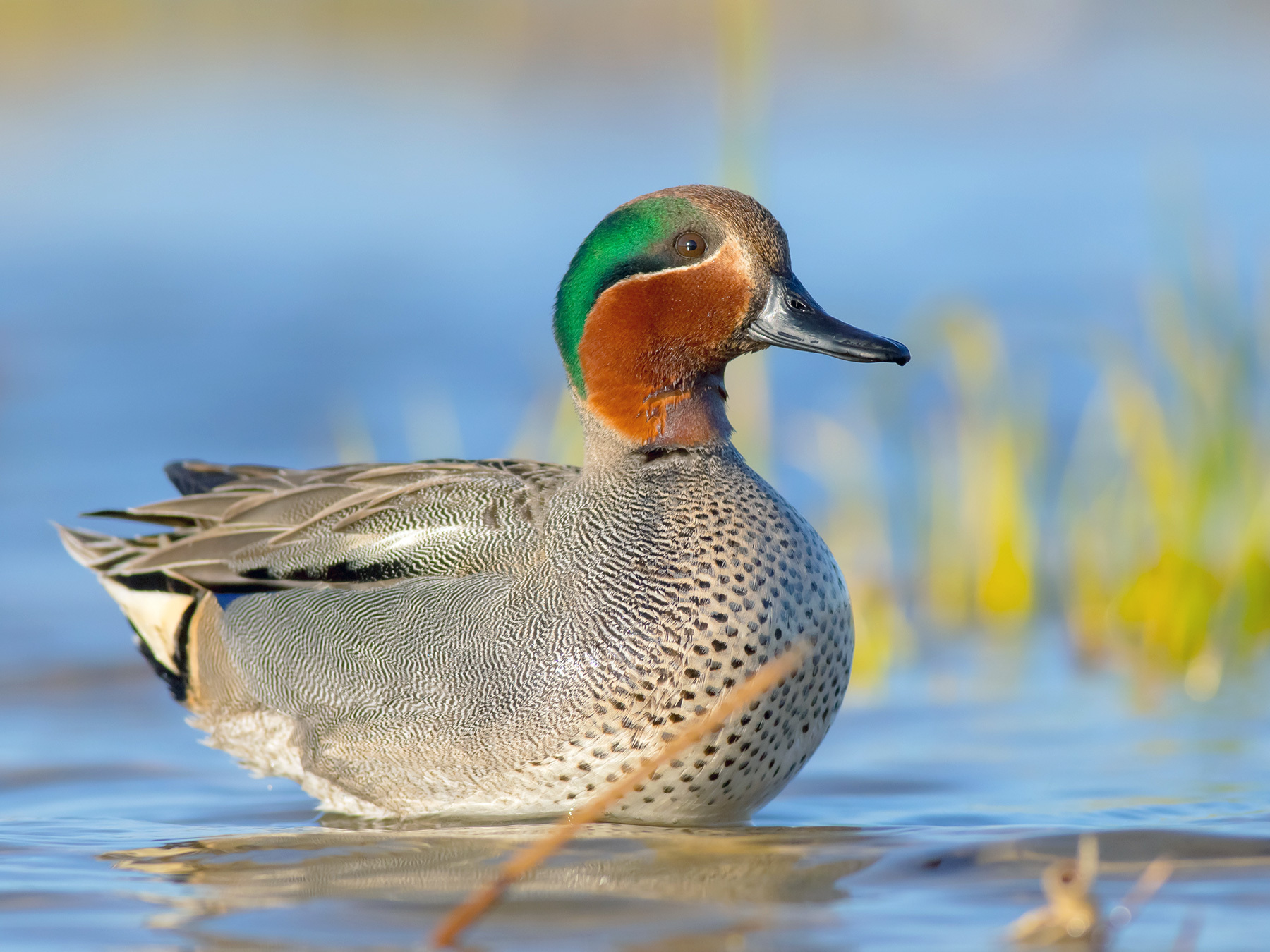
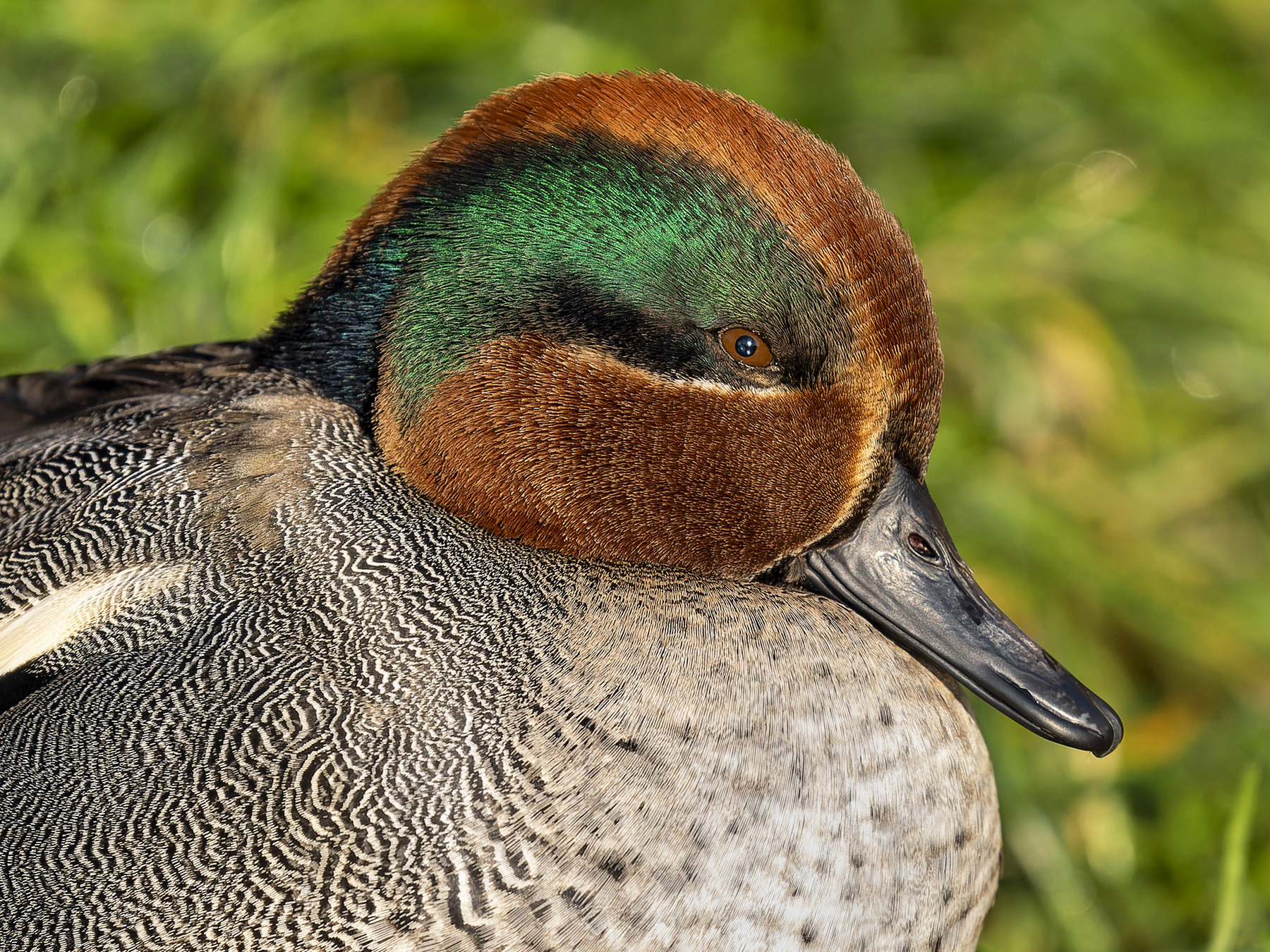
Teal are small dabbling ducks with small bills and short necks. They show distinct plumage differences between the sexes, but both have bright green speculums. Males are adorned with chestnut head plumage, complete with a broad metallic emerald stripe from the eye to the nape. The breast and front of the neck are speckled, while the flanks and rest of the neck are finely vermiculated.
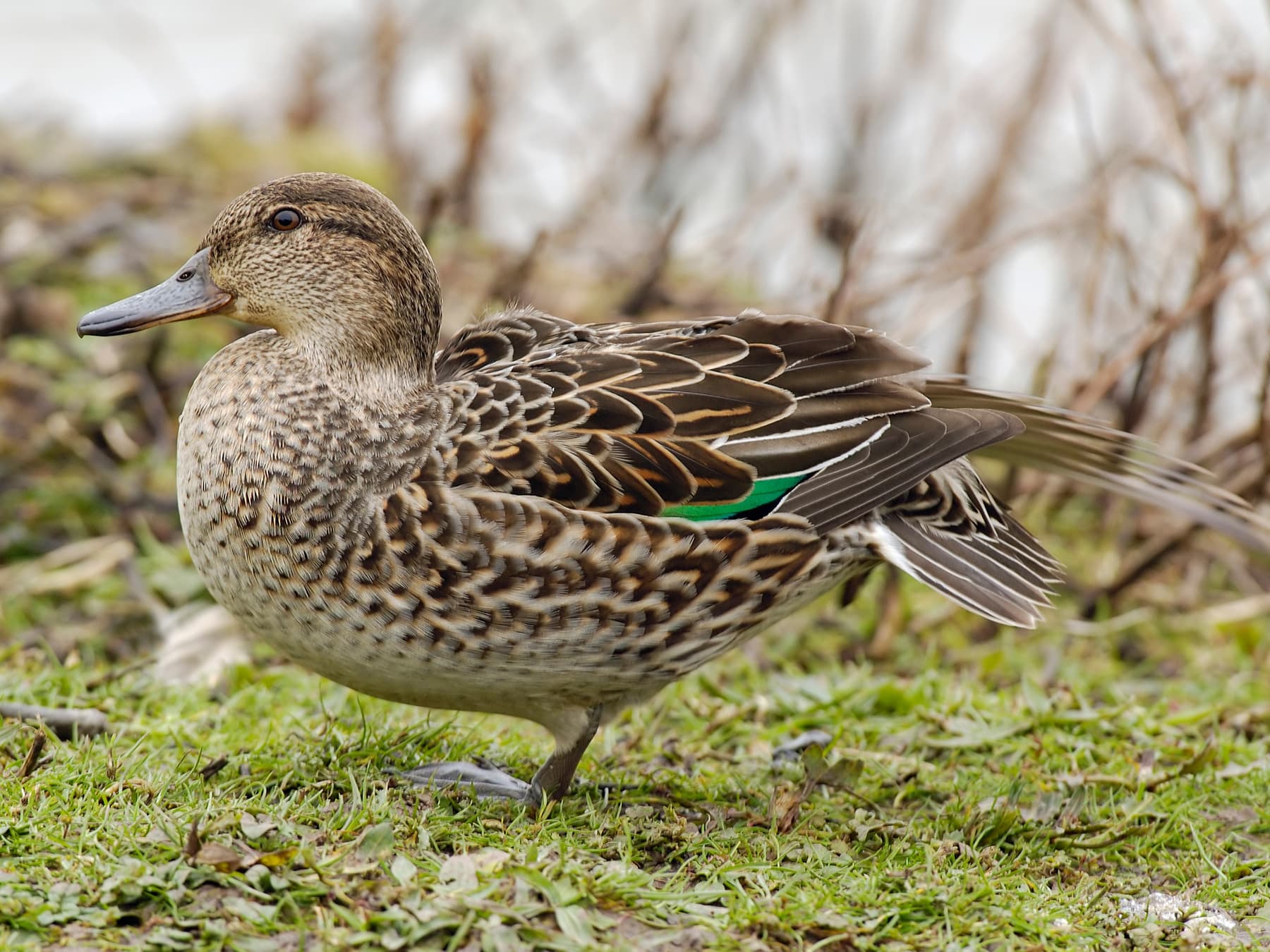
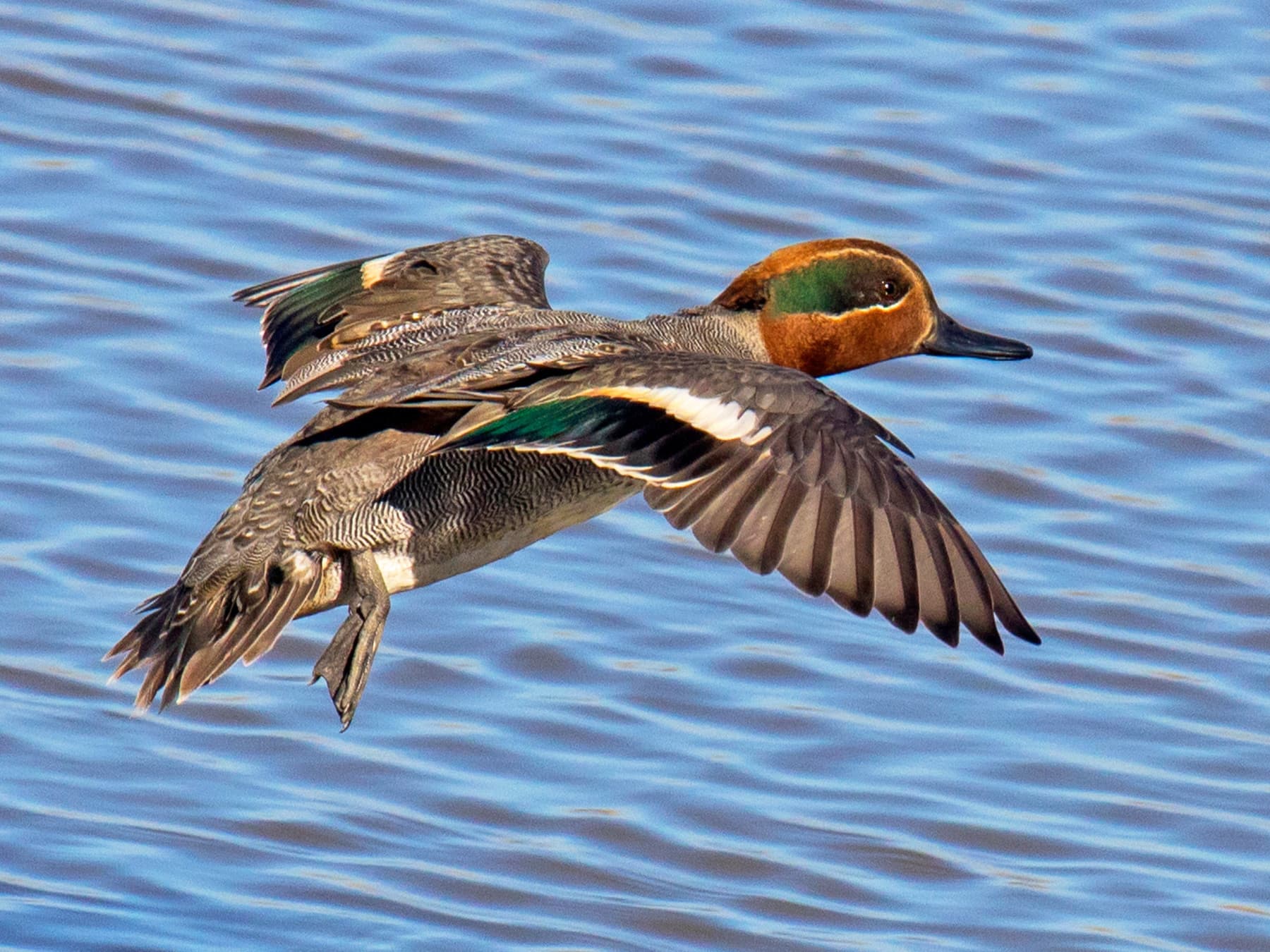
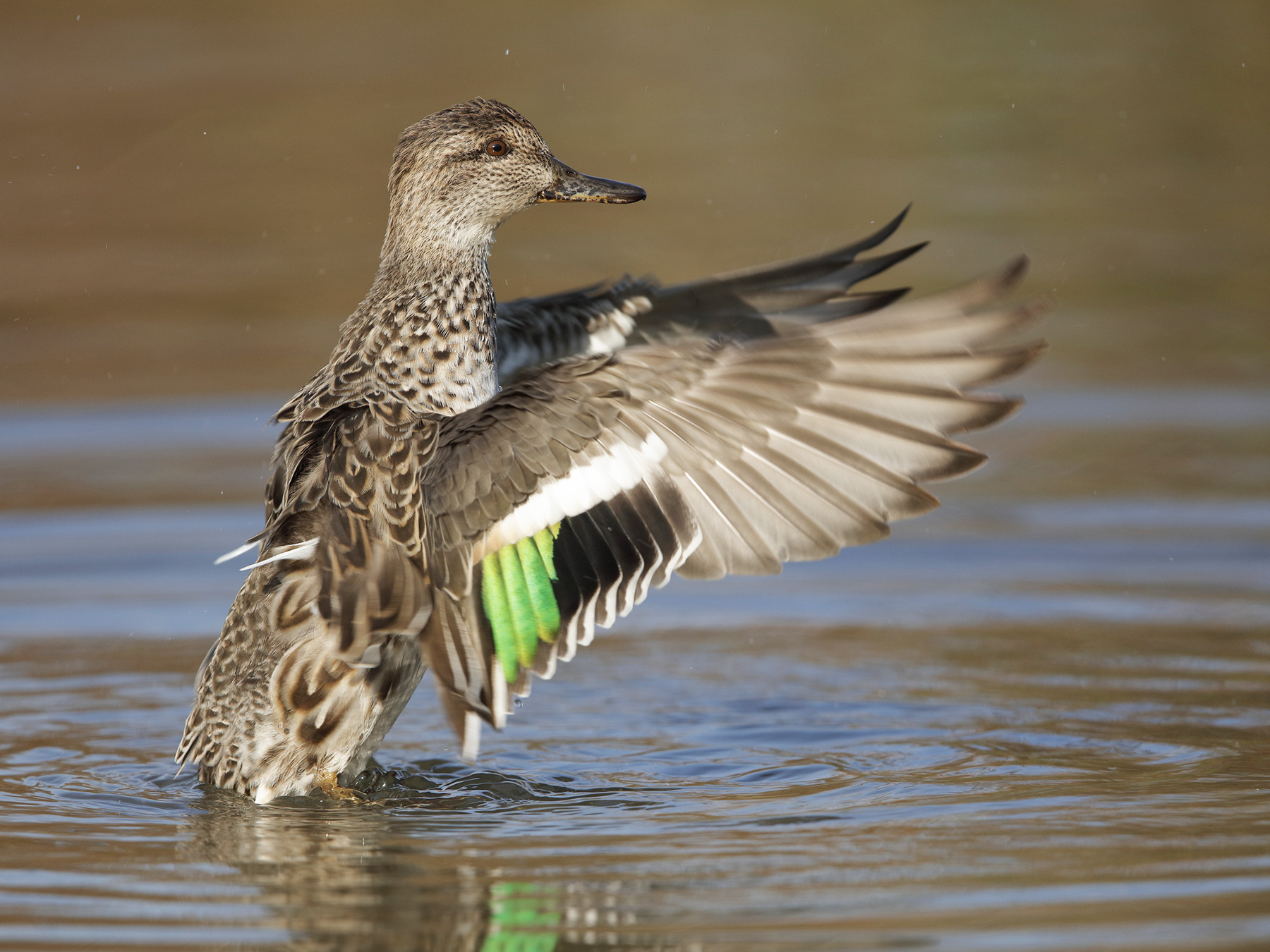
Female Teals are less distinctive than males, with rather generic female duck plumage. They are heavily marked in grey and brown and darkest on the back and crown. A dark stripe runs horizontally through each eye, and the bill is black. Their most distinctive features are the bright green speculums on each wing and a cream stripe on either side of the tail.
Juvenile Teal look very similar to adult females but have spotted underparts.
The Teal’s small size helps to differentiate it from other UK wildfowl, although females and immature birds have similar plumage to other female ducks, particularly the similar-sized Garganey.
How big are Teal?
Eurasian Teal are the smallest waterfowl species in the United Kingdom, about the same weight as a Moorhen.
Length
Teal have a body length of 34 to 38 centimetres.
Weight
They weigh 240 to 400 grams. Males (275 - 400g) are generally heavier than females (245 - 360g).
Wingspan
These fast-flying and manoeuvrable ducks have a wingspan of 58 to 64 centimetres.
Its size
Adults- Length
- 34–38 cm
- Wingspan
- 53–59 cm
- Weight
- 250–450 g
Its song and calls
What sound does a Teal make?
Male Teals produce a far-carrying two-syllabled whistle (‘prrip-prrip’ / ‘krrik krrik’) during courtship. Females make a soft, high-pitched quacking call during both the breeding and non-breeding seasons.
- Call0:00 / 0:16
Recorded in Bretagne, France · June 2025
When and where to see it
OctoberIn season
Most recorded in October
- 1. Stockton-on-Tees2.4%
- 2. Clackmannanshire2.0%
- 3. Belfast2.0%
- 4. Falkirk1.8%
- 5. Carmarthenshire1.8%
Each dot is a county, state or province: the bigger and darker, the larger the bird’s share of that place’s bird records that month. Grey dots: no regular records. The ringed point is the centre of the bird’s records this month; the arrow shows how it moved since last month, and the dashed loop its path through the year. “Arrivals” colours places where it becomes regular this month (orange) or is in its last regular month (grey). GBIF eBird Observation Dataset, 2019–2024. Map data: Natural Earth, US Census Bureau; place centres © OpenStreetMap contributors.
In your area
See when the Eurasian Teal is recorded in your county, state or province.
How often the Eurasian Teal turns up in the UK, Ireland, the United States and Canada through the year, from birdwatchers' records.
United Kingdom
Winter visitor · all year · most records in January
Ireland
Winter visitor · all year · most records in January
United States
Winter visitor · all year · most records in March
Canada
Winter visitor · all year · most records in October
Show as a table
| Month | United Kingdom | Ireland | United States | Canada |
|---|---|---|---|---|
| January | 1.1% (regular) | 1.4% (regular) | 0.36% (regular) | 0.30% (regular) |
| February | 1.1% (regular) | 1.3% (regular) | 0.36% (regular) | 0.31% (regular) |
| March | 1.0% (regular) | 1.2% (regular) | 0.47% (regular) | 0.46% (regular) |
| April | 0.74% (regular) | 0.55% (regular) | 0.31% (regular) | 0.69% (regular) |
| May | 0.21% (regular) | 0.087% (regular) | 0.088% (regular) | 0.29% (regular) |
| June | 0.25% (regular) | 0.11% (regular) | 0.059% (regular) | 0.18% (regular) |
| July | 0.38% (regular) | 0.13% (regular) | 0.031% (regular) | 0.16% (regular) |
| August | 0.74% (regular) | 0.34% (regular) | 0.12% (regular) | 0.38% (regular) |
| September | 1.1% (regular) | 0.85% (regular) | 0.22% (regular) | 0.68% (regular) |
| October | 1.0% (regular) | 1.1% (regular) | 0.35% (regular) | 0.85% (regular) |
| November | 1.1% (regular) | 1.3% (regular) | 0.45% (regular) | 0.64% (regular) |
| December | 1.1% (regular) | 1.4% (regular) | 0.35% (regular) | 0.30% (regular) |
Recorded regularly in
Worldwide: recorded regularly in 120 countries
Countries where it was recorded in at least 3 of the 6 years 2019–2024. Linked countries have their own bird list.
Europe (47)
- Åland Islands
- Albania
- Austria
- Belarus
- Belgium
- Bosnia & Herzegovina
- Bulgaria
- Croatia
- Czechia
- Denmark
- Estonia
- Faroe Islands
- Finland
- France
- Germany
- Greece
- Guernsey
- Hungary
- Iceland
- Ireland
- Isle of Man
- Italy
- Jersey
- Kosovo
- Latvia
- Liechtenstein
- Lithuania
- Luxembourg
- Malta
- Moldova
- Montenegro
- Netherlands
- North Macedonia
- Norway
- Poland
- Portugal
- Romania
- Russia
- Serbia
- Slovakia
- Slovenia
- Spain
- Svalbard & Jan Mayen
- Sweden
- Switzerland
- Ukraine
- United Kingdom
Asia (40)
- Armenia
- Azerbaijan
- Bahrain
- Bangladesh
- Bhutan
- Cambodia
- China
- Cyprus
- Georgia
- Hong Kong SAR China
- India
- Iran
- Iraq
- Israel
- Japan
- Jordan
- Kazakhstan
- Kuwait
- Kyrgyzstan
- Lebanon
- Macao SAR China
- Malaysia
- Mongolia
- Myanmar (Burma)
- Nepal
- Oman
- Pakistan
- Palestinian Territories
- Philippines
- Qatar
- Saudi Arabia
- South Korea
- Sri Lanka
- Taiwan
- Tajikistan
- Thailand
- Turkey
- United Arab Emirates
- Uzbekistan
- Vietnam
North America (22)
- Antigua & Barbuda
- Bahamas
- Barbados
- Belize
- Bermuda
- Canada
- Cayman Islands
- Costa Rica
- Cuba
- Curaçao
- El Salvador
- Greenland
- Guadeloupe
- Guatemala
- Honduras
- Mexico
- Nicaragua
- Puerto Rico
- St Kitts & Nevis
- St Martin
- St Pierre & Miquelon
- United States
Oceania (2)
- Northern Mariana Islands
- US Outlying Islands
Data: EOD – eBird Observation Dataset (Cornell Lab of Ornithology), accessed via GBIF.org, CC BY 4.0. Records from 2019–2024, aggregated and filtered by Birdfact. How these lists are made
What is the habitat of a Teal?
Teal inhabit a variety of fresh and brackish water environments. They prefer nutrient-poor habitats in the United Kingdom but can be found in many estuaries, lakes, ponds, quarries, and ditches.
What is the range of a Teal?
The Eurasian Teal has an extensive distribution in the Old World. They occur across most of Europe, Asia, and parts of North Africa. The closely related Green-winged Teal (Anas carolinensis) is widespread in North America and was previously considered a subspecies of our Eurasian birds.
Where do Teal live?
Teal are highly aquatic birds that spend most of their time on and around the water. They often forage on mudflats despite being rather ungainly on foot. These birds also leave the water to nest, although most nests are within a stone’s through of the bank.
How rare are Teal?
Teal are rare breeding birds in the United Kingdom with a population of about 4,000 pairs. However, they are far more numerous in the winter when over 400,000 individuals arrive from Iceland, Continental Europe, and Russia.
Where can you see Teal in the UK?
Look out for Teal in suitable habitats throughout the UK, particularly in the winter non-breeding season between October and February. They are far more localised in the summer when they breed on upland bogs and moors in Northern Britain.
Migration
Do Teal migrate?
Teal have both migratory and resident populations. A few thousand Teal nest in the UK, but the vast majority arrive from Iceland, Mainland Europe, and Russia for the winter.
Are Teal native to the UK?
Eurasian Teal are a native species in the United Kingdom.
Tips for seeing it
- Look for Eurasian Teals in shallow wetlands, estuaries, and coastal lagoons
- Listen for their distinctive high-pitched whistle, especially during flight
- Observe their rapid take-offs and agile flying patterns
- In the UK, visit nature reserves during winter months for the best viewing opportunities
What it eats
What do Teal eat?
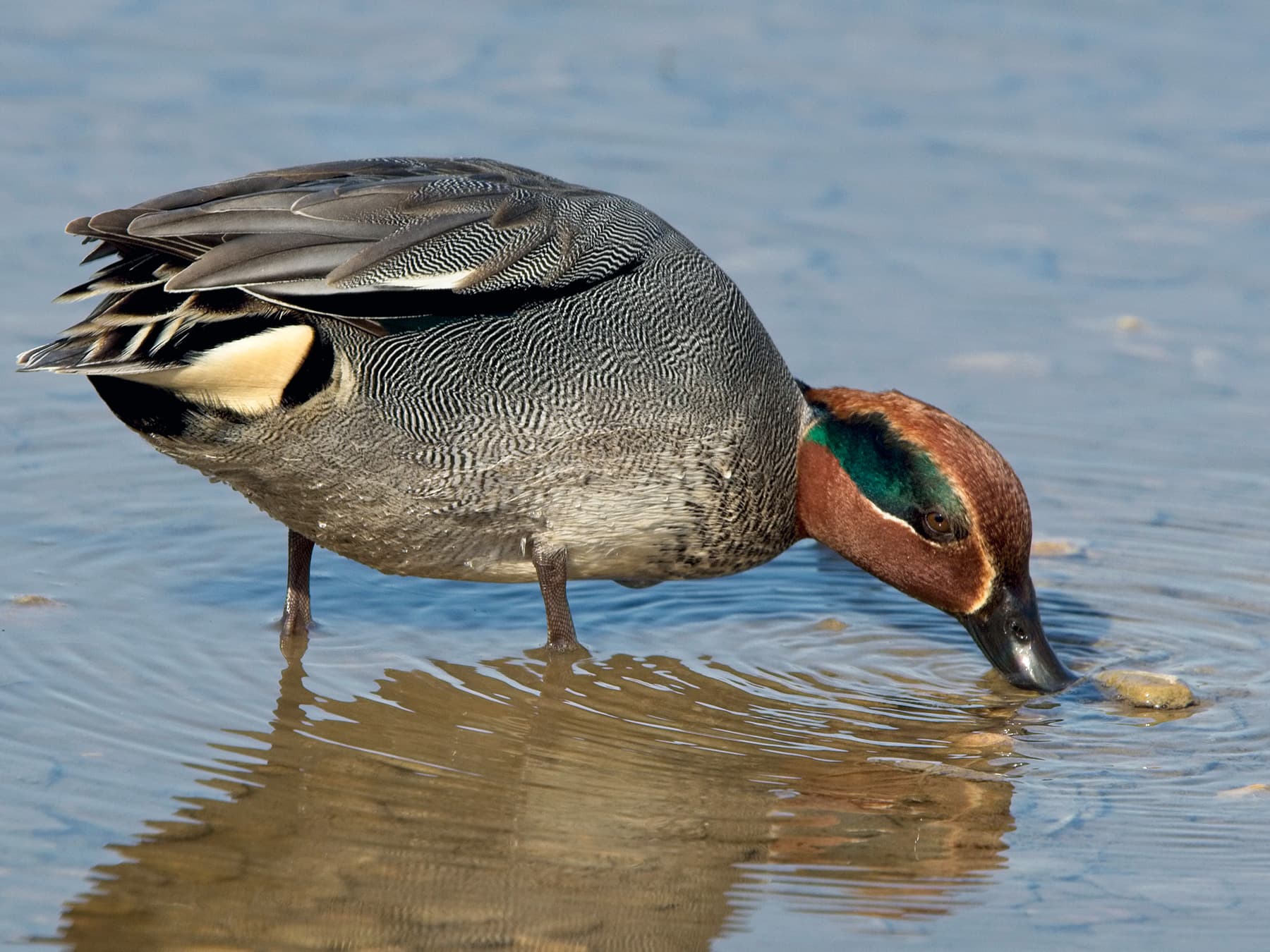
Teal have a varied diet, including invertebrates, seeds, and aquatic vegetation. They find most of their food at the water’s surface or to a depth of about 25 centimetres. These dabbling ducks may catch small flying insects above the water, dip their head under the water, or upend, but rarely dive.
What do Teal chicks eat?
Teal ducklings feed primarily on insects and other invertebrates (up to 90%) for their first two weeks. They find most of their food at or above the water’s surface. Their mother will guide them to suitable feeding areas, but the precocial young birds must feed themselves.
Nesting and breeding
Where do Teal nest?
Teals nest on the ground, usually under thick cover, where they are well hidden from predators. They nest close to the water, usually within 50 meters in the United Kingdom. The female builds the nest alone, first by excavating a scrape and then lining it with dry leaves and vegetation. Once all her eggs are laid, the female Teal will complete the nest with a lining of her own down feathers.
When do Teal nest?
Teal nest from mid-April to June in the UK. They lay a single egg each day and then incubate the clutch for approximately three weeks. The downy ducklings are ready to leave the nest on their first day but fledge after about a month.
Do Teal breed in the UK?
Teal are relatively rare but regular nesters in Northern Britain, with an estimated breeding population of 2,700 to 4,750 pairs. The breeding population has increased since the 1980s despite a slight reduction in their range.
What do Teal eggs look like?
Teal usually lay six to nine (average 8) cream white to olive buff eggs, each measuring approximately 45 millimetres long and 33 millimetres wide.
Do Teal mate for life?
Teal form monogamous pairs in the winter, but males end the relationship once incubation begins. Paired males may attempt to mate with other females too, sometimes injuring or even killing them in the process.
Behaviour
Are Teal aggressive?
Teal can be rather aggressive little wildfowl. Both males and females will fight by striking their opponent with their wings or by pecking and pulling with their bills. However, they rarely attack other bird species and are more likely to be victimised by larger waterfowl.
Where do Teal sleep at night?
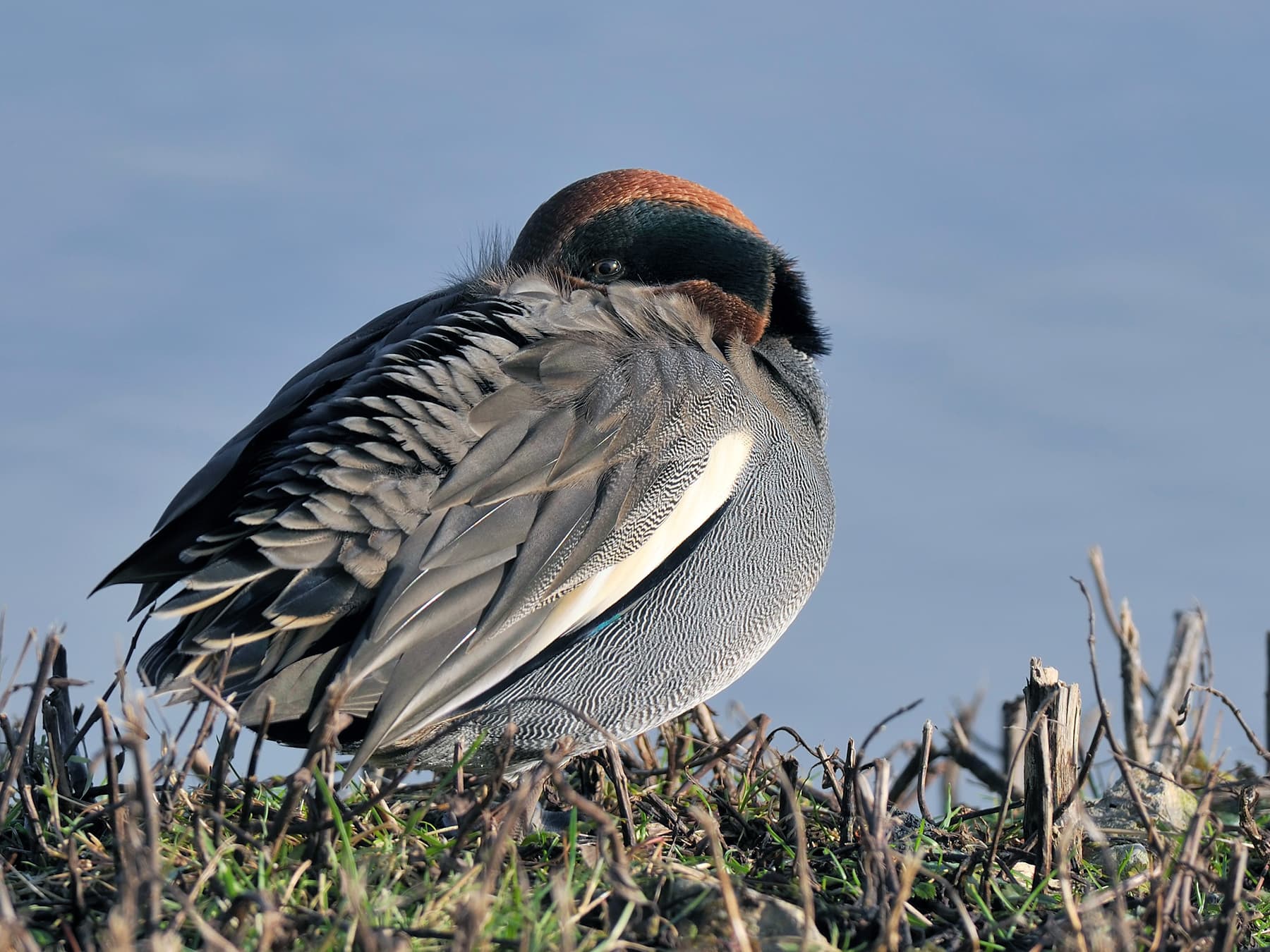
Teal sleep on the water, in the shallows, or on low perches near the bank. They typically sleep standing on one leg with their head turned back and their bill nestled between their shoulder feathers. However, Teal are not strictly diurnal and will feed in the evening or through the night in the colder months.
Lifespan and predators
How long do Teal live?
Teal can live at least 25 years in the wild, although their average life expectancy is closer to three years.
What are the predators of Teal?
Teal are most vulnerable to birds of prey like the Buzzard, Marsh Harrier, White-tailed Eagle, and Peregrine Falcon. Females are also particularly vulnerable to foxes while incubating their eggs.
Are Teal protected?
Teal are protected in the United Kingdom by the Wildlife and Countryside Act 1981.
Are Teal endangered?
Teal are not endangered. They are an amber-listed species in the UK and globally classified as ‘Least Concern’ on the IUCN Red List.
Conservation
While currently listed as Least Concern, Eurasian Teals face threats from habitat loss and degradation, particularly the draining of wetlands. Climate change may also impact their breeding and wintering grounds.
Conservation efforts focus on protecting and restoring wetland habitats across their range.
More photos
6 photos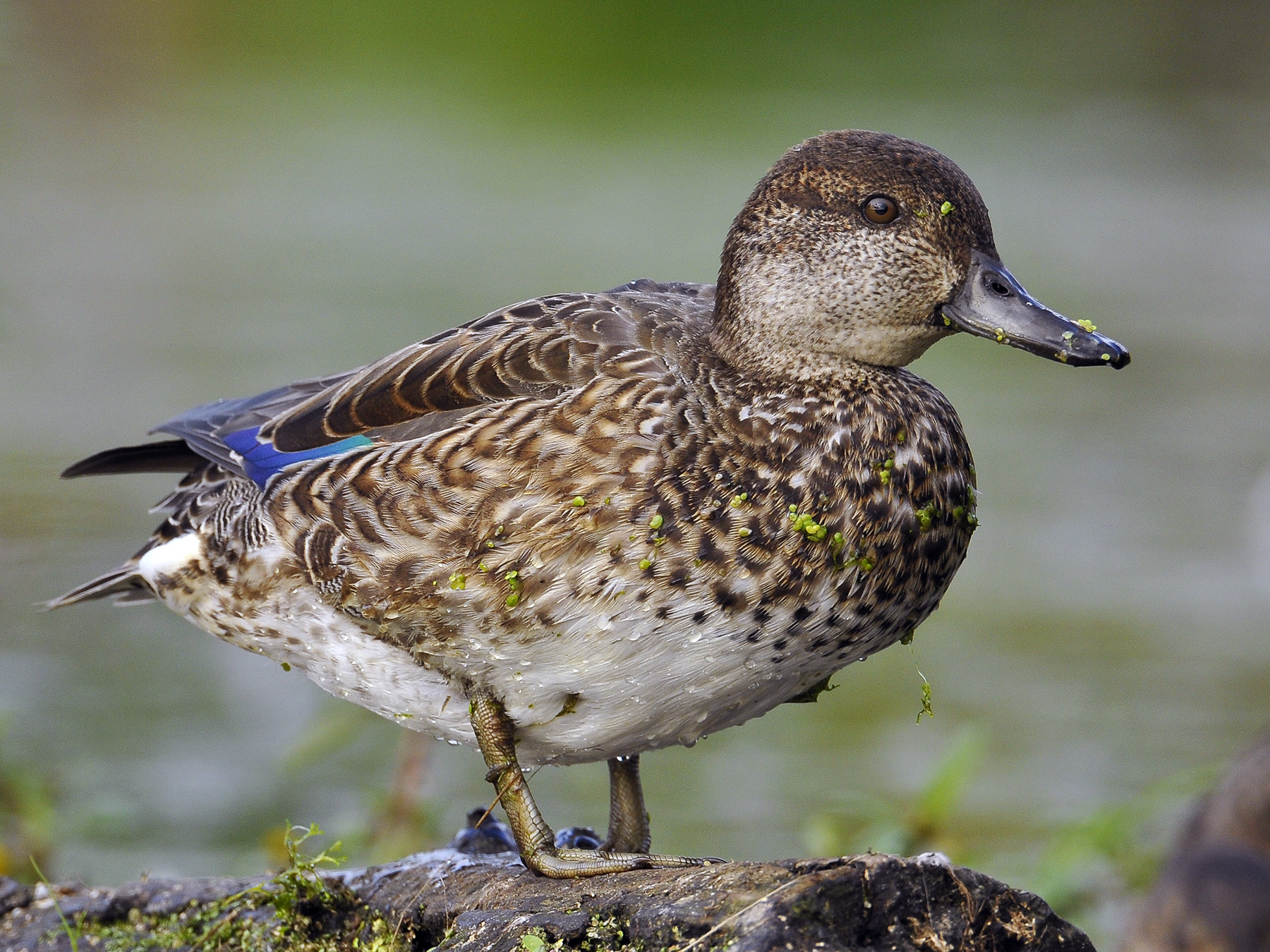
Eurasian Teal guides
1 guidesQuick facts
- Length
- 34–38 cm
- Wingspan
- 53–59 cm
- Weight
- 250–450 g
- Lifespan
- 10–15 years
- Family
- Ducks, Geese & Swans
- Migration
- Long-distance Migrant
- Global status (IUCN)
- Least Concern
- World population
- 2,800,000 mature individuals
- Population trend
- Unknown
- Also called
- Common Teal, Green-winged Teal (Eurasian subspecies)
- Scientific name
- Anas crecca
Questions
1What is the difference between a Eurasian Teal and a Green-winged Teal?
Eurasian and Green-winged Teal were long considered to be subspecies of a single species (Anas crecca). Despite a very similar appearance, the North American birds have been elevated to full species status and are now known as the Green-winged Teal (A. carolinensis).
Apart from their New World distribution, these birds differ from the Eurasian Teal (A. crecca) in having a vertical white stripe on either side of the breast, below the head. Green-winged Teals also lack the white stripe on the closed wing below the scapulars.
Sources
2- 1BirdLife International. 2020. Anas crecca. The IUCN Red List of Threatened Species 2020: e.T22680321A181692388. Source (opens in a new tab)
- 2Partners in Flight 2019, Wetlands International 2020

Checked by
Nathan Cope, founder and editor
Nathan founded Birdfact and leads its writers and contributors in the UK, the US and Canada. He has watched and studied birds for more than ten years, and checks every article and species guide before it’s published.