


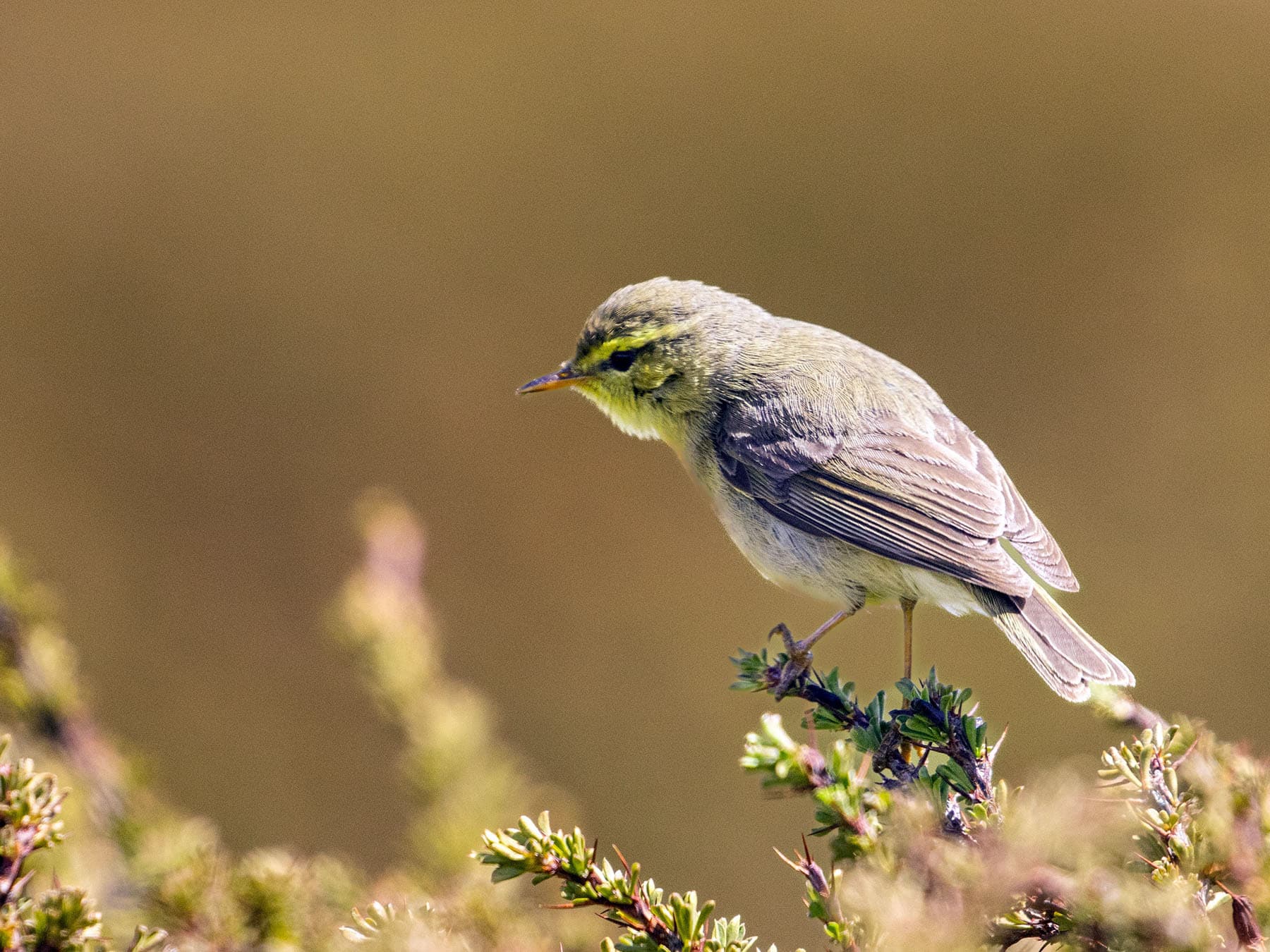
Sulphur-bellied Warbler
Olivaceous Leaf Warbler · Phylloscopus griseolus
By the Birdfact teamChecked by Nathan Cope
On this page11 sections
How to recognise it
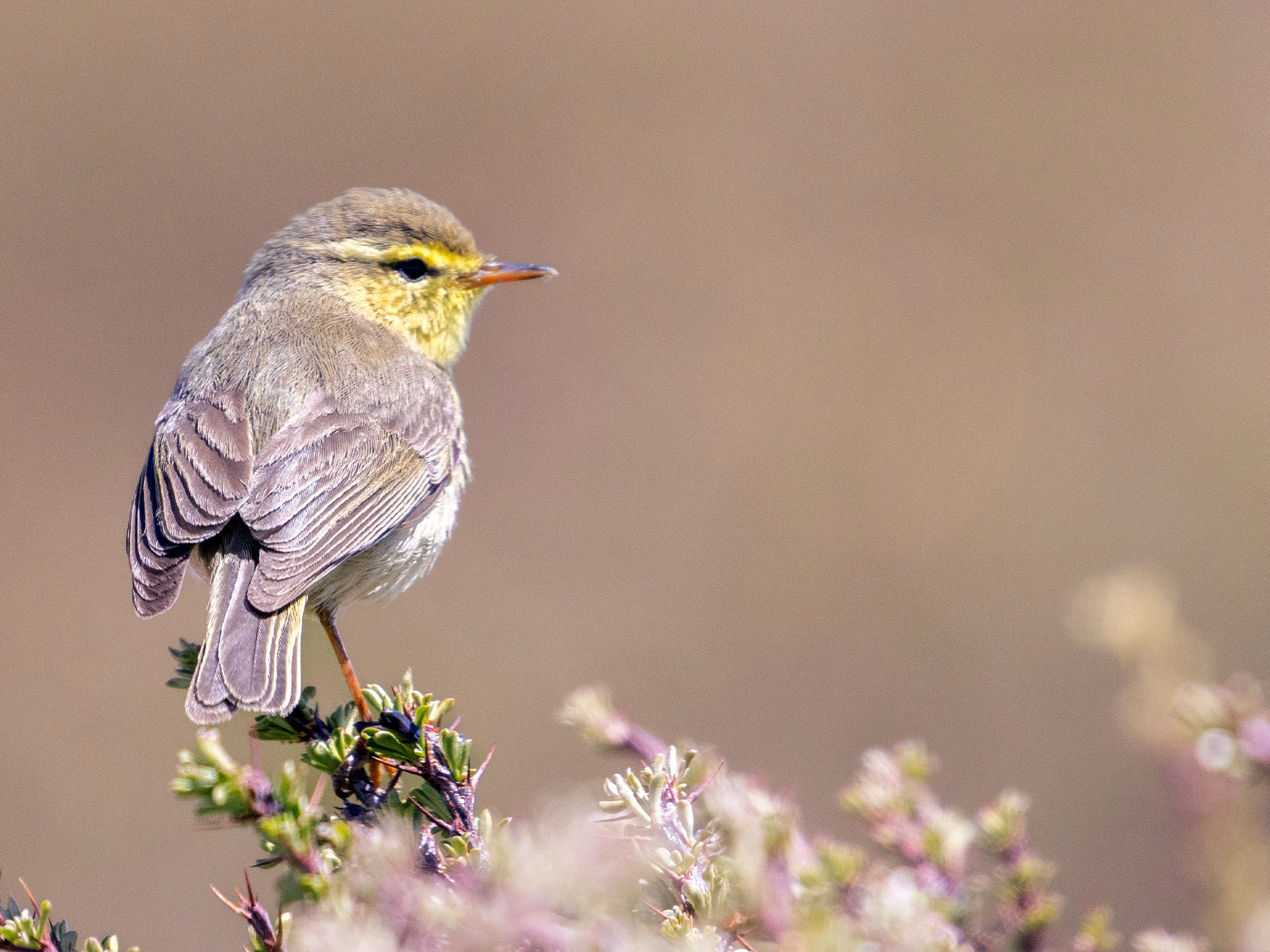
The Sulphur-bellied Warbler is a small warbler with brown upperparts and bright yellow underside. It has a distinctive bright yellow stripe above the eye (supercilium) and a dark eyestripe. The underparts are lemon-yellow, becoming more buff-coloured on the flanks.
Both sexes look similar. Juveniles closely resemble adults but are slightly warmer brown above and have duller yellow below with more buff colouring on the breast.
Its size
Adults- Length
- 11–12 cm
- Wingspan
- 16–18 cm
- Weight
- 7–10 g
Its song and calls
The Sulphur-bellied Warbler's song is a series of high-pitched, tinkling notes, often described as 'tsi-tsi-tsi-tsi-tsi'.
Its call is a sharp, metallic 'tink' or 'tzit', frequently repeated when alarmed or during foraging. These vocalisations are crucial for identification in its dense habitat.
When and where to see it
The Sulphur-bellied Warbler is not recorded regularly in the UK, Ireland, the United States or Canada.
United Kingdom: recorded in 1 of the 6 years. Too few years to count as a regular visitor.
Worldwide: recorded regularly in 7 countries
Countries where it was recorded in at least 3 of the 6 years 2019–2024. Linked countries have their own bird list.
Asia (7)
- China
- India
- Kazakhstan
- Kyrgyzstan
- Mongolia
- Pakistan
- Tajikistan
Data: EOD – eBird Observation Dataset (Cornell Lab of Ornithology), accessed via GBIF.org, CC BY 4.0. Records from 2019–2024, aggregated and filtered by Birdfact. How these lists are made
Tips for seeing it
- Look for movement in the canopy of coniferous and mixed forests
- Listen for its distinctive call, which is often the best way to locate this bird
- Observe its characteristic wing and tail flicking while foraging
- Focus on areas with dense undergrowth in mountainous regions
What it eats
The Sulphur-bellied Warbler primarily feeds on small insects and their larvae. It gleans these from leaves and branches, often hovering briefly to snatch prey from the underside of foliage.
Occasionally, it may supplement its diet with small berries or seeds, especially during migration.
Nesting and breeding
Breeding occurs from May to July, with pairs forming shortly after arrival at breeding grounds. Males establish territories through song and display flights.
The nest is a domed structure with a side entrance, built on or near the ground, often hidden in dense vegetation or rock crevices. The female typically lays 3-5 white eggs with reddish-brown speckles.
Incubation lasts about 12-14 days, primarily by the female. Both parents feed the nestlings, who fledge after approximately 14-16 days.
Behaviour
This warbler is known for its active foraging behaviour, constantly moving through the foliage in search of insects. It often flicks its wings and tail while feeding.
The Sulphur-bellied Warbler is generally solitary or seen in pairs, rarely joining mixed-species flocks.
Conservation
The Sulphur-bellied Warbler is currently listed as Least Concern by the IUCN. However, like many mountain-dwelling species, it may face future challenges due to climate change affecting its habitat. Monitoring of population trends is ongoing to detect any significant changes.
More photos
2 photos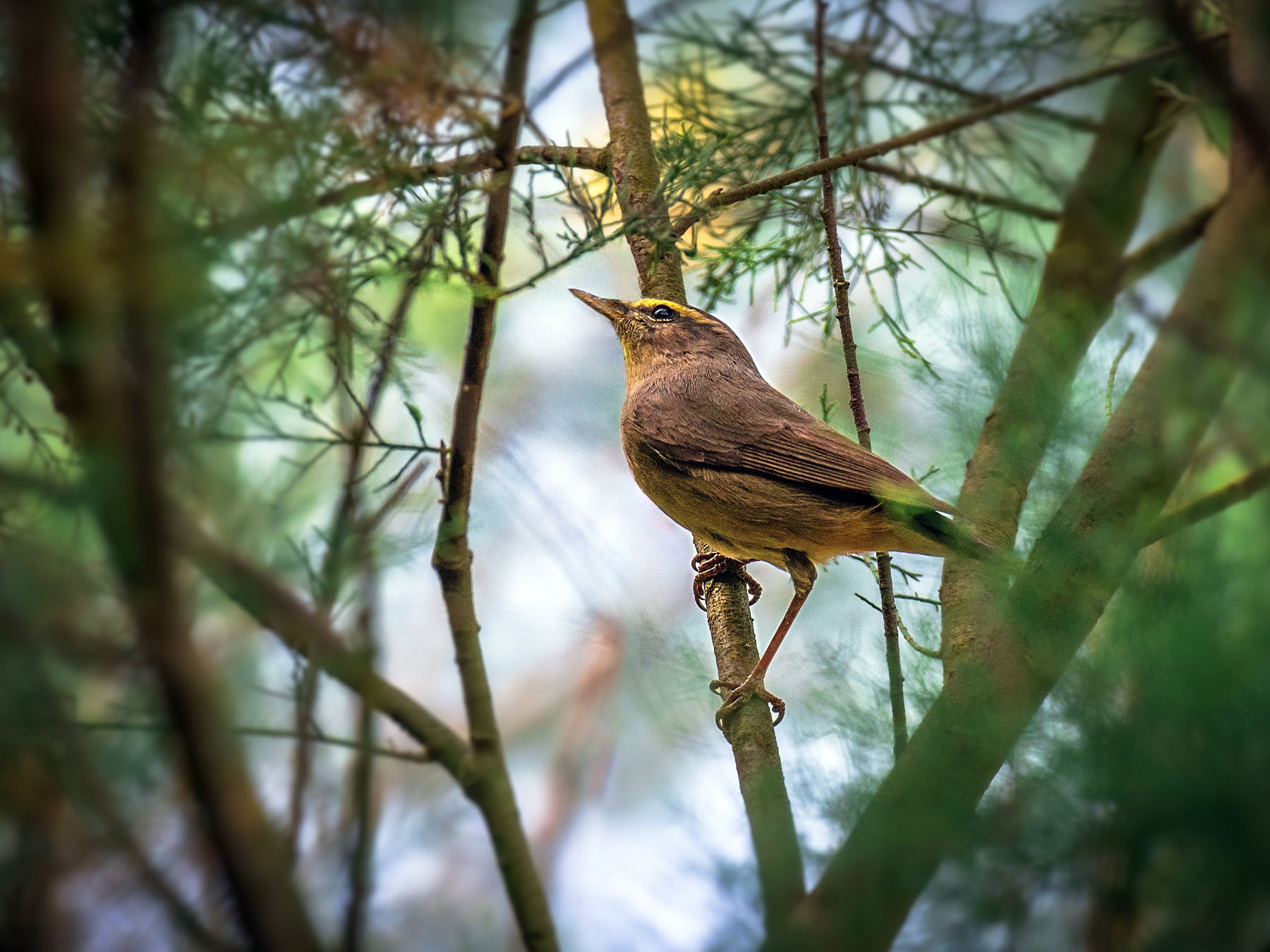
Quick facts
- Length
- 11–12 cm
- Wingspan
- 16–18 cm
- Weight
- 7–10 g
- Lifespan
- 3–5 years
- Family
- Leaf Warblers
- Migration
- Altitudinal migrant
- Global status (IUCN)
- Least Concern
- World population
- Not quantified
- Population trend
- Stable
- Also called
- Olivaceous Leaf Warbler
- Scientific name
- Phylloscopus griseolus
Sources
3- 1BirdLife International. 2024. Phylloscopus griseolus. The IUCN Red List of Threatened Species 2024: e.T22715278A263913947. Source (opens in a new tab)
- 2BirdLife International. 2024. Phylloscopus griseolus. The IUCN Red List of Threatened Species 2024: e.T22715278A263913947. Source (opens in a new tab)
- 3Lifespan estimate based on similar species

Checked by
Nathan Cope, founder and editor
Nathan founded Birdfact and leads its writers and contributors in the UK, the US and Canada. He has watched and studied birds for more than ten years, and checks every article and species guide before it’s published.