


Squacco Heron
Crab Heron · Ardeola ralloides
By the Birdfact teamChecked by Nathan Cope
On this page11 sections
How to recognise it
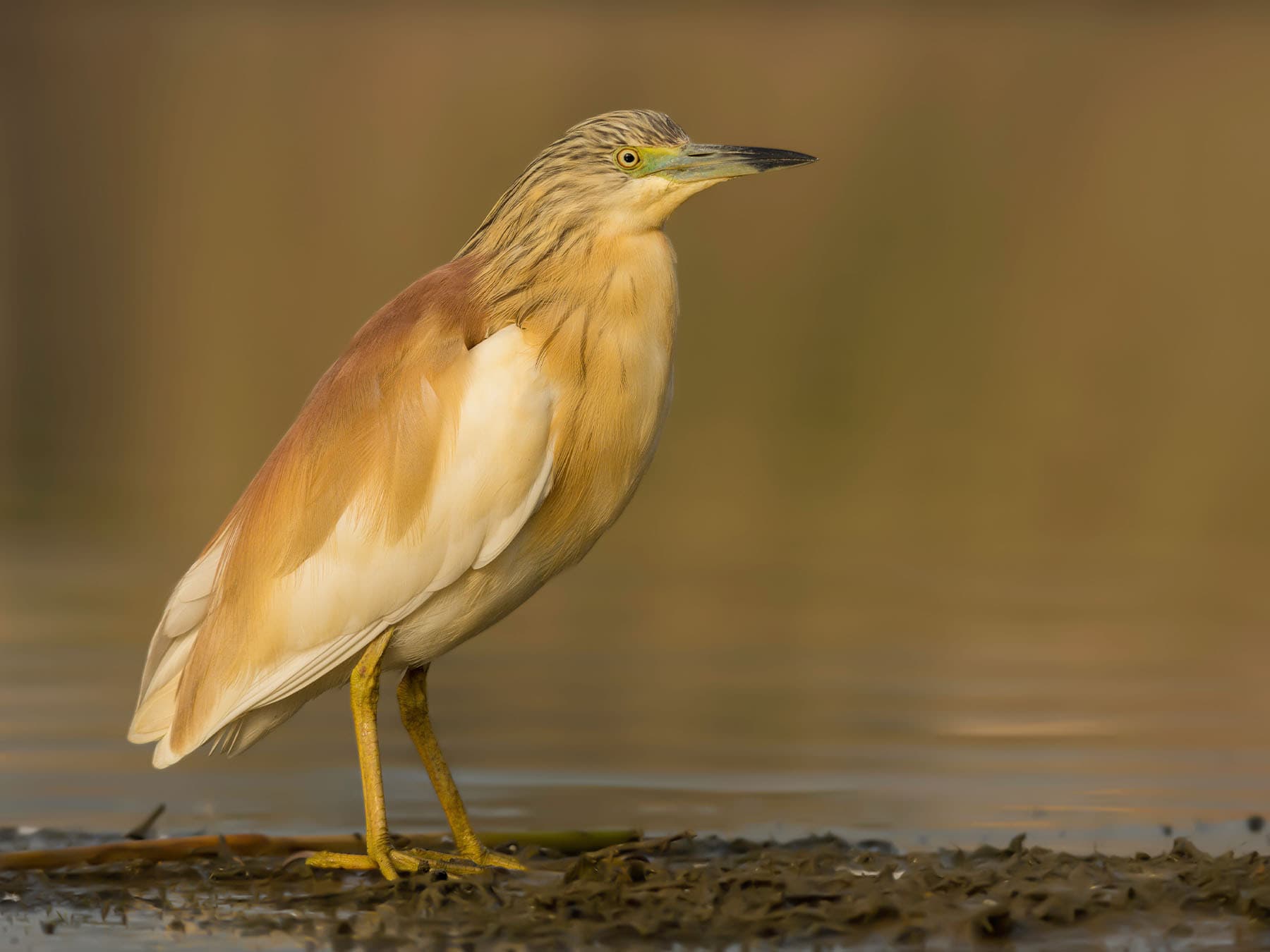
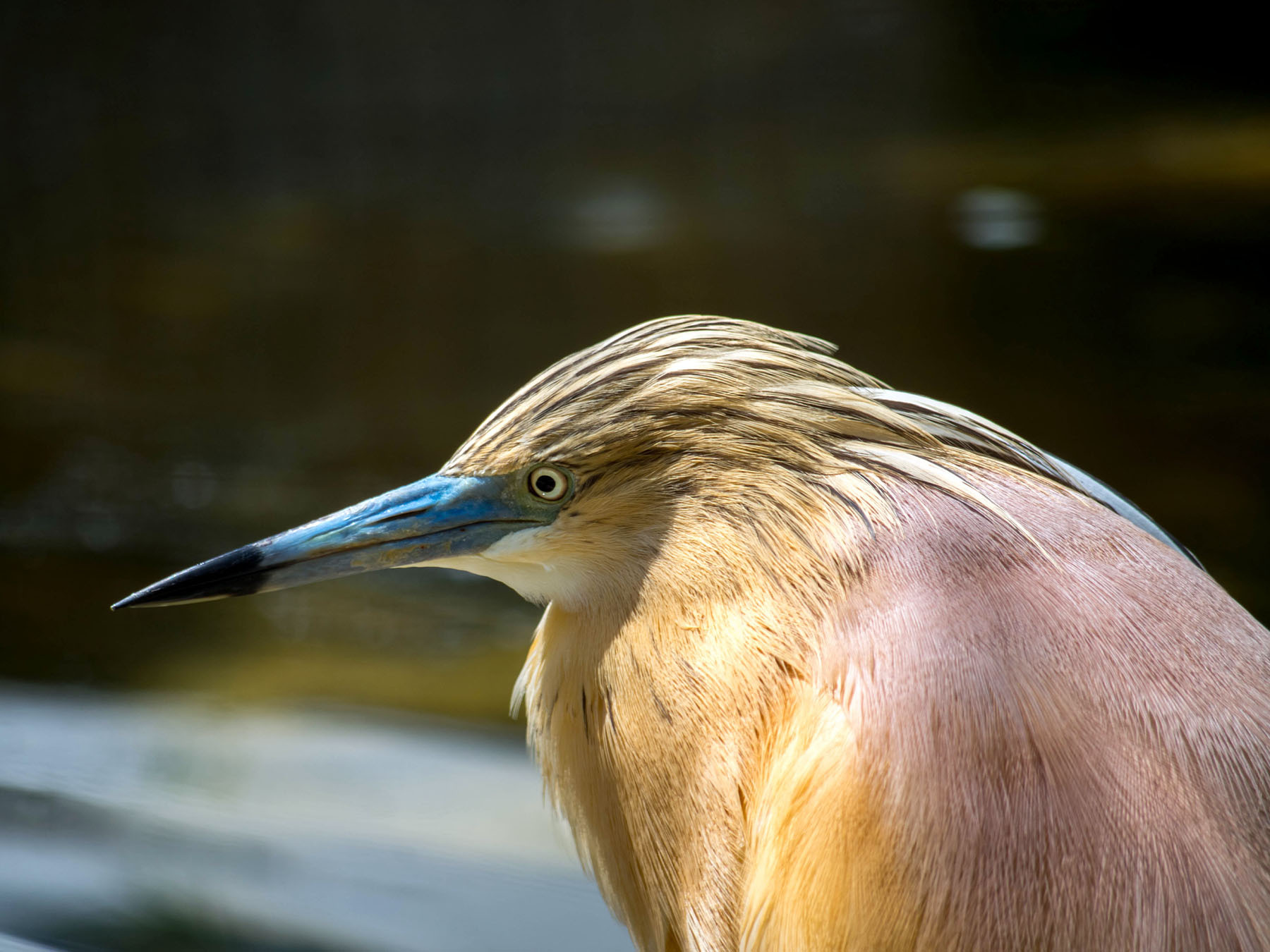
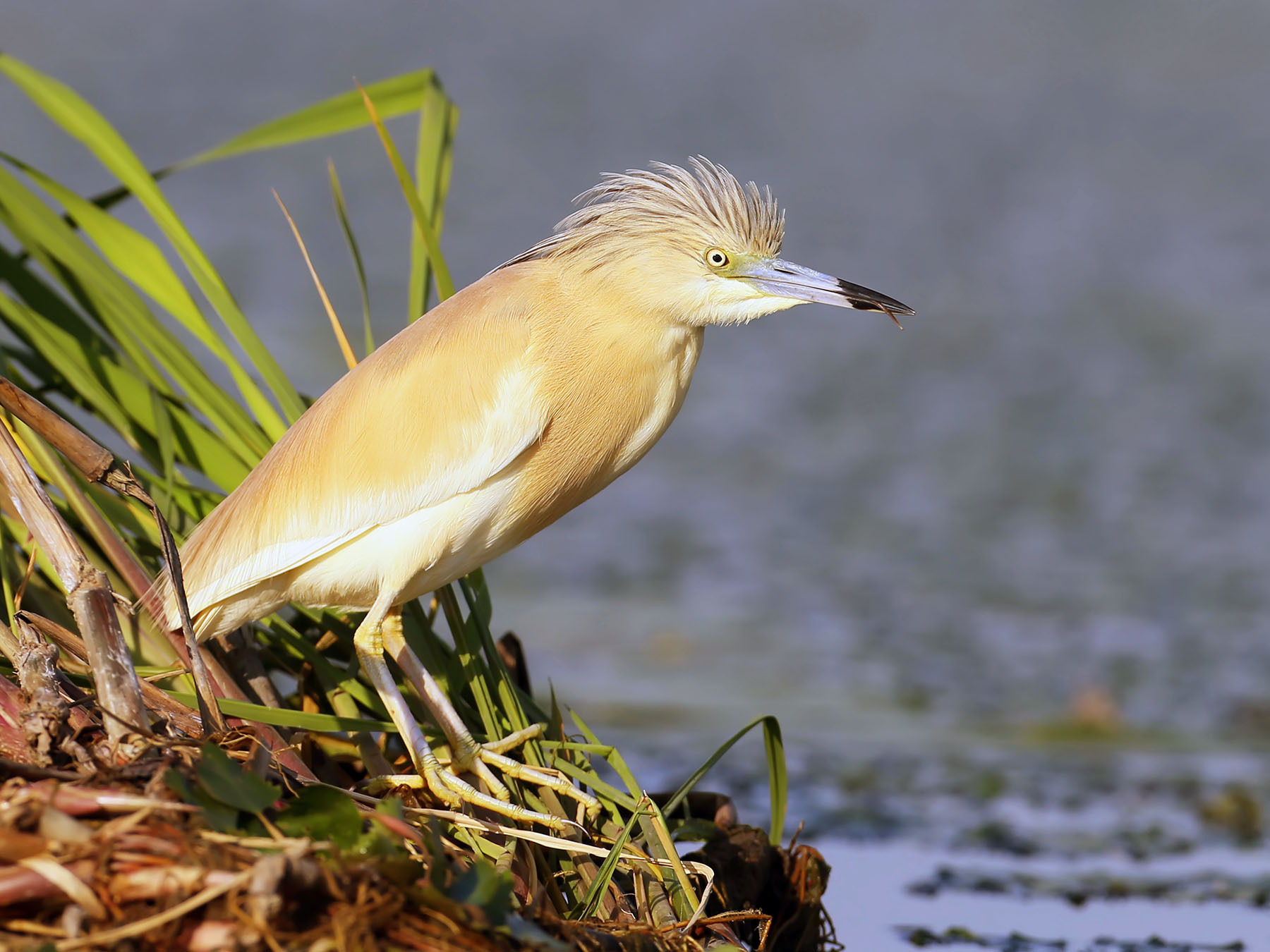
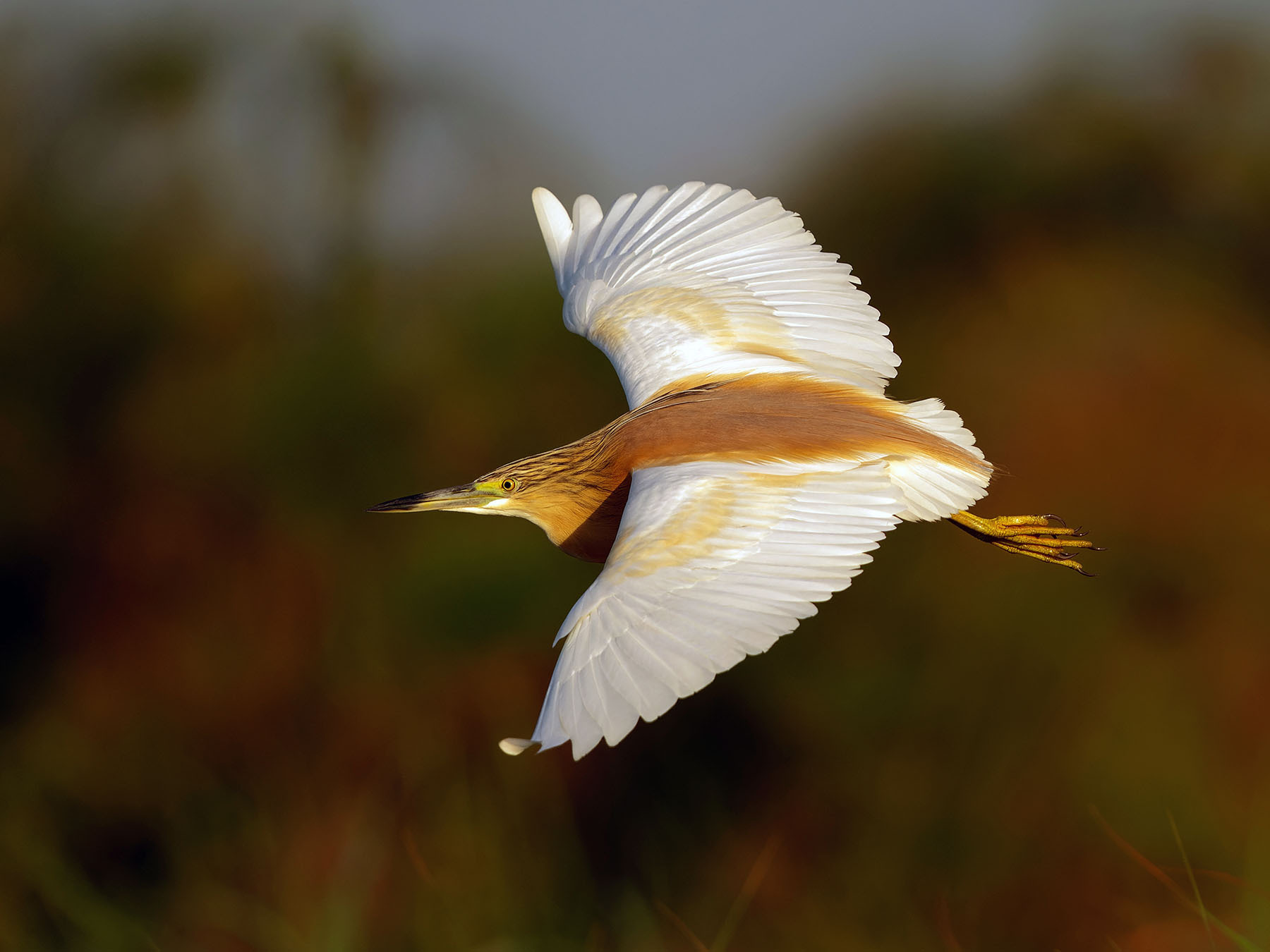
The Squacco Heron is a small, stocky heron with distinctive buff-brown plumage and white wings. Its back and crown are streaked with dark brown, while the neck and chest display fine brown striations. The bird has a robust blue-green bill and greenish-yellow legs.
During the breeding season, adults develop long, white plumes on their heads and back. Juveniles are similar to non-breeding adults but have darker streaking and lack the ornate plumes.
Its size
Adults- Length
- 40–49 cm
- Wingspan
- 76–84 cm
- Weight
- 225–370 g
Its song and calls
The Squacco Heron is generally quiet, but it does vocalise during breeding season and when alarmed. Its most common call is a harsh, guttural 'krraaak' or 'karrr'.
During courtship, males may produce a series of soft, croaking sounds to attract females.
When and where to see it
OctoberLeaving
Most recorded in October
- 1. Somersetunder 0.1%
Each dot is a county, state or province: the bigger and darker, the larger the bird’s share of that place’s bird records that month. Grey dots: no regular records. The ringed point is the centre of the bird’s records this month; the arrow shows how it moved since last month, and the dashed loop its path through the year. “Arrivals” colours places where it becomes regular this month (orange) or is in its last regular month (grey). GBIF eBird Observation Dataset, 2019–2024. Map data: Natural Earth, US Census Bureau; place centres © OpenStreetMap contributors.
In your area
See when the Squacco Heron is recorded in your county, state or province.
How often the Squacco Heron turns up in the UK and Ireland through the year, from birdwatchers' records.
United Kingdom
Passage migrant · regularly May–Aug · most records in August
Ireland
Scarce · regularly May · most records in May
Show as a table
| Month | United Kingdom | Ireland |
|---|---|---|
| January | – | – |
| February | – | – |
| March | – | – |
| April | <0.001% | – |
| May | 0.001% (regular) | 0.005% (regular) |
| June | <0.001% | <0.001% |
| July | 0.002% | – |
| August | 0.003% (regular) | – |
| September | <0.001% | – |
| October | <0.001% | – |
| November | <0.001% | – |
| December | – | – |
Recorded regularly in
Worldwide: recorded regularly in 91 countries
Countries where it was recorded in at least 3 of the 6 years 2019–2024. Linked countries have their own bird list.
Europe (30)
Africa (42)
- Algeria
- Angola
- Benin
- Botswana
- Burkina Faso
- Cameroon
- Cape Verde
- Chad
- Congo - Brazzaville
- Congo - Kinshasa
- Côte d’Ivoire
- Egypt
- Eswatini
- Ethiopia
- Gabon
- Gambia
- Ghana
- Guinea
- Guinea-Bissau
- Kenya
- Liberia
- Libya
- Madagascar
- Malawi
- Mauritania
- Morocco
- Mozambique
- Namibia
- Nigeria
- Rwanda
- São Tomé & Príncipe
- Senegal
- Sierra Leone
- South Africa
- St Helena
- Sudan
- Tanzania
- Togo
- Tunisia
- Uganda
- Zambia
- Zimbabwe
Asia (18)
- Armenia
- Azerbaijan
- Bahrain
- Cyprus
- Georgia
- Iran
- Iraq
- Israel
- Jordan
- Kazakhstan
- Kuwait
- Lebanon
- Oman
- Palestinian Territories
- Qatar
- Saudi Arabia
- Turkey
- United Arab Emirates
South America (1)
Data: EOD – eBird Observation Dataset (Cornell Lab of Ornithology), accessed via GBIF.org, CC BY 4.0. Records from 2019–2024, aggregated and filtered by Birdfact. How these lists are made
Tips for seeing it
- Look for Squacco Herons in shallow freshwater or brackish wetlands
- Observe early morning or late afternoon when they are most active
- Listen for their distinctive, harsh 'krraaak' call
- Watch for their habit of freezing in place when alarmed
What it eats
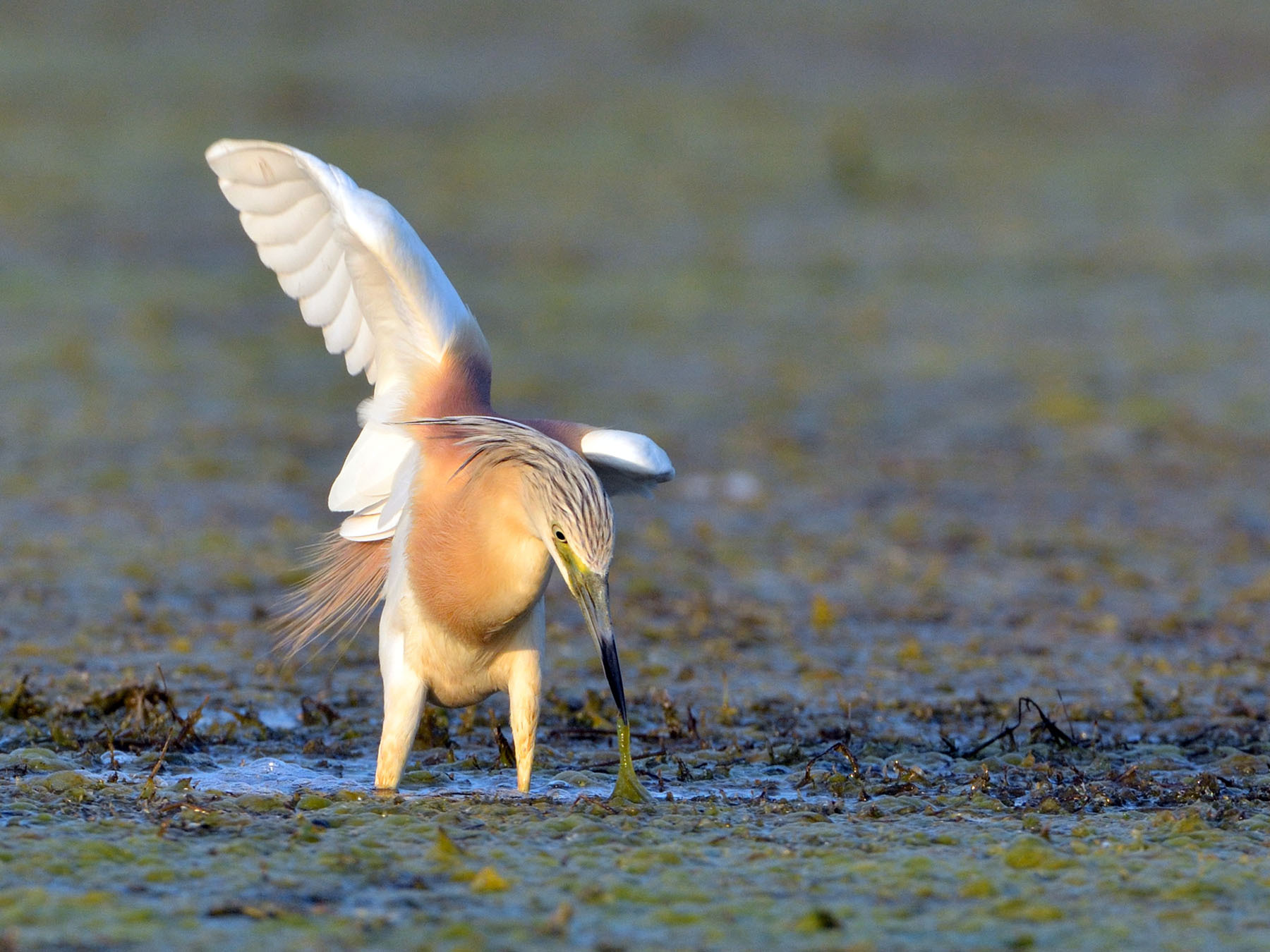
Squacco Herons primarily feed on small fish, amphibians, and aquatic insects. They also consume crustaceans, molluscs, and occasionally small mammals or reptiles.
These herons often hunt by standing still or slowly stalking through shallow water, quickly striking at prey with their sharp bill.
Nesting and breeding
Squacco Herons typically breed in loose colonies, often with other heron species. Pair formation occurs at the breeding grounds, with males performing elaborate courtship displays to attract females.
Nests are platform structures made of sticks and reeds, usually built in trees or dense reedbeds close to water. Females lay 4-6 pale blue eggs per clutch.
Both parents share incubation duties for about 22-24 days. The chicks fledge after 30-35 days but may return to the nest for several more weeks to be fed by their parents.
Behaviour
Squacco Herons are often solitary foragers, stalking prey with slow, deliberate movements in shallow water. They frequently adopt a hunched posture with their neck retracted.
When disturbed, these herons may freeze in place, stretching their neck upwards to blend in with the surrounding vegetation.
Conservation
While currently listed as Least Concern, Squacco Herons face threats from habitat loss and degradation of wetlands.
Conservation efforts focus on protecting and restoring wetland habitats across their range, particularly in their breeding and wintering grounds.
More photos
5 photos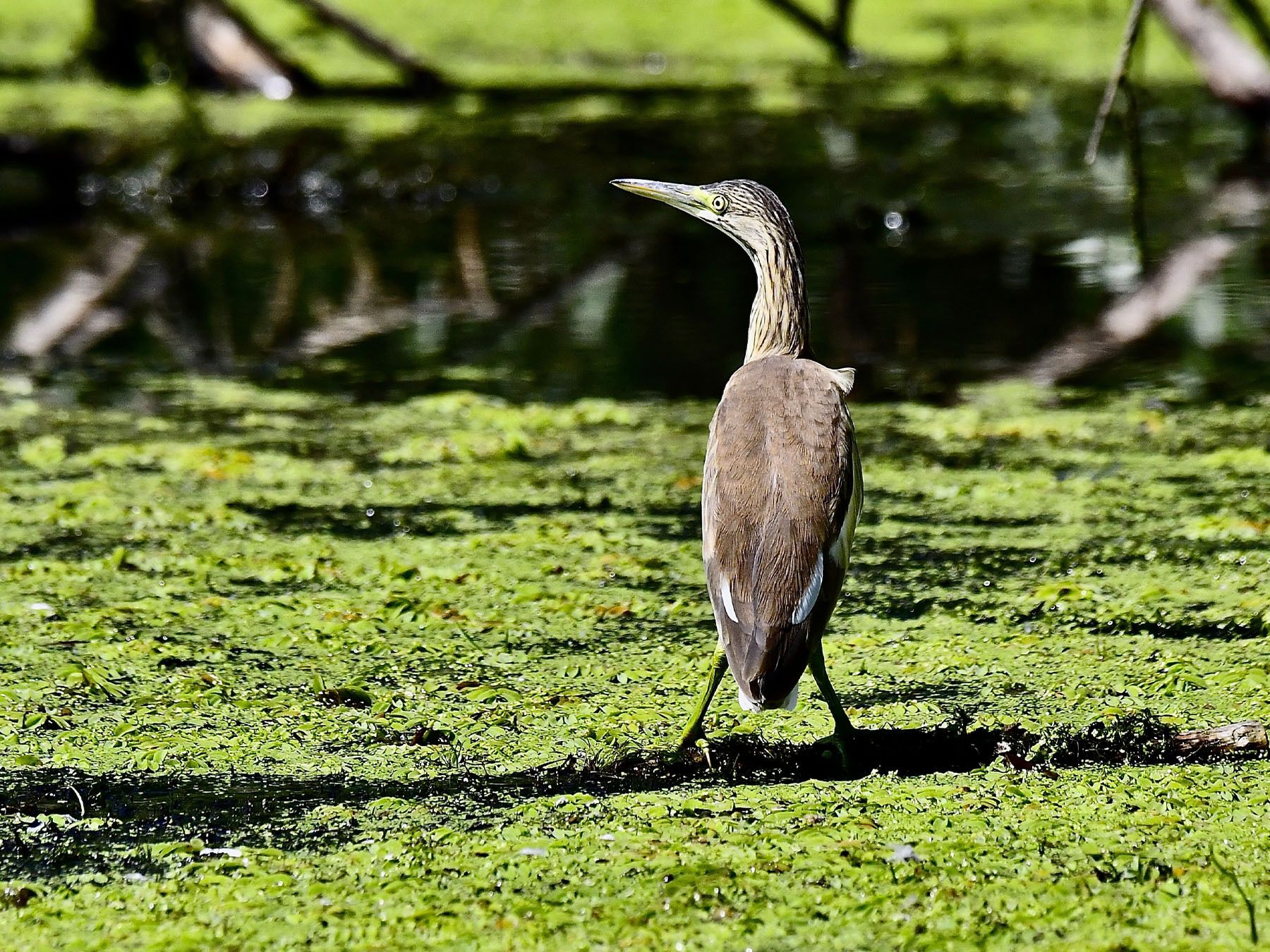
Quick facts
- Length
- 40–49 cm
- Wingspan
- 76–84 cm
- Weight
- 225–370 g
- Lifespan
- 5–11 years
- Family
- Herons & Egrets
- Migration
- Long-distance Migrant
- Global status (IUCN)
- Least Concern
- World population
- 370,000 - 780,000 mature individuals
- Population trend
- Stable
- Also called
- Crab Heron
- Scientific name
- Ardeola ralloides
Sources
3- 1BirdLife International. 2018. Ardeola ralloides. The IUCN Red List of Threatened Species 2018: e.T22697123A131940696. Source (opens in a new tab)
- 2BirdLife International. 2018. Ardeola ralloides. The IUCN Red List of Threatened Species 2018: e.T22697123A131940696. Source (opens in a new tab)
- 3Wetlands International (2015)

Checked by
Nathan Cope, founder and editor
Nathan founded Birdfact and leads its writers and contributors in the UK, the US and Canada. He has watched and studied birds for more than ten years, and checks every article and species guide before it’s published.