


Spotted Owlet
Spotted Little Owl · Athene brama
By the Birdfact teamChecked by Nathan Cope
On this page11 sections
How to recognise it
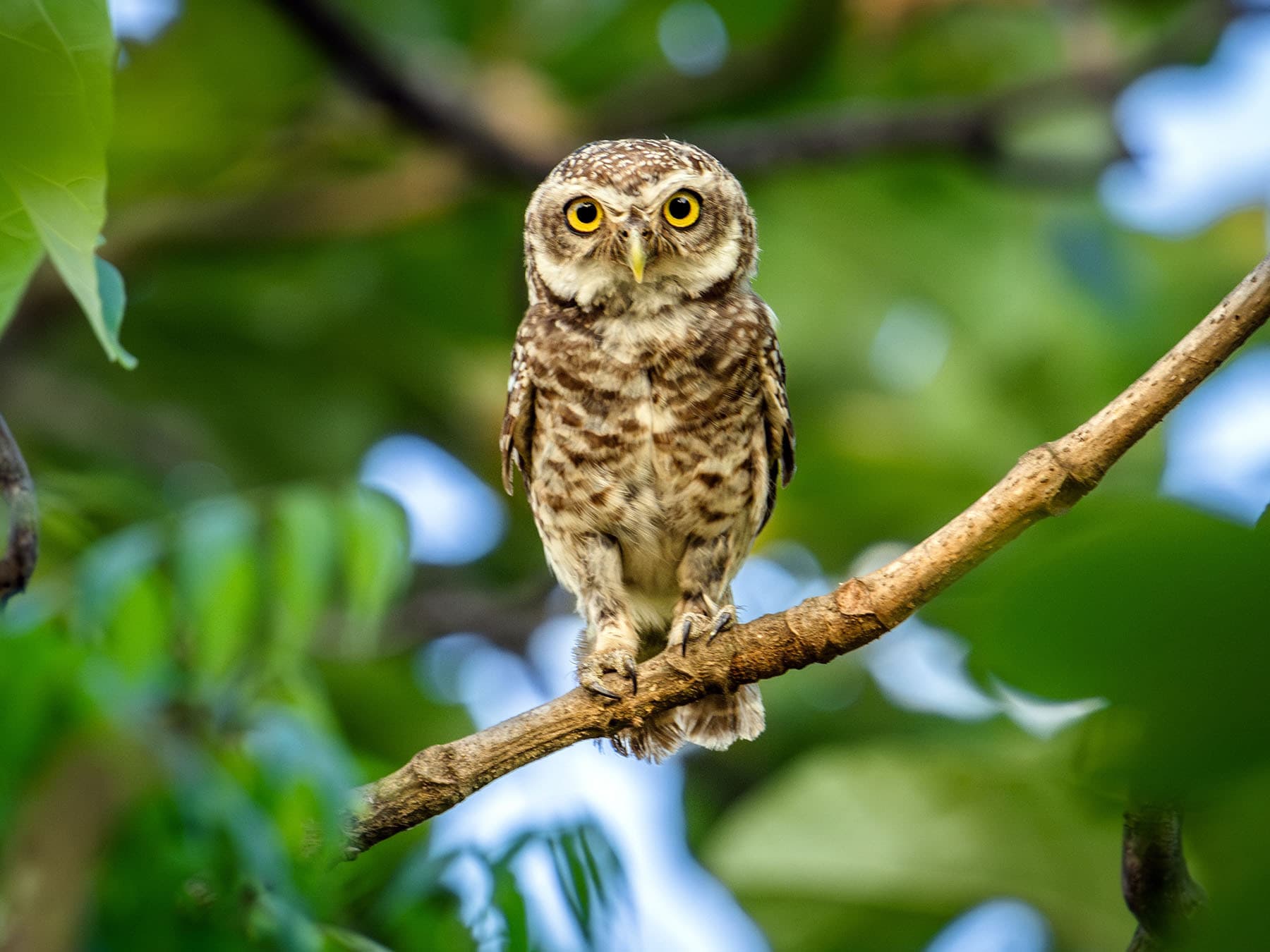
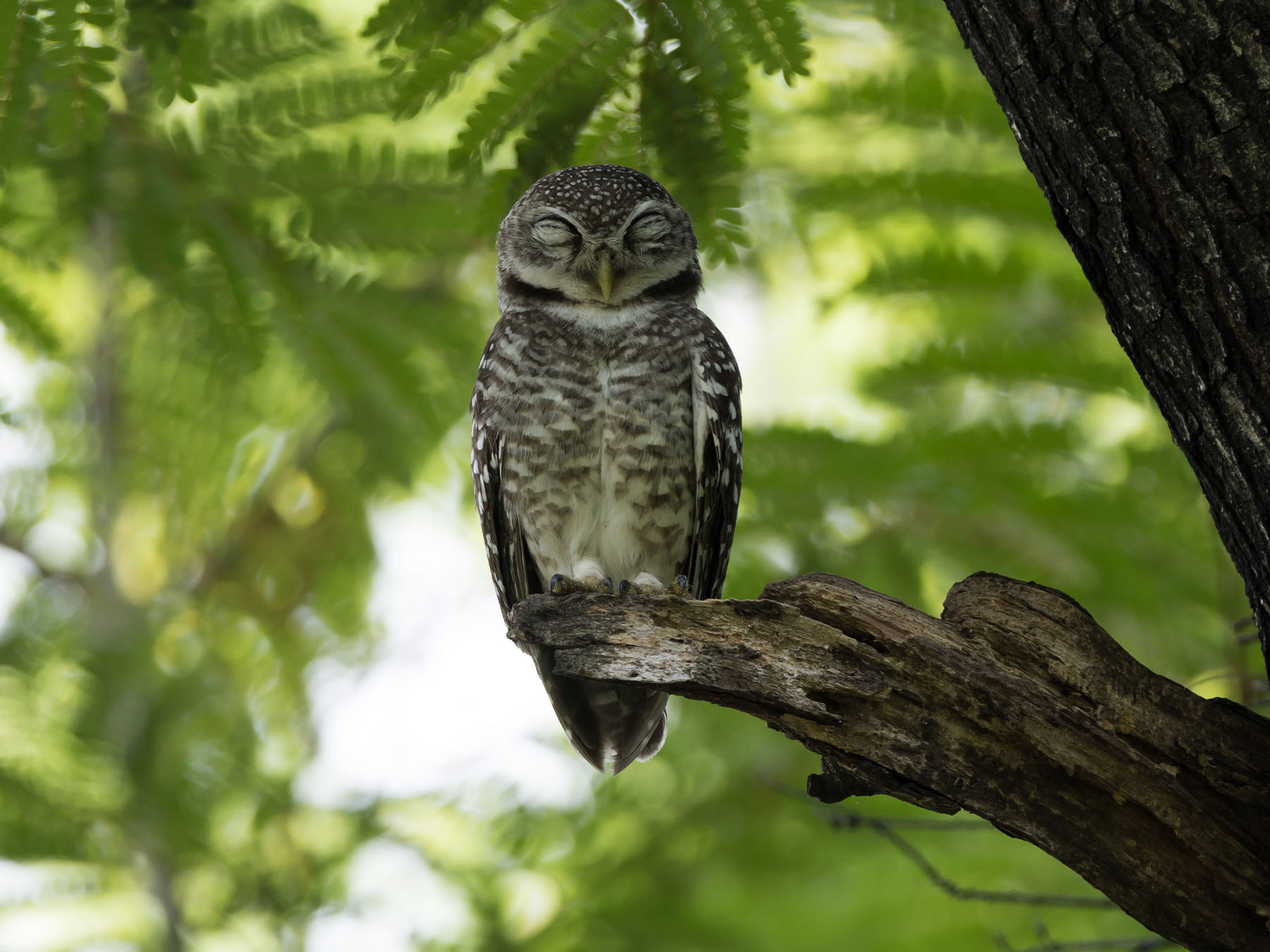
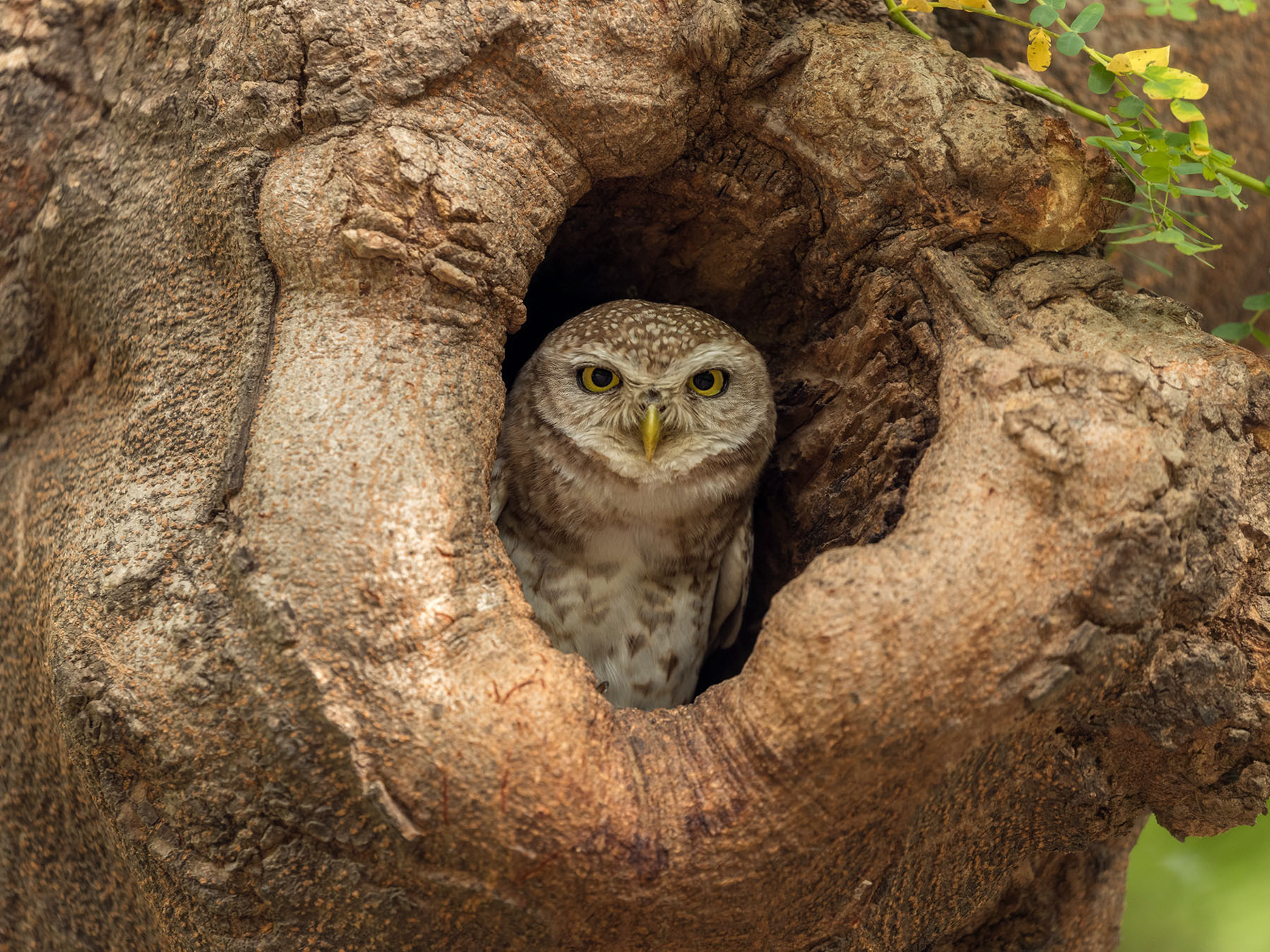
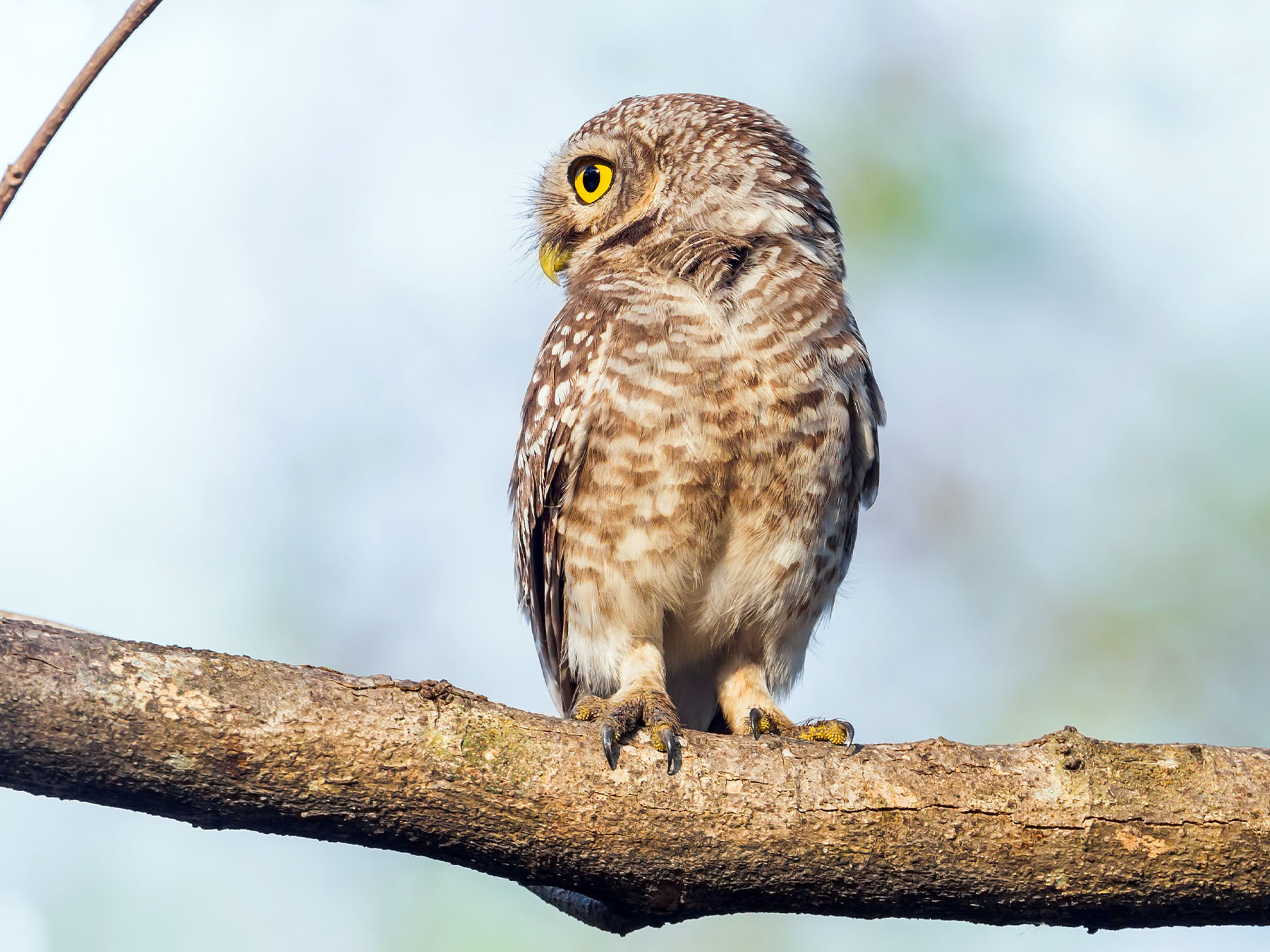
The Spotted Owlet is a small, compact owl with a rounded head and no ear tufts. Its upperparts are greyish-brown with white spots, while the underparts are creamy-white with brown bars. The facial disc is pale, bordered by white, with distinctive white eyebrows.
Both sexes look similar, with juveniles having a more uniform appearance and fewer spots. The eyes are golden-yellow, and the legs are long and thin, covered with short feathers down to the toes.
Its size
Adults- Length
- 19–21 cm
- Wingspan
- 50–56 cm
- Weight
- 110–115 g
Its song and calls
The Spotted Owlet's most common call is a sharp, repetitive 'kiew-kiew' or 'kewick-kewick'. During courtship, males produce a softer, more melodious 'hoo-hoo-hoo'. When alarmed, they emit a harsh, screeching call.
Their vocalisations are often heard at night or during early evening hours.
- Call0:00 / 0:16
Recorded in Tripura, India · August 2025
When and where to see it
The Spotted Owlet is not recorded regularly in the UK, Ireland, the United States or Canada.
Worldwide: recorded regularly in 11 countries
Countries where it was recorded in at least 3 of the 6 years 2019–2024. Linked countries have their own bird list.
Data: EOD – eBird Observation Dataset (Cornell Lab of Ornithology), accessed via GBIF.org, CC BY 4.0. Records from 2019–2024, aggregated and filtered by Birdfact. How these lists are made
Tips for seeing it
- Look for Spotted Owlets in open woodlands, parks, and around human habitations
- Listen for their distinctive 'kiew-kiew' calls at night
- Check tree cavities and old buildings during the day for roosting birds
- Observe their behaviour around dusk when they become active
What it eats
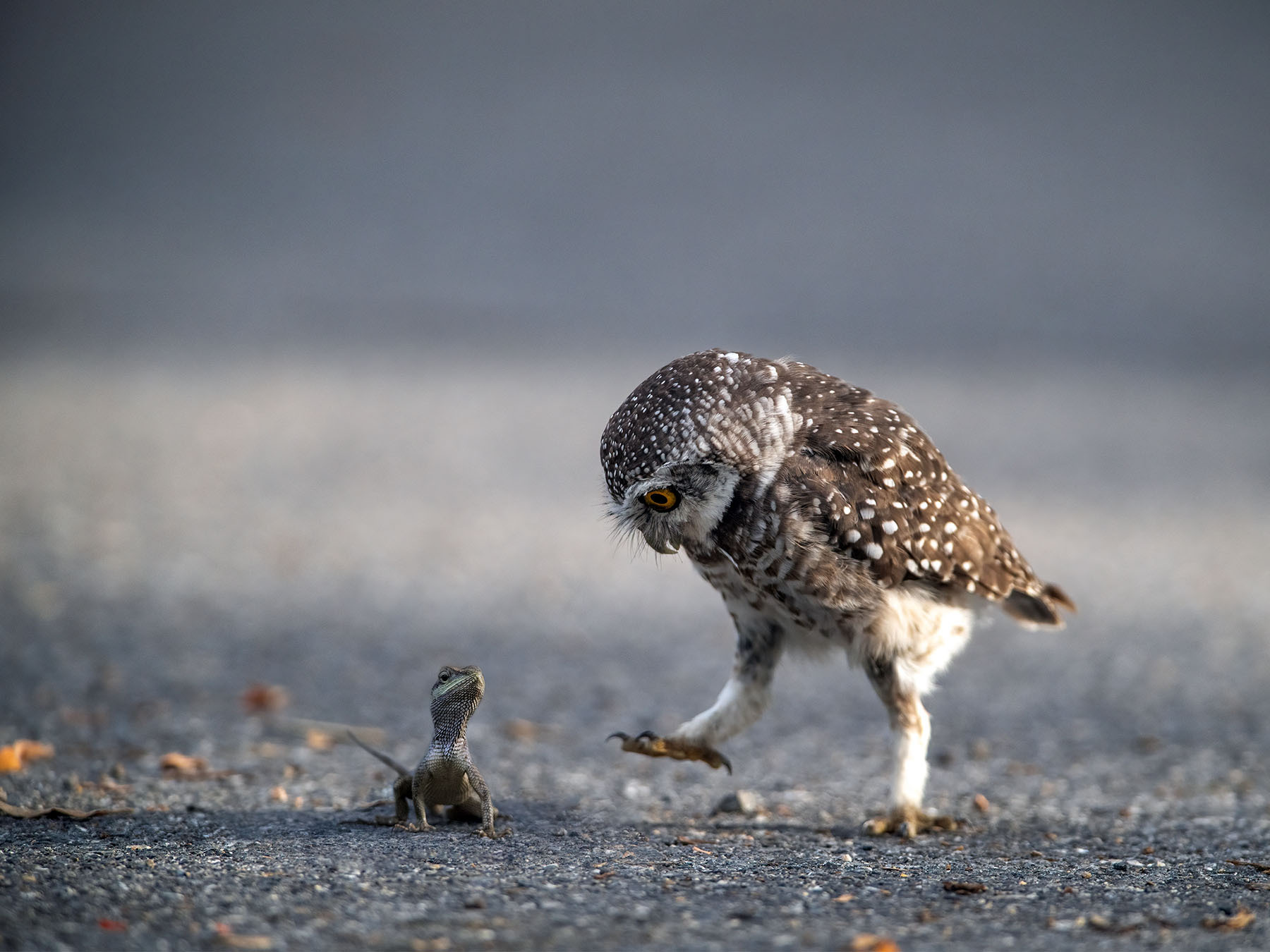
Spotted Owlets are opportunistic hunters, feeding primarily on insects such as beetles and moths. They also prey on small mammals like mice and shrews, as well as small birds, reptiles, and amphibians.
These owls often hunt from a perch, swooping down to catch prey on the ground.
Nesting and breeding
The breeding season for Spotted Owlets typically occurs from November to April. Pairs are monogamous and often use the same nesting site for multiple years.
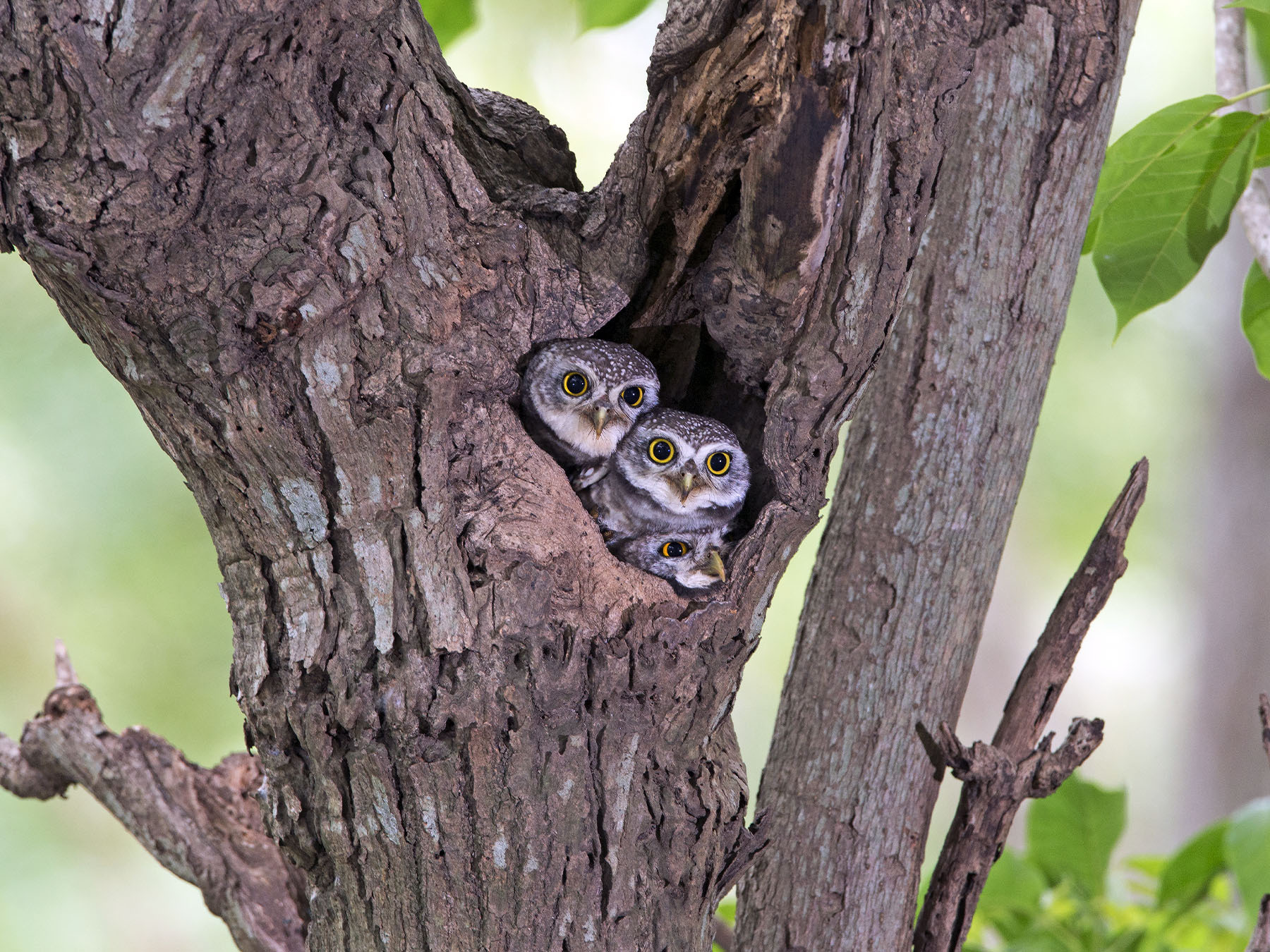
Nests are usually located in tree hollows, crevices in buildings, or abandoned nests of other birds. The female lays 3-5 round, white eggs directly on the cavity floor without adding nesting material.
Incubation lasts about 29 days, primarily done by the female while the male provides food. Chicks fledge after 30-32 days but remain dependent on their parents for several weeks afterwards.
Behaviour
Spotted Owlets are primarily nocturnal but can be active during dawn and dusk. They often perch in pairs on bare branches or poles, bobbing their heads when alert.
These owls are highly territorial and will vigorously defend their nesting sites, often mobbing larger birds of prey that enter their territory.
Conservation
While the Spotted Owlet is listed as Least Concern by the IUCN, it faces localised threats from habitat loss due to urbanisation and agricultural expansion.
Conservation efforts focus on preserving suitable nesting sites and maintaining green spaces in urban areas to support populations.
More photos
7 photos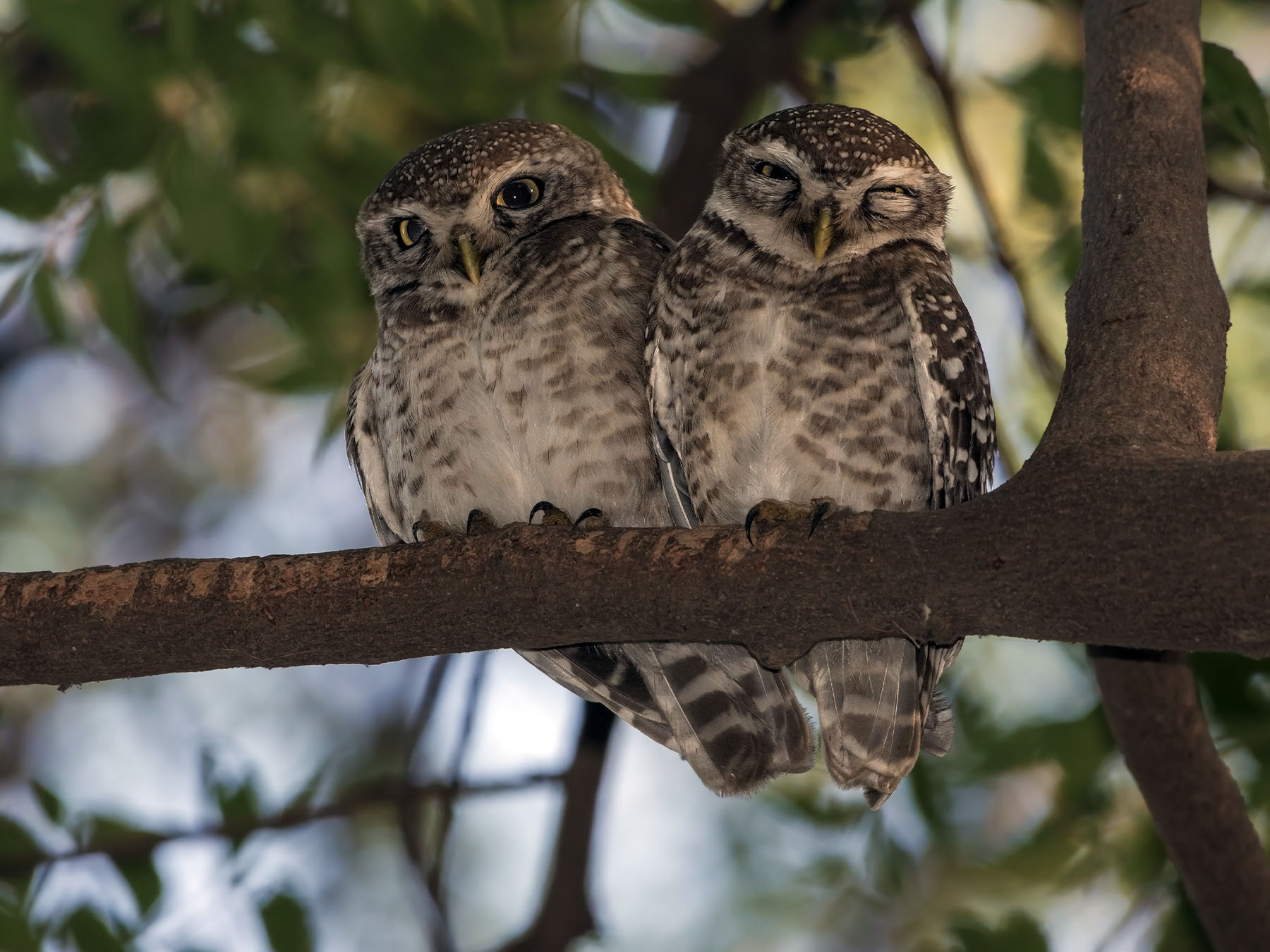
Quick facts
- Length
- 19–21 cm
- Wingspan
- 50–56 cm
- Weight
- 110–115 g
- Lifespan
- 2–3 years
- Family
- Owls
- Migration
- Resident
- Global status (IUCN)
- Least Concern
- World population
- Not quantified, but common over most of its range
- Population trend
- Stable
- Also called
- Spotted Little Owl
- Scientific name
- Athene brama
Sources
3- 1BirdLife International. 2024. Athene brama. The IUCN Red List of Threatened Species 2024: e.T22689332A263695848. Source (opens in a new tab)
- 2BirdLife International. 2024. Athene brama. The IUCN Red List of Threatened Species 2024: e.T22689332A263695848. Source (opens in a new tab)
- 3del Hoyo et al. (1999)

Checked by
Nathan Cope, founder and editor
Nathan founded Birdfact and leads its writers and contributors in the UK, the US and Canada. He has watched and studied birds for more than ten years, and checks every article and species guide before it’s published.