
Southern Masked Weaver
African Masked-Weaver, Southern Masked-Weaver · Ploceus velatus
By the Birdfact teamChecked by Nathan Cope
On this page11 sections
How to recognise it
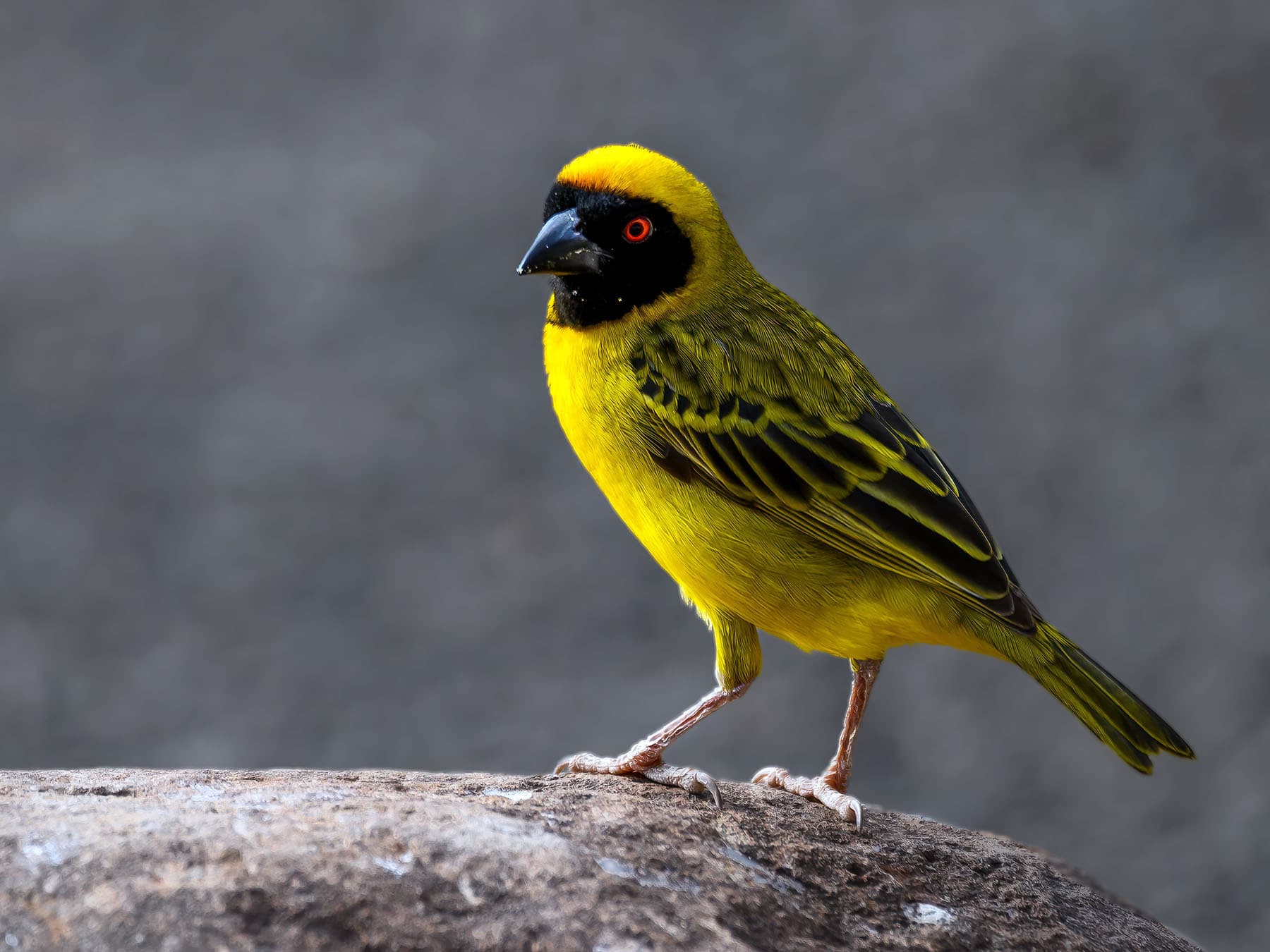
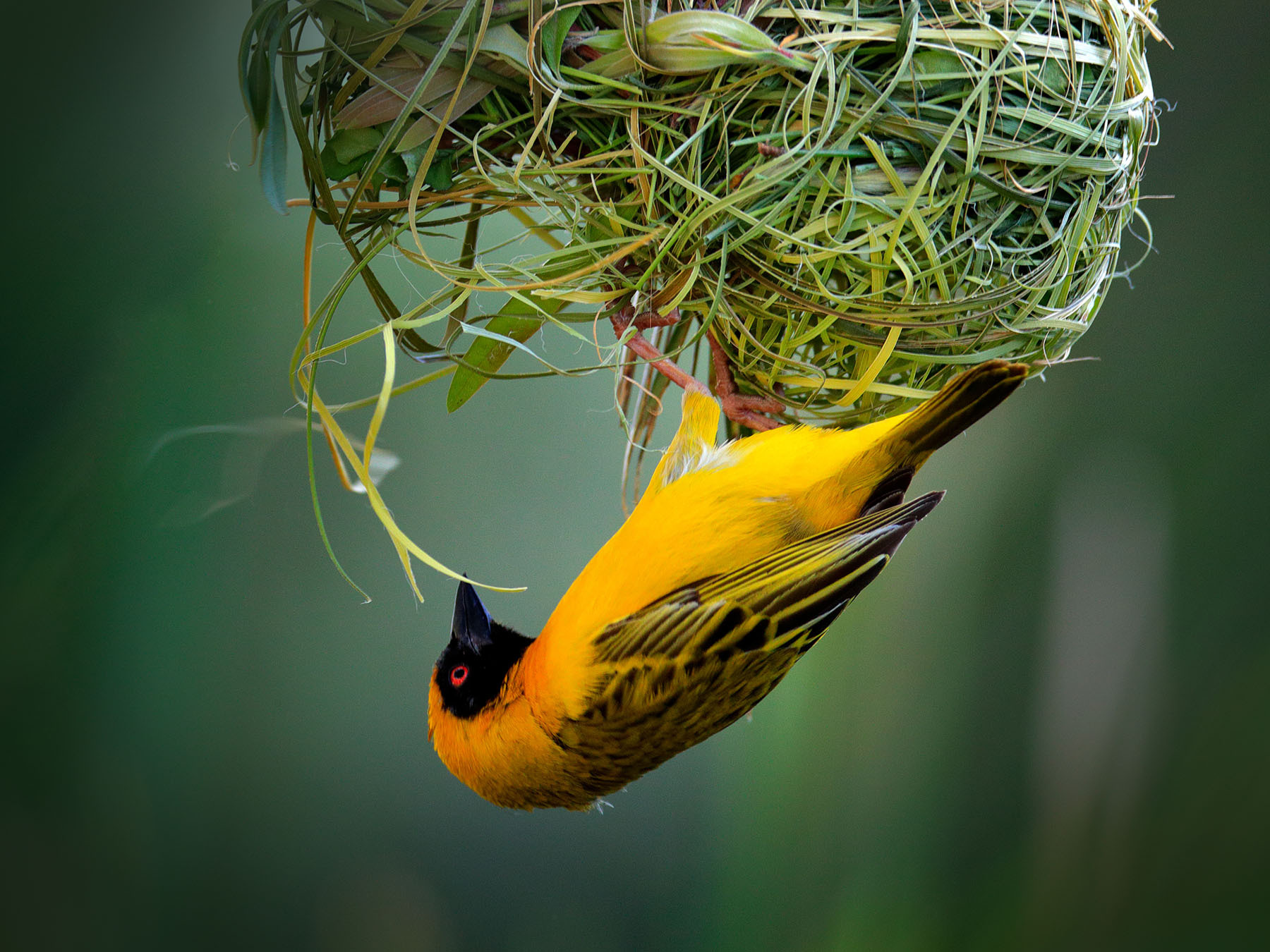
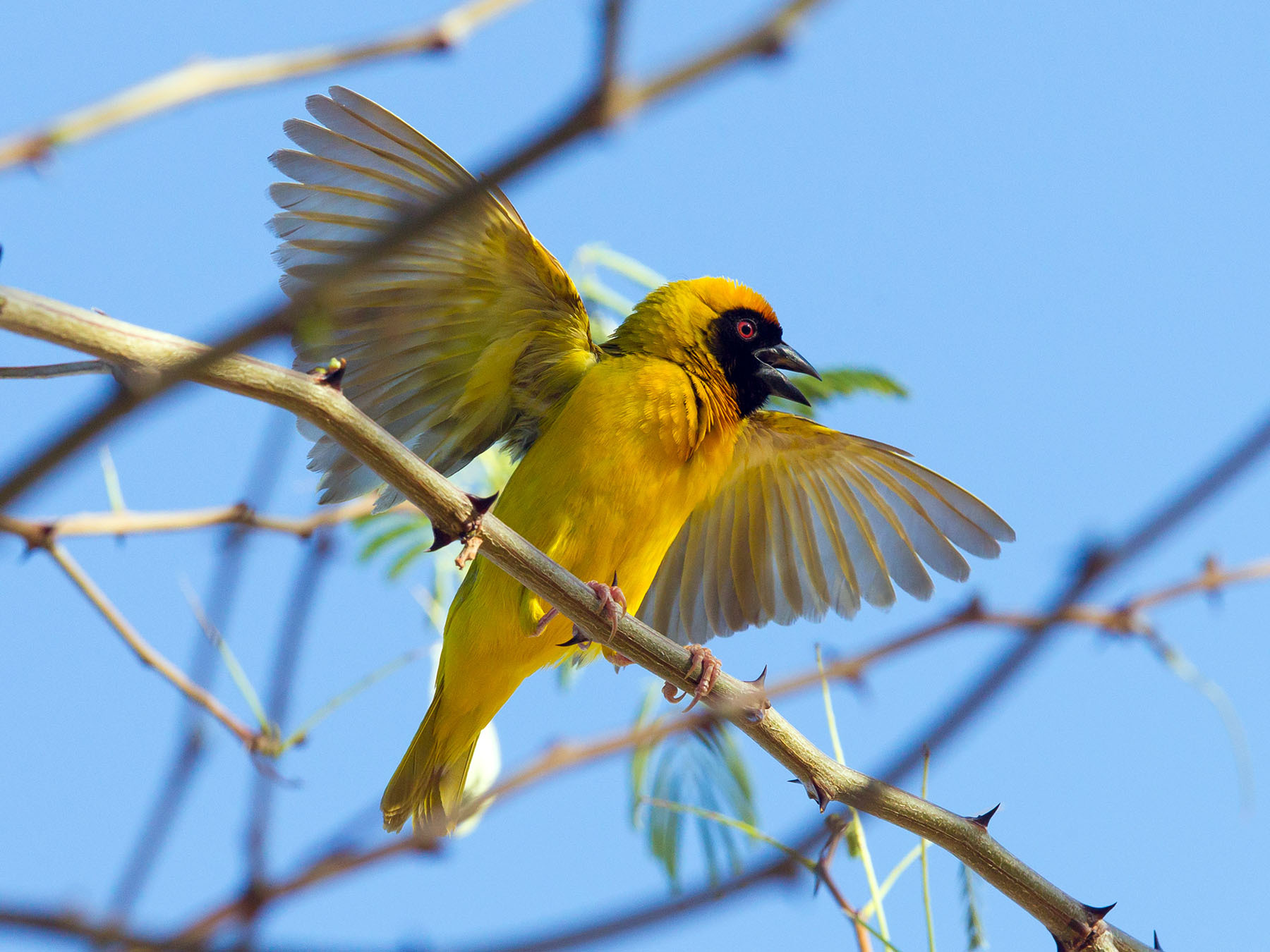
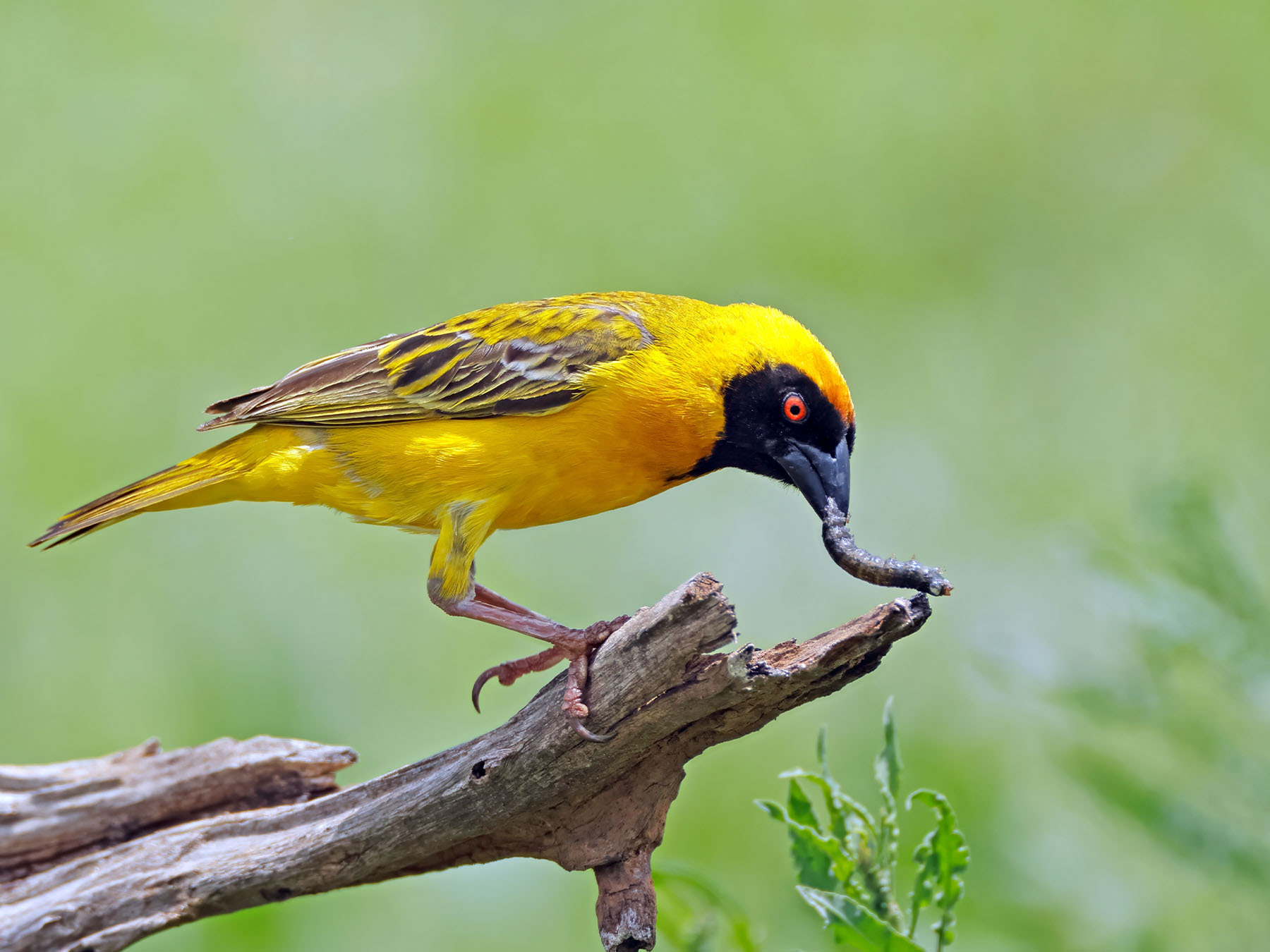
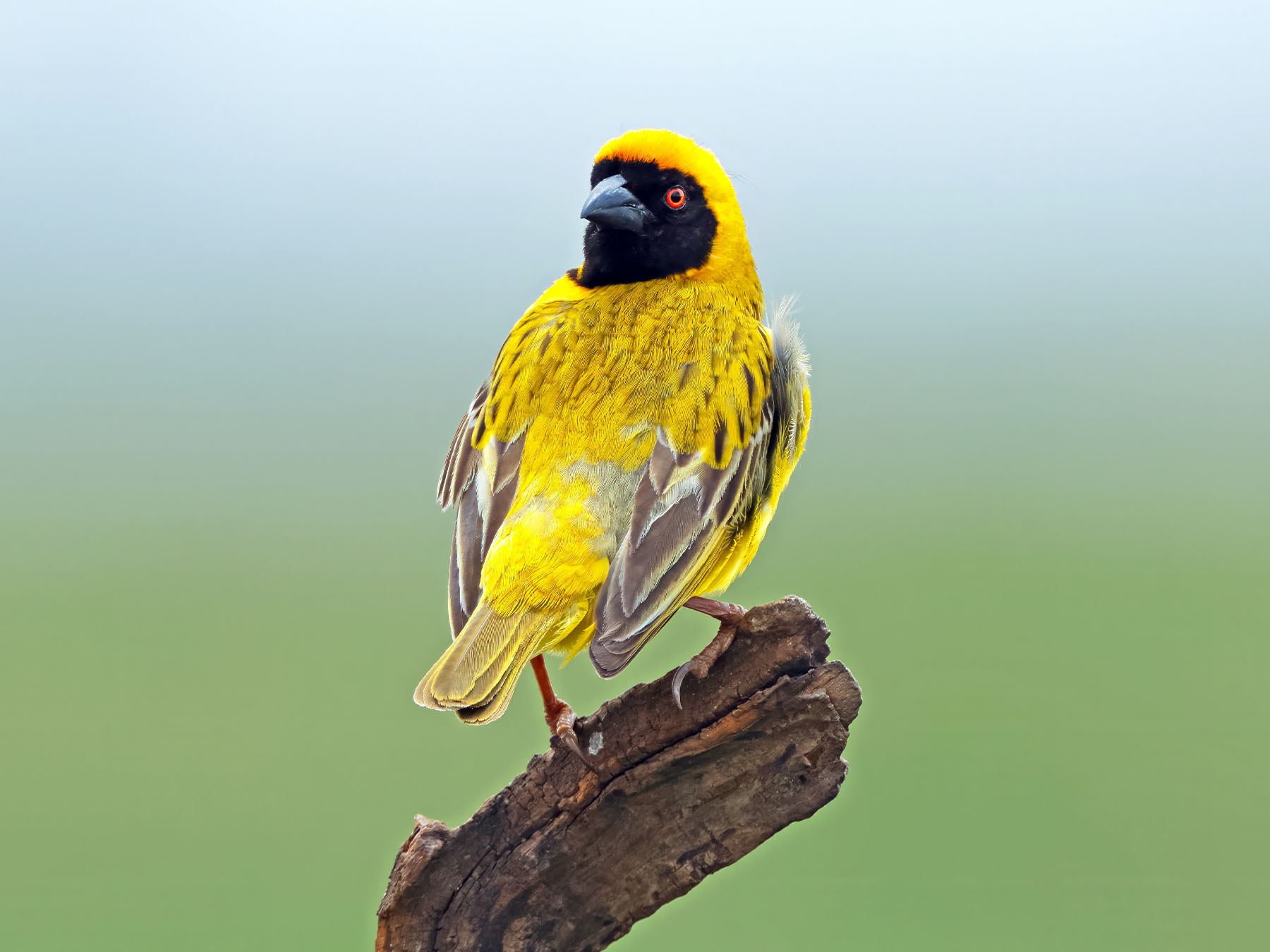
The Southern Masked Weaver is a small, vibrant bird with striking sexual dimorphism. Males in breeding plumage display bright yellow bodies with olive-green backs and a distinctive black face mask and bib, set off by their red eyes.
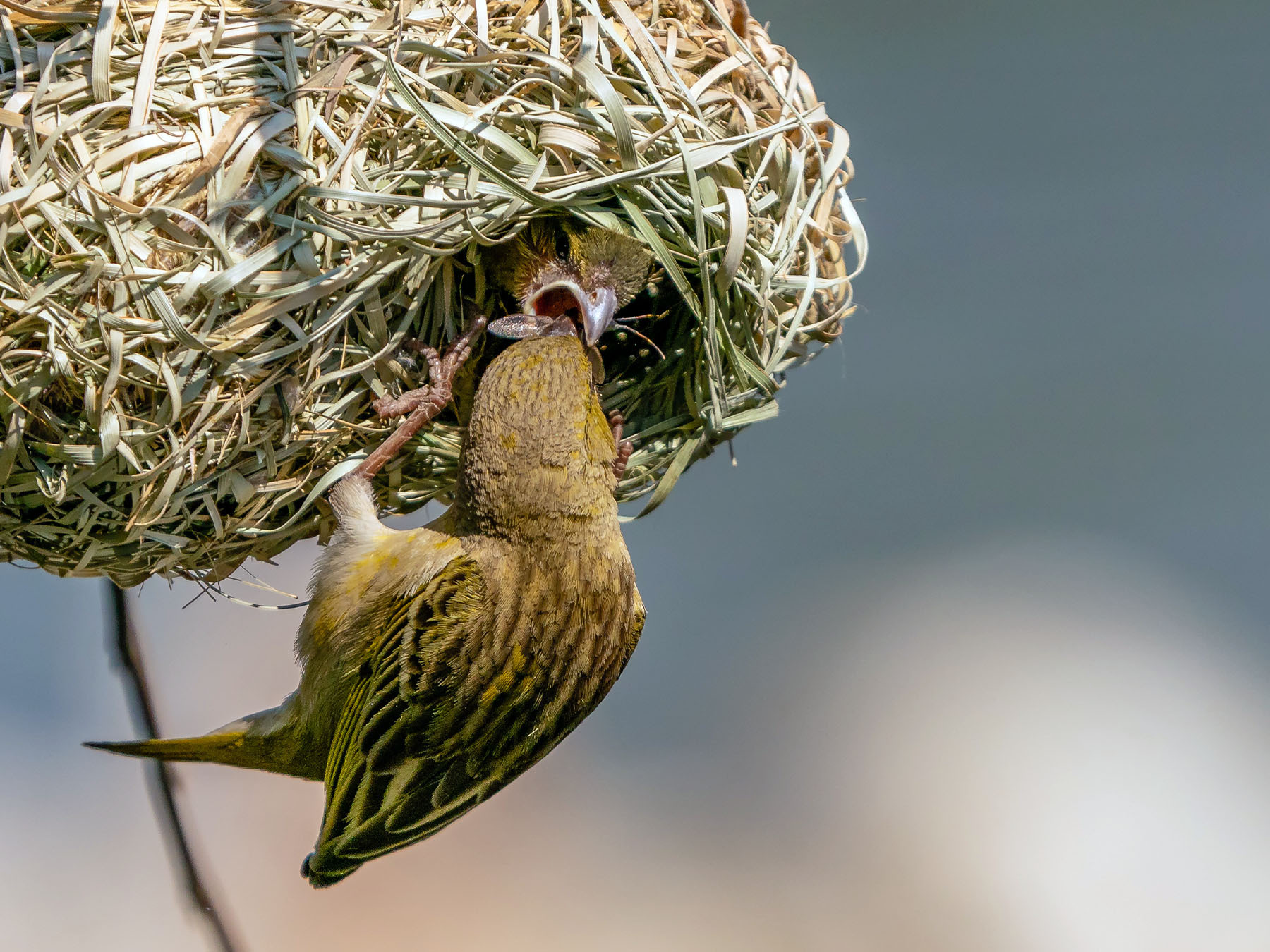
Females and non-breeding males are much duller, with streaked olive-brown upperparts and pale yellowish underparts. Juveniles resemble females but have paler bills.
Its size
Adults- Length
- 13–15 cm
- Wingspan
- 21–24 cm
- Weight
- 20–35 g
Its song and calls
Southern Masked-Weavers are vocal birds with a variety of calls. Their most common vocalisation is a rapid, chattering 'chissik-chissik-chissik' often heard during nest building.
Males also produce a softer, warbling song to attract females, sometimes accompanied by wing-fluttering displays.
- Song0:00 / 0:16
When and where to see it
The Southern Masked Weaver is not recorded regularly in the UK, Ireland, the United States or Canada.
Worldwide: recorded regularly in 11 countries
Countries where it was recorded in at least 3 of the 6 years 2019–2024. Linked countries have their own bird list.
Africa (11)
- Angola
- Botswana
- Eswatini
- Lesotho
- Malawi
- Mozambique
- Namibia
- São Tomé & Príncipe
- South Africa
- Zambia
- Zimbabwe
Data: EOD – eBird Observation Dataset (Cornell Lab of Ornithology), accessed via GBIF.org, CC BY 4.0. Records from 2019–2024, aggregated and filtered by Birdfact. How these lists are made
Tips for seeing it
- Look for their distinctive globe-shaped nests in trees near water bodies
- Listen for their chattering calls, especially during the breeding season
- Observe males performing their elaborate nest-building displays
- Check bird feeders in urban areas, particularly those offering seeds
What it eats
Southern Masked-Weavers are primarily granivorous, feeding on a variety of seeds, especially grass seeds.
They supplement their diet with insects, particularly during the breeding season, to provide protein for their young. These birds often forage on the ground or in low vegetation.
Nesting and breeding
Breeding occurs during the rainy season, typically from September to January. Males build multiple intricate, oval-shaped nests to attract females, weaving them from grass and palm fronds.
Females select the best nest and line it with soft materials. They lay 2-4 pale blue or greenish eggs with brown speckles. Incubation lasts about 12-14 days.
Both parents feed the chicks, which fledge after approximately 14-16 days. Females often raise multiple broods in a single season.
Behaviour
Southern Masked-Weavers are highly social birds, often seen in large flocks outside the breeding season. They are known for their intricate nest-building skills, with males constructing multiple nests to attract females.
These birds are also frequent visitors to bird feeders in urban areas.
Conservation
The Southern Masked-Weaver is currently listed as Least Concern by the IUCN due to its large range and stable population. However, habitat loss in some areas and climate change could pose future threats.
Conservation efforts focus on preserving grassland and savanna habitats.
More photos
6 photos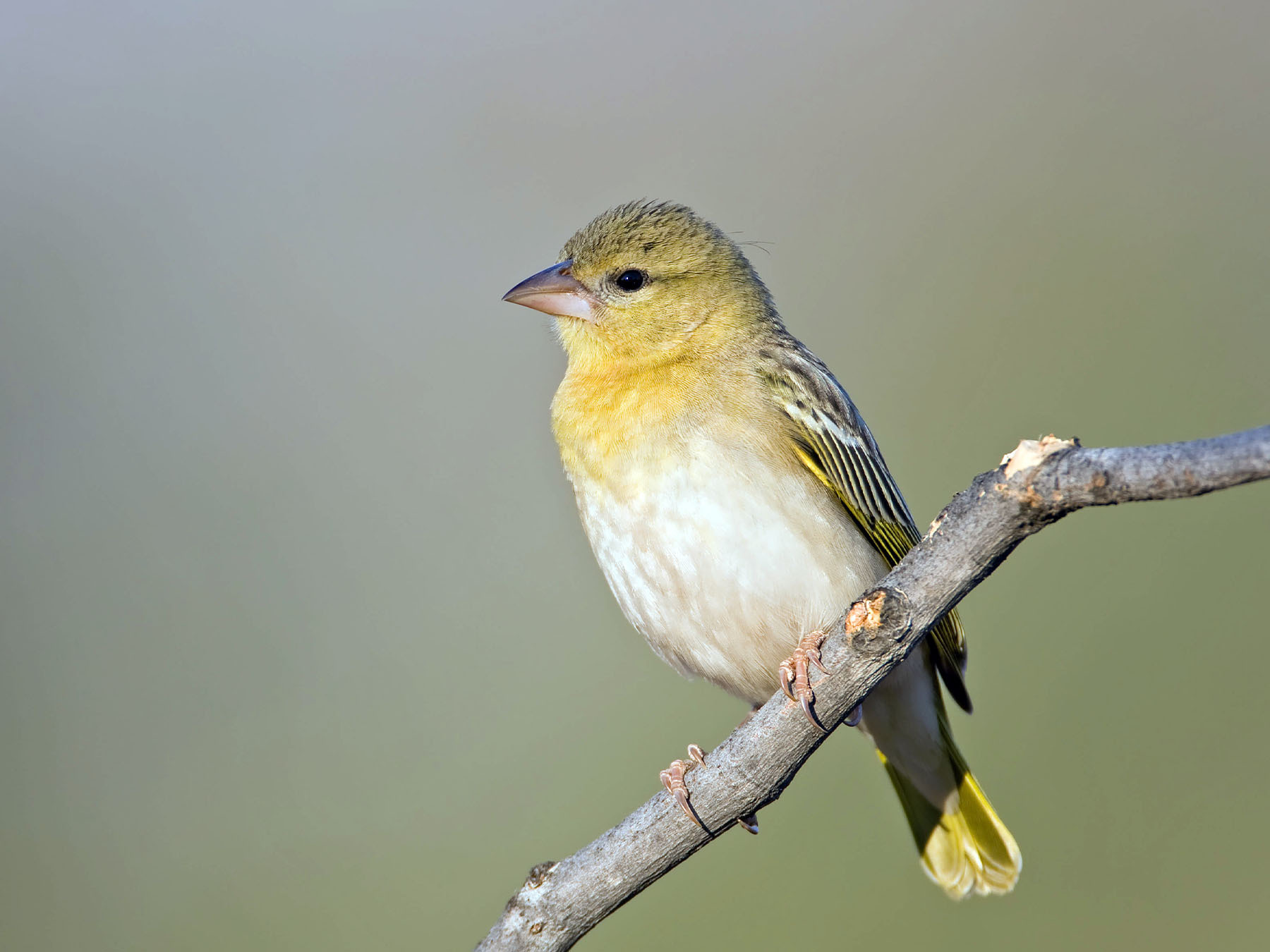
Quick facts
- Length
- 13–15 cm
- Wingspan
- 21–24 cm
- Weight
- 20–35 g
- Lifespan
- 5–15 years · oldest recorded 23.5 years
- Family
- Weavers
- Migration
- Resident
- Global status (IUCN)
- Least Concern
- World population
- Not quantified, but generally common throughout its range
- Population trend
- Stable
- Also called
- African Masked-Weaver, Southern Masked-Weaver
- Scientific name
- Ploceus velatus
Sources
5- 1BirdLife International. 2018. Ploceus velatus. The IUCN Red List of Threatened Species 2018: e.T22718890A132122348. Source (opens in a new tab)
- 2BirdLife International. 2018. Ploceus velatus. The IUCN Red List of Threatened Species 2018: e.T22718890A132122348. Source (opens in a new tab)
- 3Fry and Keith (2004)
- 4The South African Bird Ringing Unit (2002) Source (opens in a new tab)
- 5del Hoyo et al. (2010)

Checked by
Nathan Cope, founder and editor
Nathan founded Birdfact and leads its writers and contributors in the UK, the US and Canada. He has watched and studied birds for more than ten years, and checks every article and species guide before it’s published.