


Small Ground-finch
Little Ground-finch · Geospiza fuliginosa
By the Birdfact teamChecked by Nathan Cope
On this page11 sections
How to recognise it
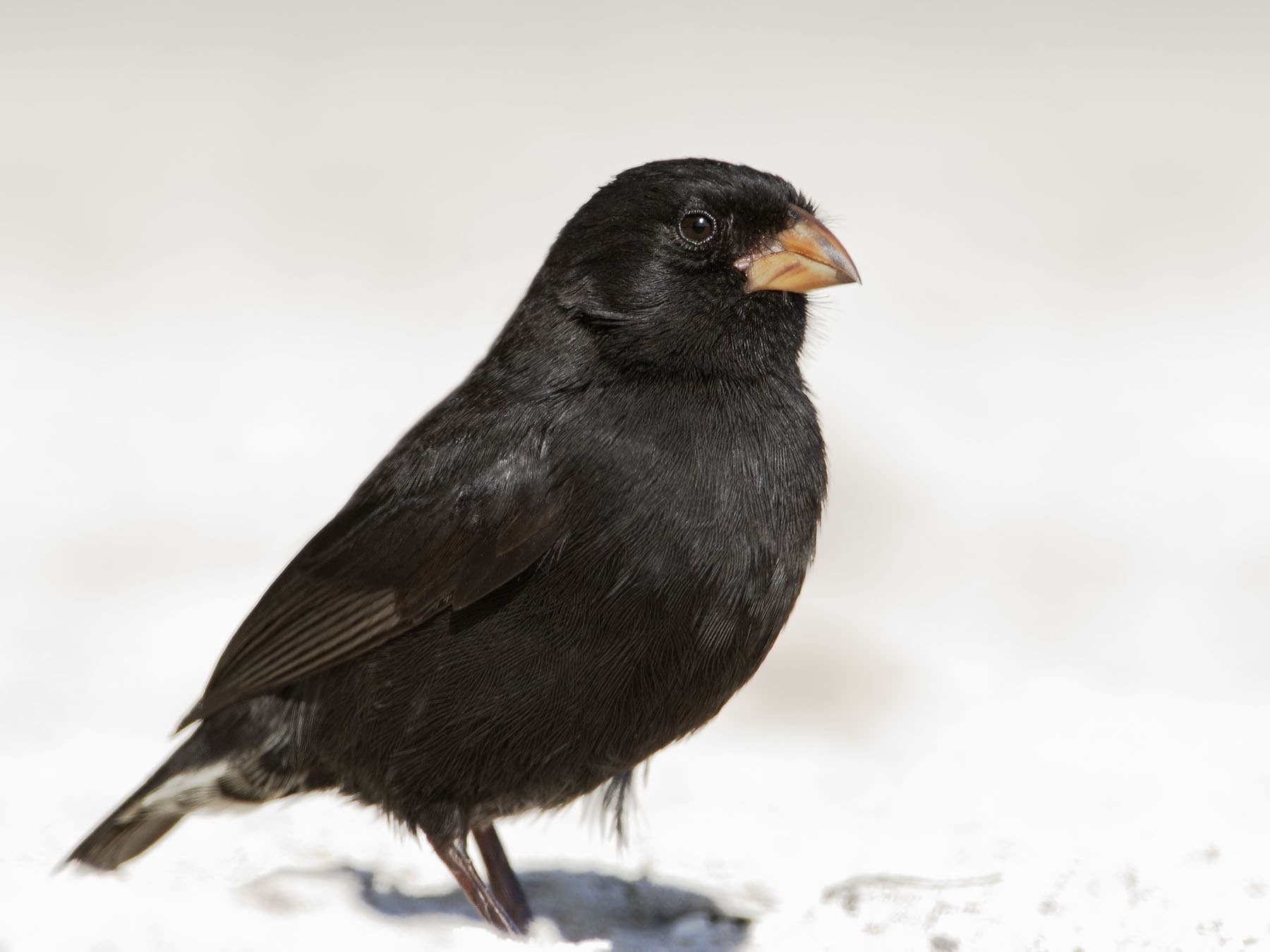
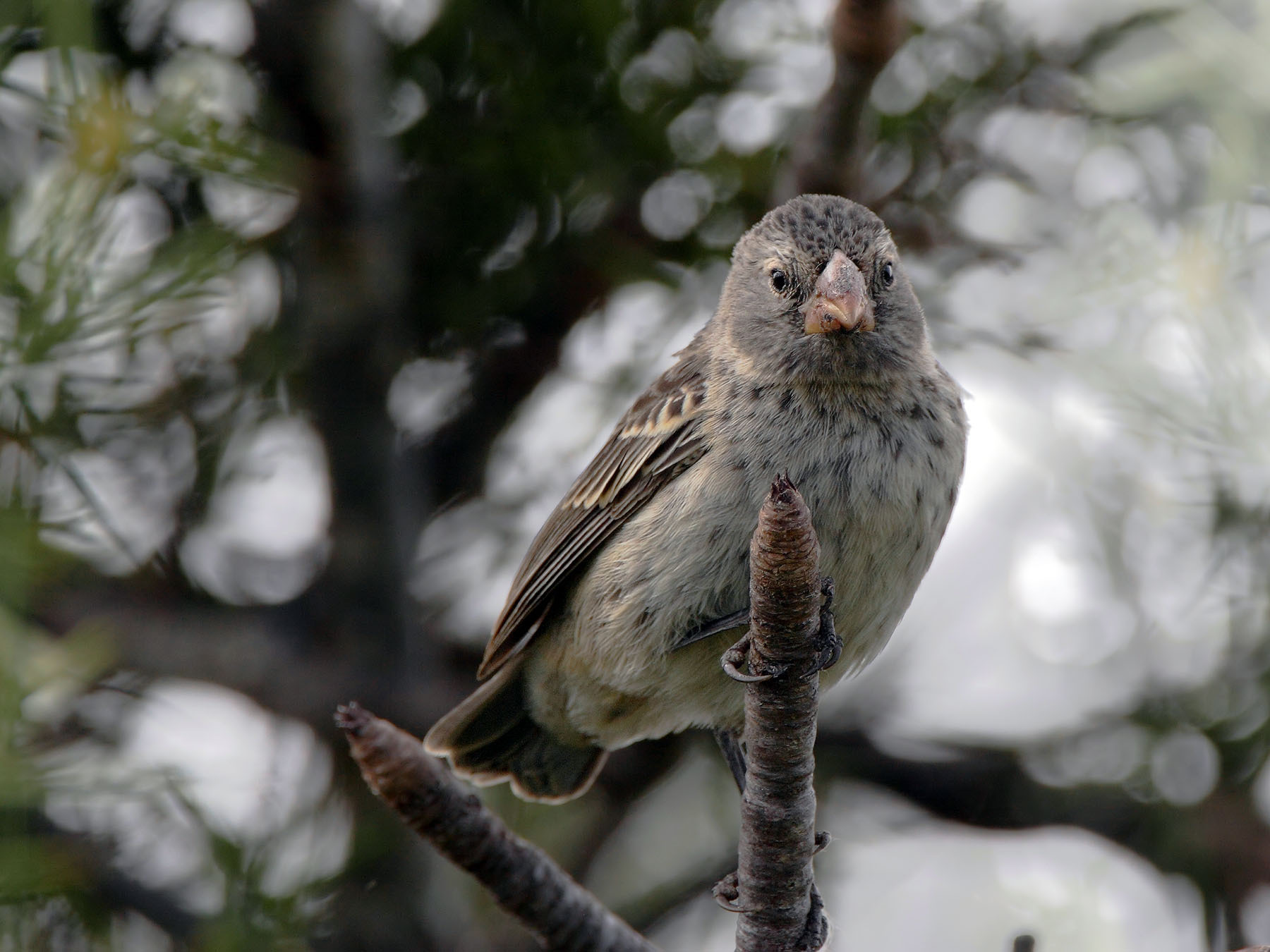
The Small Ground-finch is a compact bird with a rounded body and short tail. Males are predominantly black or dark grey, with a distinctive thick, rounded beak. Their plumage is uniform, lacking any striking markings.
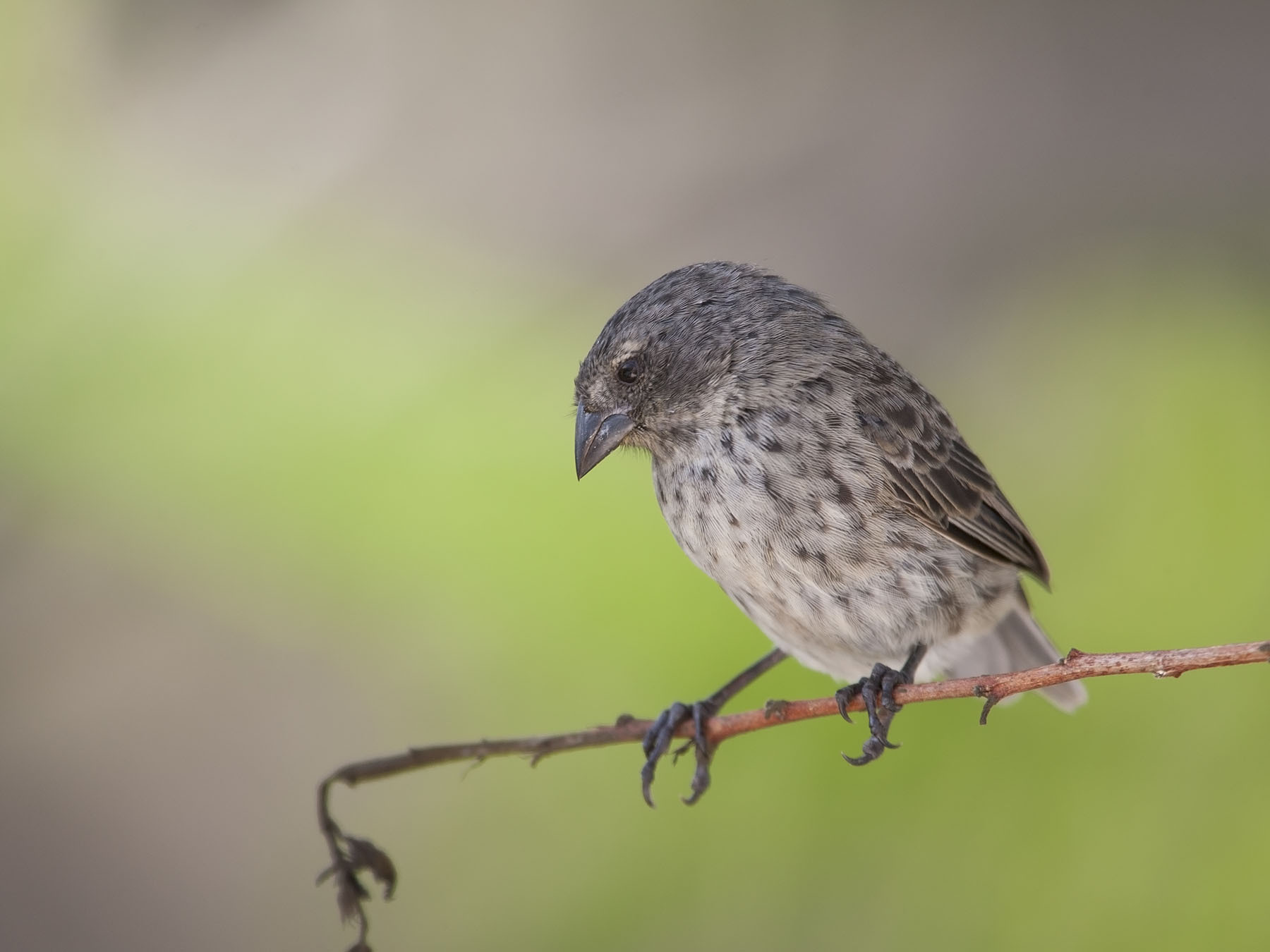
Females differ significantly, displaying brown-grey upperparts and buff underparts with streaking. Juveniles resemble females but may have a paler beak. Seasonal plumage changes are minimal in this species.
Its size
Adults- Length
- 10–11 cm
- Wingspan
- 16–18 cm
- Weight
- 11–14 g
Its song and calls
The Small Ground-finch has a simple but persistent song, consisting of a series of short, high-pitched notes often described as 'tseep-tseep-tseep'.
Their call is a short, sharp 'chip'. During courtship, males may sing continuously from exposed perches to attract mates.
When and where to see it
The Small Ground-finch is not recorded regularly in the UK, Ireland, the United States or Canada.
Worldwide: recorded regularly in 1 country
Countries where it was recorded in at least 3 of the 6 years 2019–2024. Linked countries have their own bird list.
South America (1)
- Ecuador
Data: EOD – eBird Observation Dataset (Cornell Lab of Ornithology), accessed via GBIF.org, CC BY 4.0. Records from 2019–2024, aggregated and filtered by Birdfact. How these lists are made
Tips for seeing it
- Look for them on the ground in open areas of the Galápagos Islands
- Observe their thick, rounded beaks, a key identifying feature
- Listen for their simple, repetitive songs during the breeding season
- Watch for their characteristic hopping movement while foraging
What it eats
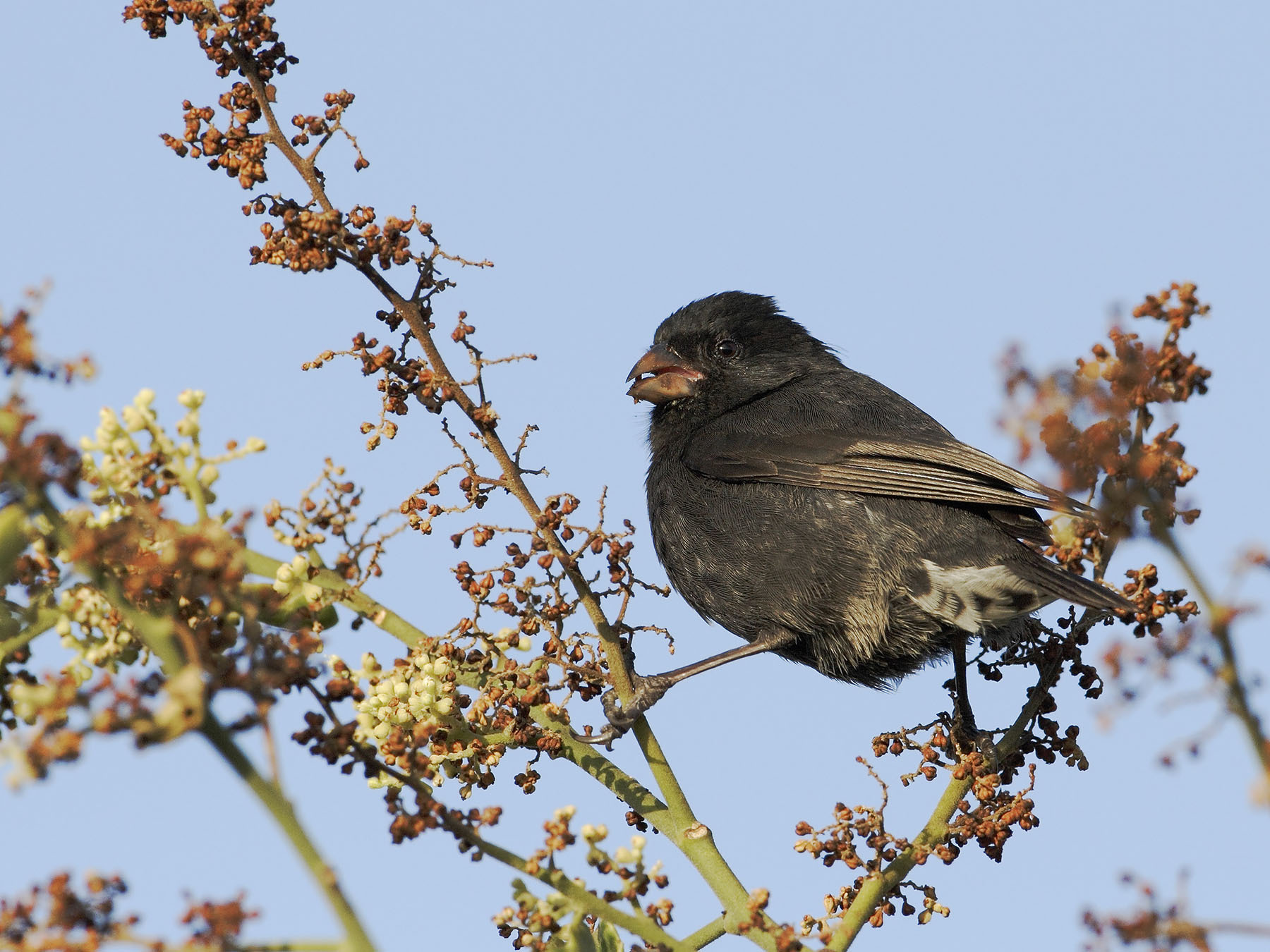
The Small Ground-finch primarily feeds on seeds, particularly those of grasses and low-growing plants. They also consume small insects and nectar when available.
Their strong, rounded beak is well-adapted for cracking open seeds and manipulating food items on the ground.
Nesting and breeding
Breeding typically occurs during the rainy season, which can vary depending on the island but often falls between December and May. Males establish territories and attract females through song and simple displays.
Nests are dome-shaped structures built in low bushes or cacti, constructed from grasses, twigs, and other plant fibres. Females typically lay 2-4 eggs, which are white with brown speckles.
Incubation lasts about 12 days, with both parents sharing duties. Nestlings fledge after approximately two weeks, but parents continue to feed them for several more weeks after leaving the nest.
Behaviour
Small Ground-finches are primarily terrestrial, hopping along the ground in search of food. They often forage in small groups, pecking at seeds and insects.
During the breeding season, males become territorial and perform simple courtship displays, perching prominently and singing to attract mates.
Conservation
While the Small Ground-finch is currently listed as Least Concern, it faces threats from habitat degradation and introduced predators on the Galápagos Islands.
Conservation efforts focus on preserving native ecosystems and controlling invasive species to protect this and other endemic bird populations.
More photos
4 photos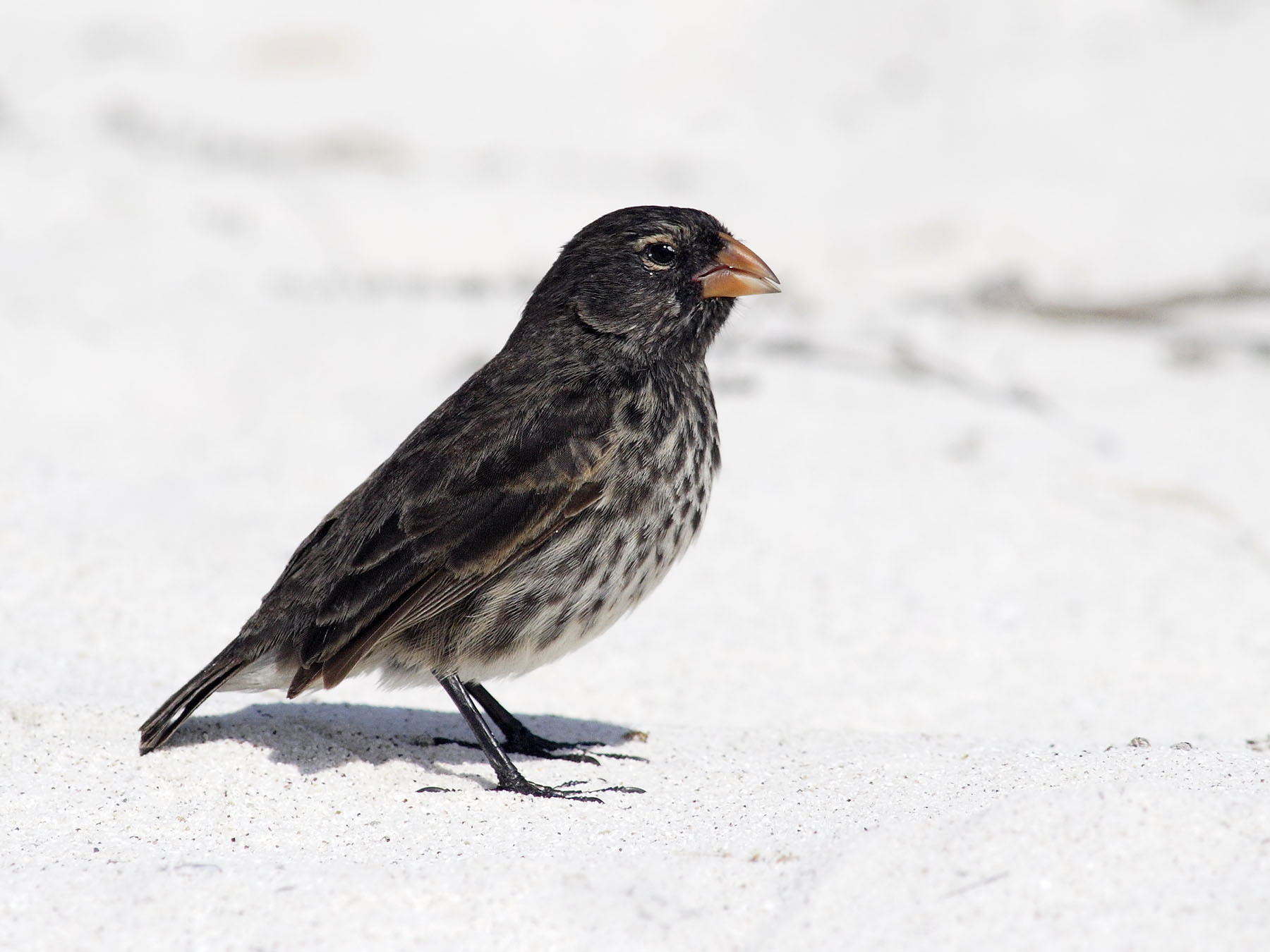
Quick facts
- Length
- 10–11 cm
- Wingspan
- 16–18 cm
- Weight
- 11–14 g
- Lifespan
- 5–10 years · oldest recorded 15 years
- Family
- Tanagers
- Migration
- Resident
- Global status (IUCN)
- Least Concern
- World population
- Not quantified, but described as 'common'
- Population trend
- Stable
- Also called
- Little Ground-finch
- Scientific name
- Geospiza fuliginosa
Sources
4- 1BirdLife International. 2024. Geospiza fuliginosa. The IUCN Red List of Threatened Species 2024: e.T22723739A263311084. Source (opens in a new tab)
- 2BirdLife International. 2024. Geospiza fuliginosa. The IUCN Red List of Threatened Species 2024: e.T22723739A263311084. Source (opens in a new tab)
- 3Stotz et al. (1996)
- 4Langton and Kleindorfer, Minimum longevity and age-related male plumage in Darwin's finches on Floreana Island, Journal of Ornithology, 160:351-361 (2019)

Checked by
Nathan Cope, founder and editor
Nathan founded Birdfact and leads its writers and contributors in the UK, the US and Canada. He has watched and studied birds for more than ten years, and checks every article and species guide before it’s published.