


Senegal Thick-knee
Senegal Stone-curlew · Burhinus senegalensis
By the Birdfact teamChecked by Nathan Cope
On this page12 sections
How to recognise it
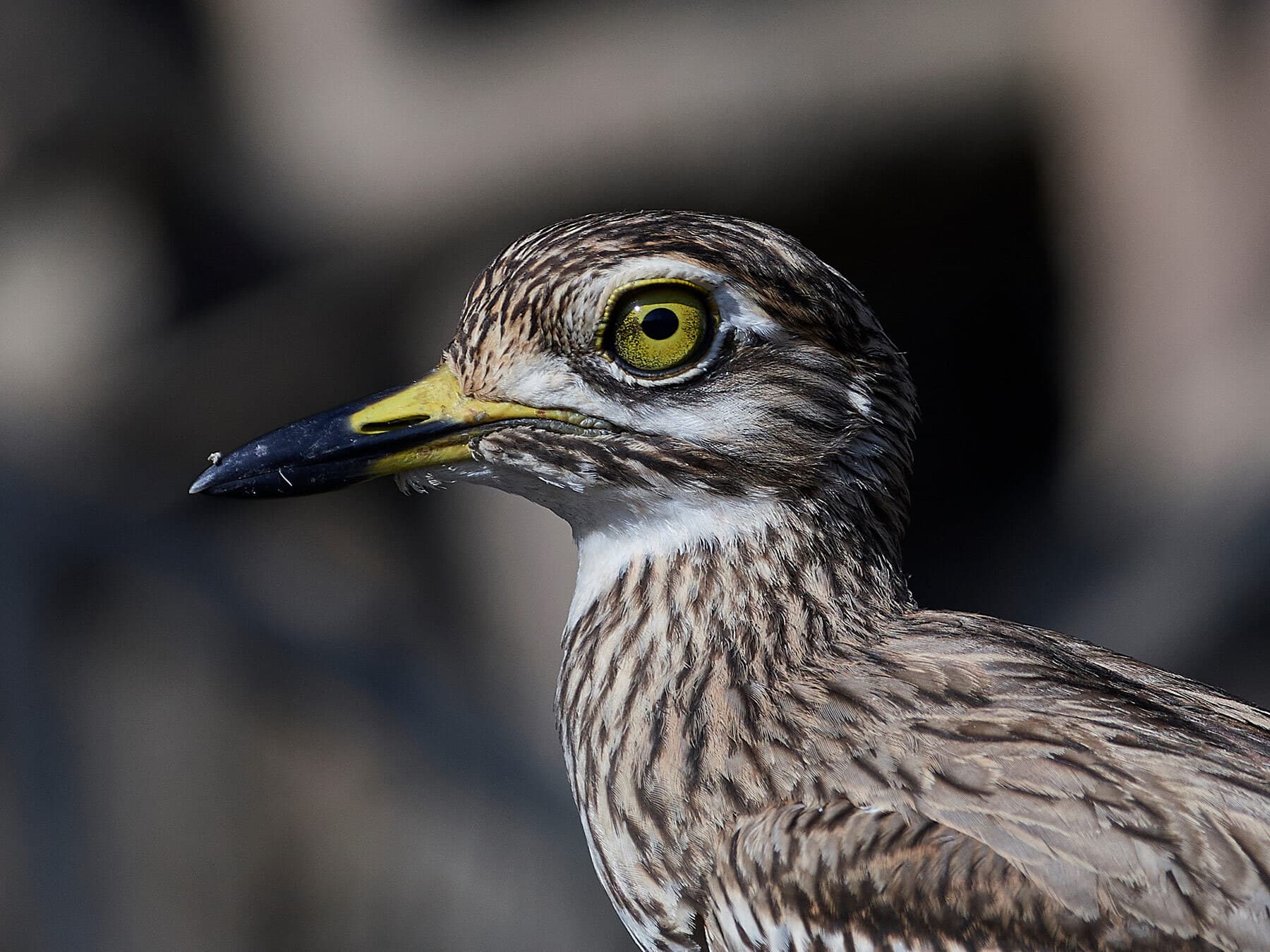
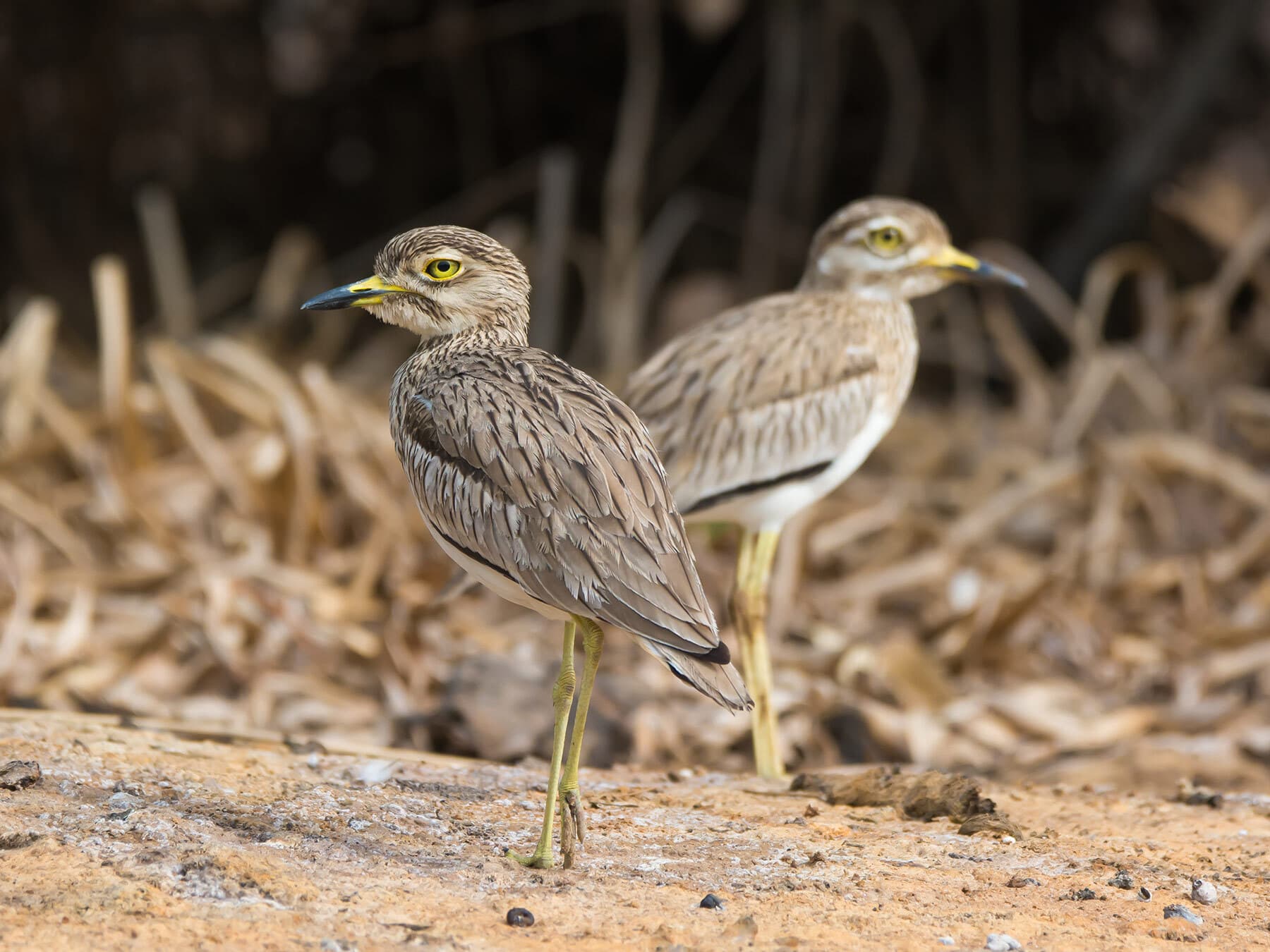
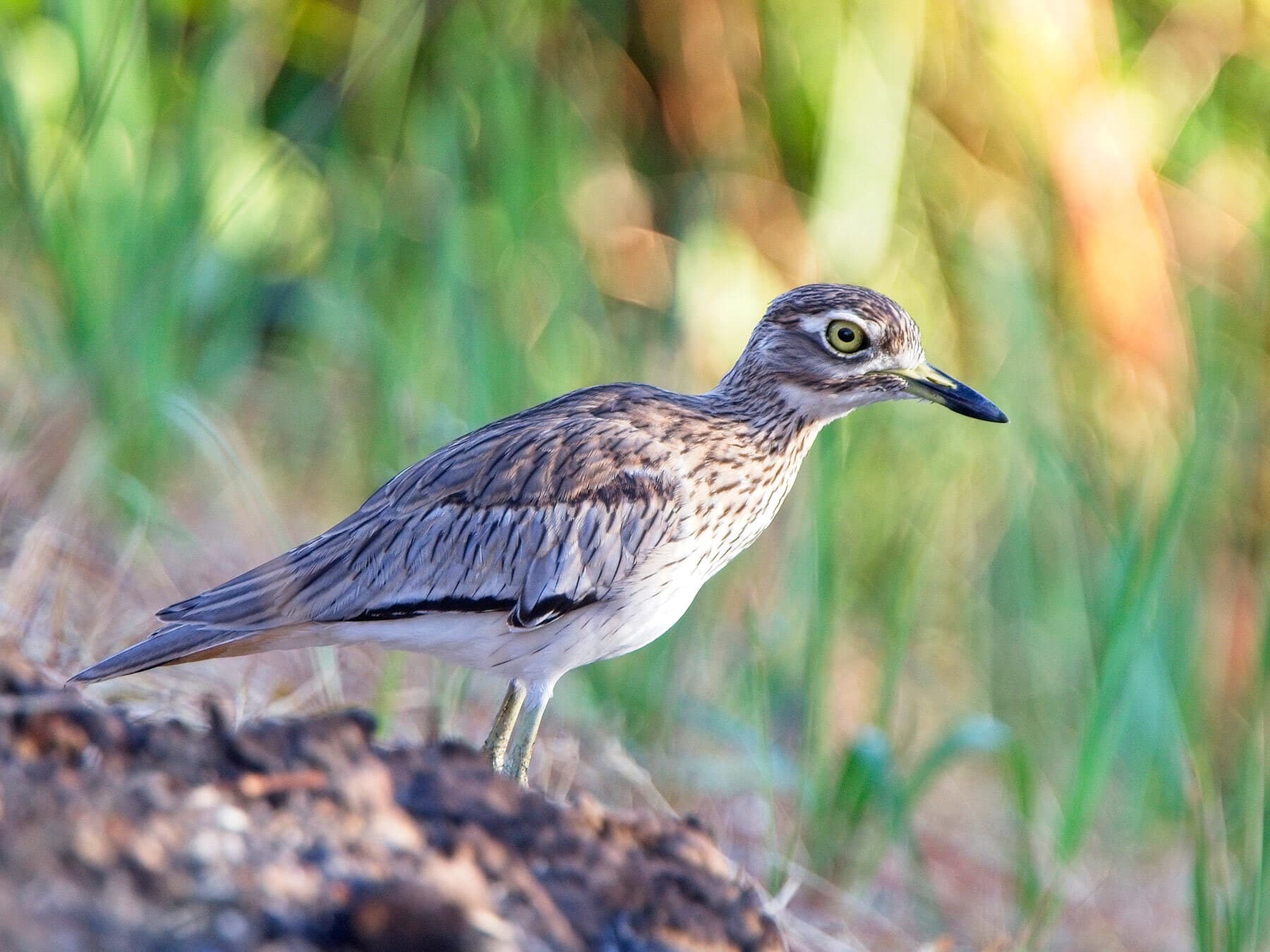
The Senegal Thick-knee is a medium-sized wader with a distinctive large head and eyes. Its plumage is primarily mottled brown and grey, providing excellent camouflage. The bird has a prominent black and white stripe above and below its large yellow eyes.
Both sexes look similar, with no significant seasonal changes in plumage. Juveniles resemble adults but have slightly duller colouration and less defined eye stripes.
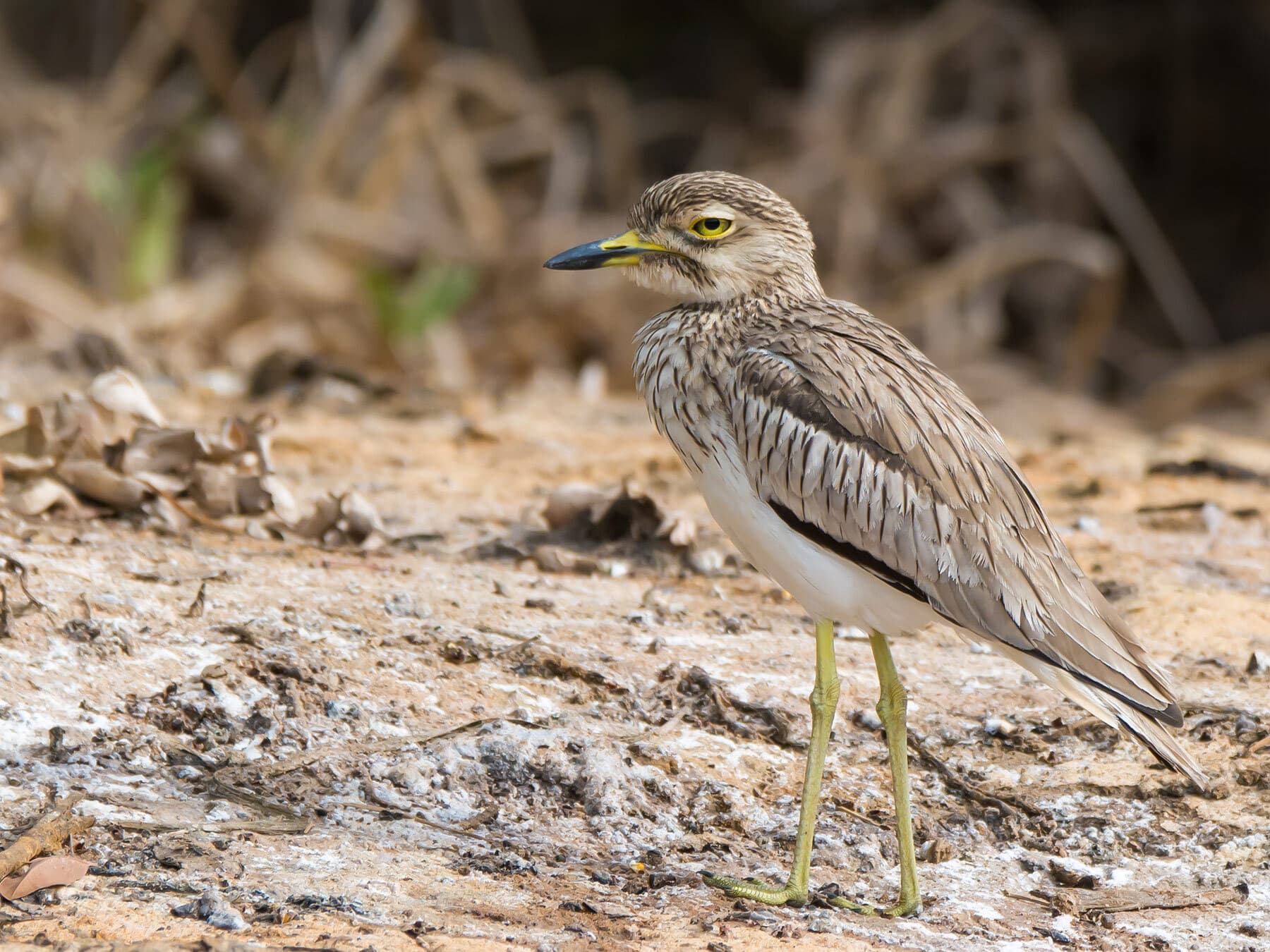
The legs are a dull pale yellow, and the knees are prominent, hence its descriptive nomenclature.
Its size
Adults- Length
- 38–43 cm
- Wingspan
- 80–90 cm
- Weight
- 290–460 g
Its song and calls
Generally, more prone to perform at dawn and dusk, the Senegal thick-knee issues a high pitched staccato whistle similar to ‘pi – pi – pi - pi’, which rises and falls in volume and pitch.
When and where to see it
The Senegal Thick-knee is not recorded regularly in the UK, Ireland, the United States or Canada.
Worldwide: recorded regularly in 19 countries
Countries where it was recorded in at least 3 of the 6 years 2019–2024. Linked countries have their own bird list.
Data: EOD – eBird Observation Dataset (Cornell Lab of Ornithology), accessed via GBIF.org, CC BY 4.0. Records from 2019–2024, aggregated and filtered by Birdfact. How these lists are made
The Senegal thick-knee is commonly found across the African west coast from Senegal south through Gambia, Guinea, Sierra Leone, Liberia, Cote d’Ivoire, Ghana and Nigeria then inland to include Burkina Faso and Benin and east through Cameroon, the Central African Republic, Sudan and Ethiopia. From there it can be found south into Uganda and Kenya and north into Egypt, the Nile Valley and occasionally Israel.
Signs and Spotting tips
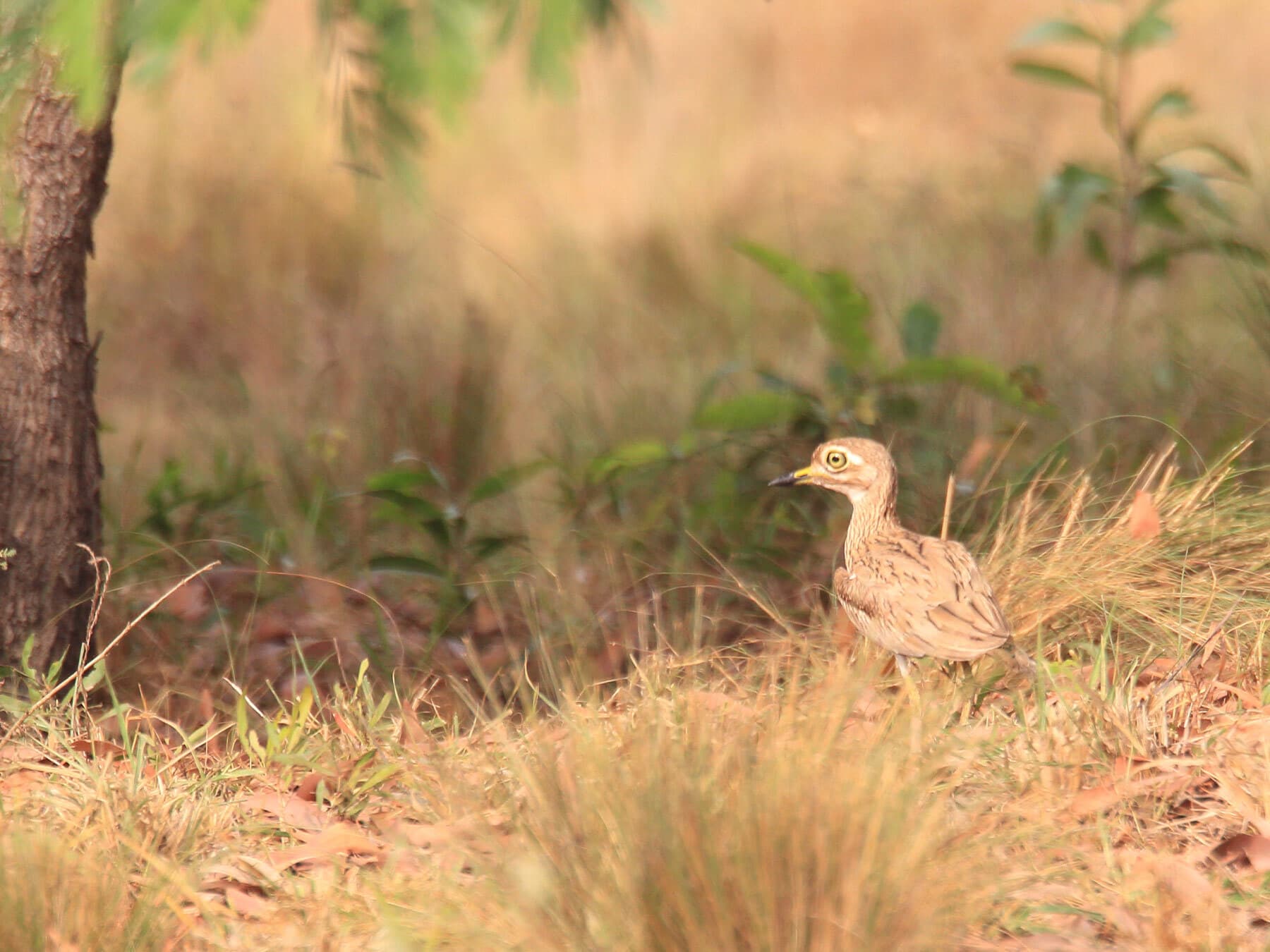
Frequently seen in groups along muddy estuaries, deltas and river banks they are also known to migrate in small flocks across their range avoiding the particularly inclement weather of the wet season which predominates along the West African Coast. It can regularly be found roosting on buildings and can be a common neighbour to human settlements.
What it eats
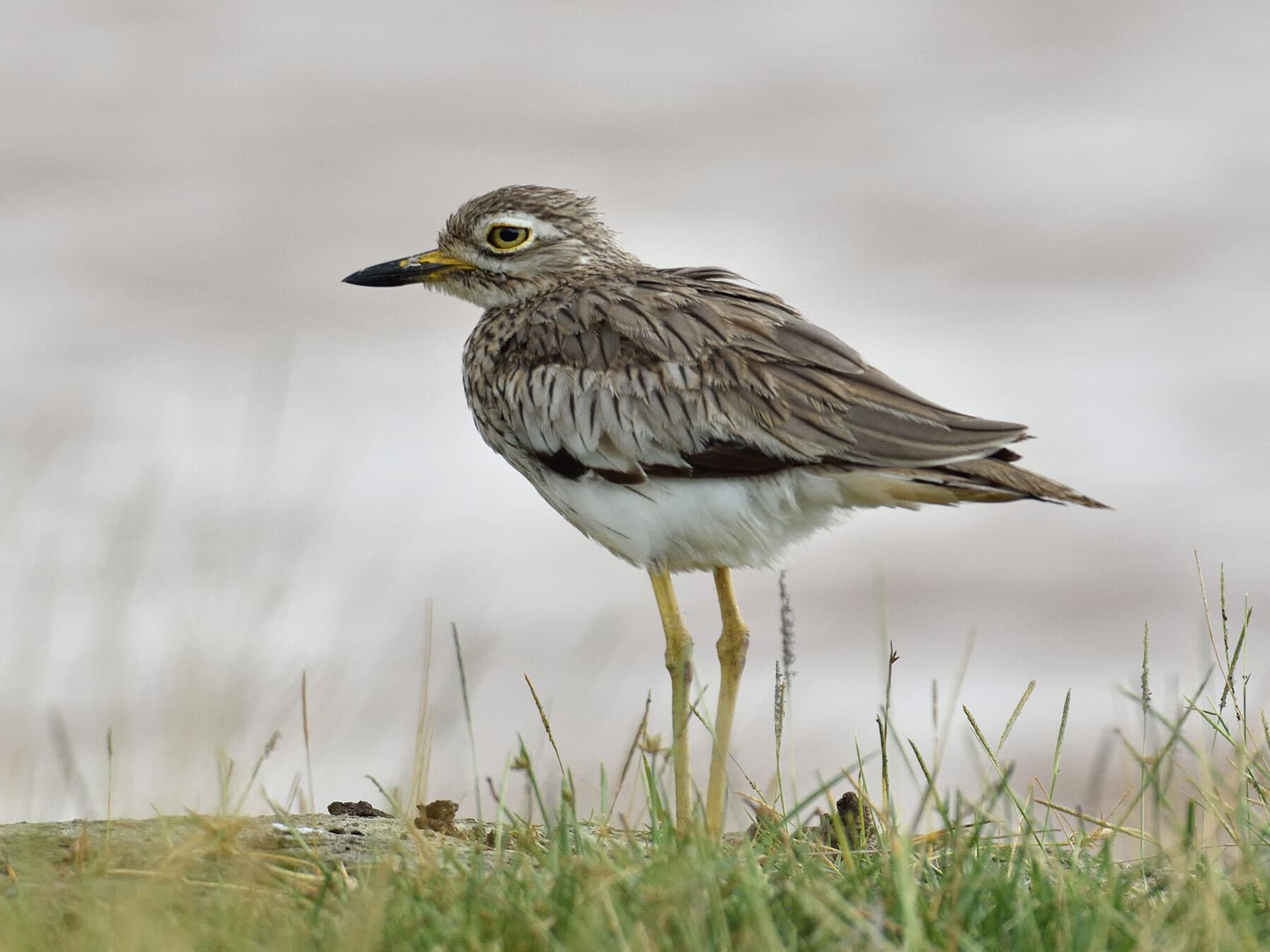
A ground forager, this bird survives on a diet of insects, invertebrates, crustaceans, small amphibians and reptiles.
Nesting and breeding
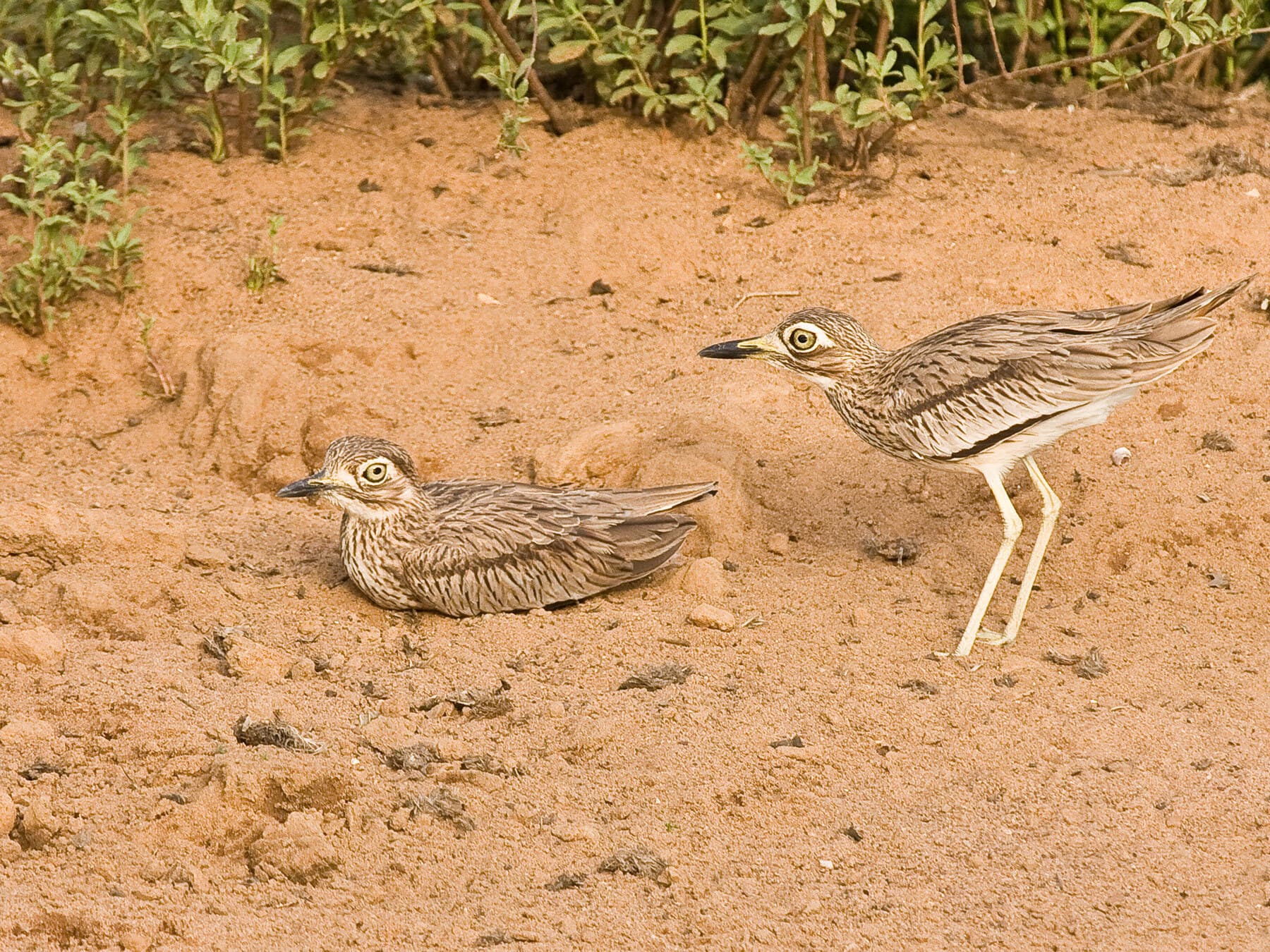
The breeding season varies with location, normally coinciding with low river levels prior to seasonal rains and occurs between April through to September or even later. A nest is constructed in a scrape on the ground, often on small islands to escape predation, where one or possibly two broods averaging two eggs are laid annually. It is believed that both parents incubate the eggs which hatch after about three weeks but detailed information in this regard is unknown.
Behaviour
Senegal Thick-knees are primarily nocturnal, becoming active at dusk. They often stand motionless for long periods, relying on their camouflage to avoid detection.
When alarmed, these birds prefer to run rather than fly, adopting a hunched posture with their heads lowered.
Lifespan and predators
Currently there is no available information regarding the lifespan of the Senegal thick-knee although one of its closest relatives of the same family, the Eurasian Thick-knee has a maximum life expectancy of ten years.
Conservation
While the Senegal Thick-knee is currently listed as Least Concern, it faces threats from habitat loss due to agricultural expansion and urbanisation.
Conservation efforts focus on protecting wetland and grassland habitats within its range.
What does a Senegal Thick-knee look like?
The Senegal thick-knee is a medium to large sized, long legged wader, with what is commonly referred to as cryptic plumage. In simple terms this means that the colour and patternation of the bird is such so as to afford maximum protection from predators due to its camouflage, rendering the bird extremely difficult to spot, particularly whilst motionless and within its natural habitat. The bird’s preferred habitat is semi-arid grassland and river banks, predominantly across central sub-Saharan Africa and this is reflected in the appearance of its plumage. Males and females are almost identical and there is no seasonal difference in colour or markings. Overall, they are a greyish brown with dark barring on the upper parts, head, face and breast with a paler plain lower breast and belly. The chin is a plain white and there is a white eye ring which appears thicker over the top of the eye as opposed to the thin line of the ring under the eye. There is a broad grey speckled band across the upper wing coverts which can be easily seen along the base of the closed wing and is edged in black. In flight, white spots are visible along the edges of the darker primary flight feathers. Unlike its closest relatives, the bill is black from its tip almost covering the entire lower mandible and as far as the nostrils on the upper mandible, but often still extending to the base of the upper mandible, whilst the area around the nostrils is a pale yellow. The eye is wide with a bold yellow iris. The legs are a dull pale yellow and knees are prominent hence its descriptive nomenclature.
Quick facts
- Length
- 38–43 cm
- Wingspan
- 80–90 cm
- Weight
- 290–460 g
- Lifespan
- 10 years
- Family
- Thick-knees
- Migration
- Resident
- Global status (IUCN)
- Least Concern
- World population
- Unknown
- Population trend
- Unknown
- Also called
- Senegal Stone-curlew
- Scientific name
- Burhinus senegalensis
Sources
1- 1BirdLife International. 2016. Burhinus senegalensis. The IUCN Red List of Threatened Species 2016: e.T22693580A93413540. Source (opens in a new tab)

Checked by
Nathan Cope, founder and editor
Nathan founded Birdfact and leads its writers and contributors in the UK, the US and Canada. He has watched and studied birds for more than ten years, and checks every article and species guide before it’s published.