


Secretarybird
Secretary Bird · Sagittarius serpentarius
By the Birdfact teamChecked by Nathan Cope
On this page11 sections
How to recognise it
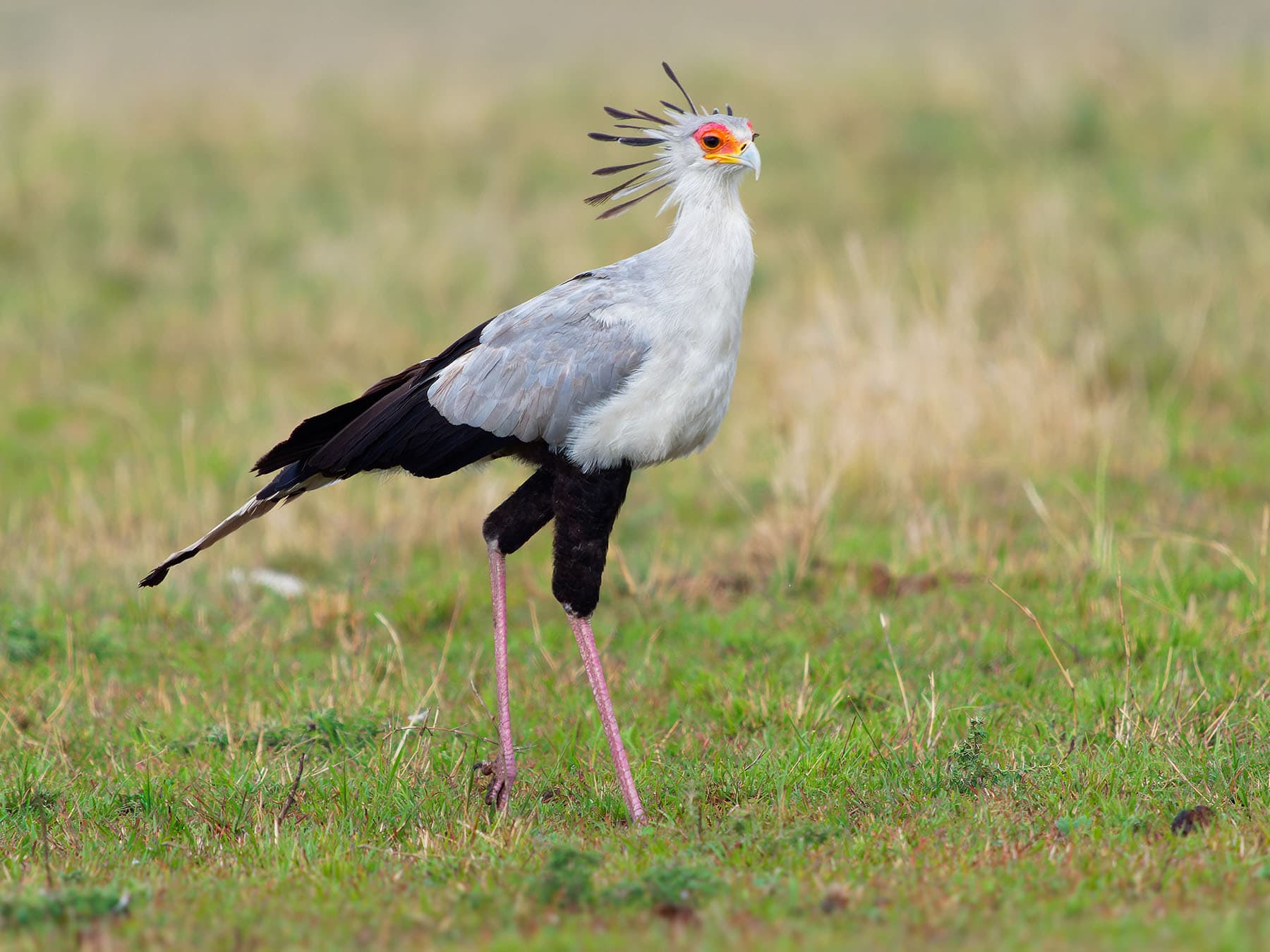
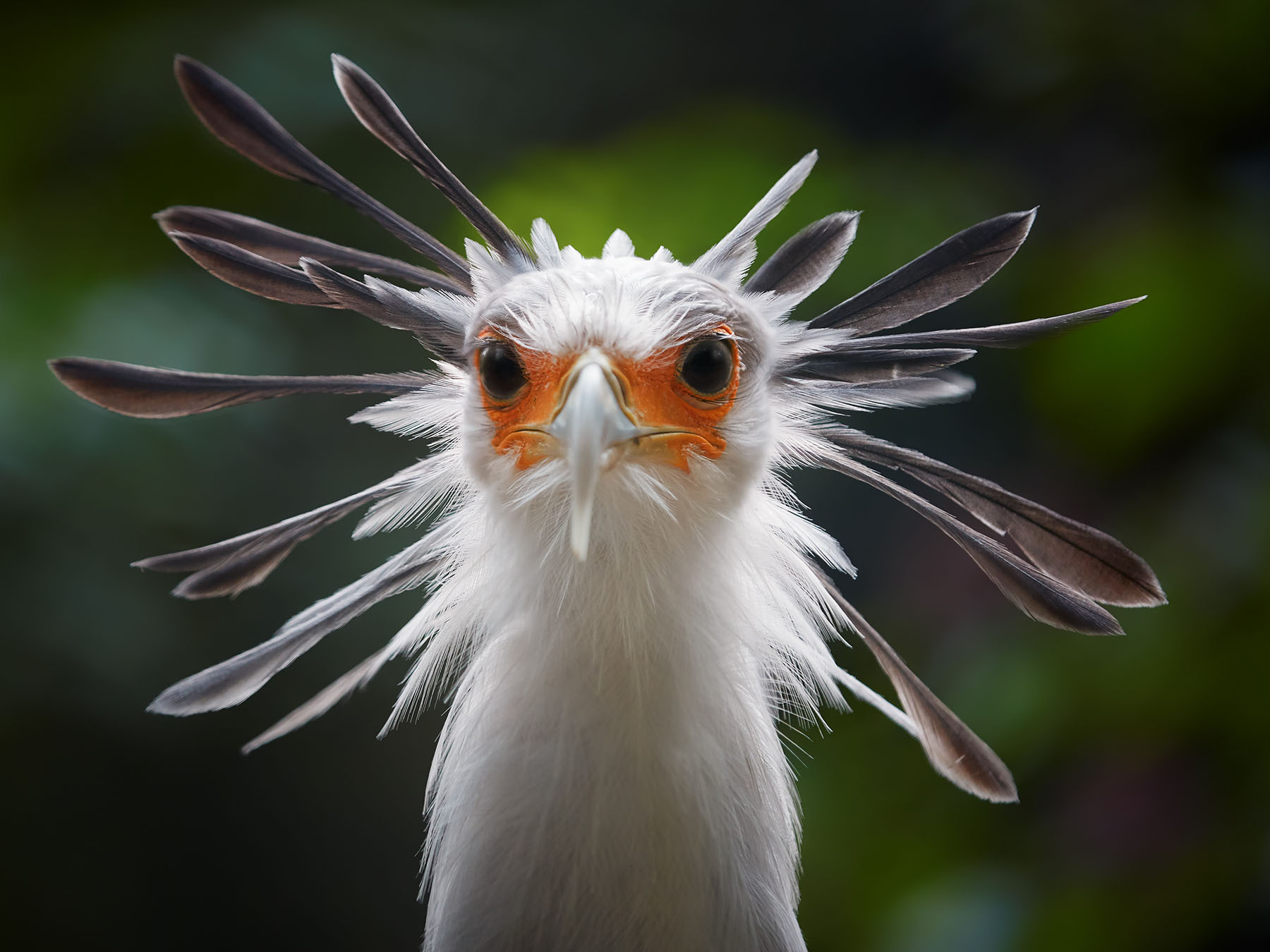
The Secretarybird is a striking, long-legged raptor with a distinctive eagle-like head and a crest of black feathers. Its body is predominantly grey, with black flight feathers and thighs. The face is bare and red-orange, contrasting with its grey beak.
Both sexes look similar, with juveniles having a duller plumage and shorter crest feathers. The bird's most notable feature is its long, pink legs, which give it a unique stance among raptors.
Its size
Adults- Length
- 112–150 cm
- Wingspan
- 191–215 cm
- Weight
- 2300–4270 g
Its song and calls
Secretarybirds are generally silent, but during breeding season, they produce deep, guttural croaking sounds. These vocalisations are often accompanied by head-bobbing displays.
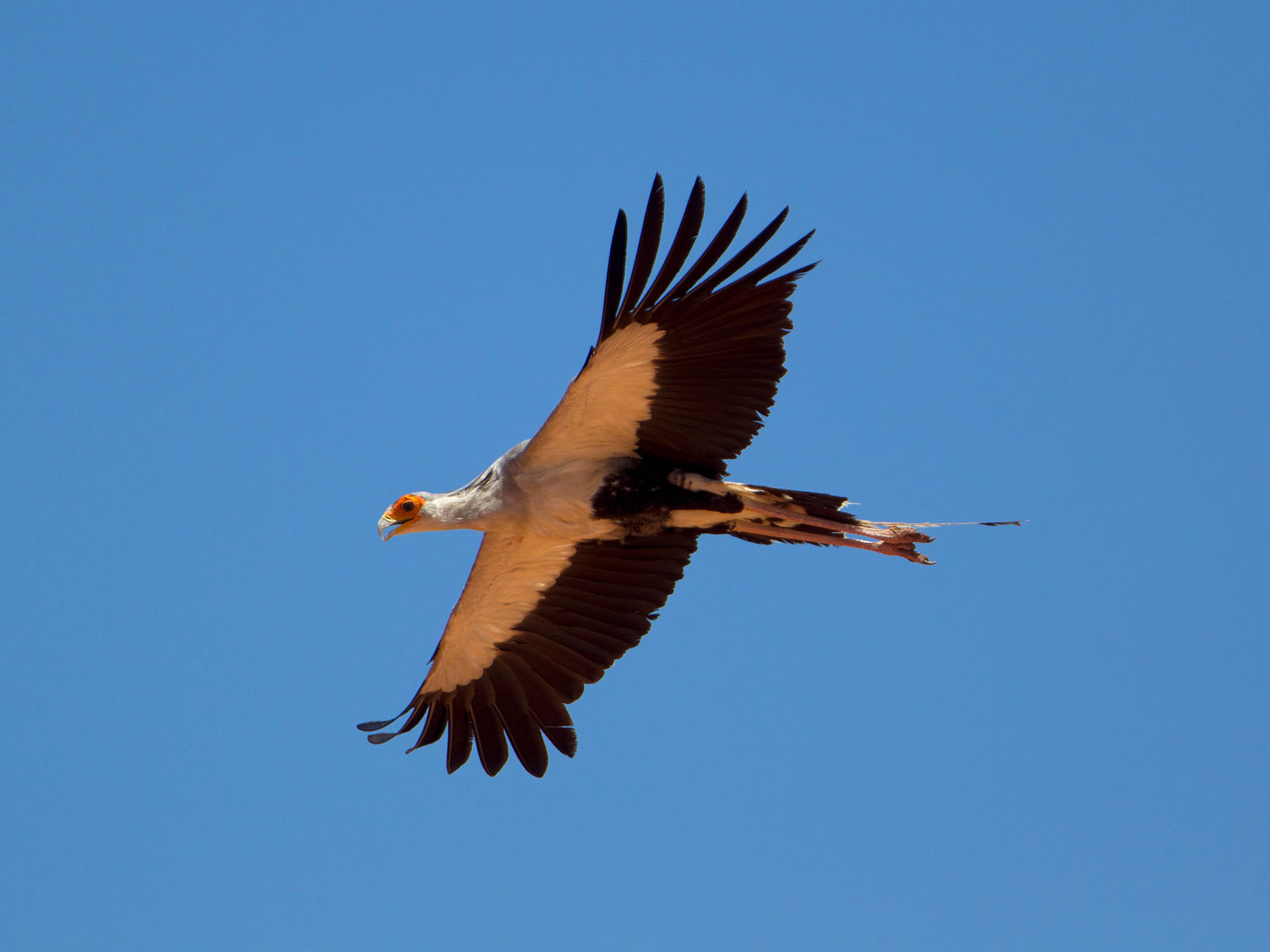
When alarmed, they may emit a softer, hissing sound. Their wings also make a distinctive swooshing noise during flight.
When and where to see it
The Secretarybird is not recorded regularly in the UK, Ireland, the United States or Canada.
Worldwide: recorded regularly in 12 countries
Countries where it was recorded in at least 3 of the 6 years 2019–2024. Linked countries have their own bird list.
Data: EOD – eBird Observation Dataset (Cornell Lab of Ornithology), accessed via GBIF.org, CC BY 4.0. Records from 2019–2024, aggregated and filtered by Birdfact. How these lists are made
Tips for seeing it
- Look for Secretarybirds in open grasslands and savannas
- Observe their distinctive walking gait and tall stature
- Watch for their unique stomping behavior when hunting
- Listen for their deep, guttural croaking calls during breeding season
What it eats
Secretarybirds are carnivorous, primarily feeding on small mammals, snakes, lizards, and large insects.
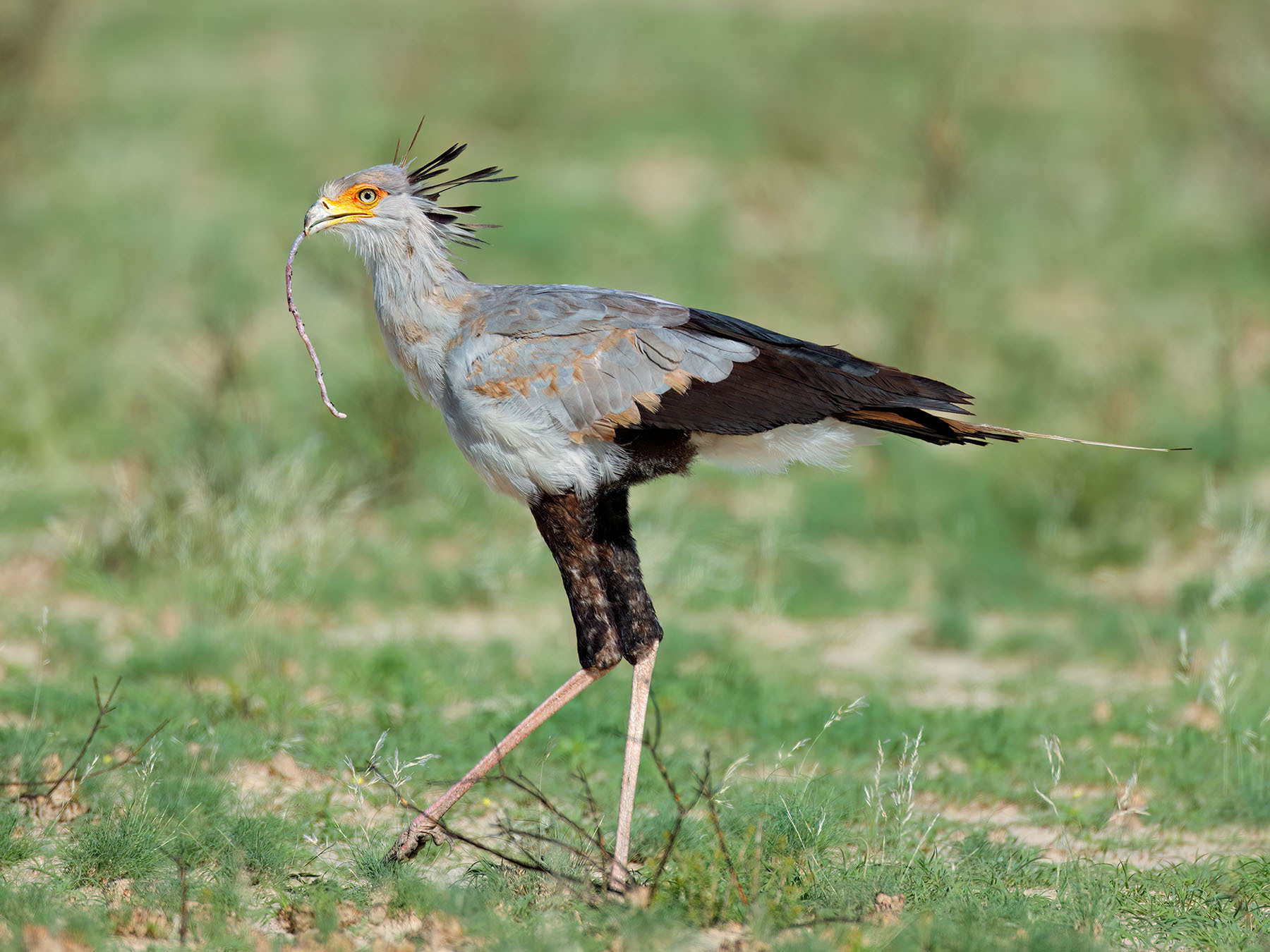
They are renowned for their ability to catch and kill venomous snakes, using their long legs to stomp and crush their prey. They may also occasionally consume bird eggs and chicks.
Nesting and breeding
Secretarybirds form monogamous pairs and engage in elaborate courtship displays, including aerial acrobatics and mutual preening. Breeding typically occurs during the dry season when the grass is shorter, facilitating hunting.
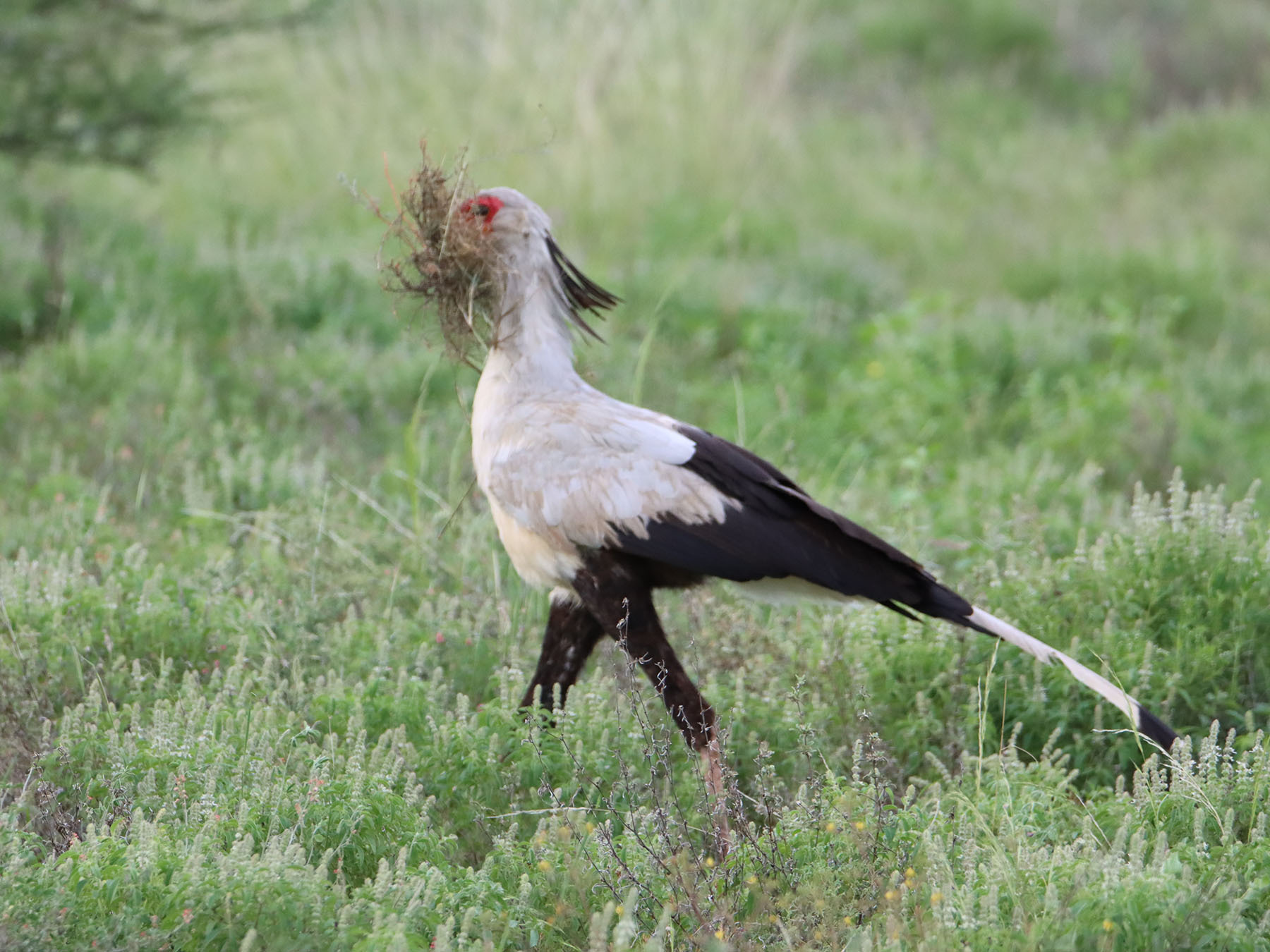
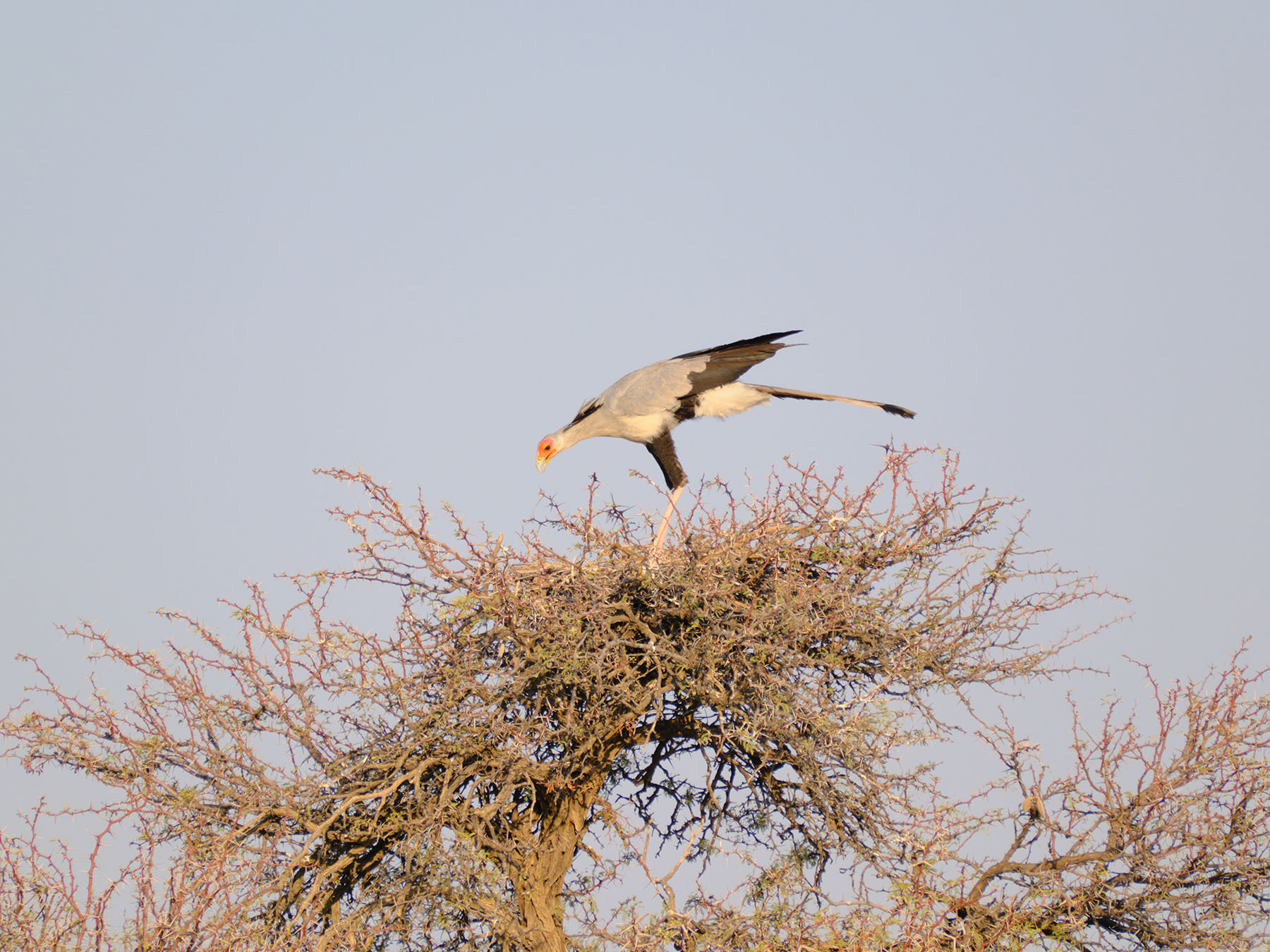
Nests are large, flat platforms of sticks built in the tops of thorny trees or dense bushes. The female usually lays 1-3 pale green eggs with brown spots.
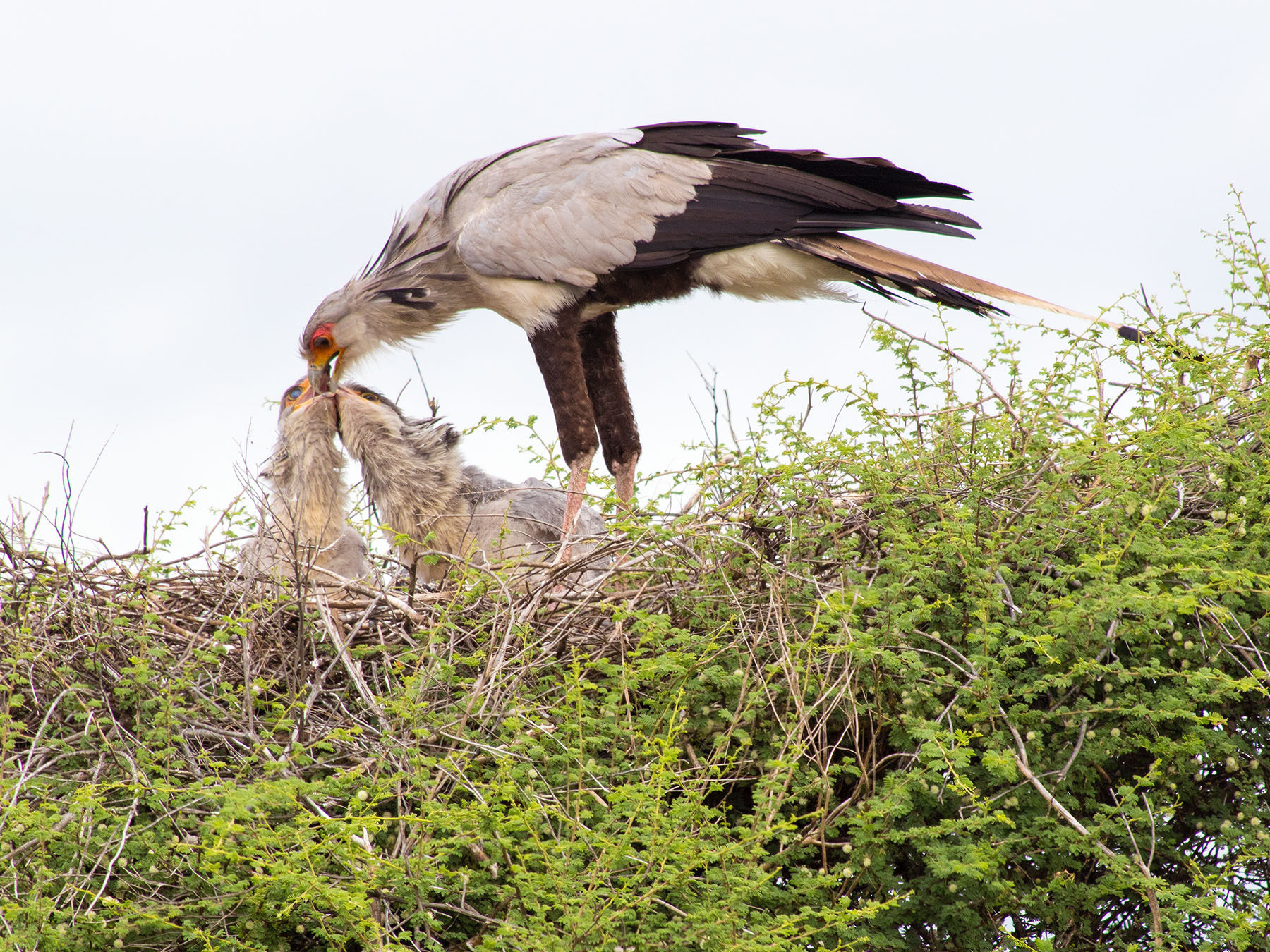
Both parents incubate the eggs for about 45 days. Chicks fledge at around 65-80 days old but remain dependent on their parents for several more months, learning crucial hunting skills.
Behaviour
Secretarybirds are primarily terrestrial, spending most of their time walking on the ground in search of prey. They are known for their unique hunting technique of stomping on prey with their powerful legs to stun or kill it.
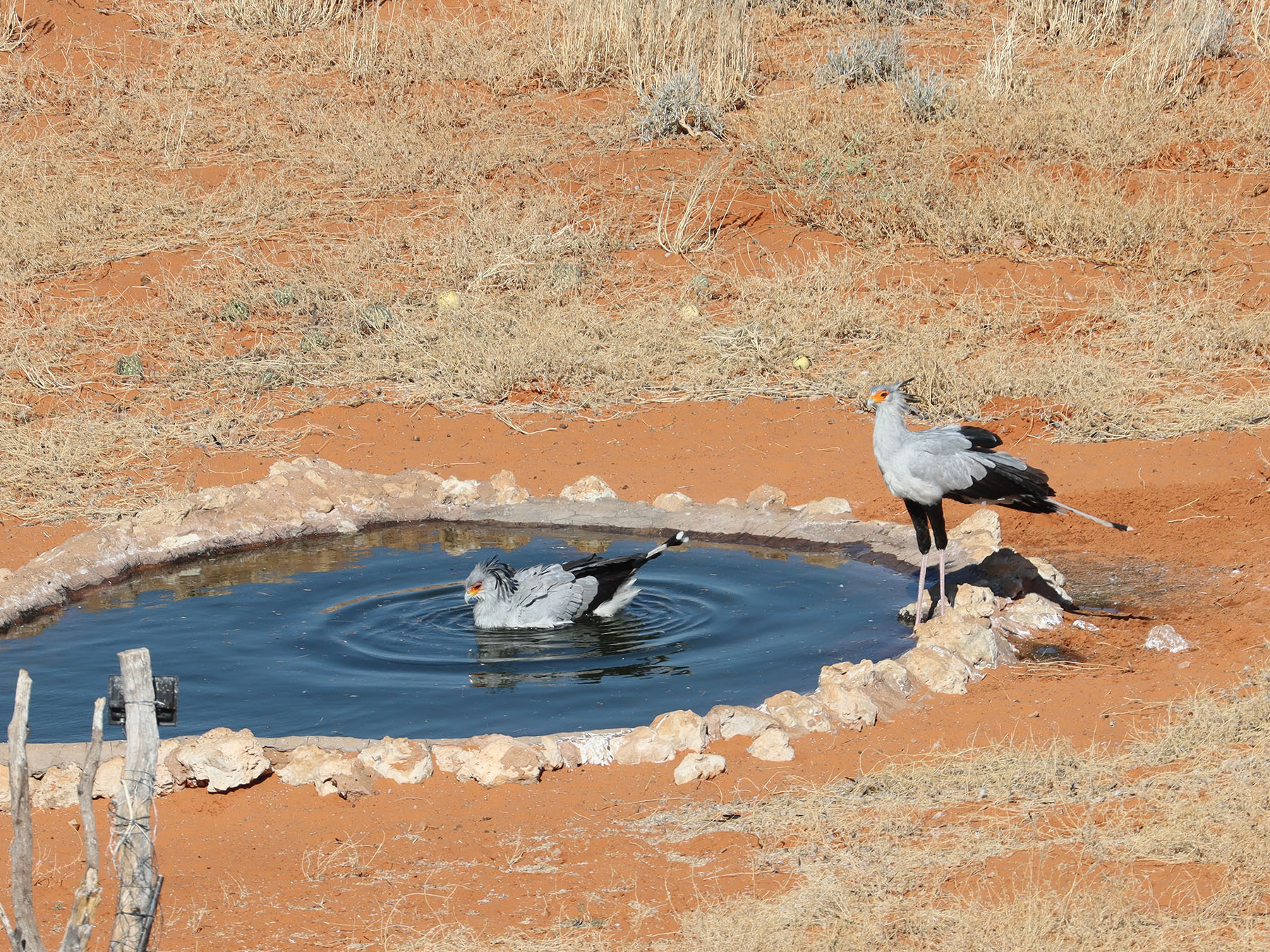
These birds are usually solitary or found in pairs but may gather in small groups at waterholes.
Conservation
The Secretarybird is listed as Endangered due to rapid population declines across its range. Habitat loss, degradation, and fragmentation are the primary threats. Collisions with power lines and fences also contribute to mortality.
Conservation efforts focus on habitat protection and reducing human-wildlife conflicts.
More photos
9 photos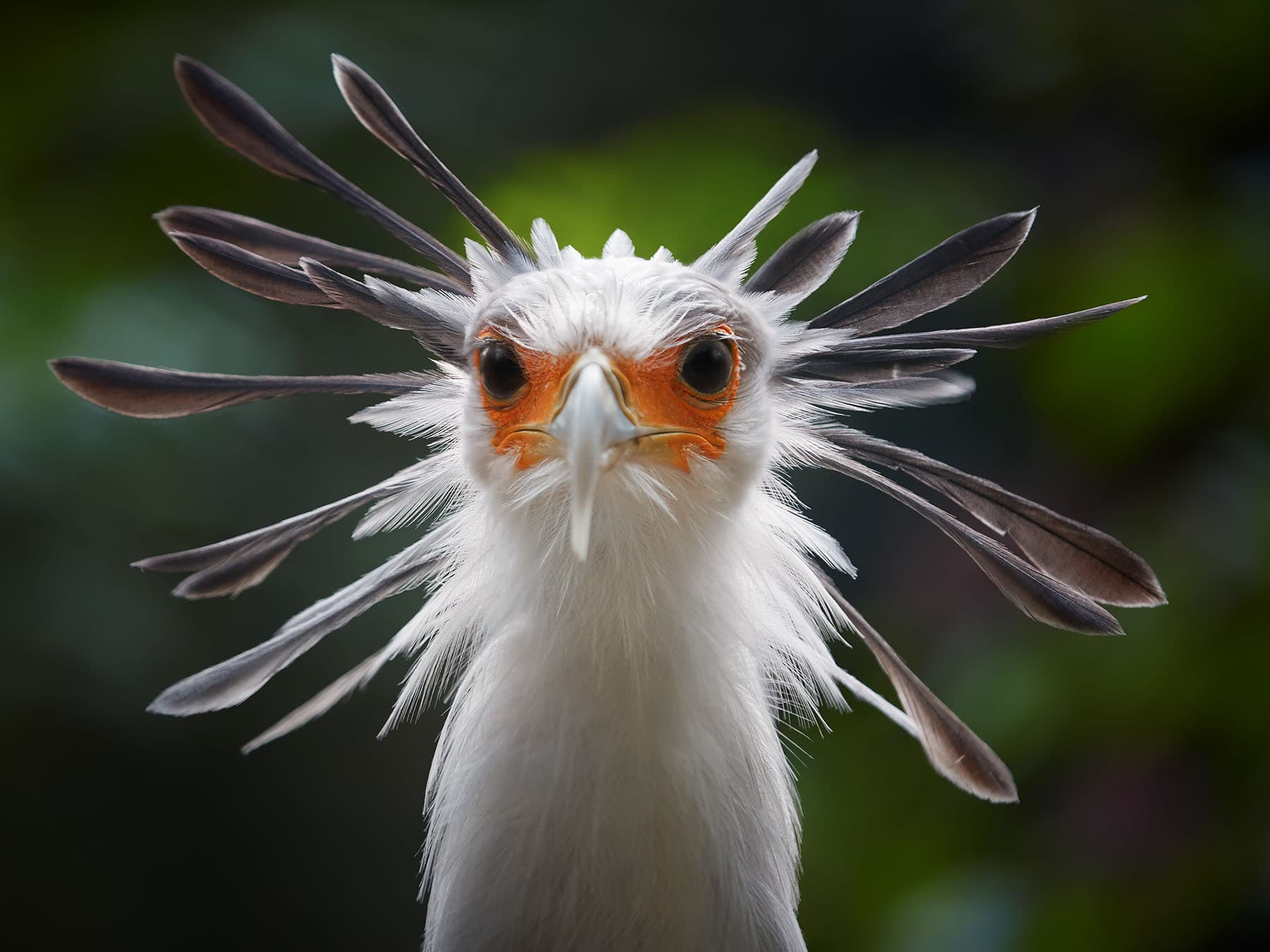 Close up portrait of a Secretarybird
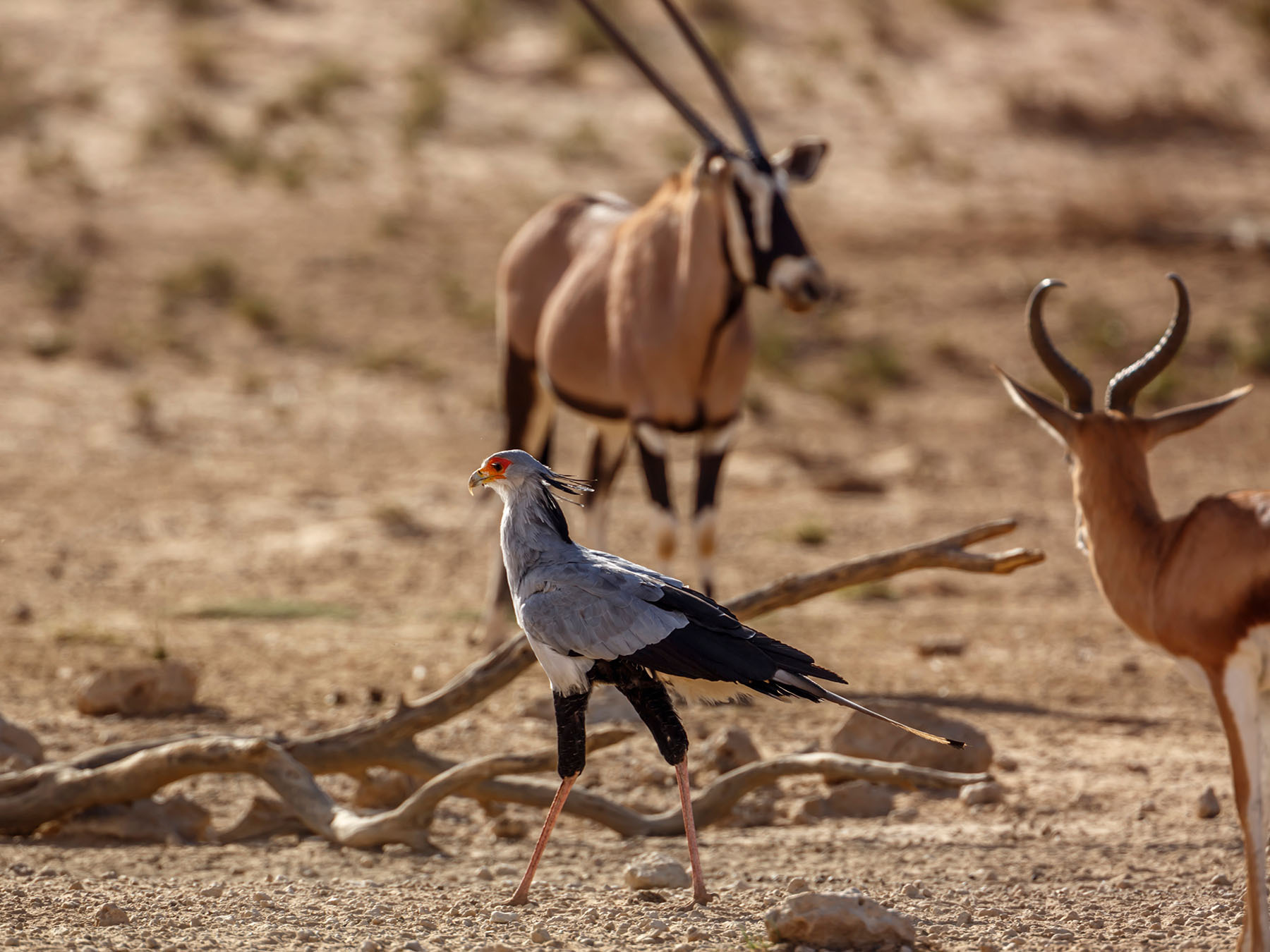
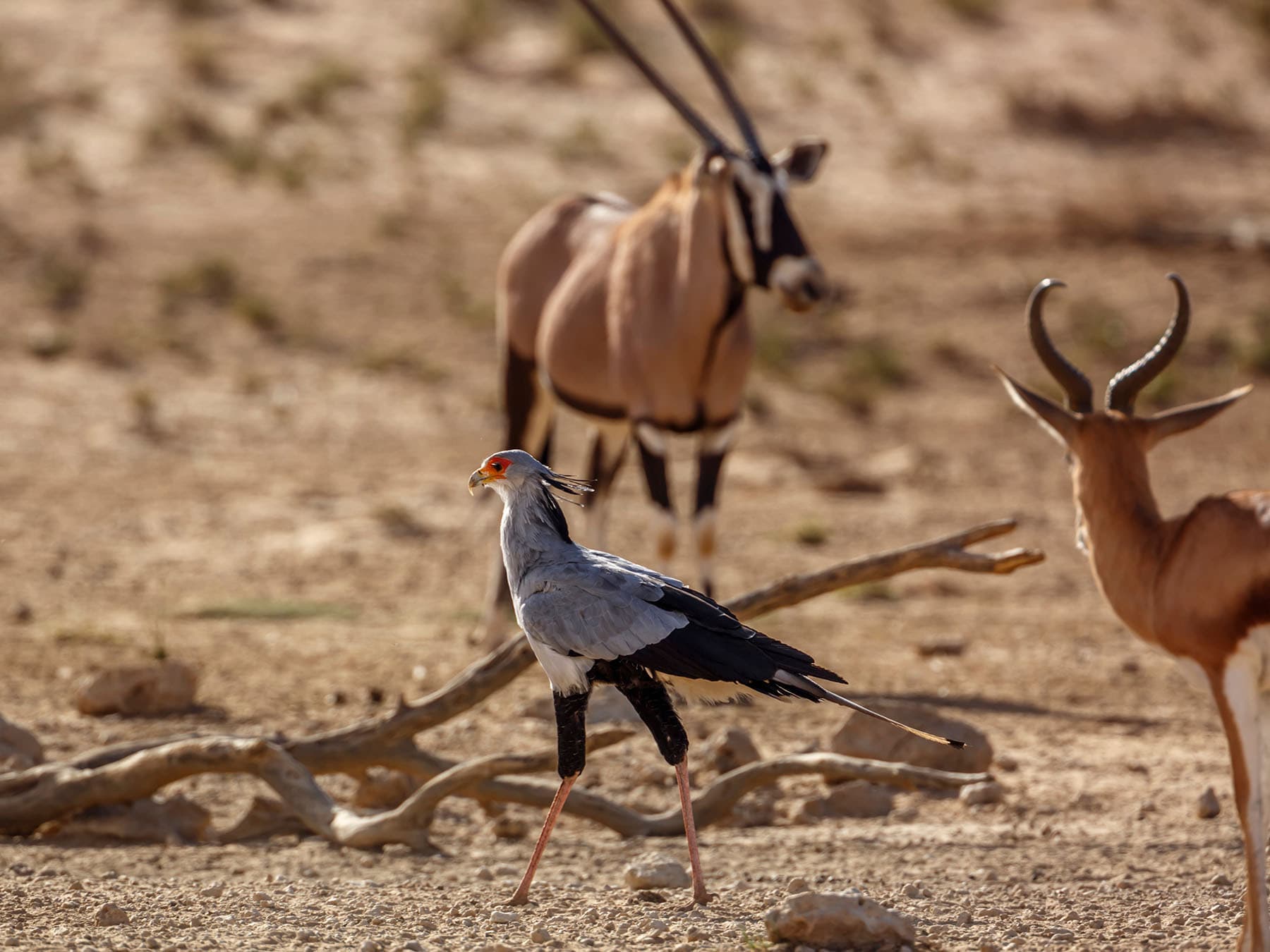 Secretarybird near Oryx
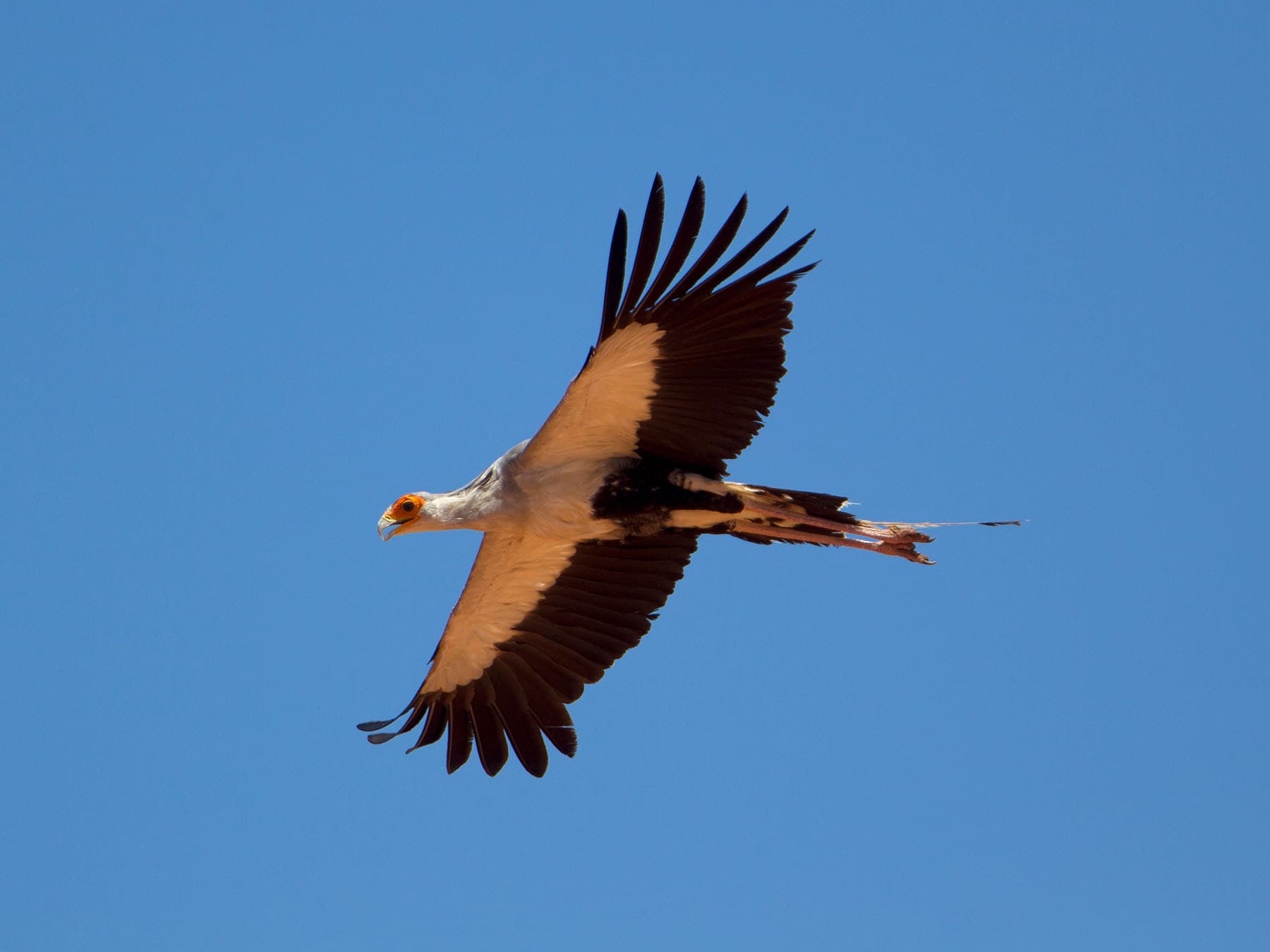 Secretarybird in flight
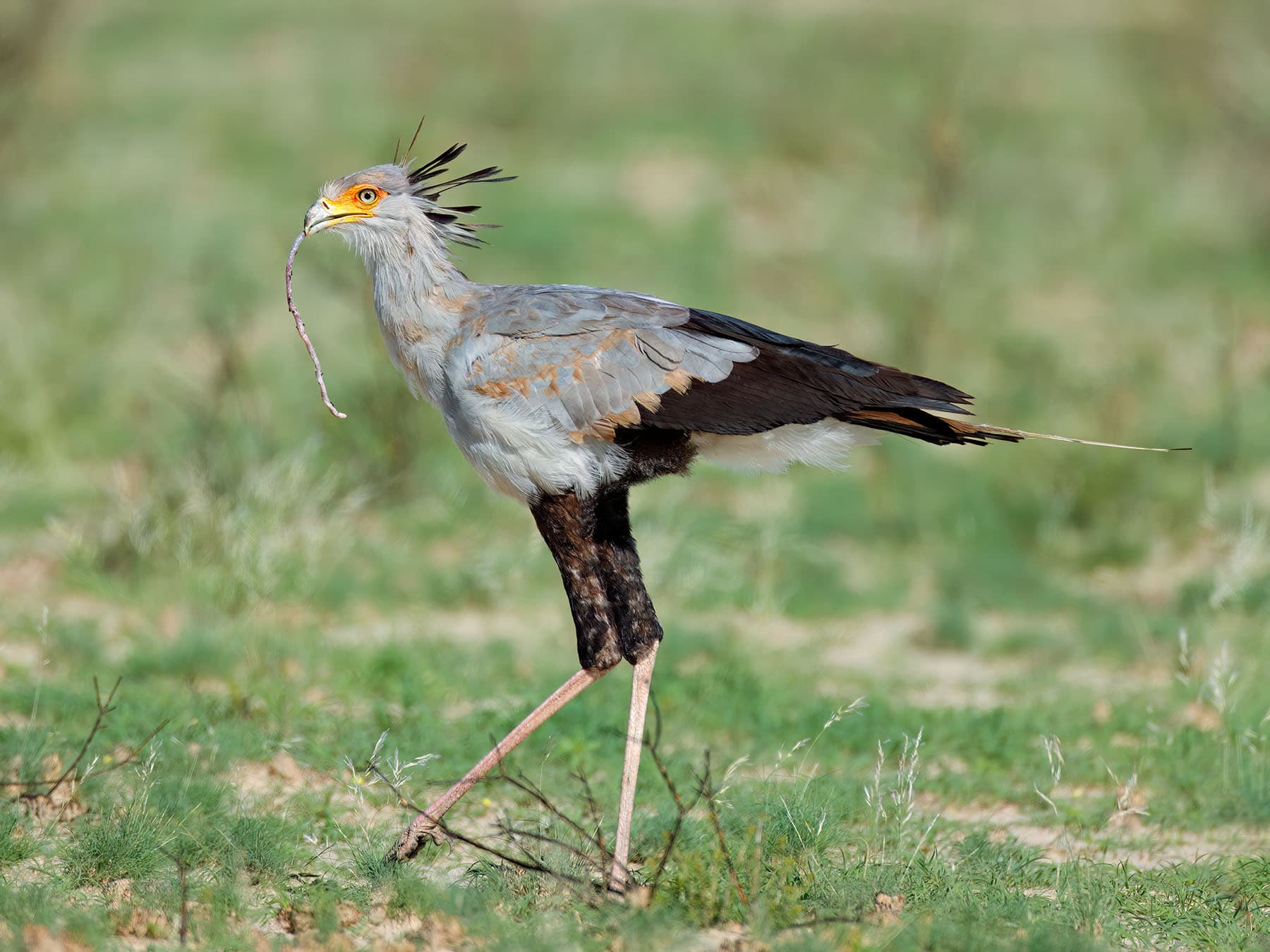 Secretarybird hunting for prey in its natural habitat
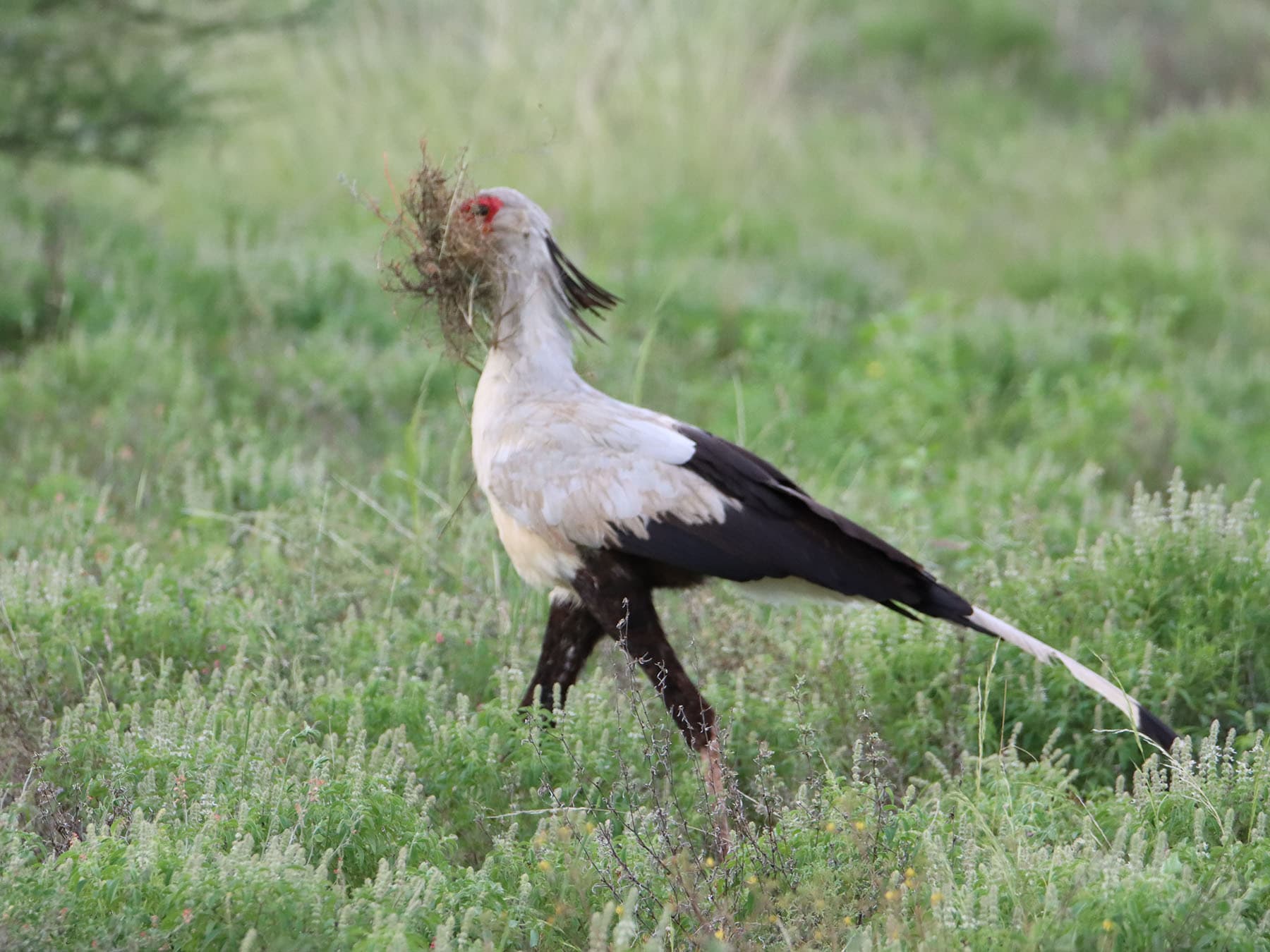 A Secretarybird gathering grass for the nest
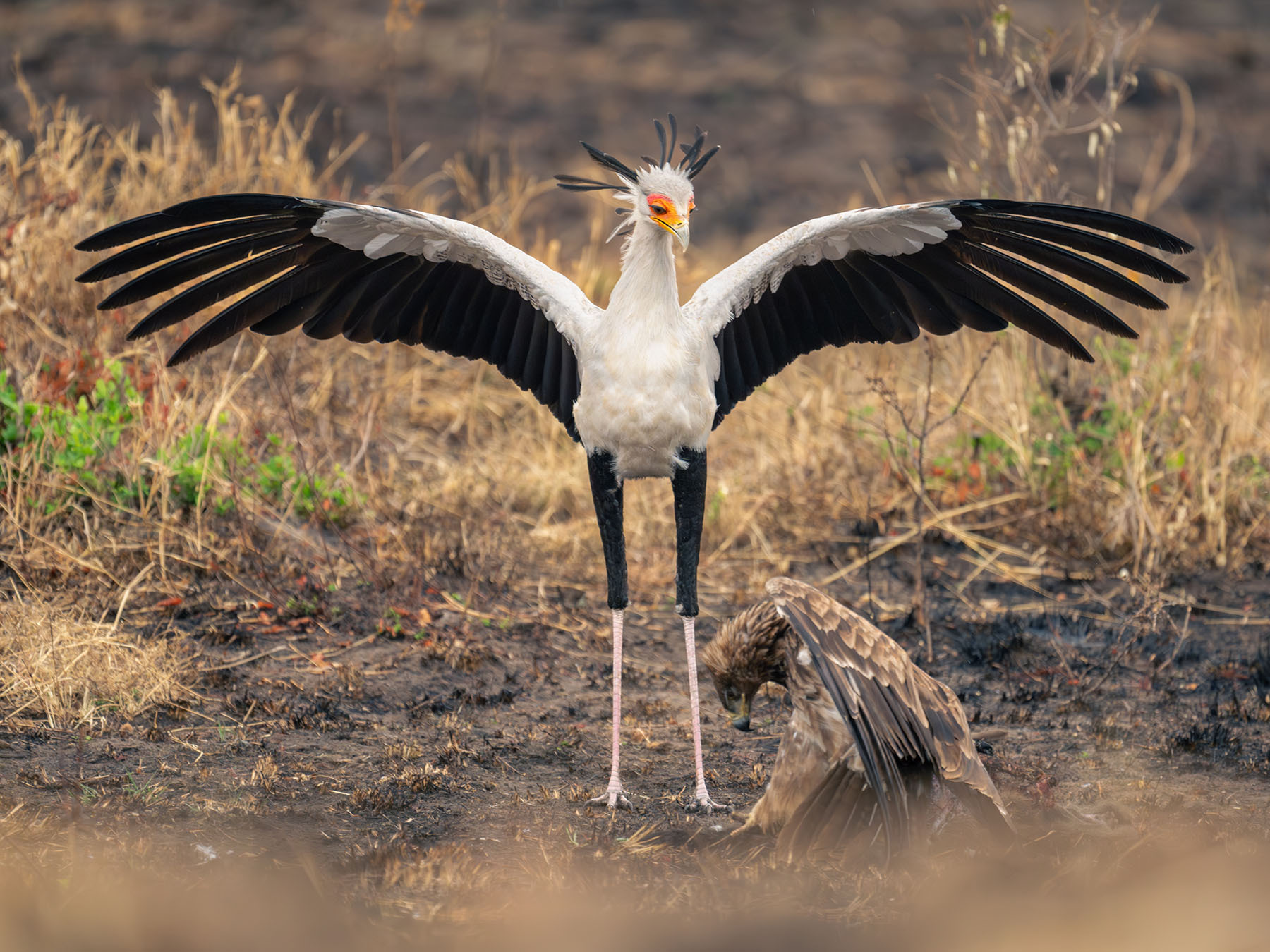
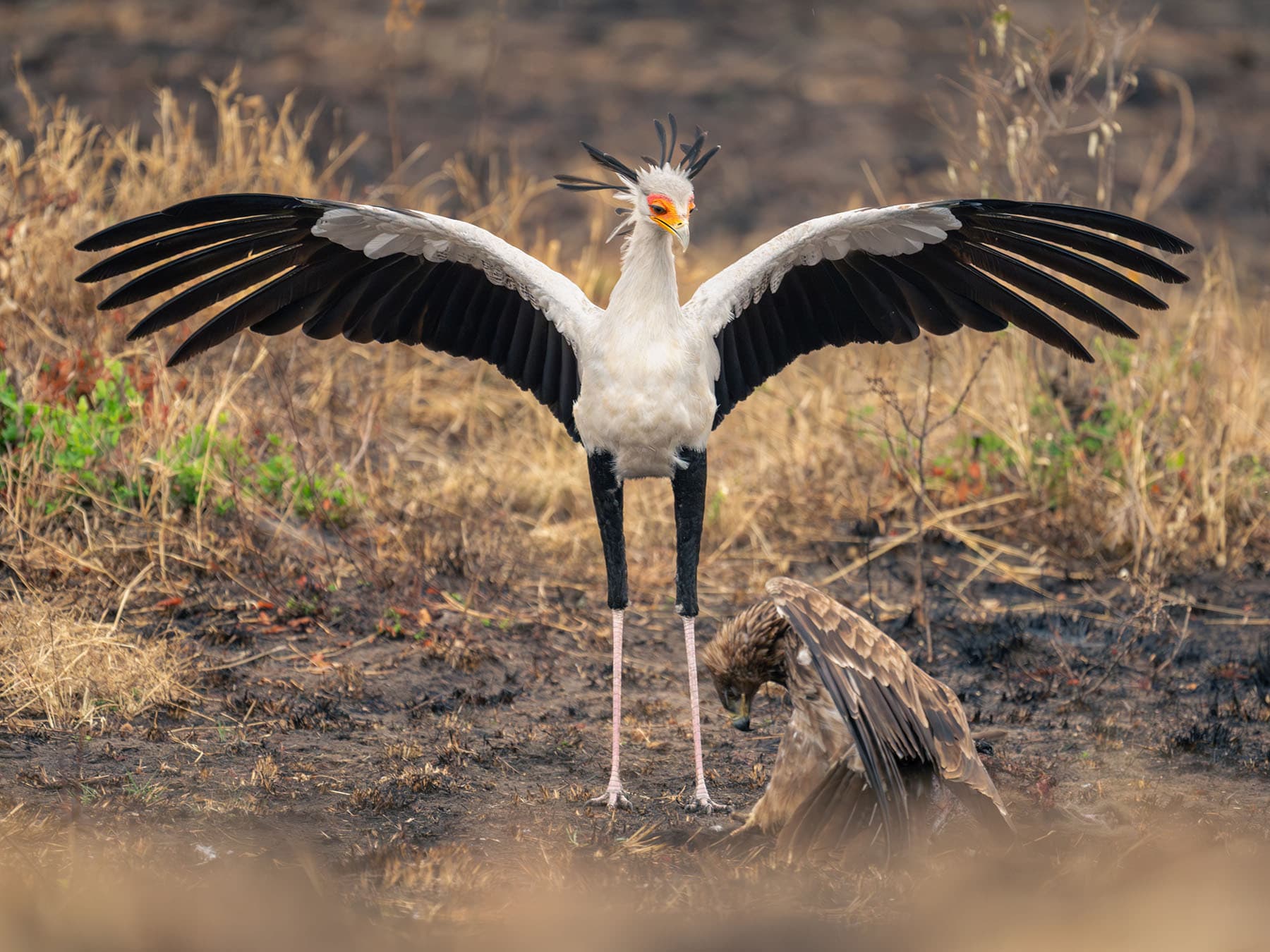 Secretarybird with spread wings
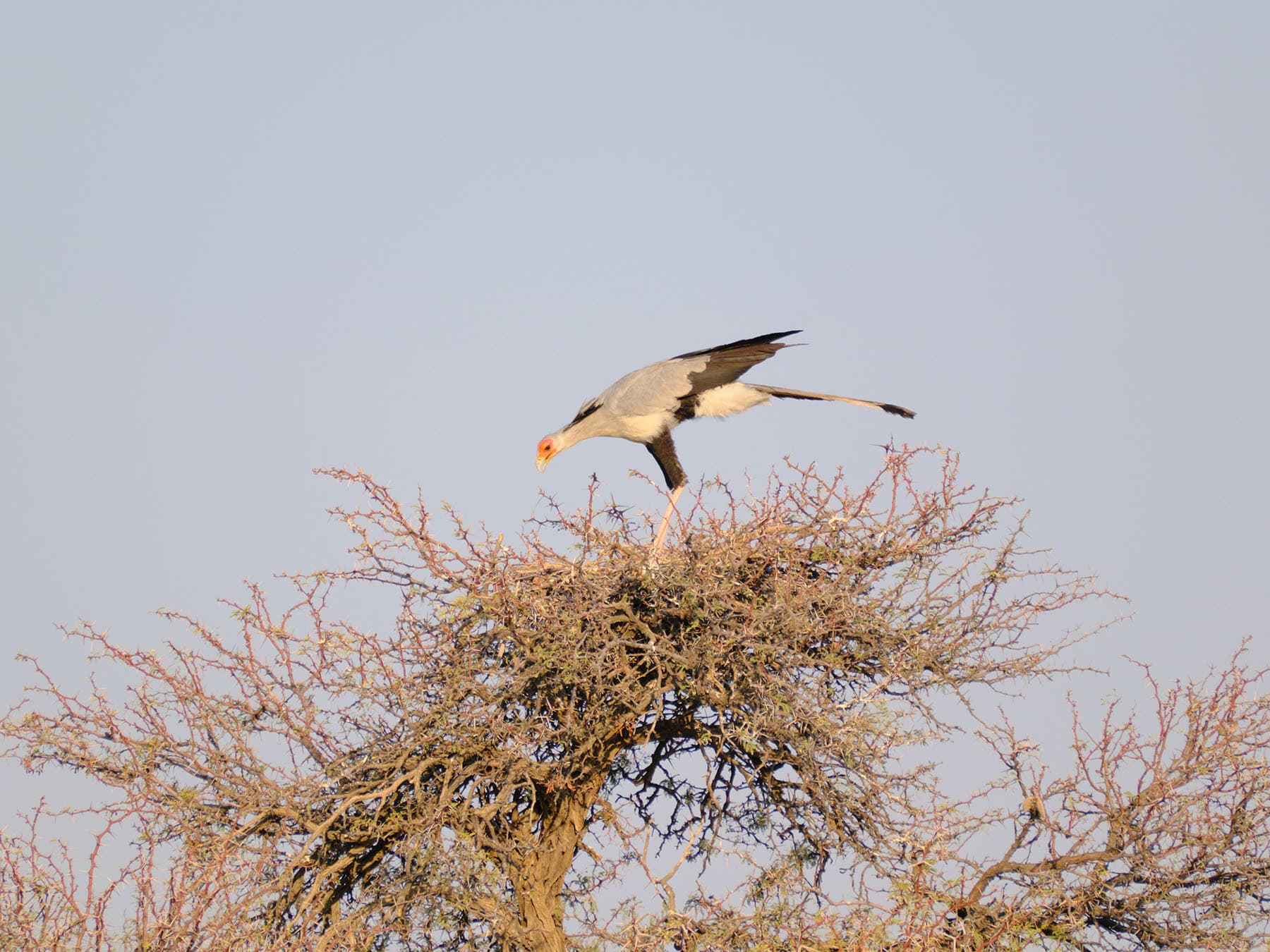 Secretarybird in its nest, at the top of a tree
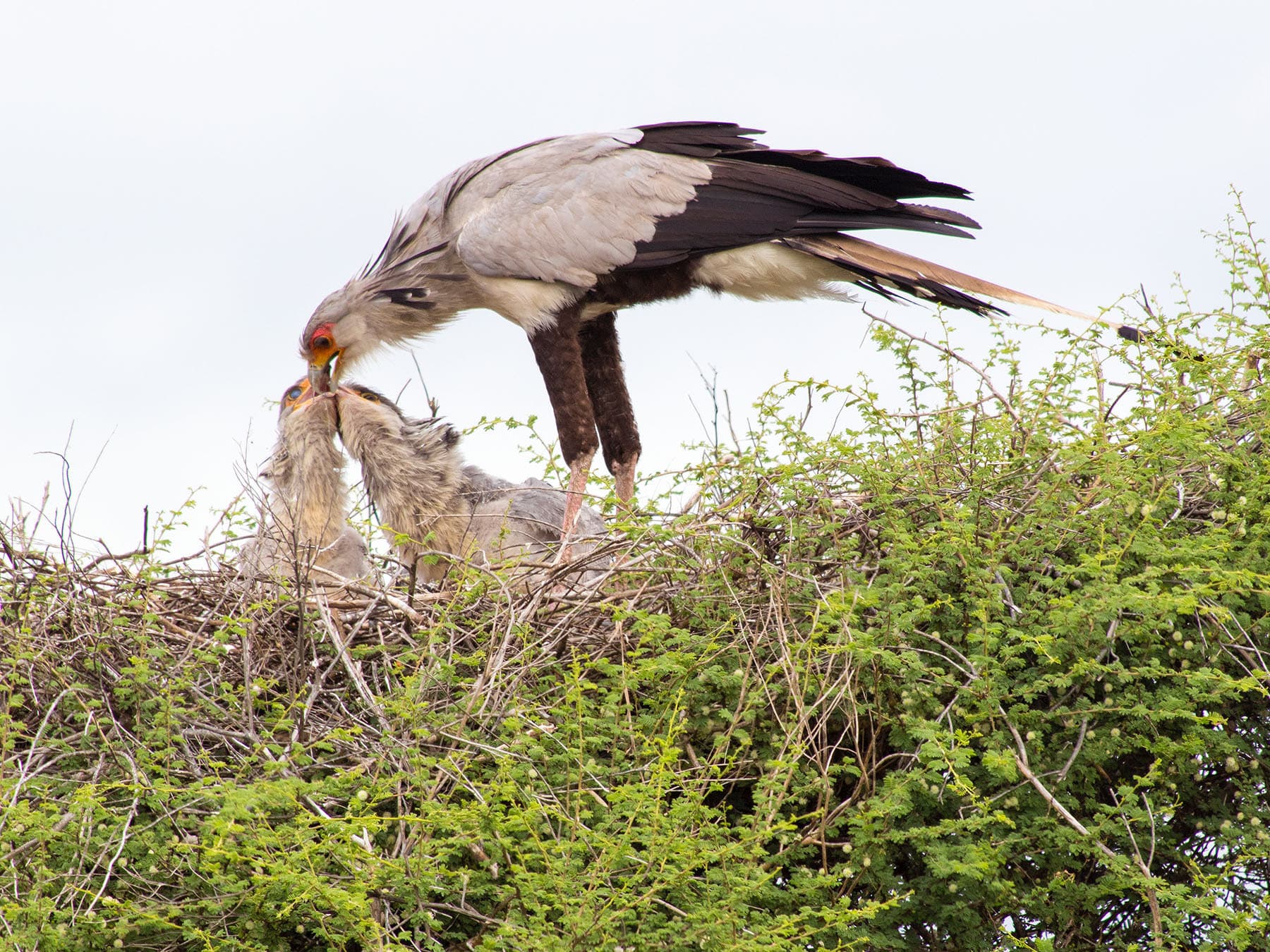 Secretarybird feeding young chicks in the nest
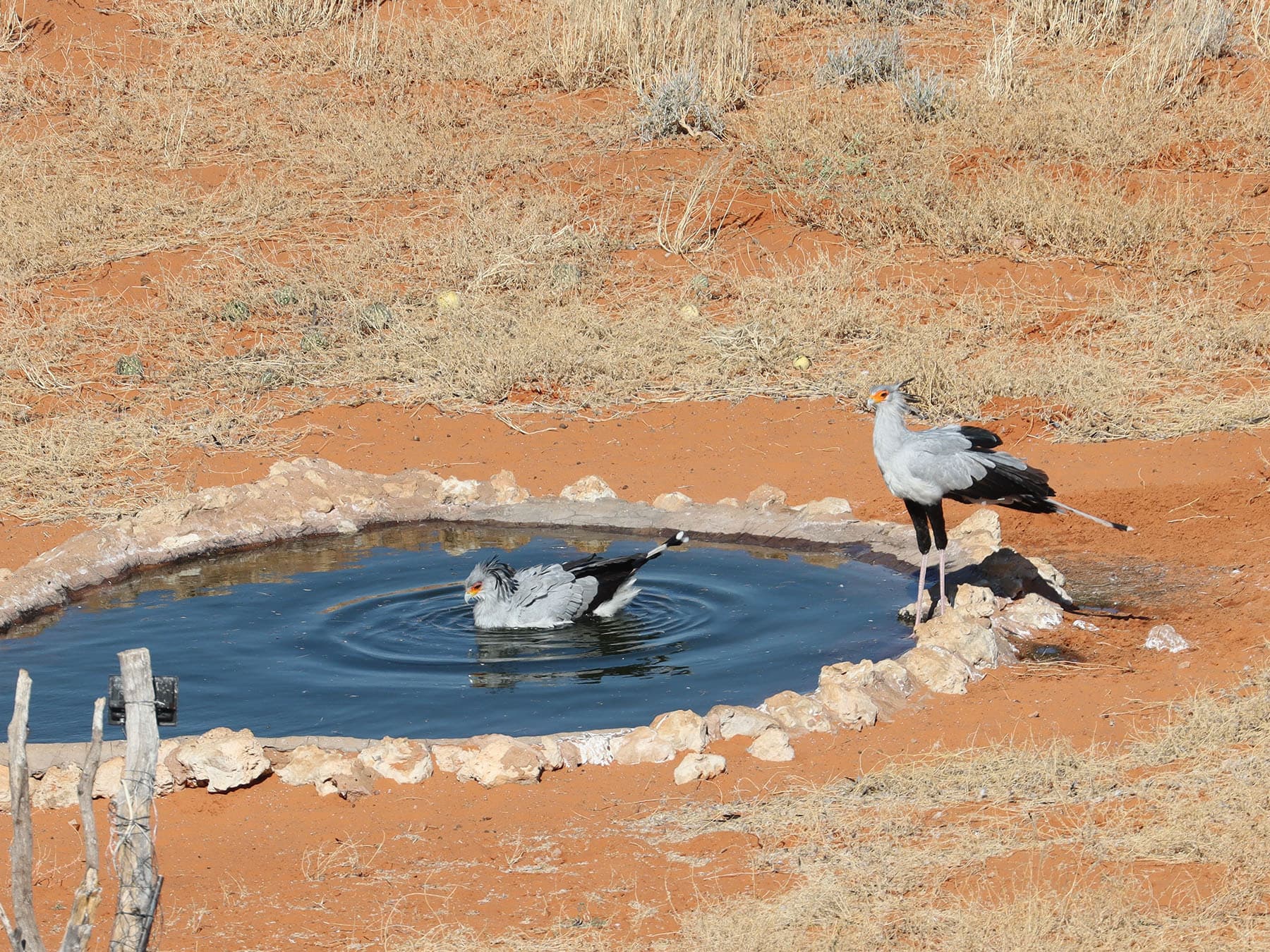 A pair of Secretarybirds bathing in the water
Quick facts
- Length
- 112–150 cm
- Wingspan
- 191–215 cm
- Weight
- 2300–4270 g
- Lifespan
- 10–15 years · oldest recorded 19 years
- Family
- Secretary Birds
- Migration
- Resident
- Global status (IUCN)
- Endangered
- World population
- 6,700 - 67,000 mature individuals
- Population trend
- Decreasing
- Also called
- Secretary Bird
- Scientific name
- Sagittarius serpentarius
Sources
4- 1BirdLife International. 2020. Sagittarius serpentarius. The IUCN Red List of Threatened Species 2020: e.T22696221A173647556. Source (opens in a new tab)
- 2BirdLife International. 2020. Sagittarius serpentarius. The IUCN Red List of Threatened Species 2020: e.T22696221A173647556. Source (opens in a new tab)
- 3BirdLife International. 2020. Sagittarius serpentarius. The IUCN Red List of Threatened Species 2020: e.T22696221A173647556. Source (opens in a new tab)
- 4Captive in Zoo

Checked by
Nathan Cope, founder and editor
Nathan founded Birdfact and leads its writers and contributors in the UK, the US and Canada. He has watched and studied birds for more than ten years, and checks every article and species guide before it’s published.