


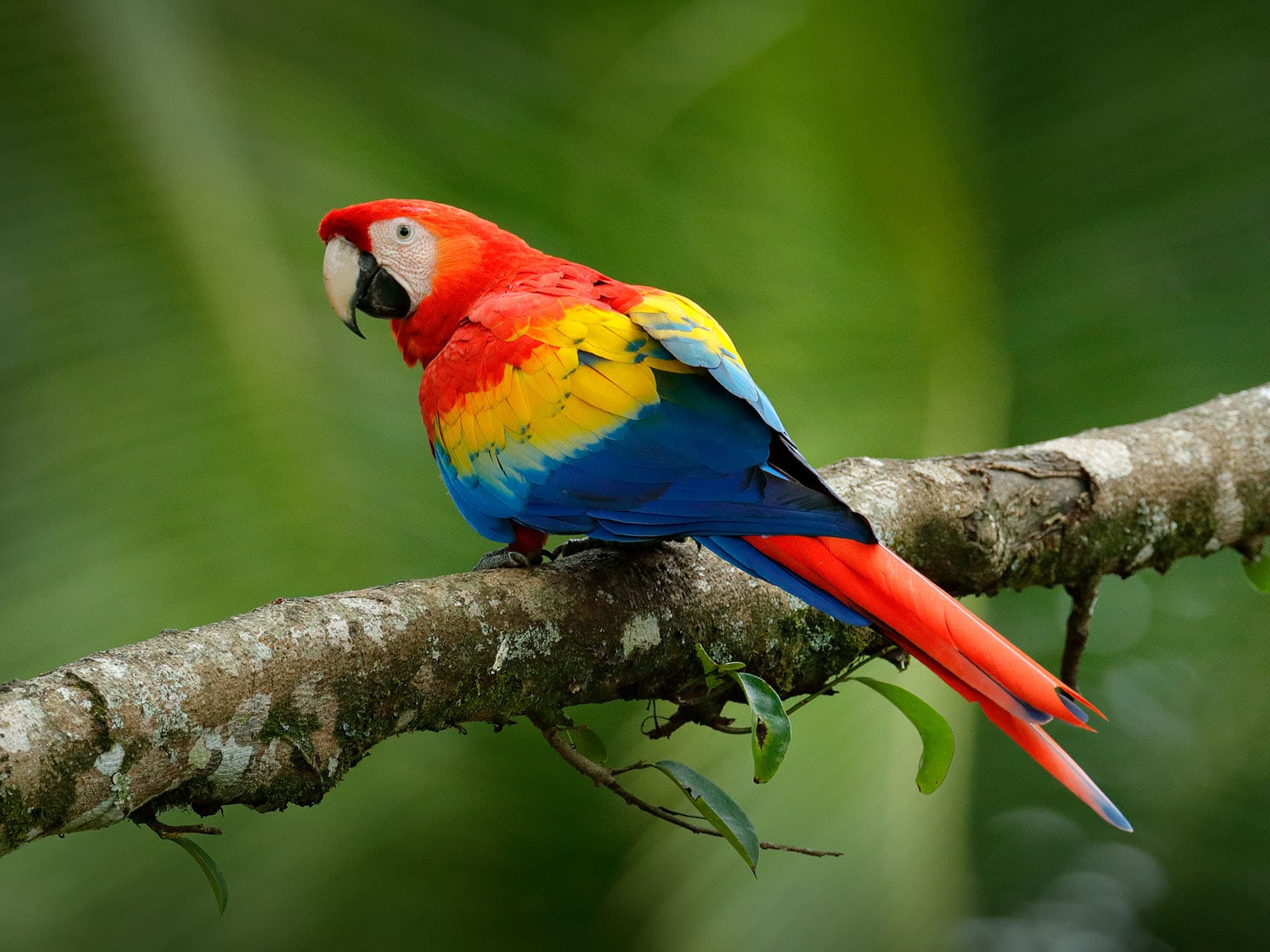
Scarlet Macaw
Red Macaw · Ara macao
By the Birdfact teamChecked by Nathan Cope
On this page11 sections
How to recognise it
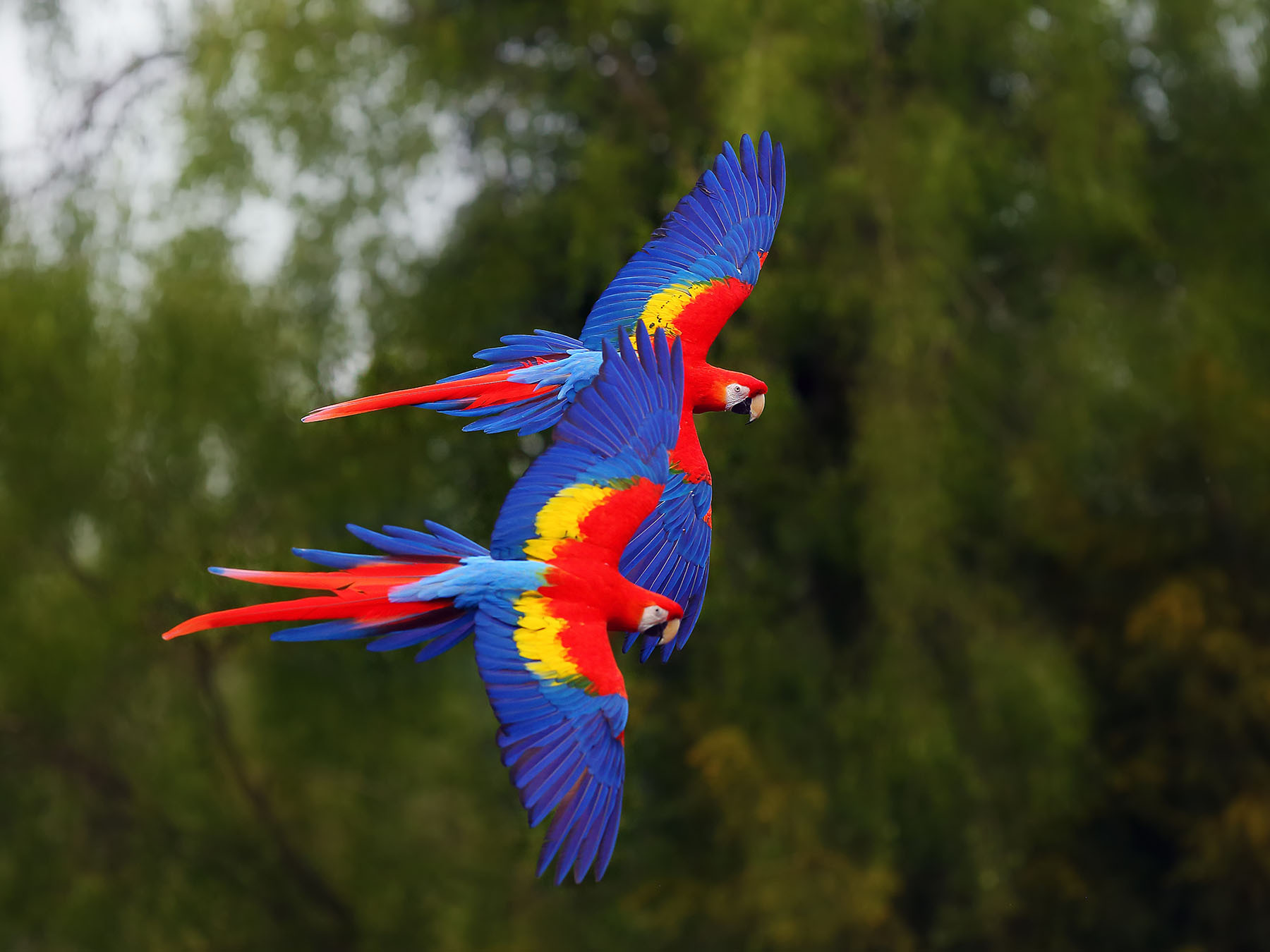
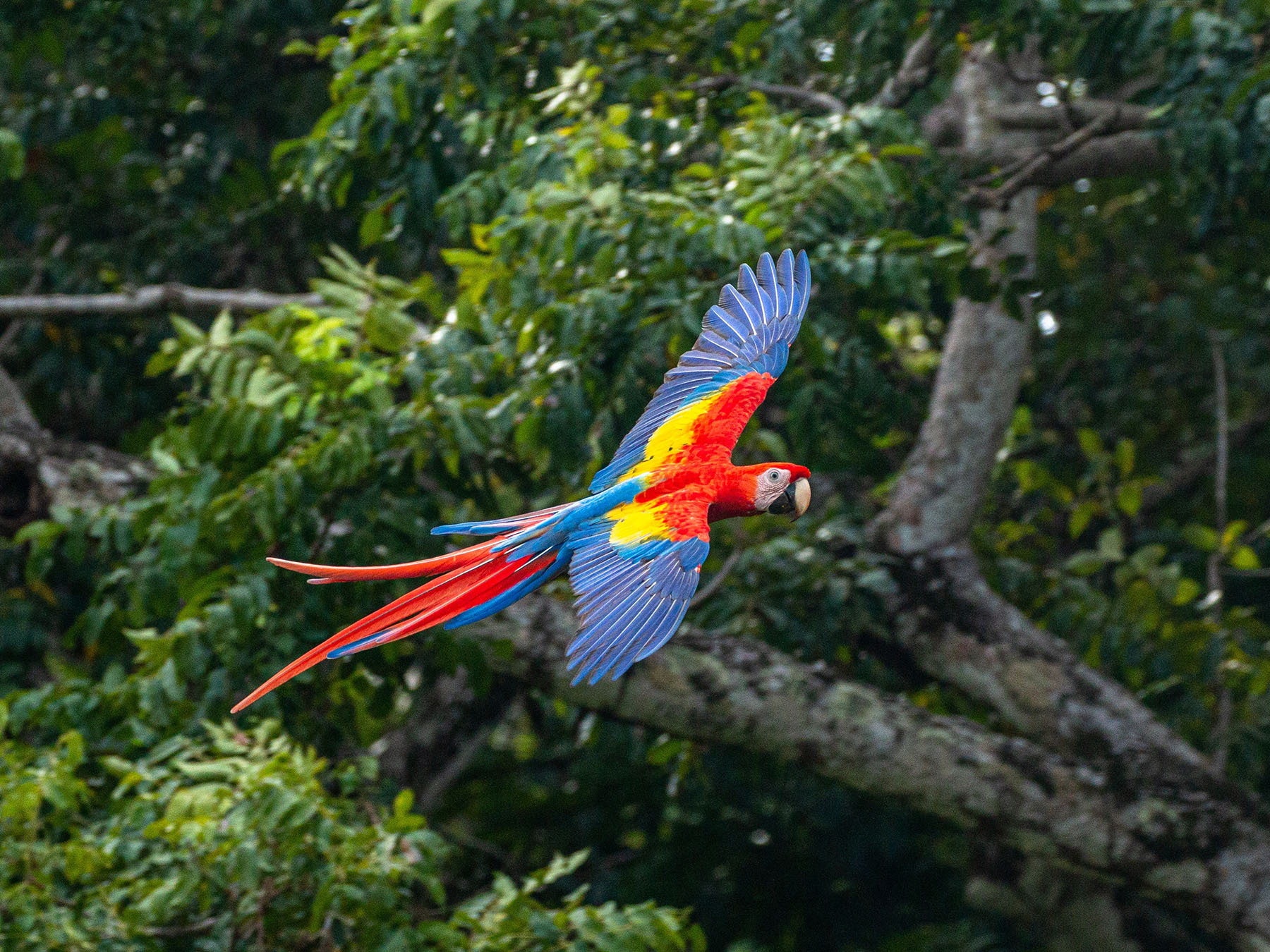
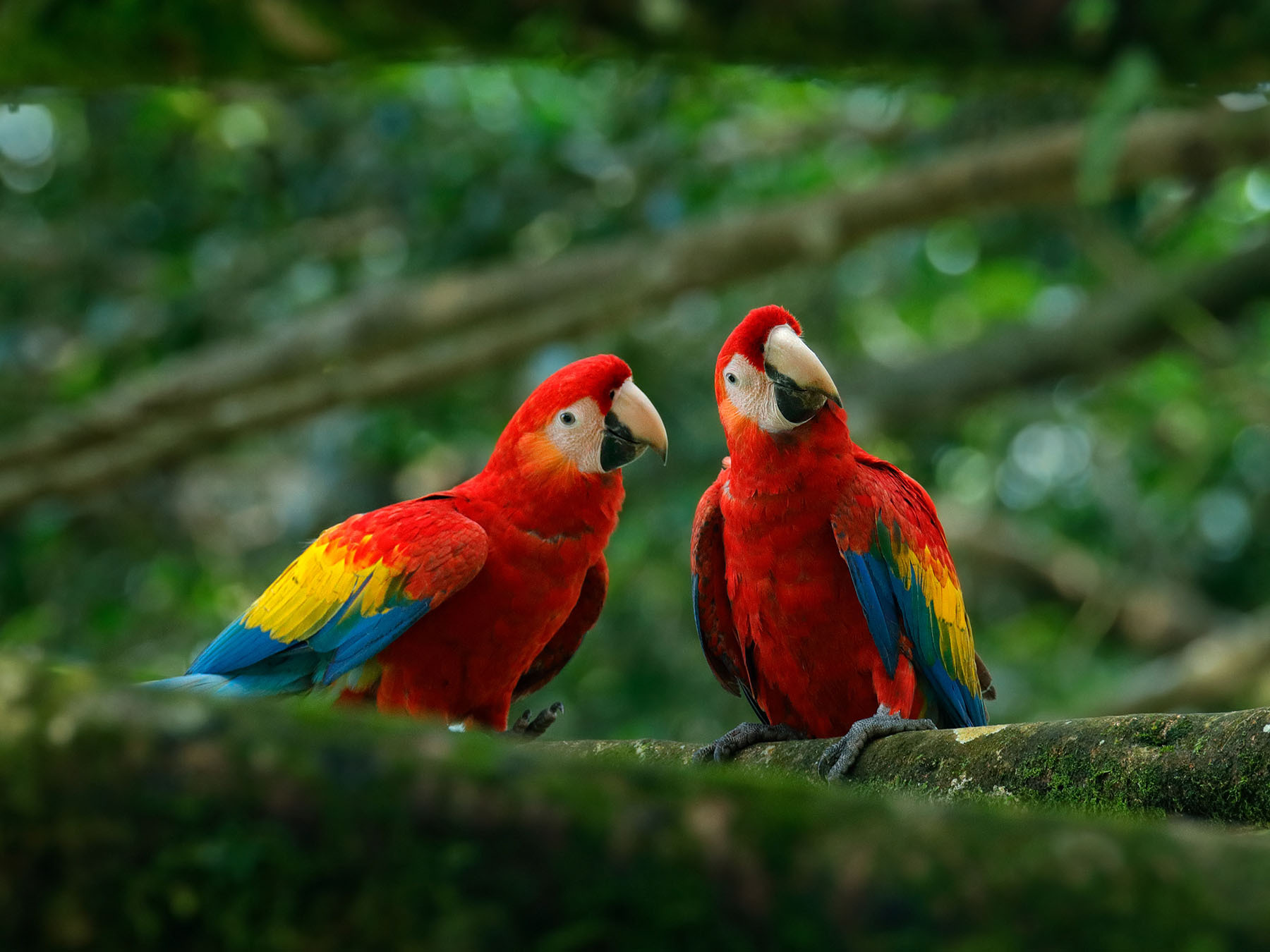
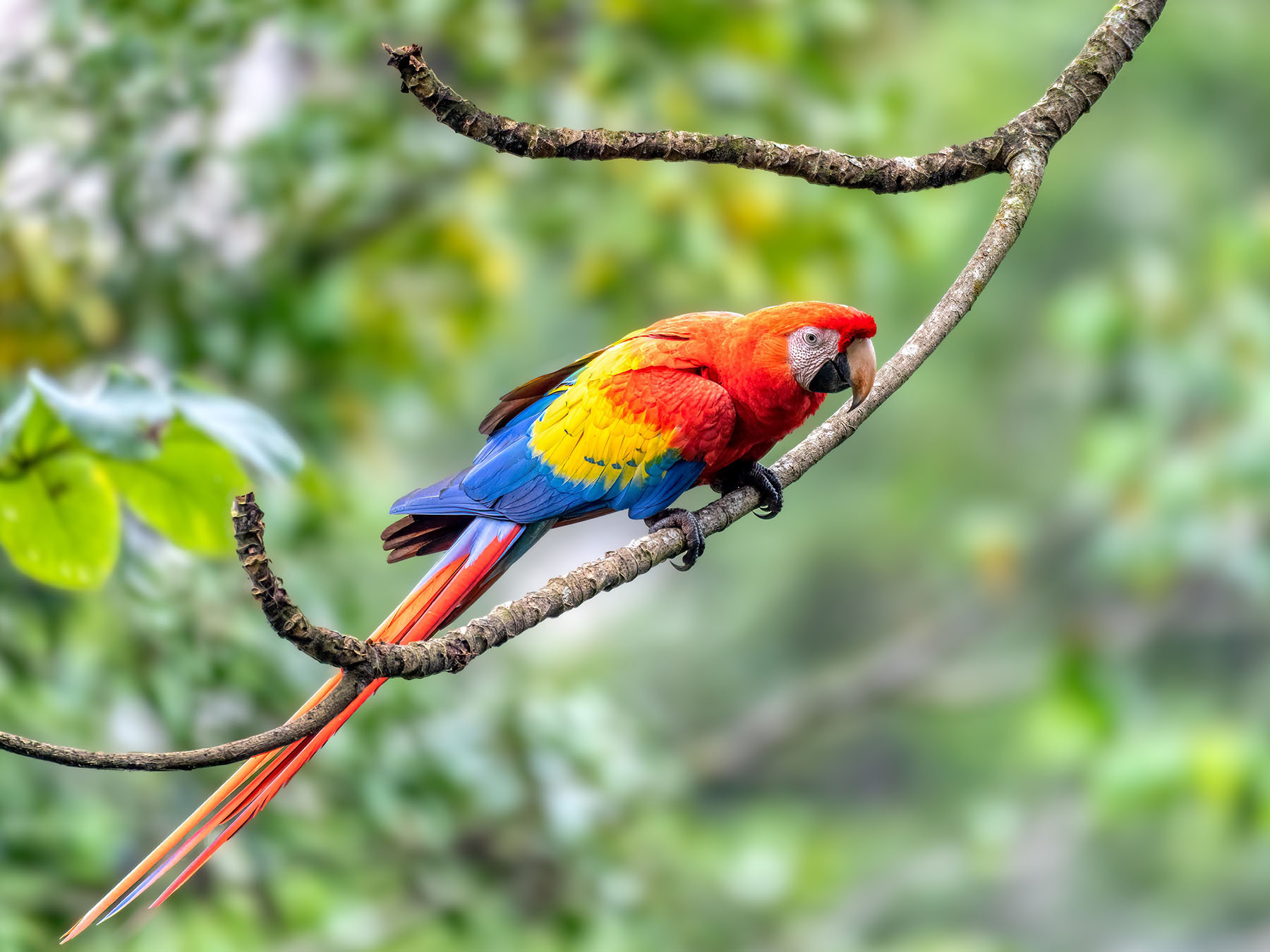
The Scarlet Macaw is a striking large parrot with vibrant plumage. Its body is primarily bright red, with yellow and blue wing feathers. The upper wings display a band of yellow, followed by blue flight feathers. The tail feathers are blue, and the upper tail coverts are light blue.
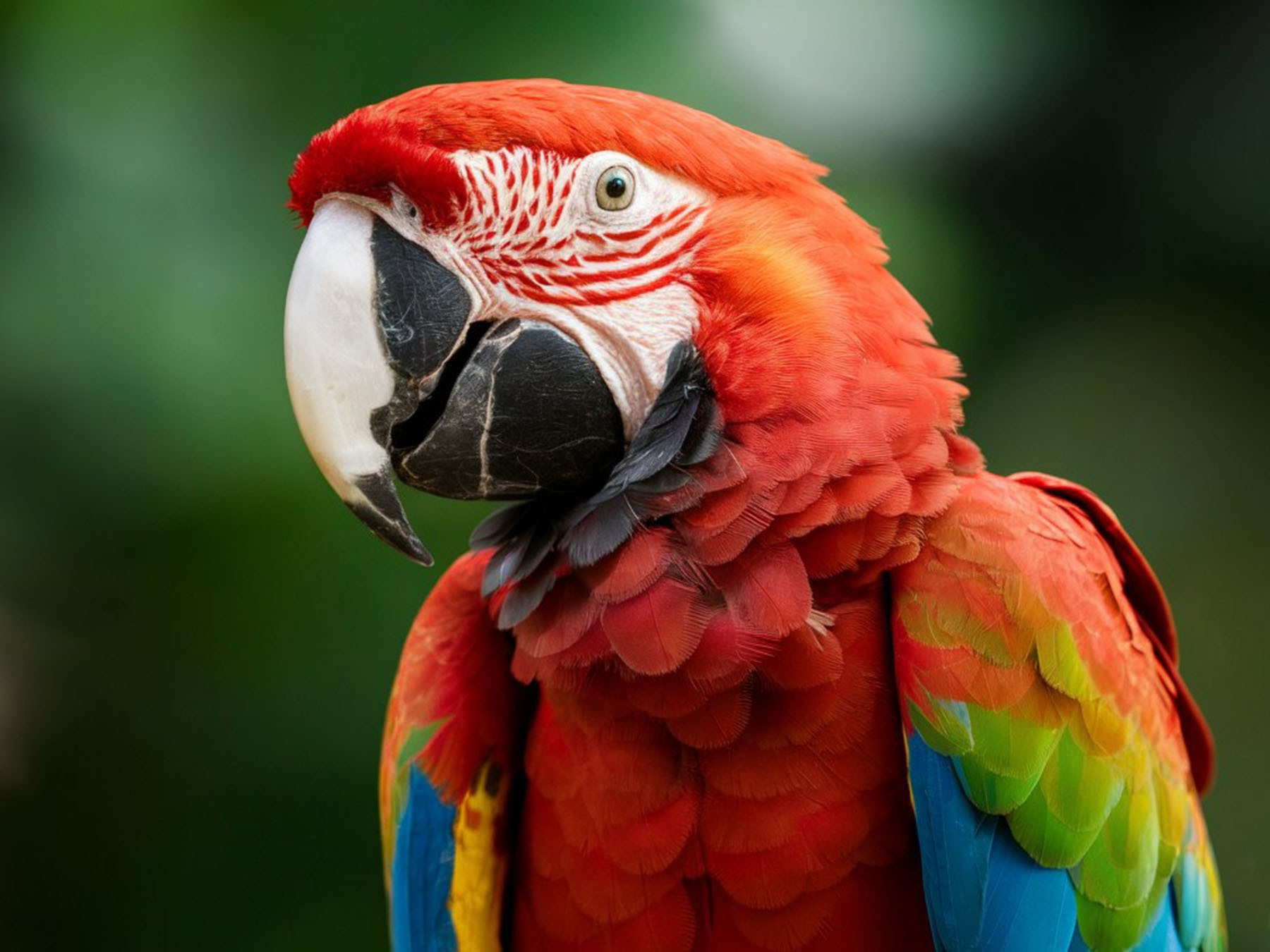
Both males and females share the same colouration. Juveniles have similar plumage to adults but with a shorter tail and darker iris. The bird's large, hooked beak is light on top and dark on the bottom.
Its size
Adults- Length
- 81–96 cm
- Wingspan
- 100–120 cm
- Weight
- 900–1500 g
Its song and calls
Scarlet Macaws are known for their loud, raucous calls. Their vocalisations include a variety of harsh squawks, screams, and softer chuckling sounds. A typical call might sound like a loud "rrah-rrah-rrah" or "awk-awk."
These vocalisations play a crucial role in communication within flocks and between mated pairs.
- Alarm call0:00 / 0:21
Recorded in Departamento de La Paz, Bolivia · May 2025
When and where to see it
The Scarlet Macaw is not recorded regularly in the UK, Ireland, the United States or Canada.
United States: recorded in 5 of the 6 years; Canada: recorded in 1 of the 6 years. Too few years to count as a regular visitor.
Worldwide: recorded regularly in 11 countries
Countries where it was recorded in at least 3 of the 6 years 2019–2024. Linked countries have their own bird list.
Data: EOD – eBird Observation Dataset (Cornell Lab of Ornithology), accessed via GBIF.org, CC BY 4.0. Records from 2019–2024, aggregated and filtered by Birdfact. How these lists are made
Tips for seeing it
- Look for Scarlet Macaws in tropical rainforests, especially near rivers or clearings.
- Listen for their loud, harsh squawks, which can be heard from a distance.
- Observe them in the early morning or late afternoon when they are most active.
- Visit protected areas or eco-lodges in Central and South America for the best chances of spotting them.
What it eats
Scarlet Macaws primarily feed on fruits, nuts, and seeds found in the rainforest canopy. They have a particular fondness for palm nuts, which they crack open with their powerful beaks.
Their diet also includes flowers, leaves, and occasionally insects or small snails.
Nesting and breeding
Scarlet Macaws form monogamous pairs that often mate for life. The breeding season varies by region but typically occurs between December and May. These birds nest in tree cavities, often choosing large, dead palm trees or hardwoods.
Females usually lay 2-3 white eggs in the nest cavity. Both parents take turns incubating the eggs for about 24-28 days. The eggs are plain white and roughly the size of a chicken egg.
Chicks are born blind and featherless and require intensive care from both parents. They remain in the nest for about 90 days before fledging. Young macaws stay with their parents for up to a year, learning essential survival skills.
Behaviour
Scarlet Macaws are highly social birds, often seen in pairs or small groups. They are excellent flyers, capable of swift and agile movements through the forest canopy.
These intelligent birds use their strong beaks and dexterous tongues to manipulate food items and climb trees with ease.
Conservation
While listed as Least Concern globally, Scarlet Macaws face threats from habitat loss and illegal pet trade.
Conservation efforts focus on protecting their rainforest habitats and establishing captive breeding programs. In some areas, reintroduction projects are helping to restore populations in their former range.
More photos
9 photos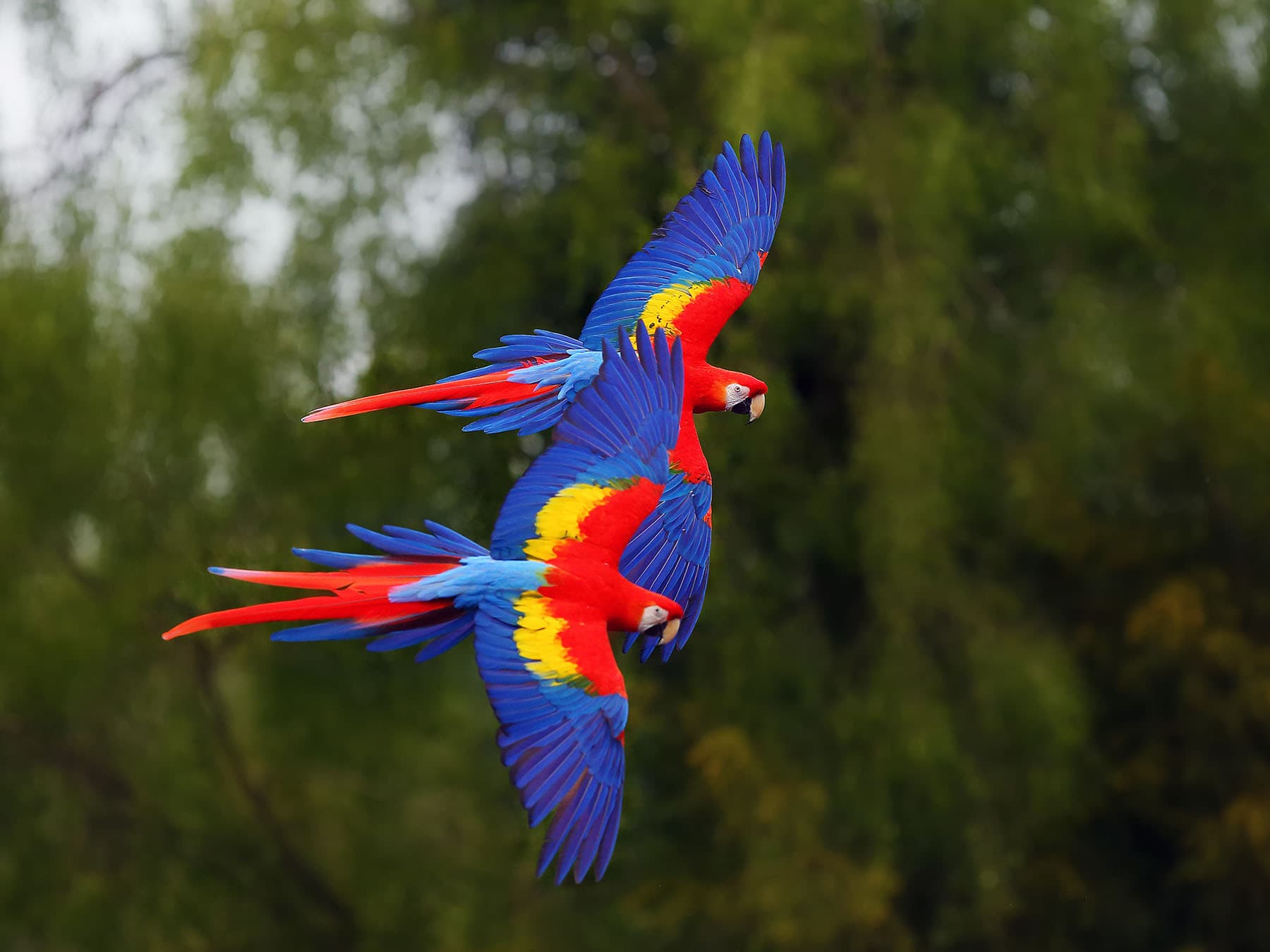 A pair of Scarlet Macaws in flight
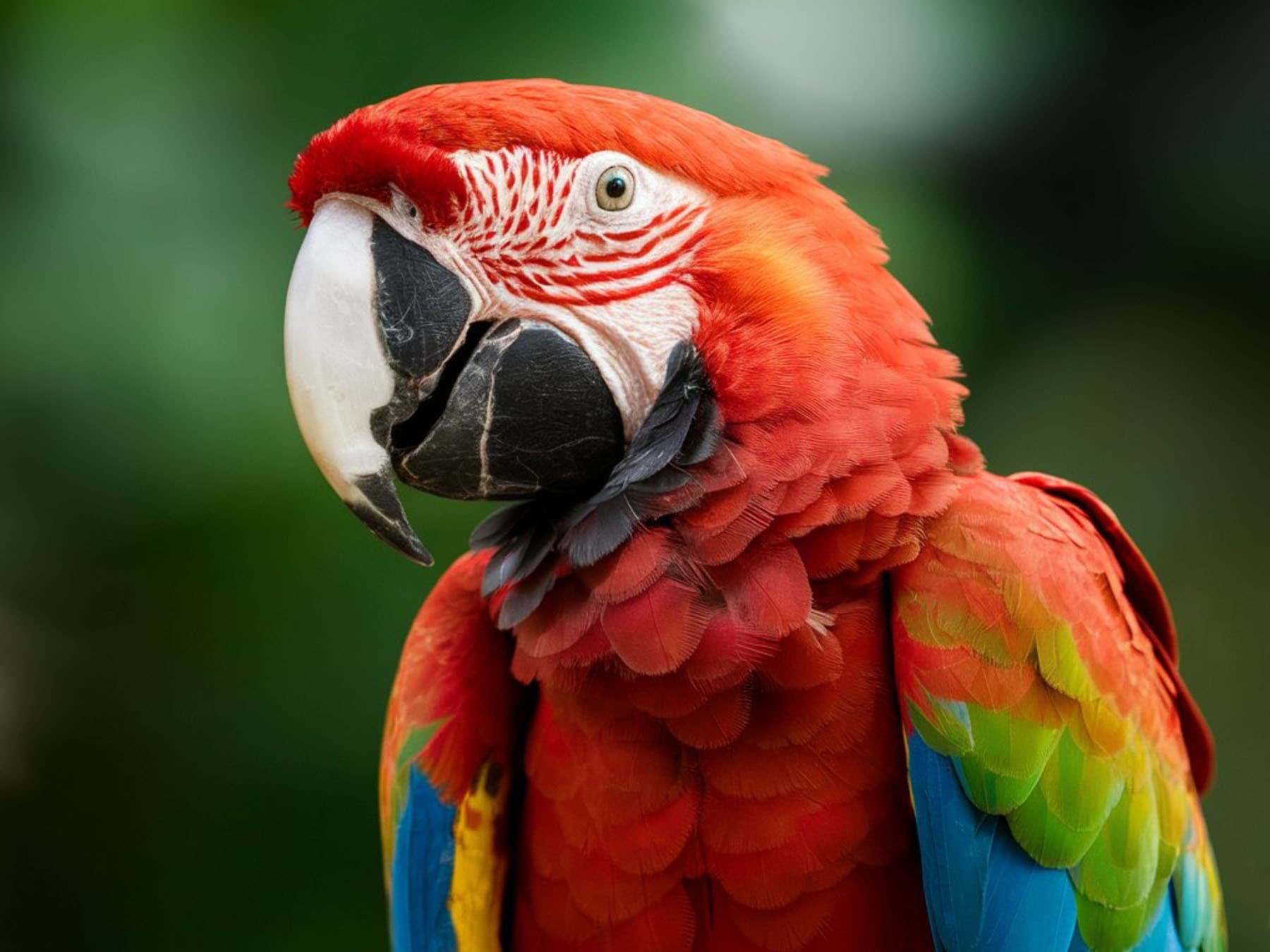 Scarlet Macaw close up portrait
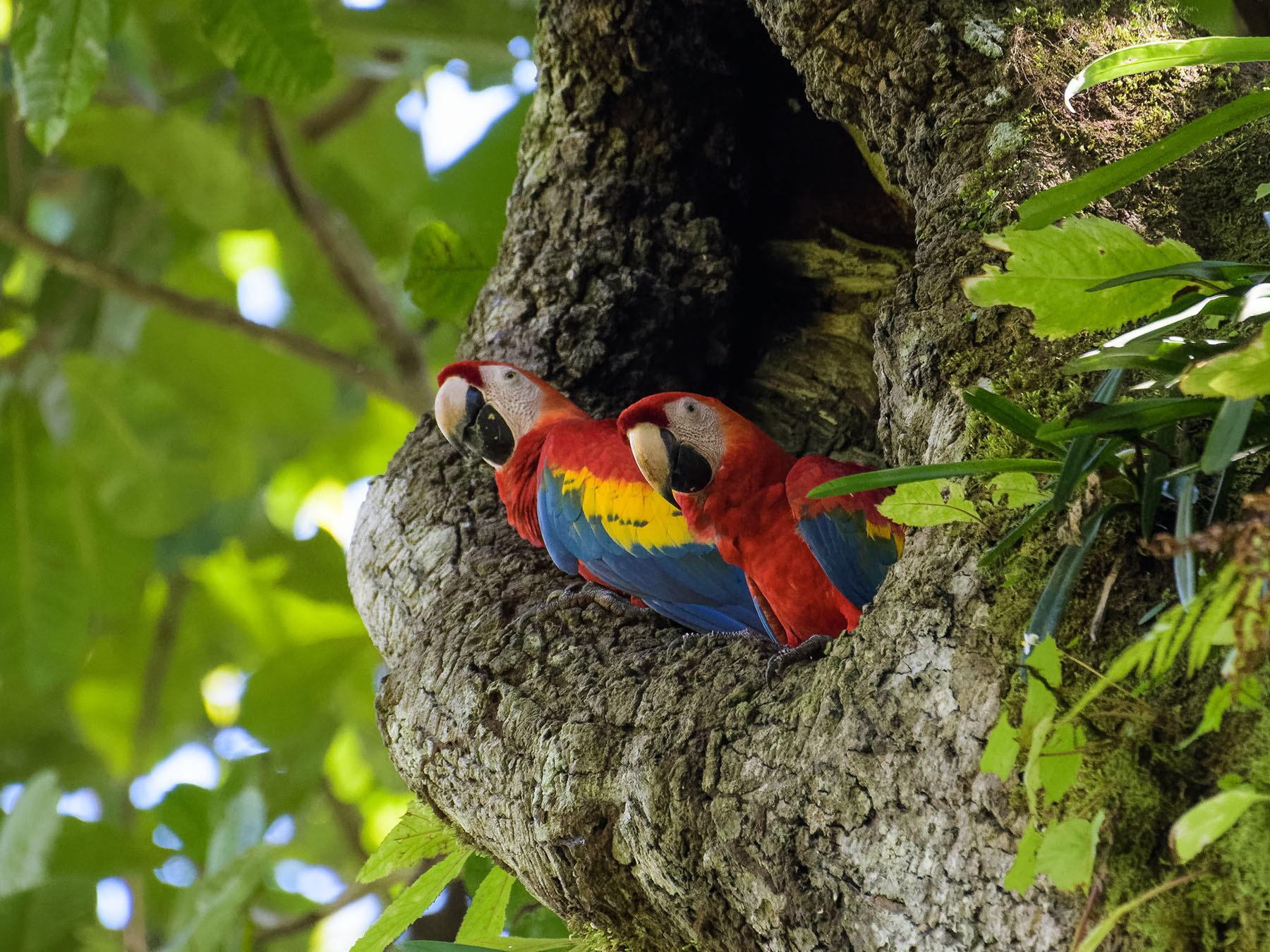
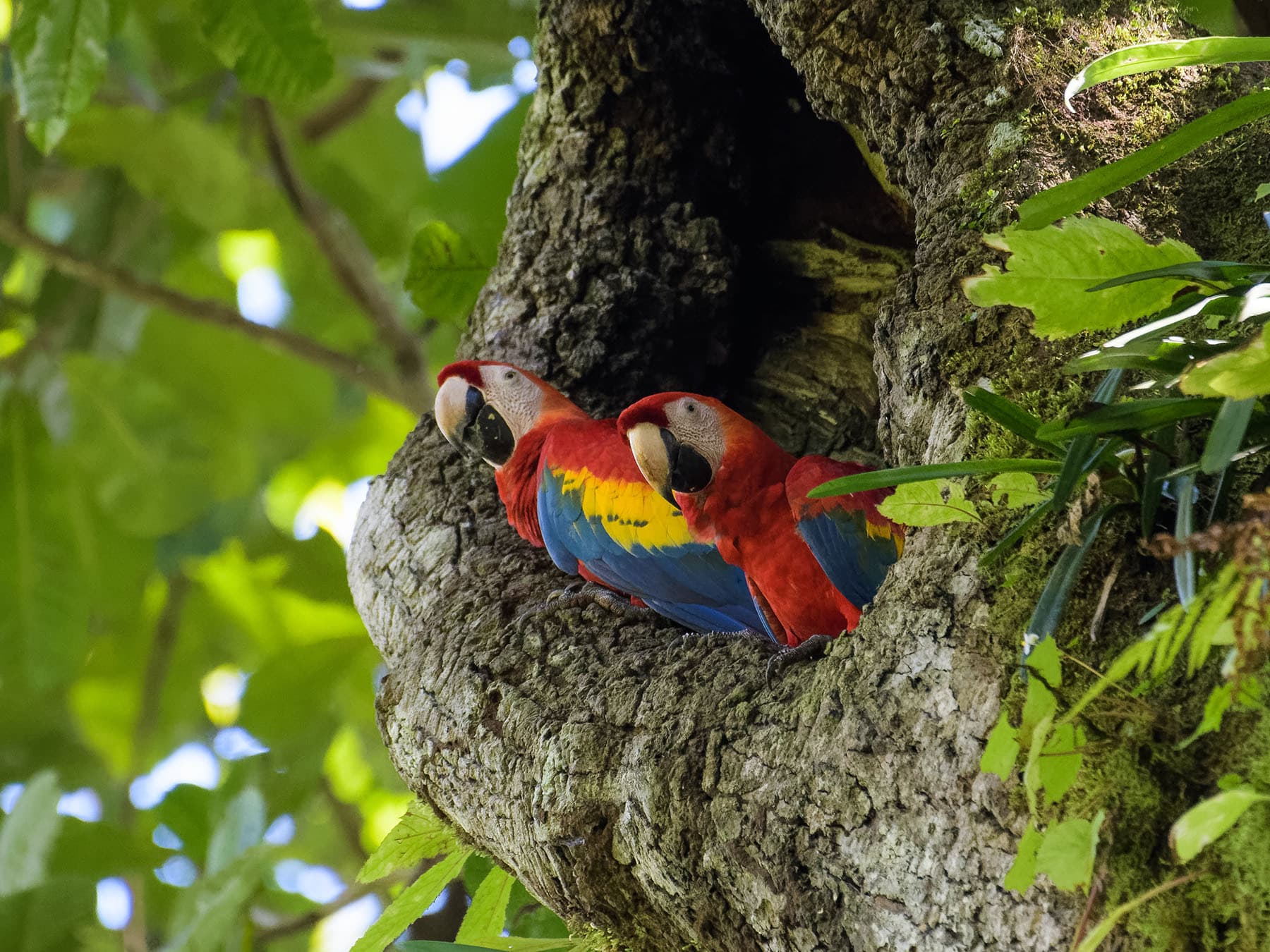 Nesting pair of Scarlet Macaws at their cavity in a cashew tree, Carara National Park
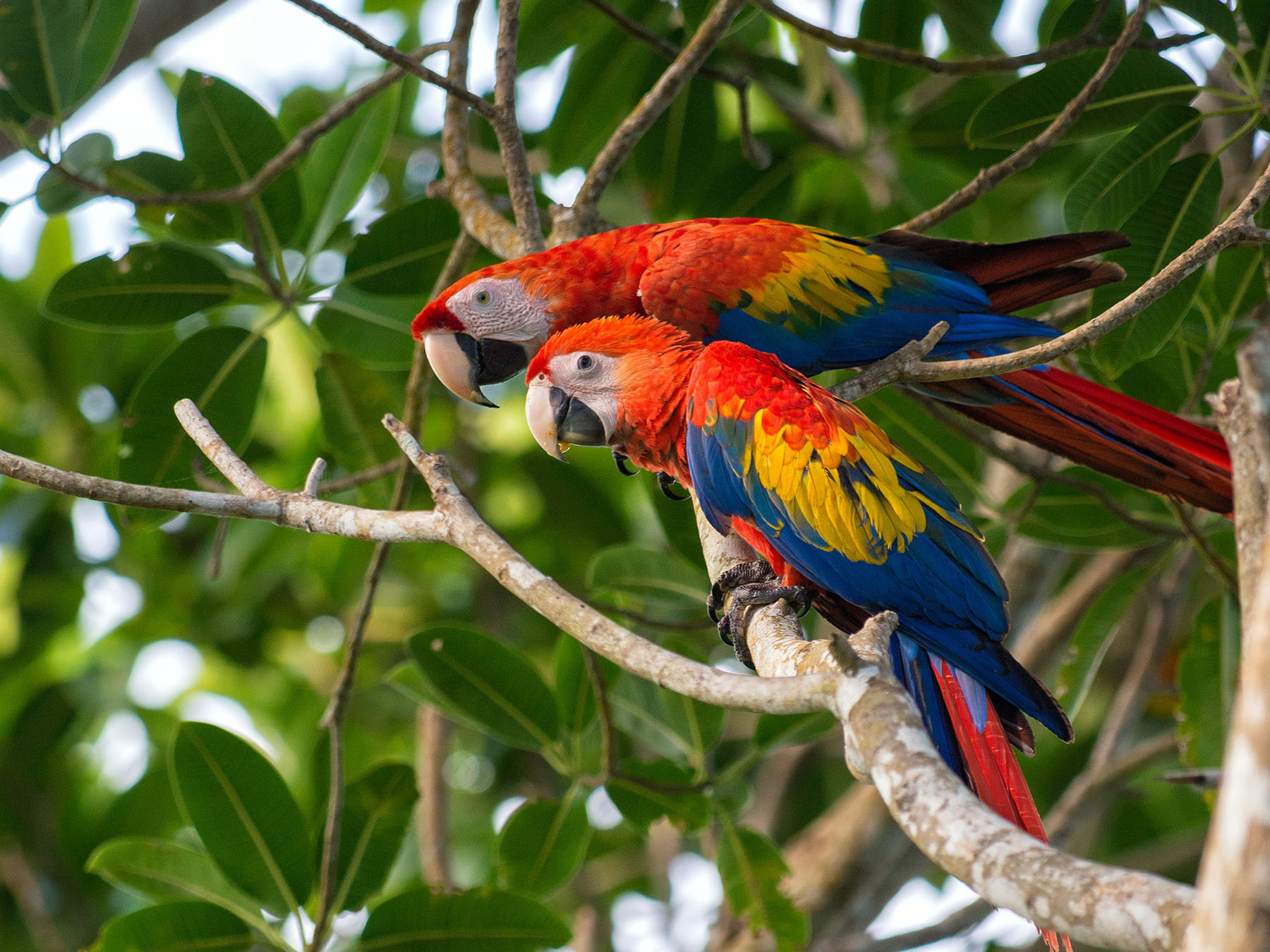
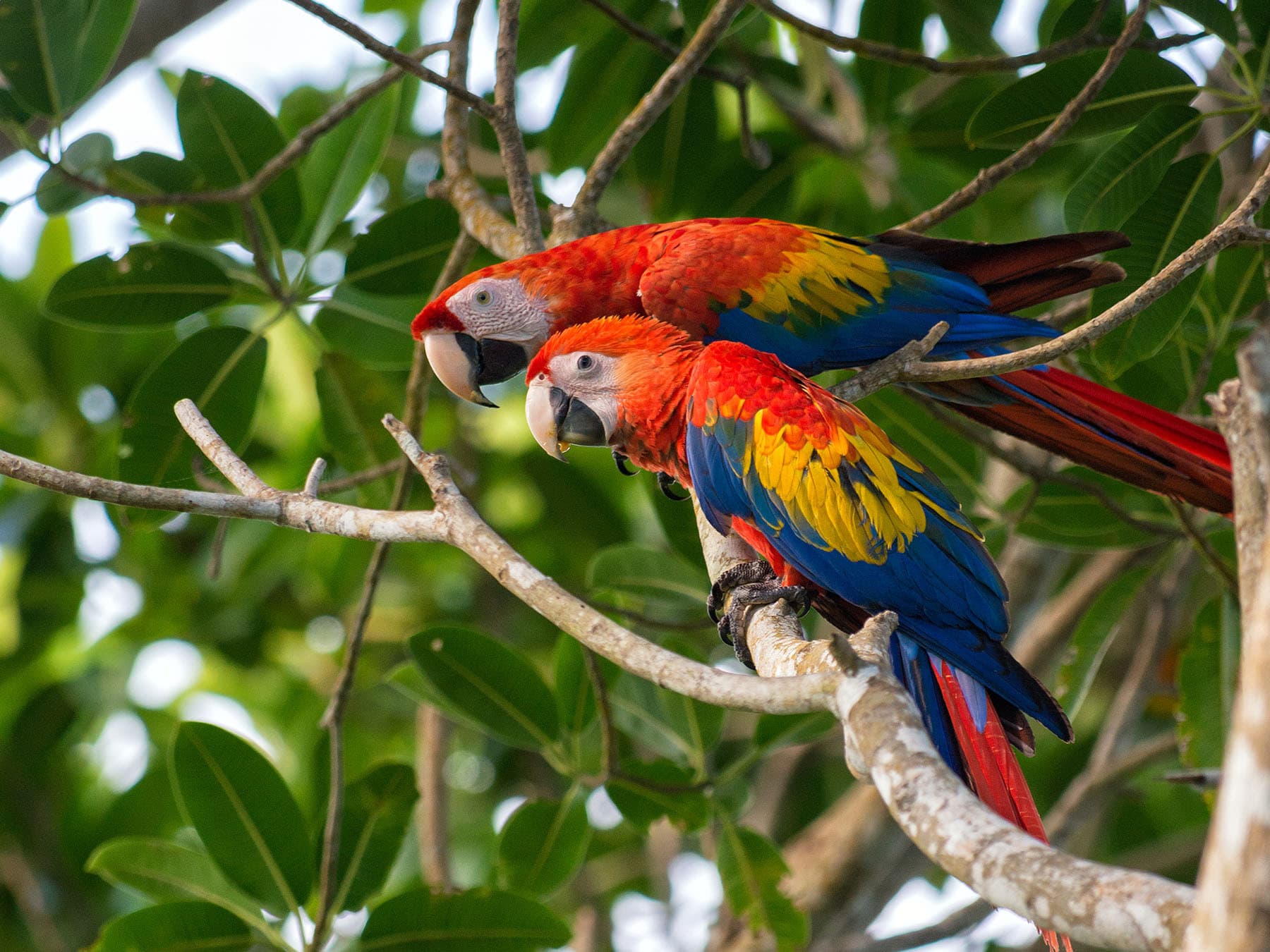 Adult (background) and juvenile (foreground) Scarlet Macaw
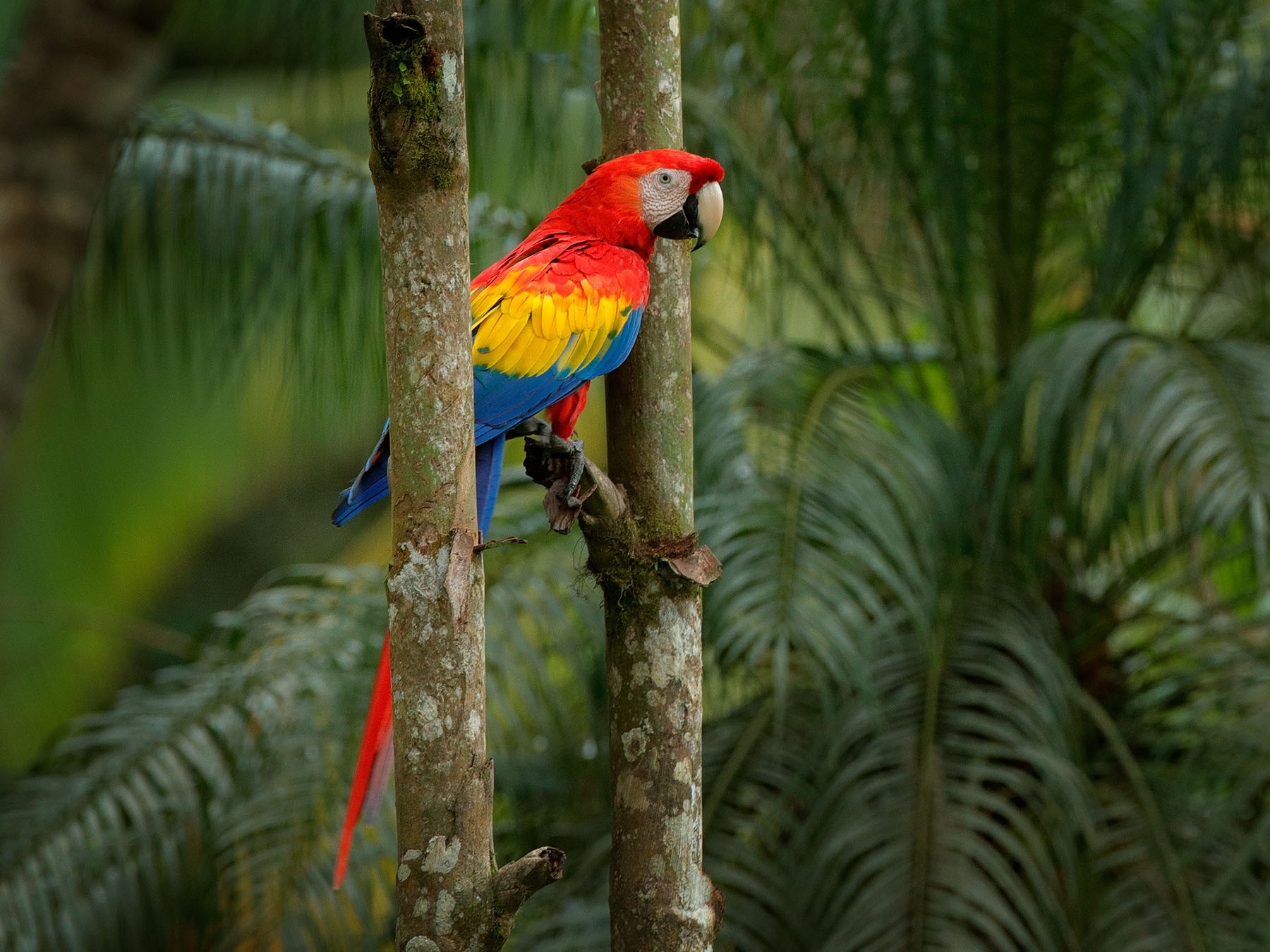
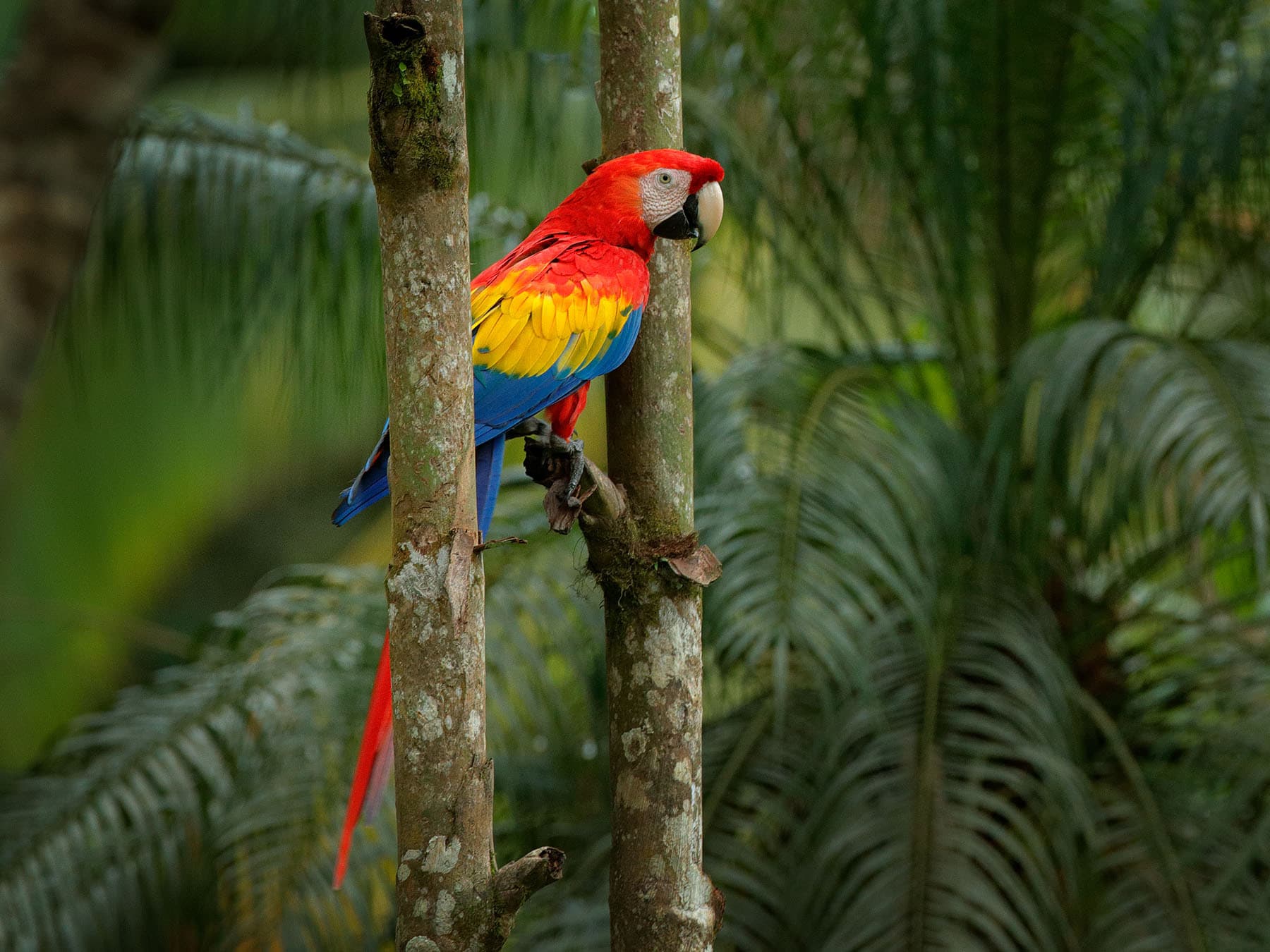 Scarlet Macaw perched on a branch
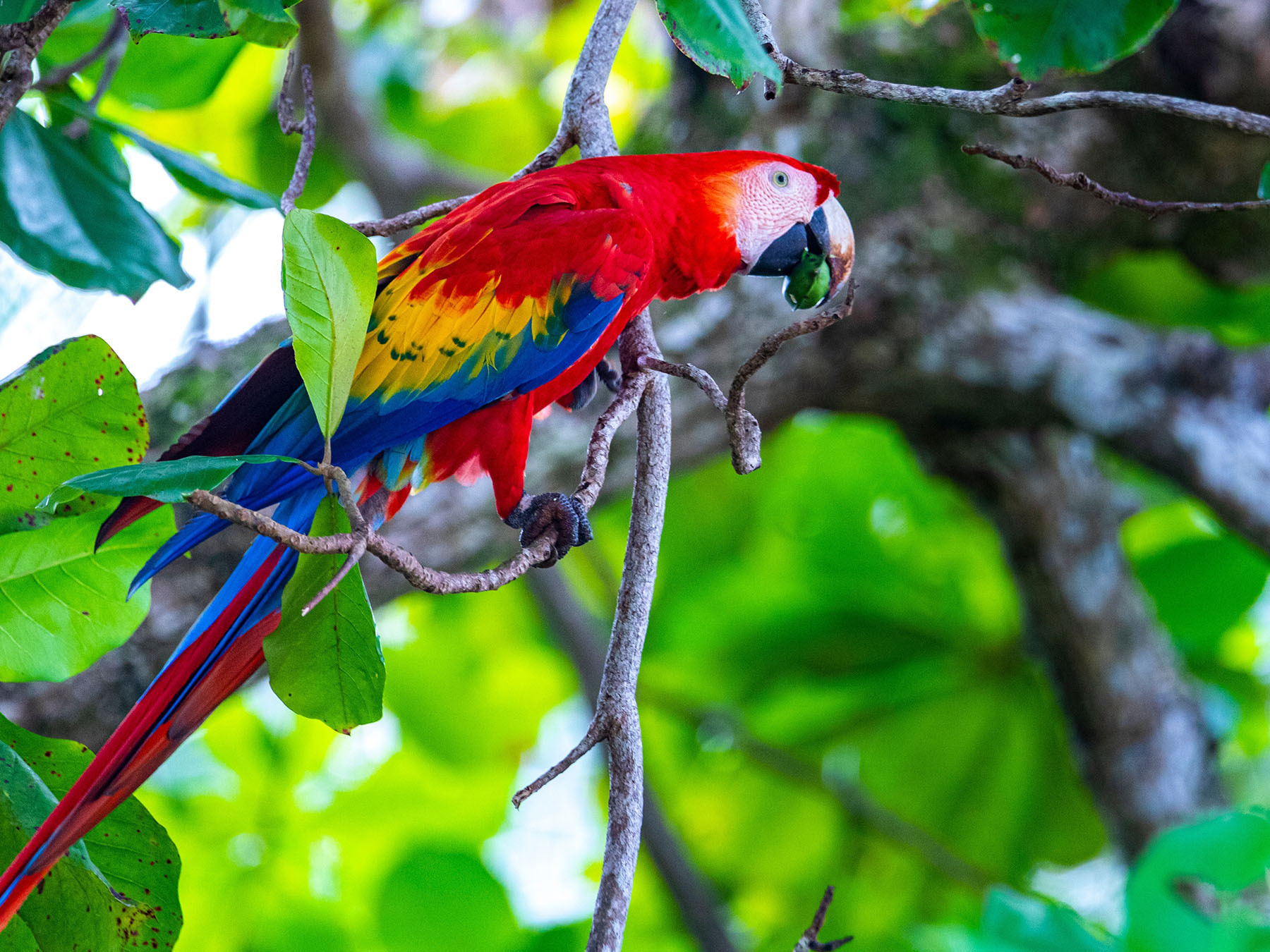
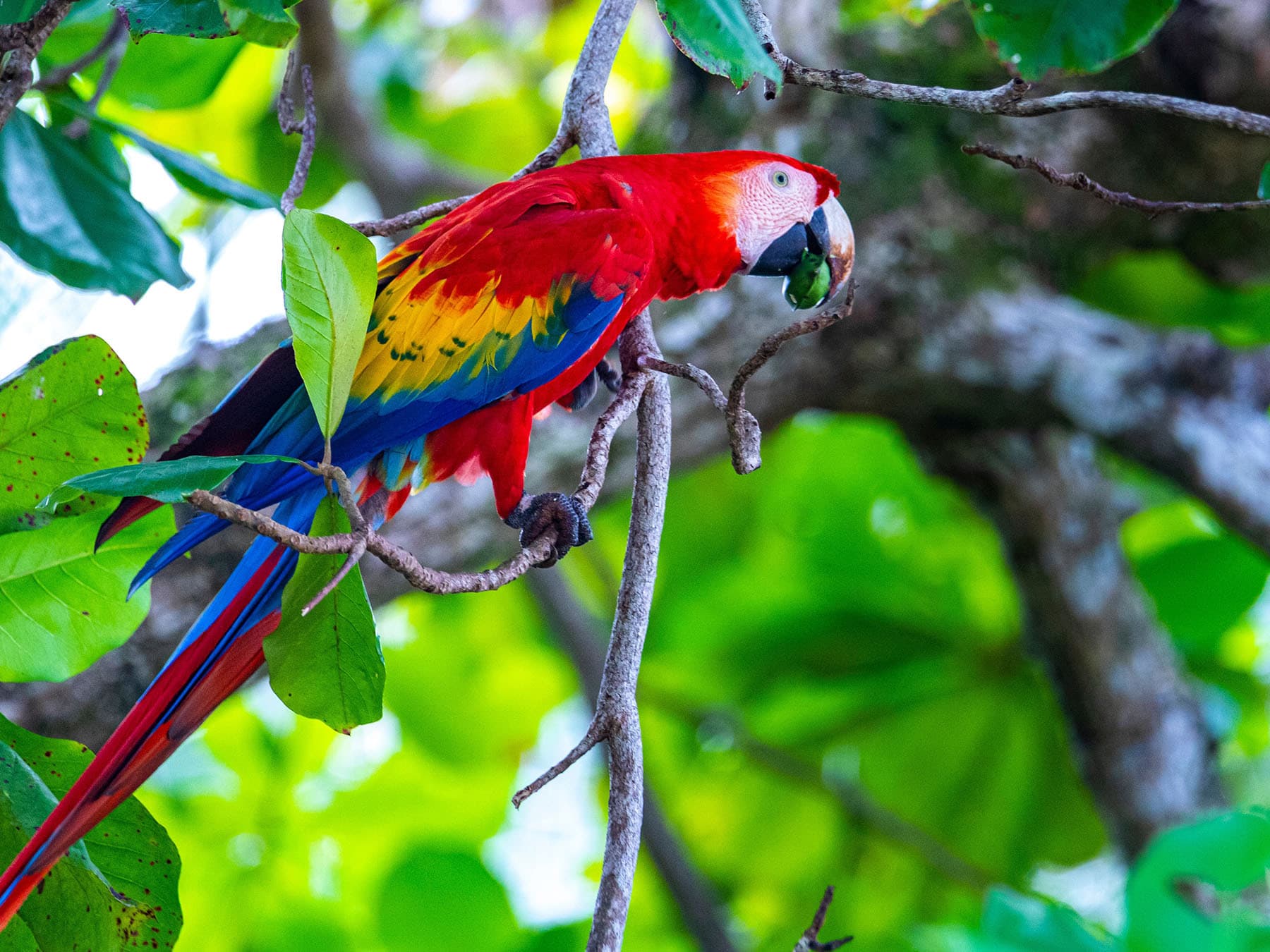 Scarlet Macaw feeding on the Almond tree, Costa Rica
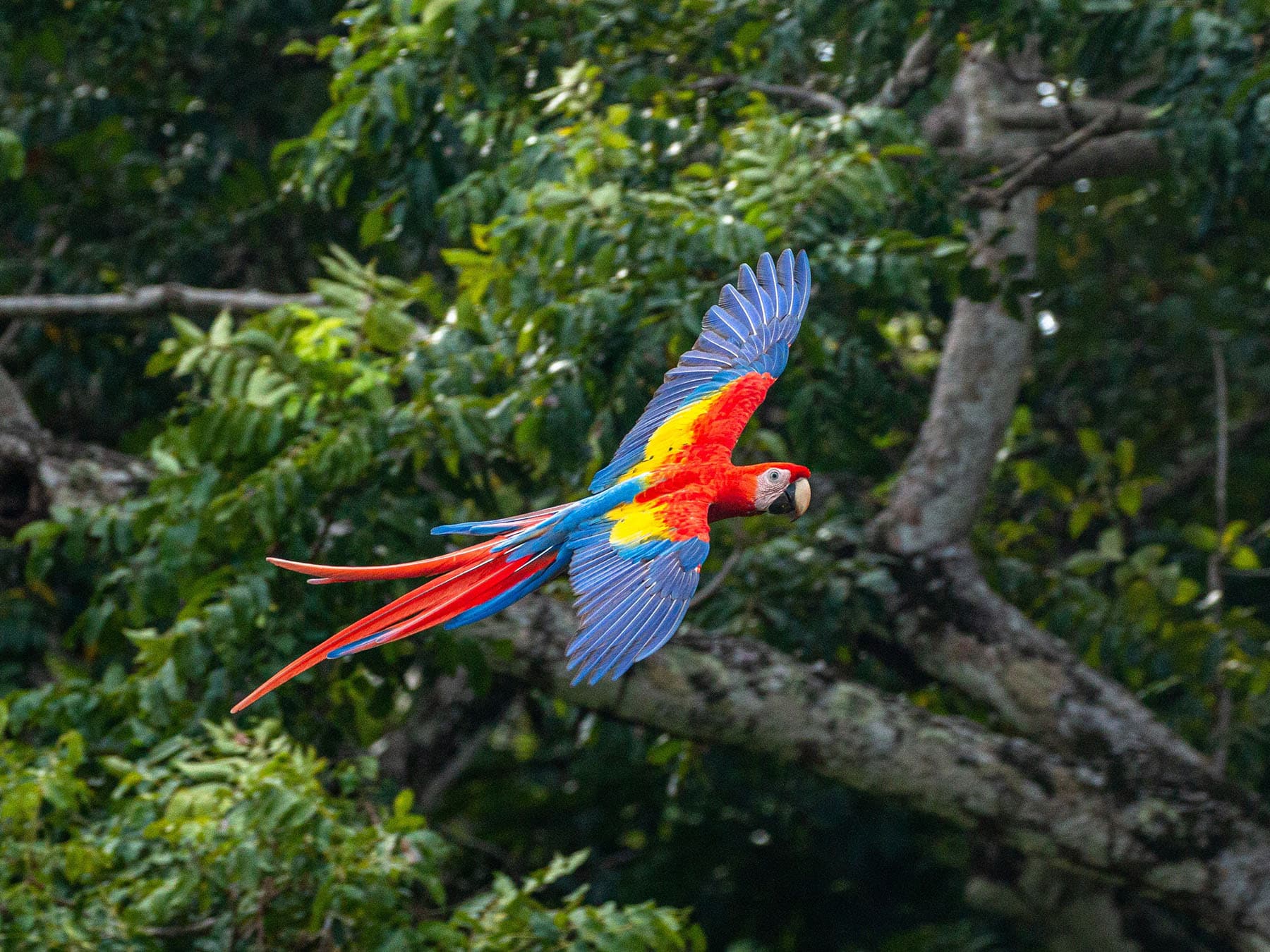 Scarlet Macaw soaring through the jungle, Osa Penisnsula, Costa Rica
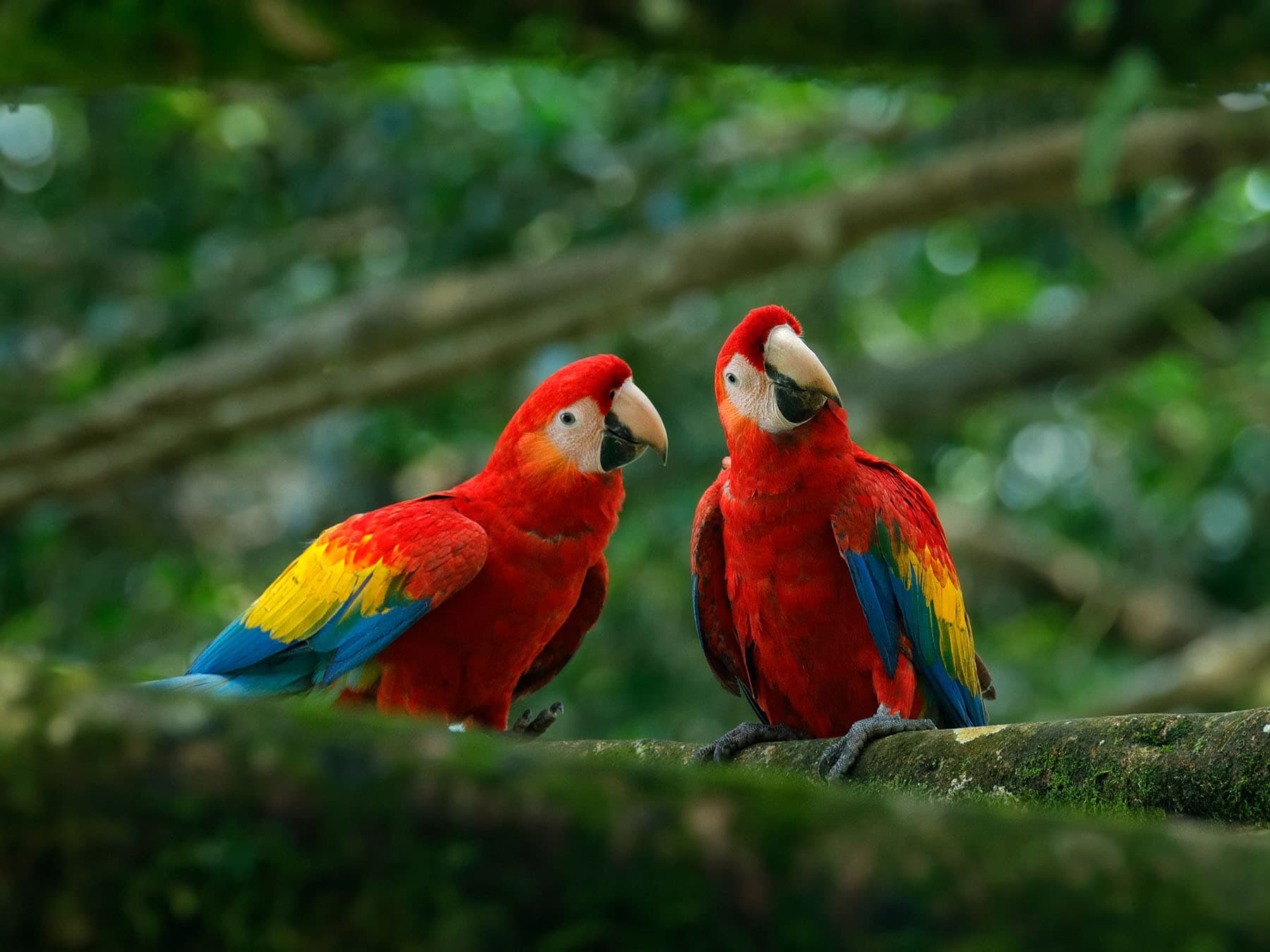 Close up of a pair of Scarlet Macaws
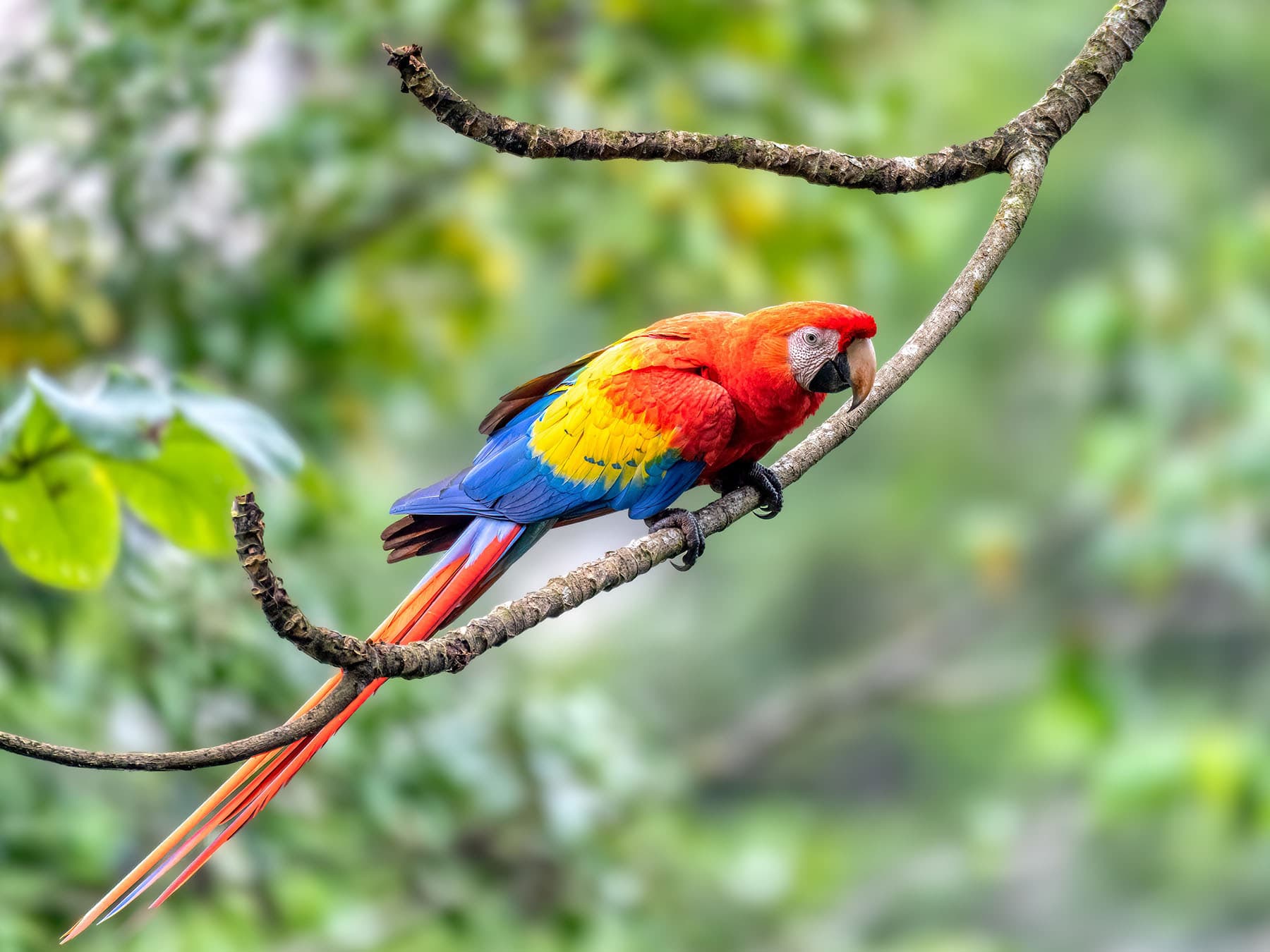 Scarlet Macaw perched high up on a tree branch
Quick facts
- Length
- 81–96 cm
- Wingspan
- 100–120 cm
- Weight
- 900–1500 g
- Lifespan
- 40–50 years
- Family
- Parrots
- Migration
- Resident
- Global status (IUCN)
- Least Concern
- World population
- 50,000 - 499,999 mature individuals
- Population trend
- Decreasing
- Also called
- Red Macaw
- Scientific name
- Ara macao
Sources
4- 1Robert Arking: Biology of Aging: Observations and Principles. Oxford University Press (2006)
- 2BirdLife International. 2022. Ara macao. The IUCN Red List of Threatened Species 2022: e.T22685563A163778999. Source (opens in a new tab)
- 3Collar et al. (2020)
- 4Partners in Flight (2022)

Checked by
Nathan Cope, founder and editor
Nathan founded Birdfact and leads its writers and contributors in the UK, the US and Canada. He has watched and studied birds for more than ten years, and checks every article and species guide before it’s published.