


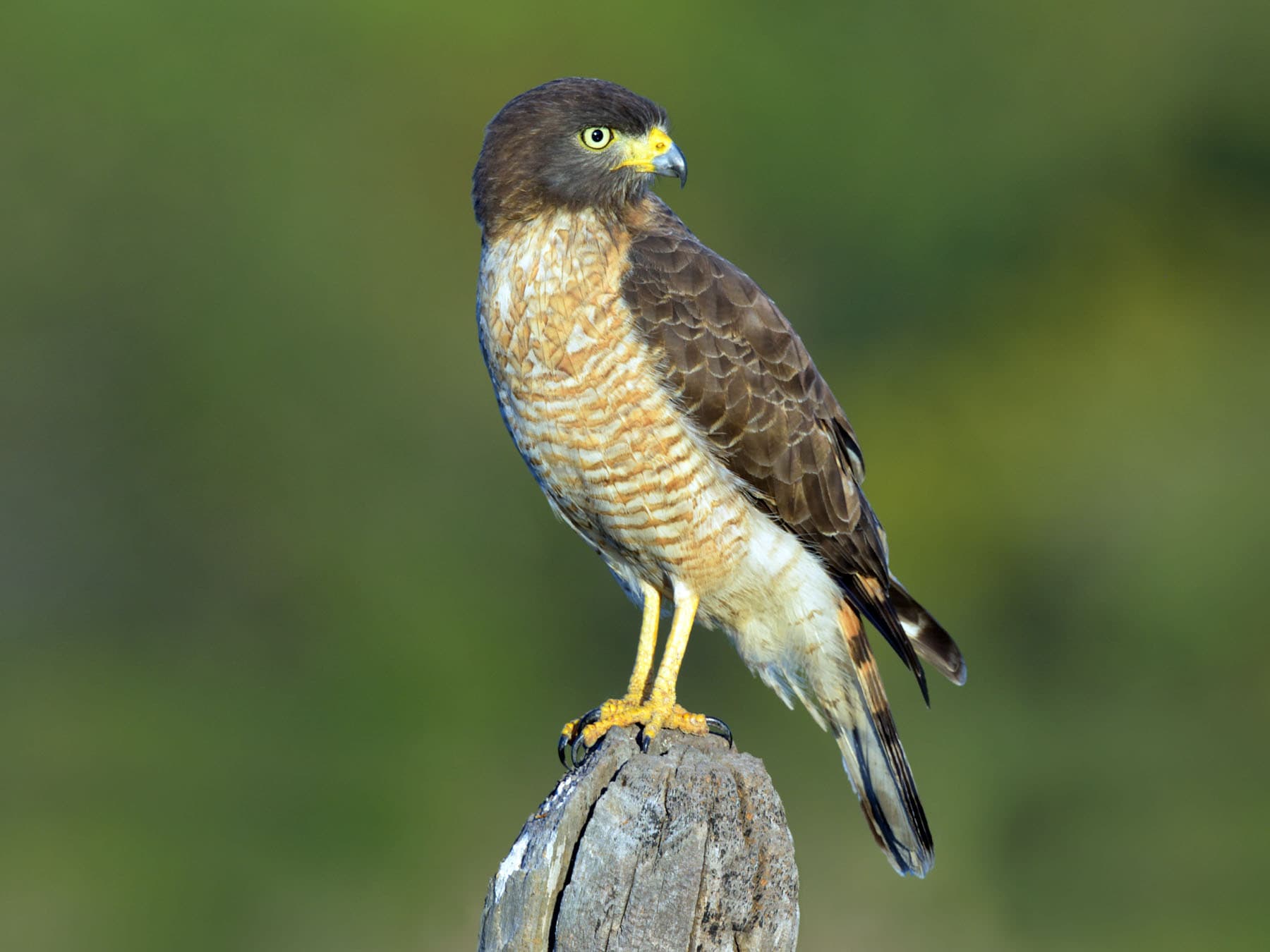
Roadside Hawk
Roadside Buzzard · Rupornis magnirostris
By the Birdfact teamChecked by Nathan Cope
On this page11 sections
How to recognise it
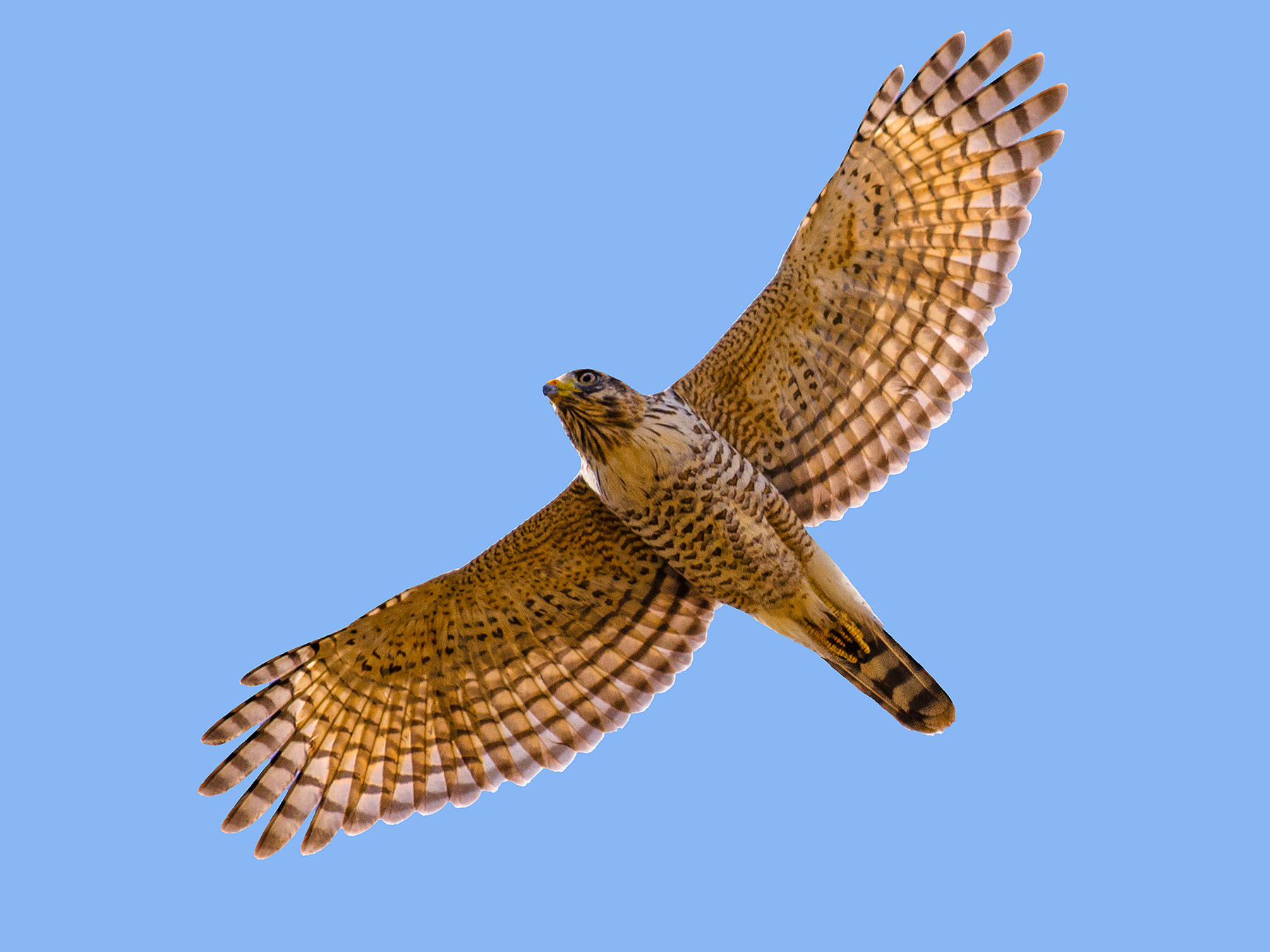
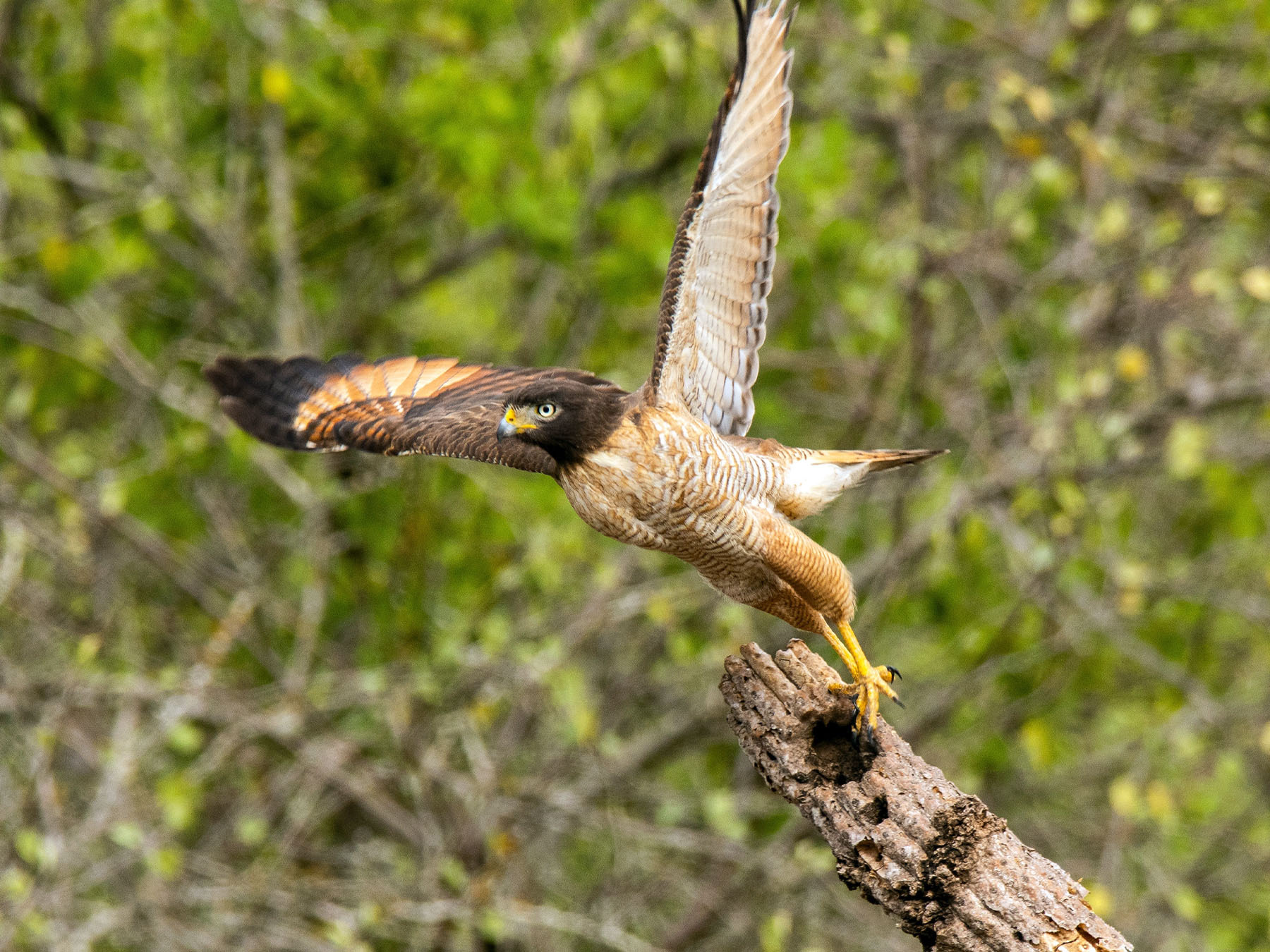
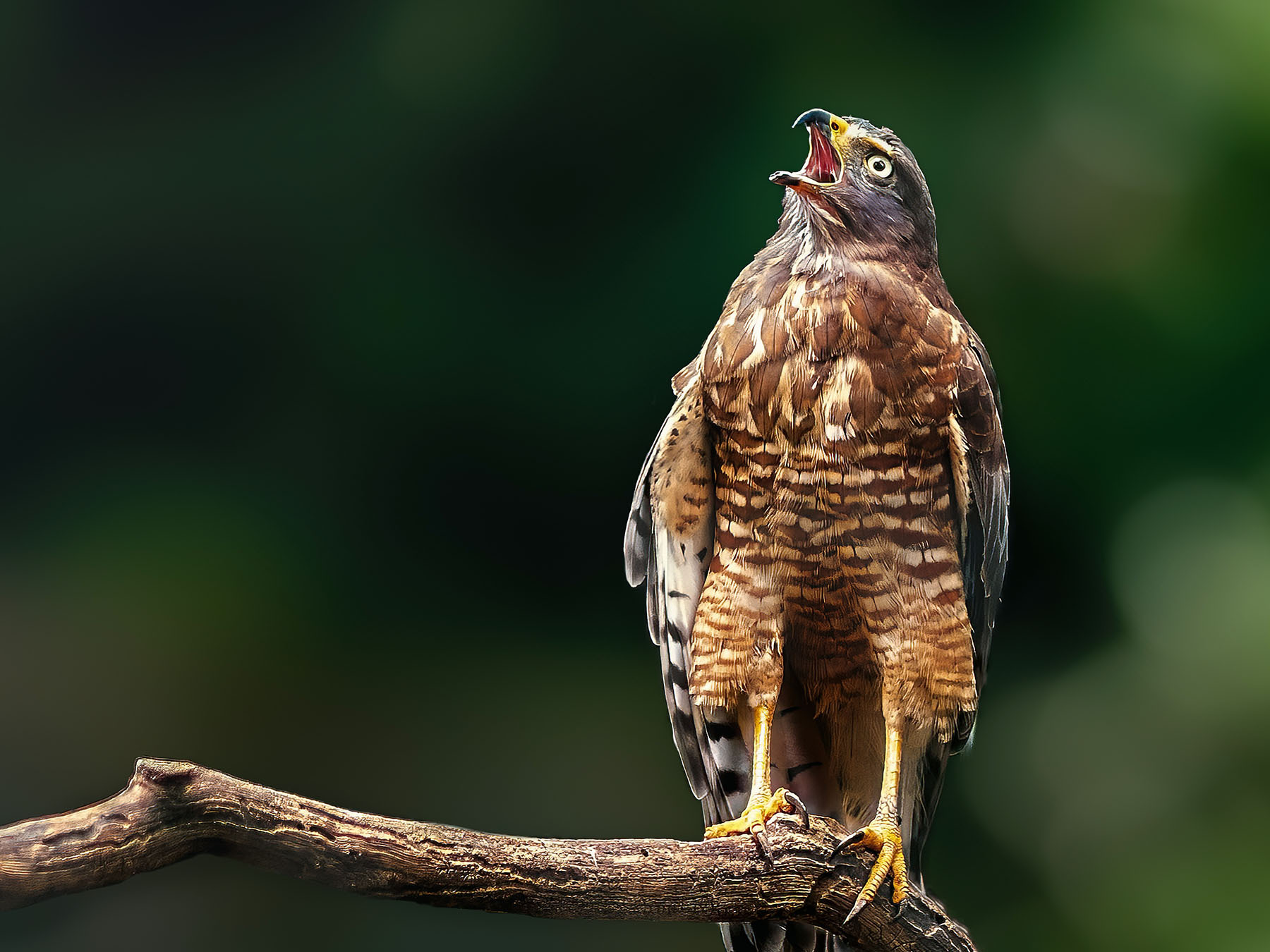
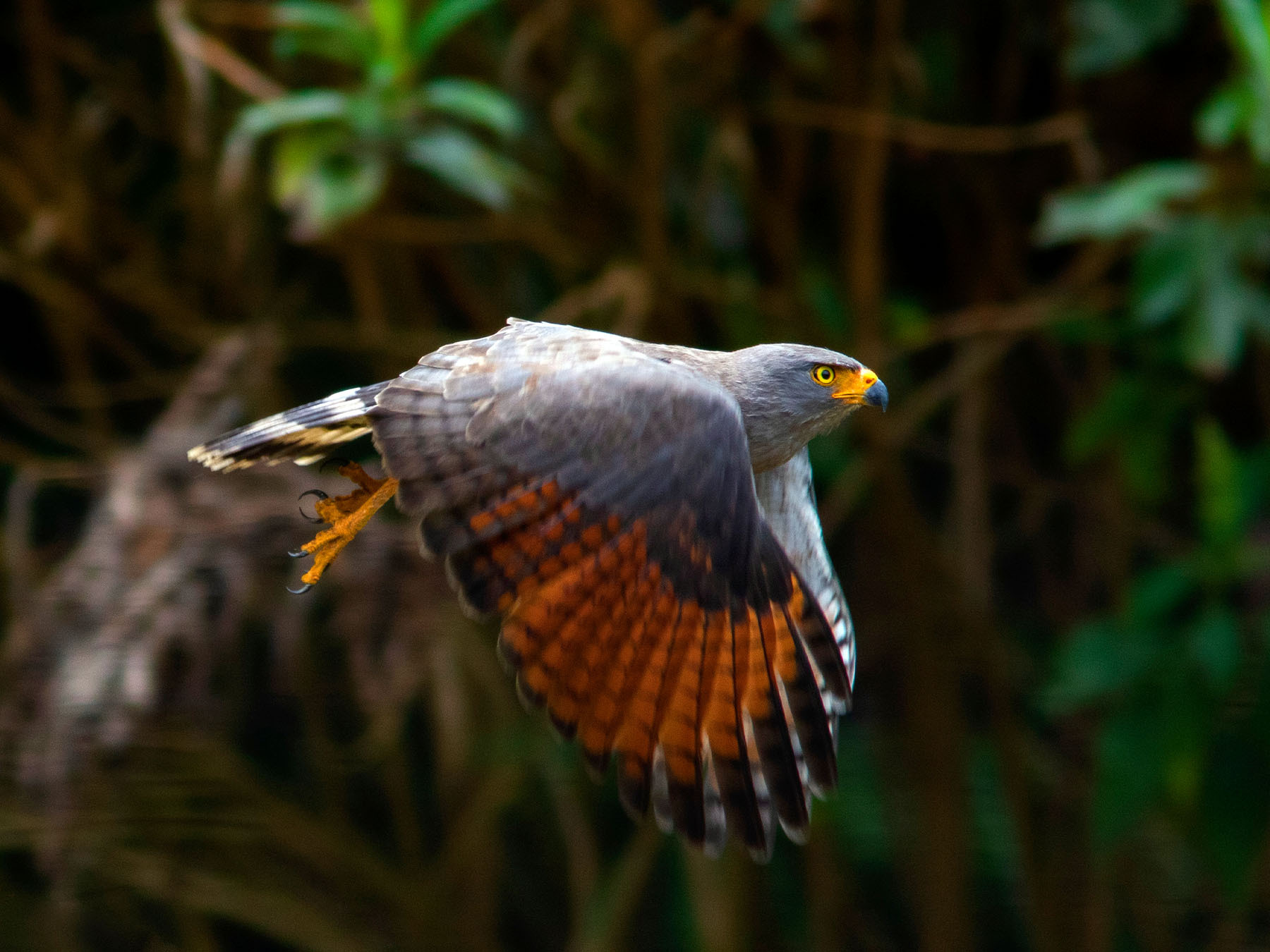
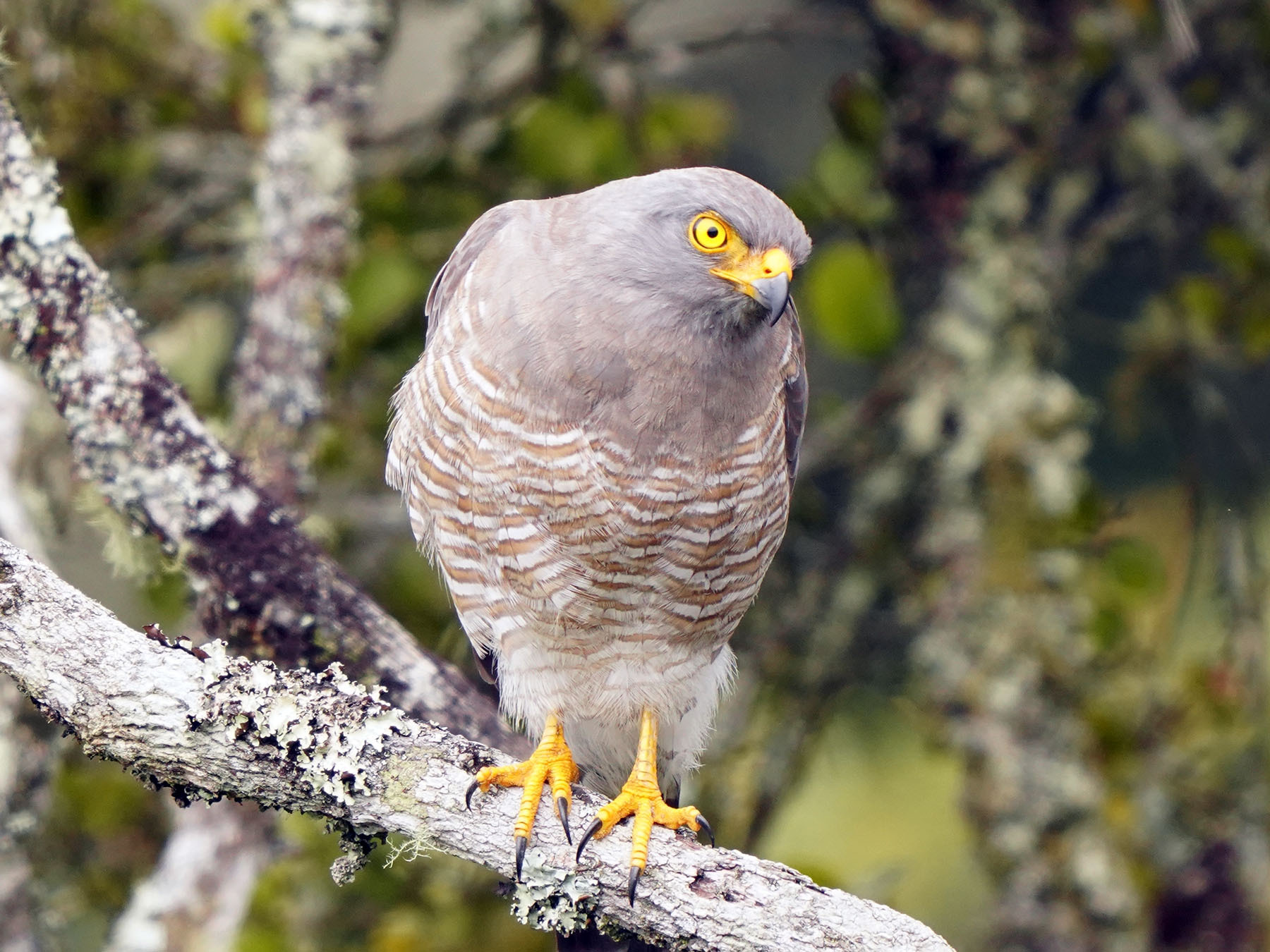
The Roadside Hawk is a compact raptor with a brown back, grey head, and barred chest. Its short, rounded wings show a distinctive rufous patch in flight, and its relatively long tail helps it manoeuvre through forest edges and open woodlands.
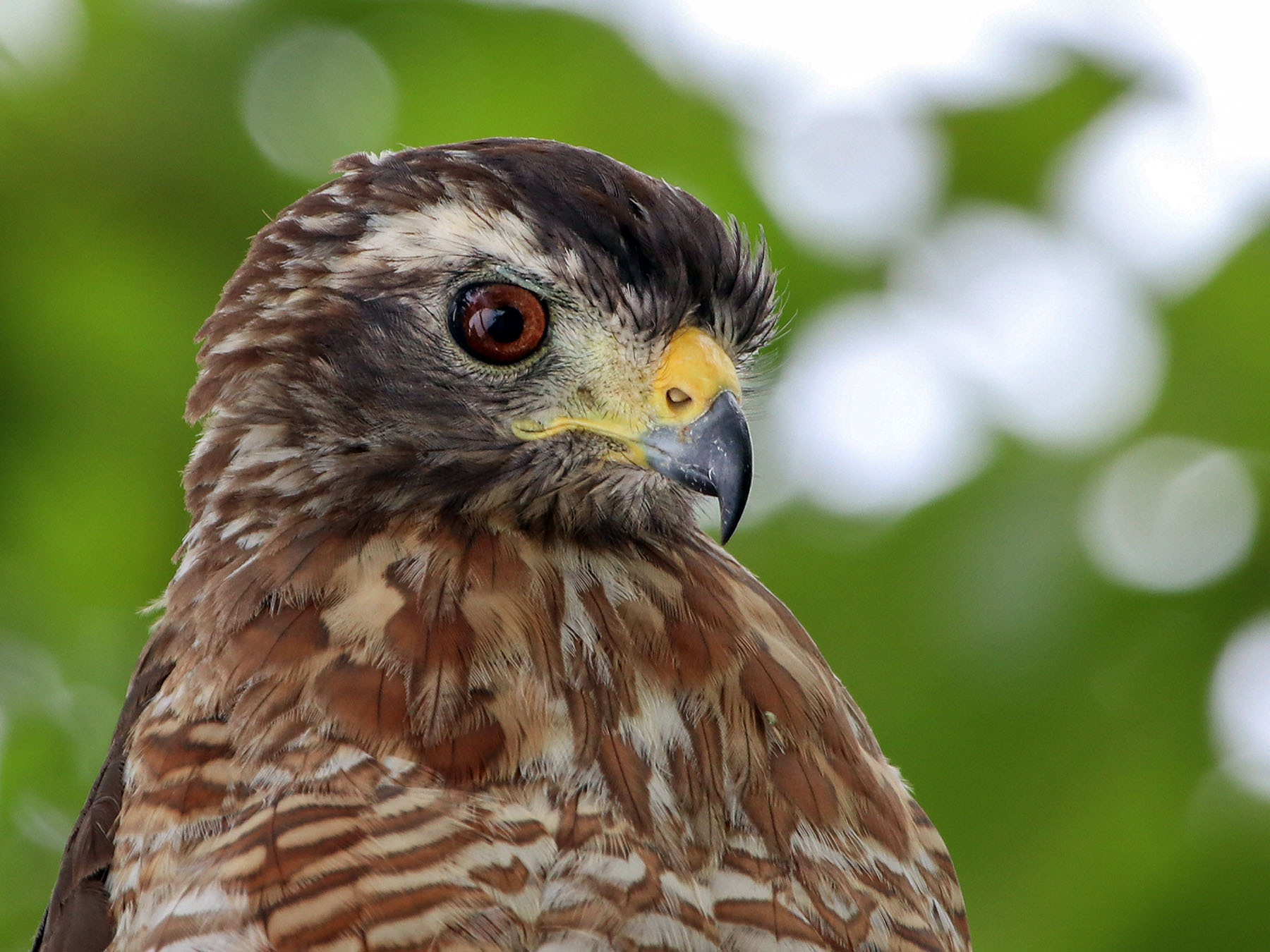
Adults have bright yellow legs and a yellow cere, while juveniles display a more streaked appearance with buffy underparts. There is little variation between sexes, but individuals may show slight regional colour differences. Females are also up to 17% larger than males.
Its size
Adults- Length
- 33–41 cm
- Wingspan
- 68–79 cm
- Weight
- 250–300 g
Its song and calls
The Roadside Hawk's call is a distinctive, high-pitched whistle, often described as a repeated "peeeeeer" or "keeeeee." This vocalisation is frequently heard during territorial displays or when the bird is alarmed.
They may also produce a rapid series of sharp notes when agitated.
- Song and calls0:00 / 0:48
Recorded in Nangaritza Valley, Ecuador · April 2007
- Call0:00 / 0:14
Recorded in Meta, Colombia
When and where to see it
The Roadside Hawk is not recorded regularly in the UK, Ireland, the United States or Canada.
United States: recorded in 2 of the 6 years. Too few years to count as a regular visitor.
Worldwide: recorded regularly in 20 countries
Countries where it was recorded in at least 3 of the 6 years 2019–2024. Linked countries have their own bird list.
Data: EOD – eBird Observation Dataset (Cornell Lab of Ornithology), accessed via GBIF.org, CC BY 4.0. Records from 2019–2024, aggregated and filtered by Birdfact. How these lists are made
Tips for seeing it
- Look for them perched on utility poles or fence posts along rural roads
- Listen for their distinctive high-pitched whistle, often given in a series
- Observe their hunting behaviour in open areas adjacent to forests
- Note their smaller size compared to other hawks in their range
What it eats
Roadside Hawks are opportunistic predators that feed on a variety of small animals. Their diet includes rodents, lizards, snakes, large insects, and occasionally small birds.
They often hunt from perches, diving down to capture prey on the ground.
Nesting and breeding
Breeding season for Roadside Hawks varies by region but typically occurs during the dry season. Pairs engage in aerial displays and vocalisations as part of courtship rituals.
Nests are constructed of sticks and lined with green leaves, usually placed in the fork of a tree 5-15 meters above ground. The female lays 1-3 white eggs with brown spots.
Incubation lasts about 33 days, primarily by the female. Chicks fledge after 5-6 weeks but may remain dependent on parents for several more weeks.
Behaviour
Roadside Hawks are often seen perched on exposed branches or poles along roadsides, hence their name. They hunt using a sit-and-wait strategy, swooping down on prey from their vantage points.
These hawks are generally solitary but may form monogamous pairs during breeding season.
Conservation
The Roadside Hawk is listed as Least Concern by the IUCN due to its large range and stable population. However, habitat loss in some areas may affect local populations.
Conservation efforts focus on preserving diverse habitats across its range.
More photos
7 photos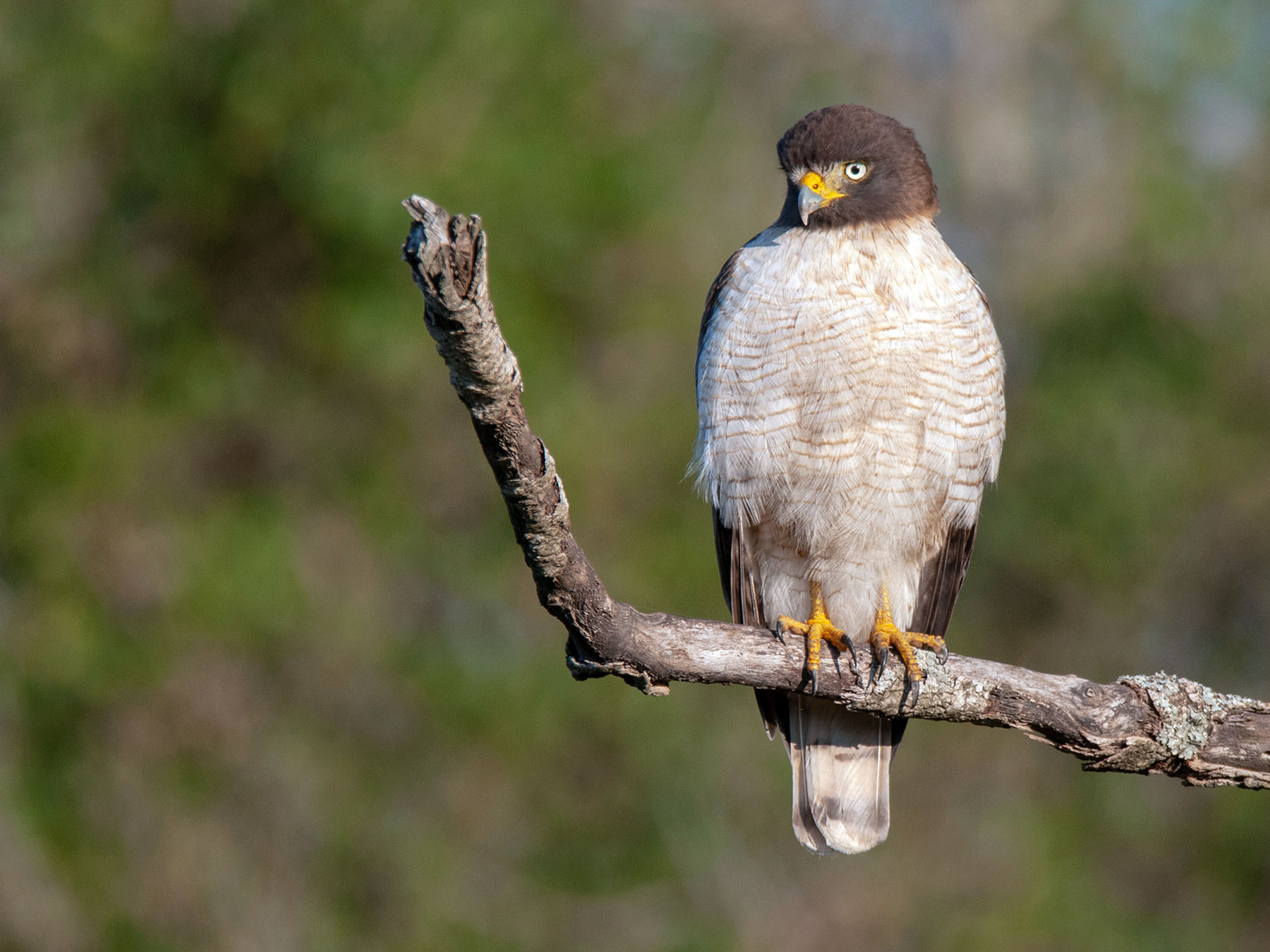
Quick facts
- Length
- 33–41 cm
- Wingspan
- 68–79 cm
- Weight
- 250–300 g
- Lifespan
- 10–15 years
- Family
- Hawks & Eagles
- Migration
- Resident
- Global status (IUCN)
- Least Concern
- World population
- 5,000,000 - 50,000,000 mature individuals
- Population trend
- Increasing
- Also called
- Roadside Buzzard
- Scientific name
- Rupornis magnirostris
Sources
4- 1Estimated lifespan based on similar species
- 2BirdLife International. 2020. Rupornis magnirostris. The IUCN Red List of Threatened Species 2020: e.T22695880A168800737. https://dx.doi.org/10.2305/IUCN.UK.2020-3.RLTS.T22695880A168800737.en. Source (opens in a new tab)
- 3Partners in Flight (2019)
- 4Partners in Flight (2019)

Checked by
Nathan Cope, founder and editor
Nathan founded Birdfact and leads its writers and contributors in the UK, the US and Canada. He has watched and studied birds for more than ten years, and checks every article and species guide before it’s published.