
Regent Honeyeater
Warty-faced Honeyeater, Embroidered Honeyeater · Anthochaera phrygia
By the Birdfact teamChecked by Nathan Cope
On this page12 sections
How to recognise it
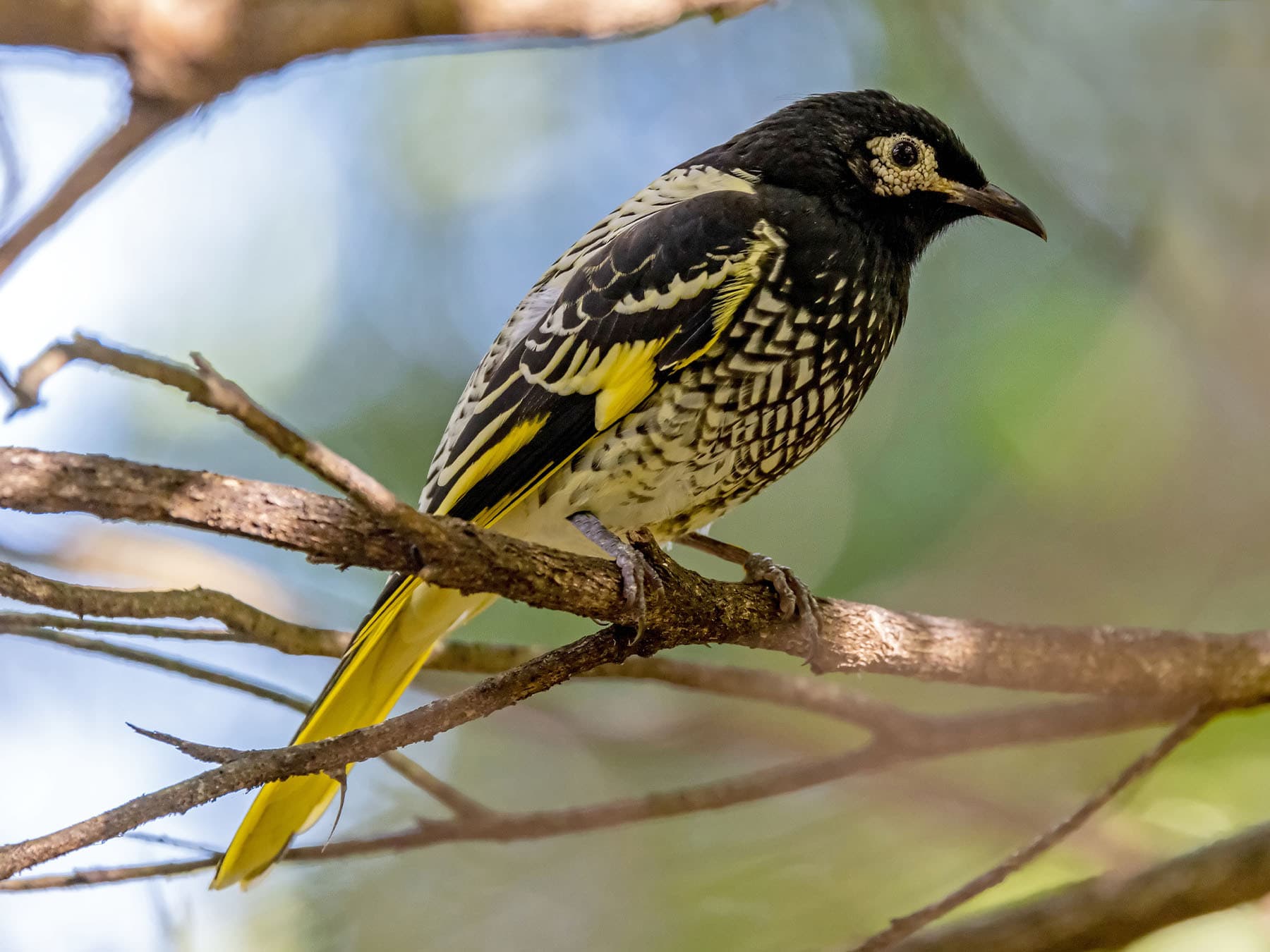
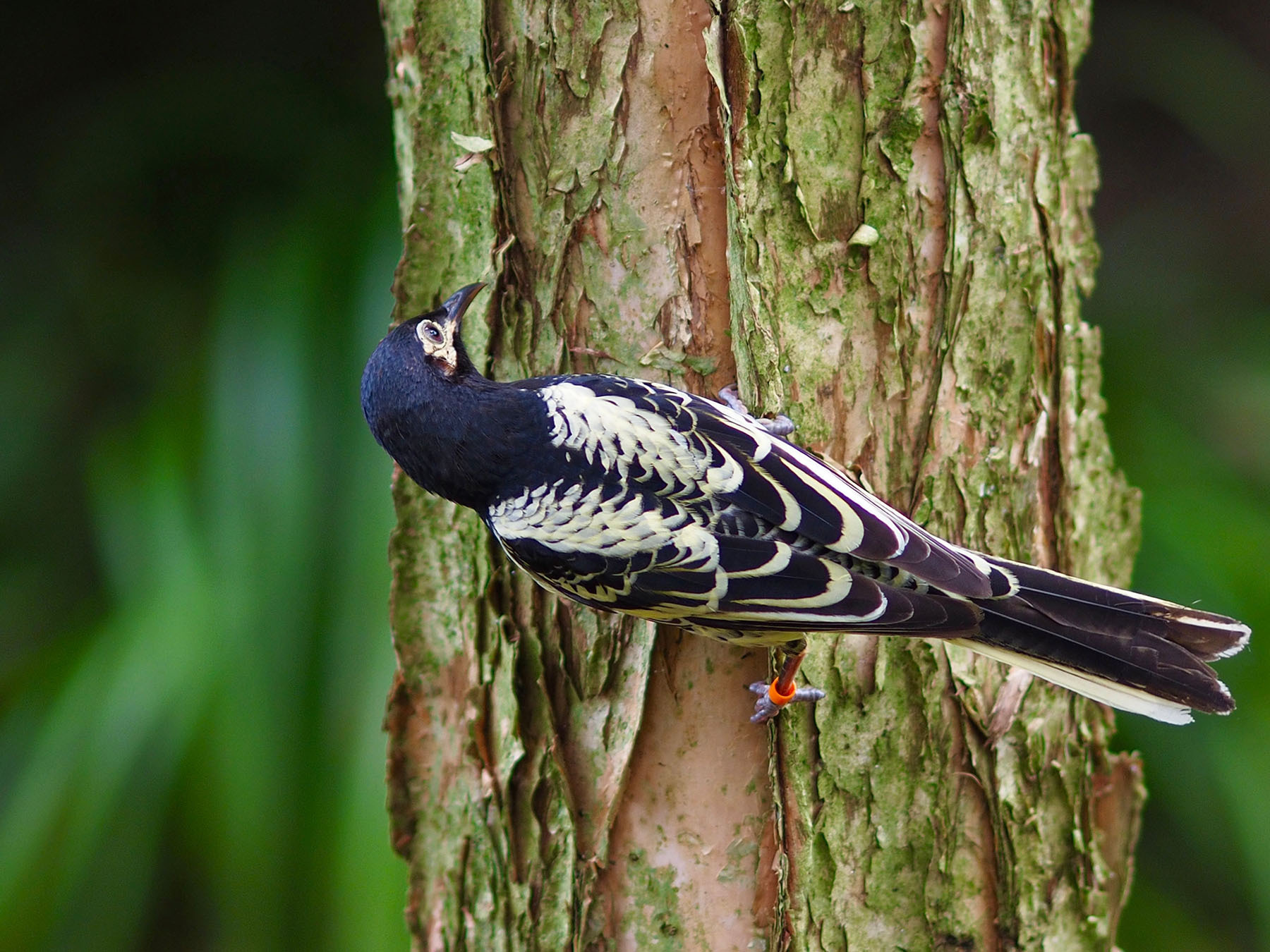
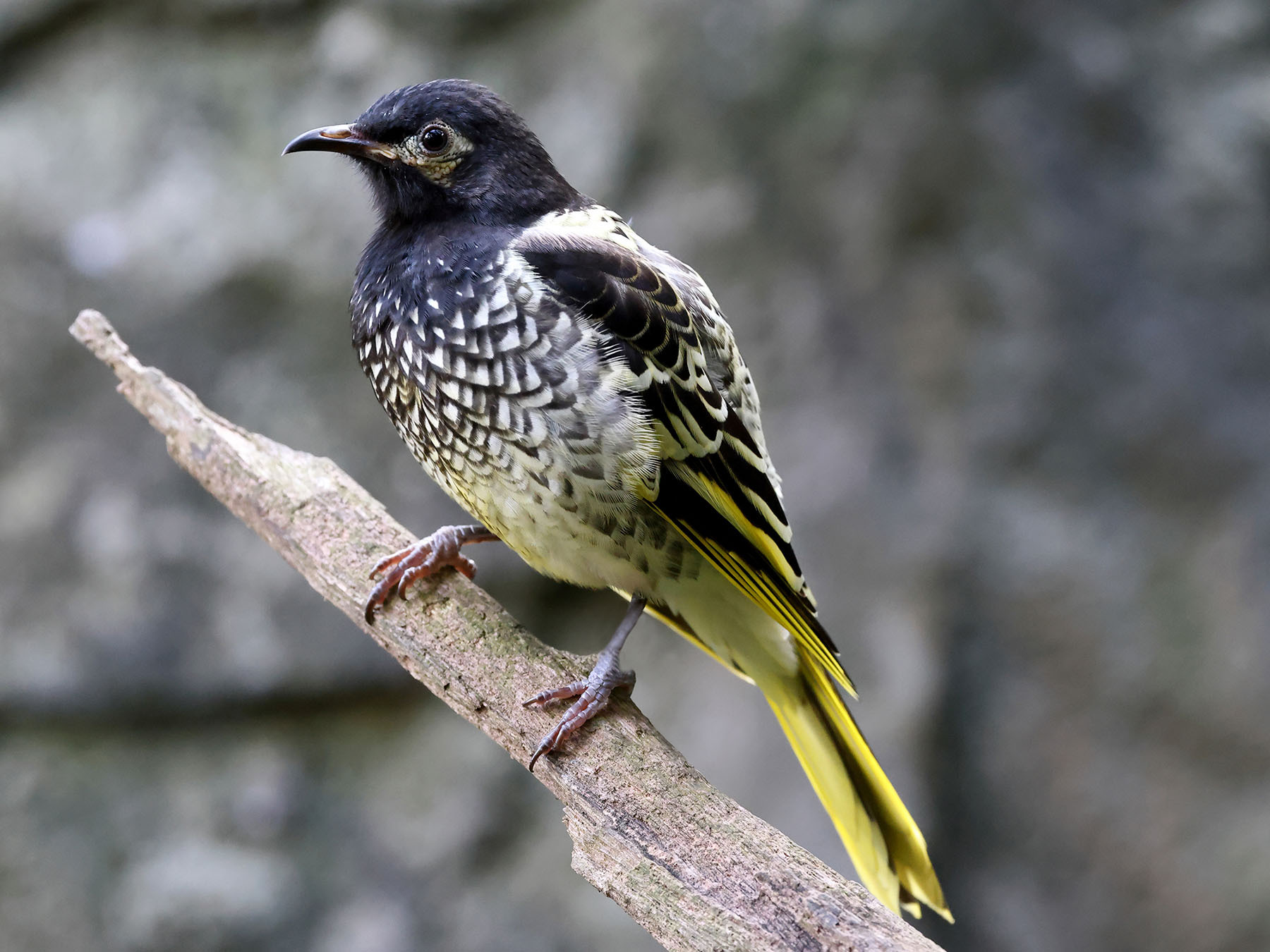
The Regent Honeyeater is a striking medium-sized bird with distinctive black and yellow plumage. Its head, neck, and upper breast are black, contrasting with bright yellow panels on the wings and tail. The lower breast and belly display intricate scalloped patterns of pale yellow and white.
Both sexes have similar plumage, though females may be slightly duller. Juveniles are browner with less distinct markings. The bird's face has a unique warty texture, giving it a characteristic appearance.
Its size
Adults- Length
- 20–24 cm
- Wingspan
- 30–35 cm
- Weight
- 35–50 g
Its song and calls
Regent Honeyeaters have a diverse vocal repertoire. Their calls include soft, bell-like notes, harsh chattering, and melodious warbling songs. They often mimic other bird species, incorporating these sounds into their own vocalisations.
During the breeding season, males sing complex songs to attract mates and defend territories.
When and where to see it
The Regent Honeyeater is not recorded regularly in the UK, Ireland, the United States or Canada.
Worldwide: recorded regularly in 1 country
Countries where it was recorded in at least 3 of the 6 years 2019–2024. Linked countries have their own bird list.
Oceania (1)
Data: EOD – eBird Observation Dataset (Cornell Lab of Ornithology), accessed via GBIF.org, CC BY 4.0. Records from 2019–2024, aggregated and filtered by Birdfact. How these lists are made
Tips for seeing it
- Look for Regent Honeyeaters in flowering eucalyptus trees, particularly ironbarks and box eucalypts
- Listen for their distinctive bell-like calls and harsh chattering
- Search in small flocks, especially during non-breeding season
- Check known breeding sites in spring and summer
- In Australia, join organised surveys to contribute to conservation efforts
What it eats
Regent Honeyeaters primarily feed on nectar from eucalyptus and mistletoe flowers. They supplement their diet with insects, especially when feeding young.
These birds have a brush-tipped tongue specially adapted for nectar feeding and can perform complex acrobatics to reach flowers.
Nesting and breeding
Regent honeyeaters breed from August to January, coinciding with the flowering of key eucalyptus species. During this time, they form monogamous pairs. They construct cup-shaped nests from bark strips, grasses, and spider webs, typically placed high in a eucalyptus tree.
Females usually lay 2-3 pale pink eggs with reddish-brown spots. Both parents share incubation duties, which last about 14 days. The nestling period is approximately 16 days.
After fledging, young birds remain dependent on their parents for several weeks. Breeding success is often low due to nest predation and competition for resources.
Behaviour
Regent Honeyeaters are highly nomadic, following the flowering patterns of their preferred eucalyptus trees. They are often seen foraging in the canopy, moving quickly between flowers.
These birds can be territorial during the breeding season, fiercely defending nectar-rich feeding areas from other honeyeaters and even larger birds.
Conservation
The Regent Honeyeater is critically endangered due to habitat loss and fragmentation.
Intensive conservation efforts are underway, including captive breeding programs, habitat restoration, and community engagement initiatives. Every sighting is crucial for monitoring this species' recovery.
Similar birds
Often mistaken for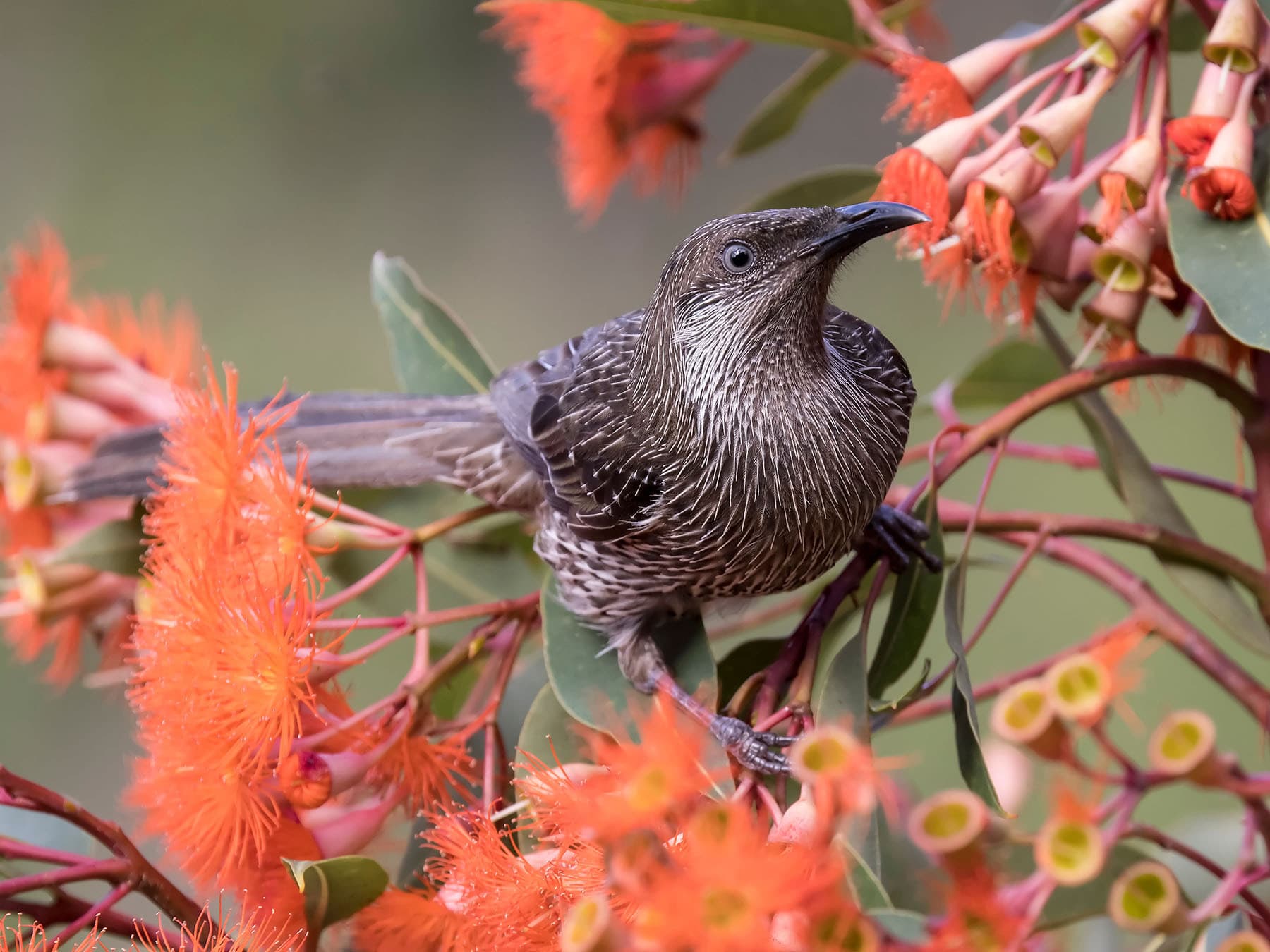
More photos
3 photos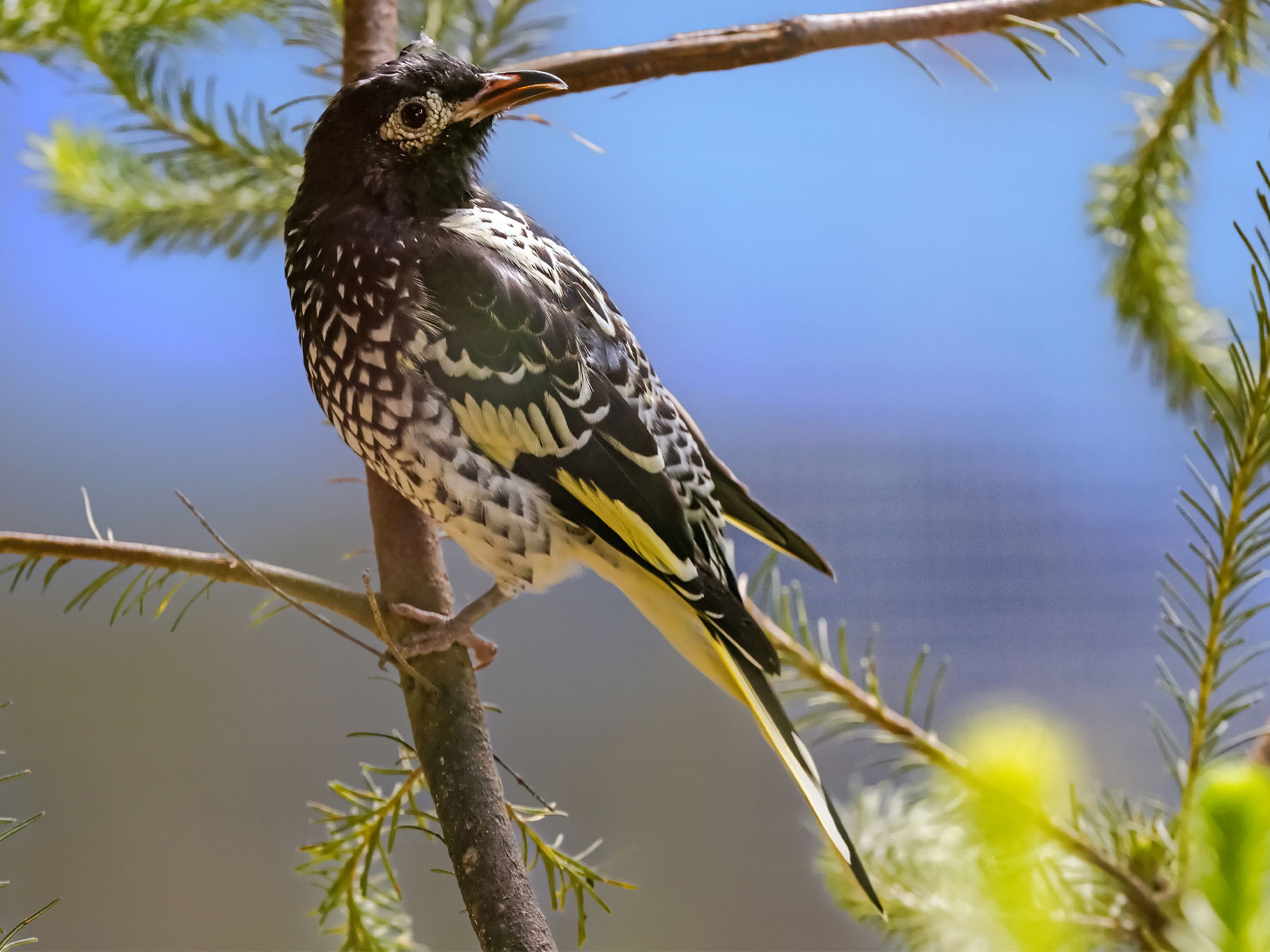
Quick facts
- Length
- 20–24 cm
- Wingspan
- 30–35 cm
- Weight
- 35–50 g
- Lifespan
- 5 years · oldest recorded 10 years
- Family
- Honeyeaters
- Migration
- Nomadic
- Global status (IUCN)
- Critically Endangered
- World population
- 350 - 400 mature individuals
- Population trend
- The population is in decline due to loss of breeding and feeding habitats
- Also called
- Warty-faced Honeyeater, Embroidered Honeyeater
- Scientific name
- Anthochaera phrygia
Sources
4- 1BirdLife International. 2018. Anthochaera phrygia. The IUCN Red List of Threatened Species 2018: e.T22704415A130992272. Source (opens in a new tab)
- 2Garnett et al. (2011)
- 3Garnett et al. (2011)
- 4ABBBS - Australian Bird and Bat Banding Scheme Source (opens in a new tab)

Checked by
Nathan Cope, founder and editor
Nathan founded Birdfact and leads its writers and contributors in the UK, the US and Canada. He has watched and studied birds for more than ten years, and checks every article and species guide before it’s published.