


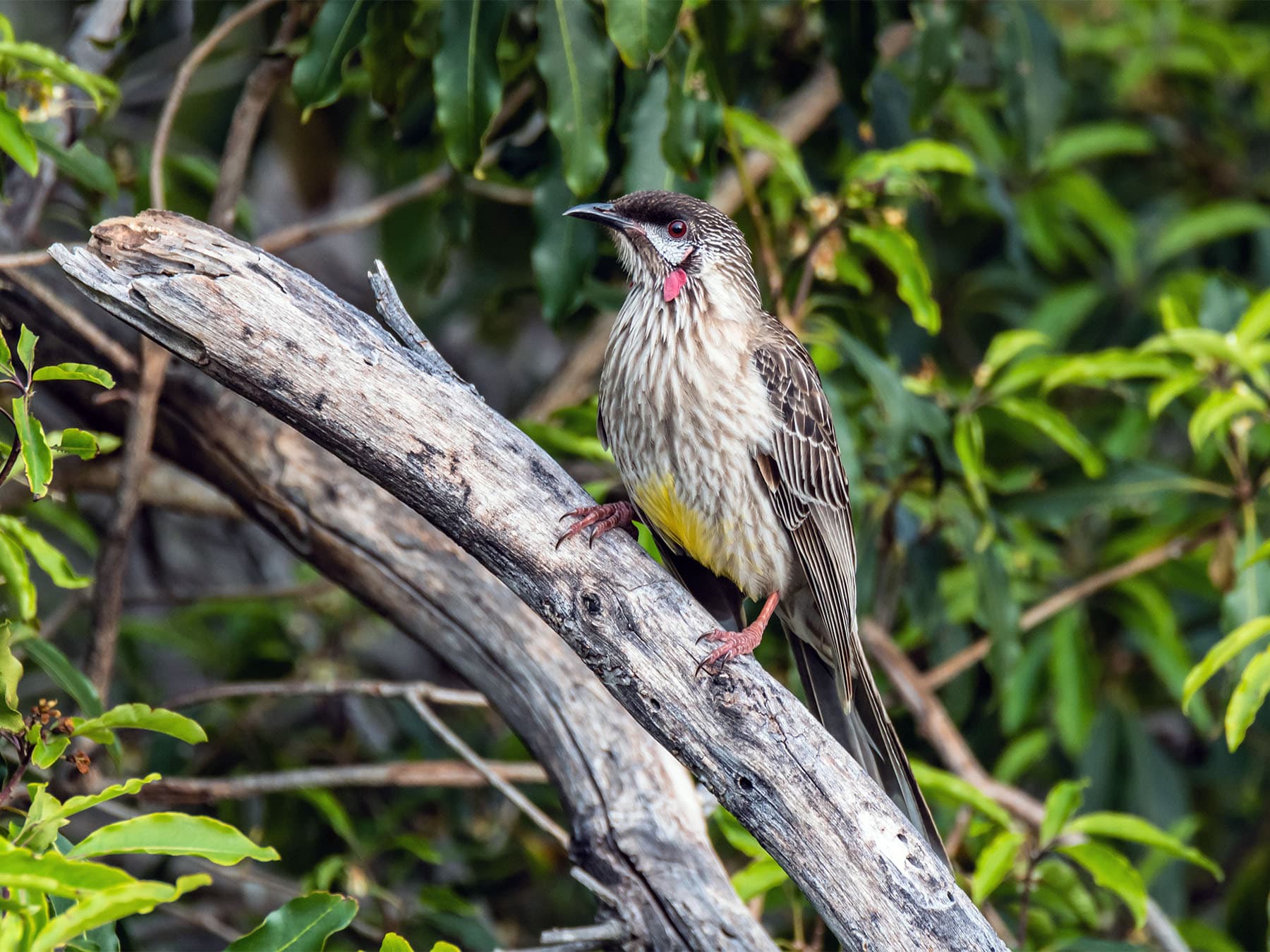
Red Wattlebird
Wattled Honeyeater, Gillbird · Anthochaera carunculata
By the Birdfact teamChecked by Nathan Cope
On this page12 sections
How to recognise it
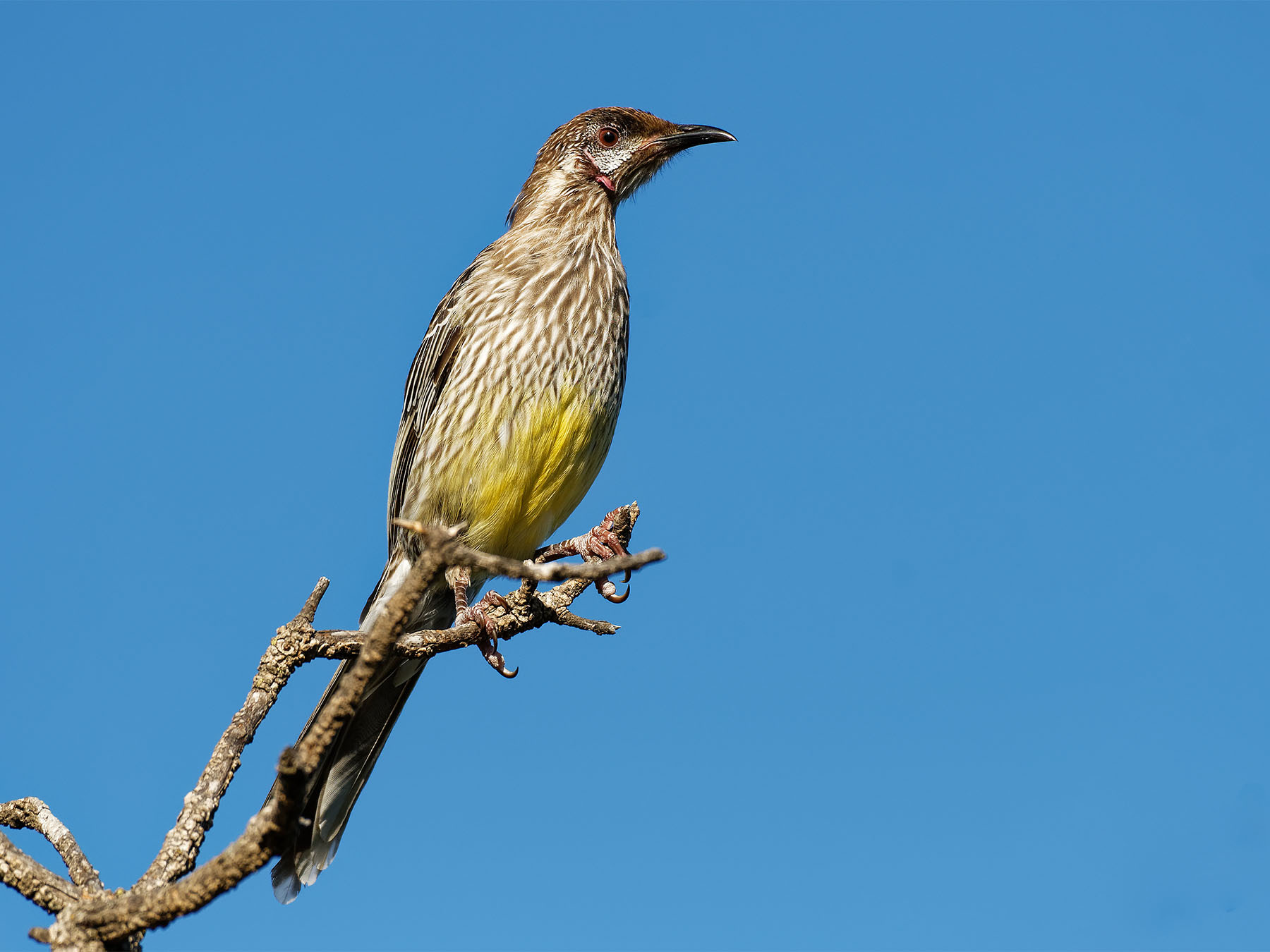
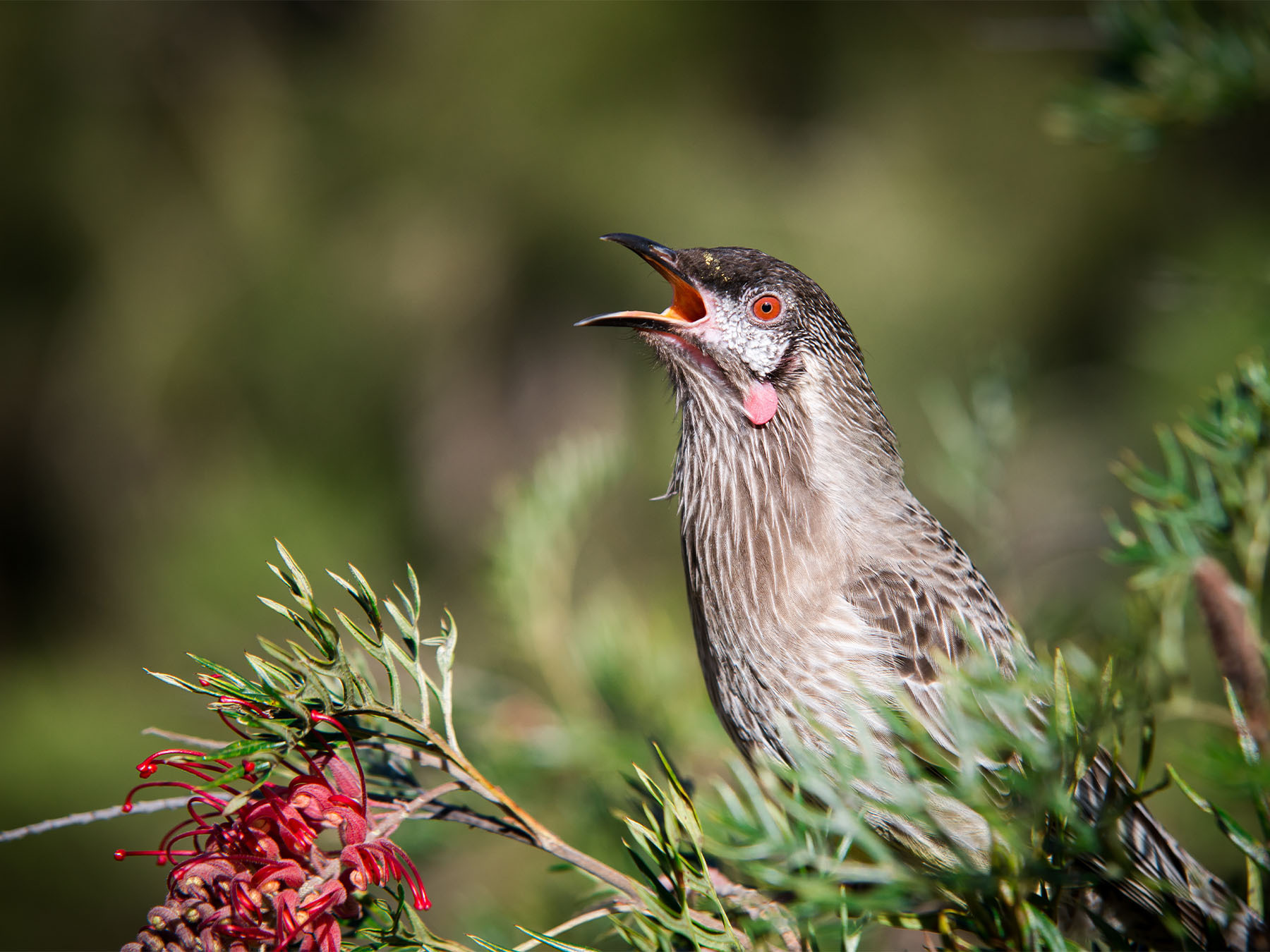
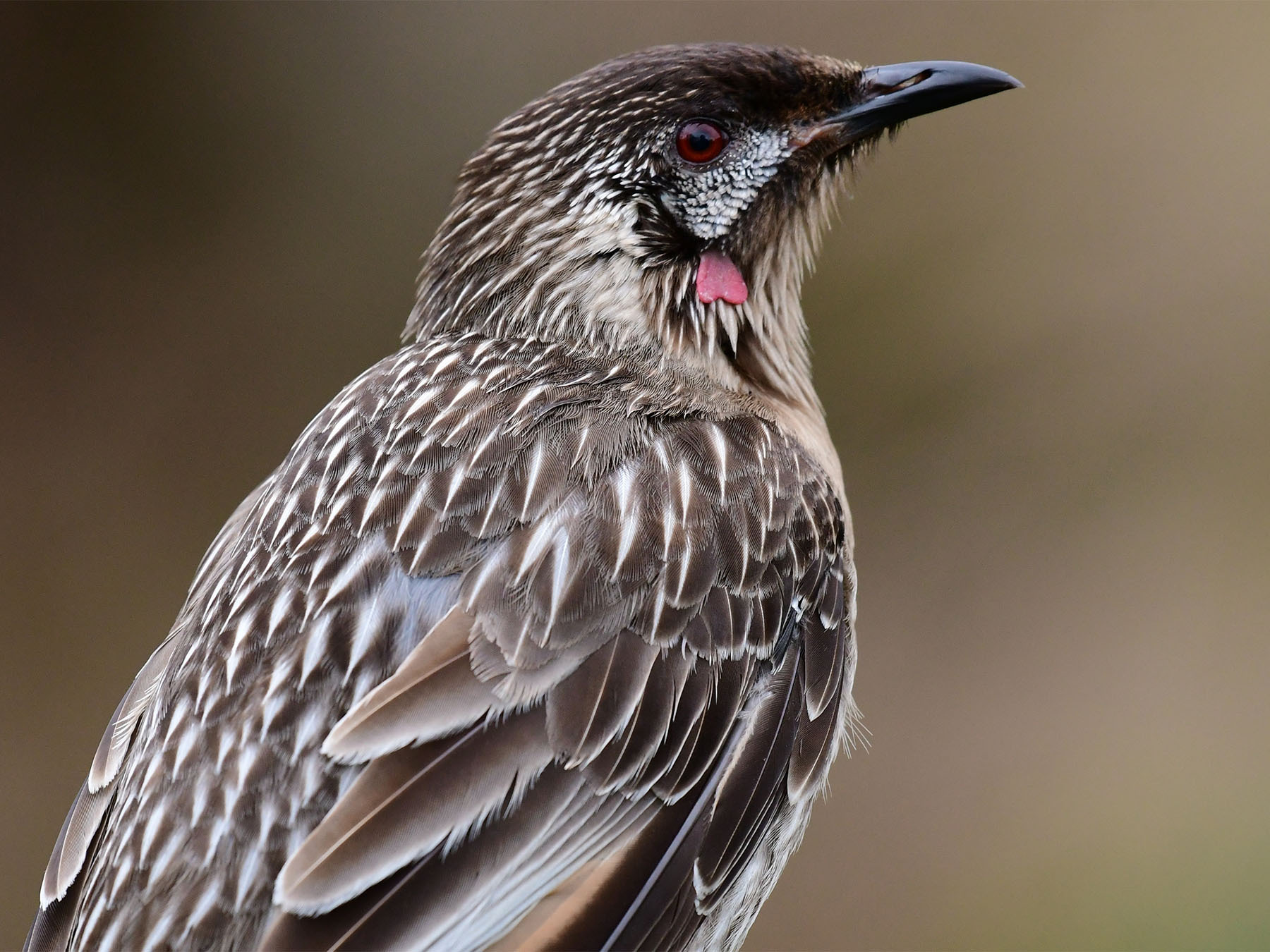
The Red Wattlebird is a large honeyeater with distinctive red wattles hanging from its cheeks. Its plumage is primarily grey-brown, with a streaked chest and prominent white patches on the wings and tail.
Both sexes look similar, with juveniles having smaller wattles and duller plumage. The bird's size and wattles become more pronounced as it matures.
Its size
Adults- Length
- 33–37 cm
- Wingspan
- 45–50 cm
- Weight
- 100–120 g
Its song and calls
Red Wattlebirds are known for their loud, harsh calls. Their most common vocalisation is a raucous 'yak-yak-yak' or a loud, coughing 'kwok'.
During the breeding season, males may produce a softer, more musical song. They're also known to occasionally mimic other bird species.
- Call0:00 / 1:06
Recorded in New South Wales, Australia · December 2018
When and where to see it
The Red Wattlebird is not recorded regularly in the UK, Ireland, the United States or Canada.
Worldwide: recorded regularly in 1 country
Countries where it was recorded in at least 3 of the 6 years 2019–2024. Linked countries have their own bird list.
Oceania (1)
Data: EOD – eBird Observation Dataset (Cornell Lab of Ornithology), accessed via GBIF.org, CC BY 4.0. Records from 2019–2024, aggregated and filtered by Birdfact. How these lists are made
Tips for seeing it
- Look for Red Wattlebirds in flowering eucalyptus trees and gardens with native plants.
- Listen for their distinctive harsh, coughing call, which often gives away their presence.
- Observe their aggressive behaviour towards other birds at feeding sites.
- In urban areas, check parks and gardens with mature trees and flowering shrubs.
What it eats
Red Wattlebirds primarily feed on nectar from native flowers, particularly eucalyptus and banksia. They supplement their diet with insects, especially during breeding season.
These birds also consume fruits and have been observed drinking sap from tree trunks.
Nesting and breeding
Red Wattlebirds typically breed between July and December, with some regional variations. Pairs are monogamous during the breeding season and may re-pair in subsequent years.
The nest is a large, cup-shaped structure made of twigs, bark, and grass, often lined with softer materials. It's usually placed high in a tree fork. Females lay 2-3 pale pink eggs with reddish-brown spots.
Incubation lasts about 16 days, with both parents sharing duties. Nestlings fledge after approximately 15 days but continue to be fed by their parents for several weeks after leaving the nest.
Behaviour
Red Wattlebirds are known for their aggressive territorial behaviour, often chasing away other birds from feeding areas. They move through trees with a bouncing flight pattern, frequently pausing to scan their surroundings.
These birds are also known to gather in noisy groups, especially near abundant food sources.
Conservation
While the Red Wattlebird is currently listed as Least Concern, habitat loss and fragmentation pose potential threats.
Conservation efforts focus on preserving native vegetation in urban and suburban areas, which provide important feeding and nesting sites for these birds.
Similar birds
Often mistaken for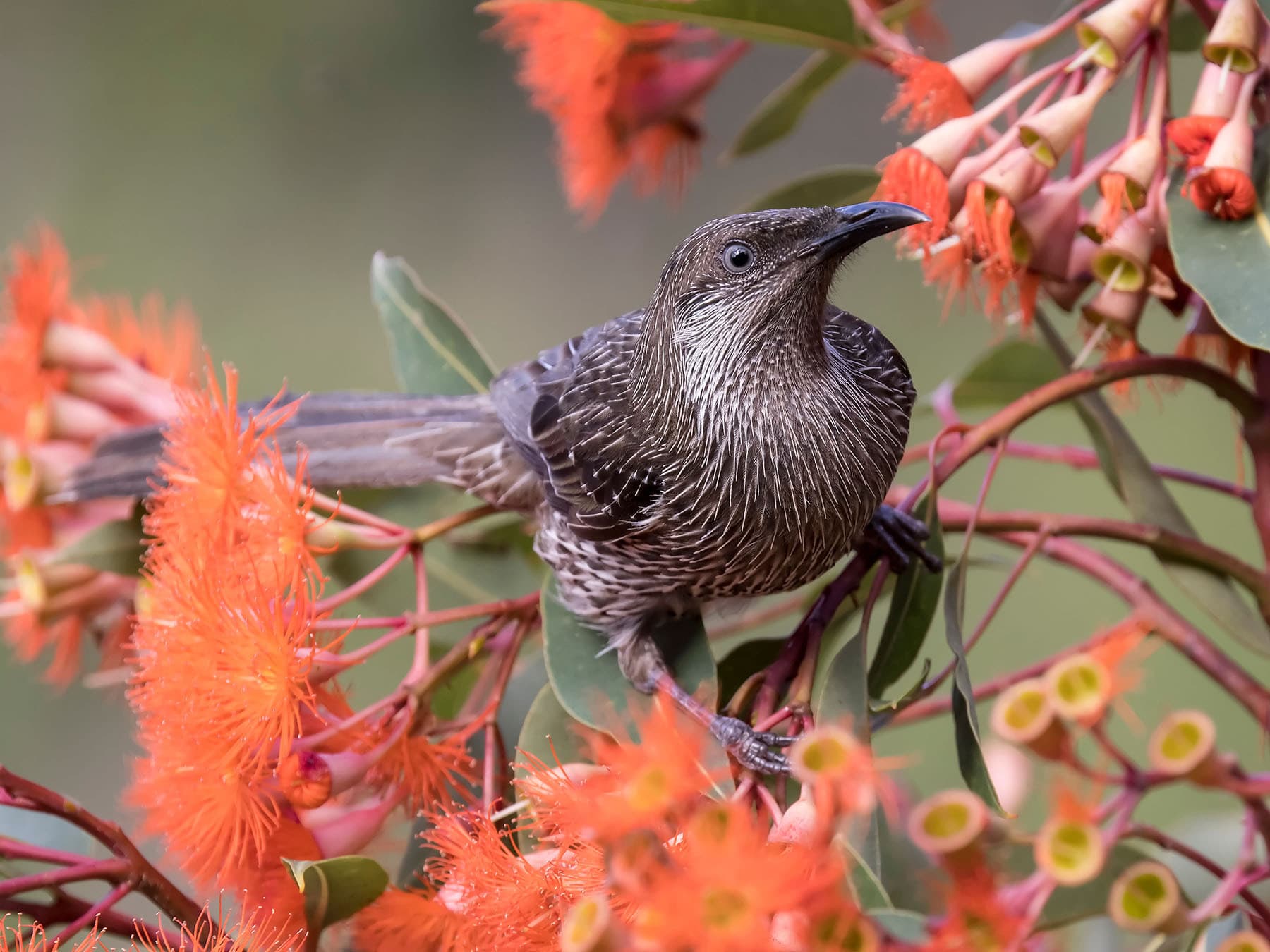
More photos
4 photos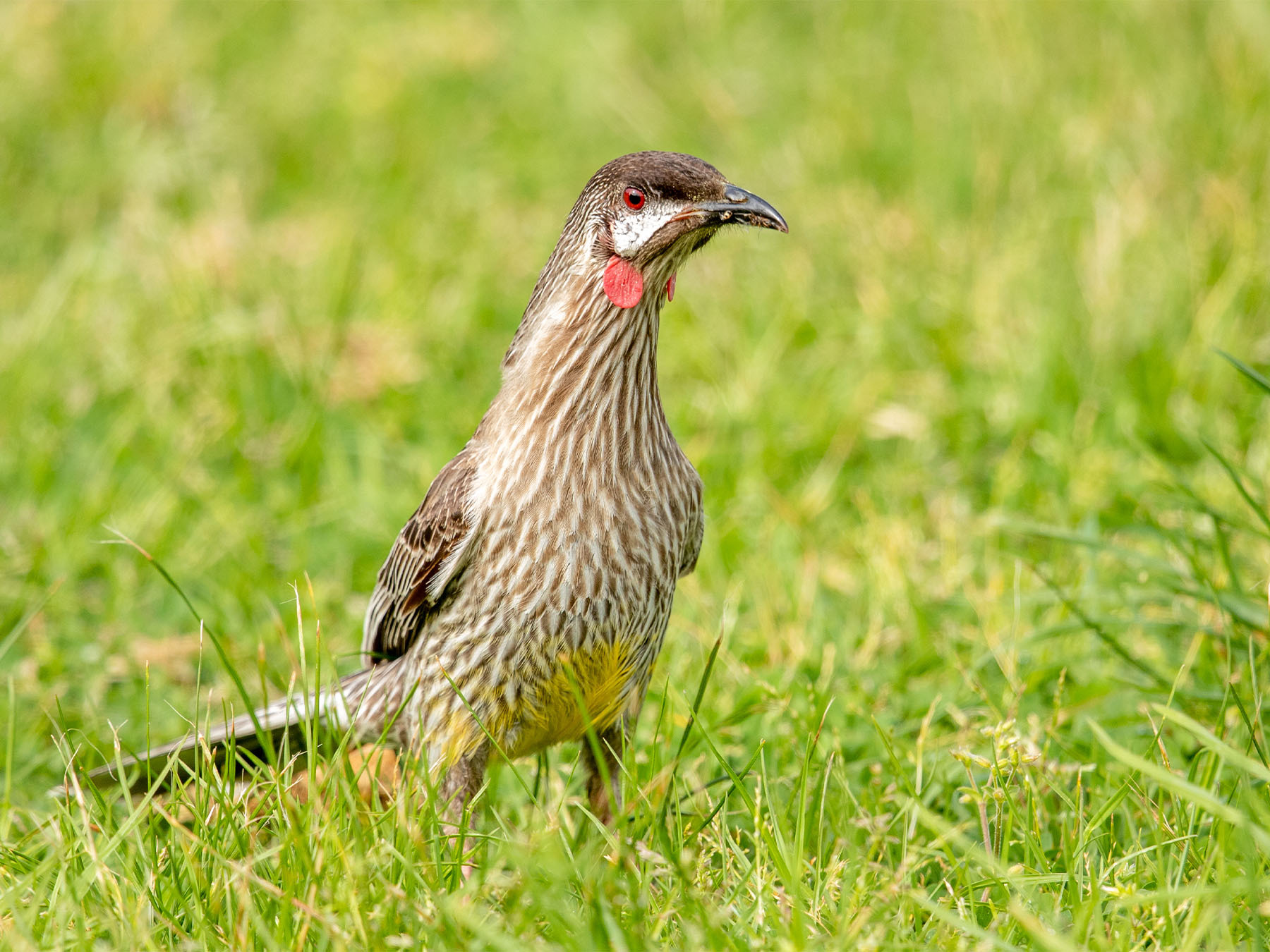
Quick facts
- Length
- 33–37 cm
- Wingspan
- 45–50 cm
- Weight
- 100–120 g
- Lifespan
- 8–10 years · oldest recorded 13 years
- Family
- Honeyeaters
- Migration
- Partial migrant
- Global status (IUCN)
- Least Concern
- World population
- Not quantified, but common throughout its range
- Population trend
- Population is considered stable, no significant trends
- Also called
- Wattled Honeyeater, Gillbird
- Scientific name
- Anthochaera carunculata
Sources
4- 1BirdLife International. 2018. Anthochaera carunculata. The IUCN Red List of Threatened Species 2018: e.T22704466A130382437. Source (opens in a new tab)
- 2BirdLife International. 2018. Anthochaera carunculata. The IUCN Red List of Threatened Species 2018: e.T22704466A130382437. Source (opens in a new tab)
- 3Morcombe (2000)
- 4ABBBS - Australian Bird and Bat Banding Scheme Source (opens in a new tab)

Checked by
Nathan Cope, founder and editor
Nathan founded Birdfact and leads its writers and contributors in the UK, the US and Canada. He has watched and studied birds for more than ten years, and checks every article and species guide before it’s published.