


Red-flanked Bluetail
Orange-flanked Bush-robin · Tarsiger cyanurus
By the Birdfact teamChecked by Nathan Cope
On this page13 sections
How to recognise it
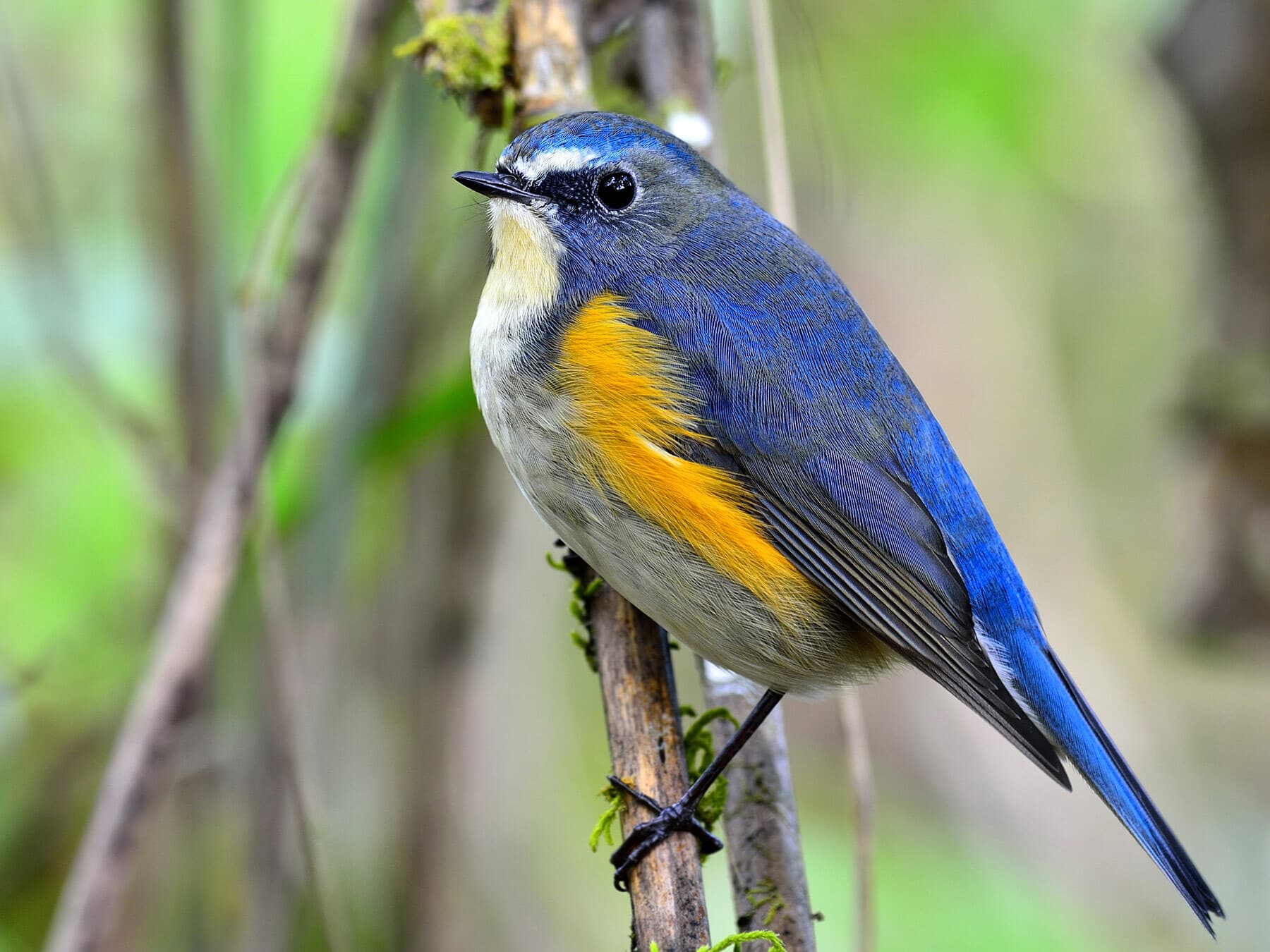
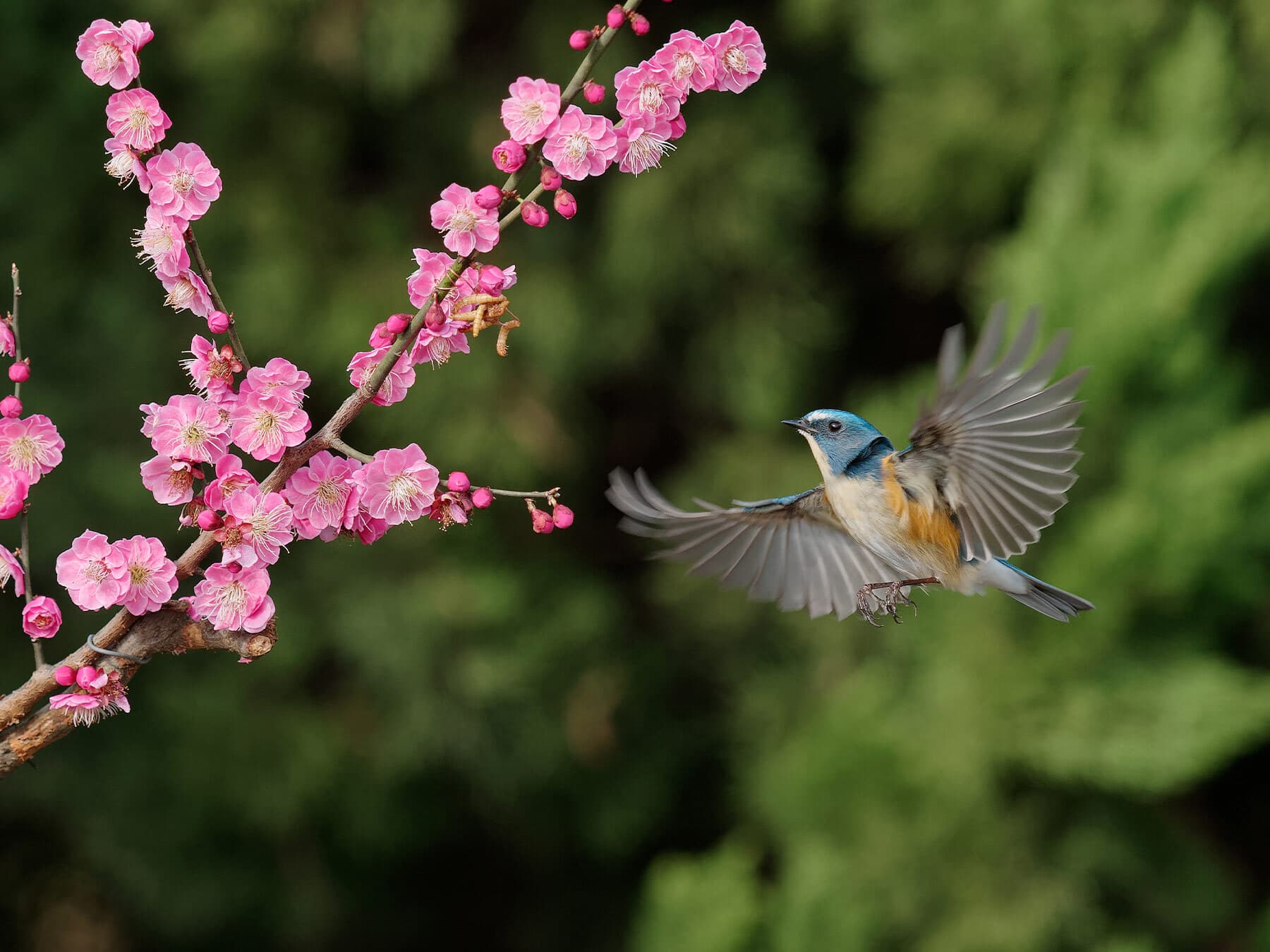
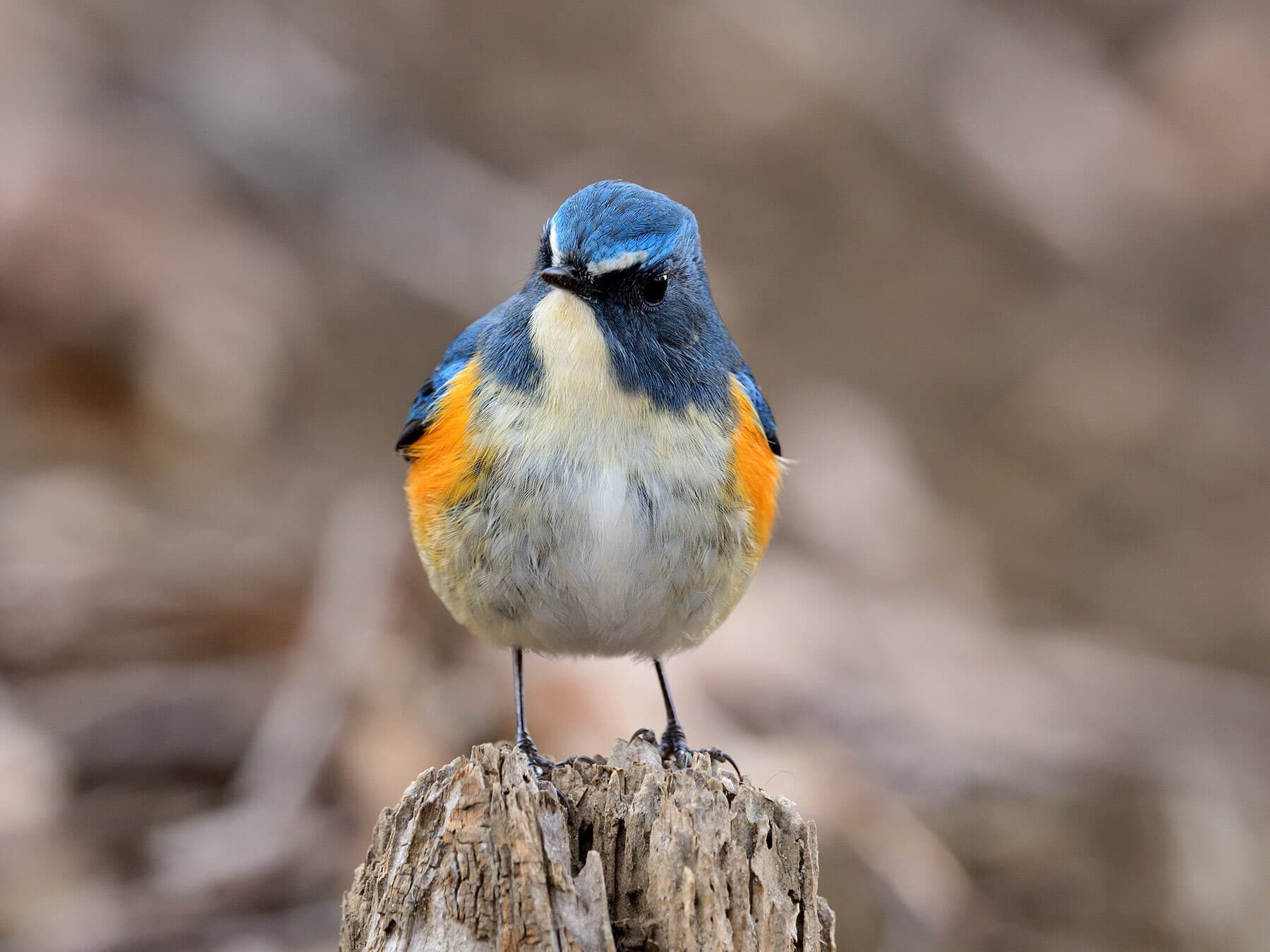
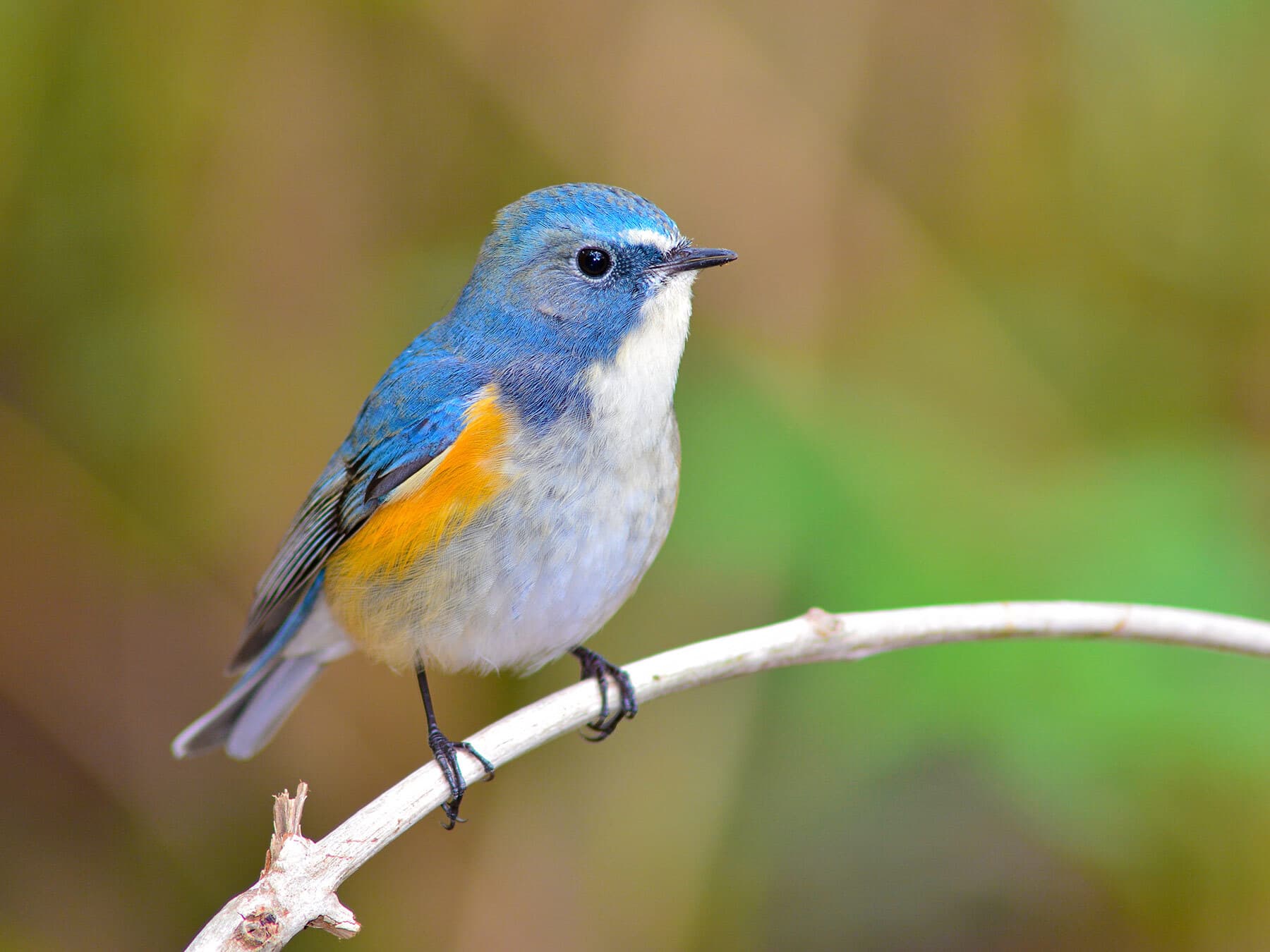
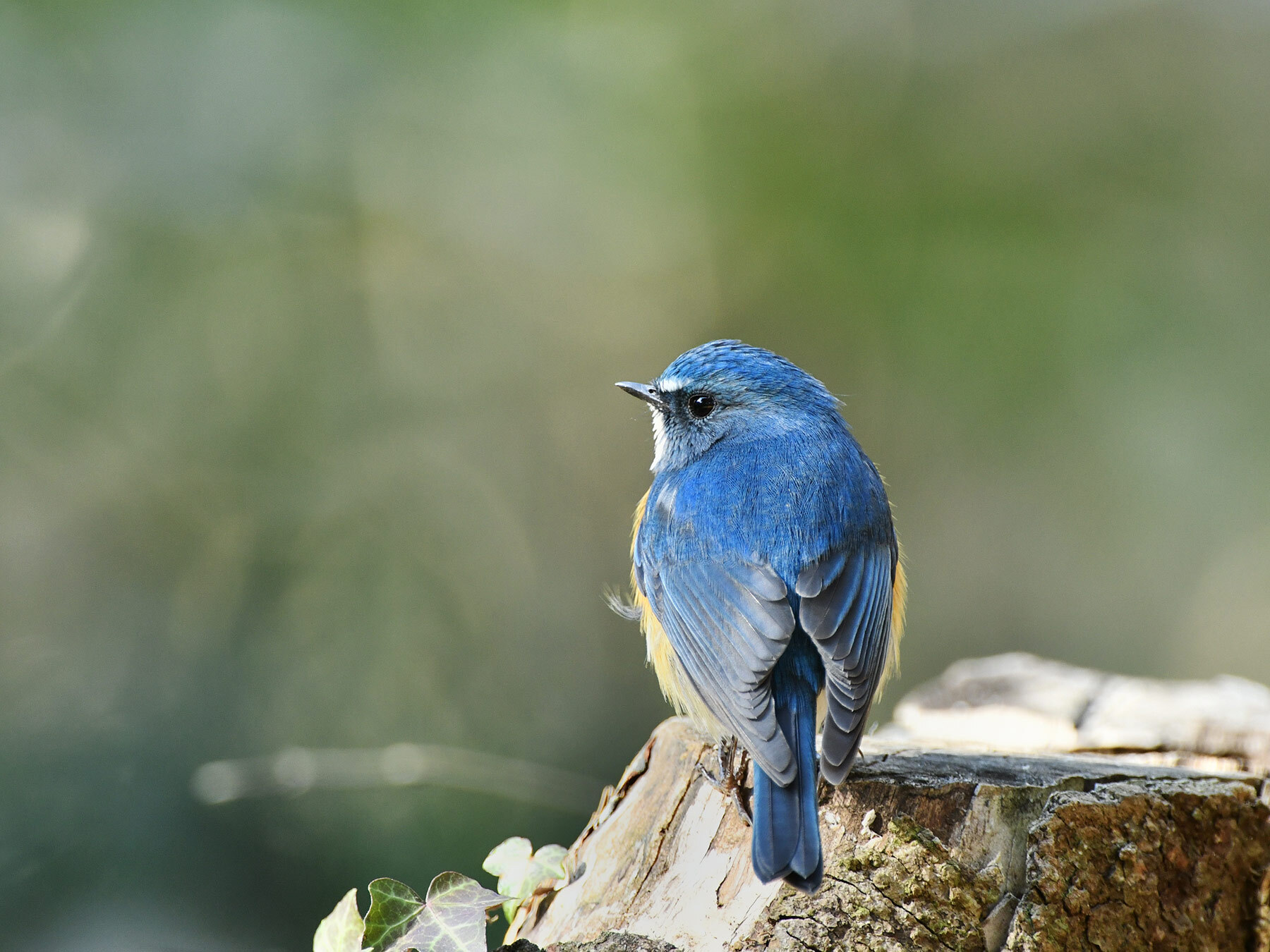
The Red-flanked Bluetail is a small, vibrant bird with striking blue upperparts in males. Its most distinctive feature is the bright orange-red flanks, contrasting beautifully with the blue back and tail. The underparts are predominantly white.
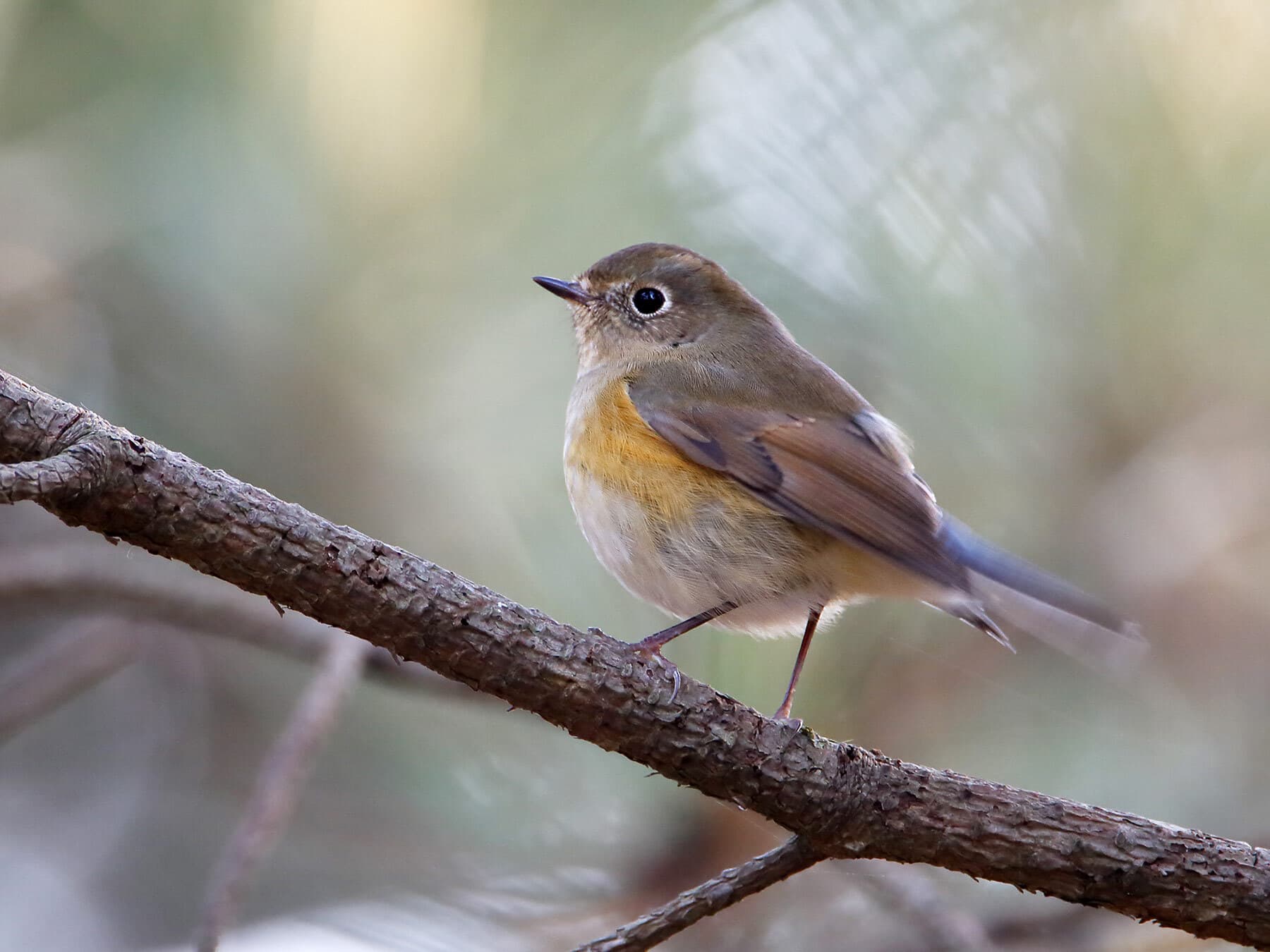
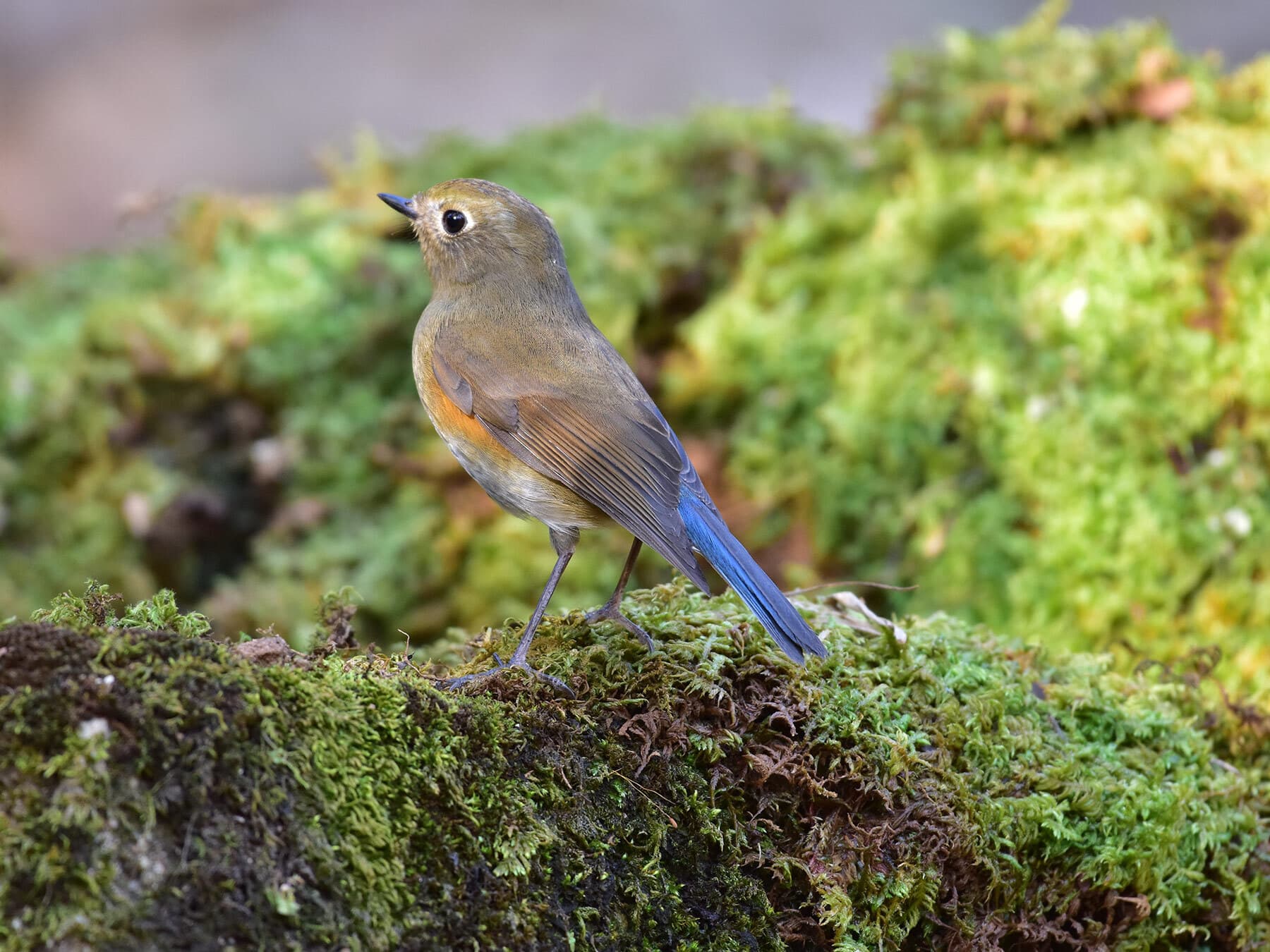
Females and juveniles are less colourful, with brown upperparts and a white eyering. Both sexes display the characteristic orange flanks, though less vivid in females. In winter, males may show duller plumage resembling females.
Its size
Adults- Length
- 13–14 cm
- Wingspan
- 20–23 cm
- Weight
- 10–18 g
Its song and calls
The adult male tends to vocalise more frequently than the female and can often be seen and heard singing from the branches of trees or the top of bushes, particularly during the breeding season, using a short repeated melodious chirping whistle. Calls vary from a high pitched, short single note whistle, to a more guttural ‘tock -tock’ sound.
When and where to see it
OctoberPeak season
Most recorded in October
- 1. East Riding of Yorkshire0.14%
- 2. Orkney Islands0.10%
- 3. Cardiffunder 0.1%
- 4. Northumberlandunder 0.1%
- 5. Tyne and Wearunder 0.1%
Each dot is a county, state or province: the bigger and darker, the larger the bird’s share of that place’s bird records that month. Grey dots: no regular records. The ringed point is the centre of the bird’s records this month; the arrow shows how it moved since last month, and the dashed loop its path through the year. “Arrivals” colours places where it becomes regular this month (orange) or is in its last regular month (grey). GBIF eBird Observation Dataset, 2019–2024. Map data: Natural Earth, US Census Bureau; place centres © OpenStreetMap contributors.
In your area
See when the Red-flanked Bluetail is recorded in your county, state or province.
How often the Red-flanked Bluetail turns up in the UK and the United States through the year, from birdwatchers' records.
United Kingdom
Passage migrant · regularly Sep–Nov · most records in October
United States
Passage migrant · regularly Jan–Mar · most records in January
Show as a table
| Month | United Kingdom | United States |
|---|---|---|
| January | <0.001% | 0.003% (regular) |
| February | <0.001% | 0.001% (regular) |
| March | – | 0.001% (regular) |
| April | <0.001% | – |
| May | <0.001% | <0.001% |
| June | – | <0.001% |
| July | – | – |
| August | – | – |
| September | 0.002% (regular) | <0.001% |
| October | 0.019% (regular) | – |
| November | 0.004% (regular) | <0.001% |
| December | <0.001% | 0.002% |
Recorded regularly in
Worldwide: recorded regularly in 24 countries
Countries where it was recorded in at least 3 of the 6 years 2019–2024. Linked countries have their own bird list.
Asia (12)
North America (1)
Data: EOD – eBird Observation Dataset (Cornell Lab of Ornithology), accessed via GBIF.org, CC BY 4.0. Records from 2019–2024, aggregated and filtered by Birdfact. How these lists are made
A migratory bird with its breeding grounds in northern Asia, it moved westwards into northern Europe during the latter part of the last century where it can be found in relatively large numbers breeding in Finland with far fewer numbers journeying into Scandinavia and even lesser numbers into western continental Europe. Whilst still a rarity it has become a more frequent visitor to the UK. Very rare appearances have been recorded in North America, mainly in the state of Alaska. Choosing a habitat of mature coniferous forests, it can be found throughout Mongolia and Siberia to the Kamchatka Peninsula on Russia’s Pacific coast and south into Japan and Korea. During the winter months most populations travel south into Indochina, Taiwan and the Indian sub-continent.
Signs and Spotting tips
In summer plumage the red-flanked bluetail, particularly the male, is easily recognisable. Prior to migration in the autumn the male changes colour slightly with its head, back and wings taking on a brown shade much closer in appearance to the female. Both sexes retain the prominent white wedged throat patch. Whilst foraging on the ground both sexes can frequently be seen flicking their wings and tail as they move about. Although rather shy birds, their preference for mature coniferous forests frequently finds them flitting around amongst the forest undergrowth and low bushes.
What it eats
Mainly a ground forager, the red-flanked blue tail survives mainly on a diet of fruits and seeds during the winter and insects, insect larvae and spiders during the summer. It will also feed from the branches of trees and catch insects on the wing.
Nesting and breeding
Dependent upon region the breeding season lasts from May through to August. Cup shaped nests are constructed from twigs, grasses and moss on the ground in small depressions, holes or under logs and lined with feathers and pine needles. Normally one brood, occasionally two, consisting of between 4 – 7 white, speckled brown eggs, are produced annually and incubated for up to fifteen days by the female alone. Chicks fledge approximately two weeks after hatching.
Behaviour
Red-flanked Bluetails are known for their quick, darting movements as they forage on the forest floor. They often perch low in shrubs or on the ground, flicking their tails upwards in a characteristic motion.
During the breeding season, males become territorial and engage in melodious singing to attract mates and defend their areas.
Lifespan and predators
Although relevant data is scarce it is believed that the average lifespan of a red-flanked bluetail is between two to three years.
Conservation
While the Red-flanked Bluetail is currently listed as Least Concern, it faces threats from habitat loss due to deforestation and climate change.
Conservation efforts focus on protecting its breeding and wintering habitats, particularly in boreal forests and mountainous regions across its range.
What does a Red-flanked Bluetail look like?
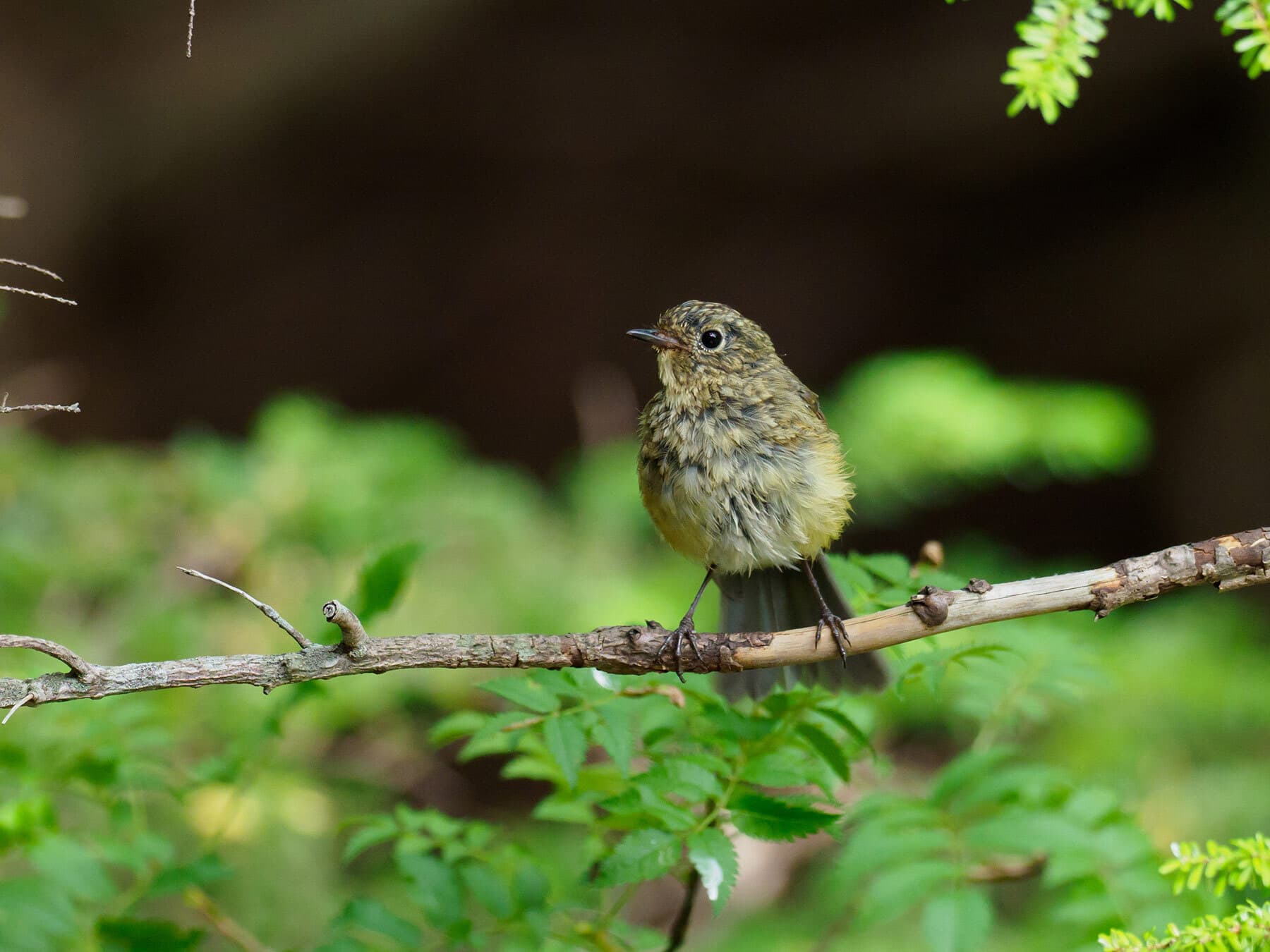
The adult male is a gloss dark blue across the upperparts with areas at the base of the tail, rump, shoulders and side of the crown, a brighter steel blue. The supercilium, which is an area of feathers extending from the base of the bill rearwards over the eye, towards the ear covert, is white, as is the chin, throat, belly and vent. The upper chest area is an off white tinged buff. Flanks are a pale orange in colour and under wings are a greyish brown. Upper wings are blue with darker shading to the primary and secondary flight feathers. The bill, legs and feet are a dark grey to black. Adult females are an olive brown colour to the upperparts with a blue tail and rump. The face and upper breast area are a light brown and the flanks a pale orange, similar to the male. Lacking the male’s prominent supercilium the female has a faint white eye ring. The throat, lower breast, belly and vent are an off white. Juvenile birds are similar to the adult female although generally the brown upper parts have a spotted buff patternation.
More photos
2 photos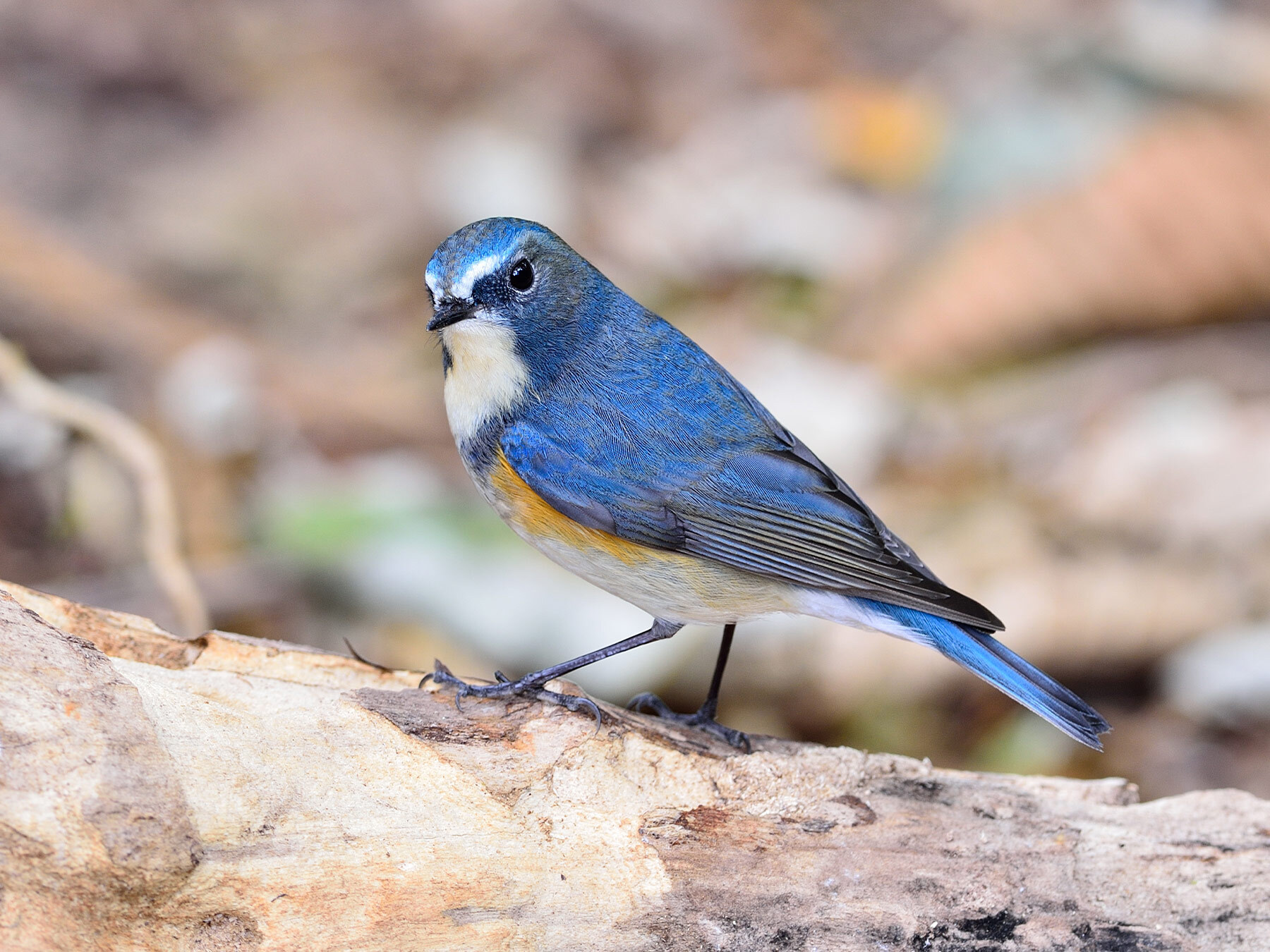
Quick facts
- Length
- 13–14 cm
- Wingspan
- 20–23 cm
- Weight
- 10–18 g
- Lifespan
- 3–5 years
- Family
- Old World Flycatchers
- Migration
- Long-distance Migrant
- Global status (IUCN)
- Least Concern
- World population
- 40,300 - 113,000 mature individuals (European)
- Population trend
- Stable
- Also called
- Orange-flanked Bush-robin
- Scientific name
- Tarsiger cyanurus
Sources
3- 1BirdLife International. 2016. Tarsiger cyanurus. The IUCN Red List of Threatened Species 2016: e.T105294257A87892860. Source (opens in a new tab)
- 2BirdLife International. 2016. Tarsiger cyanurus. The IUCN Red List of Threatened Species 2016: e.T105294257A87892860. Source (opens in a new tab)
- 3BirdLife International. 2016. Tarsiger cyanurus. The IUCN Red List of Threatened Species 2016: e.T105294257A87892860. Source (opens in a new tab)

Checked by
Nathan Cope, founder and editor
Nathan founded Birdfact and leads its writers and contributors in the UK, the US and Canada. He has watched and studied birds for more than ten years, and checks every article and species guide before it’s published.