


Red-browed Finch
Red-browed Firetail · Neochmia temporalis
By the Birdfact teamChecked by Nathan Cope
On this page11 sections
How to recognise it
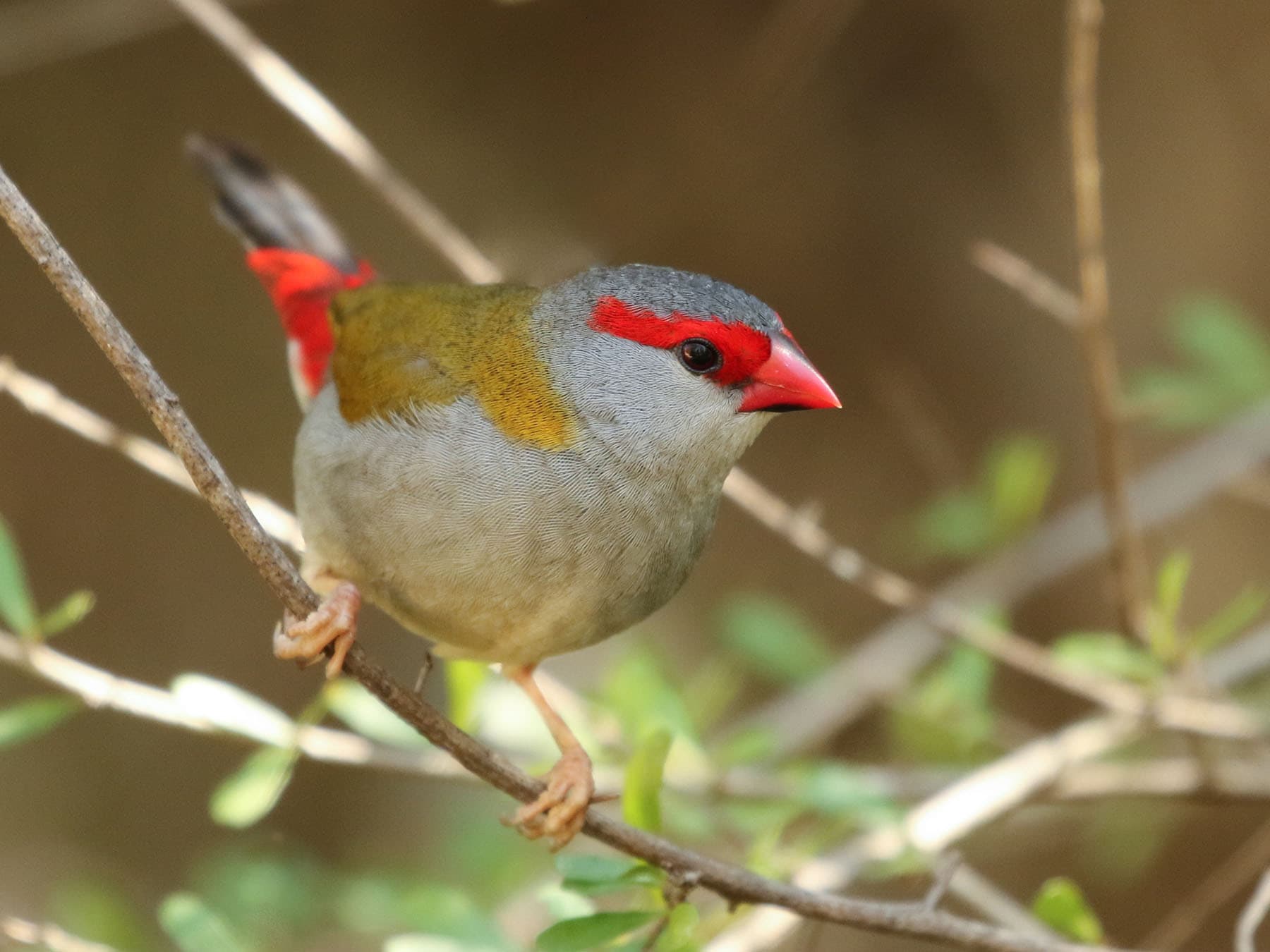
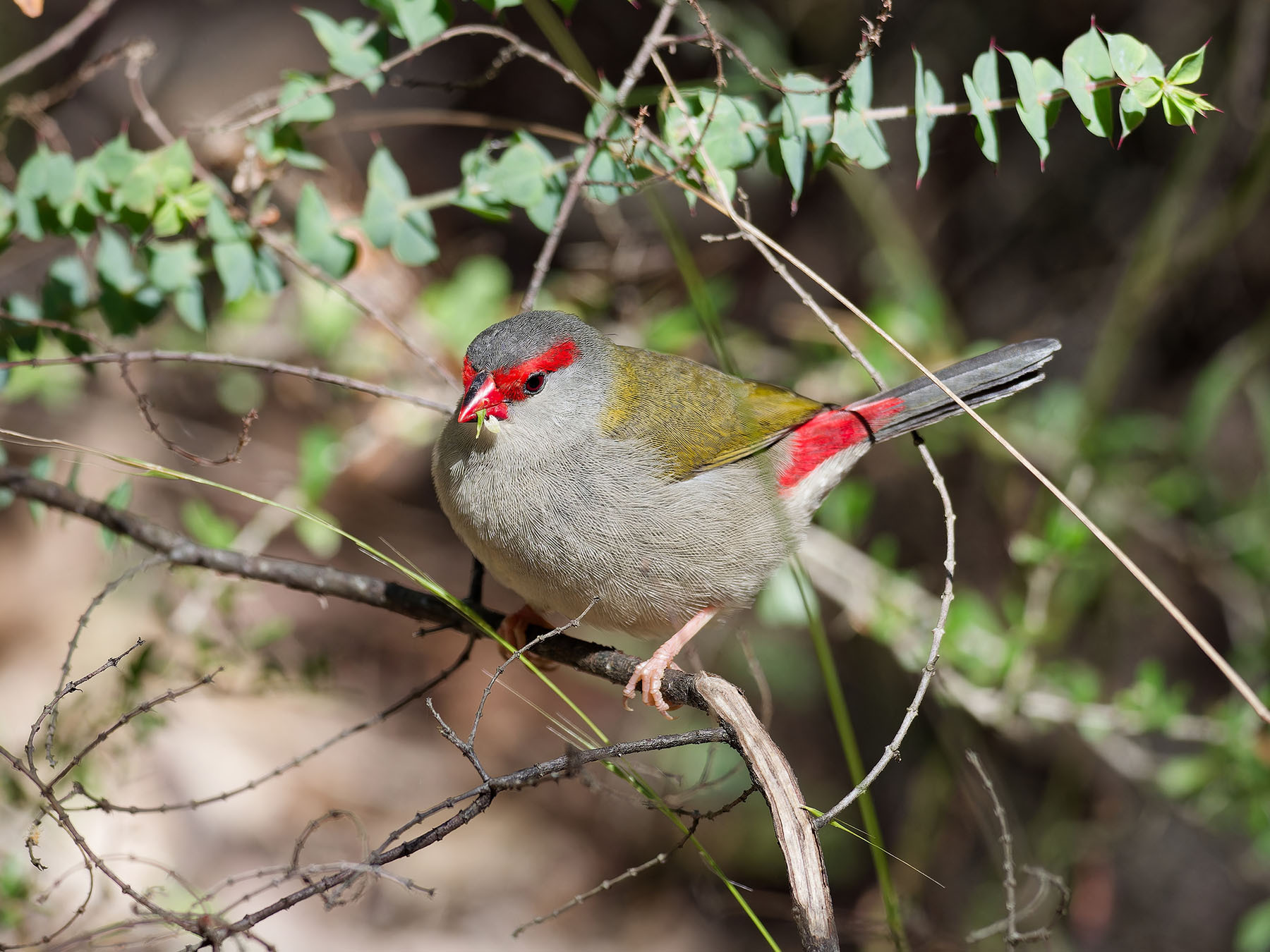
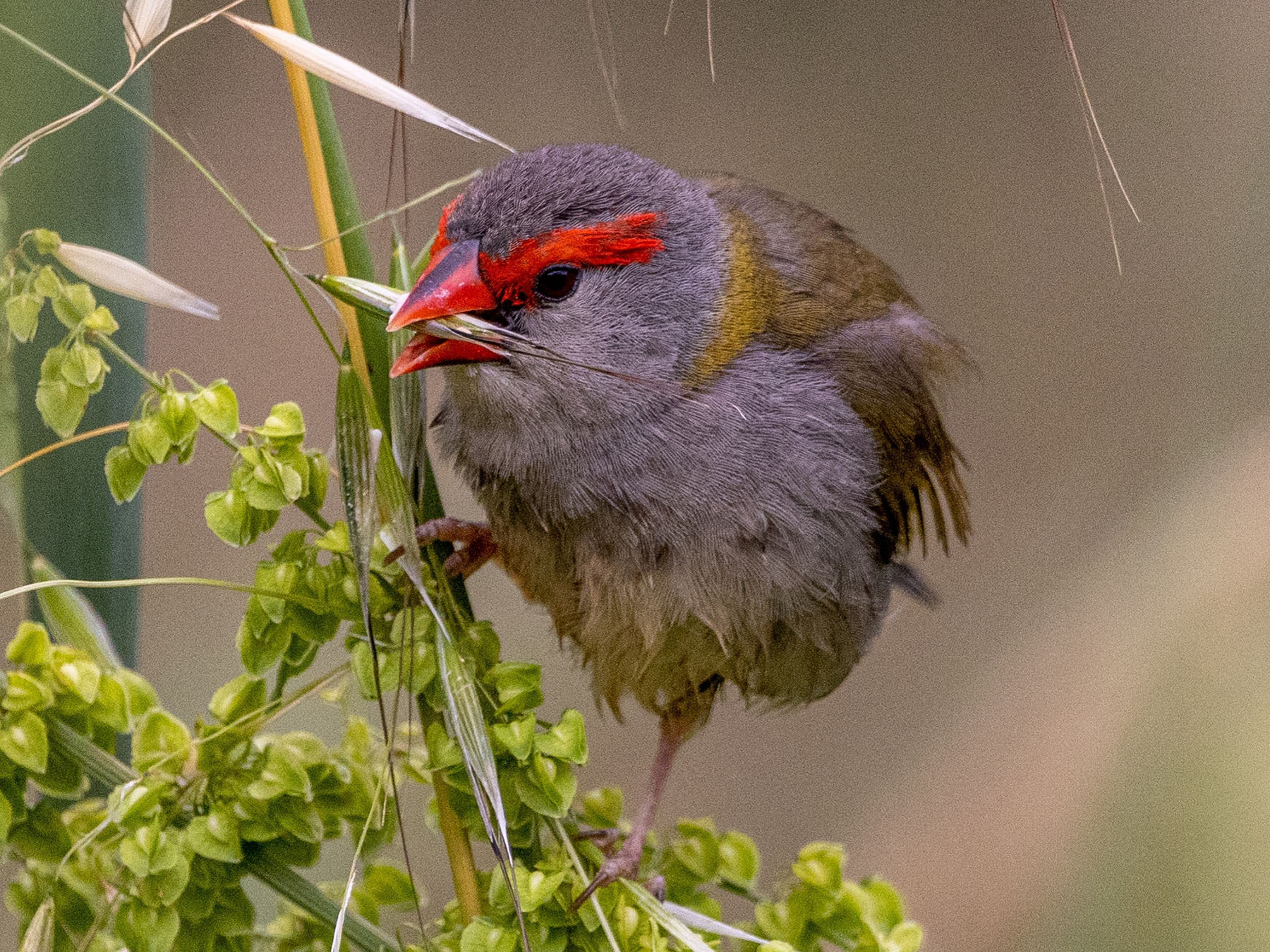
The Red-browed Finch is a small, sleek bird with distinctive olive-green upperparts and pale grey underparts. Its most striking feature is the bright red eyebrow stripe, which contrasts sharply with its grey face and throat.
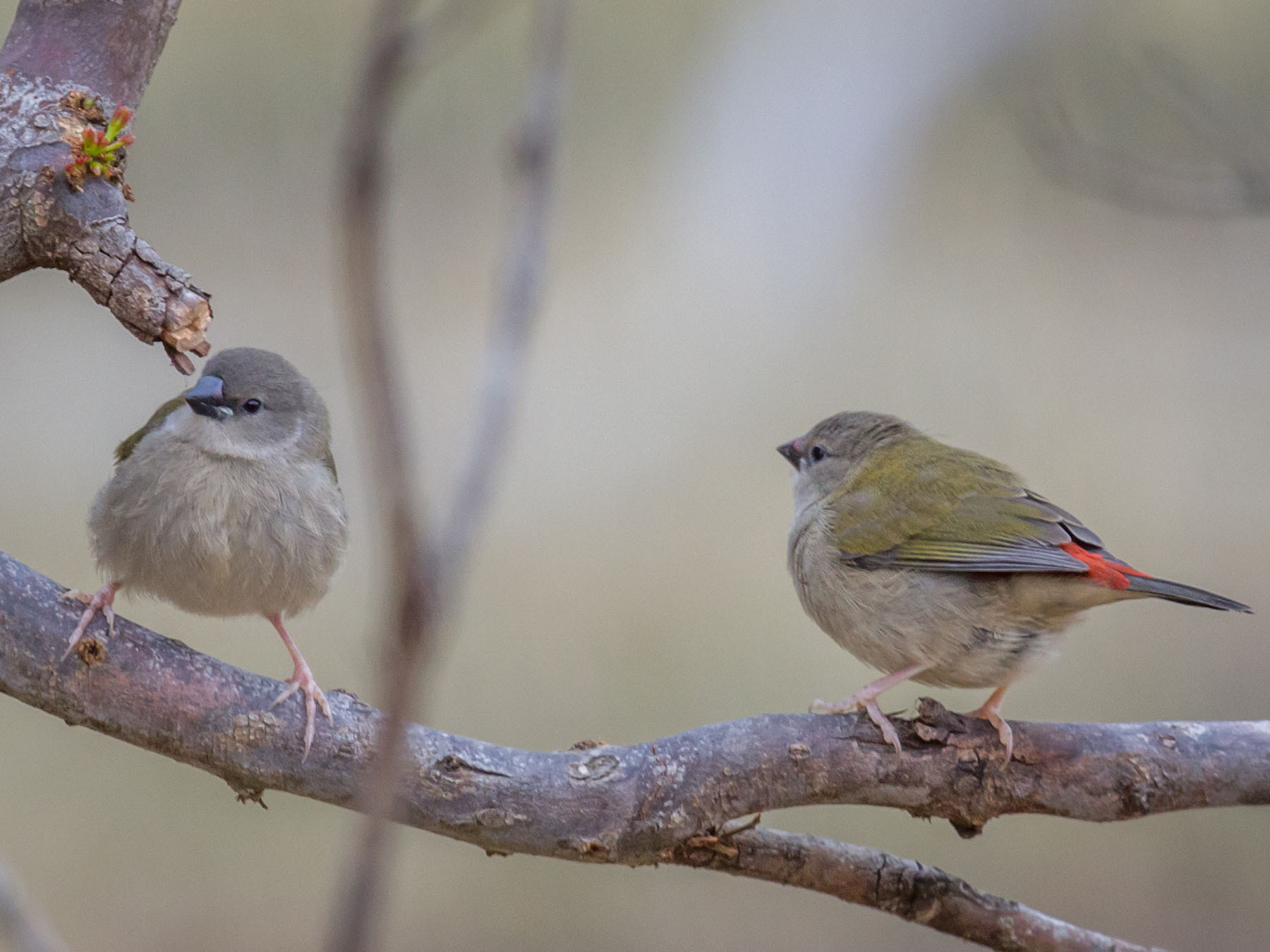
Both sexes look similar, with juveniles showing duller plumage and a black beak that turns red as they mature. The tail is long and pointed, often appearing darker than the body.
Its size
Adults- Length
- 11–12 cm
- Wingspan
- 15–18 cm
- Weight
- 9–14 g
Its song and calls
Red-browed Finches have a variety of soft, high-pitched calls. Their most common vocalisation is a sharp, metallic 'seeep' used as a contact call within flocks.
During courtship, males produce a quiet, warbling song that sounds like 'swee-swee-swee-swit-swit', often accompanied by a grass stem in their beak.
When and where to see it
The Red-browed Finch is not recorded regularly in the UK, Ireland, the United States or Canada.
Worldwide: recorded regularly in 2 countries
Countries where it was recorded in at least 3 of the 6 years 2019–2024. Linked countries have their own bird list.
Oceania (2)
- Australia
- French Polynesia
Data: EOD – eBird Observation Dataset (Cornell Lab of Ornithology), accessed via GBIF.org, CC BY 4.0. Records from 2019–2024, aggregated and filtered by Birdfact. How these lists are made
Tips for seeing it
- Look for small flocks in grassy areas near water sources
- Listen for their distinctive 'seeep' contact calls
- Observe their quick, bouncing movements through low vegetation
- In Australia, check parks and gardens with native plantings
What it eats
Red-browed Finches primarily feed on grass seeds, which they gather both on the ground and directly from seed heads. They supplement their diet with small insects, especially during breeding season.
These finches are often seen foraging in mixed flocks with other small seed-eating birds.
Nesting and breeding
Breeding occurs mainly from October to April, with pairs forming strong, monogamous bonds. Males court females with soft songs and short display flights, often carrying grass stems in their beaks.
Nests are large, domed structures made of grass and lined with feathers, typically placed in dense shrubs or low trees. Females lay 4-6 white eggs per clutch.
Both parents share incubation duties for about 12 days. Chicks fledge after 21-25 days but continue to be fed by parents for several weeks after leaving the nest.
Behaviour
Red-browed Finches are highly social, often seen in small flocks of 10-20 birds. They hop and flit through grass and low shrubs while foraging, maintaining contact with soft, high-pitched calls.
During the breeding season, pairs become more territorial, with males performing short, fluttering display flights to attract mates.
Conservation
While the Red-browed Finch is currently listed as Least Concern, it faces localised threats from habitat loss due to urban development and agricultural expansion.
Conservation efforts focus on preserving native grasslands and woodland edges, which are crucial for their survival.
More photos
4 photos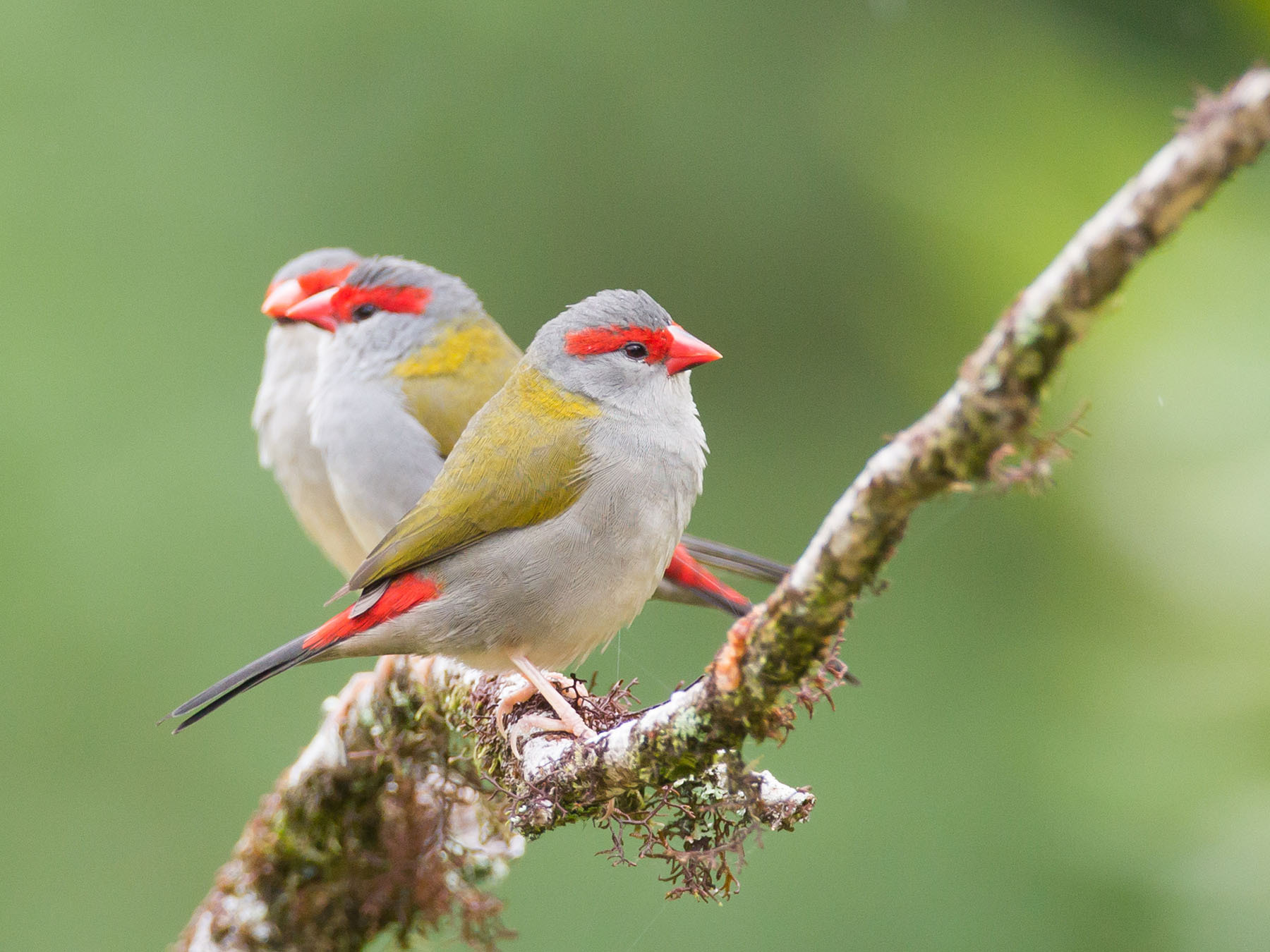
Quick facts
- Length
- 11–12 cm
- Wingspan
- 15–18 cm
- Weight
- 9–14 g
- Lifespan
- 5–7 years · oldest recorded 23.4 years
- Family
- Waxbills & Finches
- Migration
- Resident
- Global status (IUCN)
- Least Concern
- World population
- Not quantified, but common across range
- Population trend
- Population is considered stable across its range
- Also called
- Red-browed Firetail
- Scientific name
- Neochmia temporalis
Sources
3- 1ABBBS - Australian Bird and Bat Banding Scheme Source (opens in a new tab)
- 2BirdLife International. 2018. Neochmia temporalis. The IUCN Red List of Threatened Species 2018: e.T22719666A132130886. Source (opens in a new tab)
- 3BirdLife International. 2018. Neochmia temporalis. The IUCN Red List of Threatened Species 2018: e.T22719666A132130886. Source (opens in a new tab)

Checked by
Nathan Cope, founder and editor
Nathan founded Birdfact and leads its writers and contributors in the UK, the US and Canada. He has watched and studied birds for more than ten years, and checks every article and species guide before it’s published.