


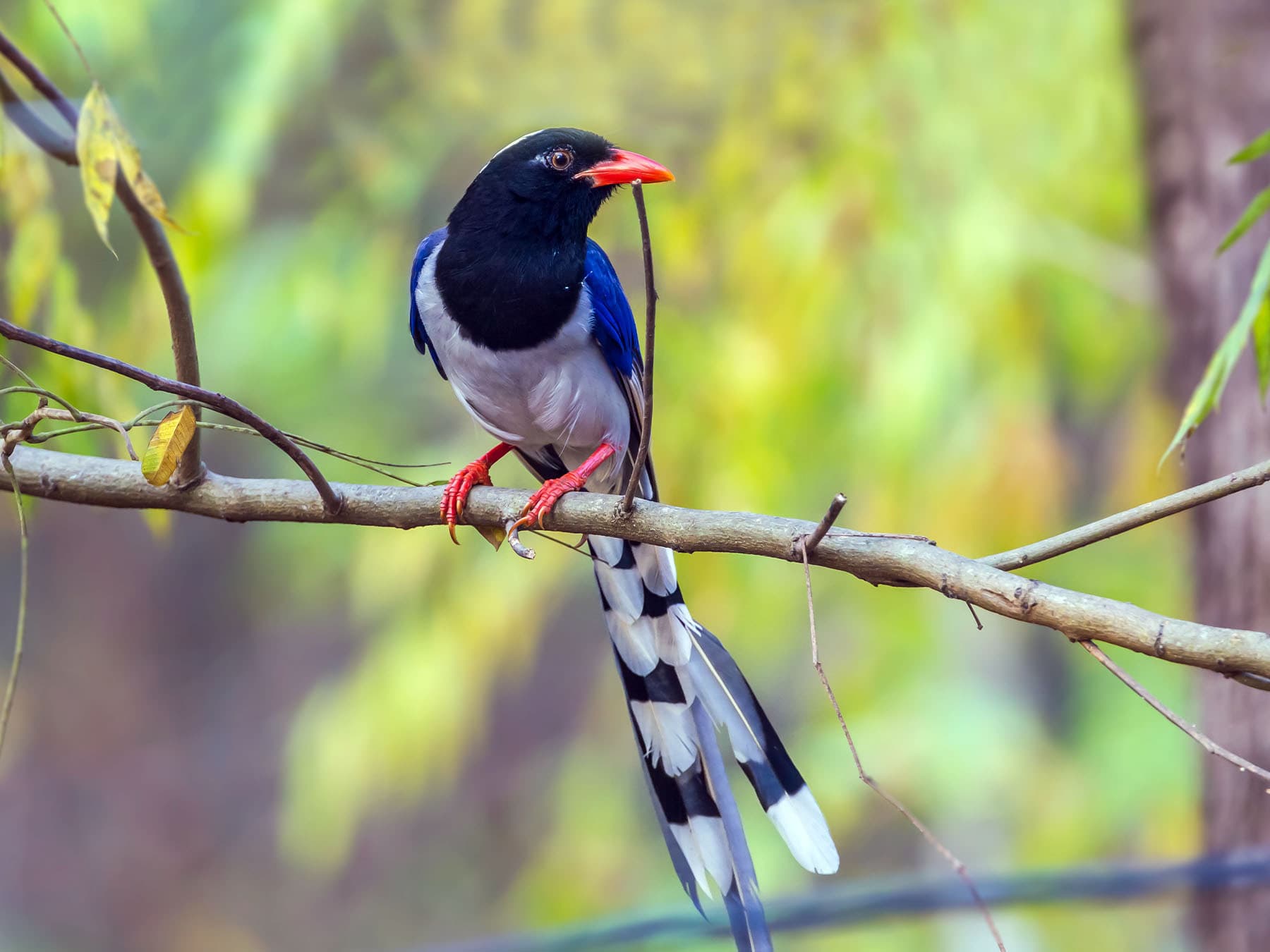
Red-billed Blue Magpie
Occipital Blue Pie, Red-billed Magpie, Red-billed Blue-Magpie · Urocissa erythroryncha
By the Birdfact teamChecked by Nathan Cope
On this page11 sections
How to recognise it
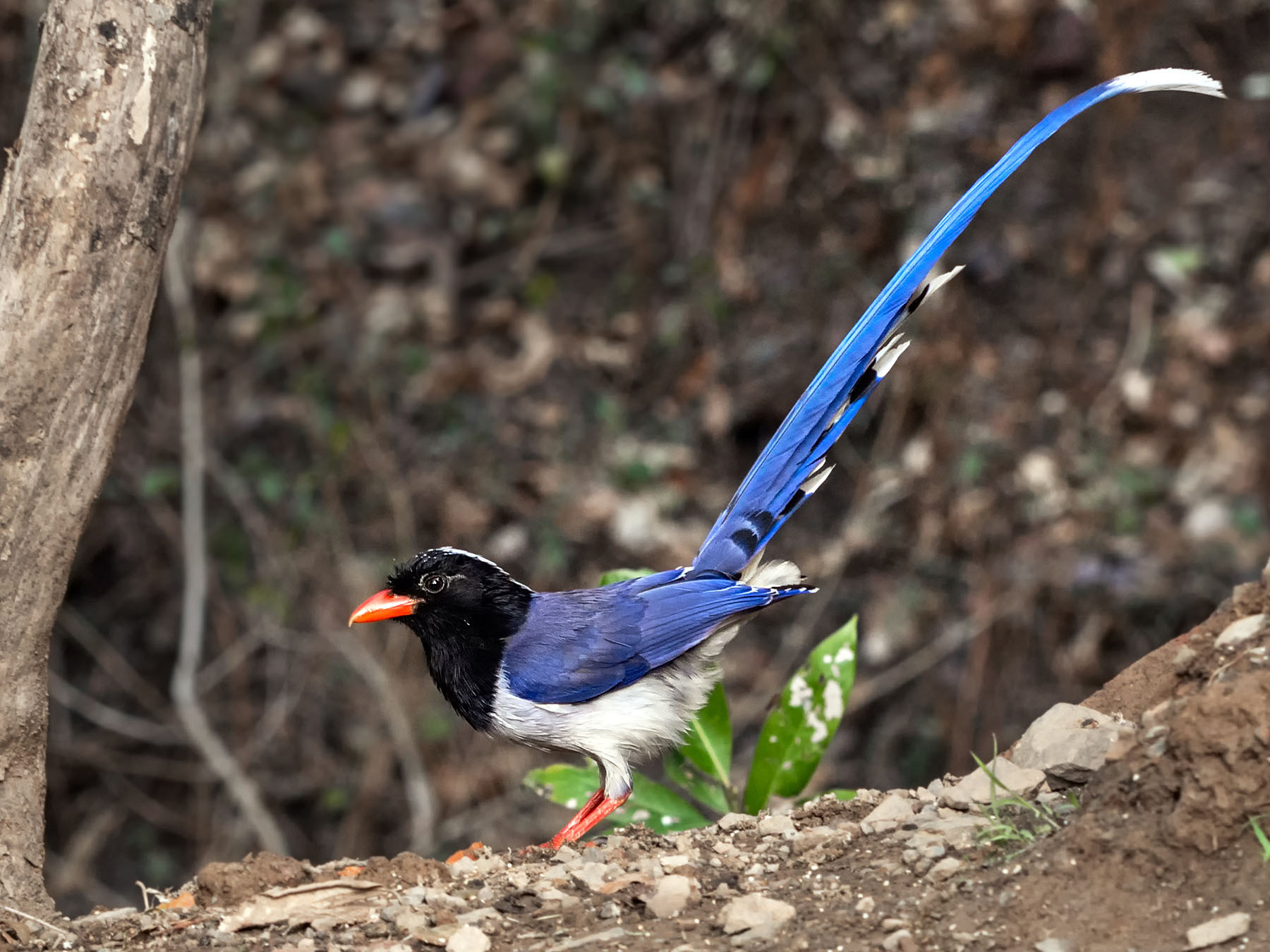
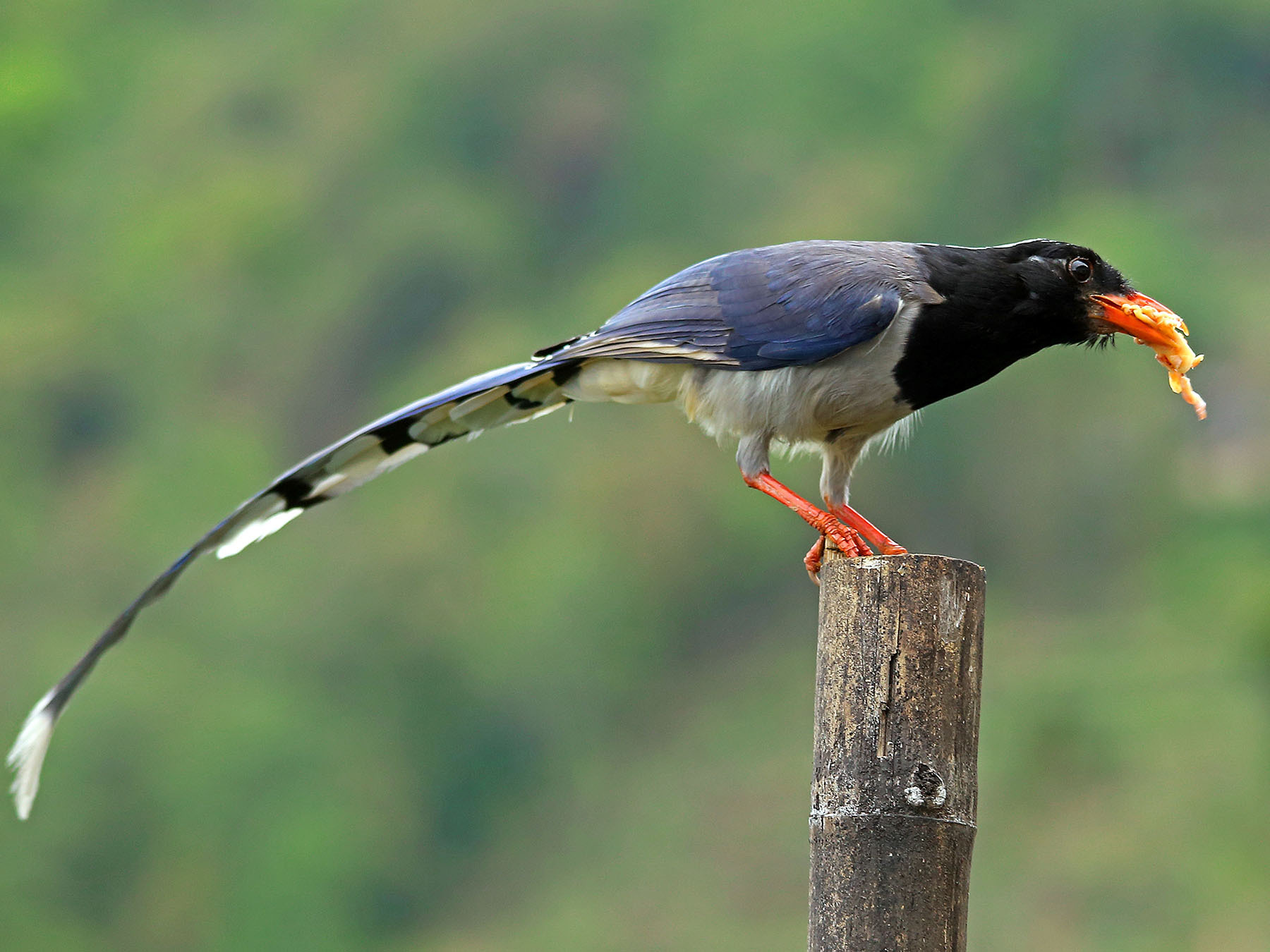
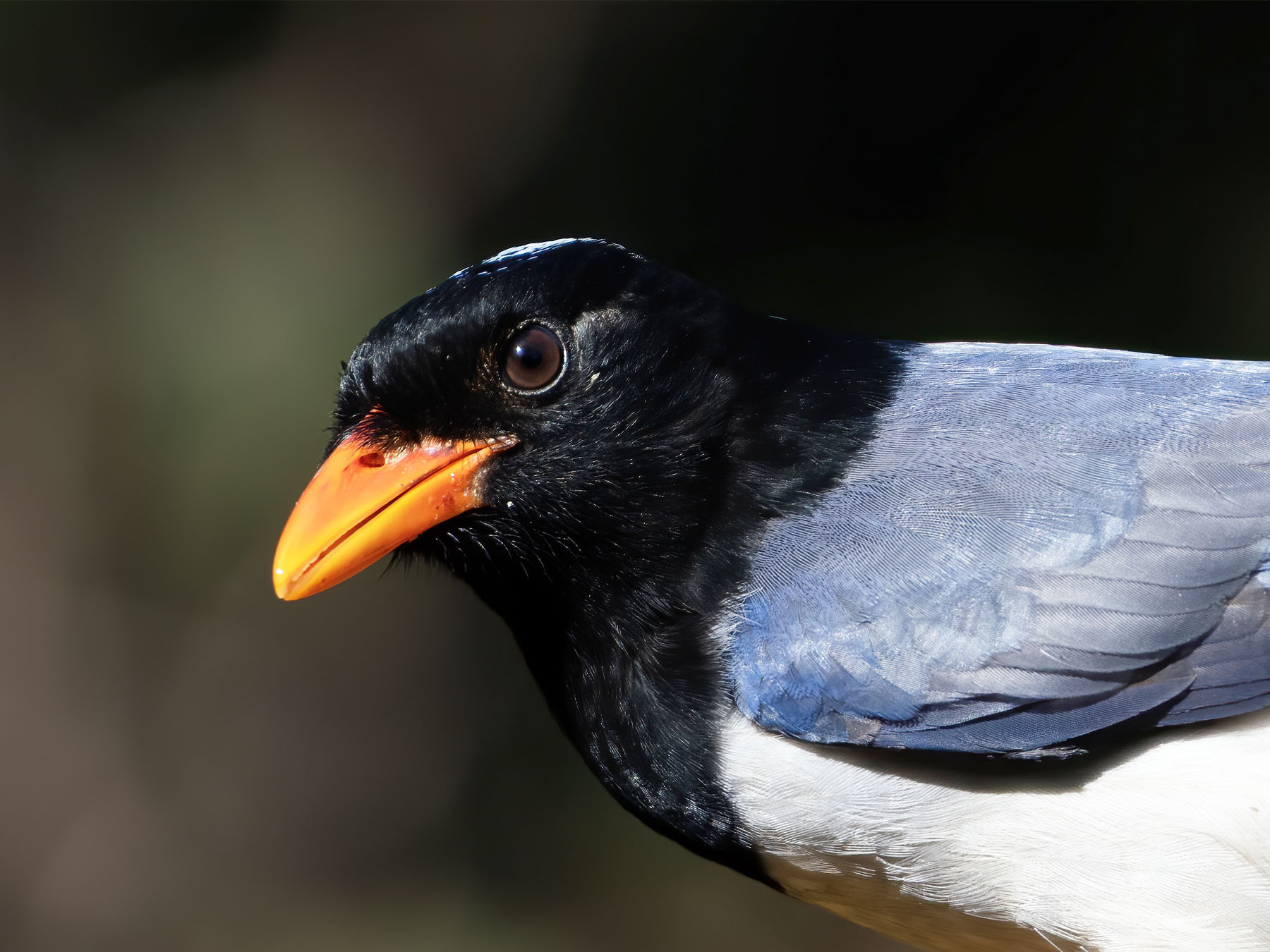
The Red-billed Blue Magpie is a striking bird with vibrant blue plumage, a black head speckled with white, and an exceptionally long, graduated tail marked with white spots. Its bright red bill and legs stand out against its predominantly blue body, while the white tips on its wings and tail create a distinctive pattern.
Both sexes share similar colouration, with no significant differences between males and females. Juveniles have duller plumage with a whitish throat and face, and their bills start greyish before developing the adult's red colouration.
Its size
Adults- Length
- 65–68 cm
- Wingspan
- 90–100 cm
- Weight
- 196–232 g
Its song and calls
Red-billed Blue Magpies are known for their varied vocalisations. Their calls include harsh, grating 'kree-kree' sounds and softer, melodious whistles.
They also produce a series of chattering notes, especially when alarmed or in social interactions with other magpies.
When and where to see it
The Red-billed Blue Magpie is not recorded regularly in the UK, Ireland, the United States or Canada.
United States: recorded in 1 of the 6 years. Too few years to count as a regular visitor.
Worldwide: recorded regularly in 7 countries
Countries where it was recorded in at least 3 of the 6 years 2019–2024. Linked countries have their own bird list.
Data: EOD – eBird Observation Dataset (Cornell Lab of Ornithology), accessed via GBIF.org, CC BY 4.0. Records from 2019–2024, aggregated and filtered by Birdfact. How these lists are made
Tips for seeing it
- Look for their distinctive long, blue tails in forested areas
- Listen for their loud, harsh calls, which can help locate them
- Observe them in small groups, often moving through the canopy
- Visit forest edges and clearings where they may forage on the ground
What it eats
Red-billed Blue Magpies are omnivorous, with a varied diet that includes insects, small reptiles, rodents, and birds' eggs. They also consume fruits and seeds, particularly during the non-breeding season.
These birds often forage on the ground, using their strong bills to probe for food.
Nesting and breeding
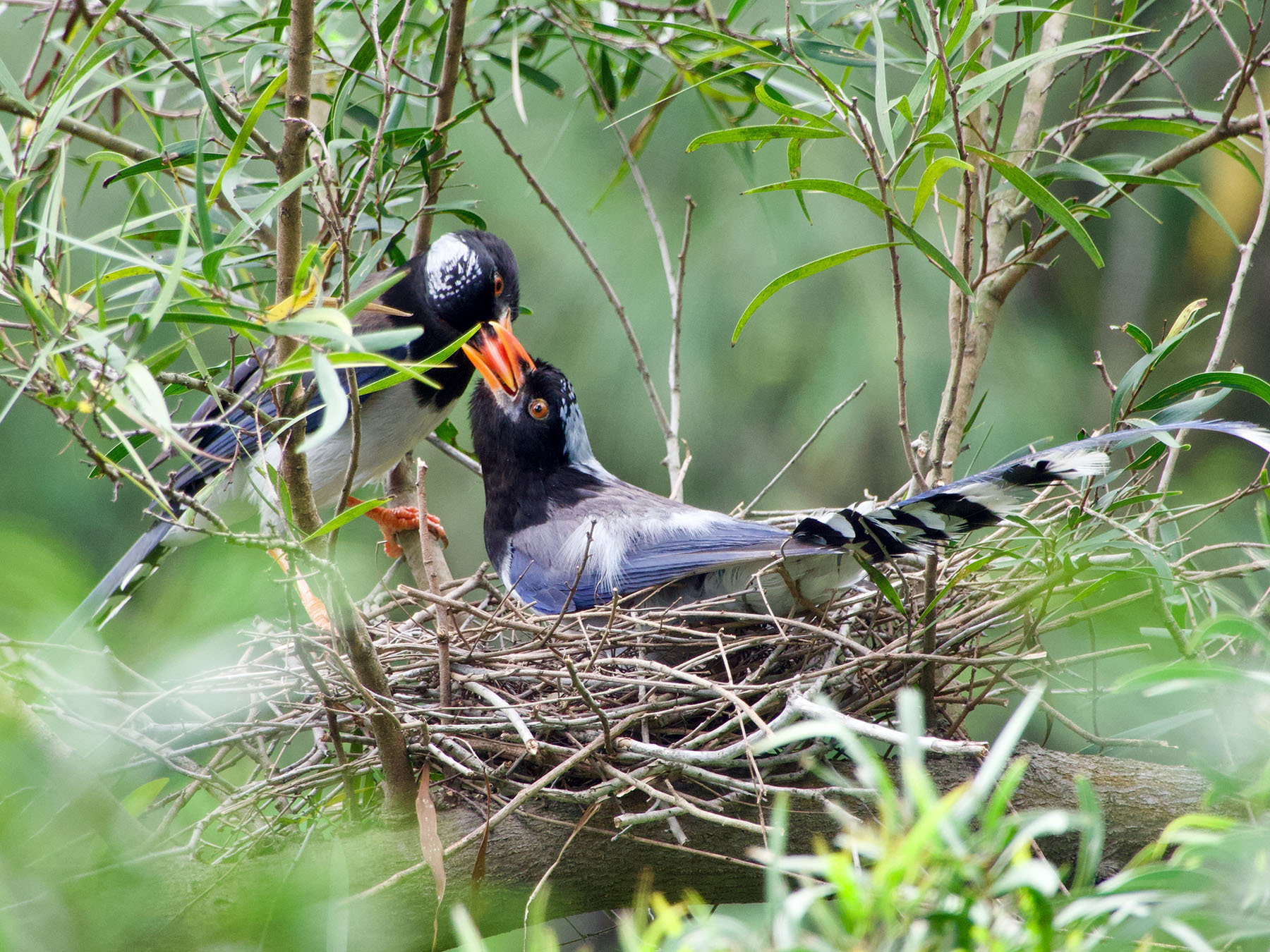
Breeding season for Red-billed Blue Magpies typically occurs from March to July. Pairs form strong bonds and engage in mutual preening and food sharing as part of courtship rituals.
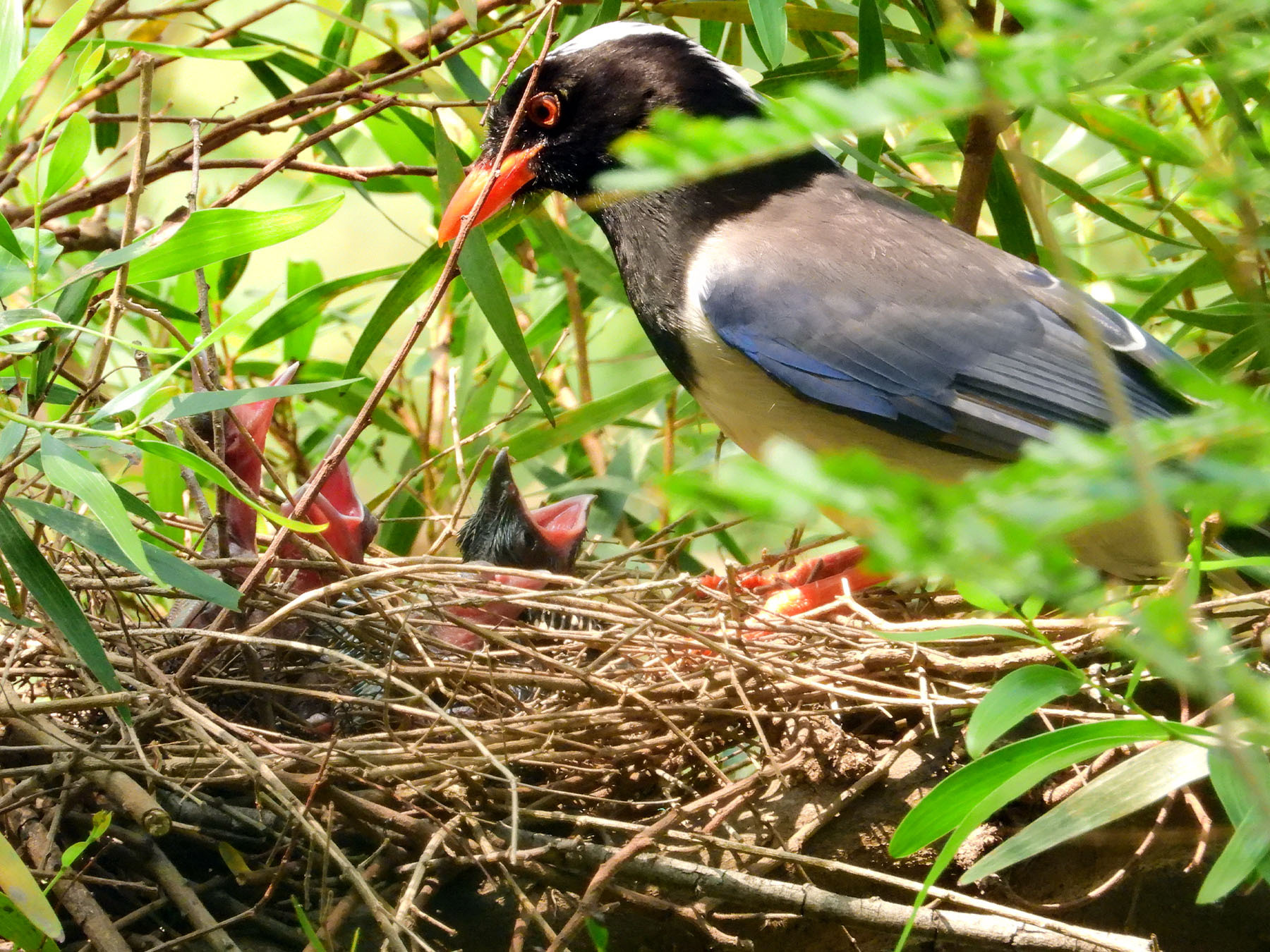
Nests are large, cup-shaped structures made of twigs and lined with softer materials like grass and moss. They are usually placed high in trees, often near the trunk. Females lay 3-5 pale blue or greenish eggs with brown spots.
Both parents participate in incubation, which lasts about 17-19 days. Nestlings are altricial and fledge after approximately 3-4 weeks but remain dependent on parents for several more weeks.
Behaviour
Red-billed Blue Magpies are highly social birds, often seen in small family groups or larger flocks. They are known for their acrobatic movements through trees, using their long tails for balance.
These intelligent birds engage in cooperative breeding, with family members helping to raise young.
Conservation
While the Red-billed Blue Magpie is currently listed as Least Concern, habitat loss due to deforestation poses a potential threat.
Conservation efforts focus on protecting their woodland habitats, particularly in mountainous regions where they are most commonly found.
More photos
6 photos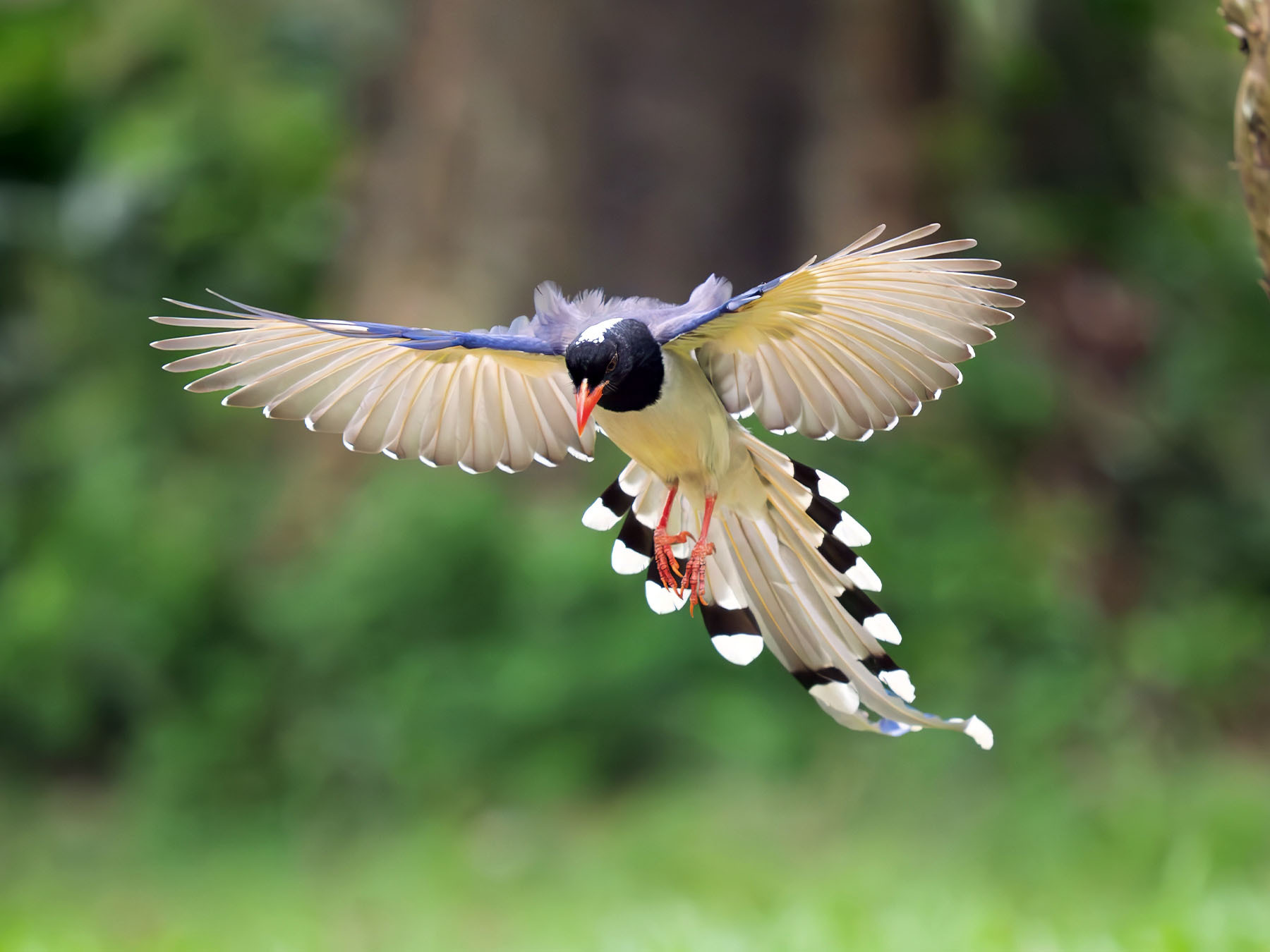
Quick facts
- Length
- 65–68 cm
- Wingspan
- 90–100 cm
- Weight
- 196–232 g
- Lifespan
- 10–15 years
- Family
- Crows & Jays
- Migration
- Resident
- Global status (IUCN)
- Least Concern
- World population
- Not quantified, but common throughout its range
- Population trend
- Stable
- Also called
- Occipital Blue Pie, Red-billed Magpie, Red-billed Blue-Magpie
- Scientific name
- Urocissa erythroryncha
Sources
3- 1BirdLife International. 2018. Urocissa erythroryncha. The IUCN Red List of Threatened Species 2018: e.T22705802A130380978. Source (opens in a new tab)
- 2BirdLife International. 2018. Urocissa erythroryncha. The IUCN Red List of Threatened Species 2018: e.T22705802A130380978. Source (opens in a new tab)
- 3Madge and Burn (1993)

Checked by
Nathan Cope, founder and editor
Nathan founded Birdfact and leads its writers and contributors in the UK, the US and Canada. He has watched and studied birds for more than ten years, and checks every article and species guide before it’s published.