


Common Quail
European Quail, Quail · Coturnix coturnix
By the Birdfact teamChecked by Nathan Cope
On this page14 sections
How to recognise it
The Quail is a small, compact ground bird with cryptic camouflage. Continue reading to learn more about Common Quail appearance.
What do Quails look like?
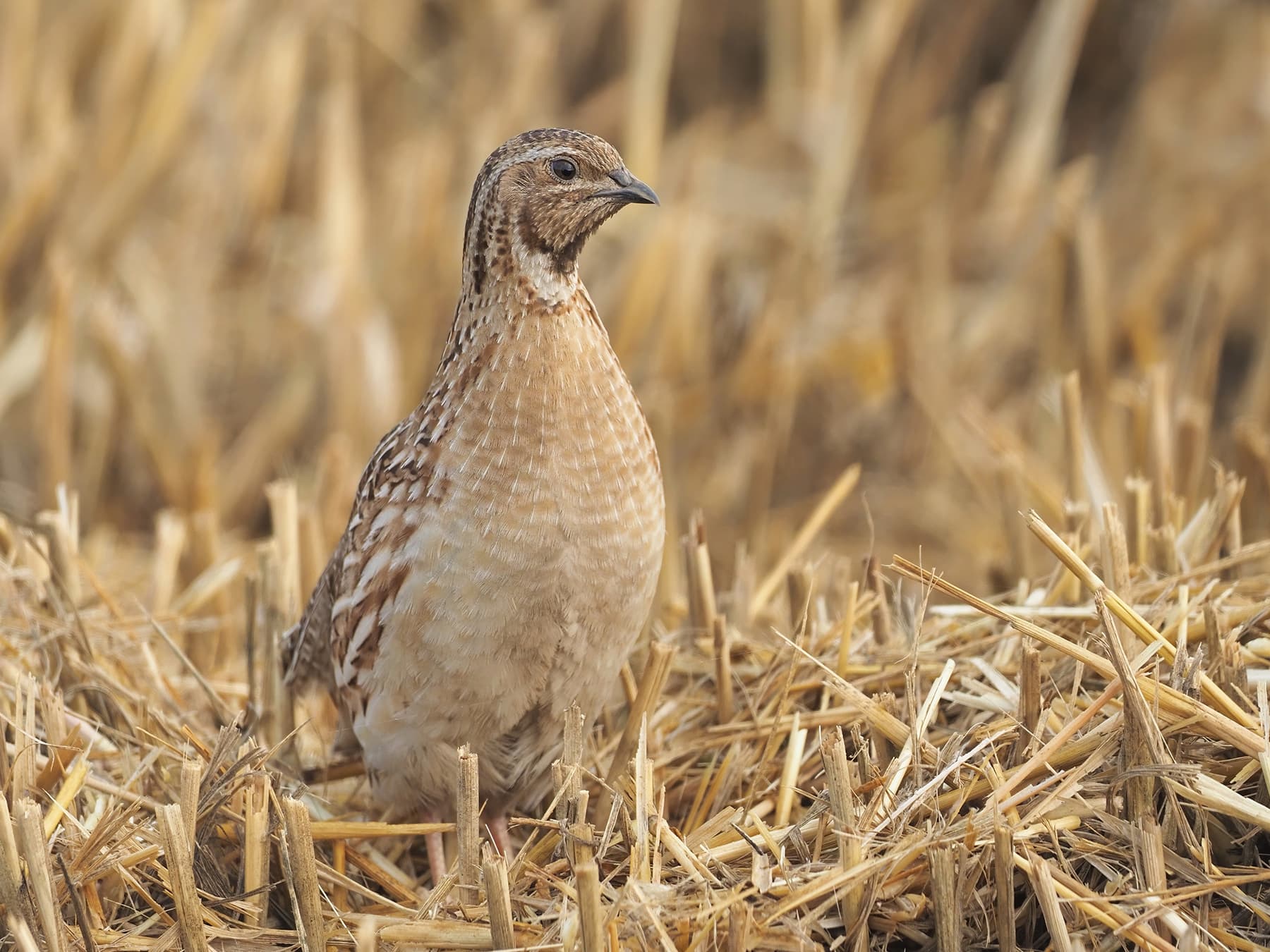
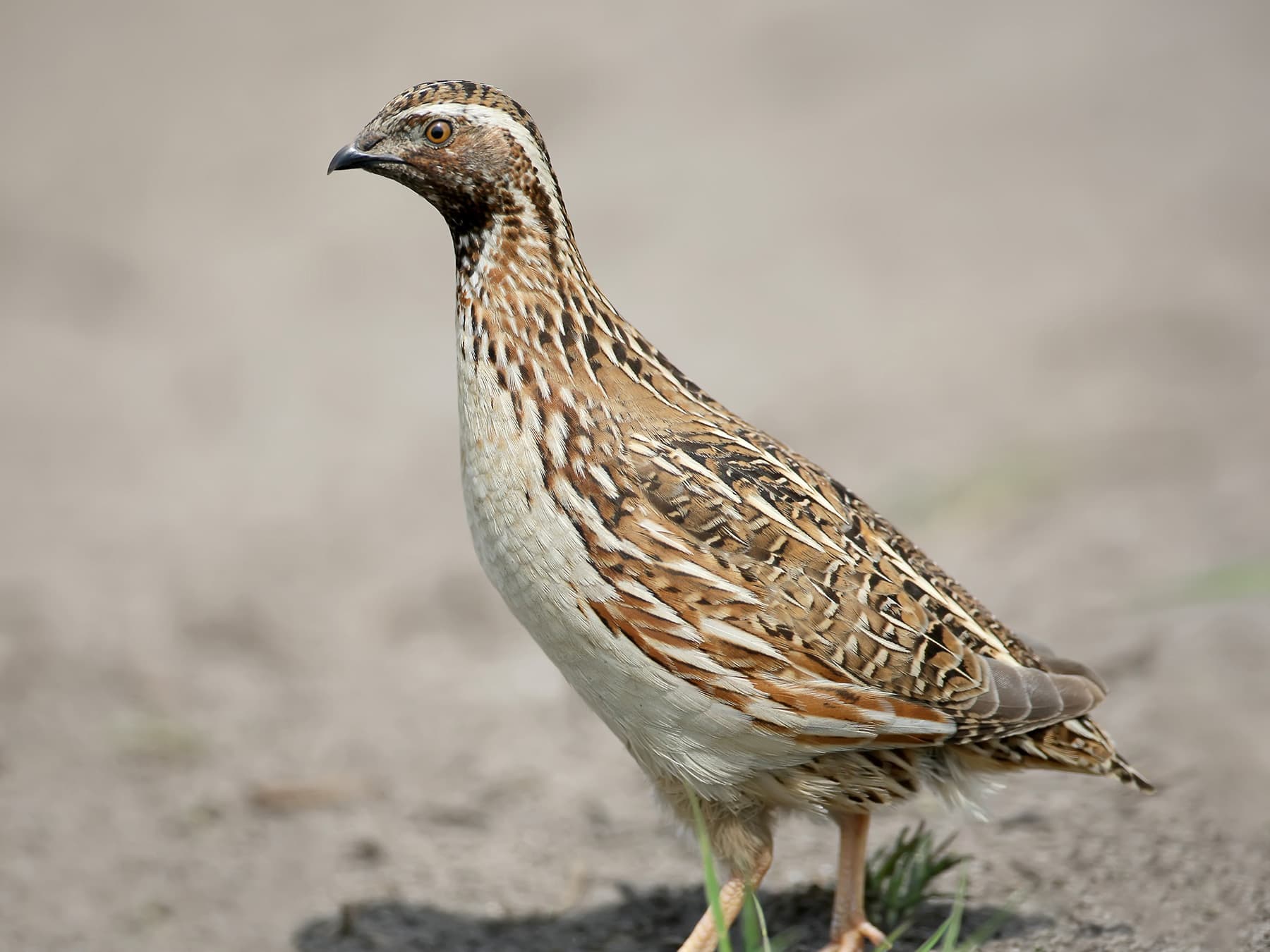
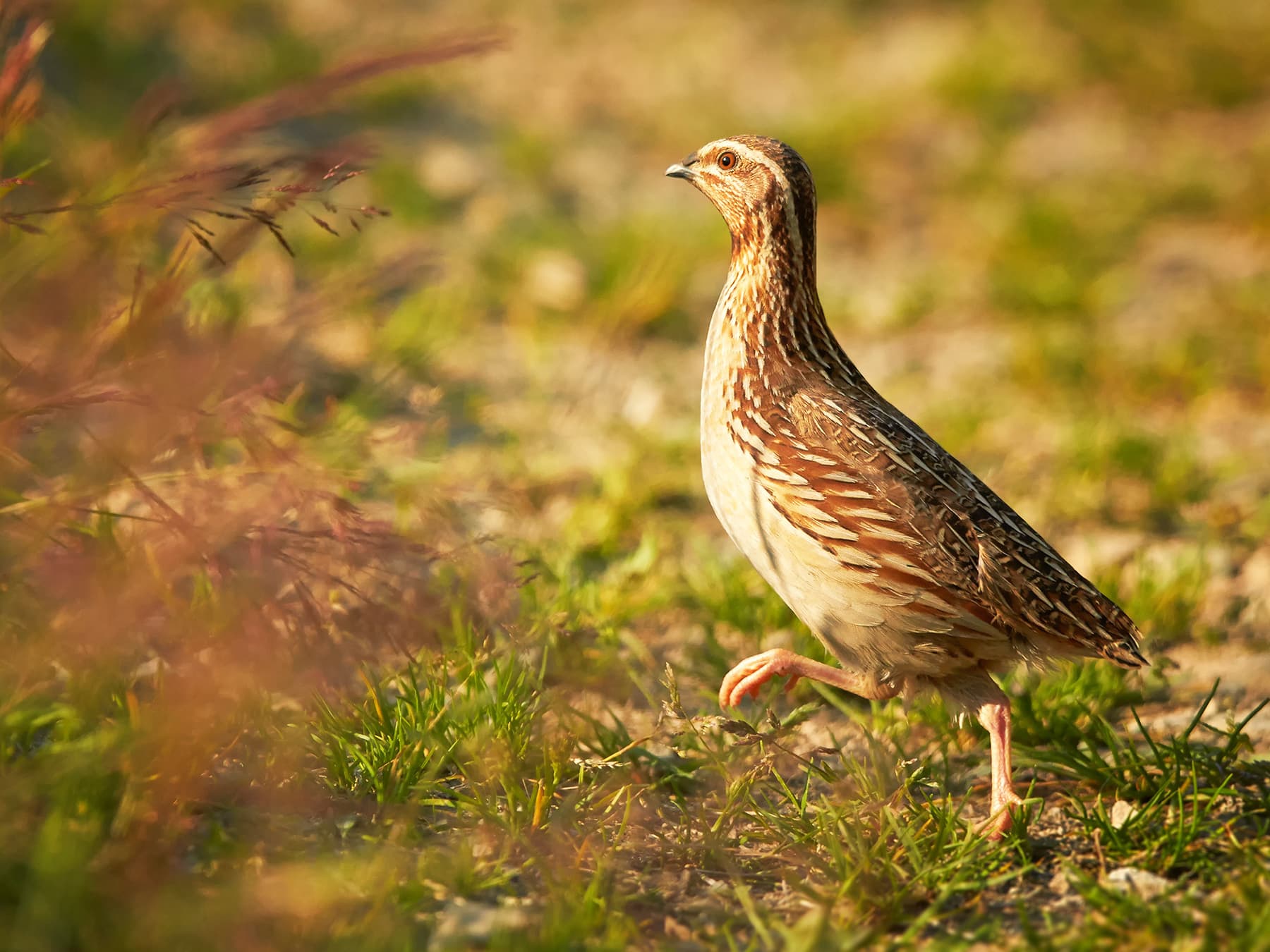
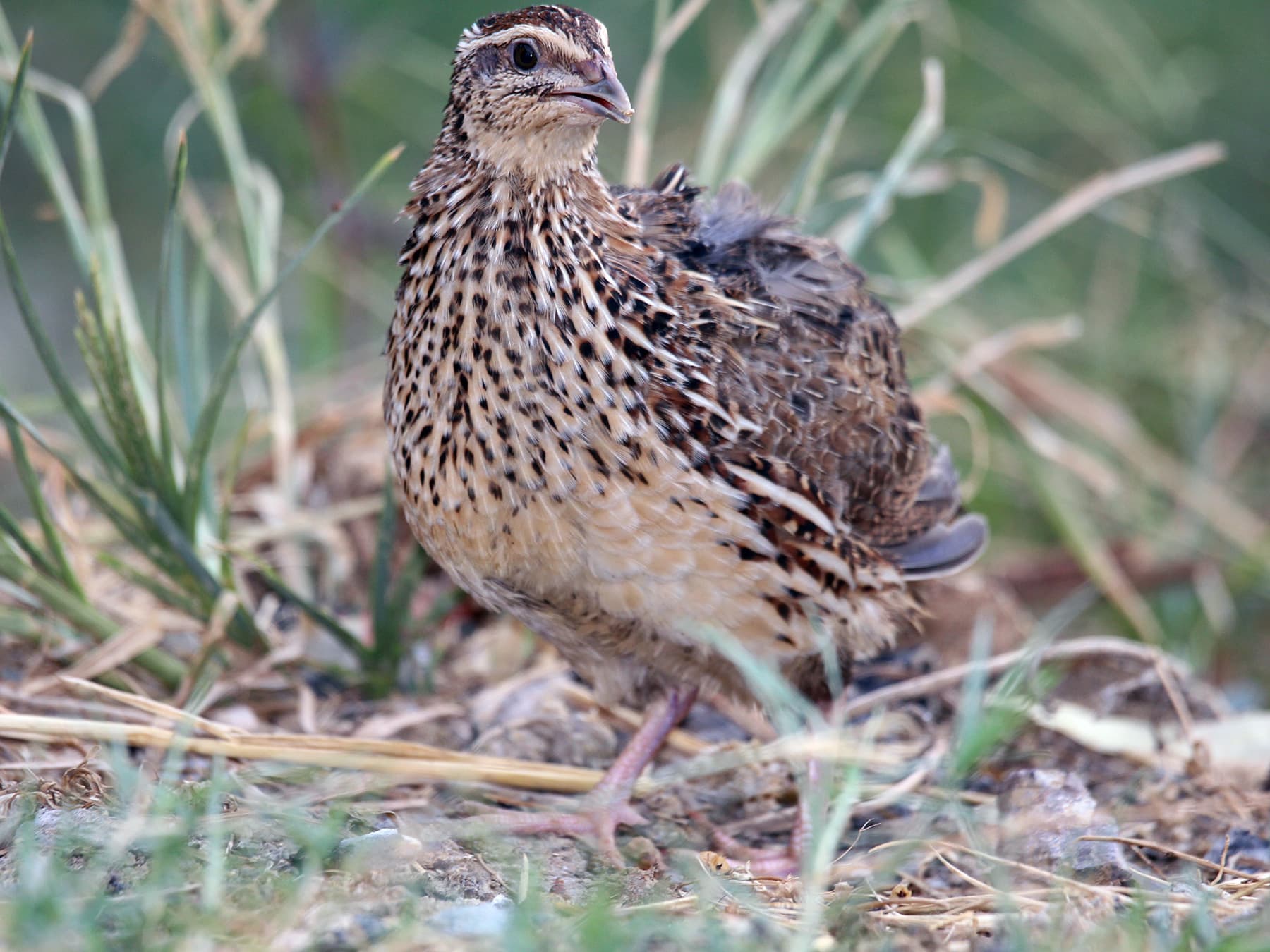
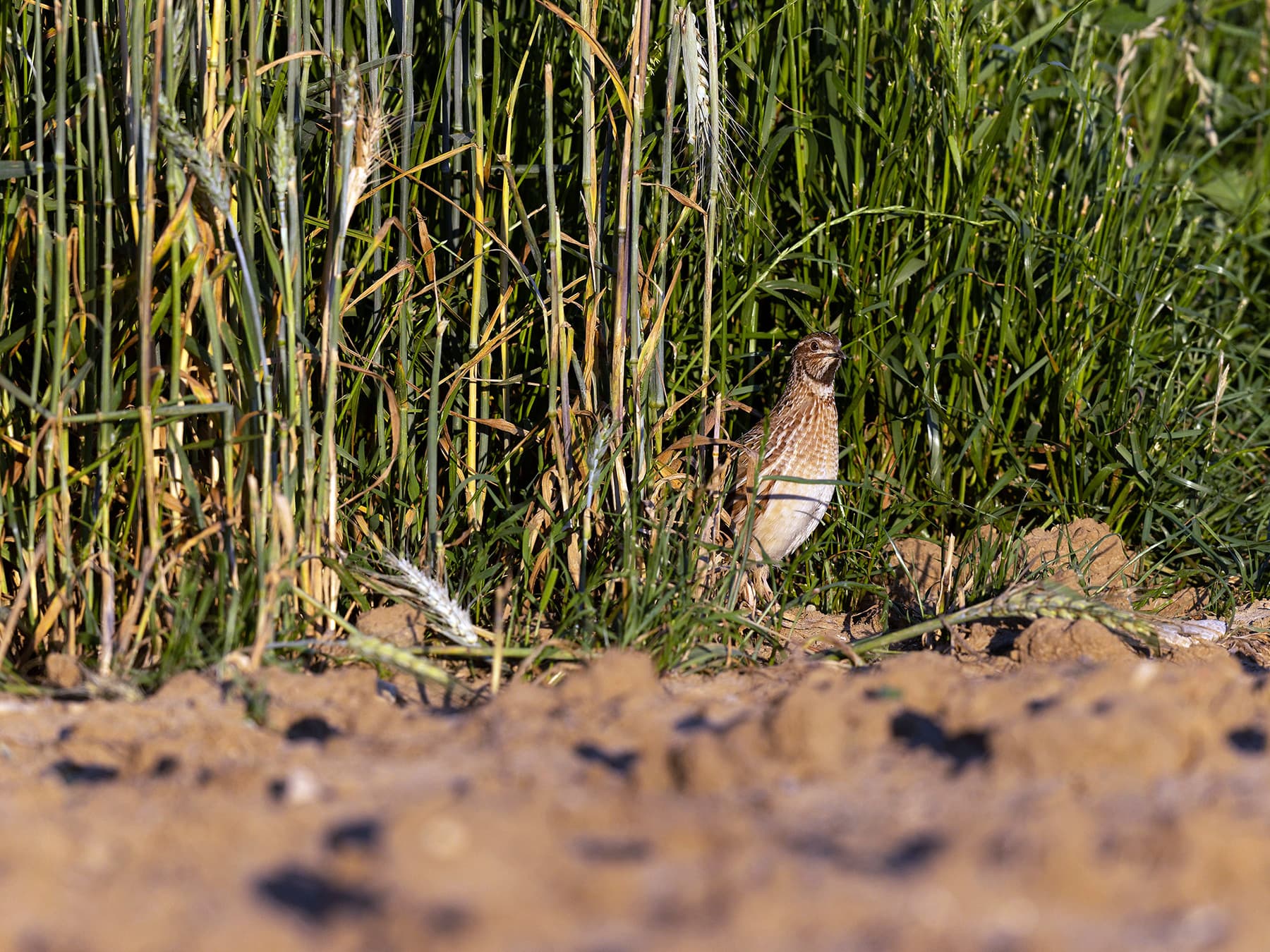
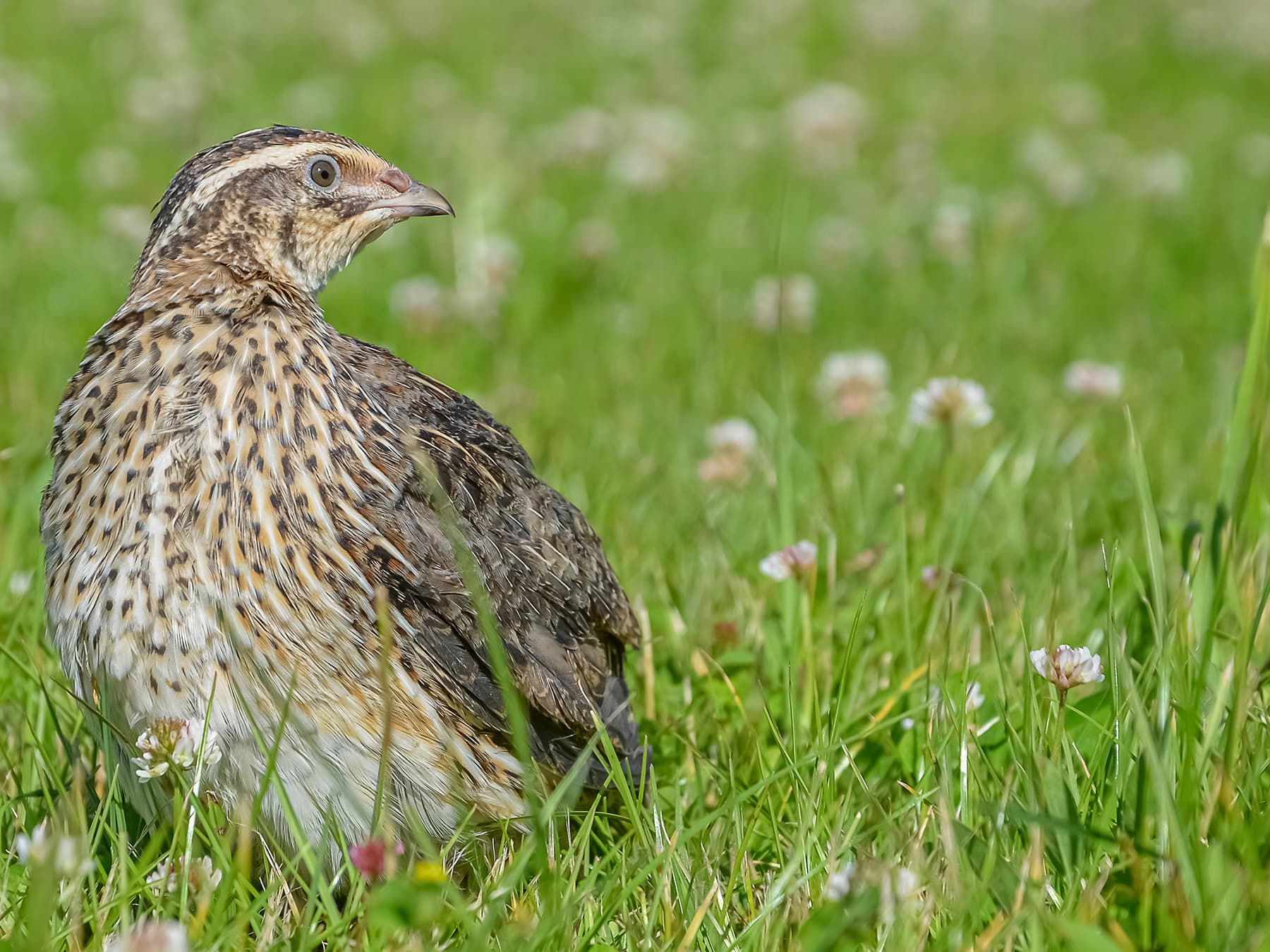
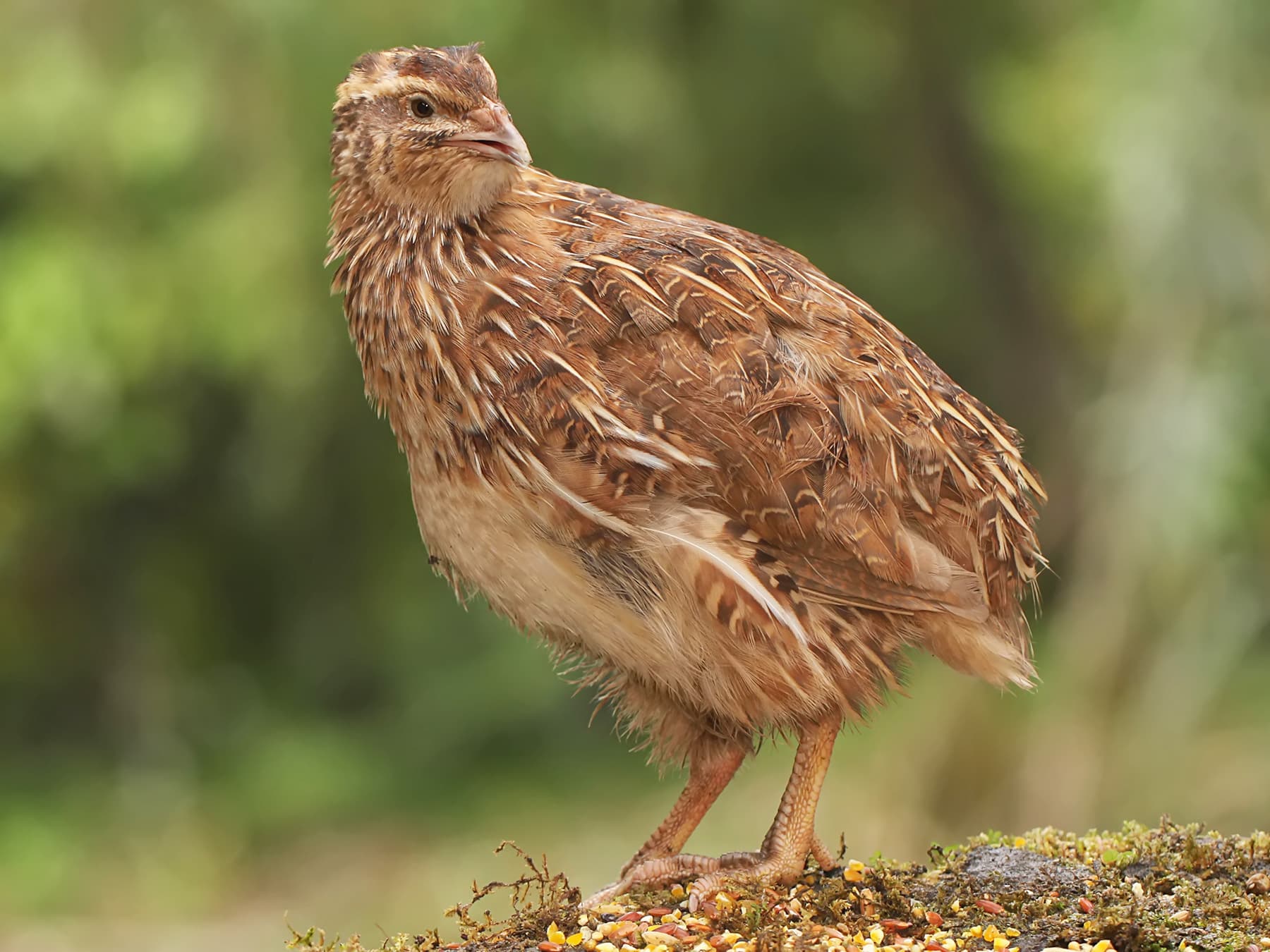
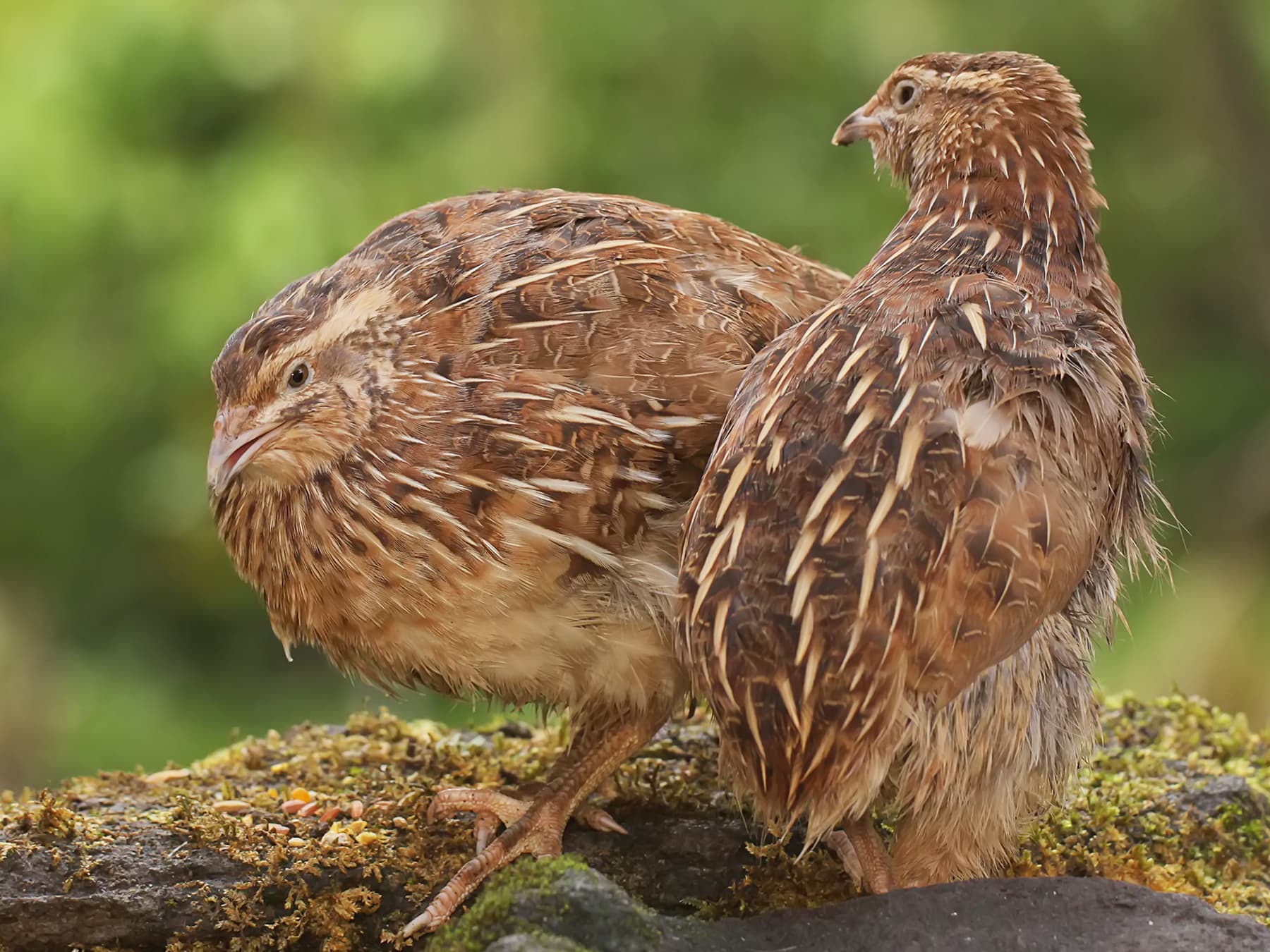
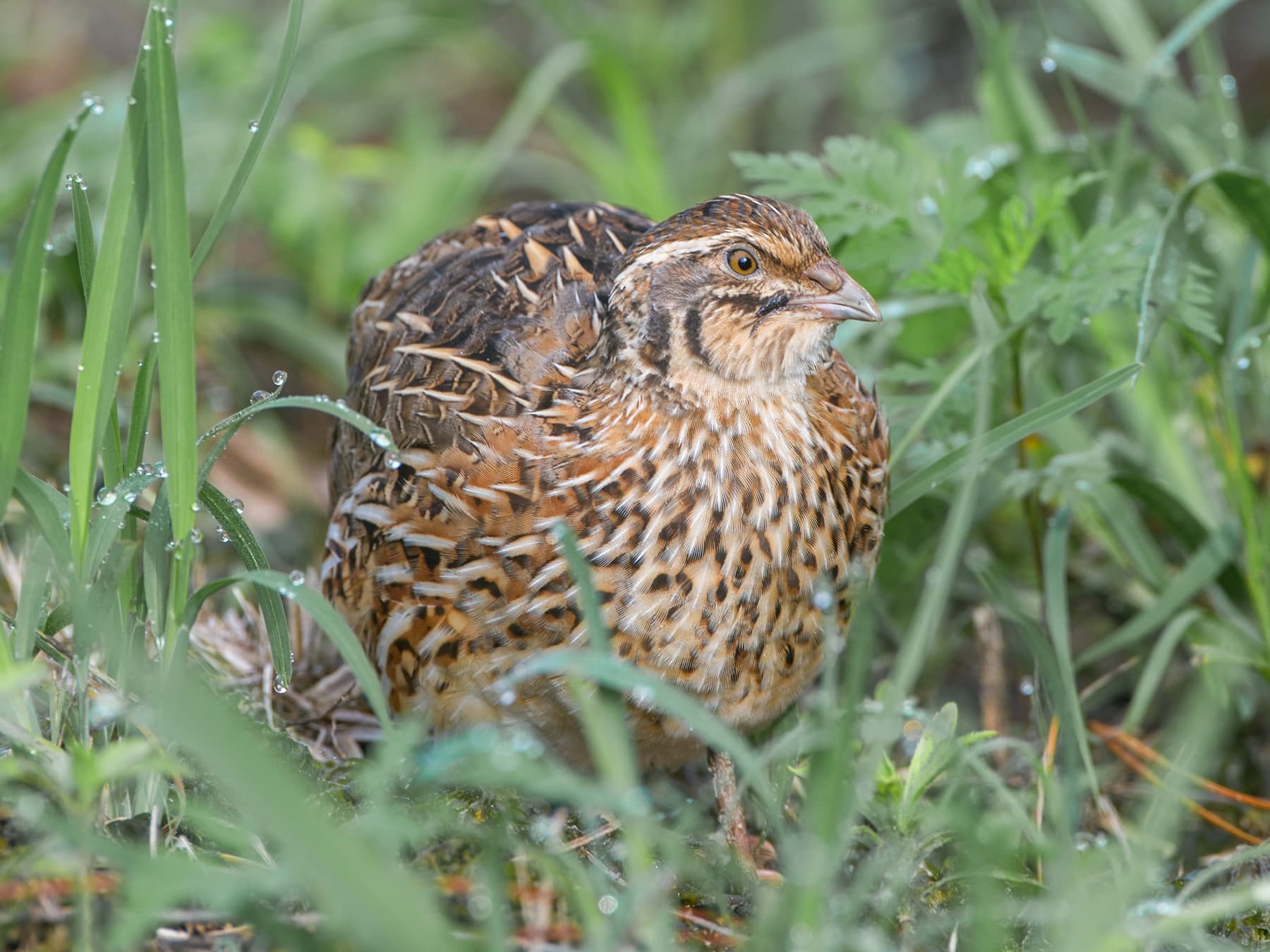
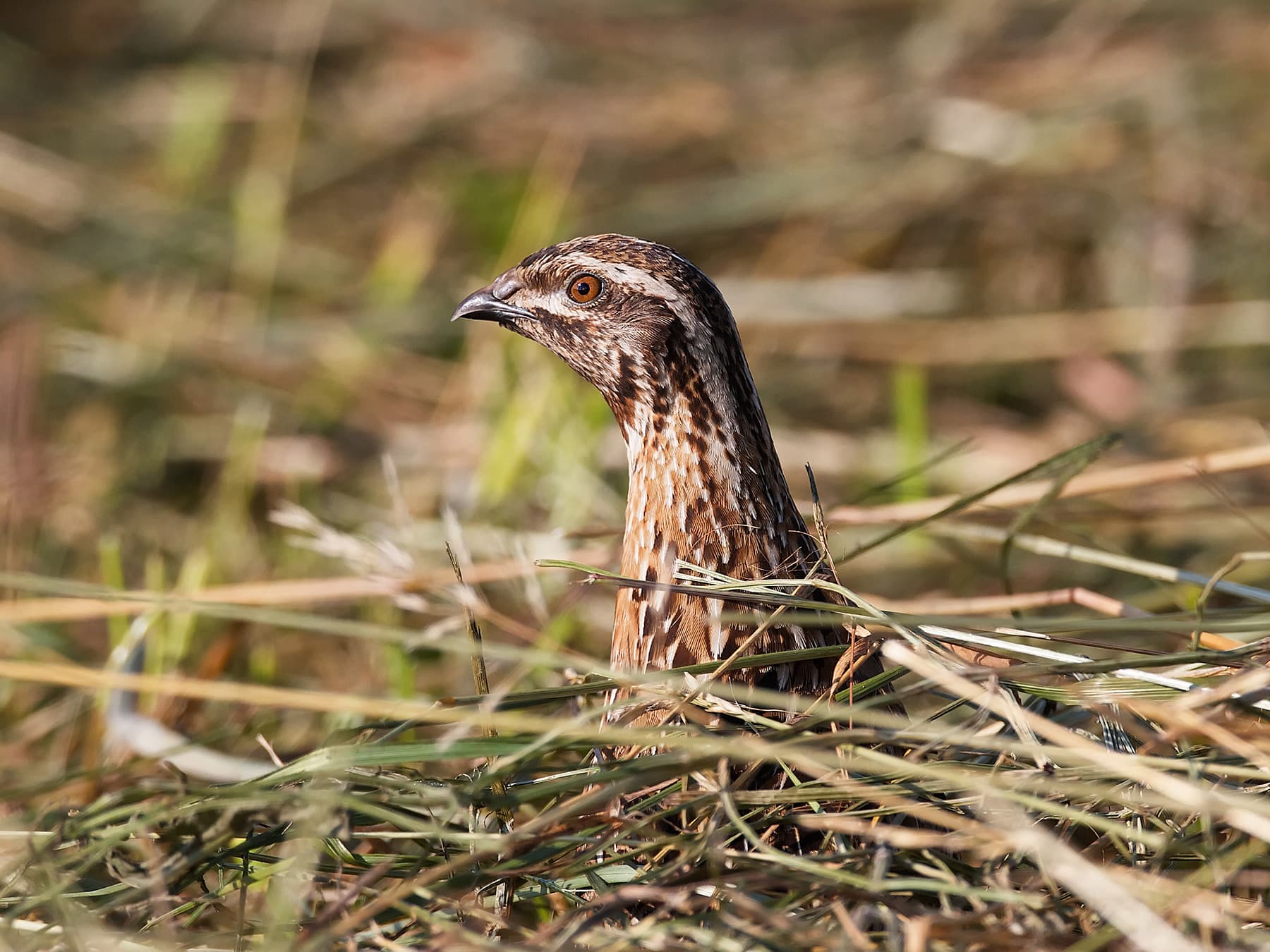
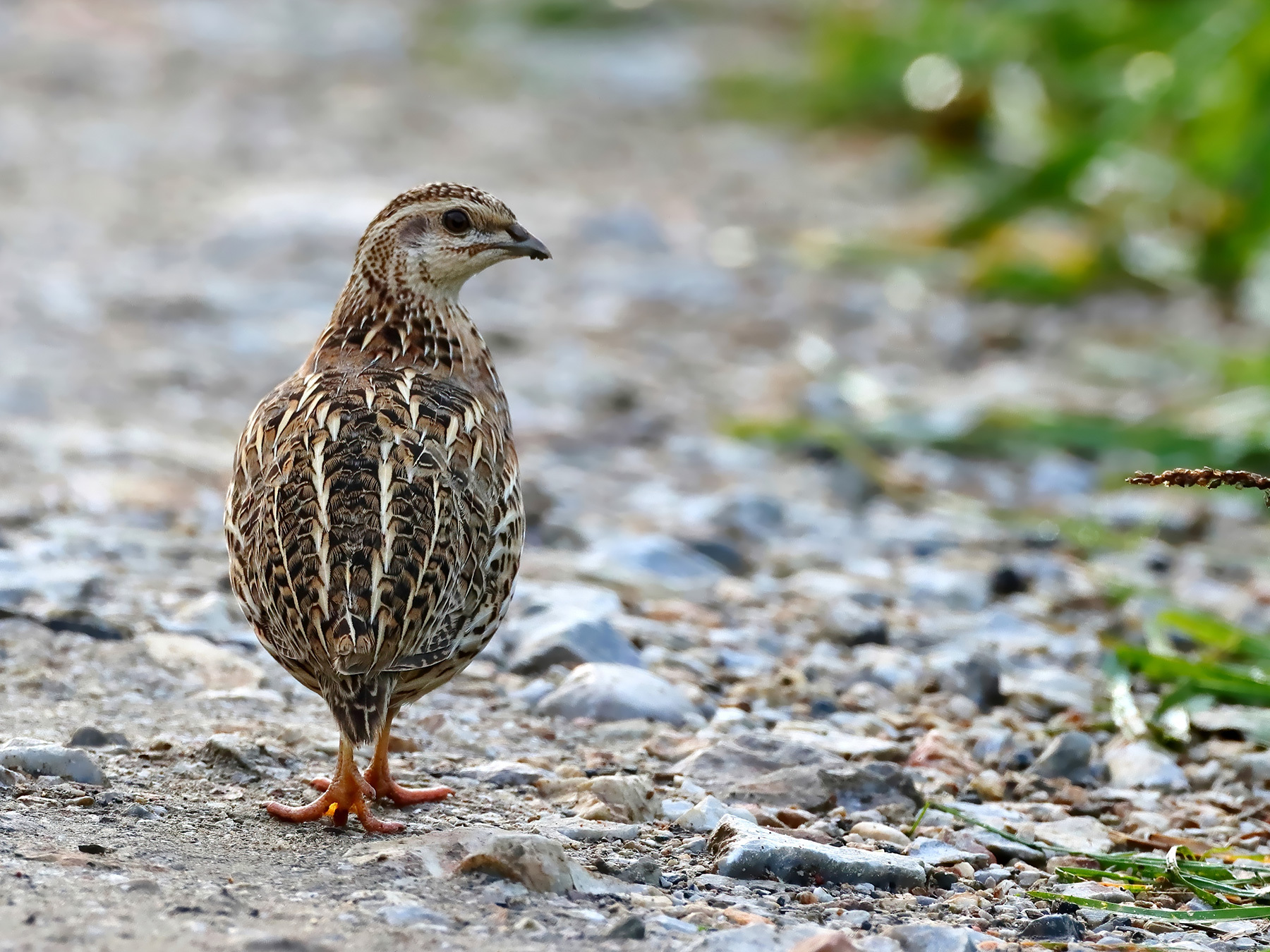
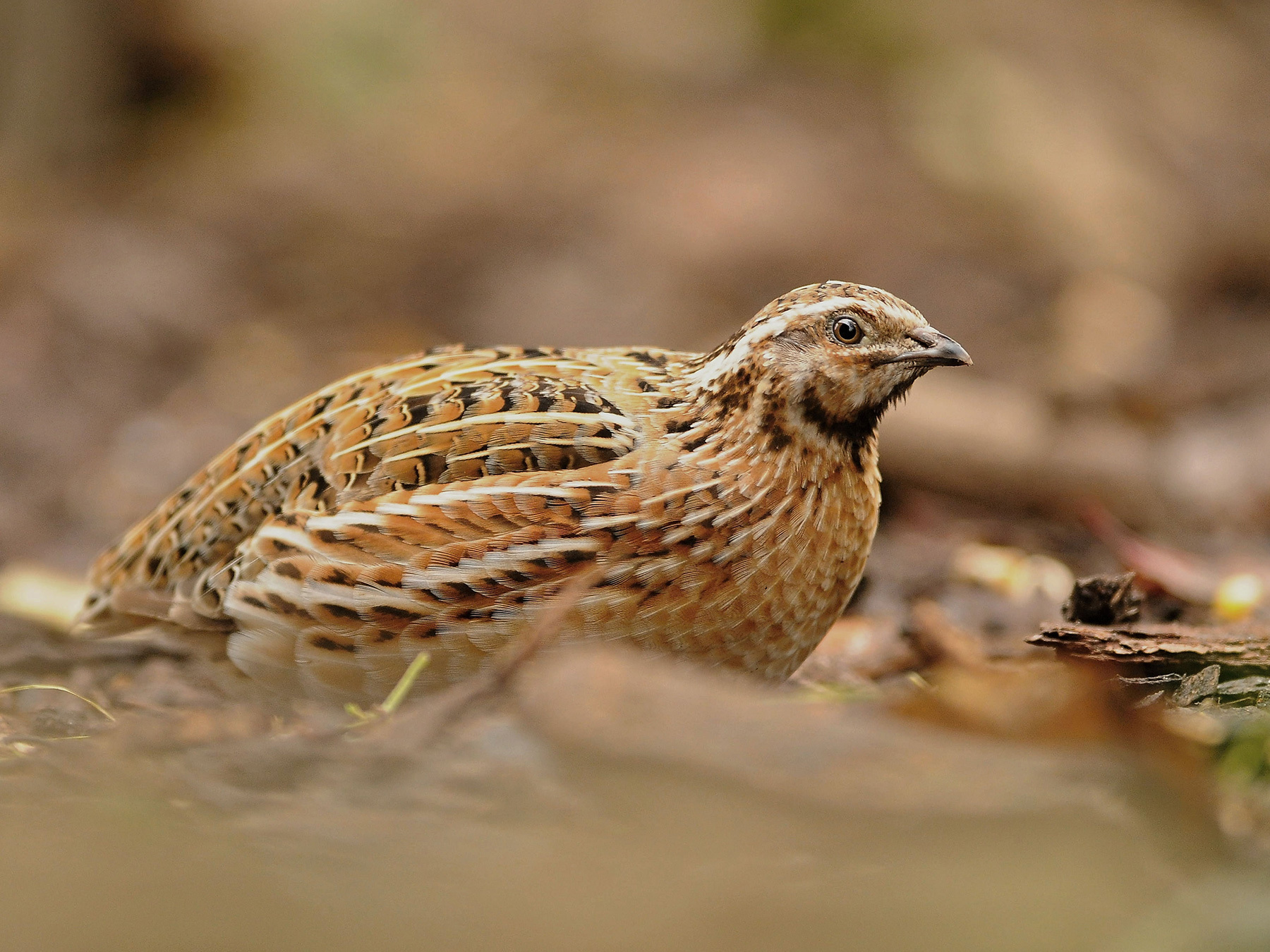
Quails are plump, short-tailed game birds with short necks and well-developed legs. They have a sharp, multi-purpose bill and relatively long wings. These birds blend seamlessly with their environment and are difficult to detect among the grass and low vegetation. Their upper parts are brown with dark spots or bars and cream streaks. Their underparts are much paler, with rich orange shades and streaked flanks.
The sexes are very similar in appearance, although only the males have a white throat. Females are generally heavier and have slightly longer tails, although these differences do not help identify these elusive birds in the field.
Baby Quails leave the nest on their first day after hatching and might be seen foraging in the company of their mother. They start life as tiny fluffy chicks with downy yellow feathers and dark stripes on their heads and upper parts. Older juvenile Quails resemble adult females but have barred flanks.
How big are Quails?
The Common Quai is a small species, shorter than a Blackbird but slightly heavier.
Length
The Common Quail has a short tail and neck, resulting in a total body length of just 16 - 18 centimetres or about 7 inches.
Weight
Quails weigh between 75 and 135 grams (2½ - 5 oz). Females are generally heavier than males.
Wingspan
Quails have a wingspan of 32 to 35 centimetres or about 13 inches. Their wings are surprisingly long for such a compact bird, but Quails fly well and travel long distances on migration.
Its size
Adults- Length
- 16–18 cm
- Wingspan
- 32–35 cm
- Weight
- 70–140 g
Its song and calls
Quails are far easier to hear than see, and their distinctive call is a great way to locate them in the landscape.
What sound does a Quail make?
The song of the Quail is usually described as ‘Wet-my-lips’. The male makes this three-noted sound, and at close range, you may hear a softer ‘werr-werr’ call just before it.
- Song0:00 / 0:07
Recorded in West Sussex, England · June 2022
- Call0:00 / 0:20
Recorded in Central Bedfordshire, England · May 2023
When and where to see it
OctoberMostly absent
Most recorded in October
- 1. Gloucestershireunder 0.1%
- 2. Oxfordshireunder 0.1%
- 3. Cornwallunder 0.1%
- 4. Suffolkunder 0.1%
Each dot is a county, state or province: the bigger and darker, the larger the bird’s share of that place’s bird records that month. Grey dots: no regular records. The ringed point is the centre of the bird’s records this month; the arrow shows how it moved since last month, and the dashed loop its path through the year. “Arrivals” colours places where it becomes regular this month (orange) or is in its last regular month (grey). GBIF eBird Observation Dataset, 2019–2024. Map data: Natural Earth, US Census Bureau; place centres © OpenStreetMap contributors.
In your area
See when the Common Quail is recorded in your county, state or province.
How often the Common Quail turns up in the UK through the year, from birdwatchers' records.
United Kingdom
Summer visitor · regularly May–Aug · most records in June
Show as a table
| Month | United Kingdom |
|---|---|
| January | <0.001% |
| February | <0.001% |
| March | <0.001% |
| April | <0.001% |
| May | 0.007% (regular) |
| June | 0.022% (regular) |
| July | 0.016% (regular) |
| August | 0.006% (regular) |
| September | <0.001% |
| October | <0.001% |
| November | <0.001% |
| December | – |
Recorded regularly in
Worldwide: recorded regularly in 82 countries
Countries where it was recorded in at least 3 of the 6 years 2019–2024. Linked countries have their own bird list.
Europe (38)
Africa (20)
Asia (24)
- Armenia
- Azerbaijan
- China
- Cyprus
- Georgia
- India
- Iran
- Iraq
- Israel
- Jordan
- Kazakhstan
- Kuwait
- Kyrgyzstan
- Lebanon
- Mongolia
- Nepal
- Oman
- Pakistan
- Palestinian Territories
- Qatar
- Saudi Arabia
- Turkey
- United Arab Emirates
- Uzbekistan
Data: EOD – eBird Observation Dataset (Cornell Lab of Ornithology), accessed via GBIF.org, CC BY 4.0. Records from 2019–2024, aggregated and filtered by Birdfact. How these lists are made
The Common Quail is the most widespread of six species in the Coturnix genus. Continue reading to learn where these small gamebirds live.
What is the habitat of a Quail?
Quails occur in open habitats like rough grassland and arable land where hay, wheat, and other cereal crops are grown. They avoid scrubby, bare, wooded, marshy, or mountainous terrain and are generally found in flat or gently sloping areas.
What is the range of a Quail?
The Common Quail has an extensive global range encompassing most of Europe and much of Central Asia in the Northern Hemisphere. They are also widespread visitors and residents in Africa from north to south.
Where do Quails live?
Quails are ground birds. They spend their lives foraging among low vegetation but also undertake lengthy flights on migration.
How rare are Quails?
Quails are rare birds in the UK, with an estimated 350 males heard each year. However, their numbers fluctuate, and there may be as many as 2000 males in some years.
Where can you see Quails in North America?
The Common Quail (C. coturnix) is not native to the United States or North America. However, the similar Japanese Quail (C. japonica) is a common domestic bird in North America and many other parts of the world.
Where can you see Quails in the UK?
Quails can turn up just about anywhere in the lowlands of England and eastern Scotland. With such low numbers and a wide range, tracking them down in the UK is a challenging task. Wiltshire and Dorset tend to offer the best chances of spotting these elusive game birds.
Migration
Do Quails migrate?
Quails are known as partial migrants since some populations are sedentary while others migrate varying distances. The birds that visit the United Kingdom are migrants that overwinter in Africa south of the Sahara Desert.
Are Quails native to North America?
The Common Quail is not native to North America. However, there are six native species from the New World Quail family (Odontophoridae) in the United States, including:
- Mountain Quail (Oreortyx pictus)
- Scaled Quail (Callipepla squamata)
- California Quail (Callipepla californica)
- Gambel’s Quail (Callipepla gambelii)
- Northern Bobwhite (Colinus virginianus)
- Montezuma Quail (Cyrtonyx montezumae)
Are Quails native to the UK?
Quails are native but relatively rare in the United Kingdom. They are regular summer breeding visitors, although their numbers fluctuate from year to year.
Tips for seeing it
- Listen for their distinctive 'wet-my-lips' call, especially in the early morning or evening
- Look for movement in tall grass or cereal crops
- Be patient and quiet, as these birds are easily startled
- In the UK, watch for them in agricultural fields during the summer months
What it eats
What do Quails eat?
Quails are omnivorous and opportunistic. Plant matter is the most important component of the Quail diet, but they also hunt for insects and other invertebrates, which are important protein sources for breeding females.
Their regular diet consists of the following food types:
- Seeds and grain
- Bulbs
- Leaves
- Flowers
- Buds
- Beetles, ants, and other insects
- Snails
- Worms
What do Quail chicks eat?
Quail chicks are well-developed when they hatch and capable of short-distance flight after just a few days. They leave the nest on their first day and feed themselves a similar diet to their parents by watching what they eat.
Nesting and breeding
Where do Quails nest?
Quails have a complex breeding range that includes much of Europe (including the UK) and Western Asia. However, there are also scattered resident breeding populations in Africa and South Asia. These birds nest on the ground among grass and other low vegetation. The female constructs a simple scrape and lines it with grass and other material.
When do Quails nest?
Quails arrive in the UK in the late spring and begin nesting in early summer. Across Europe, their breeding dates vary somewhat with latitude and climate, starting as early as March and ending as late as August.
What do Quail eggs look like?
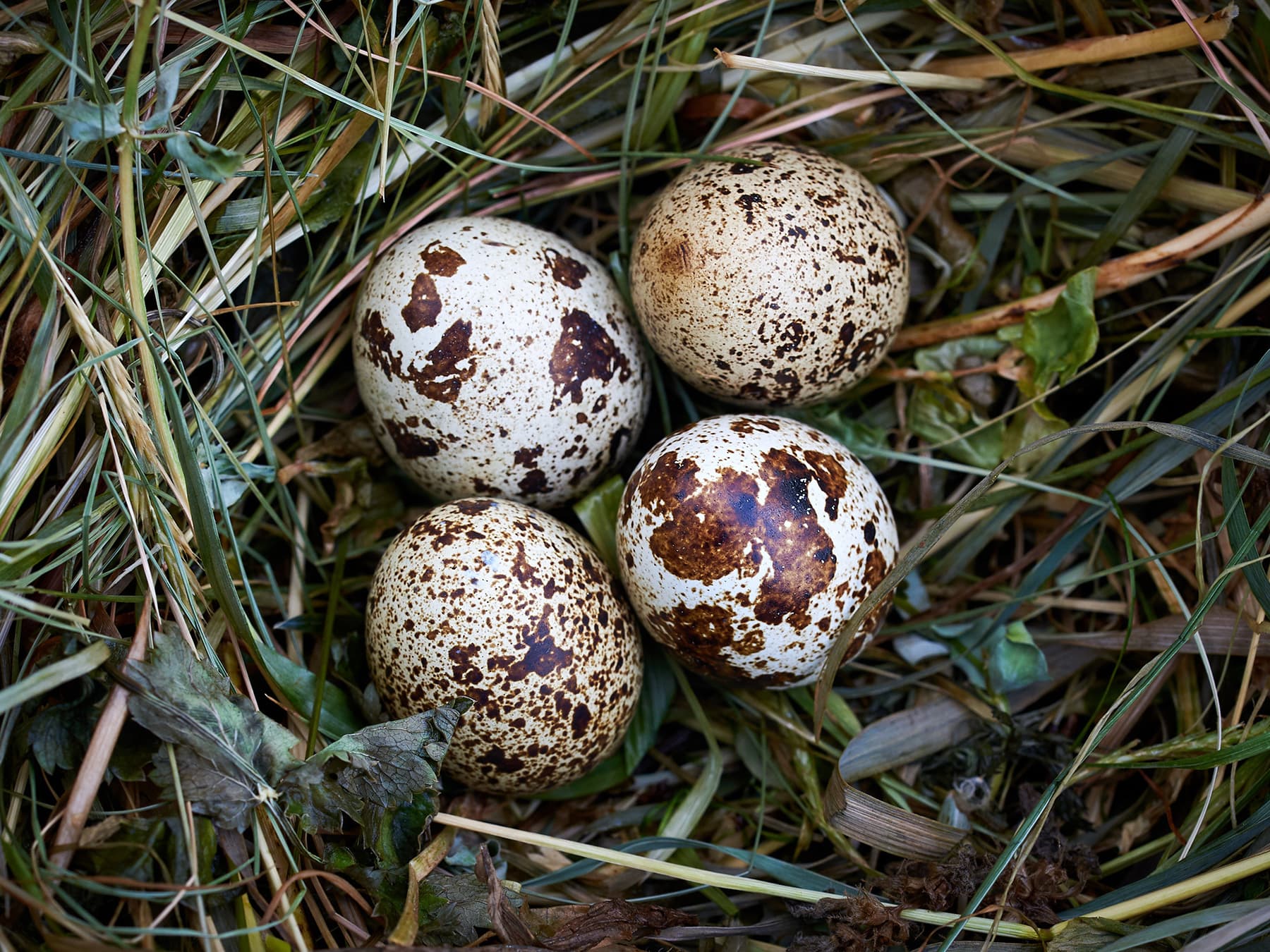
Quails lay anything from two to eighteen eggs, although eight to thirteen is most common. The eggs are yellow to white and heavily marked in brown speckles and blotches. Quail eggs measure approximately 30 millimetres long and 23 millimetres wide.
Do Quails mate for life?
Quails do not mate for life. They have various breeding strategies, including monogamy and polygamy.
Behaviour
Are Quails aggressive?
Wild Quails are territorial and frequently call to keep other males off their turf. Coturnix Quails can be highly aggressive toward their own kind in captivity and often injure each other by pecking.
Where do Quails sleep at night?
Quails sleep on the ground among low grass and vegetation.
Lifespan and predators
How long do Quails live?
Quails that survive to adulthood have a typical lifespan of about two years. However, they can live much longer in captivity, where the threats of extreme weather, food shortages, and predation are limited. Their maximum lifespan is about eleven years.
What are the predators of Quails?
Quails are vulnerable to many predators, including birds of prey like Hen Harriers and mammals like foxes and domestic cats. Humans are also significant predators as Quails are popular gamebirds for wing shooters and are caught in nets for food in parts of the world.
Are Quails protected?
Quails are protected by the Wildlife and Countryside Act in the United Kingdom.
Are Quails endangered?
Common Quails are a common and widespread species with a ‘Least Concern’ classification on the IUCN Red List. They are on the UK’s Amber list due to historical declines, although their population has remained relatively stable in recent times.
Conservation
While listed as Least Concern globally, Common Quail populations face threats from habitat loss due to agricultural intensification and hunting.
Conservation efforts focus on maintaining suitable grassland and farmland habitats, particularly in their breeding ranges across Europe and Asia.
More photos
3 photos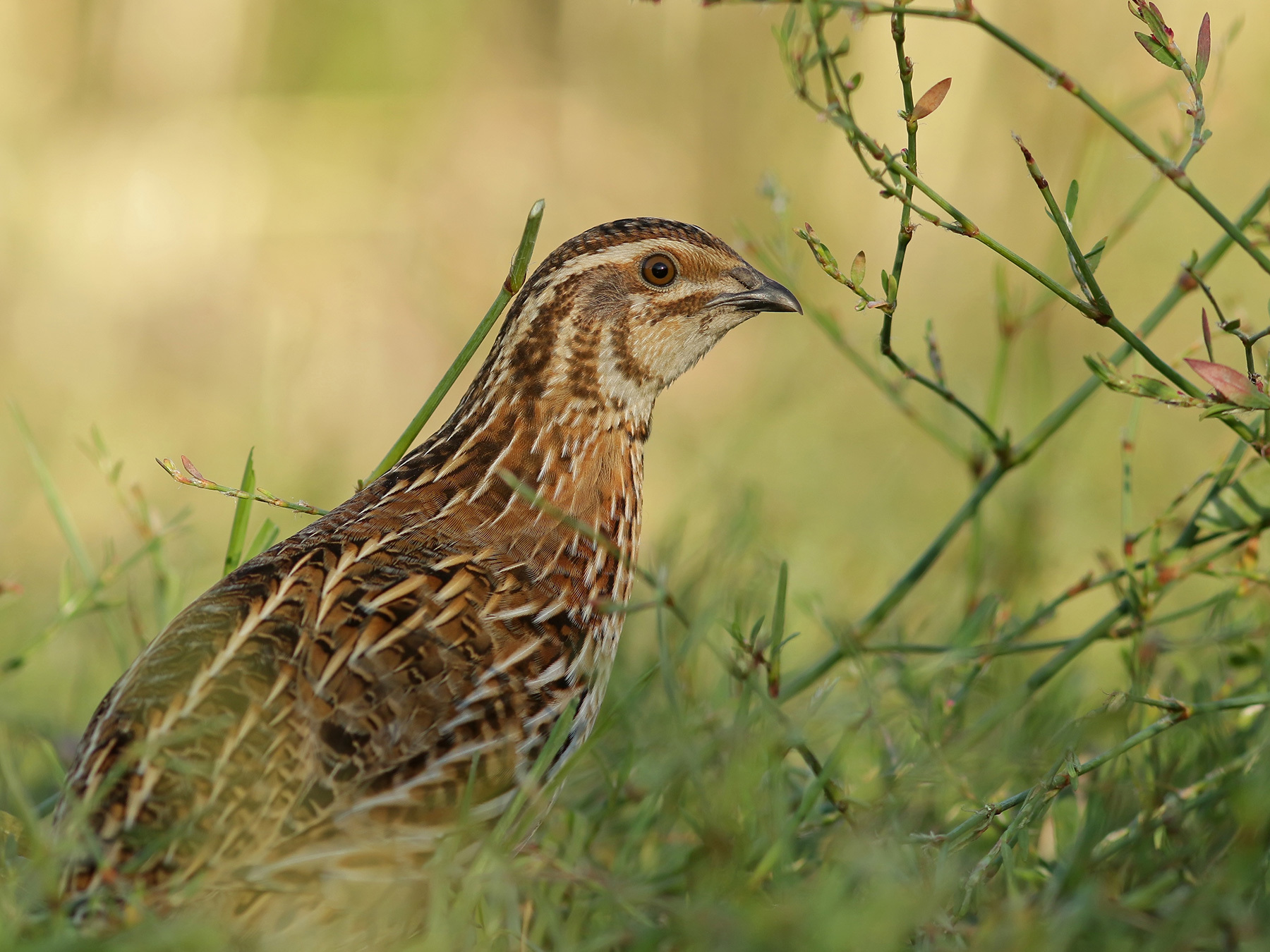
Common Quail guides
4 guidesQuick facts
- Length
- 16–18 cm
- Wingspan
- 32–35 cm
- Weight
- 70–140 g
- Lifespan
- 2–5 years · oldest recorded 14 years
- Family
- Pheasants & Grouse
- Migration
- Long-distance Migrant
- Global status (IUCN)
- Least Concern
- World population
- 15,000,000 - 35,000,000 mature individuals
- Population trend
- Decreasing
- Also called
- European Quail, Quail
- Scientific name
- Coturnix coturnix
Questions
4Do people eat Quail?
Quail are popular food birds in many parts of the world and are often commercially available. Both Quail eggs and meat are popular despite being rather small.
Are common Quail good pets?
Many people keep Quails as pets, and these birds have many benefits over other species. Quails are relatively quiet and clean, although they need a cage or aviary with plenty of floor space.
Do Quail bond with humans?
Wild Quails are shy birds that will never approach humans, although captive Quails can be tamed. Dedicated Quail keepers can develop a bond with their birds, but they are not the most affectionate pets.
How to pronounce Quail
The word Quail can be confusing at first glance, but it is easy to pronounce. This word sounds like KWAYL.
Sources
4- 1BirdLife International. 2018. Coturnix coturnix. The IUCN Red List of Threatened Species 2018: e.T22678944A131904485. Source (opens in a new tab)
- 2BirdLife International. 2018. Coturnix coturnix. The IUCN Red List of Threatened Species 2018: e.T22678944A131904485. Source (opens in a new tab)
- 3del Hoyo et al. (1994)
- 4Fransson et al., EURING list of longevity records for European birds (2010) Source (opens in a new tab)

Checked by
Nathan Cope, founder and editor
Nathan founded Birdfact and leads its writers and contributors in the UK, the US and Canada. He has watched and studied birds for more than ten years, and checks every article and species guide before it’s published.