


Purple Swamphen
Pūkeko, Western Swamphen · Porphyrio porphyrio
By the Birdfact teamChecked by Nathan Cope
On this page12 sections
How to recognise it
What do Western Swamphens look like?
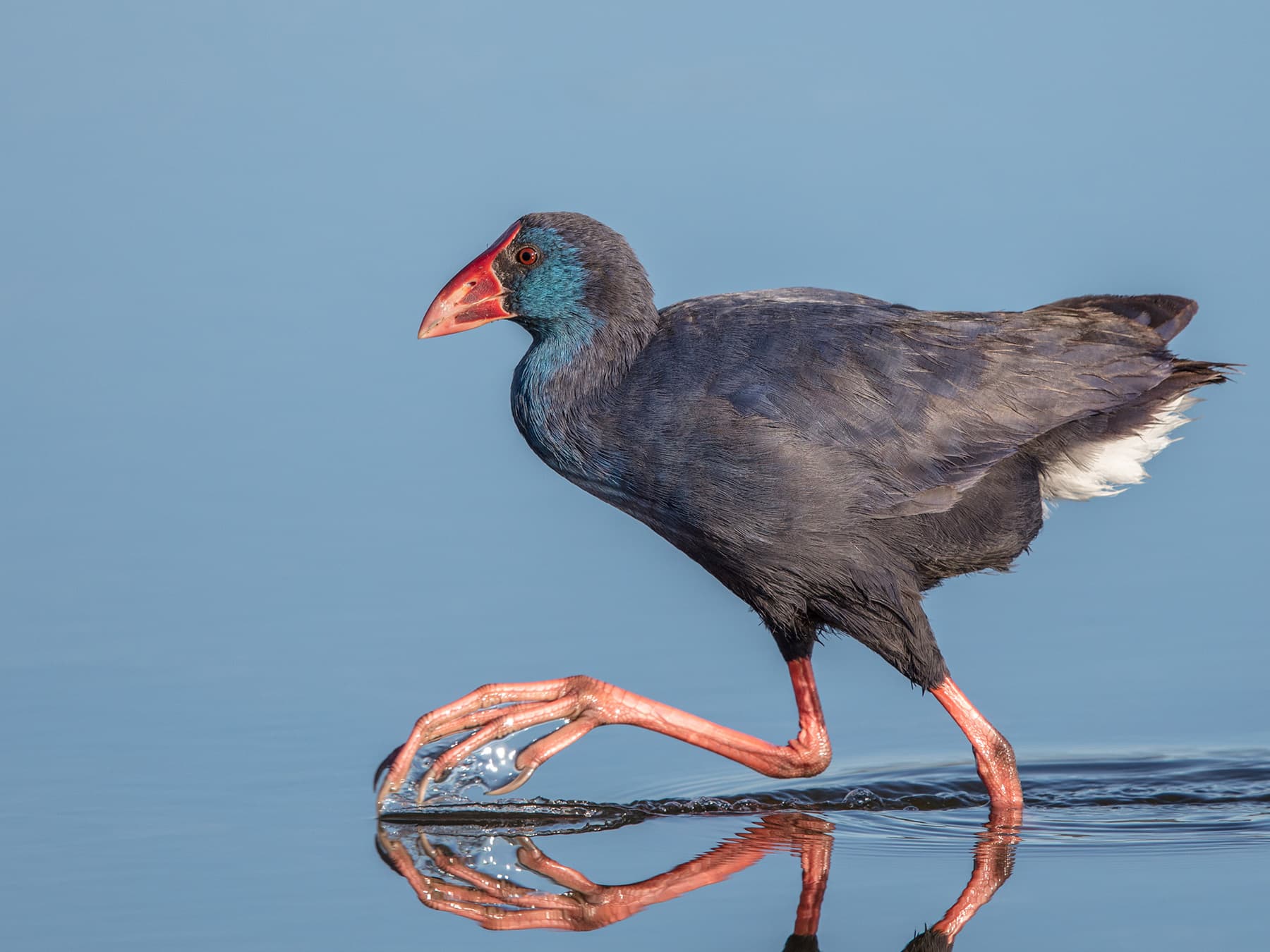
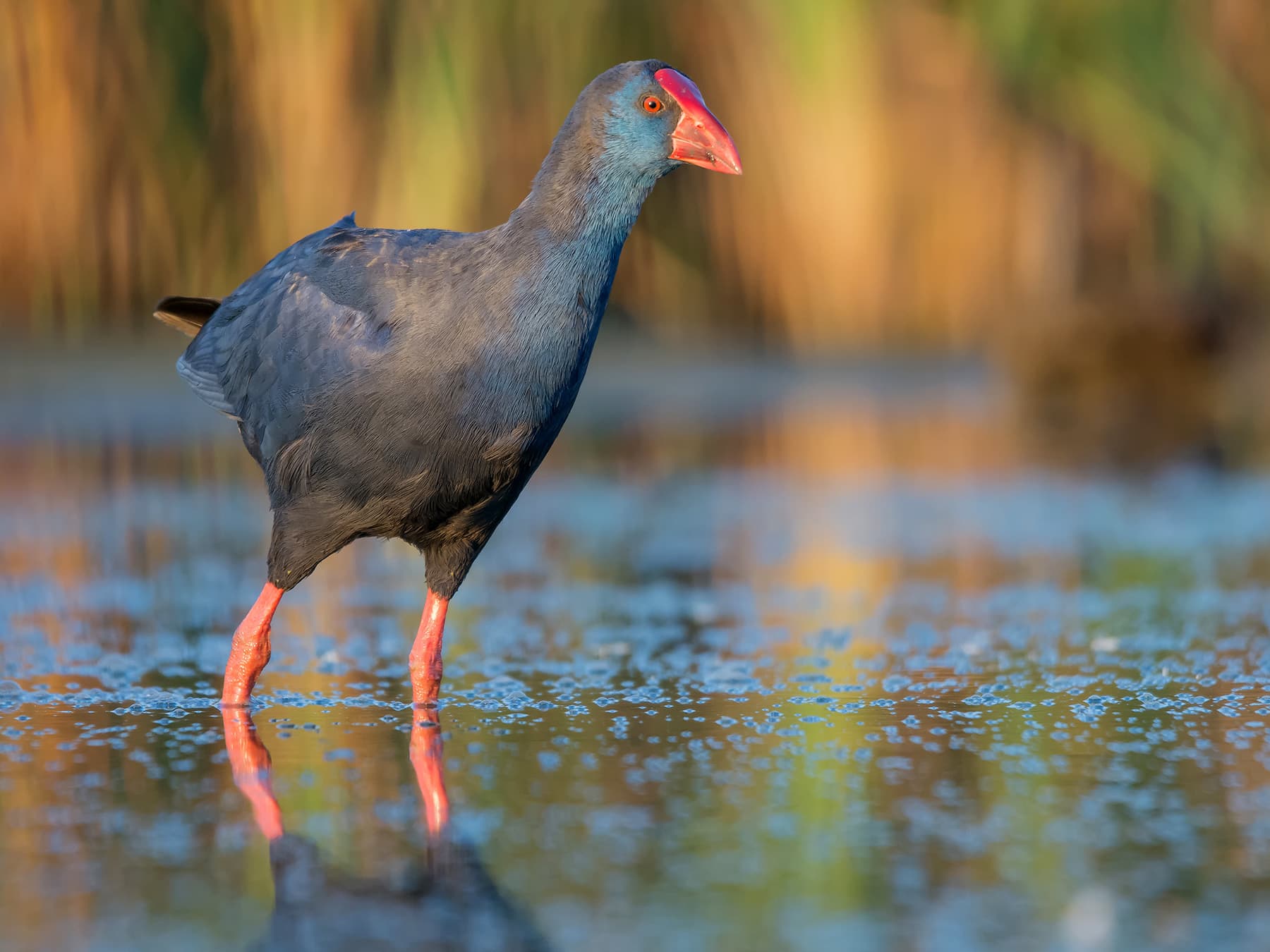
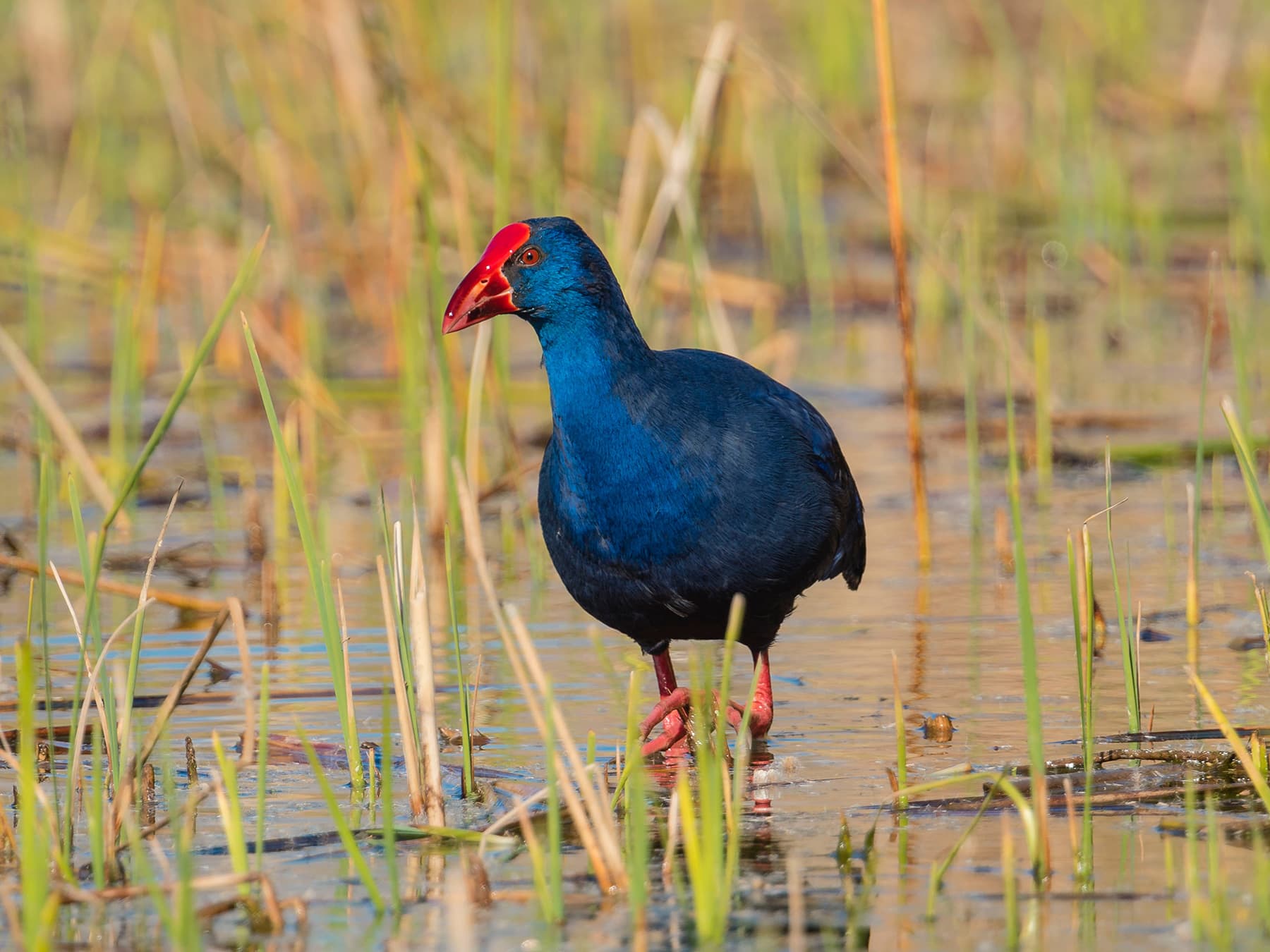
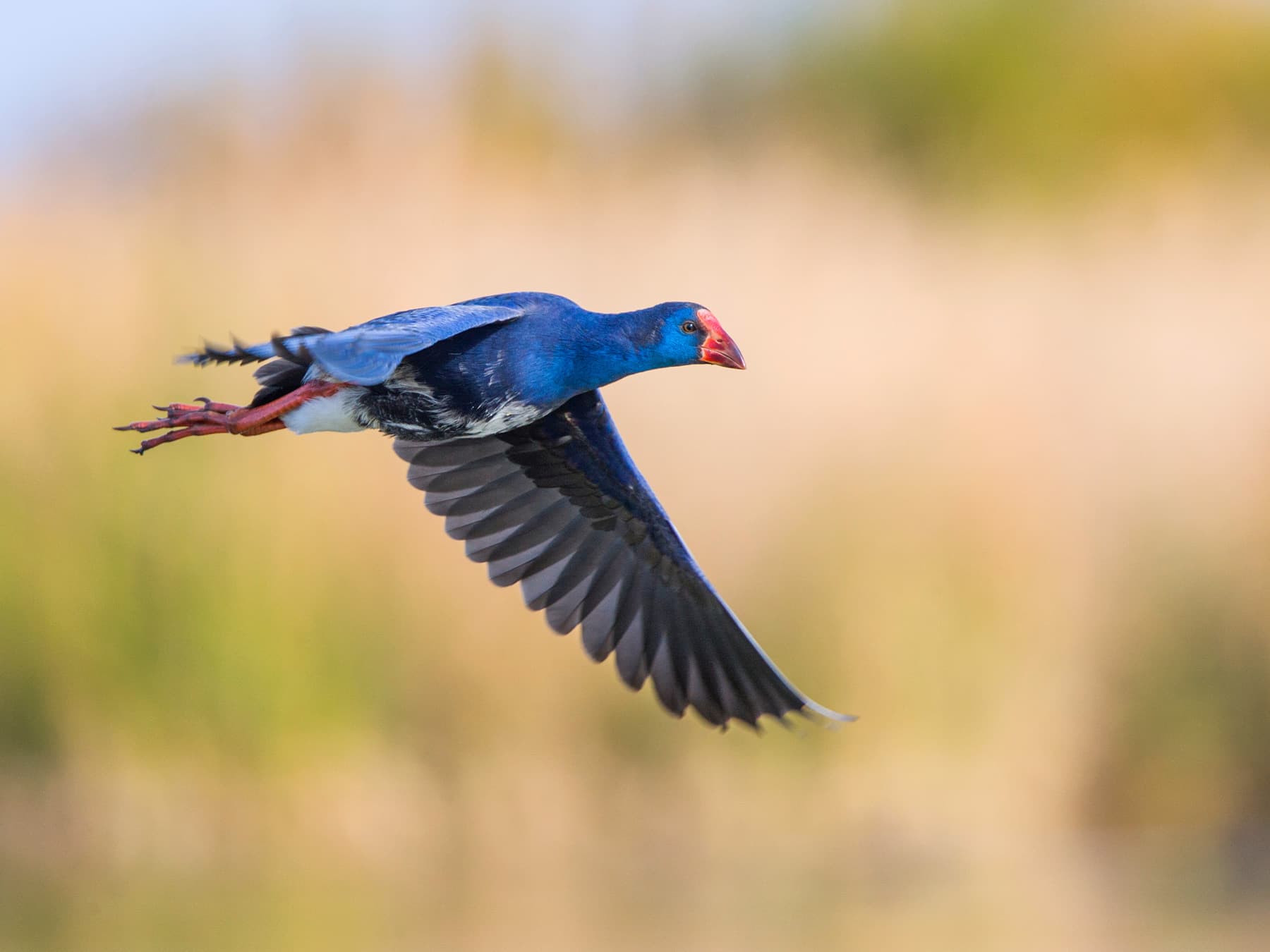
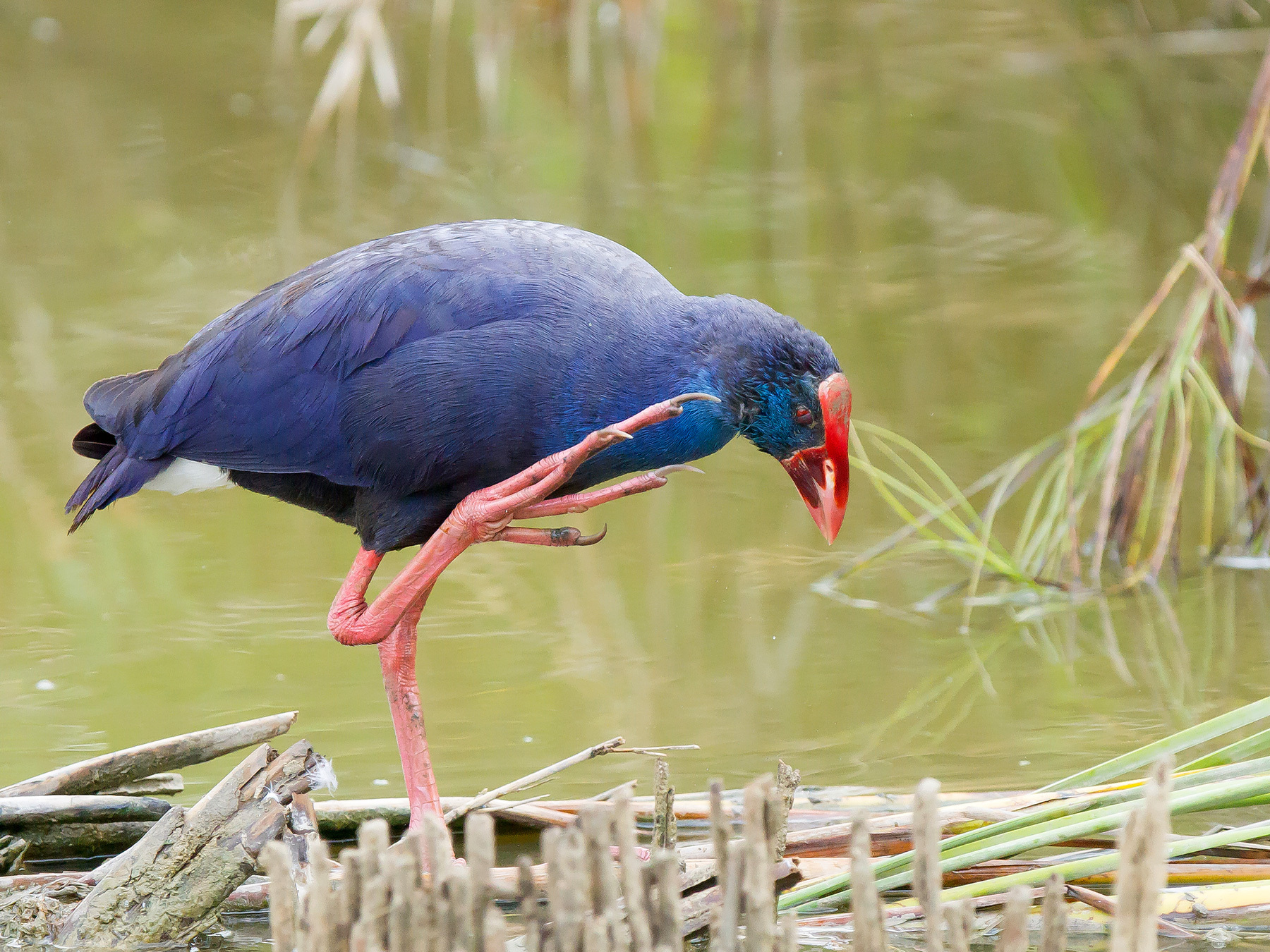
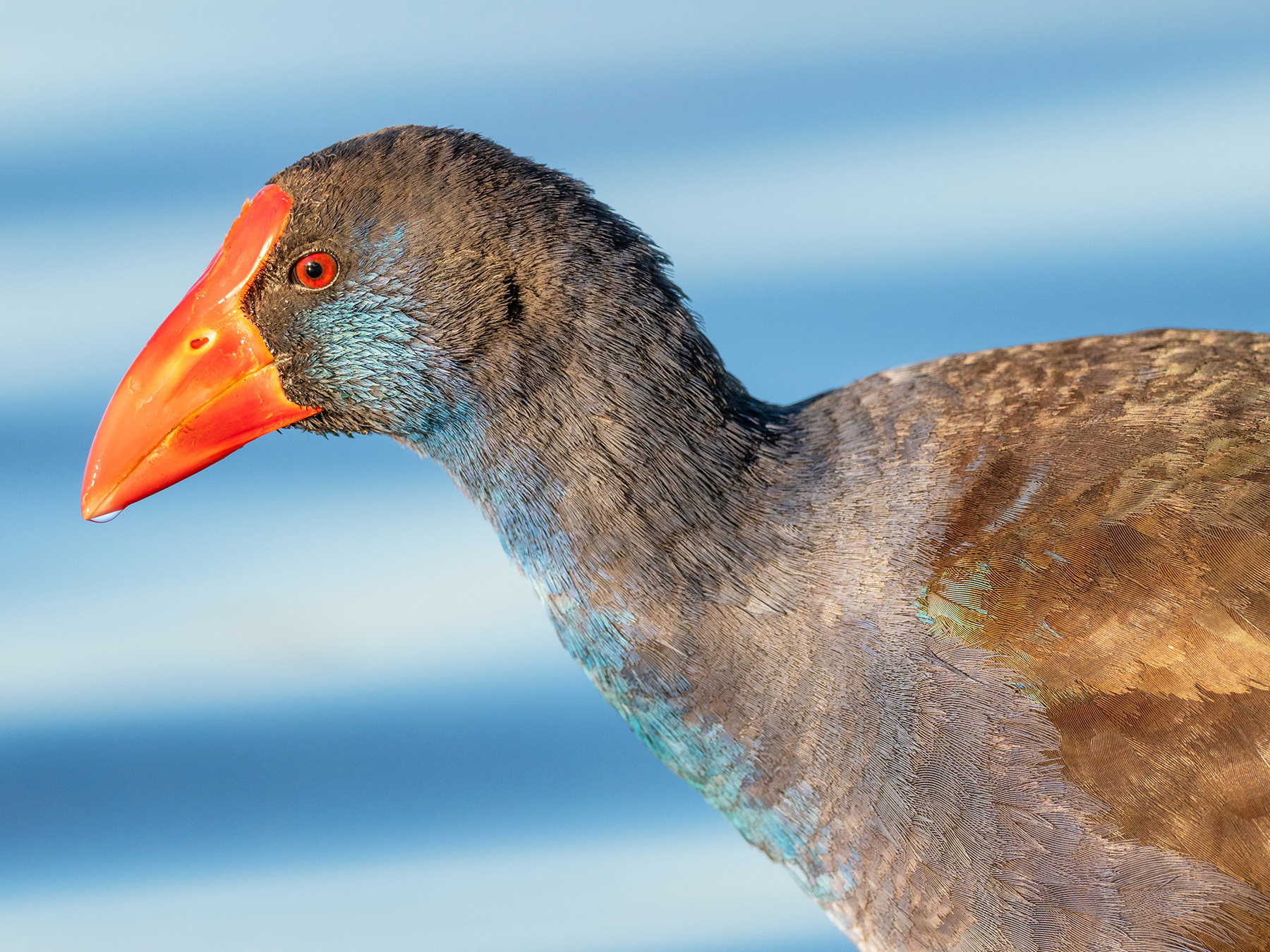
Western Swamphens are large, chicken-like wetland birds, with a number of distinguishing features that set them apart from other similar species. They have a large triangular red bill, which extends into a solid red forehead shield, and their legs are also bright red.
Their plumage is dark, with a glossy blueish-purple sheen on the head and throat, while their body, belly, and wings are blackish-green. The upper tail is black, and the undertail is white.
Females are similar to males, but smaller overall, and have a smaller facial shield.
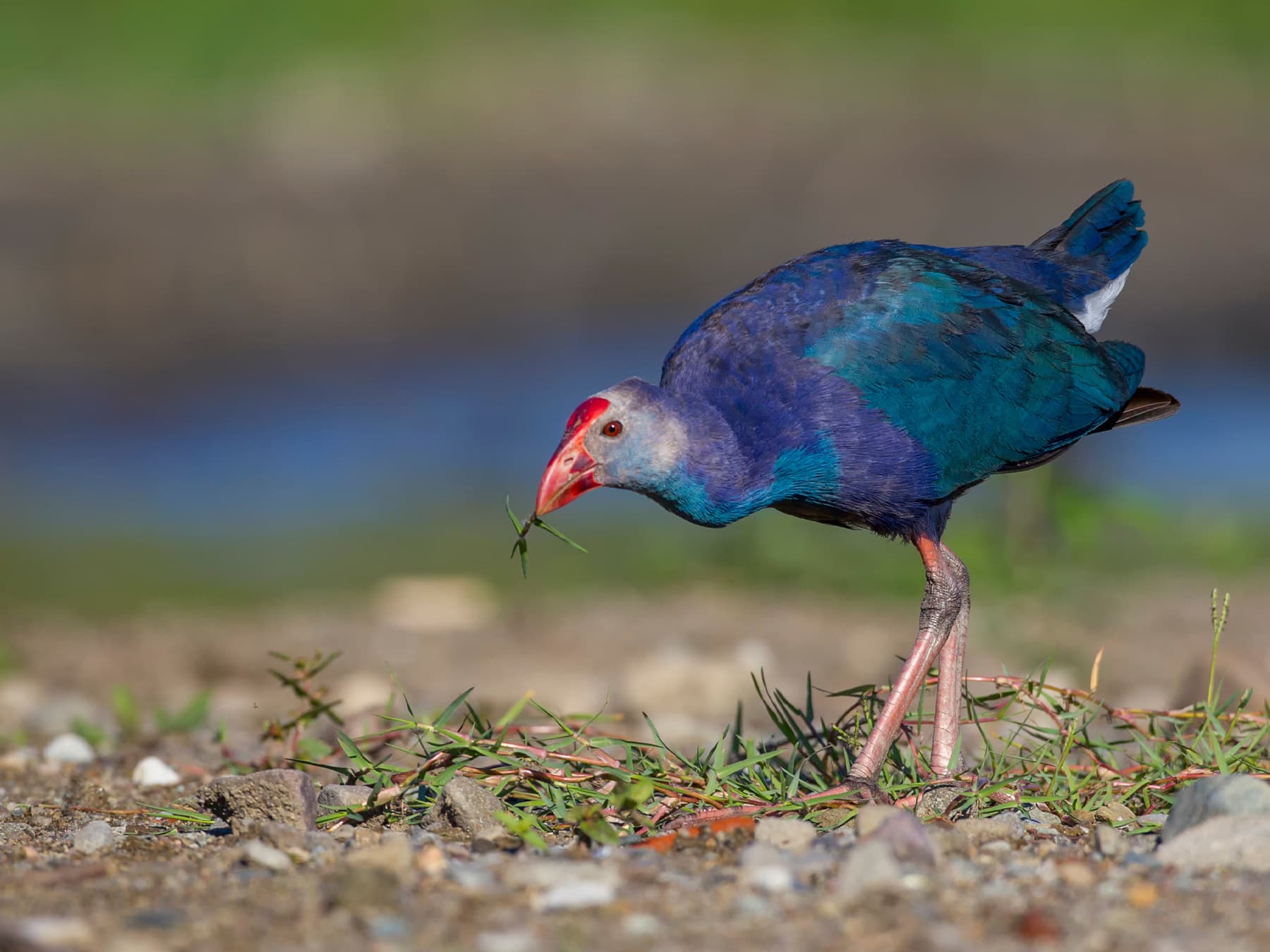
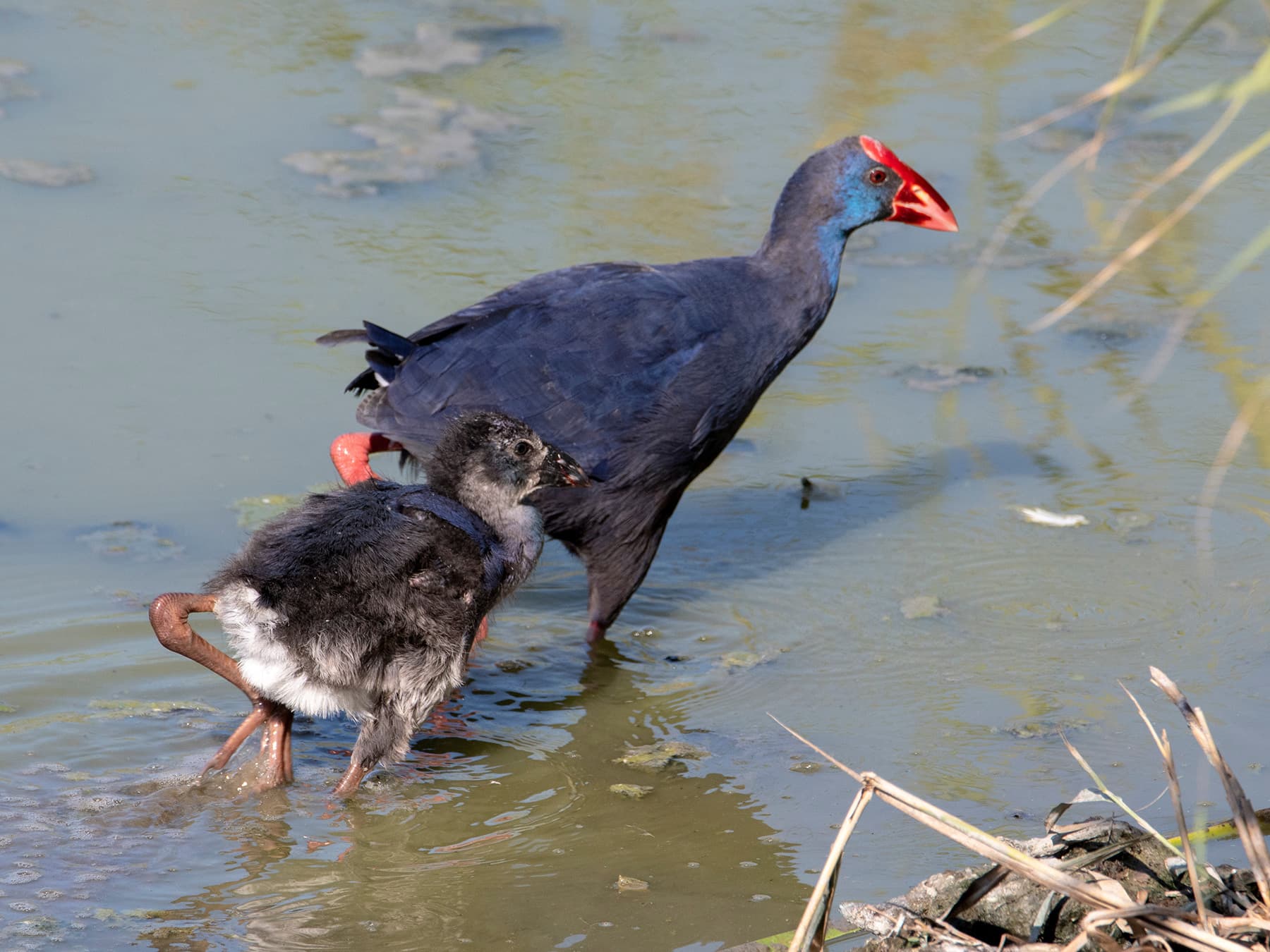
Juvenile western swamphens are similar to adult birds but their plumage is paler and less glossy, and their heads have more of a greyish wash than the striking blue-violet seen in mature birds.
How big are Western Swamphens?
Around the size of a large chicken, western swamphens are much larger and heavier than the similar-looking moorhen. Male western swamphens are larger and heavier than females.
- Length: 38 cm to 50 cm (15 in to 20 in)
- Wingspan: 90 cm to 100 cm (35 in to 39 in)
- Weight: Male: 720 g to 1,000 g (25 oz to 35 oz)
- Weight Female: 520 g to 870 g (18 oz to 31 oz)
Its size
Adults- Length
- 45–50 cm
- Wingspan
- 90–100 cm
- Weight
- 700–1000 g
Its song and calls
What sound does a Western Swamphen make?
Western swamphens are a noisy species with a wide variety of sounds and calls heard in different situations. A cackling series of shrieks can be heard in flight, while on water, males call using long, haunting notes and females respond with shriller, softer calls.
Alarm calls resemble a loud trumpeting sound, and a quieter, grating cry is used to signal an approaching threat.
- Flight call0:00 / 0:18
Recorded in Andalucía, Spain · August 2018
When and where to see it
The Purple Swamphen is not recorded regularly in the UK, Ireland, the United States or Canada.
Worldwide: recorded regularly in 7 countries
Countries where it was recorded in at least 3 of the 6 years 2019–2024. Linked countries have their own bird list.
Data: EOD – eBird Observation Dataset (Cornell Lab of Ornithology), accessed via GBIF.org, CC BY 4.0. Records from 2019–2024, aggregated and filtered by Birdfact. How these lists are made
What is the habitat of a Western Swamphen?
Regions with high rainfall are preferred by western swamphens, which live in wetlands lined with dense vegetation during breeding and non-breeding seasons. They also may be spotted on lakes and may spread into farmers’ fields and open land alongside slow-flowing rivers, where they may forage for rice and crops.
What is the range of a Western Swamphen?
Western swamphens are found in a small region of south-western Europe and north-west Africa, including Spain, Portugal, south-eastern France, the Mediterranean islands of Sicily and Sardinia, and in Morocco, Algeria and Tunisia.
Where do Western Swamphens live?
The global population of western swamphens is estimated at 780,000 to 2,910,000 individuals, of which between 19,100 and 102,000 individuals live in Europe. Spain has the largest concentration and they are also common and widespread in north-eastern Algeria.
How rare are Western Swamphens?
In their home distribution range, western swamphens are not at all unusual, particularly in Spain where the majority of the population is concentrated. Outside of this range, they are highly unusual and sightings are incredibly rare, even more so due to their preference to migrate on foot rather than by flying.
Where can you see Western Swamphens in the UK?
The first verified sighting of a western swamphen was recorded at Minsmere in Suffolk in 2016, and the individual bird was then moved to Lincolnshire where it remained until early the following year. Reported sightings are highly unusual.
Migration
Do Western Swamphens migrate?
Western swamphens are a generally sedentary species, and any migrations are usually on foot and take them only a short distance from their nesting sites each year. However, some migration further afield must occur occasionally to explain their presence as vagrant visitors in regions way beyond their natural distribution range.
Are Western Purple Swamphens native to the UK?
The first verified record of a western purple swamphen was made at Minsmere in Suffolk in 2016, after which the species was added to the list of British birds. Previous sightings were never fully verified or confirmed.
Tips for seeing it
- Look for Purple Swamphens in wetlands with dense vegetation
- Listen for their loud, distinctive calls, especially at dawn and dusk
- Observe their unique foraging behaviour as they climb through reeds
- In Australia and New Zealand, check grassy areas near water bodies
What it eats
What do Western Swamphens eat?
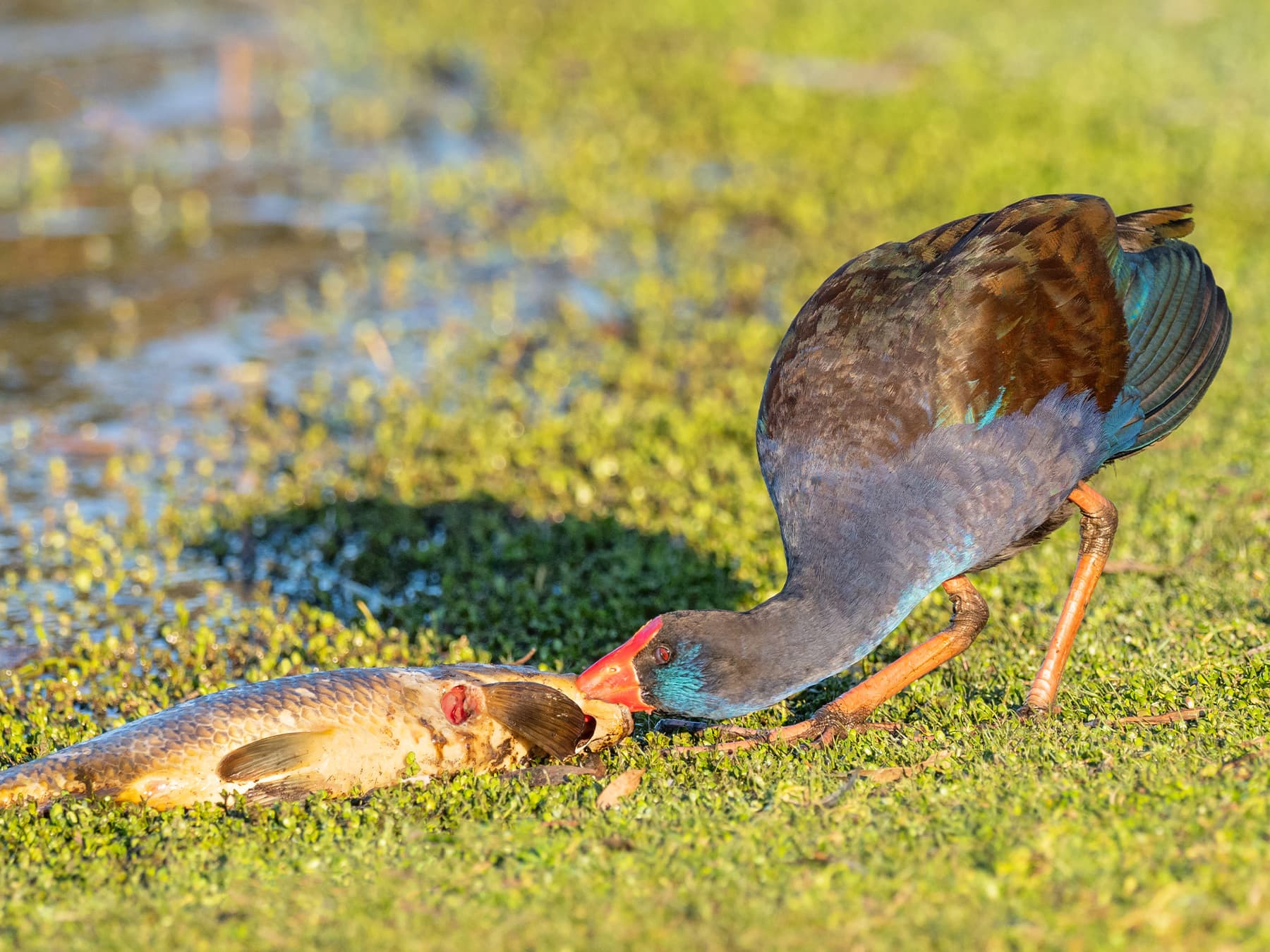
Plant matter forms the main element of a western swamphen’s diet, with shoots, roots and leaves of aquatic plants widely eaten, as well as rice, grass seeds, sedge and flowers. Molluscs, crustaceans, insects and larvae, small fish, rodents, young birds, and their eggs and carrion may also be eaten if the opportunity arises.
What do Western Swamphen chicks eat?
Soft plant parts are fed to young western swamphen chicks by their parents. Sap from inside plant stems is a common choice for young chicks in their early days, with parent birds snapping the stem in half and using their toes to feed the sap into their chicks’ bills.
Nesting and breeding
Where do Western Swamphens nest?
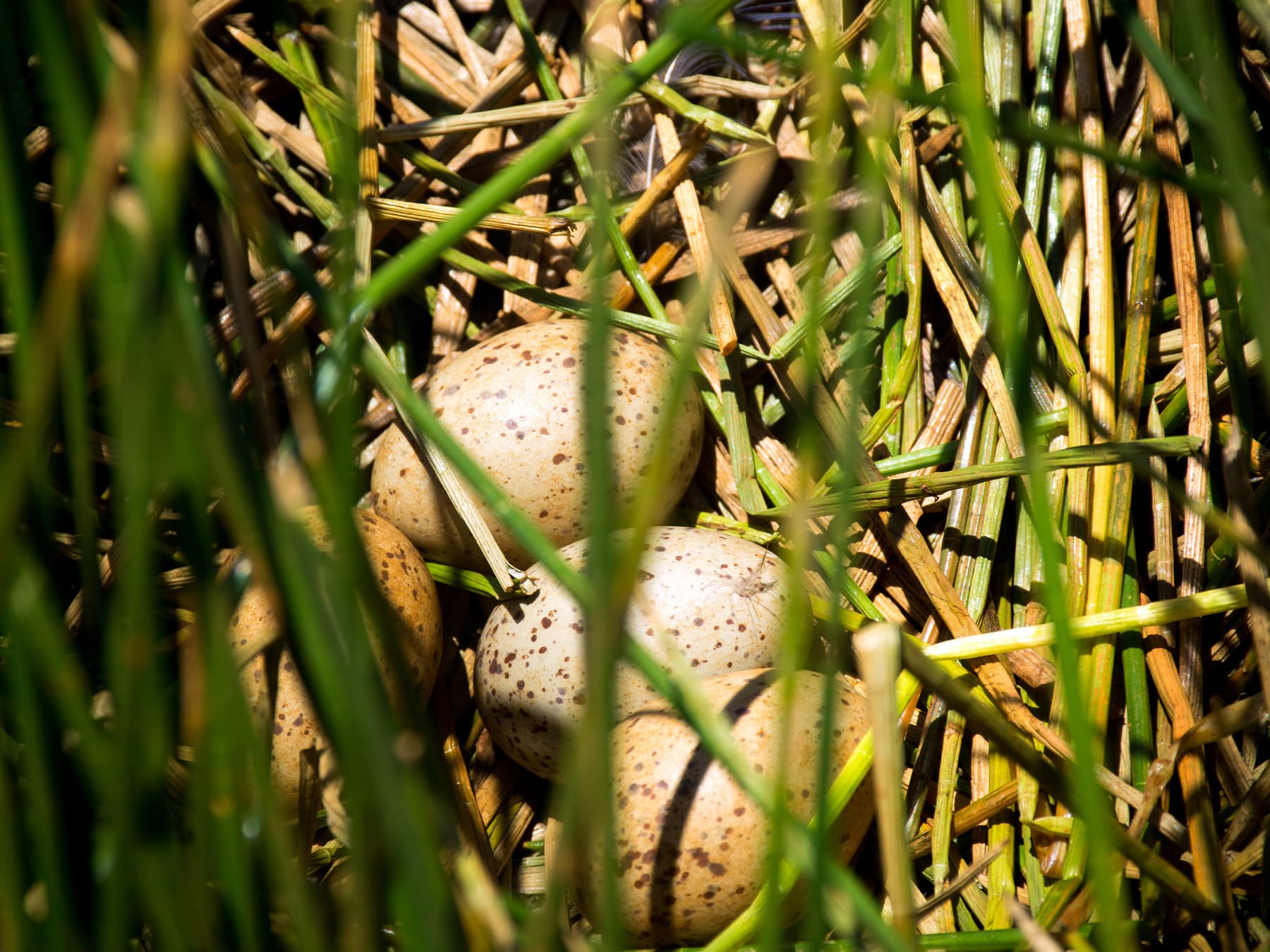
Western swamphens build their nests on platforms of semi-submerged aquatic vegetation, with a large cup constructed using leaves and stems of wetland plants. Surrounding plants are used to form a canopy, concealing the nest site from open view. Males and females both participate in building the nest and may also be helped by non-breeding birds.
When do Western Swamphens nest?
In Mediterranean regions, the breeding season for western swamphens is between March and June, with one or occasionally two broods raised each year. Males and females take turns to incubate, for a period of between 23 and 27 days. Young leave the nest a short while after hatching and are cared for on the water by both parents until they reach independence at between 6 and 8 weeks.
What do Western Swamphens eggs look like?
Western swamphens lay large, pale glossy eggs. Between 3 and 6 eggs are laid, from pale stone to light yellow in colour, and marked with purple-brown scrawls.
Do Western Swamphens mate for life?
Western swamphens tend to live in extended family groups, and while they may have a mate for the duration of a breeding season, other closely related birds will also assist with caring for young. Communal nests also occasionally occur, with up to 12 eggs laid by different females, and incubation shared.
Behaviour
Are Western Swamphens aggressive?
Western swamphens are a relatively tame species and tolerant of being around other western swamphens and humans. Communal breeding is common, and they live in extended family groups.
Lifespan and predators
How long do Western Swamphens live?
No verified data exists for the average or longest lifespan of a western swamphen. First-time breeding is thought to occur at between one and two years of age.
What are the predators of Western Swamphens?
As a large wetland species with nest sites that are often inaccessible to land predators, western swamphens do not have many natural predators. Eagle owls and buzzards are among the biggest threats.
Are Western Swamphens protected?
Western swamphens have full legal protection in Greece, Portugal, Spain, Italy and France. They are listed as a Red List species in Italy, Portugal and Spain.
Are Western Swamphens endangered?
While no official conservation status exists for western swamphens, they are under threat from both loss and degradation of their wetland habitats. Widespread drainage of wetlands has led to a contraction of breeding grounds and the introduction of exotic invasive species to a number of key wetland sites has also had a negative impact on their future survival.
Conservation
While the Purple Swamphen is listed as Least Concern globally, local populations face threats from habitat loss and degradation.
Conservation efforts focus on protecting and restoring wetland habitats. In some areas, they are considered agricultural pests, requiring balanced management approaches.
More photos
3 photos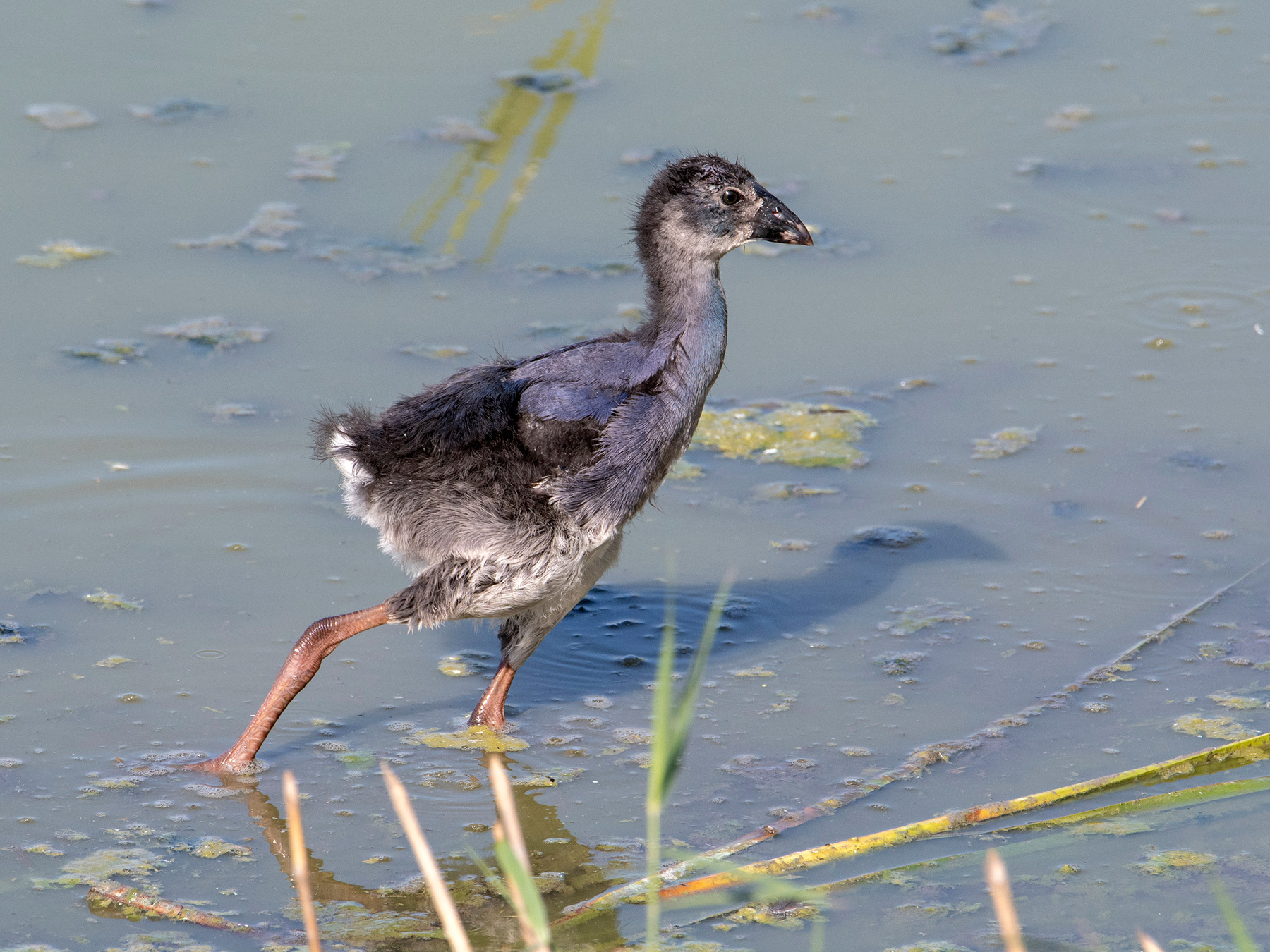
Quick facts
- Length
- 45–50 cm
- Wingspan
- 90–100 cm
- Weight
- 700–1000 g
- Lifespan
- 5–7 years · oldest recorded 8.4 years
- Family
- Rails & Coots
- Migration
- Resident
- Global status (IUCN)
- Least Concern
- World population
- 780,000 - 2,910,000 individuals
- Population trend
- Unknown
- Also called
- Pūkeko, Western Swamphen
- Scientific name
- Porphyrio porphyrio
Sources
3- 1BirdLife International. 2019. Porphyrio porphyrio (amended version of 2016 assessment). The IUCN Red List of Threatened Species 2019: e.T22692792A155531172. Source (opens in a new tab)
- 2Wetlands International (2015)
- 3ABBBS - Australian Bird and Bat Banding Scheme Source (opens in a new tab)

Checked by
Nathan Cope, founder and editor
Nathan founded Birdfact and leads its writers and contributors in the UK, the US and Canada. He has watched and studied birds for more than ten years, and checks every article and species guide before it’s published.