


Rock Ptarmigan
Rock Grouse, Snow Chicken · Lagopus muta
By the Birdfact teamChecked by Nathan Cope
On this page13 sections
How to recognise it
What do Rock Ptarmigans look like?
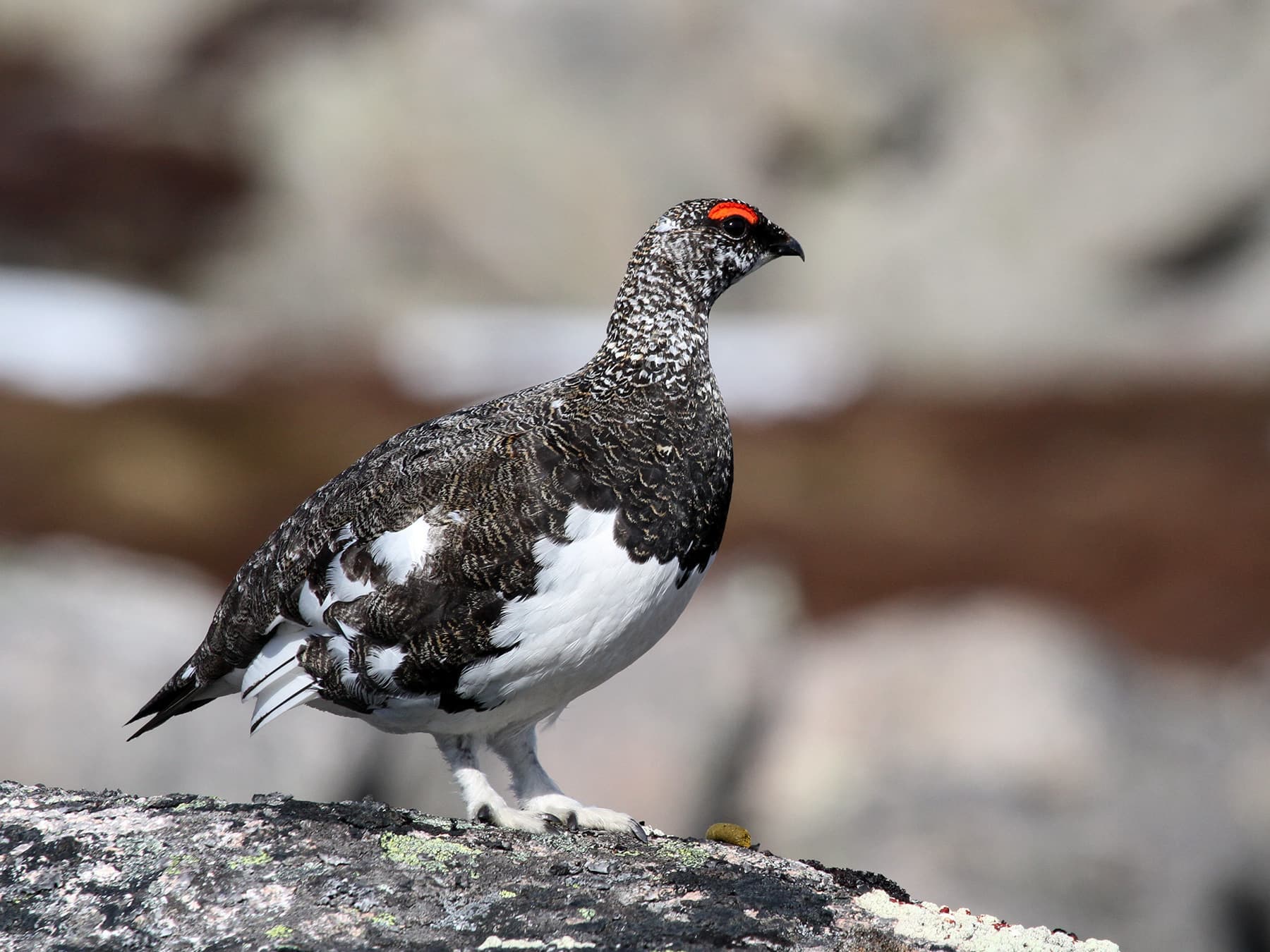
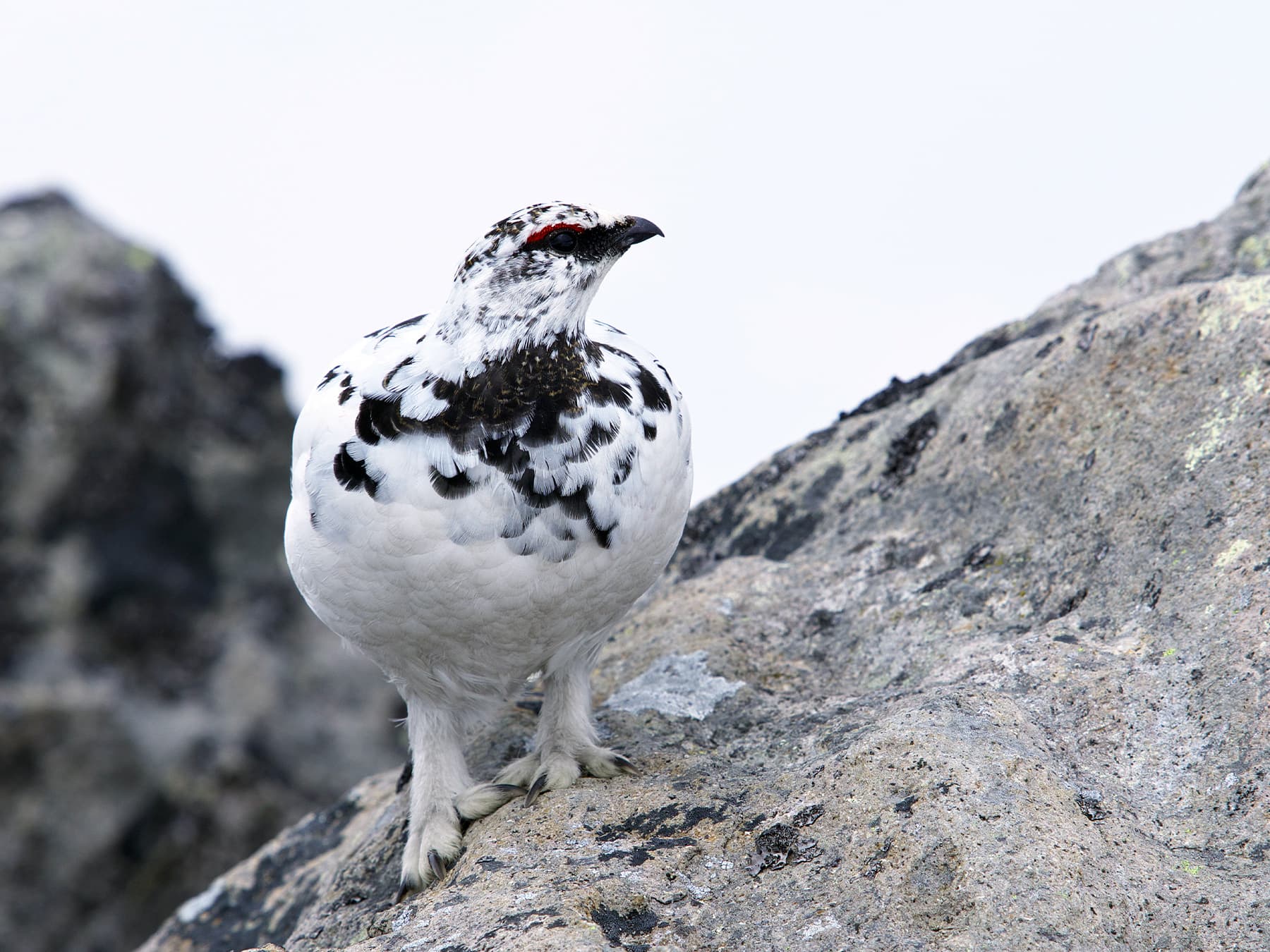
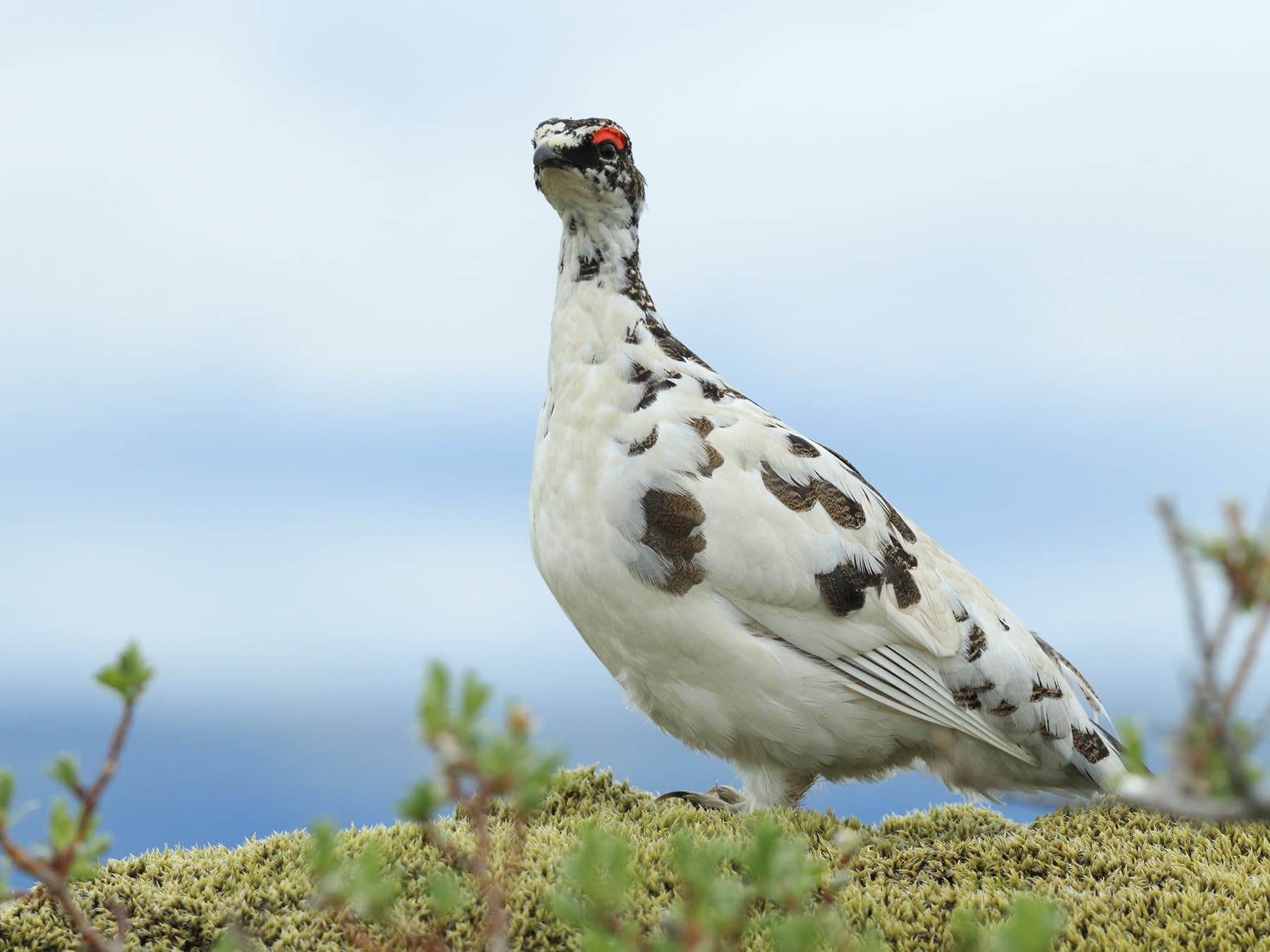
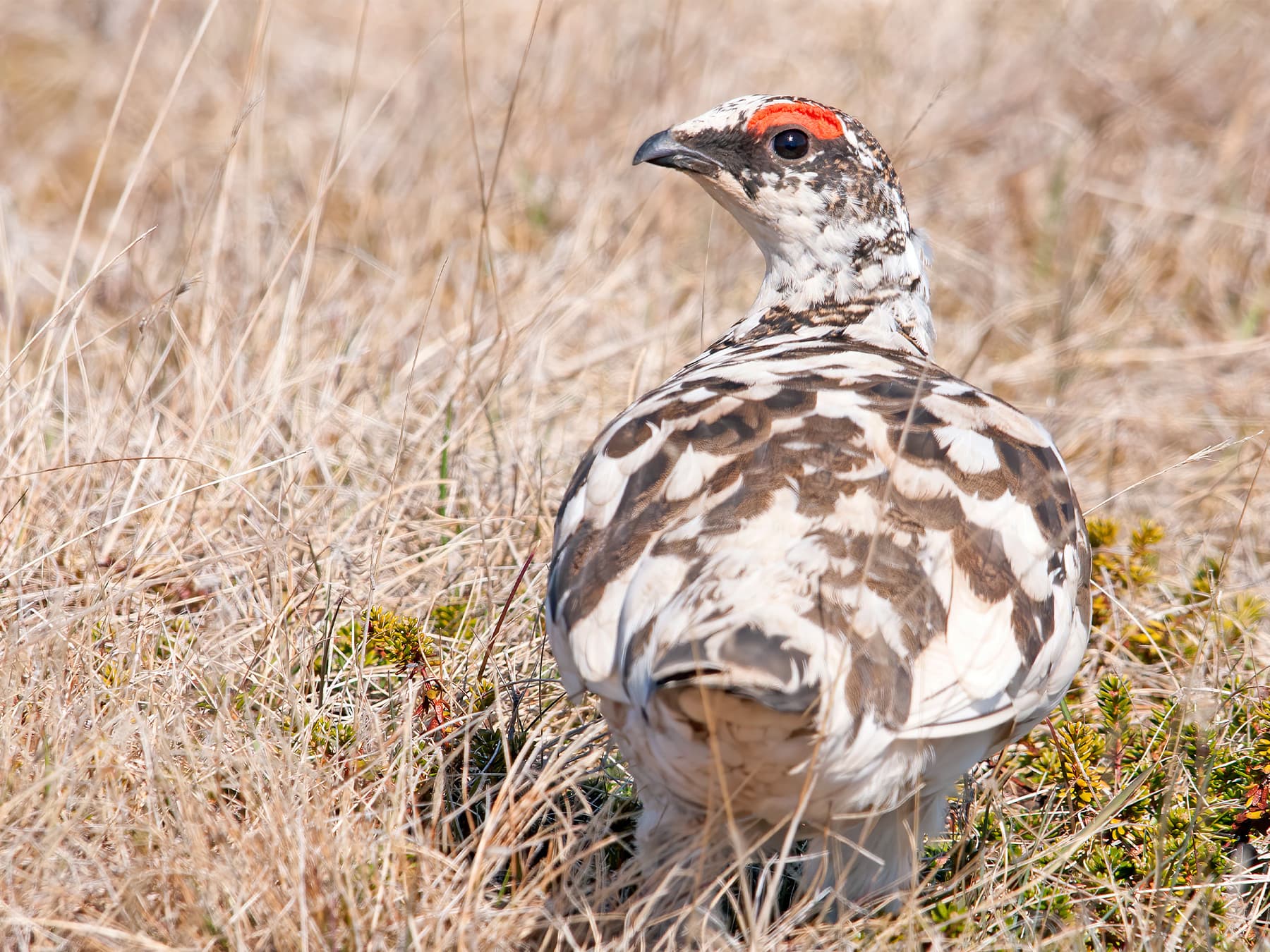
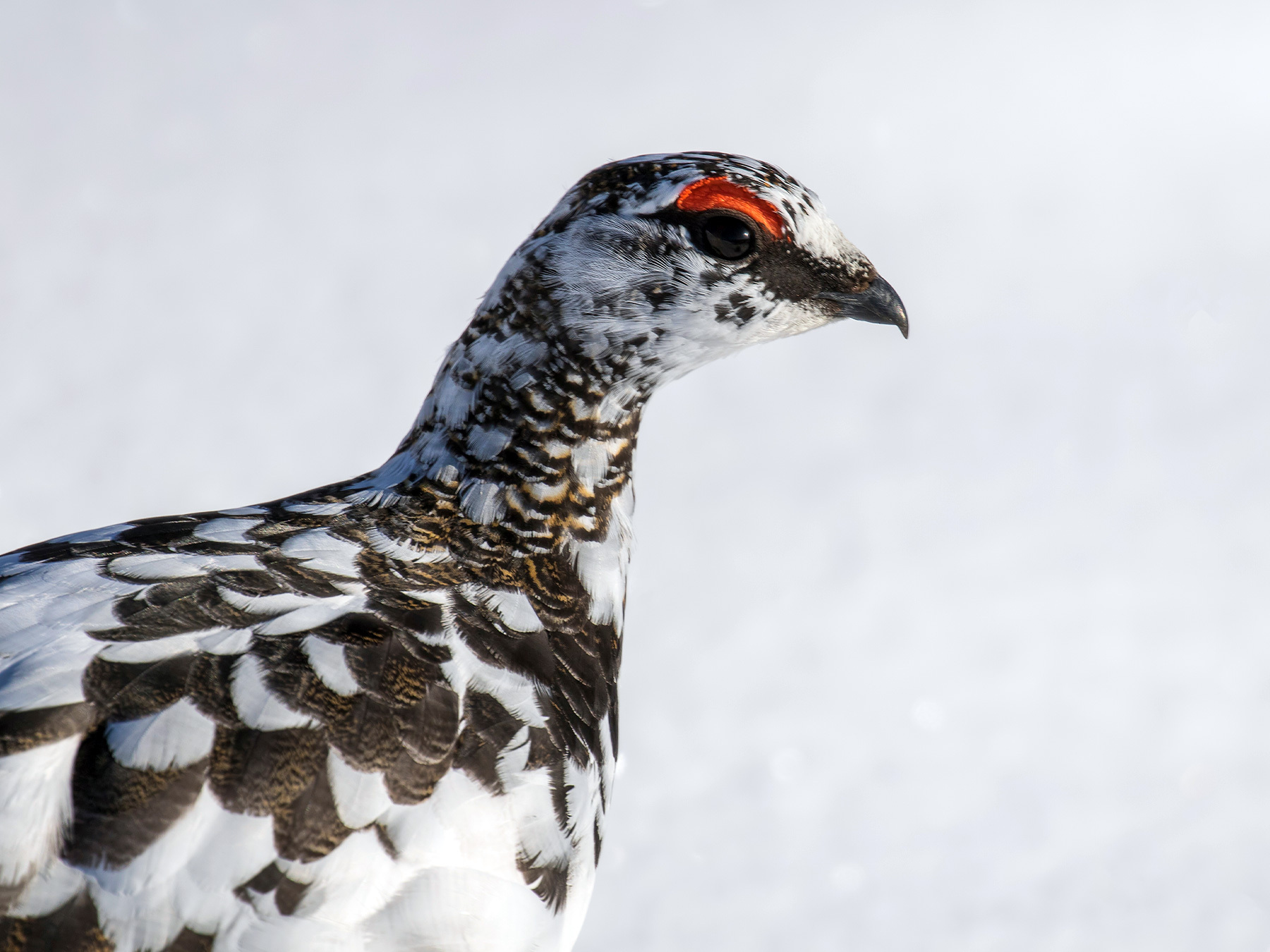
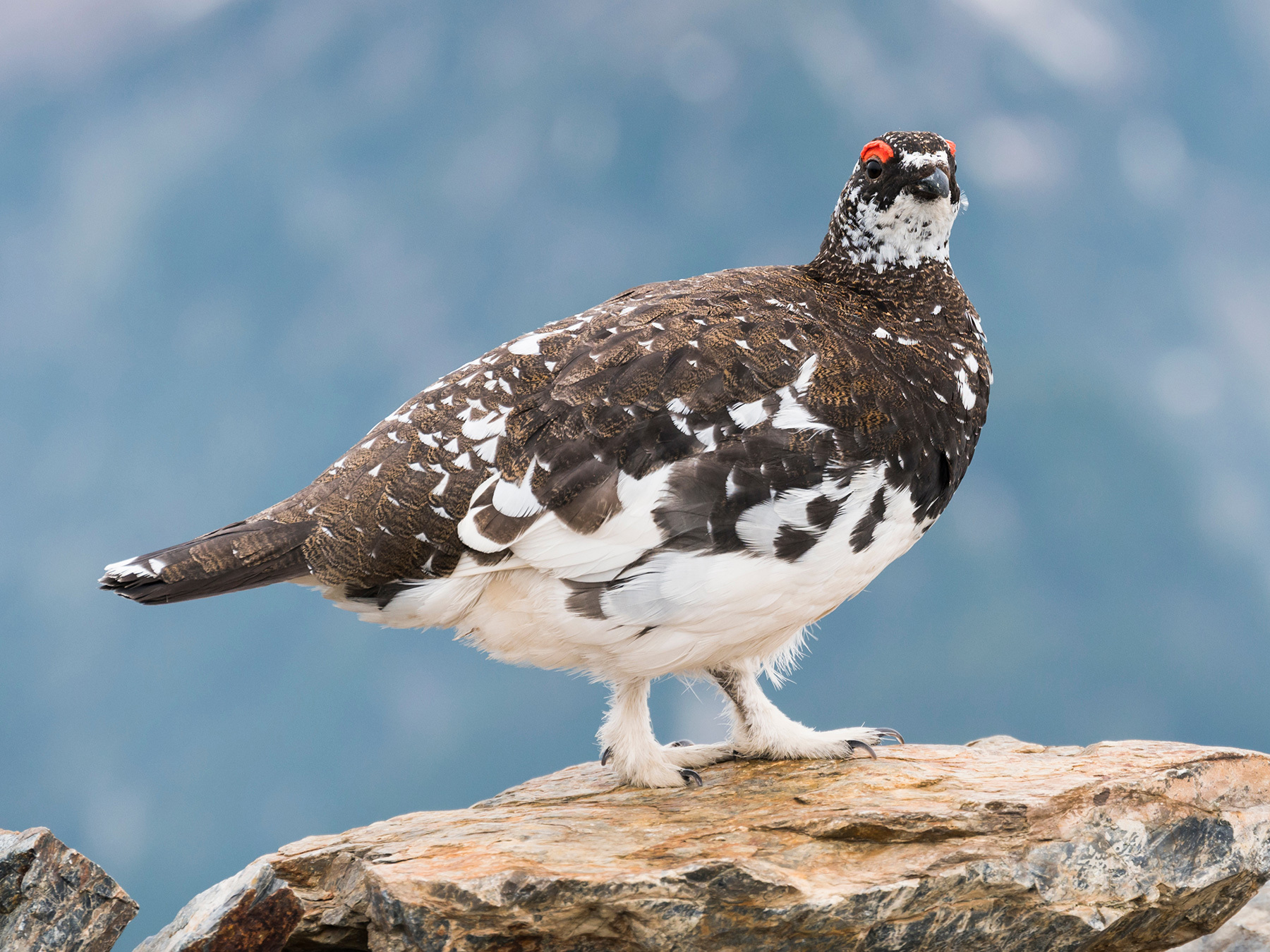
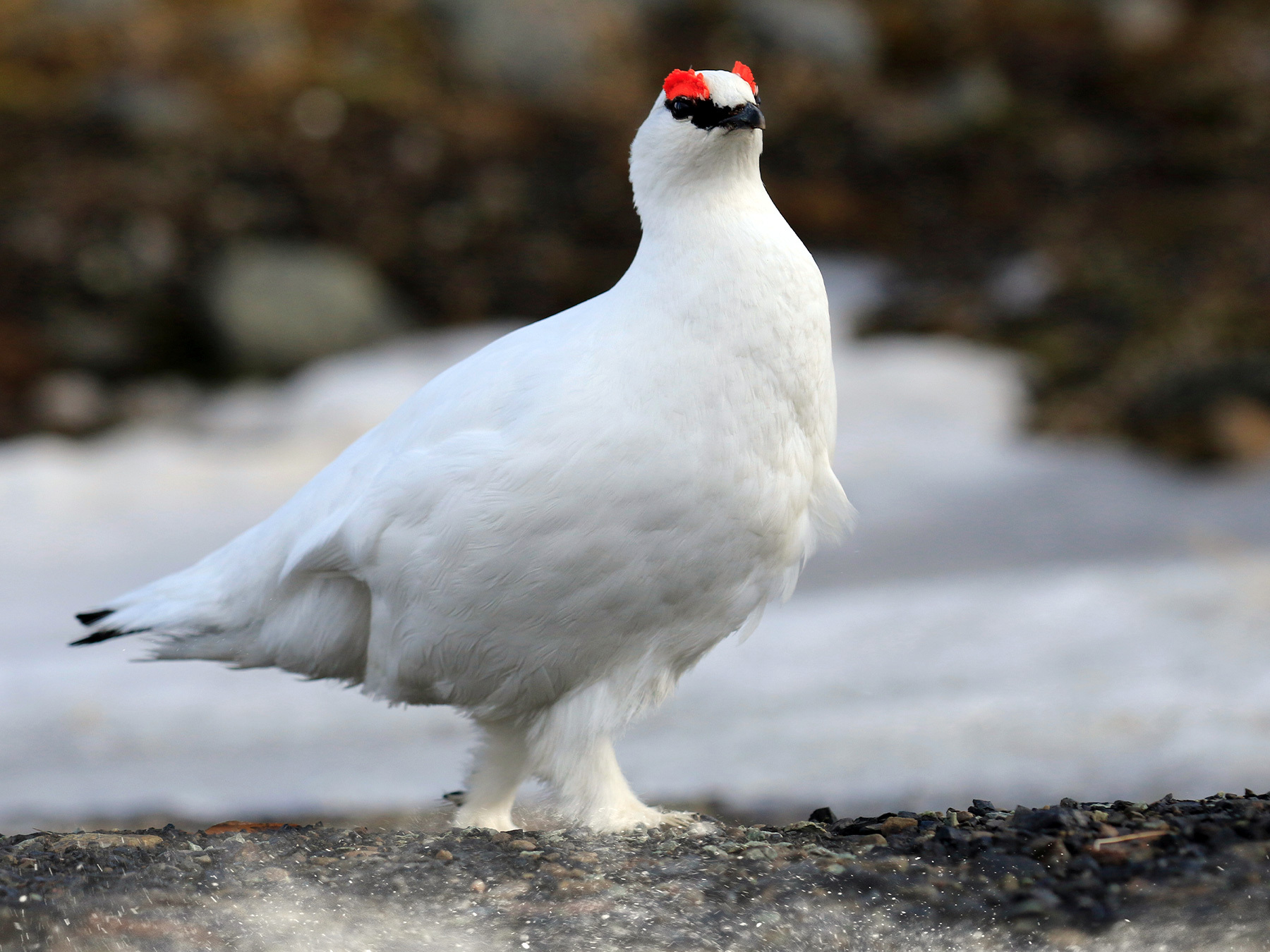
Rock Ptarmigans are plump game birds with small hooked bills, dark eyes, and feathered legs and feet. They look dramatically different between the seasons, developing pure white plumage in the winter to match their snowy habitat and darker, cryptic colouration in the warmer months.
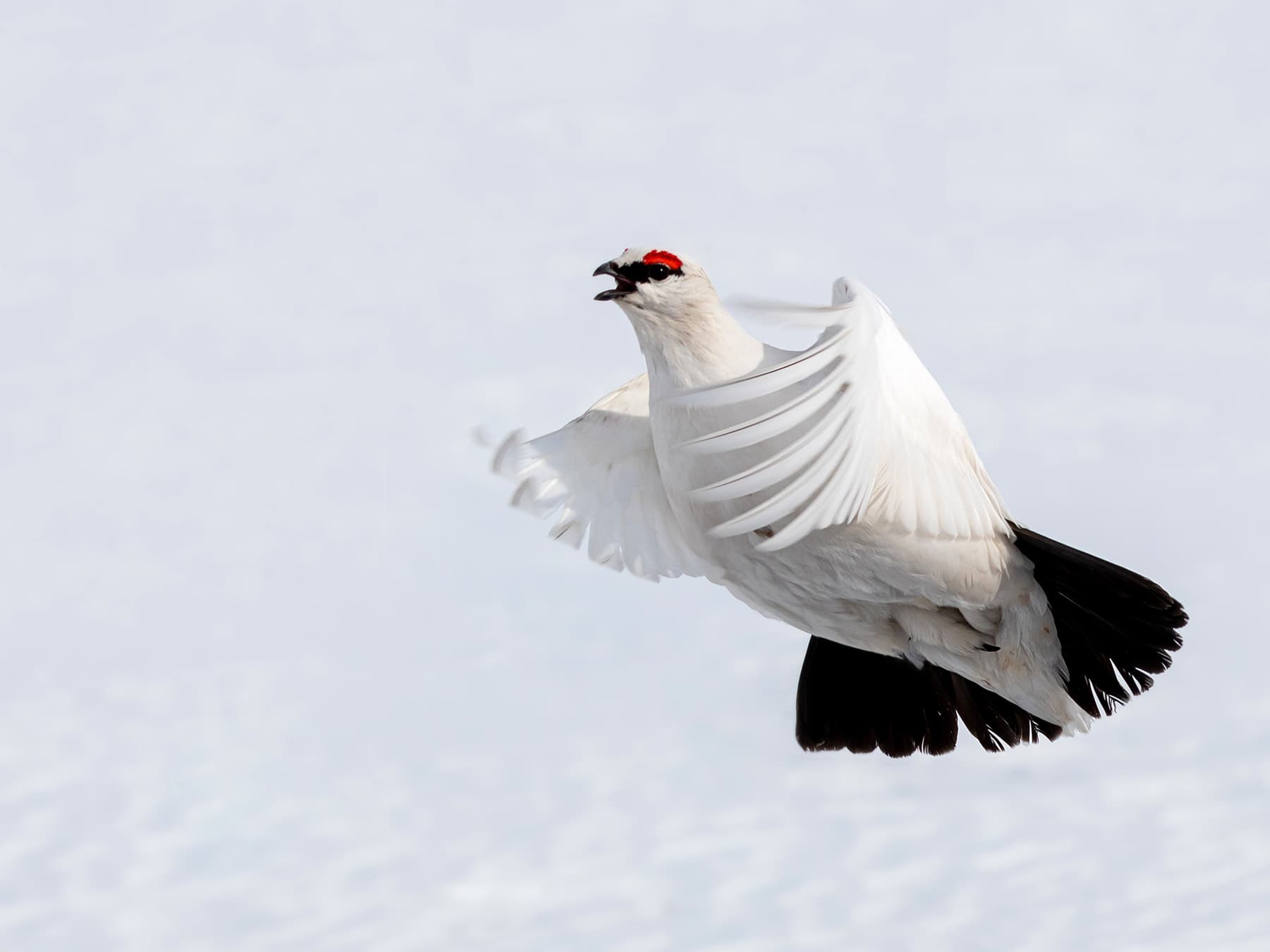
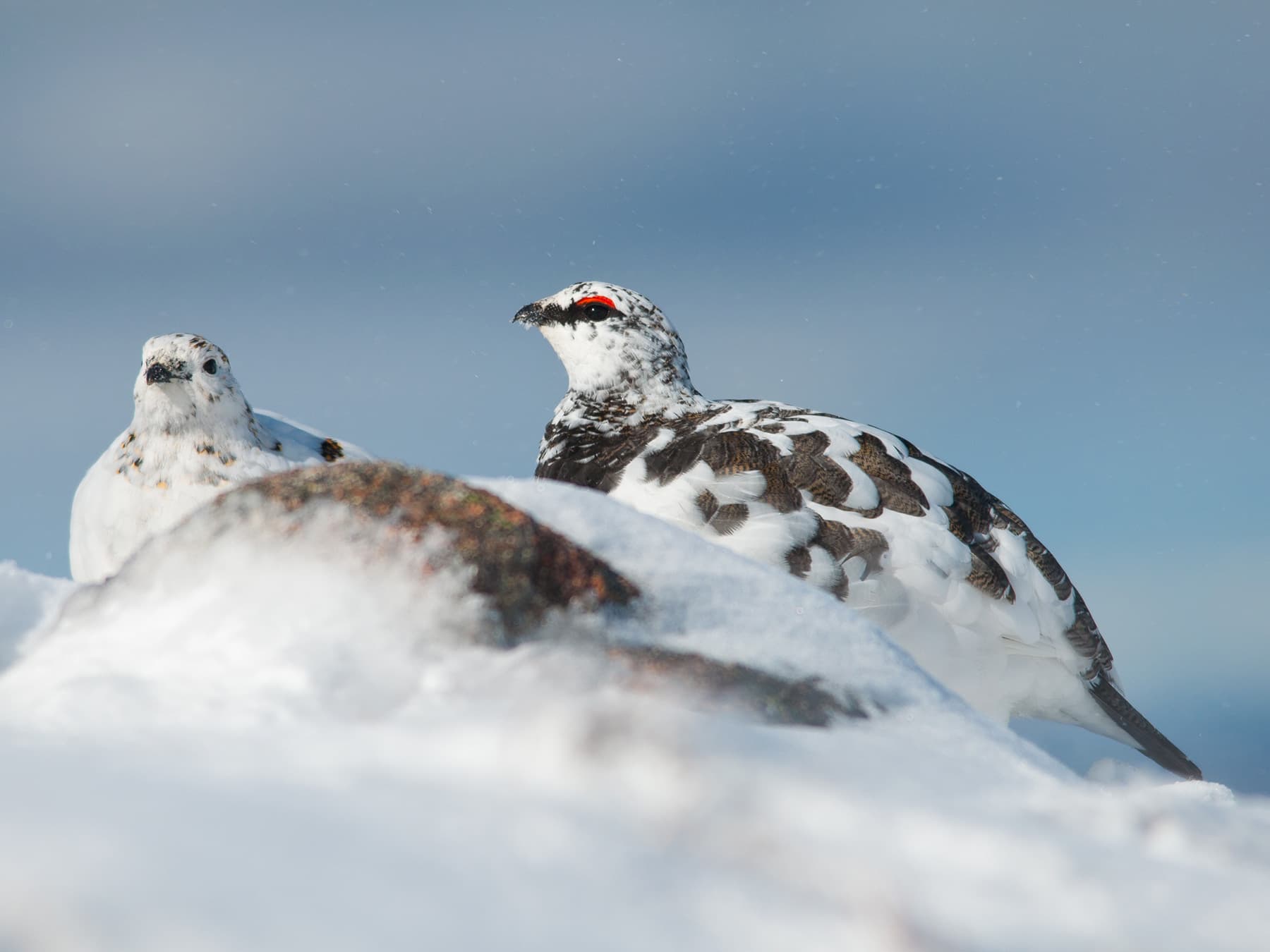
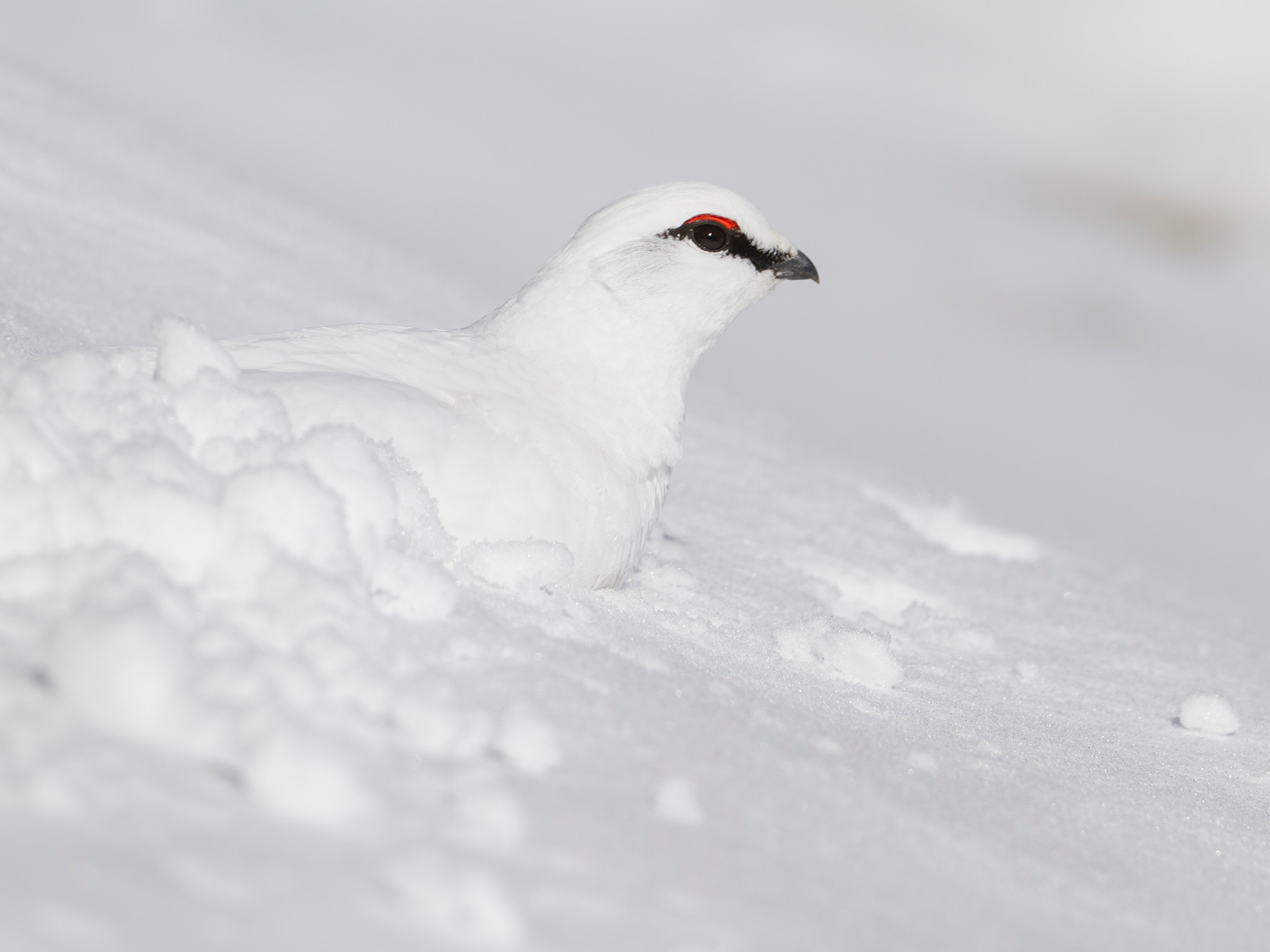
Males and females look more or less alike in the winter, with all white plumage except for a black tail and a black eye with a reddish ‘eyebrow’ known as a comb. Males can be identified by their more prominent comb and the black streak between their eyes and bill.
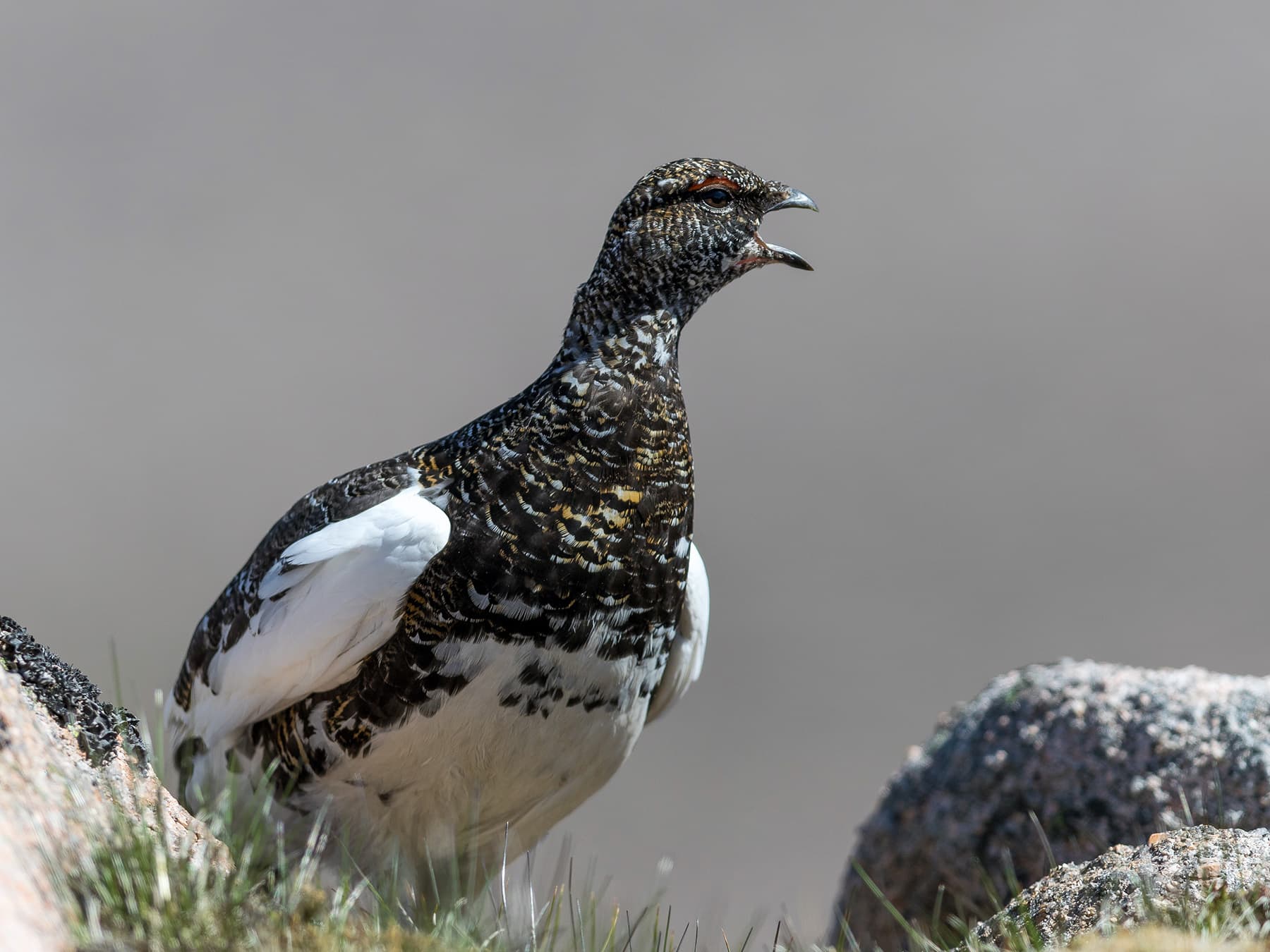
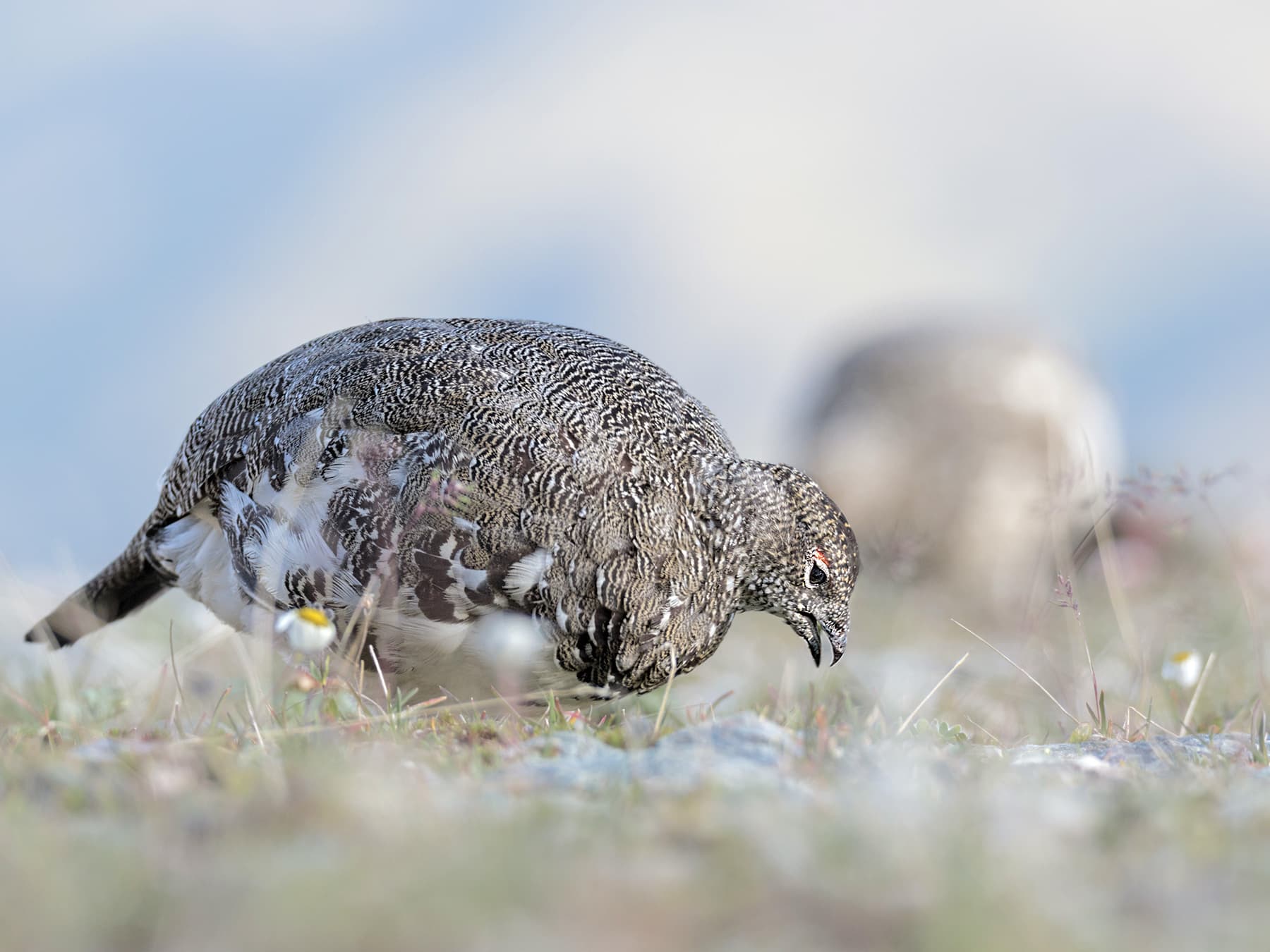
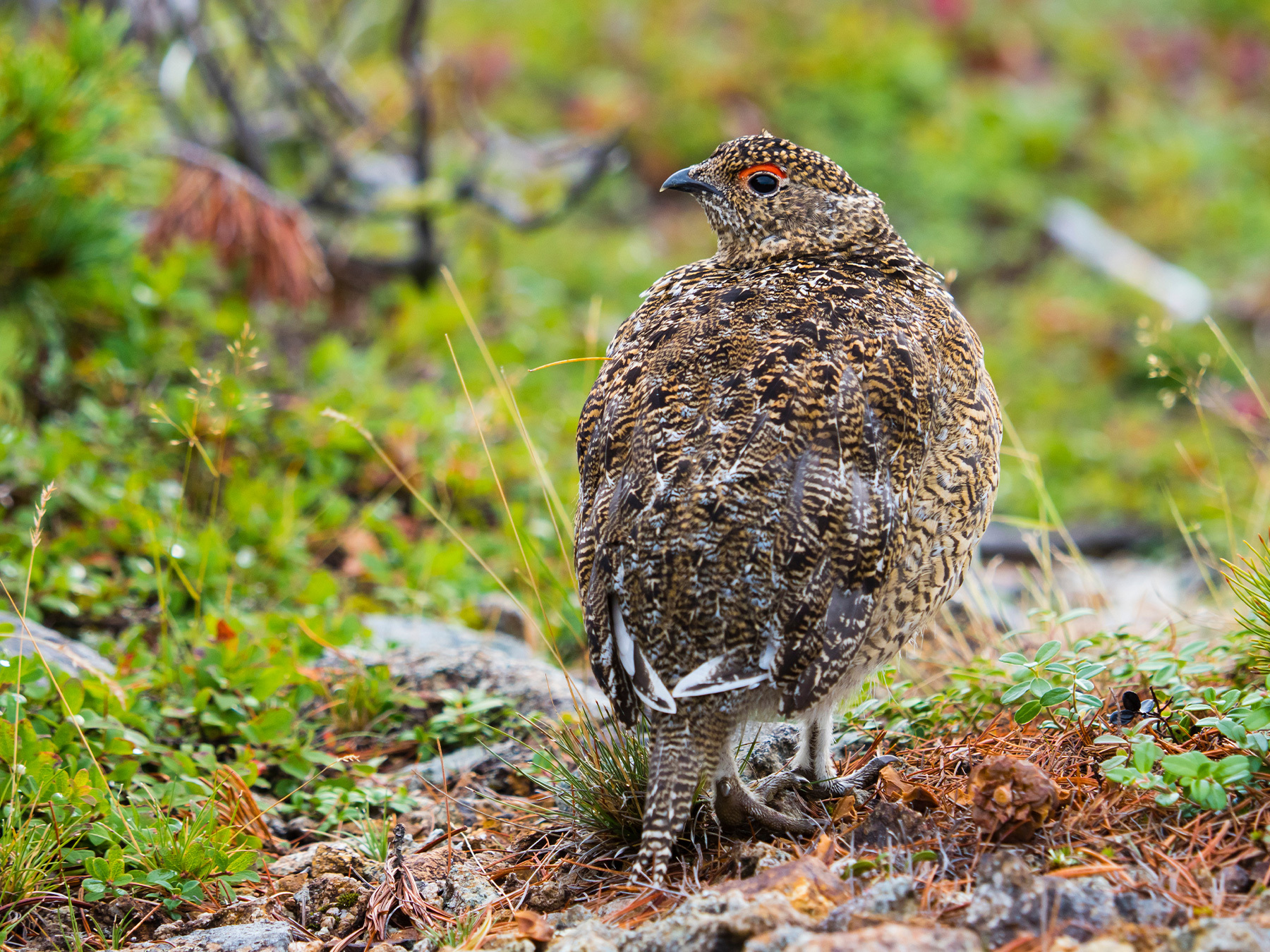
In the breeding season, female Rock Ptarmigans have white wings and rich, speckled and barred plumage combining warm brown, black and yellowish feathers. Males in breeding plumage have finely barred, grey-brown upperparts and white legs and underparts.
Juveniles resemble adult females but have white feather tips on their upperparts and a softer, fluffier appearance.
How big are Rock Ptarmigans?
Length
Adults measure 33 to 40 centimetres in length. Males Rock Ptarmigans are usually larger than females in all respects.
Weight
Male Rock Ptarmigans are generally heavier than males, except just before females lay their eggs. Males usually weigh 450 to 880 grams (16 - 31oz), while females weigh 400 to 700 grams (14 - 24 oz)
Wingspan
These birds have a wingspan of 54 to 60 centimetres or 21 to 24 inches.
Its size
Adults- Length
- 34–36 cm
- Wingspan
- 54–60 cm
- Weight
- 400–750 g
Its song and calls
What sound does a Rock Ptarmigan make?
Male Rock Ptarmigans perform a drawn-out croaking/clucking flight song when courting a female. They produce a wide range of calls during the breeding season, including strange hissing, coo-ing, clucking, and rattling sounds.
When and where to see it
OctoberIn season
Most recorded in October
- 1. Highlandunder 0.1%
- 2. Aberdeenshireunder 0.1%
- 3. Stirlingunder 0.1%
- 4. Perthshire and Kinrossunder 0.1%
- 5. Argyll and Buteunder 0.1%
Each dot is a county, state or province: the bigger and darker, the larger the bird’s share of that place’s bird records that month. Grey dots: no regular records. The ringed point is the centre of the bird’s records this month; the arrow shows how it moved since last month, and the dashed loop its path through the year. “Arrivals” colours places where it becomes regular this month (orange) or is in its last regular month (grey). GBIF eBird Observation Dataset, 2019–2024. Map data: Natural Earth, US Census Bureau; place centres © OpenStreetMap contributors.
In your area
See when the Rock Ptarmigan is recorded in your county, state or province.
How often the Rock Ptarmigan turns up in the UK, the United States and Canada through the year, from birdwatchers' records.
United States
Summer visitor · regularly May–Oct · most records in June
Canada
Summer visitor · regularly May–Mar · most records in June
Show as a table
| Month | United States | Canada |
|---|---|---|
| January | <0.001% | <0.001% (regular) |
| February | <0.001% | <0.001% (regular) |
| March | <0.001% | <0.001% (regular) |
| April | <0.001% | <0.001% |
| May | 0.002% (regular) | <0.001% (regular) |
| June | 0.004% (regular) | 0.006% (regular) |
| July | <0.001% (regular) | 0.004% (regular) |
| August | <0.001% (regular) | 0.001% (regular) |
| September | <0.001% (regular) | 0.001% (regular) |
| October | <0.001% (regular) | <0.001% (regular) |
| November | <0.001% | <0.001% (regular) |
| December | <0.001% | <0.001% |
Recorded in United Kingdom, but eBird withholds many records of this sensitive species to protect it, so no months are shown.
Recorded regularly in
Worldwide: recorded regularly in 19 countries
Countries where it was recorded in at least 3 of the 6 years 2019–2024. Linked countries have their own bird list.
Data: EOD – eBird Observation Dataset (Cornell Lab of Ornithology), accessed via GBIF.org, CC BY 4.0. Records from 2019–2024, aggregated and filtered by Birdfact. How these lists are made
What is the habitat of a Rock Ptarmigan?
Rock Ptarmigans are most at home in the sparsely vegetated rocky tundra, although they also inhabit mountain summits and open meadows. They avoid wooded areas and habitats dominated by tall vegetation.
What is the range of a Rock Ptarmigan?
Rock Ptarmigans occur in the coldest regions of the Northern Hemisphere, from Alaska to Greenland and across Northern Europe to Siberia. They also occur further south in alpine habitats in Japan, Mongolia, China, Kazakhstan, Tajikistan, and across the Alps of southern Europe.
Where do Rock Ptarmigans live?
Rock Ptarmigans are terrestrial birds that live in cold, open, and mountainous environments in the far north of the world. They are well-suited to their surroundings, with feathered feet that prevent heat loss and act like snowshoes. These tough birds even dig themselves into the snow to shelter from cold winds.
How rare are Rock Ptarmigans?
Rock Ptarmigans are not rare, although they are rarely seen due to their inhospitable habitat. Their global population is estimated at over eight million individuals.
Where can you see Rock Ptarmigans in the US?
Rock Ptarmigans do not live in the Lower 48 states of the United States, although they are widespread in the tundra of Alaska.
Where can you see Rock Ptarmigans in Canada?
Rock Ptarmigans have a wide distribution in Canada, although they are absent from most of the south. They do, however, extend down the west coast through British Columbia.
Where can you see Rock Ptarmigans in the UK?
Rock Ptarmigans in the United Kingdom are limited to the mountains of the Scottish Highlands.
Migration
Do Rock Ptarmigans migrate?
Rock Ptarmigans are resident or short-distance migrants, often moving to lower altitudes or areas with less snow in the winter. They are more migratory or nomadic in Arctic Alaska and Canada, where they migrate in flocks, sometimes numbering in the hundreds.
Why do Rock Ptarmigans migrate?
Rock Ptarmigan migrate to lower altitudes and latitudes when thick snow blankets alpine and far northern breeding habitats. They can scratch through loose snow to feed but will seek areas where food is readily available.
Are Rock Ptarmigans native to the US?
Rock Ptarmigans are not native to the Contiguous United States, although they are widespread and native in Alaska.
Are Rock Ptarmigans native to Canada?
Rock Ptarmigans are widespread native residents and migrants in Canada.
Are Rock Ptarmigans native to the UK?
The Ptarmigan is native to the United Kingdom but has a small population and restricted range in the highest parts of Scotland.
Tips for seeing it
- Look for Rock Ptarmigans in rocky, treeless areas above the timberline.
- Listen for their distinctive croaking call, especially during the breeding season.
- Observe their seasonal plumage changes for accurate identification.
- In winter, watch for movement against snowy backgrounds to spot these well-camouflaged birds.
What it eats
What do Rock Ptarmigans eat?
Rock Ptarmigans are primarily herbivorous, taking flowers, buds, catkins, leaves, berries, and seeds. They also eat insects and snails when available in summer.
What do Rock Ptarmigan chicks eat?
Rock Ptarmigan chicks eat caterpillars and snails for their first week or so but rely increasingly on berries and other plant material as they grow older. The young birds stick together with their mother but leave the nest on their first day, already fully capable of feeding themselves.
Nesting and breeding
Where do Rock Ptarmigans nest?
Rock Ptarmigans nest on the ground, out in the open, but often next to a rock or shrub that provides shelter from the wind. The nest is a shallow scrape (1 - 7.5cm deep) made by the female and lined with feathers and plant material.
When do Rock Ptarmigans nest?
Rock Ptarmigans pair up around the end of May and lay their eggs soon after. Incubation takes 20 to 26 days, and the hatchlings leave the nest on their first day. These birds produce one brood per season.
What do Rock Ptarmigan eggs look like?
Rock Ptarmigans lay 3 to 13 light pinkish-brown eggs with warm brown irregular spots. Each egg measures approximately 42 millimetres long and 30 millimetres wide.
Do Rock Ptarmigans mate for life?
Rock Ptarmigans are not known to mate for life but usually form a monogamous bond during each breeding season. However, polygyny is common, and some males may mate with up to four females.
Behaviour
Are Rock Ptarmigans aggressive?
Male Rock Ptarmigans defend their territories enthusiastically, although they use posturing and chases more than physical conflict to solve disputes. However, fighting males may resort to striking at each other's heads with their wings and beaks.
Where do Rock Ptarmigans sleep at night?
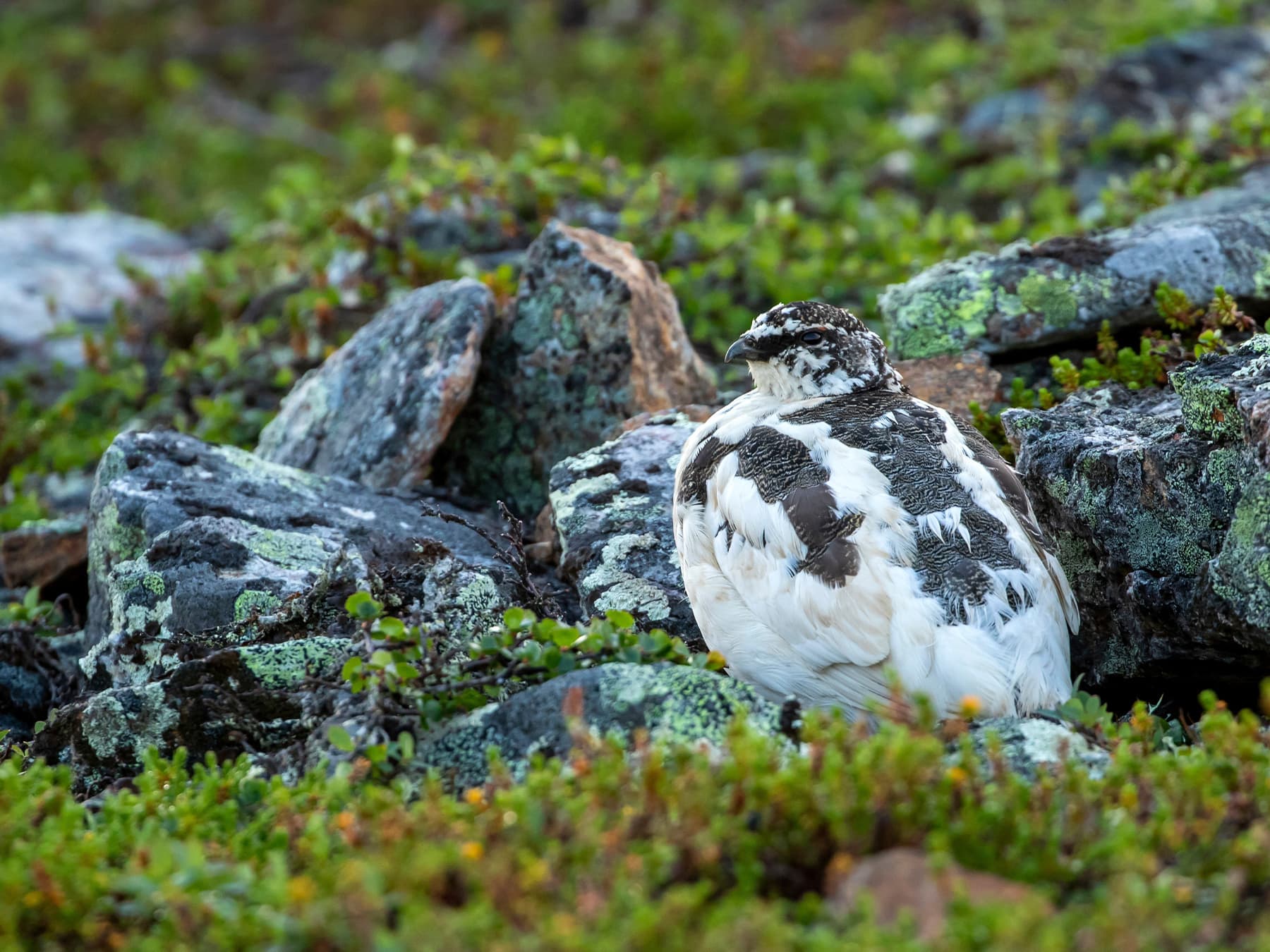
Rock Ptarmigans sleep on the ground, often in shallow hollows and behind shrubs or boulders that provide shelter from the wind. They will also dig a sleeping hole in powdery snow, up to about a half meter deep.
Lifespan and predators
How long do Rock Ptarmigans live?
Rock Ptarmigans can live for at least twelve years, although their average lifespan is much shorter at about two years.
What are the predators of Rock Ptarmigans?
The Gyrfalcon is the Rock Ptarmigans' major enemy, although they are vulnerable to various other birds of prey, including Peregrine Falcons, Snowy Owls, and Golden Eagles. Weasels, Arctic Foxes, ravens, and gulls take their eggs and chicks.
Are Rock Ptarmigans protected?
Rock Ptarmigans are protected by the Wildlife and Countryside Act in the United Kingdom.
Are Rock Ptarmigans endangered?
Rock Ptarmigans are thought to be decreasing, although they are not endangered. These game birds are assessed as a ‘Least Concern’ species on the IUCN Red List. Unfortunately, Ptarmigans have suffered a severe decline in the United Kingdom, where they are a red-listed species.
Conservation
While currently listed as Least Concern, Rock Ptarmigans face threats from climate change, which affects their alpine habitats. Some populations are declining due to habitat loss and hunting pressure.
Conservation efforts focus on habitat protection and sustainable hunting practices in areas where they are game birds.
More photos
6 photos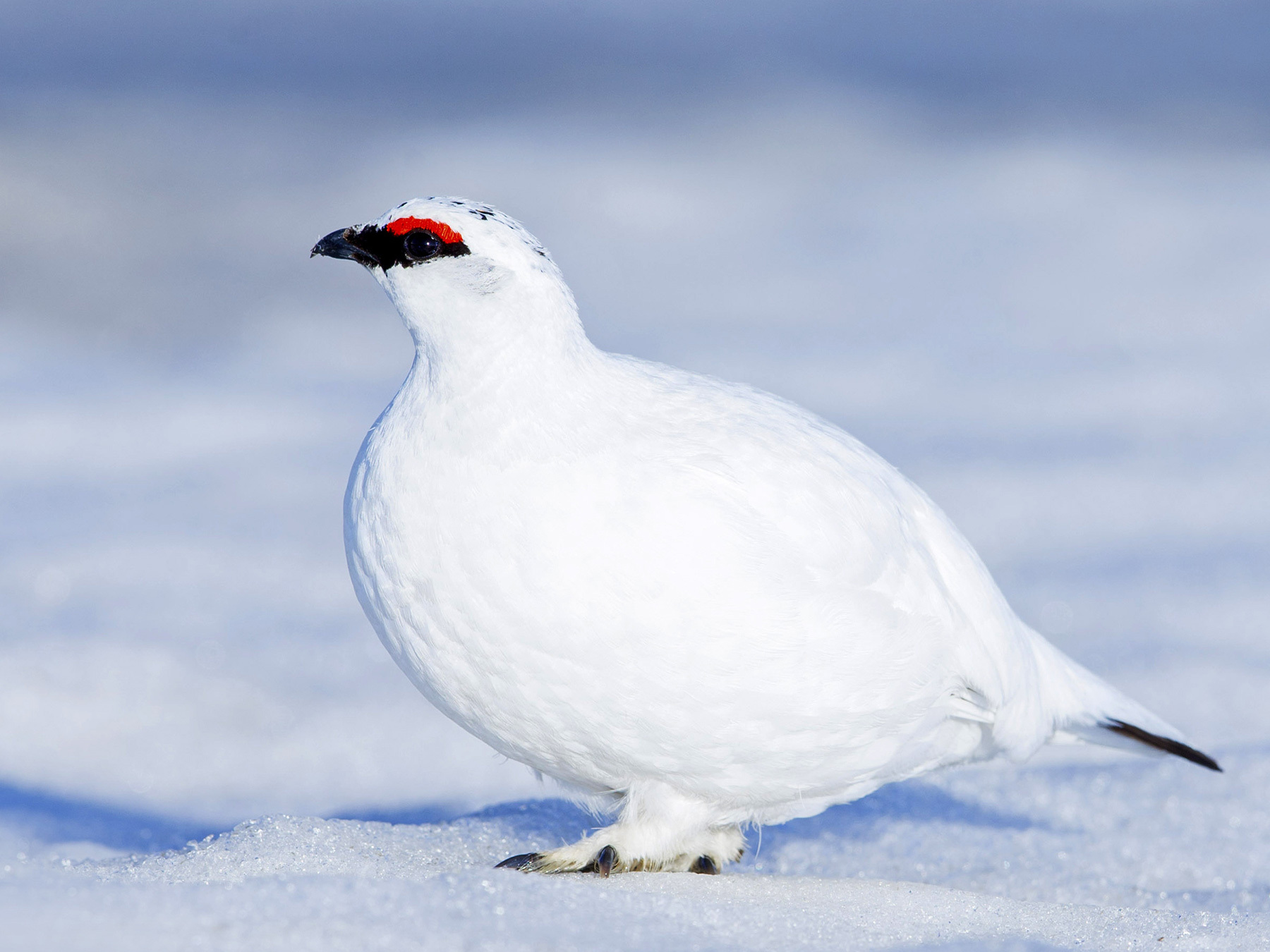
Quick facts
- Length
- 34–36 cm
- Wingspan
- 54–60 cm
- Weight
- 400–750 g
- Lifespan
- 3–6 years · oldest recorded 11.7 years
- Family
- Pheasants & Grouse
- Migration
- Partial migrant
- Global status (IUCN)
- Least Concern
- World population
- 5,140,000 - 20,200,000 mature individuals
- Population trend
- Decreasing
- Also called
- Rock Grouse, Snow Chicken
- Scientific name
- Lagopus muta
Questions
4Can the Rock Ptarmigan fly?
Rock Ptarmigan spend most of their time on the ground and usually move about on foot. However, they can fly fast and strong, often low to the ground and with rapid wingbeats interspersed with gliding. Some birds have travelled over a thousand kilometres on migration, so they have no problem flying longer distances.
Are Rock Ptarmigan omnivores?
Rock Ptarmigans are primarily vegetarian (over 99%), although they also take some snails, caterpillars, and other invertebrates in the warmer months.
Is a Ptarmigan a prey or predator?
Ptarmigans are low on the food chain and eaten by many birds of prey and mammals, including humans.
How to pronounce Ptarmigan
Ptarmigan is easy to pronounce once you learn that the ‘P’ is silent, as in psychology or raspberry. Their name is pronounced Taar-muh-gn
Sources
4- 1BirdLife International. 2016. Lagopus muta (errata version published in 2017). The IUCN Red List of Threatened Species 2016: e.T22679464A113623562. Source (opens in a new tab)
- 2BirdLife International. 2016. Lagopus muta (errata version published in 2017). The IUCN Red List of Threatened Species 2016: e.T22679464A113623562. Source (opens in a new tab)
- 3BirdLife International. 2016. Lagopus muta (errata version published in 2017). The IUCN Red List of Threatened Species 2016: e.T22679464A113623562. Source (opens in a new tab)
- 4Fransson et al., EURING list of longevity records for European birds (2010) Source (opens in a new tab)

Checked by
Nathan Cope, founder and editor
Nathan founded Birdfact and leads its writers and contributors in the UK, the US and Canada. He has watched and studied birds for more than ten years, and checks every article and species guide before it’s published.