


Pomarine Jaeger
Pomarine Skua · Stercorarius pomarinus
By the Birdfact teamChecked by Nathan Cope
On this page12 sections
How to recognise it
What do Pomarine Skuas look like?
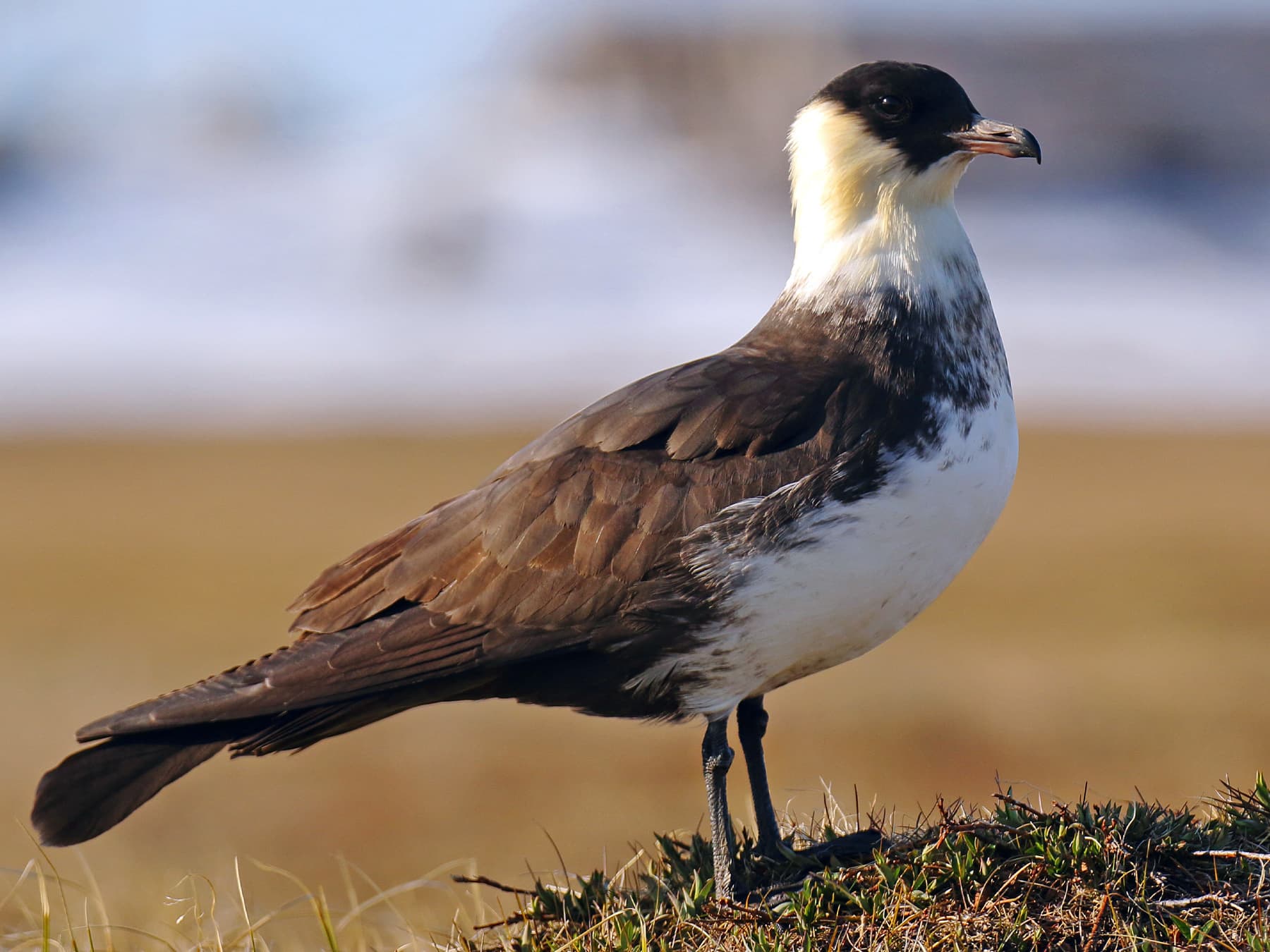
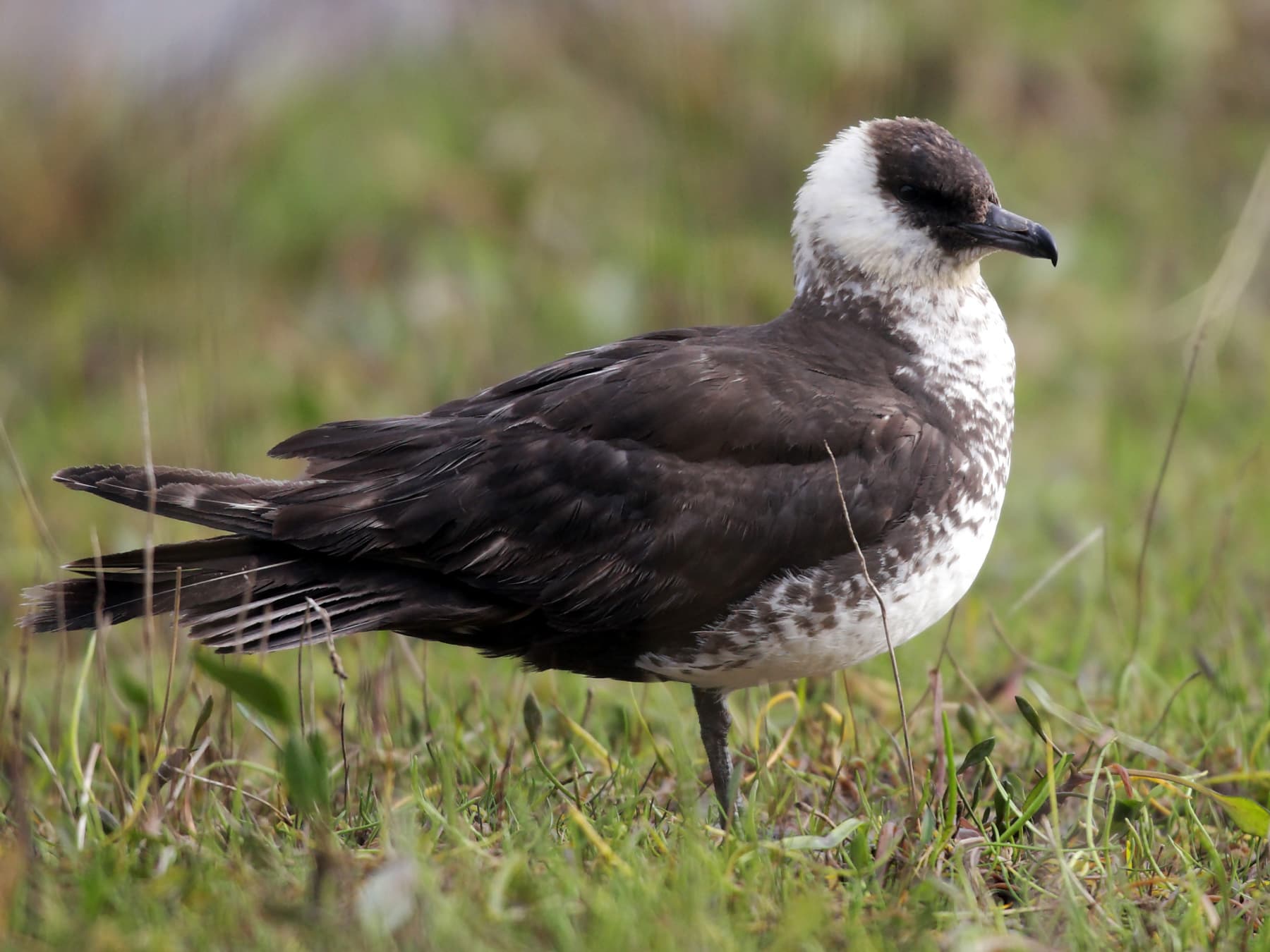
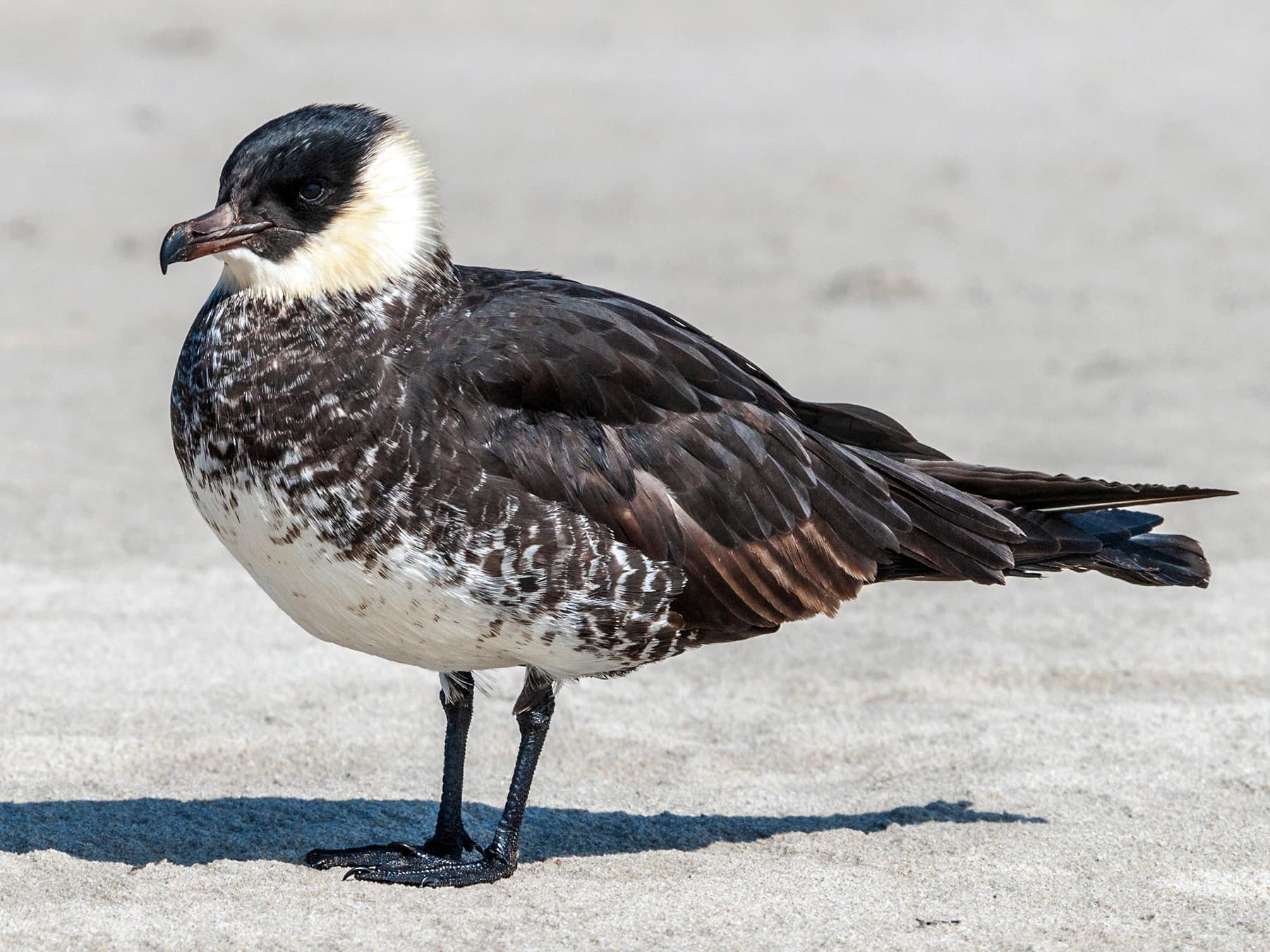
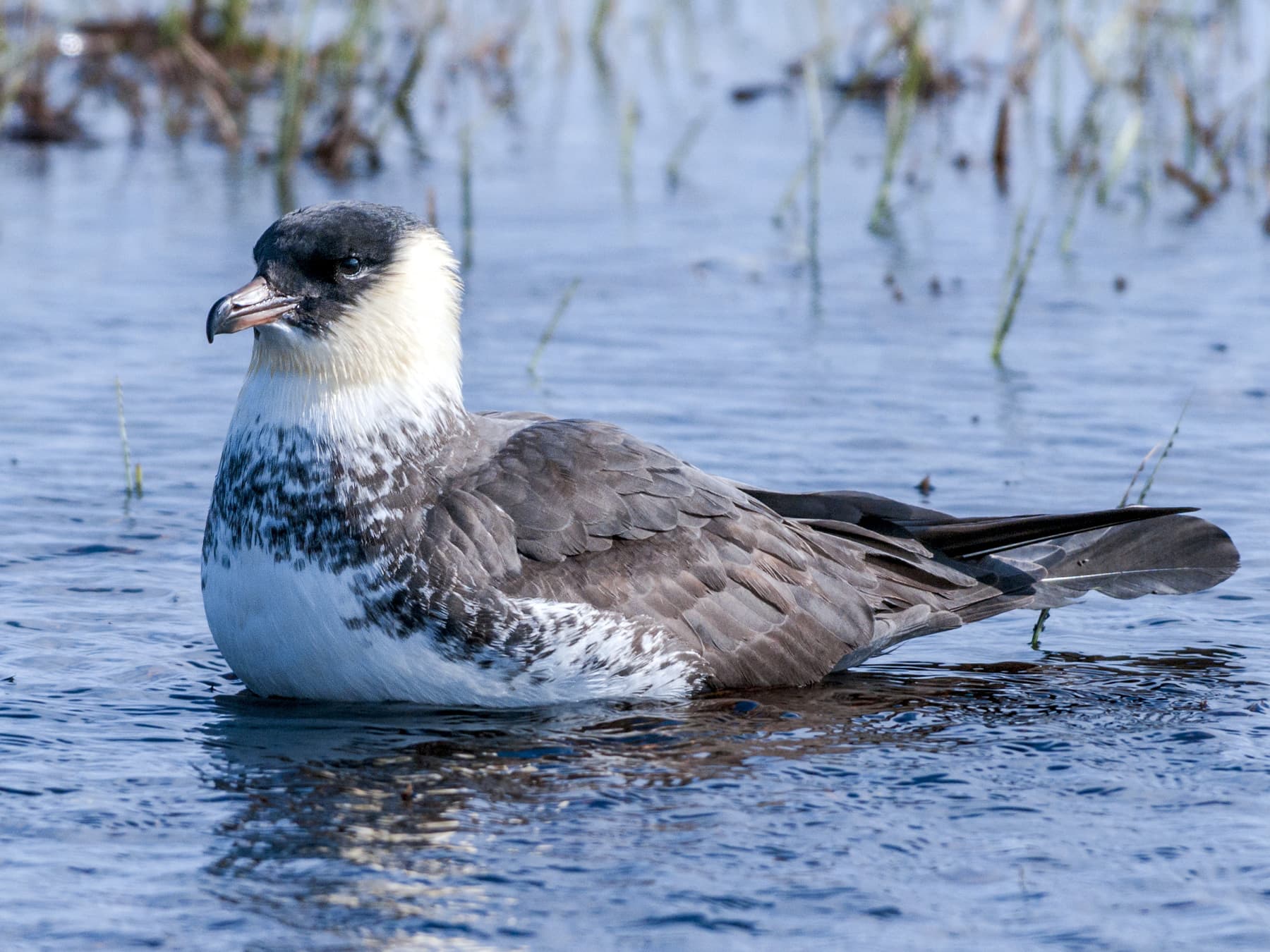
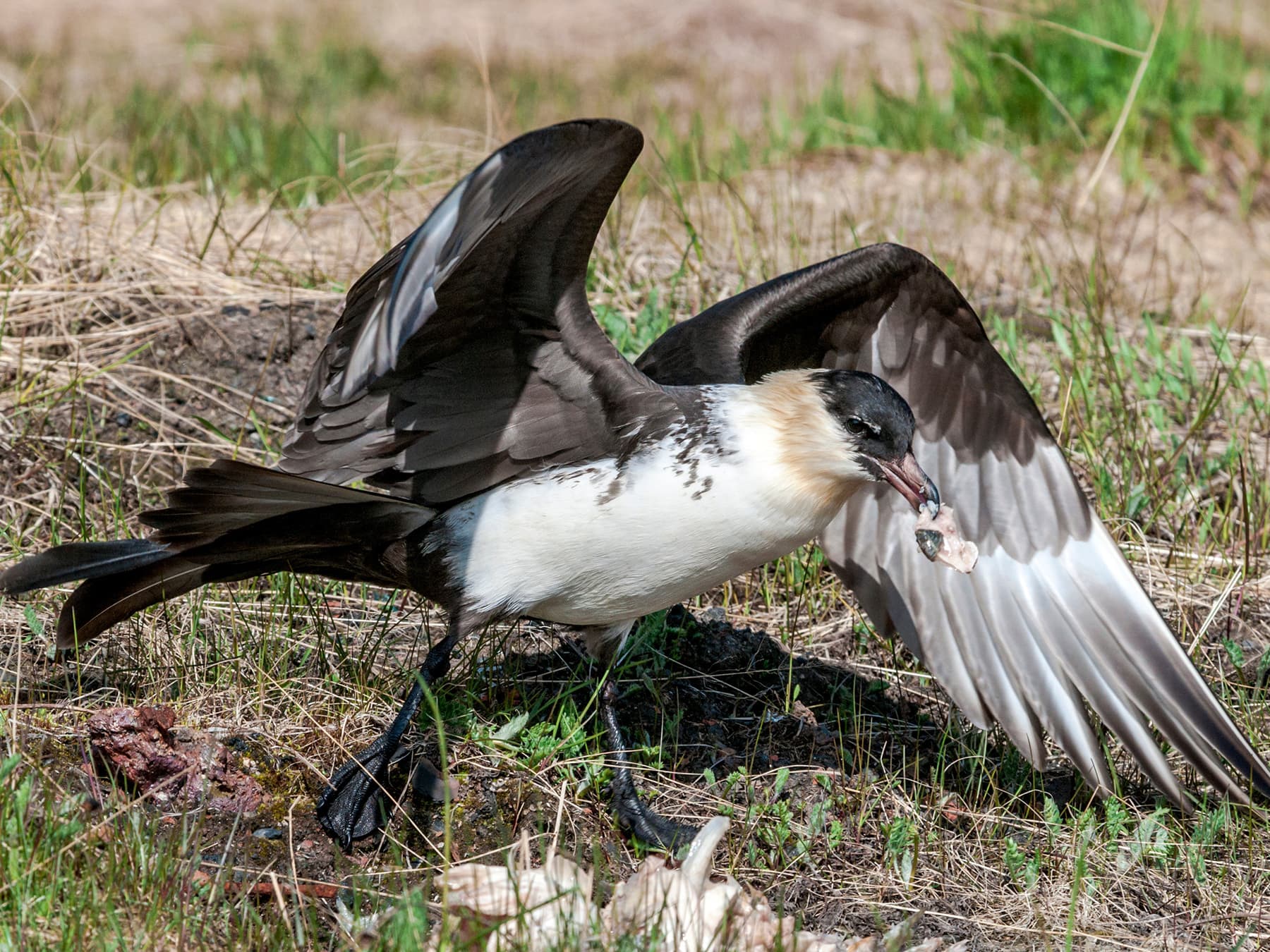
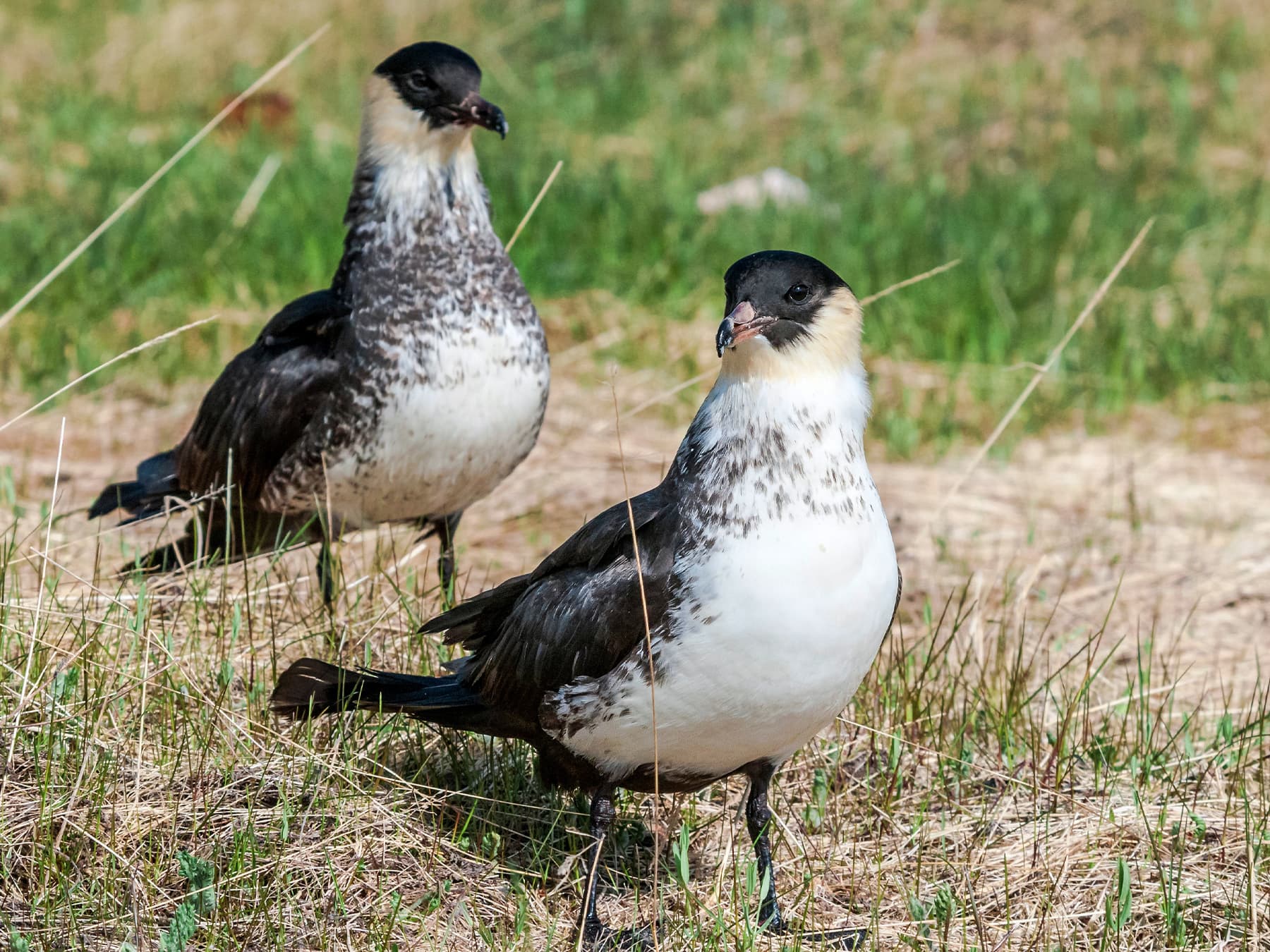
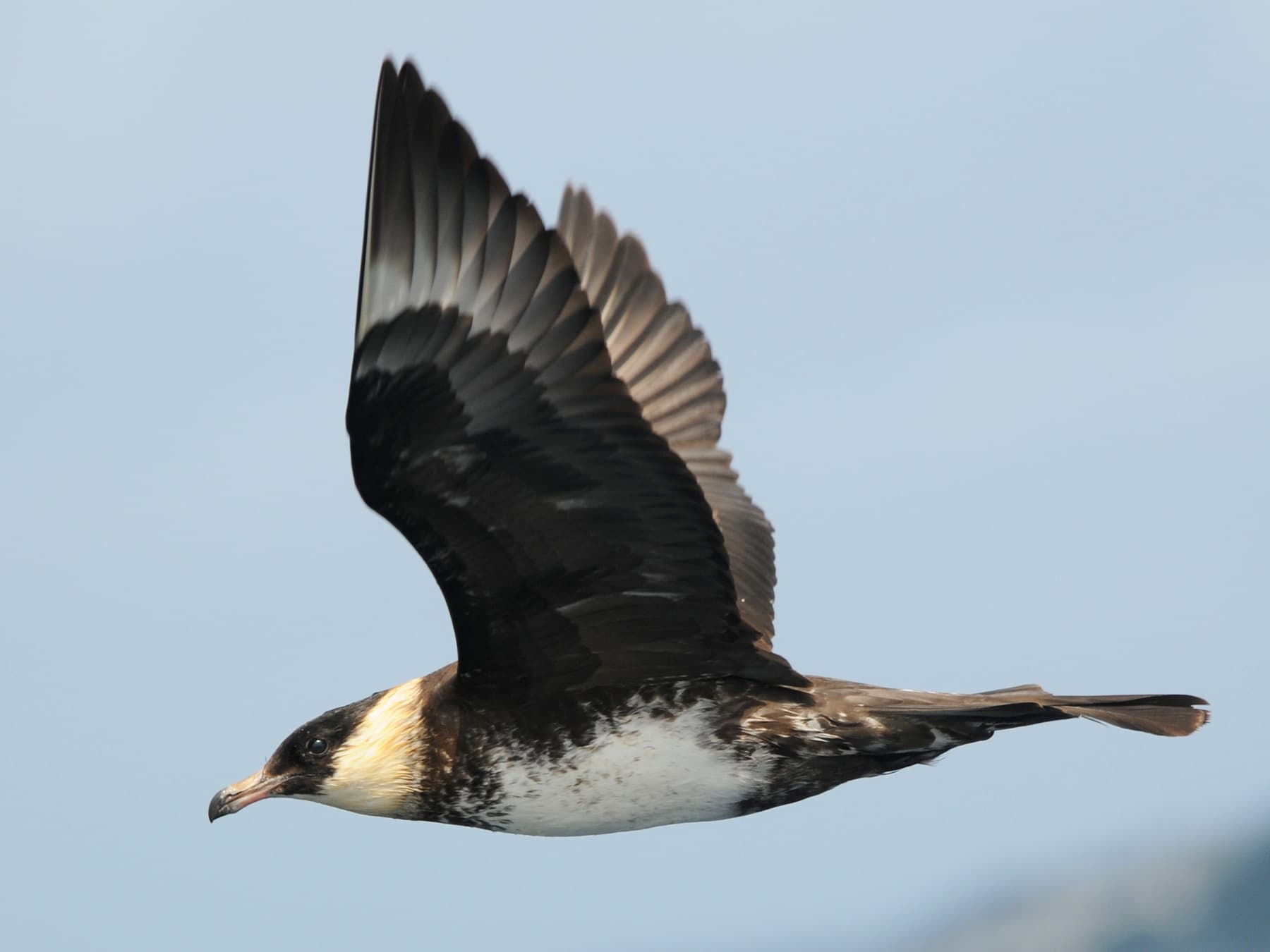
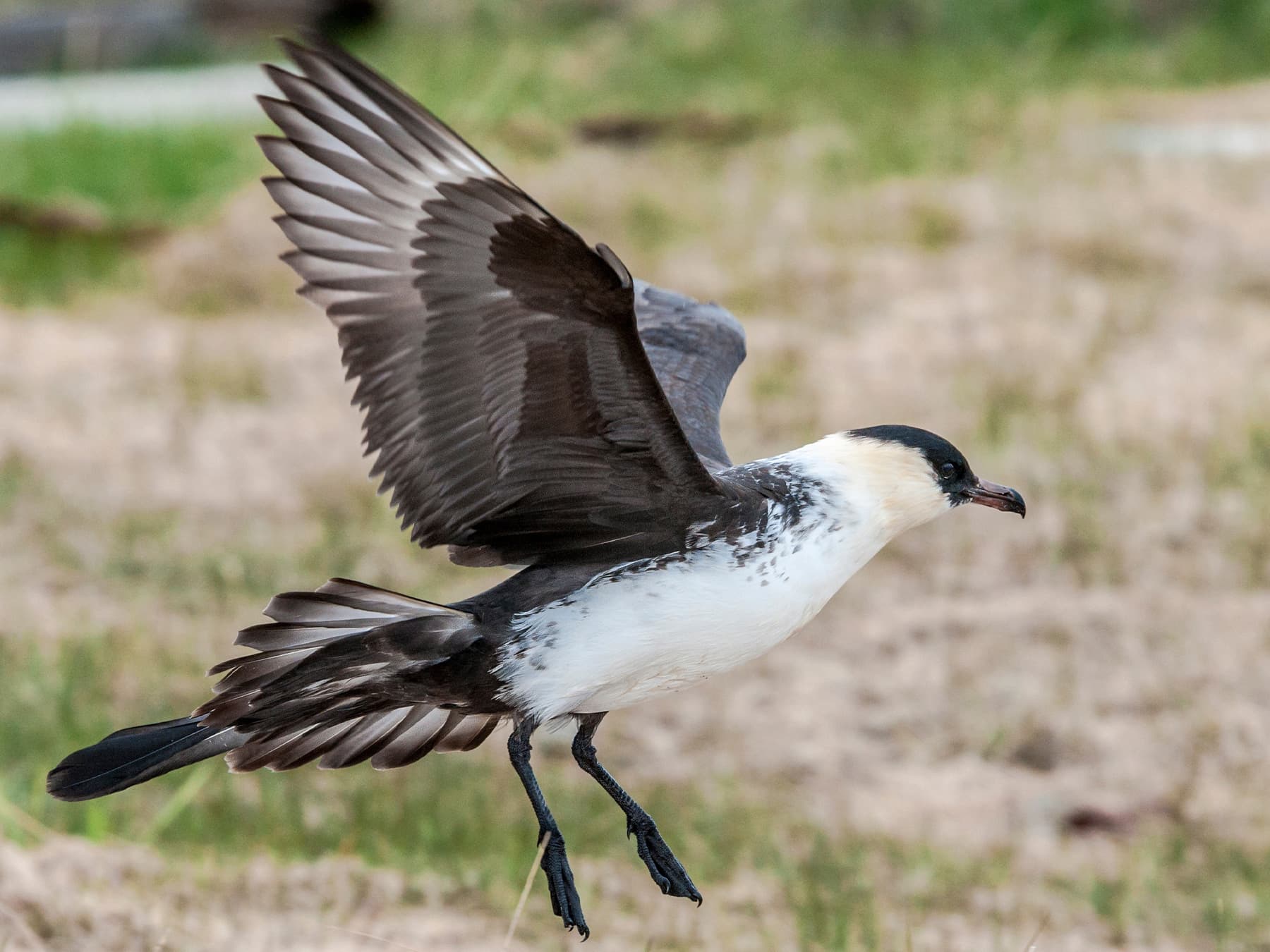
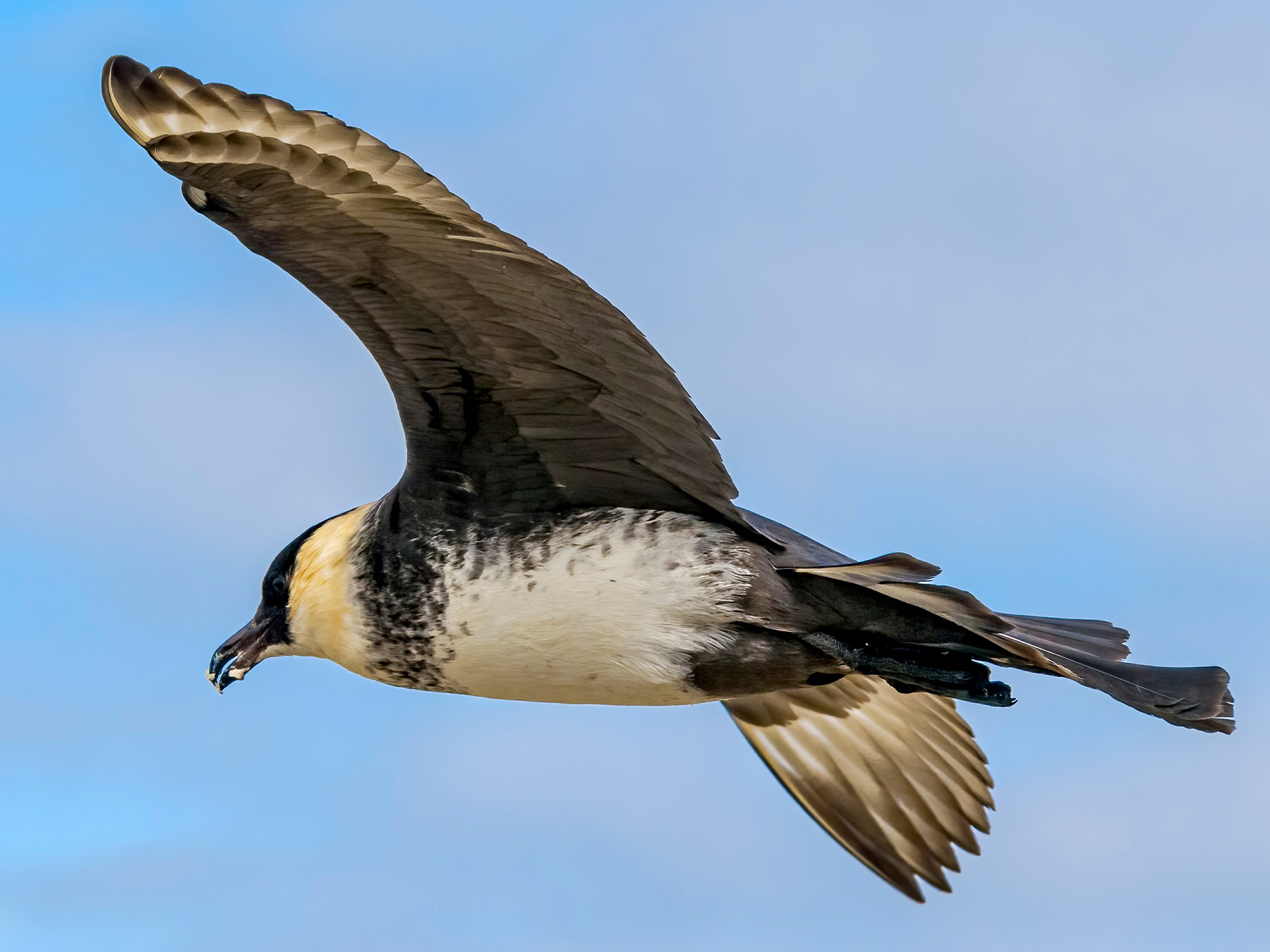
Two colour morphs of pomarine skuas exist. Light morph birds are by far the most common. This variety has a black crown and prominent black face mask, pale yellow cheeks and throat and upper neck, dusky brown upperparts, including wings, back, and tail, and a bright white belly with a grey breastband (which is always present in females, but sometimes absent in males).
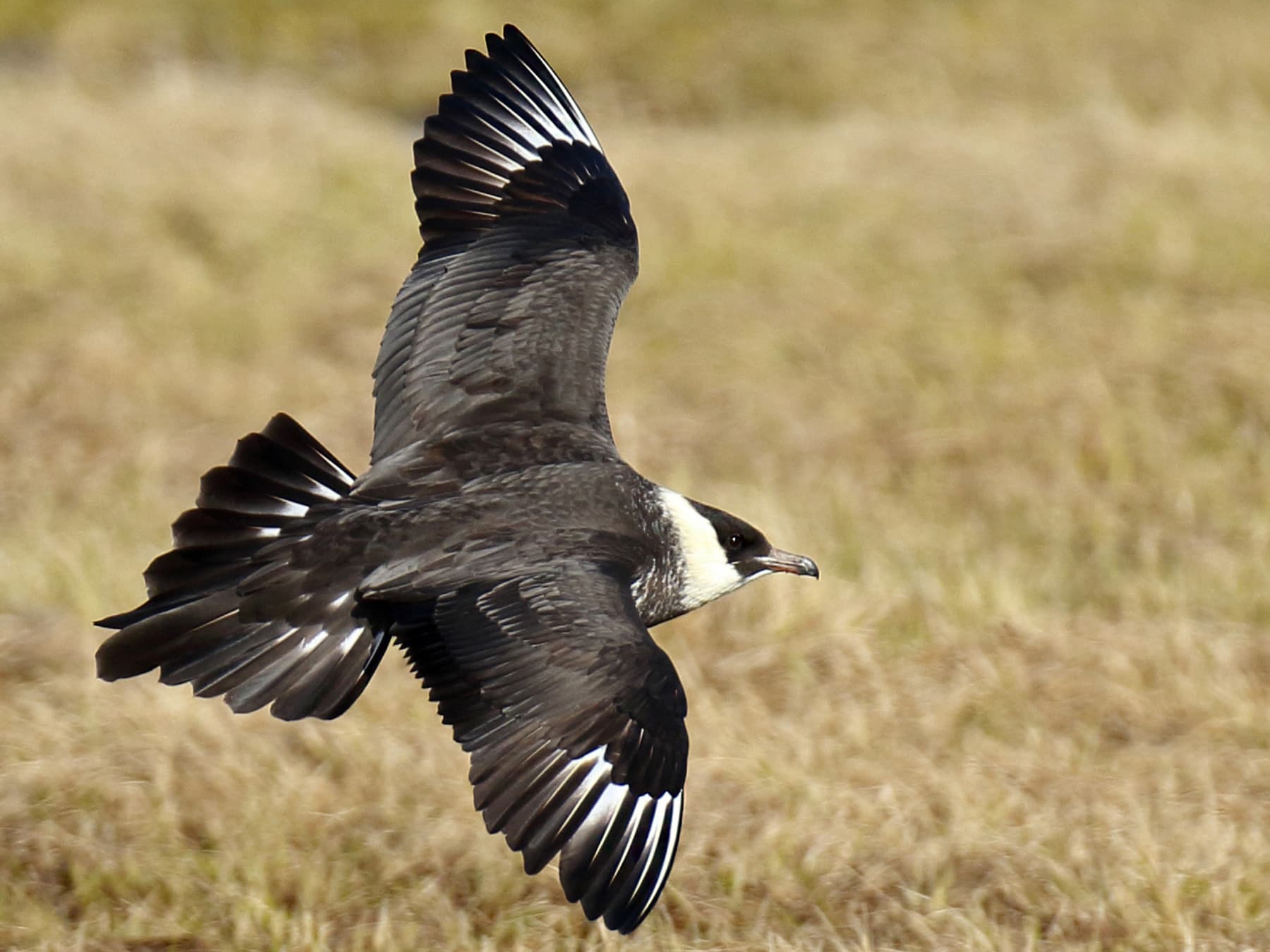
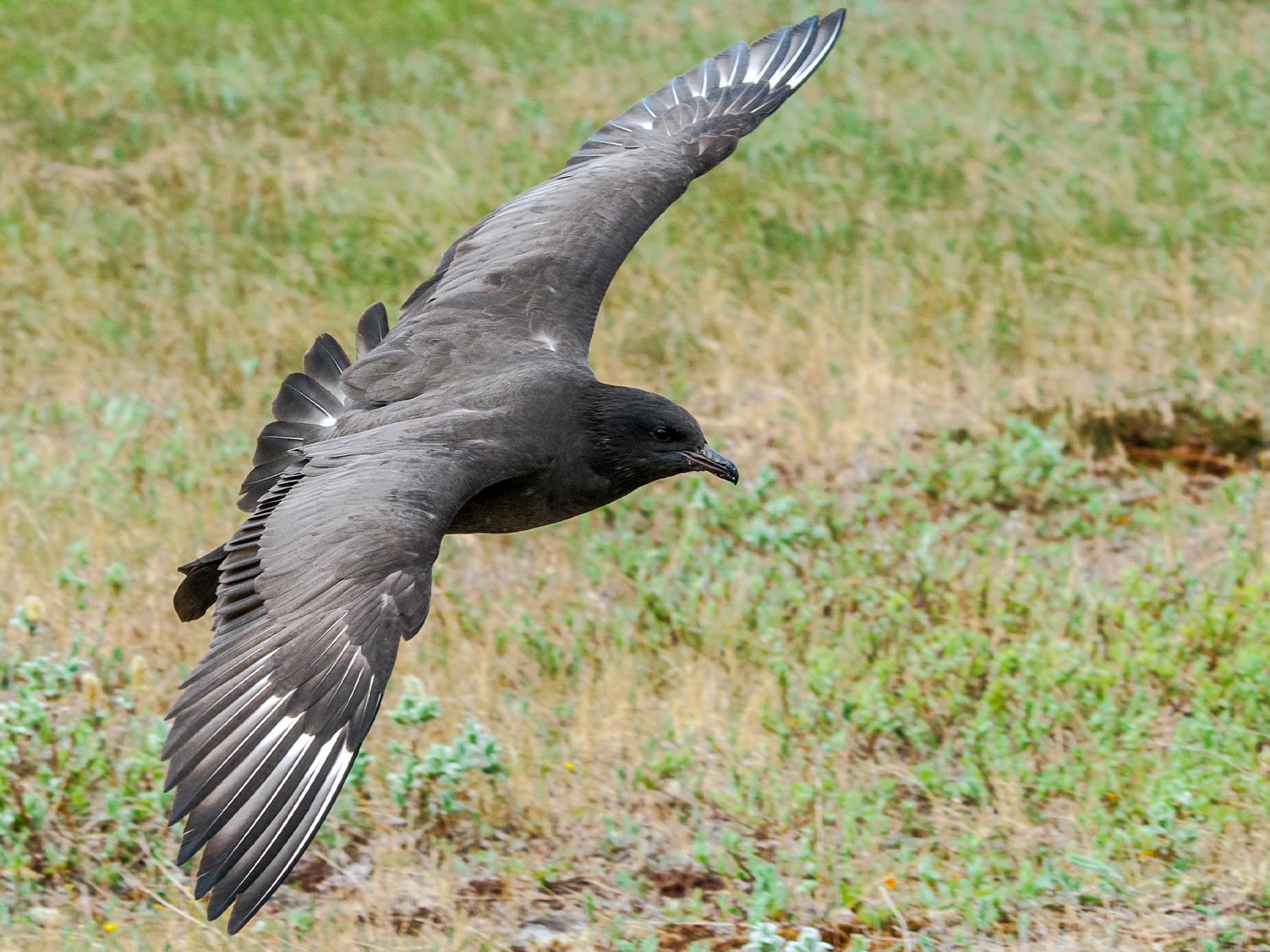
Two rounded tail streamers, often described as ‘spoon-shaped’ are a useful distinguishing feature for a pomarine skua in flight. Also in flight, a white ‘quotation mark’-shaped patch can clearly be seen on the underwing, with a wide white patch visible on the upper wings.
Darker birds represent around between 5 and 20 percent of all pomarine skuas, and are dark brown-black all over, except for their wings, which have the same notable white markings on both the underneath and upper side.
In light morph birds, the bill is pinkish, tipped with black, while in dark pomarine skuas, it is grey with a darker tip.
In both colour morphs, males and females are largely alike, although as mentioned above, the breastband is not always present or complete in light morph males.
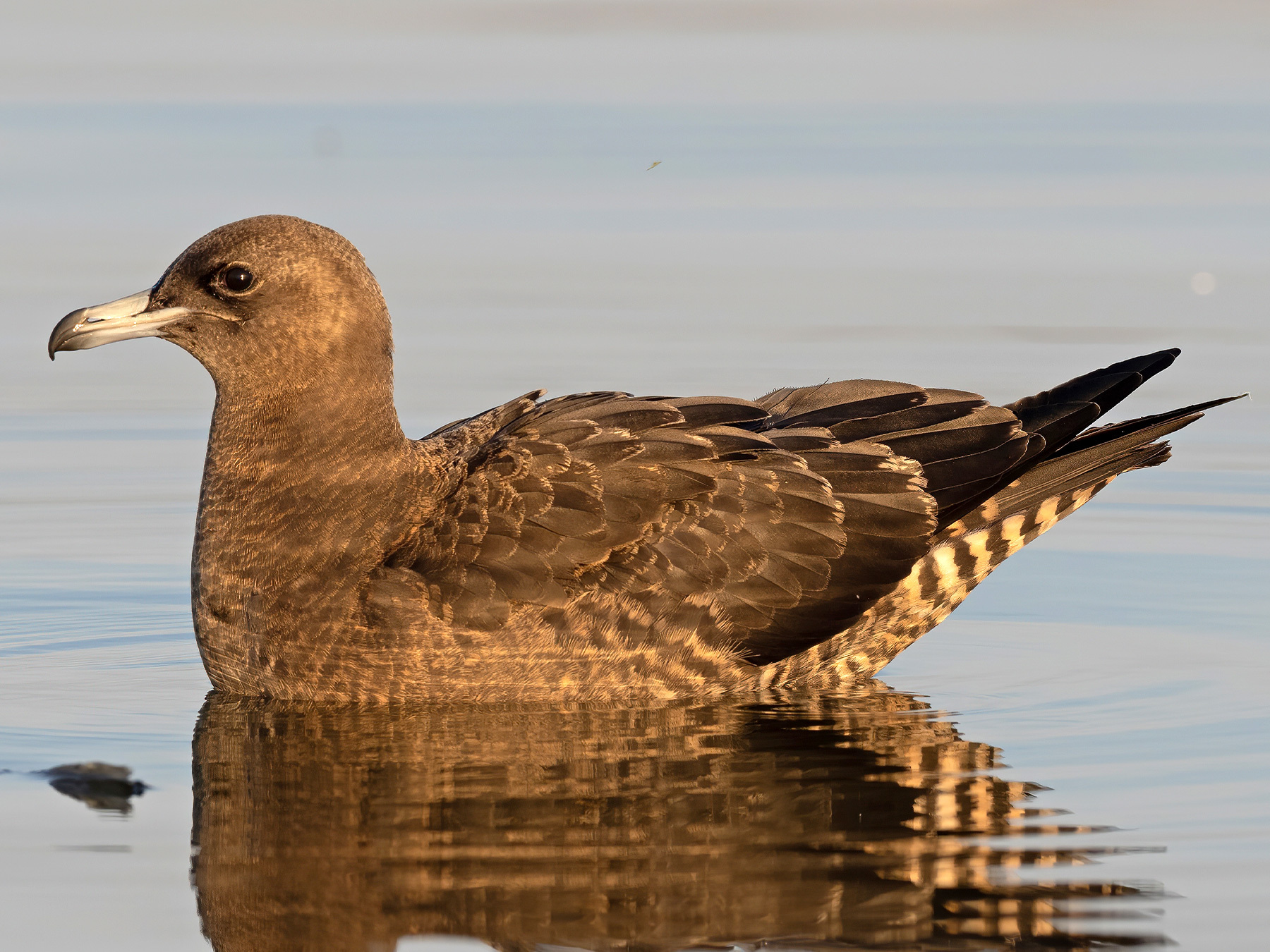
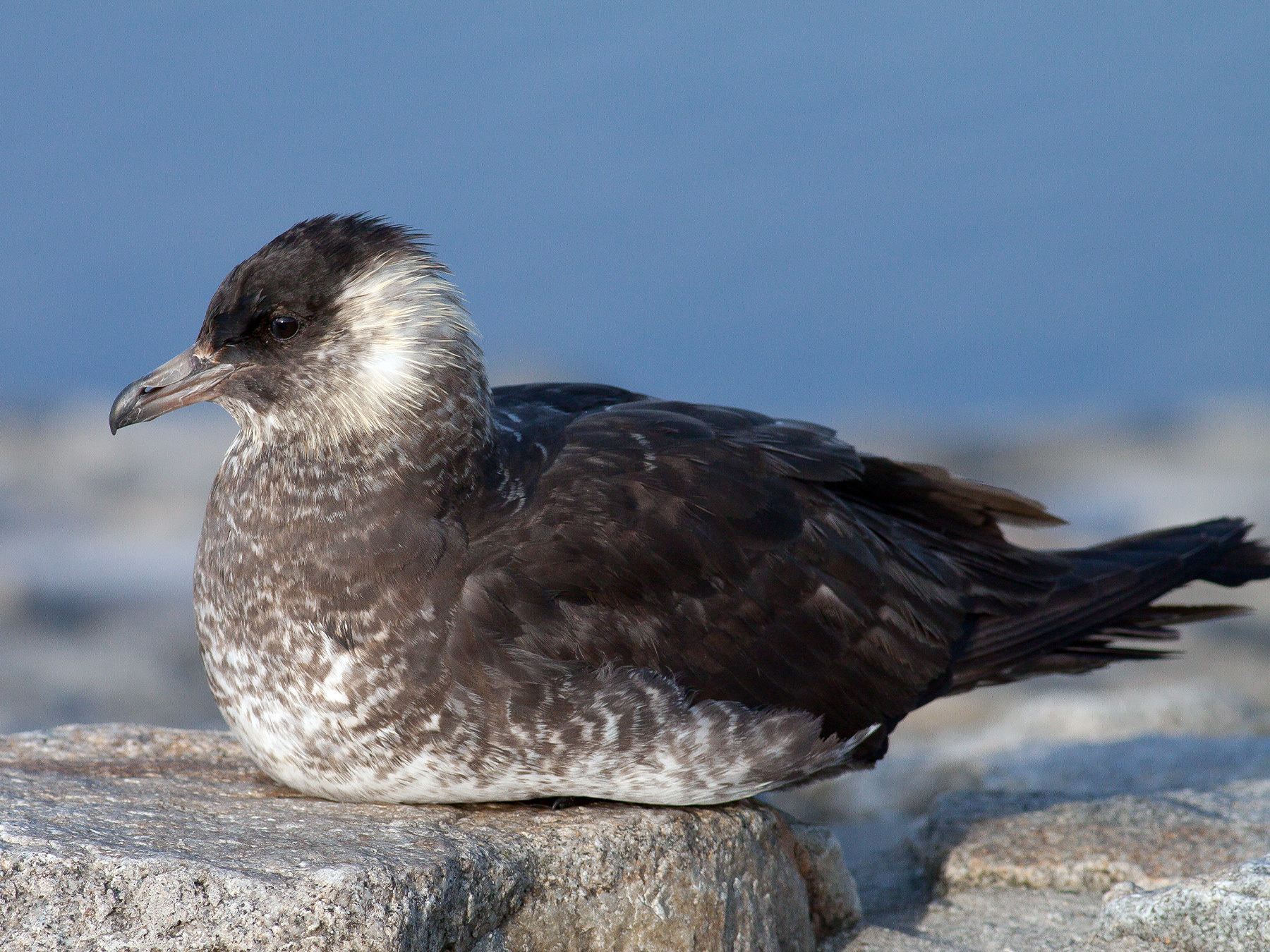
Juvenile light morph pomarine skuas are similar in appearance to immature seagulls and are heavily barred with pale brown and buff breasts and darker brown and buff-tipped wings. Young dark morph birds are almost entirely dark brown and are similar to adult dark morph birds, but lack any identifying white markings on their uniform dark brown wings.
How big are Pomarine Skuas?
Pomarine skuas are large, bulky seabirds, slightly smaller than herring gulls. Females are between 10 and 15 percent heavier than males.
- Length: 46 cm to 51 cm (18 in to 20 in)
- Wingspan: 113 cm to 125 cm (44 in to 49 in)
- Weight: 550 g to 900 g (19.4 oz to 31.7 oz)
Its size
Adults- Length
- 46–51 cm
- Wingspan
- 110–138 cm
- Weight
- 540–910 g
Its song and calls
What sound does a Pomarine Skua make?
A harsh, chattering ‘which-yew, which-yew’ call is heard when feeding at sea. A short call and a quavering call are both used to alert of a threat or approaching danger, while a loud, high-pitched ‘yowk, yowk, yowk’ is frequently heard on breeding grounds.
When and where to see it
OctoberLeaving
Most recorded in October
- 1. Fife0.11%
- 2. Waterford0.11%
- 3. Pembrokeshire0.10%
- 4. Tyne and Wearunder 0.1%
- 5. Orkney Islandsunder 0.1%
Each dot is a county, state or province: the bigger and darker, the larger the bird’s share of that place’s bird records that month. Grey dots: no regular records. The ringed point is the centre of the bird’s records this month; the arrow shows how it moved since last month, and the dashed loop its path through the year. “Arrivals” colours places where it becomes regular this month (orange) or is in its last regular month (grey). GBIF eBird Observation Dataset, 2019–2024. Map data: Natural Earth, US Census Bureau; place centres © OpenStreetMap contributors.
In your area
See when the Pomarine Jaeger is recorded in your county, state or province.
How often the Pomarine Jaeger turns up in the UK, Ireland, the United States and Canada through the year, from birdwatchers' records.
United Kingdom
Summer visitor · regularly Apr–Dec · most records in September
Ireland
Passage migrant · regularly Jul–Oct · most records in August
United States
Summer visitor · regularly Apr–Feb · most records in September
Canada
Passage migrant · regularly Jun–Dec · most records in September
Show as a table
| Month | United Kingdom | Ireland | United States | Canada |
|---|---|---|---|---|
| January | <0.001% | – | 0.002% (regular) | <0.001% |
| February | <0.001% | – | 0.003% (regular) | – |
| March | <0.001% | – | 0.001% | <0.001% |
| April | 0.003% (regular) | 0.004% | 0.002% (regular) | <0.001% |
| May | 0.006% (regular) | 0.002% | 0.003% (regular) | <0.001% |
| June | 0.001% (regular) | <0.001% | 0.011% (regular) | 0.001% (regular) |
| July | 0.002% (regular) | 0.013% (regular) | 0.004% (regular) | 0.003% (regular) |
| August | 0.013% (regular) | 0.13% (regular) | 0.019% (regular) | 0.009% (regular) |
| September | 0.020% (regular) | 0.045% (regular) | 0.033% (regular) | 0.016% (regular) |
| October | 0.014% (regular) | 0.021% (regular) | 0.024% (regular) | 0.007% (regular) |
| November | 0.009% (regular) | 0.004% | 0.010% (regular) | 0.003% (regular) |
| December | 0.002% (regular) | – | 0.004% (regular) | 0.002% (regular) |
Recorded regularly in
Worldwide: recorded regularly in 60 countries
Countries where it was recorded in at least 3 of the 6 years 2019–2024. Linked countries have their own bird list.
Europe (18)
Africa (6)
Asia (12)
North America (14)
- Bahamas
- Bermuda
- Canada
- Costa Rica
- Dominica
- El Salvador
- Greenland
- Guadeloupe
- Guatemala
- Mexico
- Nicaragua
- Panama
- St Pierre & Miquelon
- United States
Oceania (3)
Data: EOD – eBird Observation Dataset (Cornell Lab of Ornithology), accessed via GBIF.org, CC BY 4.0. Records from 2019–2024, aggregated and filtered by Birdfact. How these lists are made
What is the habitat of a Pomarine Skua?
Low-lying coastal tundras in the Arctic Circle provide ideal breeding grounds for pomarine skuas, as long as a rich local lemming population is present. This is more of a decisive factor than any landscape feature.
Winters are spent far from land, foraging offshore over open sea, and often over waters along the continental shelf. During winter, pomarine skuas rarely make their way inland, but following strong winds may make brief appearances on beaches and coastal headlands.
What is the range of a Pomarine Skua?
Pomarine skuas breed in the far north of North America and Eurasia, from Alaska to northern and north-eastern Canada and across the Atlantic Ocean in northern Norway to the extreme north of Russia.
Non-breeding seasons are spent at sea, in tropical ocean waters, with most pomarine skuas wintering between the Tropic of Cancer and Tropic of Capricorn, as well as along the coasts of Argentina and Australia.
Where do Pomarine Skuas live?
In the pomarine skua’s North American range, northern Alaska is a prime breeding ground, with up to 20,000 pairs nesting there in a ‘good lemming year’.
The European population of around 40,000 individuals is almost exclusively located in Russia, with a small number of pairs breeding in the high northern tundras on the Norwegian coast. Eastern Russia, including Siberia, is home to up to 100,000 breeding pairs.
How rare are Pomarine Skuas?
Pomarine skuas are not especially rare, but little verified data is available on population metrics and we rely on estimates and projections.
The European population is estimated at around 40,000 mature individuals, and this figure is believed to represent around 10 percent of the worldwide population, giving an estimated figure of 400,000 individuals.
Where can you see Pomarine Skuas in the US?
With the exception of Alaska, a major breeding site for pomarine jaegers each spring, no other regions of the US support the species in spring, and sightings are limited to offshore glimpses of birds in migration passage.
Fall sightings are common off the coast of California when between 30,000 and 70,000 migrant birds pass through the state’s offshore waters between September and October.
Where can you see Pomarine Skuas in the UK?
Sightings in the UK of pomarine skuas are limited to birds passing over British waters on spring migration northwards from April to May and the return post-breeding leg to southern wintering grounds between August and November when they are regularly spotted on the North Sea coasts.
Powerful winds can have a bearing on the number of sightings of pomarine skuas reported in the UK. In the north-west of England, a good location for spotting skuas on their spring migration is Bowness-on-Solway, Cumbria, where over 150 were spotted en route to Scandinavian breeding sites in May 2002 and May 2007, following particularly strong winds.
Aird an Runair on North Uist, Outer Hebrides is another key site for spotting passage migrants each spring, while further south, the coastal waters off Dungeness in Kent regularly report more than 100 sightings.
Migration
Do Pomarine Skuas migrate?
Pomarine skuas are a fully migratory species, breeding in the Arctic tundras of northern Alaska, Canada, and Eurasia.
Once breeding is complete, a lengthy southward migration follows, across both land and water, to wintering grounds in tropical ocean waters off the coasts of South America, the Caribbean, Africa, South Asia, and Australia.
Are Pomarine Skuas native to the US?
The only place in the US where pomarine skuas breed is Alaska, with established breeding grounds on the state’s west and north coasts.
Migrant pomarine skuas can be seen off the eastern and western coasts of the US in spring and autumn, with sightings on the Pacific coast, off Washington and California, concentrated in late summer and early autumn.
Are Pomarine Skuas native to the UK?
Pomarine skuas are not native to the UK and do not breed or overwinter on British shores. However, they are regularly spotted in passage, both on their spring migrations towards breeding grounds and on the return trip each autumn.
Spring sightings are concentrated on the southern coast of Ireland and north-west Scotland, while in autumn, pomarine skuas can be spotted travelling down coastlines on both sides of the British Isles.
Tips for seeing it
- Look for Pomarine Jaegers along coastlines during migration periods
- Observe their distinctive flight pattern with deep wing beats and glides
- Watch for kleptoparasitic behavior as they chase other seabirds
- Use a spotting scope to identify the twisted central tail feathers
- In North America, check coastal areas in spring and fall for migrating individuals
What it eats
What do Pomarine Skuas eat?
The availability of lemmings is vital to the survival and success of breeding pomarine skuas, with brown rodents forming up to 90 percent of their diet during this period. In years when lemming populations are poor or non-existent, pomarine skuas are unable to breed.
The young of wading birds and game birds nesting nearby, as well as eggs and carrion are also eaten.
In winter, pomarine skuas feed on fish, both caught from the ocean waters they live on and stolen from other large birds of prey, a practice known as kleptoparasitism. They will also eat carrion and offal at sea.
What do Pomarine Skua chicks eat?
As lemmings form the main diet of breeding adult pomarine skuas, it’s no surprise that this is what young birds are fed on in their initial few weeks of life too. Parents tear strips of meat from the lemmings they catch and feed them to their young until they are able to hunt and feed for themselves.
Nesting and breeding
Where do Pomarine Skuas nest?
Pomarine skuas nest in grass-lined scrapes on Arctic tundra and offshore islands. These depressions are shaped by the birds’ feet and breasts, and rounded into a shallow bowl with raised edges. Plant matter is added as a sparse lining.
When do Pomarine Skuas nest?
Pomarine skuas arrive on breeding grounds in May or early June, and pairs form (and re-form) shortly afterward. Territories are established within a week, and eggs are usually laid a short while later, from early to mid-June. Incubation lasts for between 23 and 25 days and is shared relatively evenly between males and females.
What do Pomarine Skua eggs look like?
A pomarine skua’s eggs measure 64 mm by 44 mm (2.5 in by 1.7 in) and are olive-brown in colour, marked with some darker spots and streaks. A typical clutch contains two eggs and pairs raise a single brood each year.
Do Pomarine Skuas mate for life?
Pomarine skuas may re-pair with a previous mate in subsequent breeding seasons, although pairs do disperse at the end of the breeding season and do not remain together during winter migrations.
New pairs will form if one mate disappears or dies. In seasons where local lemmings are in short supply, pairs may not breed at all, and a different mate will be found the following year, if breeding conditions are better.
Behaviour
Are Pomarine Skuas aggressive?
Pomarine skuas are bold and aggressive, and would not think twice about flying at a much larger predator, including a human. They are particularly protective of their nest sites and will launch aerial attacks on any potential threat that approaches too closely.
Lifespan and predators
How long do Pomarine Skuas live?
The average and maximum lifespan for pomarine skuas is as yet unresearched and unknown, but is likely to be similar to that of other members of the skua family, with an average lifespan of around 12 years and the oldest recorded individuals reaching more than 30 years.
First-time breeding is believed to occur between three and six years of age. Pairs do not breed successfully each year and may only raise young once every three or four years.
What are the predators of Pomarine Skuas?
The only known predators of healthy adult pomarine skuas are white-tailed eagles, golden eagles and great black-backed gulls. Arctic foxes, glaucous gulls and snowy owls raid pomarine skuas’ nests for eggs and hatchlings.
Are Pomarine Skuas protected?
In Britain, the Wildlife and Countryside Act, of 1981, offers protection to pomarine skuas against being killed, injured, or taken into captivity. The Migratory Birds Treaty Act of 1918 gives the species a similar level of protection in the United States, additionally protecting the eggs, nests, and young of pomarine jaegers from being taken or sold.
Are Pomarine Skuas endangered?
Little data is available for the entire global population of pomarine skuas, but there is no evidence to indicate the species is in any kind of decline, and therefore they are classed as a species of least concern.
Conservation
While currently listed as Least Concern, Pomarine Jaegers face threats from climate change affecting their Arctic breeding grounds. Oil spills and marine pollution pose risks during migration and wintering periods.
Conservation efforts focus on protecting critical habitats and reducing human impacts on marine ecosystems.
More photos
4 photos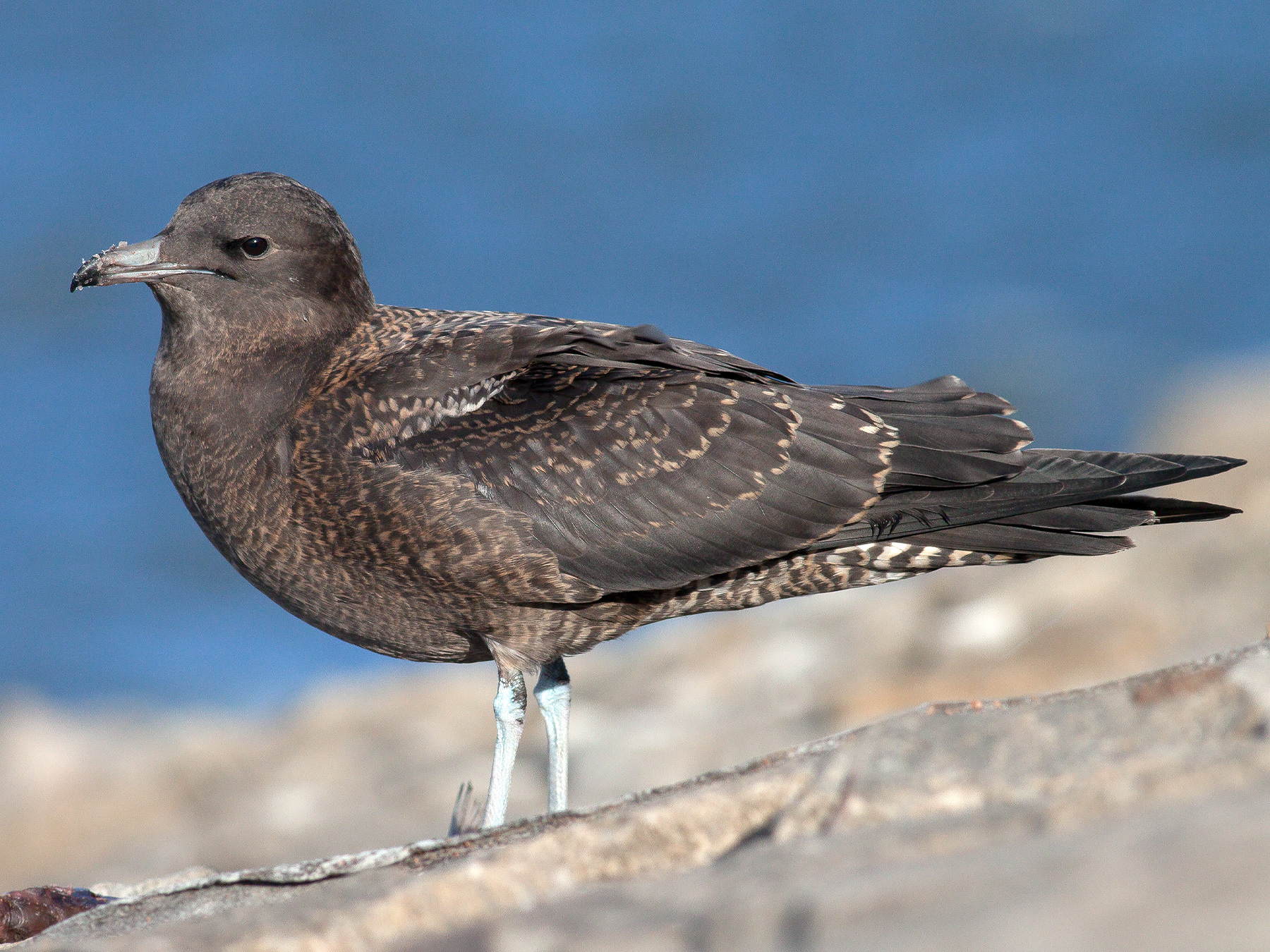
Quick facts
- Length
- 46–51 cm
- Wingspan
- 110–138 cm
- Weight
- 540–910 g
- Lifespan
- 12–15 years · oldest recorded 32 years
- Family
- Skuas & Jaegers
- Migration
- Long-distance Migrant
- Global status (IUCN)
- Least Concern
- World population
- 400,000 mature individuals
- Population trend
- Stable
- Also called
- Pomarine Skua
- Scientific name
- Stercorarius pomarinus
Sources
3- 1BirdLife International. 2018. Stercorarius pomarinus. The IUCN Red List of Threatened Species 2018: e.T22694240A132534251. Source (opens in a new tab)
- 2BirdLife International. 2018. Stercorarius pomarinus. The IUCN Red List of Threatened Species 2018: e.T22694240A132534251. Source (opens in a new tab)
- 3BirdLife International. 2018. Stercorarius pomarinus. The IUCN Red List of Threatened Species 2018: e.T22694240A132534251. Source (opens in a new tab)

Checked by
Nathan Cope, founder and editor
Nathan founded Birdfact and leads its writers and contributors in the UK, the US and Canada. He has watched and studied birds for more than ten years, and checks every article and species guide before it’s published.