


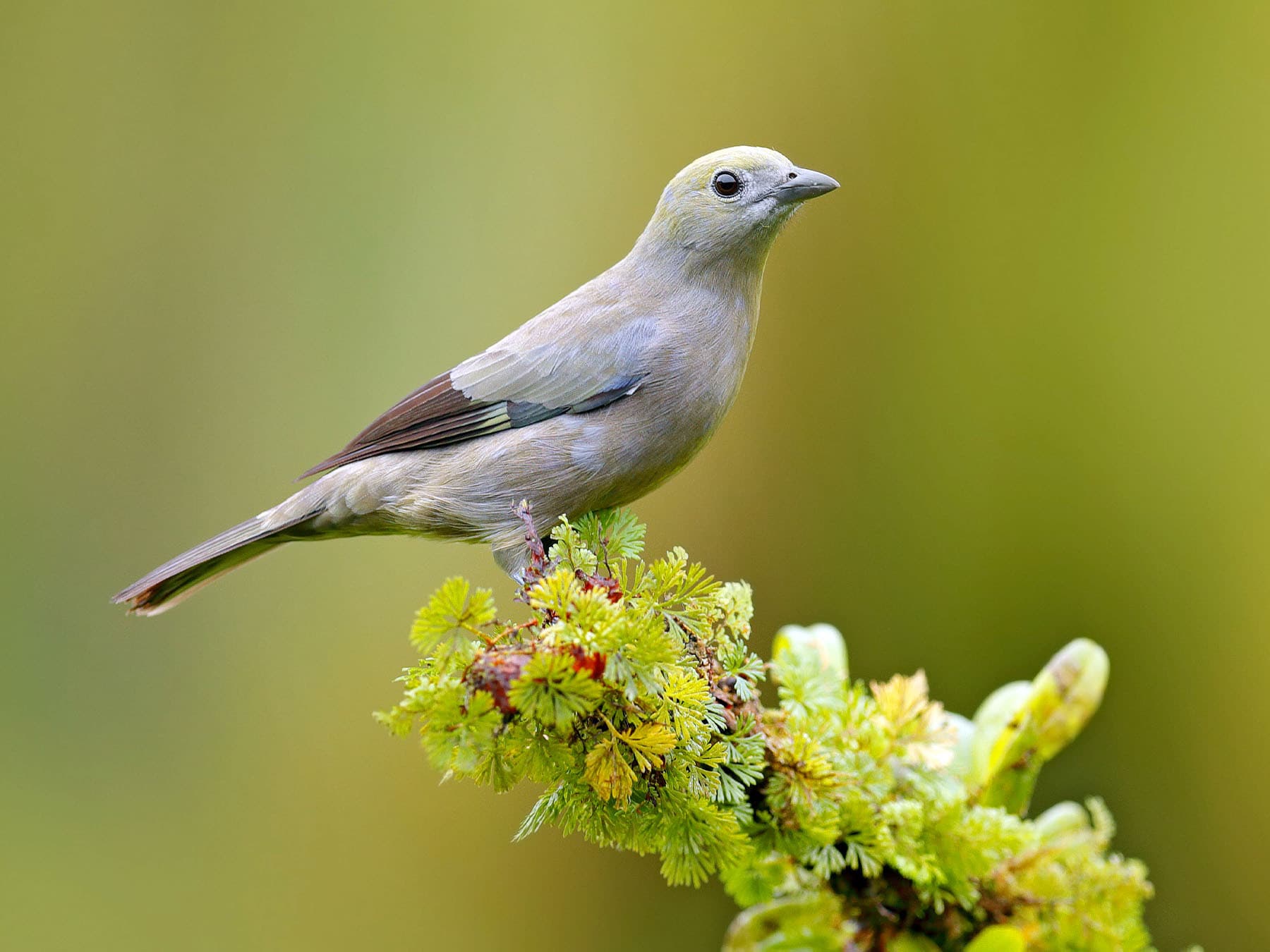
Palm Tanager
Palmiste, Pipira-verde, Green Jean · Thraupis palmarum
By the Birdfact teamChecked by Nathan Cope
On this page11 sections
How to recognise it
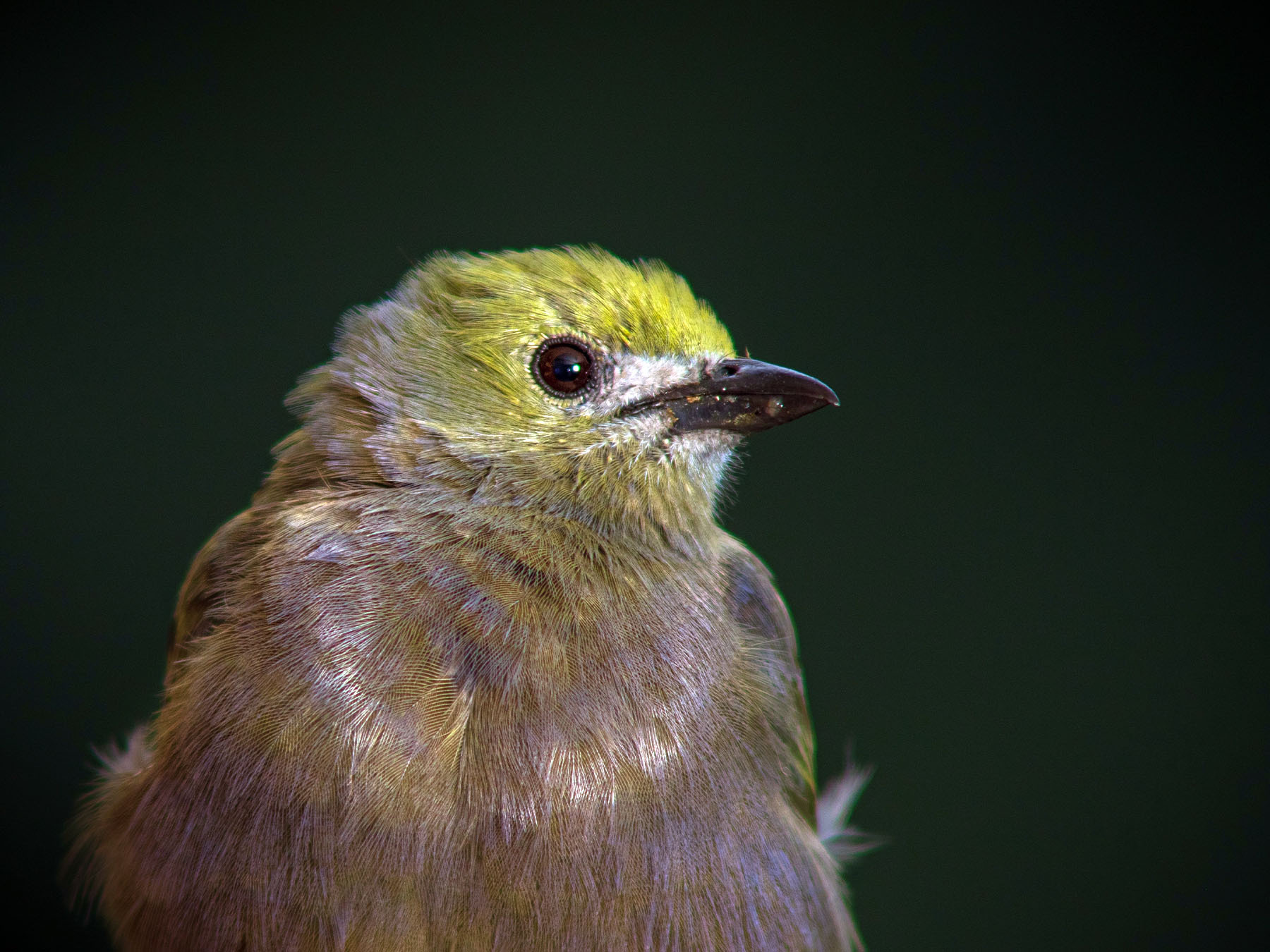
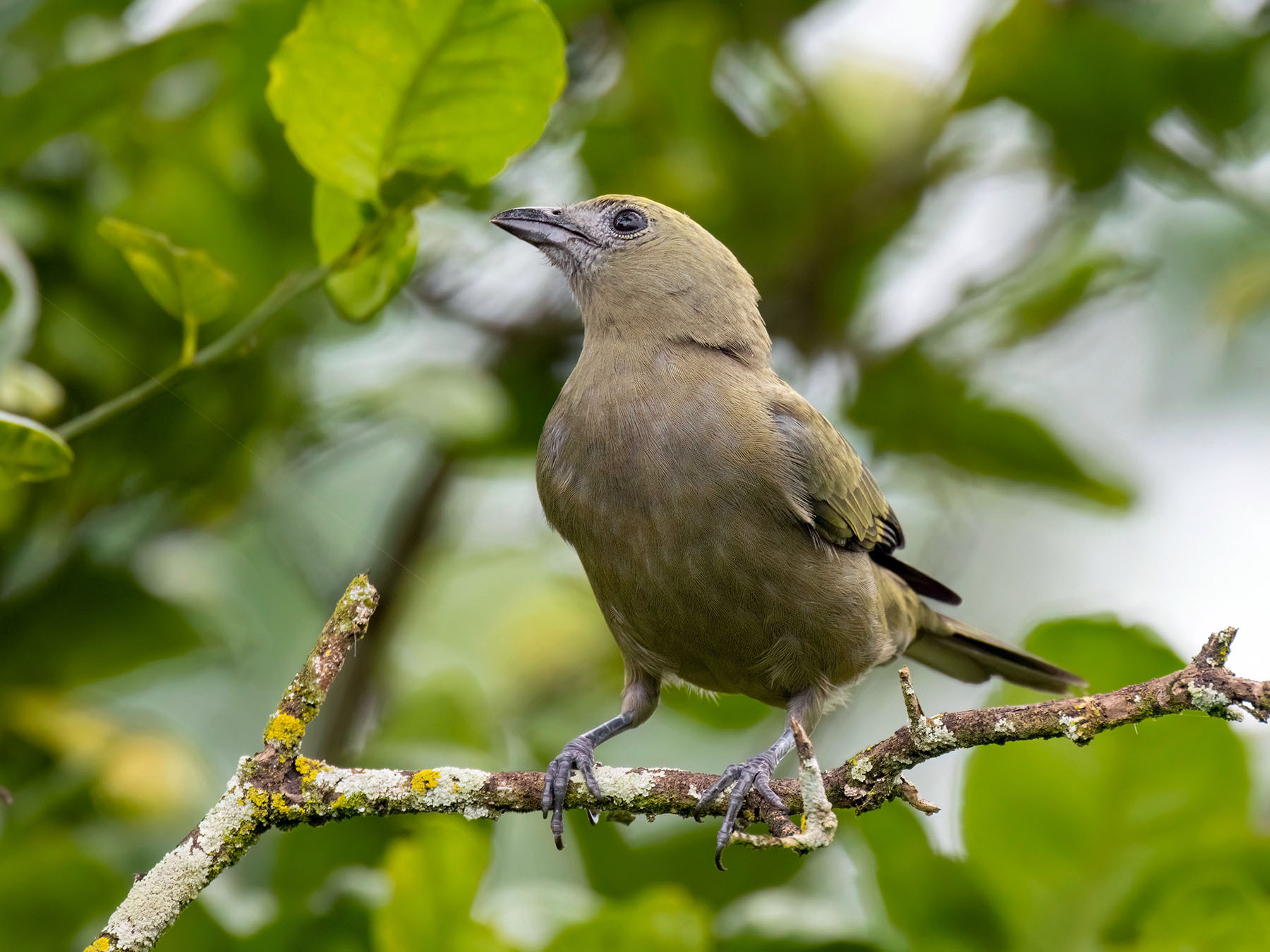
The Palm Tanager is a small, drab bird with smoky brown to olive plumage. Its body shows subtle glossy tones, though in poor light, it can appear rather plain. The wings feature blackish flight feathers and a pale olive-yellow wingband, most visible during flight.
Both males and females look very similar. Juveniles resemble adults but appear duller overall.
Its size
Adults- Length
- 16–18 cm
- Wingspan
- 25–28 cm
- Weight
- 27–48 g
Its song and calls
The Palm Tanager's vocalisations are characterised by high-pitched, squeaky notes. Their song is a series of thin, reedy 'tsee-tsee-tsee' sounds, often repeated in quick succession. When alarmed or during territorial disputes, they emit sharp, staccato 'chik' calls.
- Song0:00 / 0:36
Recorded in Nangaritza Valley, Ecuador · March 2007
When and where to see it
The Palm Tanager is not recorded regularly in the UK, Ireland, the United States or Canada.
Worldwide: recorded regularly in 15 countries
Countries where it was recorded in at least 3 of the 6 years 2019–2024. Linked countries have their own bird list.
North America (4)
- Costa Rica
- Nicaragua
- Panama
- Trinidad & Tobago
Data: EOD – eBird Observation Dataset (Cornell Lab of Ornithology), accessed via GBIF.org, CC BY 4.0. Records from 2019–2024, aggregated and filtered by Birdfact. How these lists are made
Tips for seeing it
- Look for Palm Tanagers in palm trees and fruiting plants in gardens and parks.
- Listen for their high-pitched, squeaky calls to locate them in dense foliage.
- Observe their behaviour around fruiting trees, where they often gather in small groups.
- Check the edges of forests and clearings, where they frequently forage.
What it eats
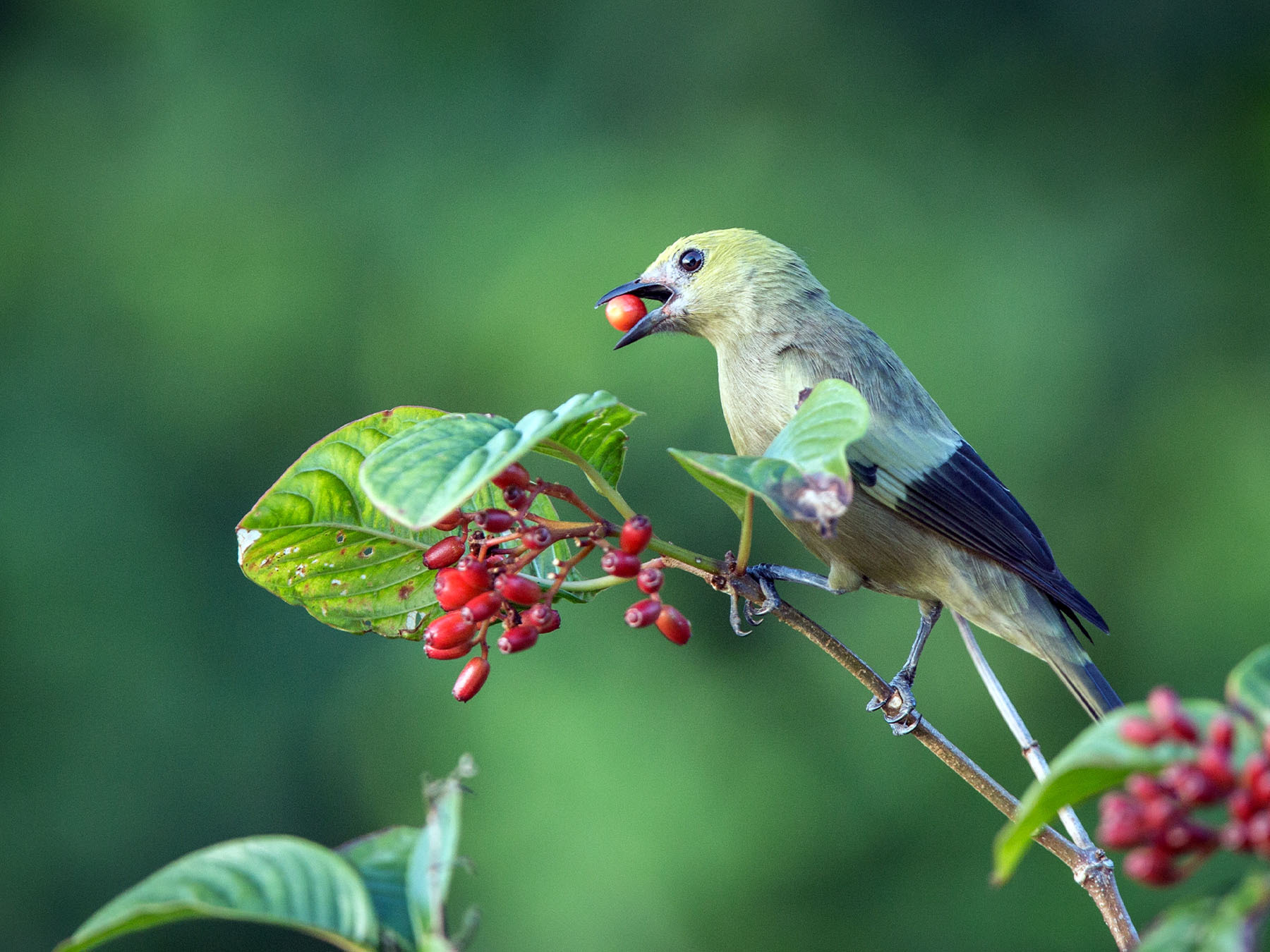
Palm Tanagers have a varied diet consisting primarily of fruits, especially small berries and palm fruits. They supplement their fruit intake with insects, particularly during breeding season.
These birds are often seen probing flowers for nectar and small arthropods, showcasing their adaptable feeding habits.
Nesting and breeding
Palm Tanagers typically breed during the rainy season, which varies across their range. Pairs form monogamous bonds and work together in nest building and chick rearing.
The nest is a cup-shaped structure made of plant fibres, often placed in the crown of a palm tree or the fork of a tree branch. Females usually lay 2-3 pale blue or greenish eggs with brown speckles.
Incubation lasts about 12-14 days, with both parents sharing duties. Chicks fledge after approximately 15-20 days but may remain dependent on their parents for several more weeks.
Behaviour
Palm Tanagers are known for their agile movements, often seen hopping and flitting through palm fronds and tree canopies.
They are social birds, frequently found in pairs or small groups. These tanagers are not shy around humans and often visit gardens and urban areas with suitable vegetation.
Conservation
The Palm Tanager is listed as Least Concern by the IUCN due to its large range and stable population. However, like many tropical species, it faces localised threats from deforestation and habitat degradation.
Conservation efforts focus on preserving its diverse habitats across South and Central America.
More photos
4 photos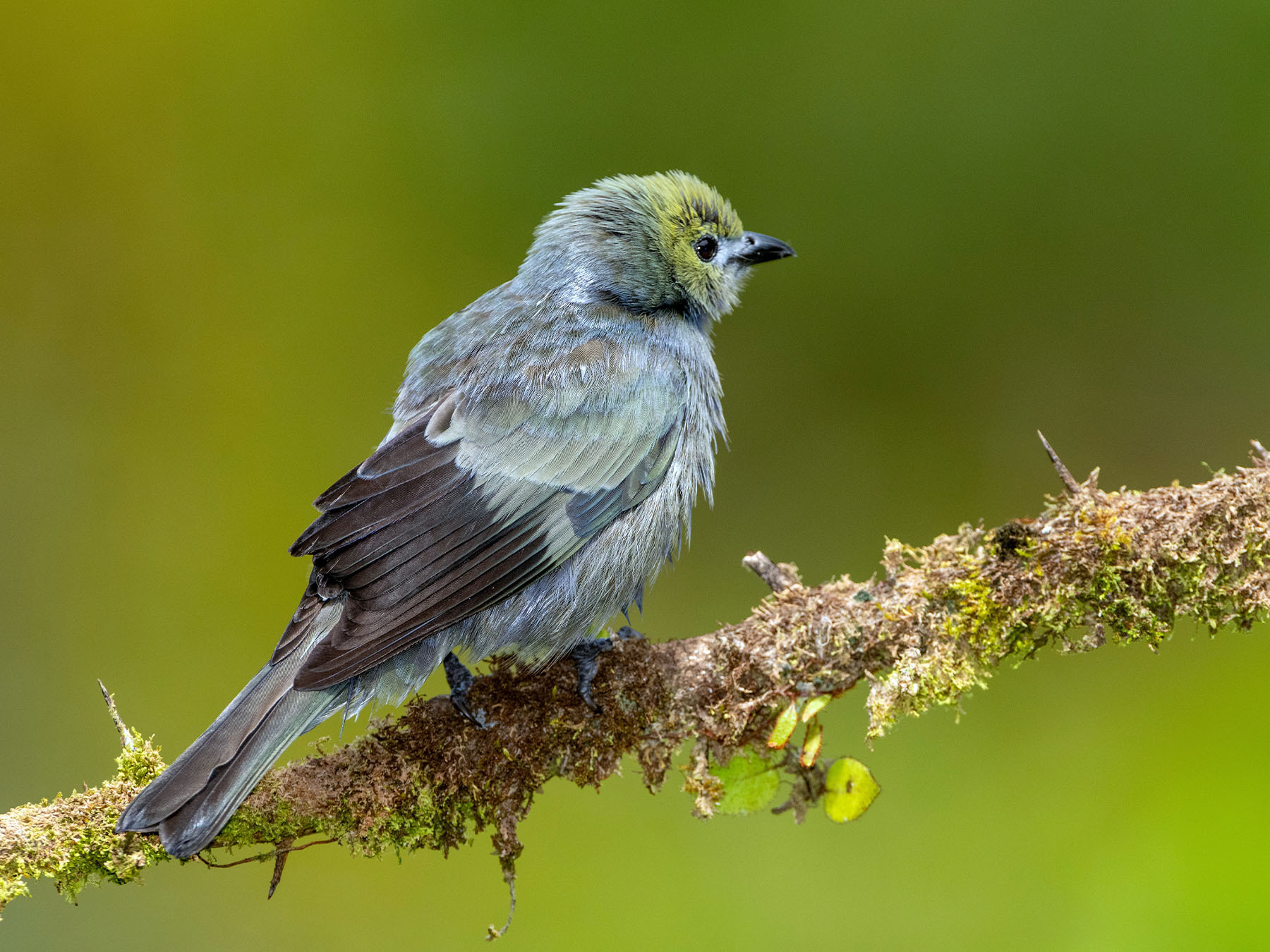
Quick facts
- Length
- 16–18 cm
- Wingspan
- 25–28 cm
- Weight
- 27–48 g
- Family
- Tanagers
- Migration
- Resident
- Global status (IUCN)
- Least Concern
- World population
- Not quantified, but described as common
- Population trend
- Stable
- Also called
- Palmiste, Pipira-verde, Green Jean
- Scientific name
- Thraupis palmarum
Sources
2- 1BirdLife International. 2018. Tangara palmarum. The IUCN Red List of Threatened Species 2018: e.T22722546A132155296. Source (opens in a new tab)
- 2BirdLife International. 2018. Tangara palmarum. The IUCN Red List of Threatened Species 2018: e.T22722546A132155296. Source (opens in a new tab)

Checked by
Nathan Cope, founder and editor
Nathan founded Birdfact and leads its writers and contributors in the UK, the US and Canada. He has watched and studied birds for more than ten years, and checks every article and species guide before it’s published.