


Pale-winged Starling
Onychognathus nabouroup
By the Birdfact teamChecked by Nathan Cope
On this page11 sections
How to recognise it
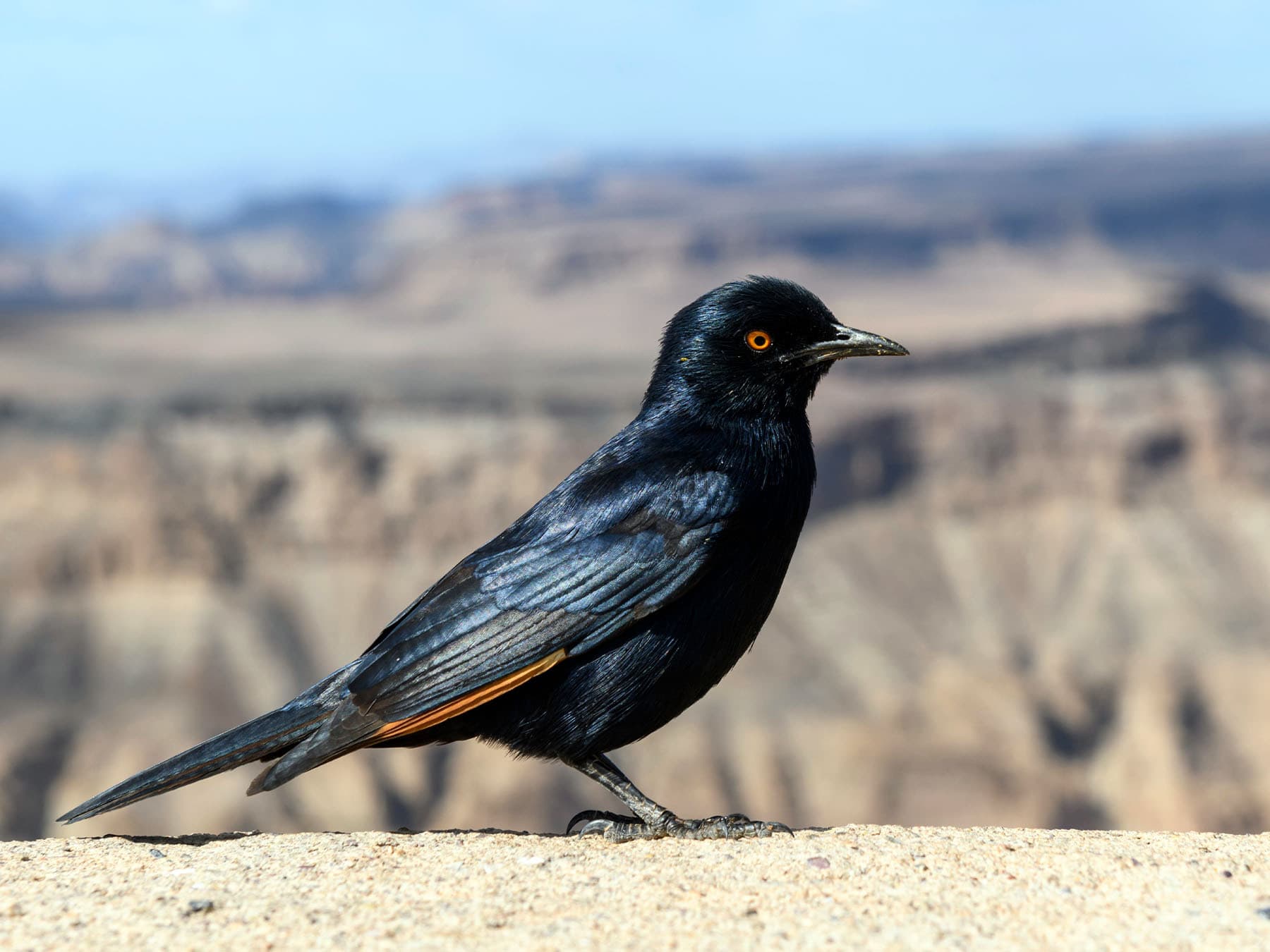
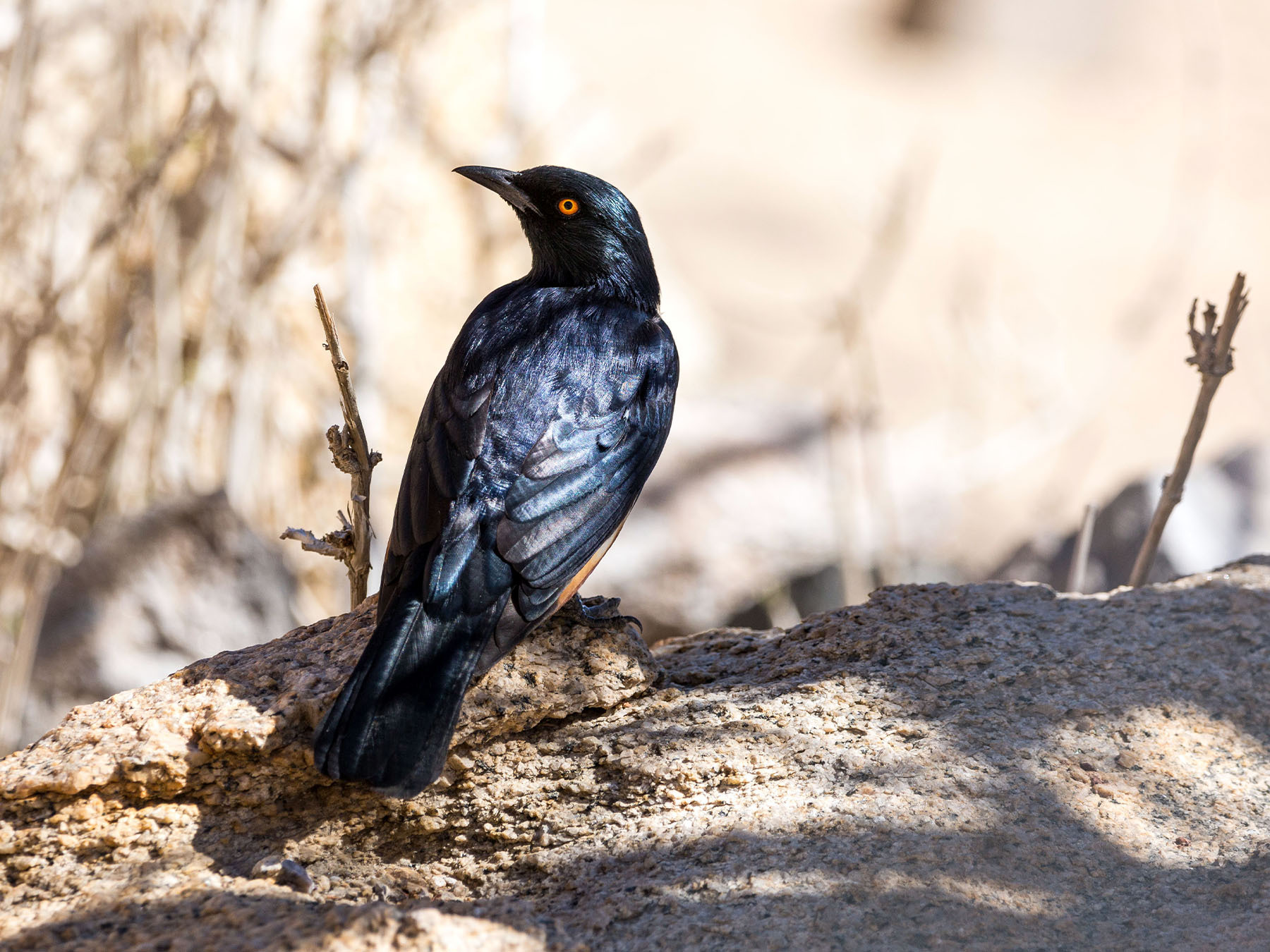
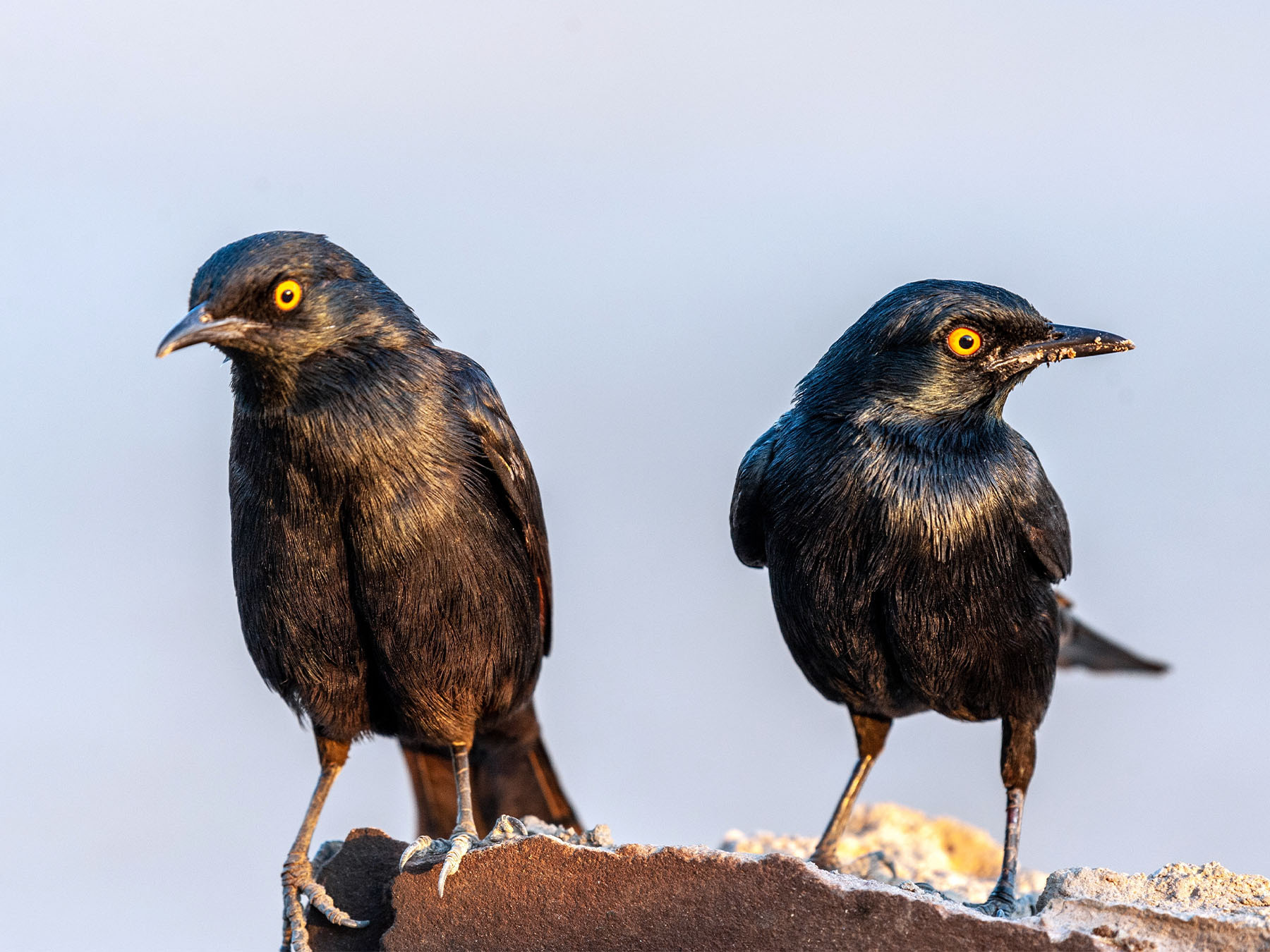
The Pale-winged Starling is a striking bird with glossy black plumage covering most of its body. Its most distinctive feature is the pale wing pattern, showing cream-coloured and rufous patches visible during flight.
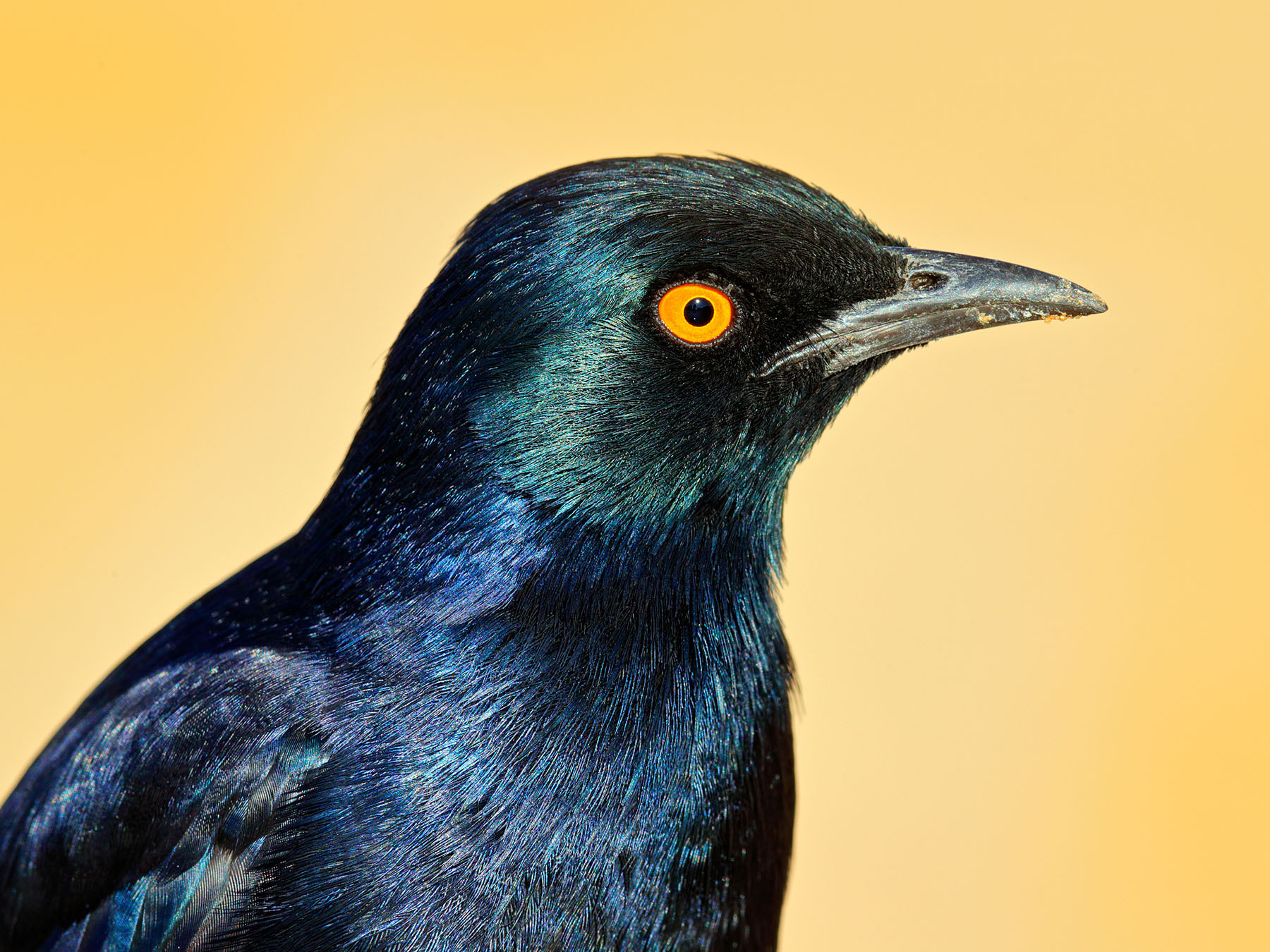
While males and females share similar colouring, males are typically slightly larger in size. Juveniles appear duller, with a brownish tinge to their plumage, less glossy feathers, and brown eyes compared to the orange-yellow eyes of adults.
Its size
Adults- Length
- 25–28 cm
- Wingspan
- 45–50 cm
- Weight
- 94–122 g
Its song and calls
Pale-winged Starlings have a varied vocal repertoire, including melodious whistles and warbling calls. Their most characteristic sound is a clear, high-pitched 'whee-oo' or 'pee-oo' whistle, often repeated in series.
They also produce chattering and clicking noises, especially when in flocks or during social interactions.
When and where to see it
The Pale-winged Starling is not recorded regularly in the UK, Ireland, the United States or Canada.
Worldwide: recorded regularly in 3 countries
Countries where it was recorded in at least 3 of the 6 years 2019–2024. Linked countries have their own bird list.
Africa (3)
- Angola
- Namibia
- South Africa
Data: EOD – eBird Observation Dataset (Cornell Lab of Ornithology), accessed via GBIF.org, CC BY 4.0. Records from 2019–2024, aggregated and filtered by Birdfact. How these lists are made
Tips for seeing it
- Look for Pale-winged Starlings in rocky, arid areas, especially near cliffs or ravines
- Listen for their distinctive whistling calls, which can help locate them
- Observe their flight pattern, noting the conspicuous white wing patches
- Watch for their gregarious behaviour, often seen in small groups
What it eats
Pale-winged Starlings are omnivorous, with a diet consisting of insects, small fruits, and seeds. They forage on the ground and in vegetation, using their strong beaks to probe crevices and turn over stones in search of prey.
During the breeding season, they increase their intake of protein-rich insects.
Nesting and breeding
Breeding typically occurs during the late winter to early summer months. Pale-winged Starlings form monogamous pairs and often return to the same nesting sites year after year.
Nests are built in rock crevices, cliff faces, or occasionally in tree cavities. Both partners participate in nest construction, using grass, twigs, and feathers to create a cup-shaped structure.
Females lay 2-4 pale blue eggs with brown speckles. Incubation lasts about 14 days, with both parents sharing duties. Chicks fledge after approximately 23-25 days but may remain dependent on parents for several weeks after leaving the nest.
Behaviour
Pale-winged Starlings are highly social birds, often seen in small flocks or pairs. They are agile flyers, capable of swift, acrobatic movements when foraging or evading predators.
These birds are known for their curious nature, often investigating rocky crevices and tree cavities in search of food or nesting sites.
Conservation
Currently listed as Least Concern by the IUCN, Pale-winged Starlings have a stable population. However, they face localised threats from habitat degradation due to overgrazing and climate change in their arid habitats.
Conservation efforts focus on maintaining suitable rocky habitats and monitoring population trends.
More photos
4 photos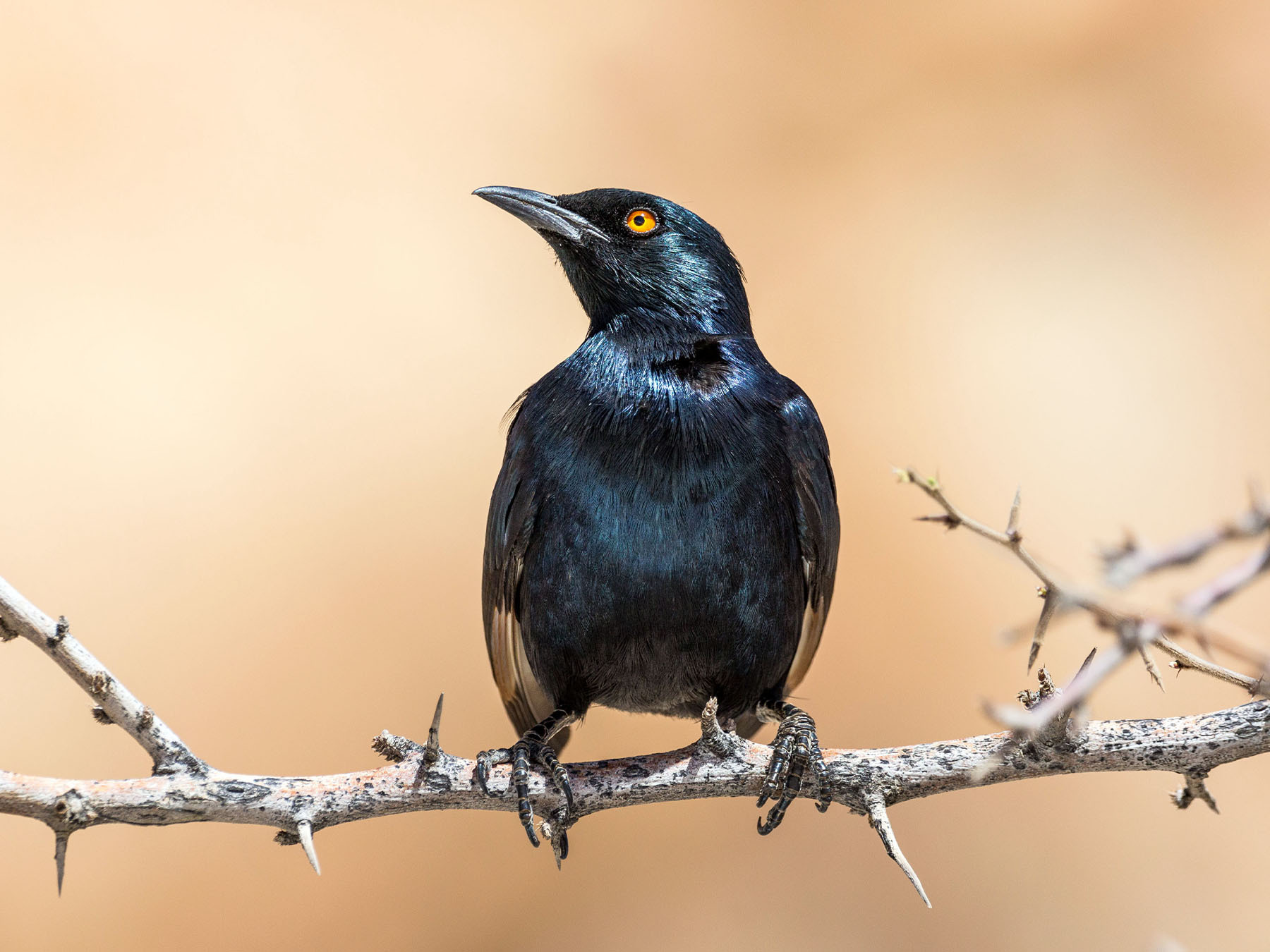
Quick facts
- Length
- 25–28 cm
- Wingspan
- 45–50 cm
- Weight
- 94–122 g
- Lifespan
- 2–5 years
- Family
- Starlings & Mynas
- Migration
- Resident
- Global status (IUCN)
- Least Concern
- World population
- Not quantified, but common to abundant
- Population trend
- Stable
- Scientific name
- Onychognathus nabouroup
Sources
3- 1BirdLife International. 2024. Onychognathus nabouroup. The IUCN Red List of Threatened Species 2024: e.T22710600A263776542. Source (opens in a new tab)
- 2BirdLife International. 2024. Onychognathus nabouroup. The IUCN Red List of Threatened Species 2024: e.T22710600A263776542. Source (opens in a new tab)
- 3Feare and Craig (1998)

Checked by
Nathan Cope, founder and editor
Nathan founded Birdfact and leads its writers and contributors in the UK, the US and Canada. He has watched and studied birds for more than ten years, and checks every article and species guide before it’s published.