


Painted Bunting
Nonpareil · Passerina ciris
By the Birdfact teamChecked by Nathan Cope
On this page12 sections
How to recognise it
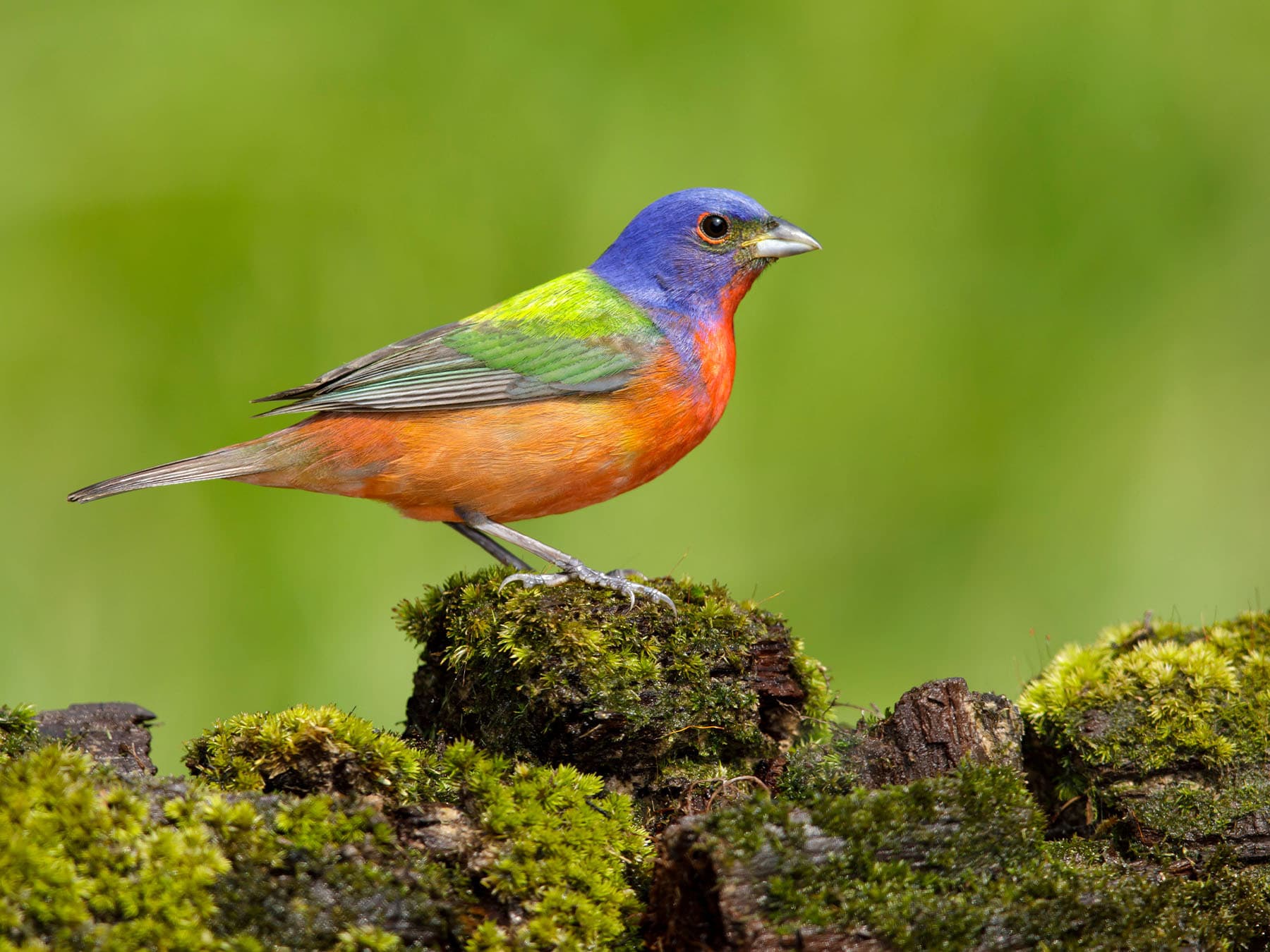
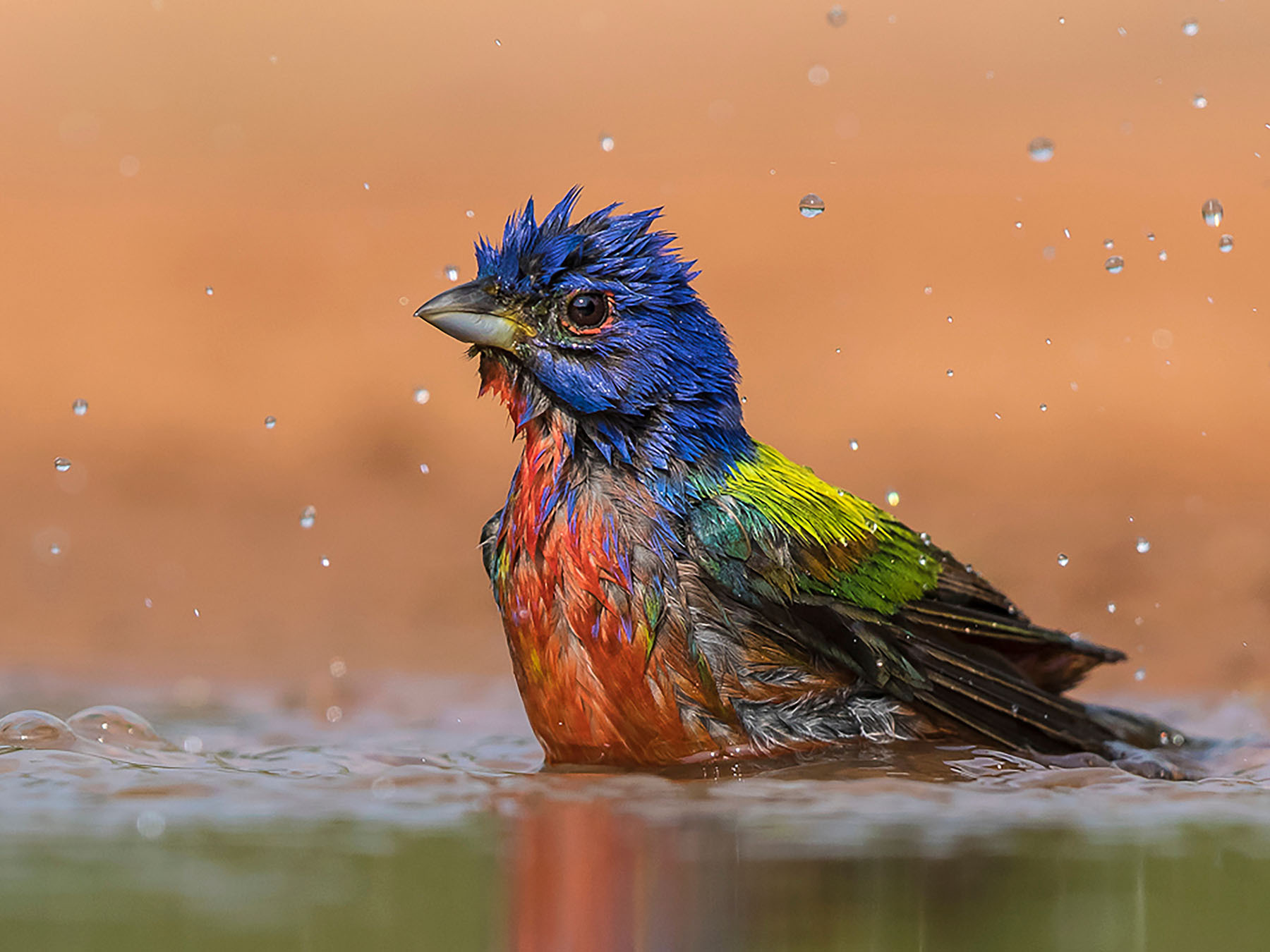
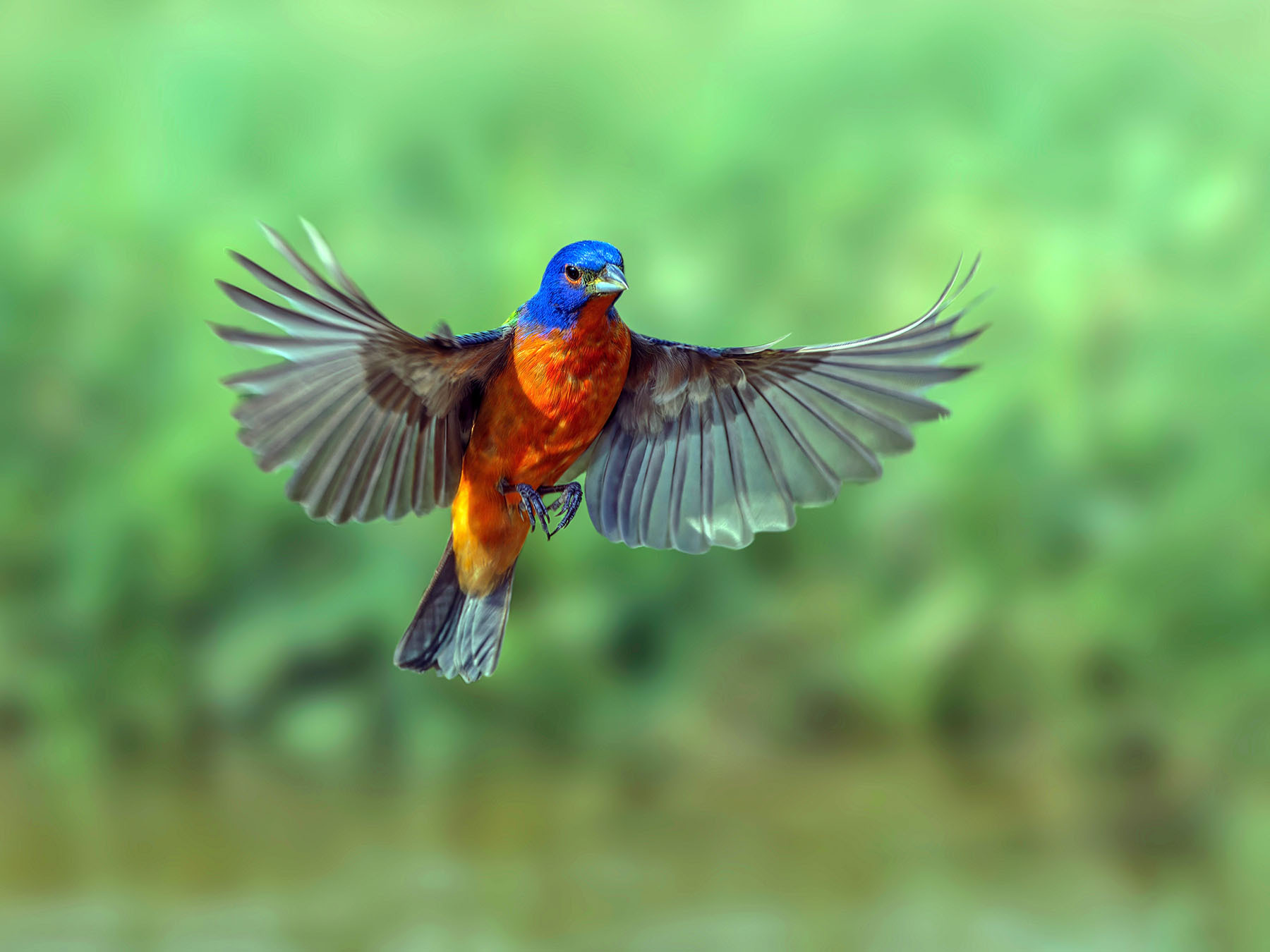
The male Painted Bunting is a kaleidoscope of vibrant colors, with a bright blue head, red underparts, and green back. Its wings show a mix of green and reddish-brown, creating a striking contrast.
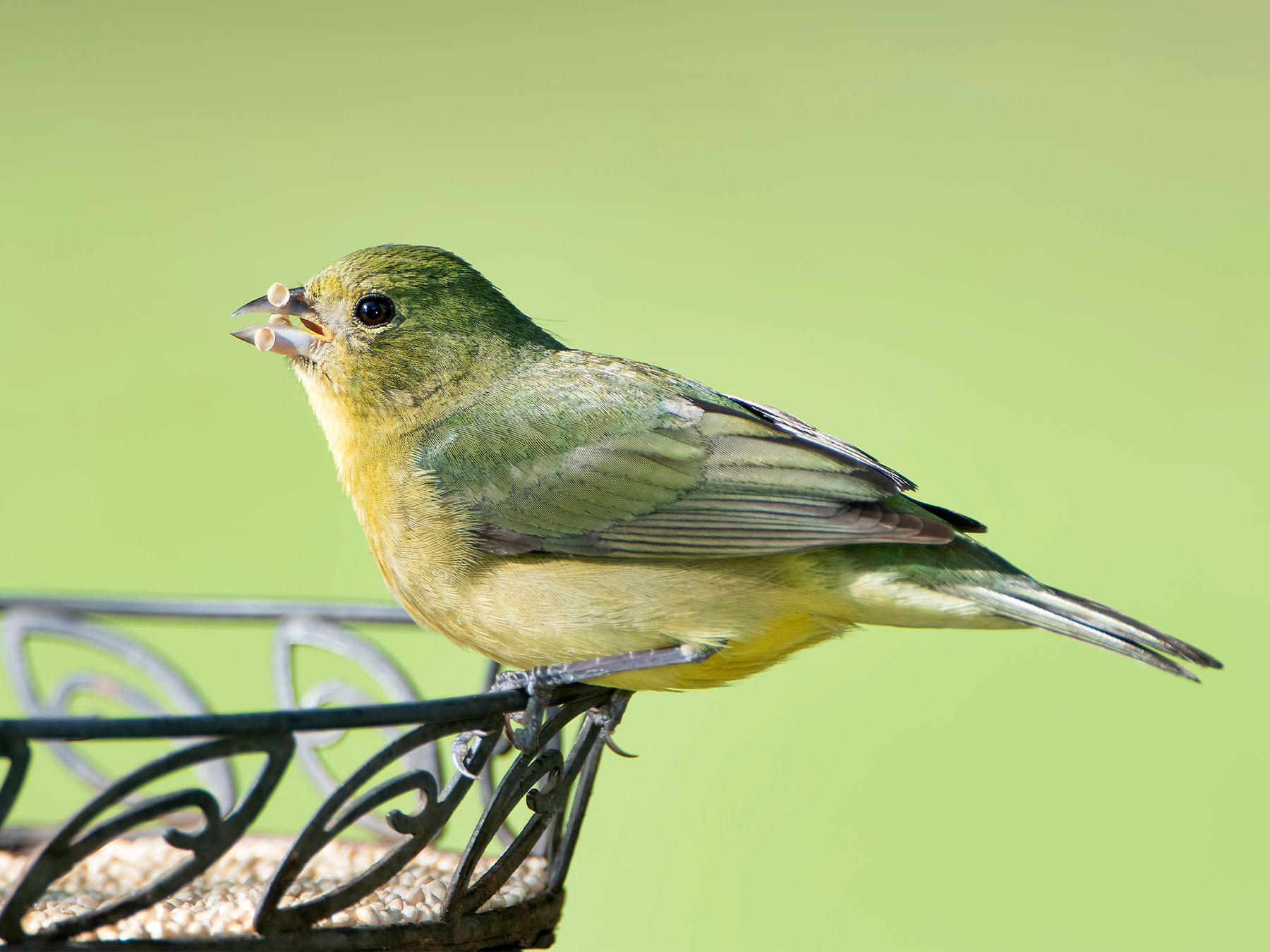
Females and juveniles are a uniform bright green above with yellowish-green underparts. This stark difference in plumage between sexes is a classic example of sexual dimorphism in birds.
Its size
Adults- Length
- 12–14 cm
- Wingspan
- 21–23 cm
- Weight
- 13–19 g
Its song and calls
The Painted Bunting's song is a series of high-pitched, sweet, warbling notes, often described as 'plik plik plik-o-lee chee-wee'.
Males sing persistently during the breeding season, especially in the early morning. Their call is a soft, metallic 'chip' or 'tink' sound used for communication between pairs or to signal an alarm.
When and where to see it
OctoberLeaving
Most recorded in October
- 1. South Carolina0.40%
- 2. Georgia0.24%
- 3. Louisianaunder 0.1%
- 4. Texasunder 0.1%
- 5. Mississippiunder 0.1%
Each dot is a county, state or province: the bigger and darker, the larger the bird’s share of that place’s bird records that month. Grey dots: no regular records. The ringed point is the centre of the bird’s records this month; the arrow shows how it moved since last month, and the dashed loop its path through the year. “Arrivals” colours places where it becomes regular this month (orange) or is in its last regular month (grey). GBIF eBird Observation Dataset, 2019–2024. Map data: Natural Earth, US Census Bureau; place centres © OpenStreetMap contributors.
In your area
See when the Painted Bunting is recorded in your county, state or province.
How often the Painted Bunting turns up in the United States and Canada through the year, from birdwatchers' records.
United States
Summer visitor · regularly Dec–Oct · most records in June
Canada
Passage migrant · regularly Nov–May · most records in November
Show as a table
| Month | United States | Canada |
|---|---|---|
| January | 0.009% (regular) | <0.001% |
| February | 0.008% (regular) | <0.001% |
| March | 0.005% (regular) | <0.001% |
| April | 0.080% (regular) | <0.001% |
| May | 0.078% (regular) | 0.001% (regular) |
| June | 0.089% (regular) | <0.001% |
| July | 0.088% (regular) | <0.001% |
| August | 0.056% (regular) | <0.001% |
| September | 0.032% (regular) | <0.001% |
| October | 0.016% (regular) | – |
| November | 0.004% | 0.003% (regular) |
| December | 0.006% (regular) | 0.002% |
Worldwide: recorded regularly in 12 countries
Countries where it was recorded in at least 3 of the 6 years 2019–2024. Linked countries have their own bird list.
North America (12)
- Bahamas
- Belize
- Canada
- Costa Rica
- Cuba
- El Salvador
- Guatemala
- Honduras
- Mexico
- Nicaragua
- Panama
- United States
Data: EOD – eBird Observation Dataset (Cornell Lab of Ornithology), accessed via GBIF.org, CC BY 4.0. Records from 2019–2024, aggregated and filtered by Birdfact. How these lists are made
Tips for seeing it
- Look for males singing from exposed perches during the breeding season
- Search dense, shrubby areas near forest edges or fields
- Listen for their distinctive, high-pitched warbling song
- In the US, visit coastal areas of the Southeast during the summer months
- Be patient and quiet, as these birds can be shy and elusive
What it eats
Painted Buntings primarily feed on seeds, particularly those of grasses and forbs. During breeding season, they supplement their diet with insects and spiders, crucial for feeding nestlings.
They often forage on the ground or in low vegetation, using their stout beaks to crack open seeds.
Nesting and breeding
Breeding season for Painted Buntings typically begins in late April to early May. Males establish territories and attract females with their vibrant plumage and melodious songs.
Females construct cup-shaped nests in dense vegetation, usually 3-6 feet above the ground. The nest is made of grasses, leaves, and bark, lined with finer materials. A typical clutch consists of 3-4 pale blue or greenish-white eggs with brown speckles.
Incubation lasts about 11-12 days, performed solely by the female. Both parents feed the nestlings, which fledge after 8-9 days but remain dependent on their parents for several more weeks.
Behaviour
Painted Buntings are typically shy and secretive, often hiding in dense vegetation. They forage on the ground or in low shrubs, hopping and fluttering between branches.
During the breeding season, males become more conspicuous, perching on exposed branches to sing and defend their territories.
Conservation
Although listed as Least Concern, the Painted Bunting faces threats to habitat loss and fragmentation. Coastal development in its breeding range and deforestation in wintering grounds pose significant threats.
Conservation efforts focus on protecting and restoring suitable habitats, particularly in coastal areas.
More photos
4 photos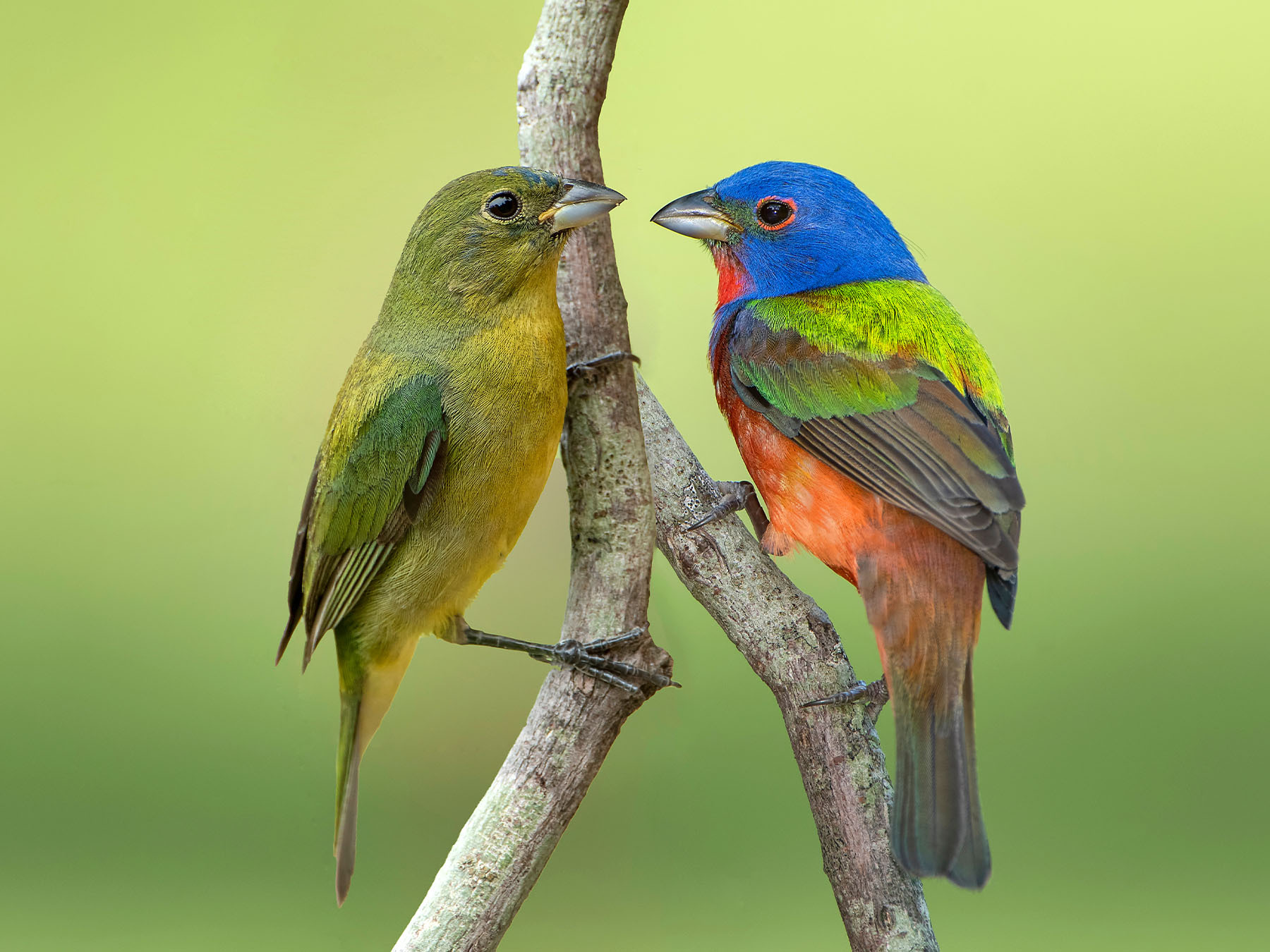
Painted Bunting guides
1 guidesQuick facts
- Length
- 12–14 cm
- Wingspan
- 21–23 cm
- Weight
- 13–19 g
- Lifespan
- 5–10 years · oldest recorded 12 years
- Family
- Cardinals & Grosbeaks
- Migration
- Long-distance Migrant
- Global status (IUCN)
- Least Concern
- World population
- 15,000,000 individuals
- Population trend
- Population thought to be sightly declining due to habitat loss and trapping, but considered stable due to large numbers
- Also called
- Nonpareil
- Scientific name
- Passerina ciris
Sources
4- 1BirdLife International. 2018. Passerina ciris. The IUCN Red List of Threatened Species 2018: e.T22723957A131475071. Source (opens in a new tab)
- 2BirdLife International. 2018. Passerina ciris. The IUCN Red List of Threatened Species 2018: e.T22723957A131475071. Source (opens in a new tab)
- 3Partners in Flight (2018) Source (opens in a new tab)
- 4John Terres, The Audubon Society Encyclopedia of North American Birds (1980)

Checked by
Nathan Cope, founder and editor
Nathan founded Birdfact and leads its writers and contributors in the UK, the US and Canada. He has watched and studied birds for more than ten years, and checks every article and species guide before it’s published.