


Oriental Scops-owl
Asian Scops-owl · Otus sunia
By the Birdfact teamChecked by Nathan Cope
On this page12 sections
How to recognise it
What do Oriental Scops-Owls look like?
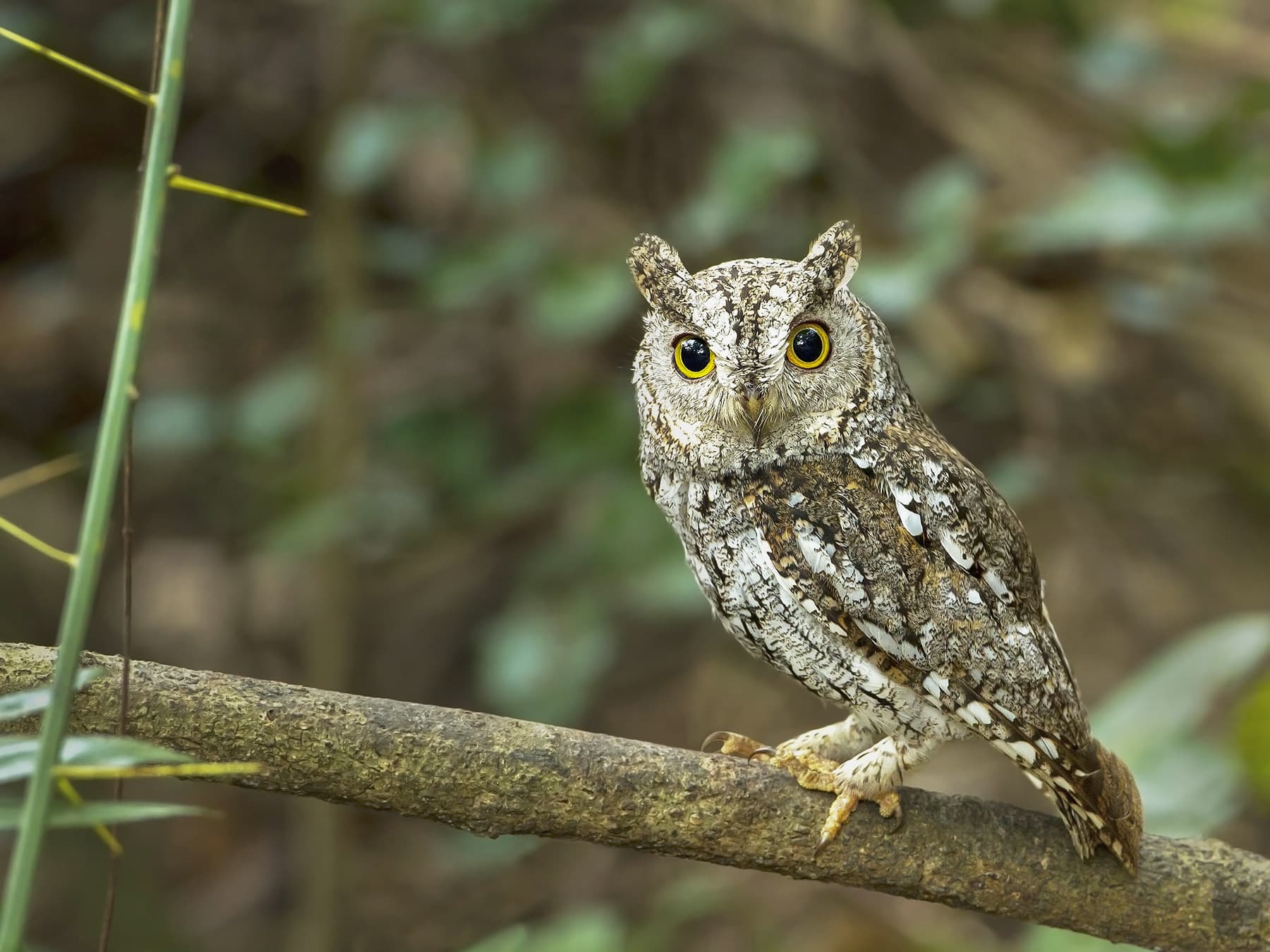
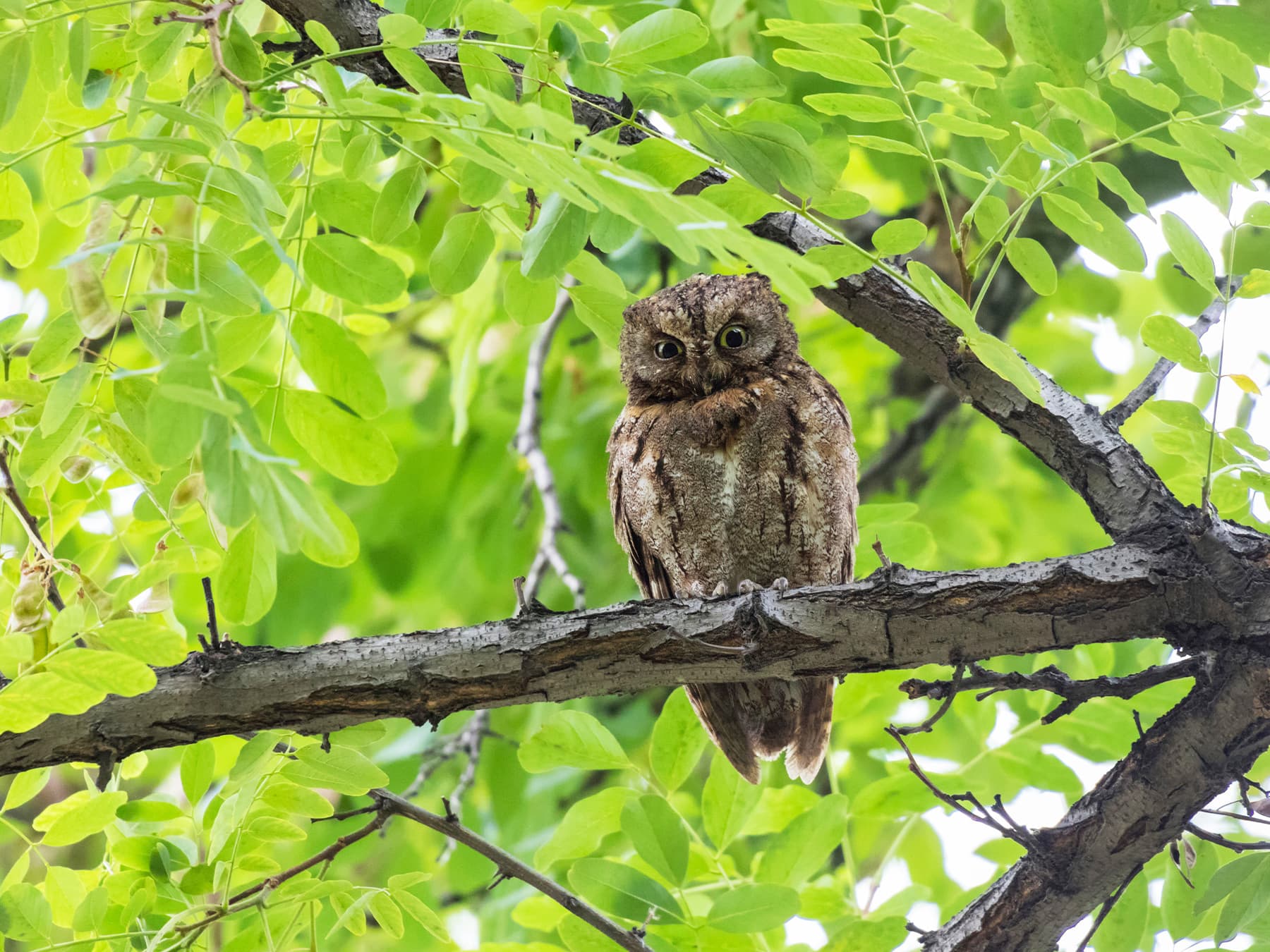
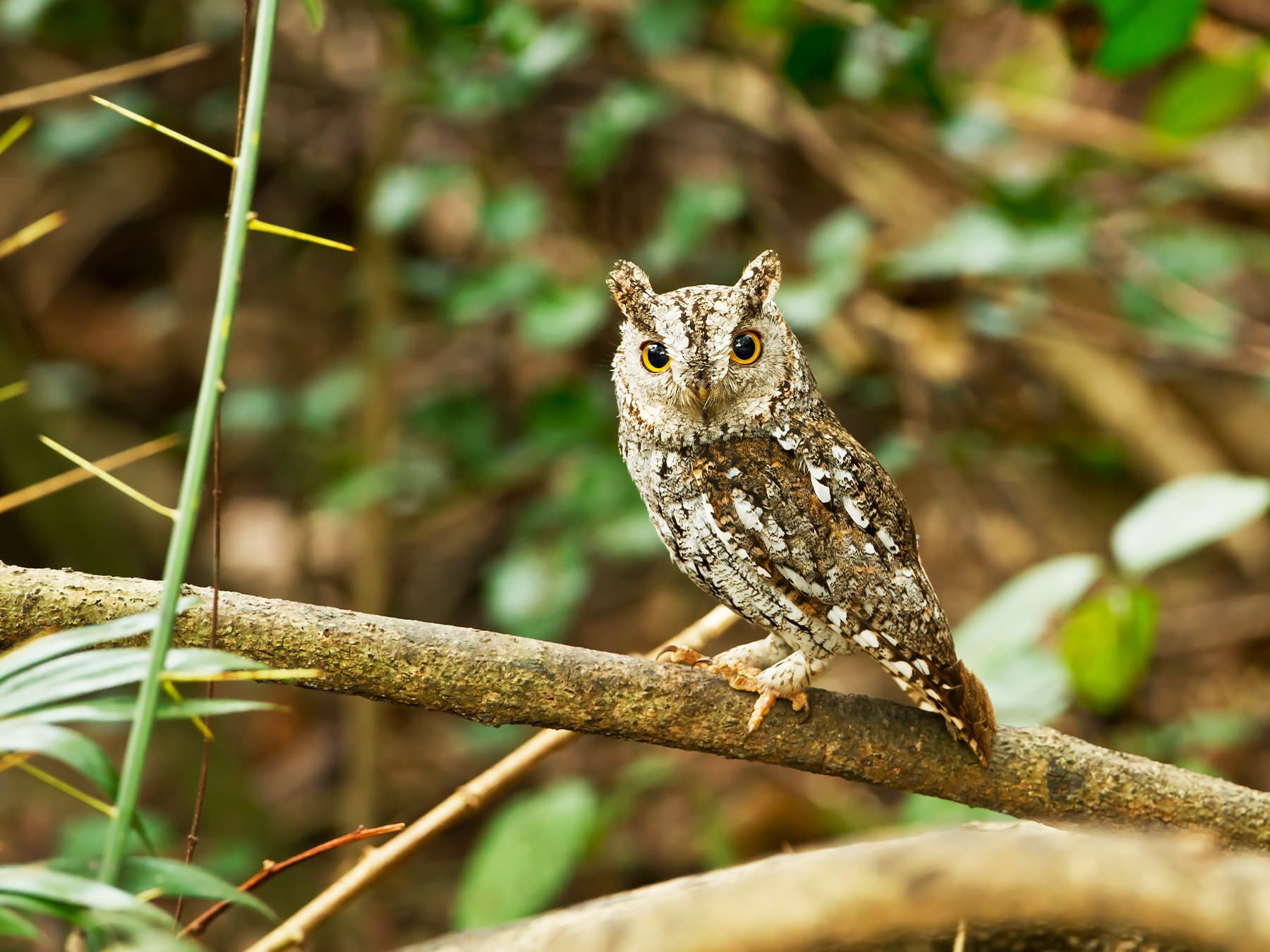
Oriental scops-owls are tiny, with noticeable ear tufts. Two color morphs exist; a gray-brown morph and a rufous morph. Males and females are alike in both color variations.
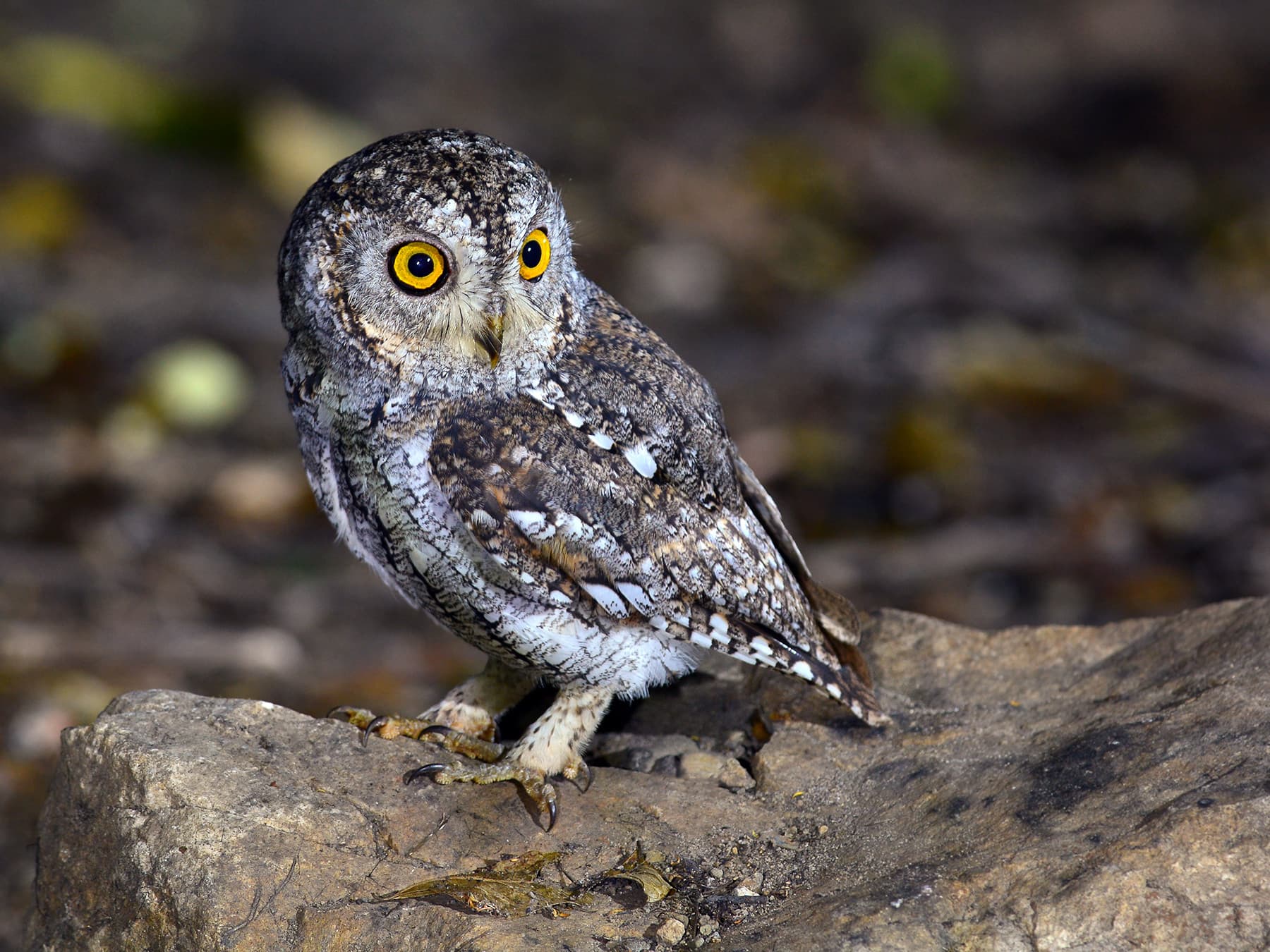
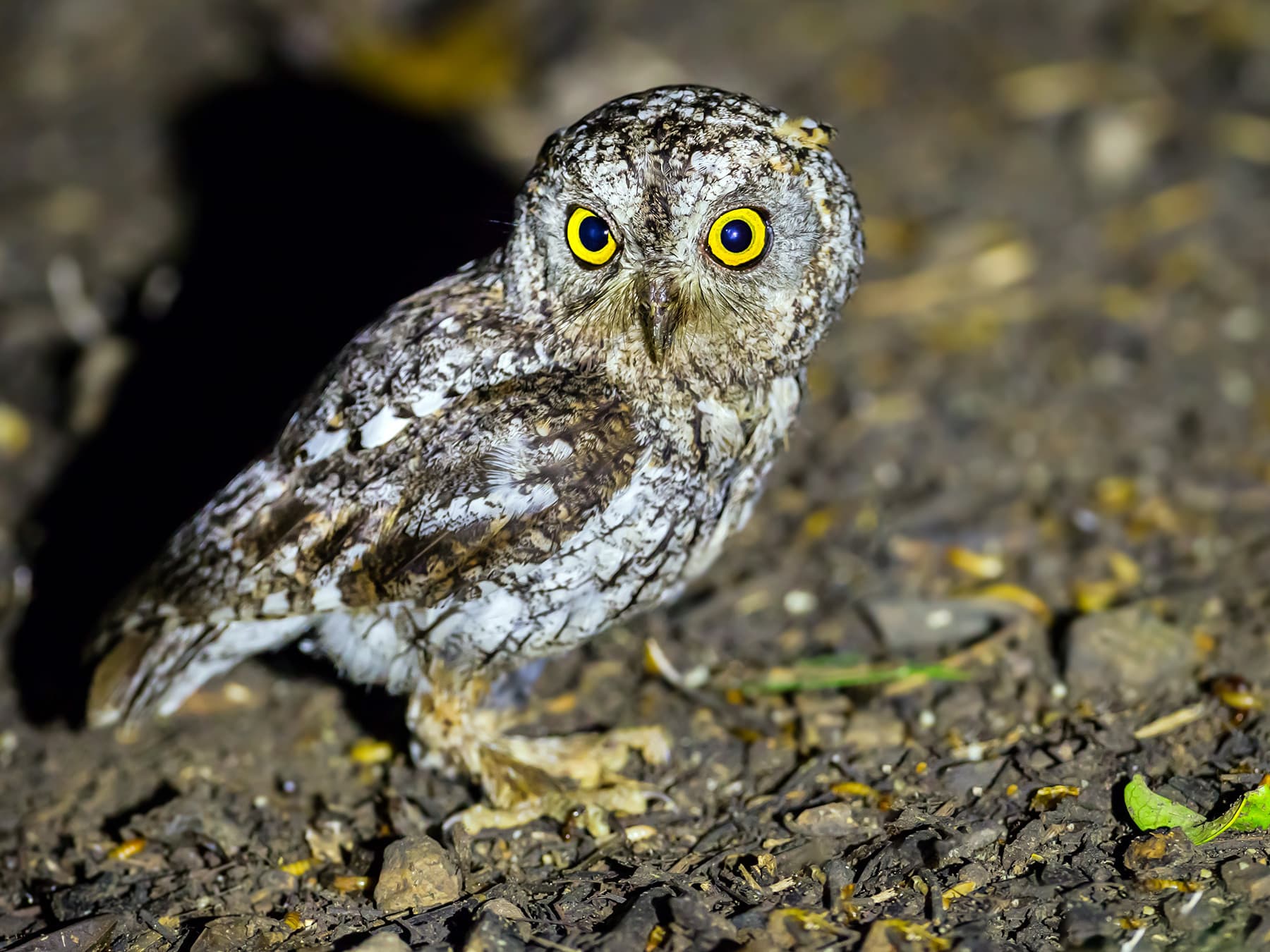
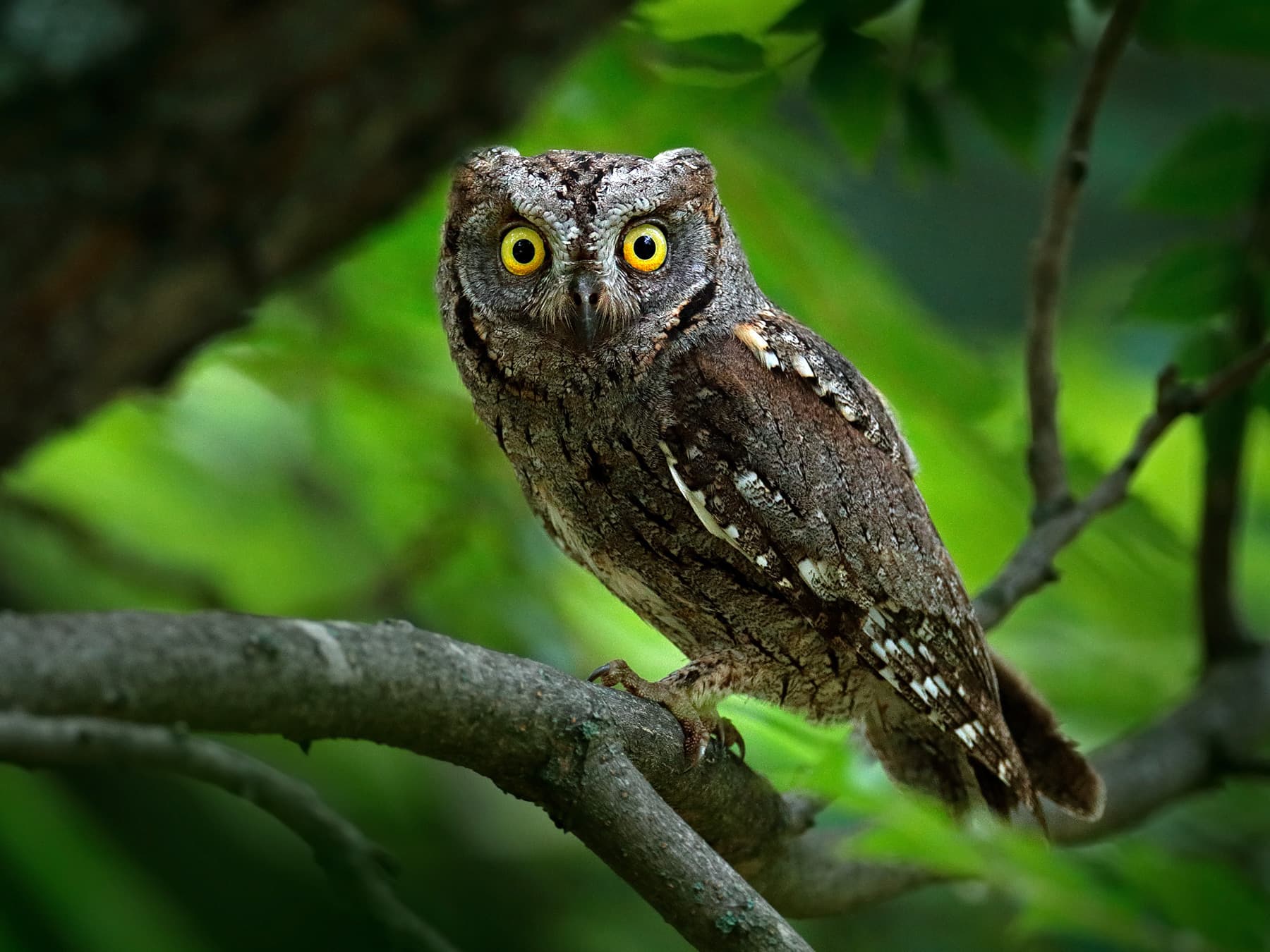
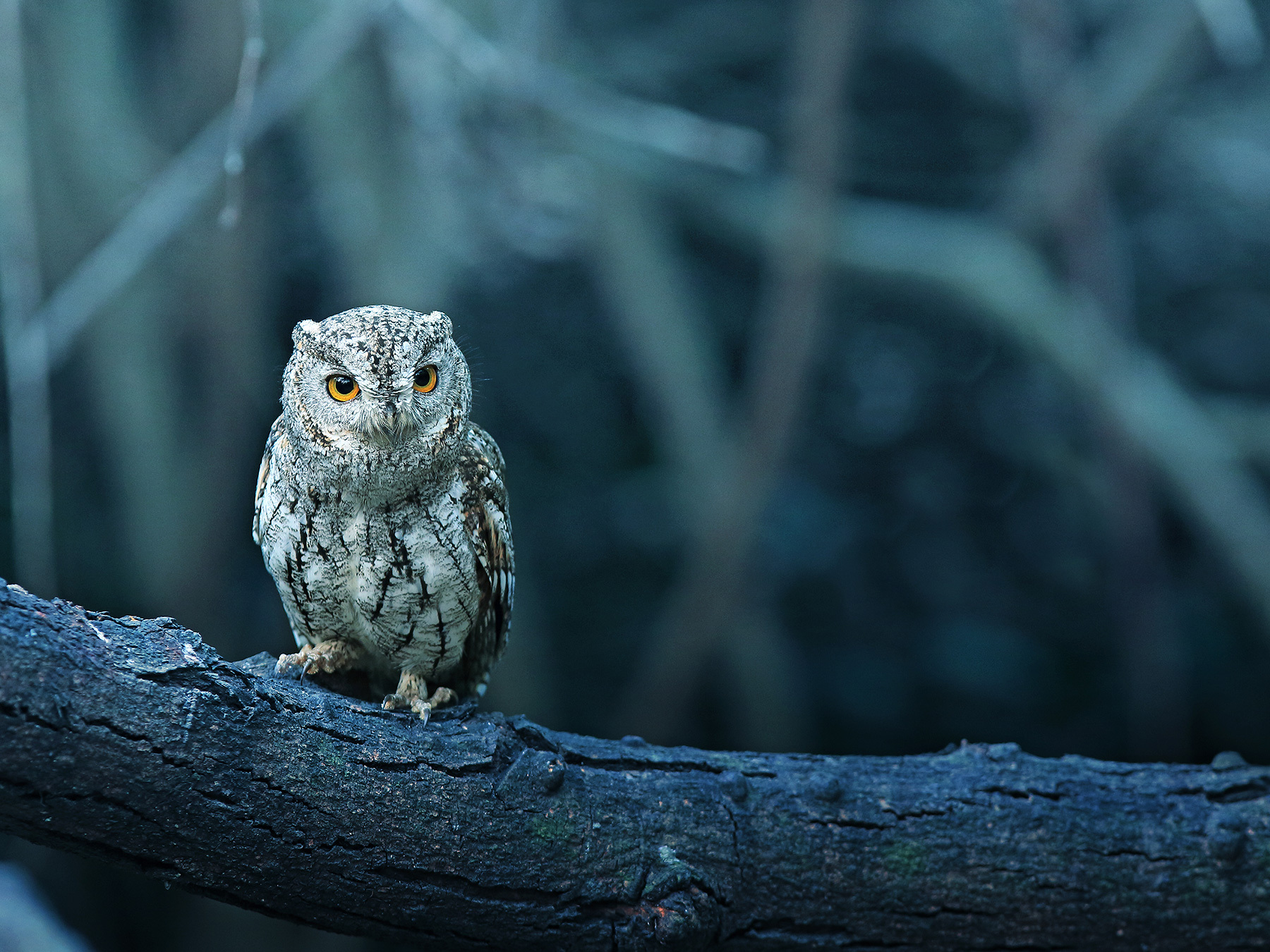
Gray-brown morph oriental scops owls have a mottled sooty plumage with few distinguishing features apart from a white shoulder stripe edged with black, and strong black barred markings on the belly. The face is paler brownish-gray, with an indistinct facial disc and bright yellow eyes.
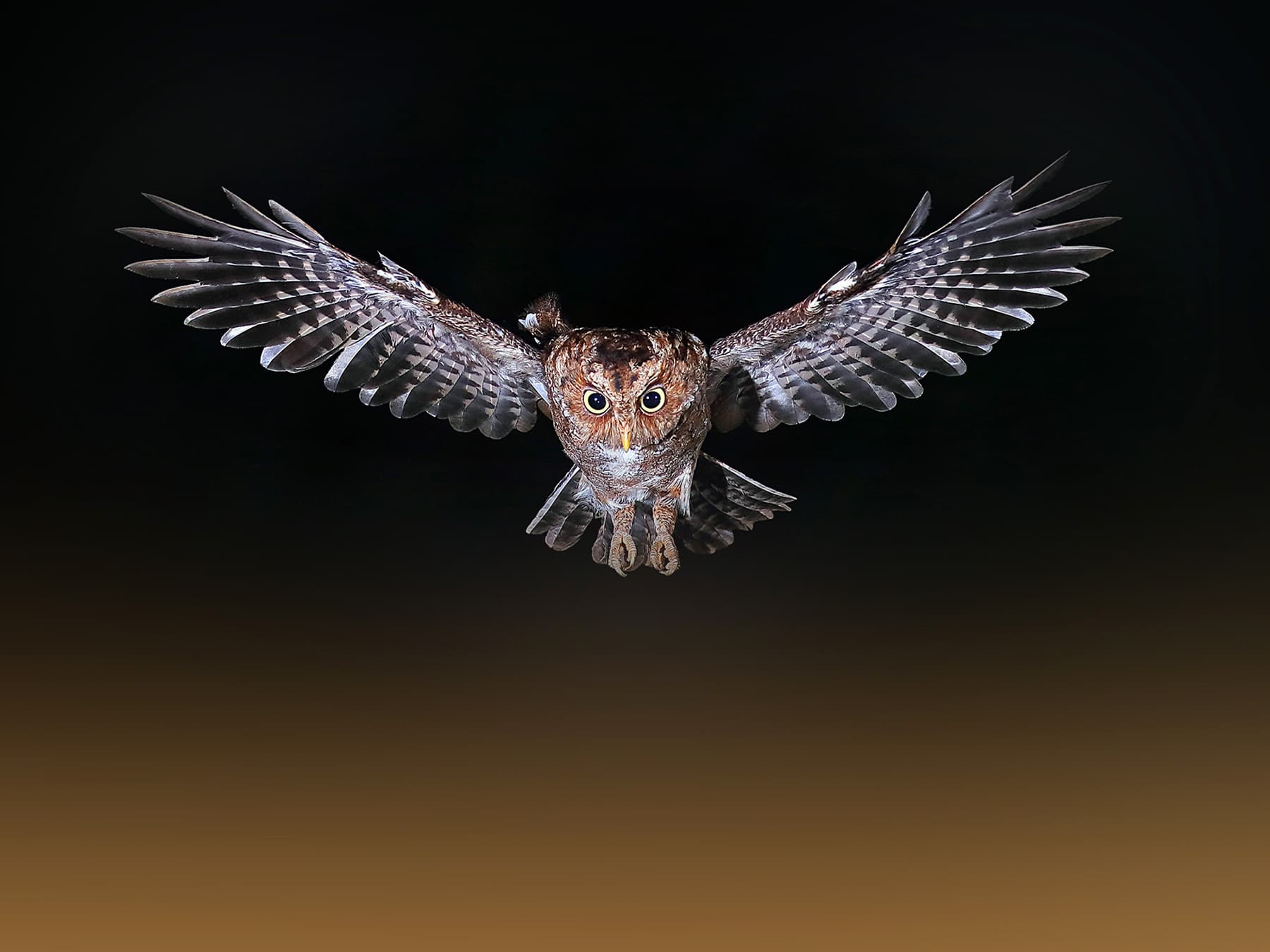
Rufous morph oriental scops owls have more vivid reddish-brown coloring, with deeper patterning on the back and wings and rippled reddish barring across the breast and belly. The white shoulder stripe is visible and perhaps the most notable feature of either morph of this species. As with the gray morph individuals, eyes are bright yellow.
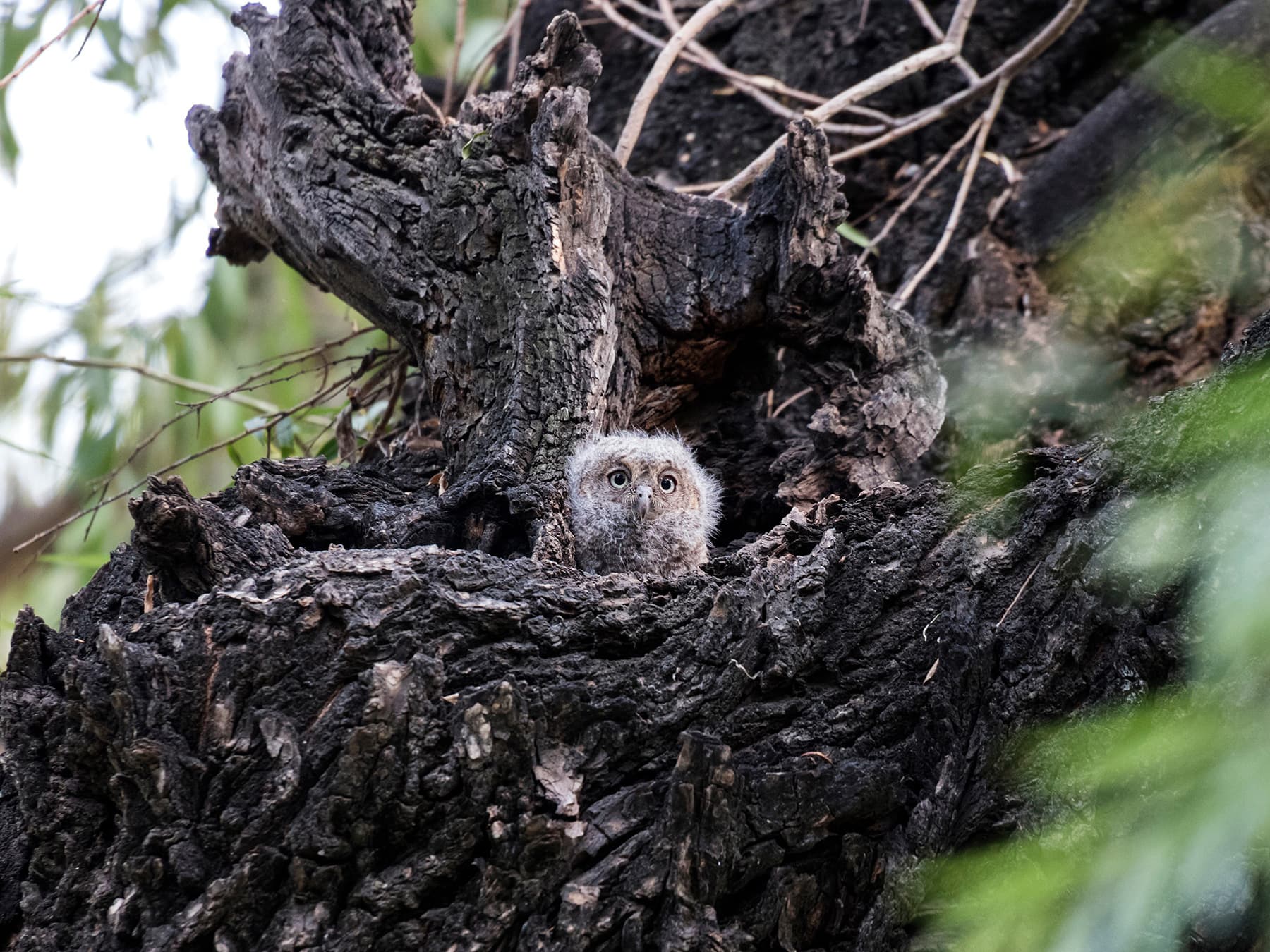
In oriental scops owls of both color morphs, juvenile birds resemble adults although their barred markings are less vivid.
How big are Oriental Scops-Owls?
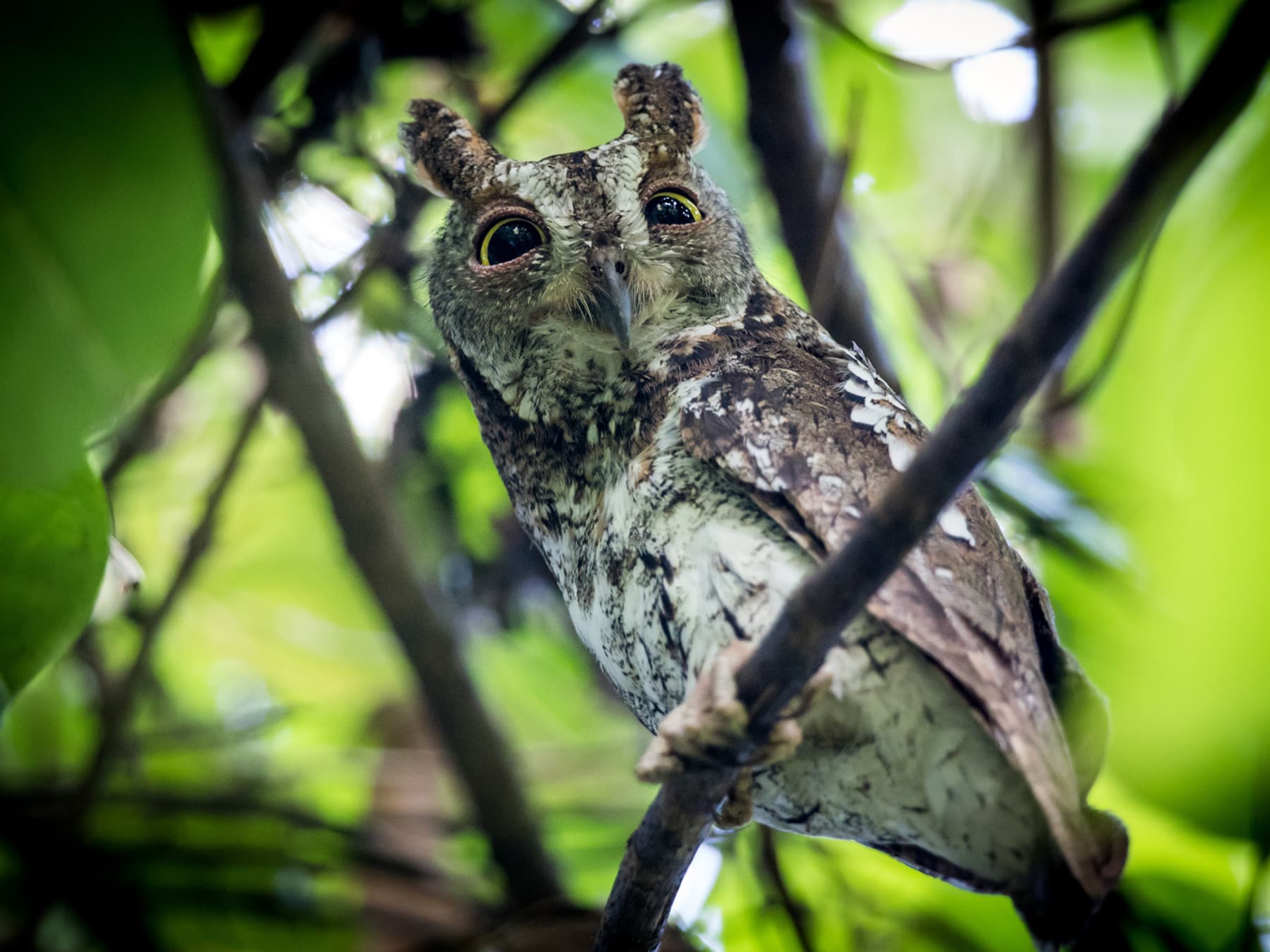
A tiny forest-dwelling owl, the oriental scops-owl is similar in size to the northern and ferruginous pygmy owls. Females are usually noticeably larger and heavier than males.
- Length: 17 cm to 21 cm (6.7 in to 8.2 in)
- Wingspan: 43 cm to 53 cm (17 in to 21 in)
- Weight: 72.5 g to 95.2 g (0.16 lb to 0.21 lb)
Its size
Adults- Length
- 16–20 cm
- Wingspan
- 40–50 cm
- Weight
- 60–95 g
Its song and calls
What sound does an Oriental Scops-Owl make?
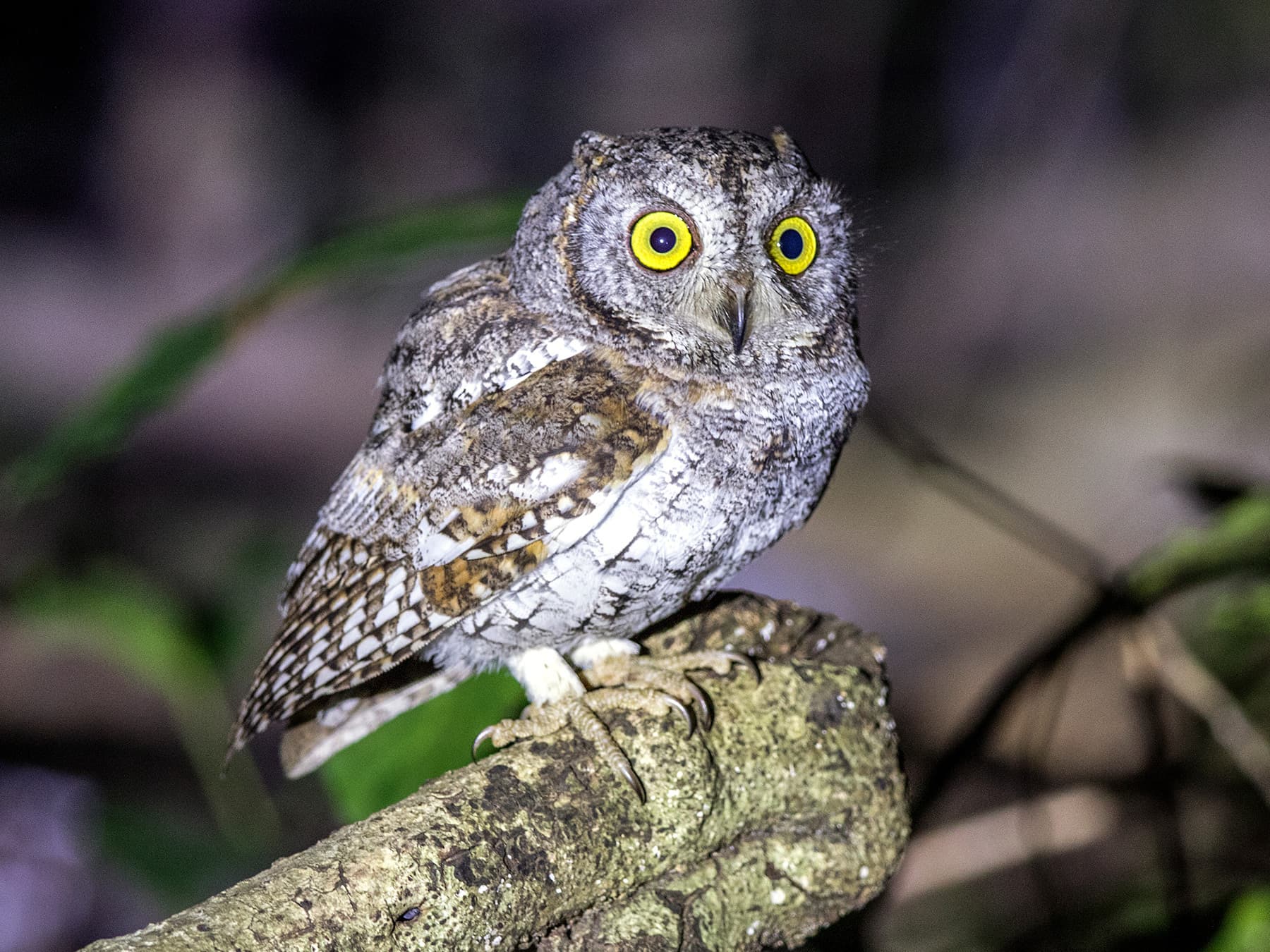
A repetitive flowing ‘toik-toik-toik’ call is the most frequently heard vocalization of oriental scops-owls.
- Song0:00 / 0:15
Recorded in Sichuan, China · June 2025
When and where to see it
The Oriental Scops-owl is not recorded regularly in the UK, Ireland, the United States or Canada.
Worldwide: recorded regularly in 15 countries
Countries where it was recorded in at least 3 of the 6 years 2019–2024. Linked countries have their own bird list.
Data: EOD – eBird Observation Dataset (Cornell Lab of Ornithology), accessed via GBIF.org, CC BY 4.0. Records from 2019–2024, aggregated and filtered by Birdfact. How these lists are made
What is the habitat of an Oriental Scops-Owl?
Dry deciduous or mixed species forests offer the required nesting sites for oriental scops-owls. Evergreen trees are also used for nesting but less frequently.
Preferred habitats also include orchards, riverside woodland landscapes, parklands, and agricultural land. They are also regularly spotted living in settled areas, in suburban environments.
What is the range of an Oriental Scops-Owl?
Oriental scops-owls are widely distributed across South and East Asia. A disjunct population exists in India, with resident populations found along the west coast and throughout Sri Lanka.
To the north, the species is present across northern India and Nepal eastwards to the coast of south China, stretching southwards into South East Asia. In the southern reaches of the range, for example in Malaysia and northern Indonesia, oriental scops-owls are winter visitors only.
In the east of the range, from around Shanghai northwards, the presence of oriental scops-owls is limited to the breeding season only, with breeding grounds extending northwards into Siberia, Japan, northern China, and the Korean peninsula.
Where do Oriental Scops-Owls live?
Precise data for individual countries’ populations of oriental scops-owls remains under-researched. The Korean peninsula, China, and Japan are all believed to host up to 100,000 breeding pairs each spring, while up to 10,000 pairs breed in Siberian Russia.
How rare are Oriental Scops-Owls?
Although global population estimates are unavailable for the species, oriental scops-owls are not considered rare.
Due to their nocturnal habits, small size, and well-camouflaged plumage, they are not as frequently spotted as some larger, more familiar owls, but they are widespread and considered a relatively common Asian owl species.
Where can you see Oriental Scops-Owls in the US?
Only two recorded and verified sightings of oriental scops-owls have been made in the United States to date. Classed as accidental vagrants and a non-native species, the oriental scops-owl sightings were made in Alaska’s Aleutian Islands in 1977 and 1979.
Where can you see Oriental Scops-Owls in Canada?
Oriental scops-owls have not officially been spotted in Canada, with the nearest reports of the species being two independent records in Alaska’s Aleutian Islands.
Migration
Do Oriental Scops-Owls migrate?
Oriental scops-owls are partial migrants, with a resident range that extends across India’s west and east coasts, the northern half of South East Asia, and across southern China.
To the north, in Siberia, Japan, the Korean peninsula, and northern China, oriental scops-owls are breeding visitors, present from late March to September/October. Post-breeding migration reaches destinations as far south as Malaysia and northern Indonesia.
Are Oriental Scops-Owls native to the US?
Oriental scops-owls are native to east and south Asia and do not breed in the wild outside of the continent. Occasional vagrant visitors have been recorded in Alaska, but no breeding has taken place and they are not permanent residents anywhere in North America.
Tips for seeing it
- Listen for their distinctive 'poop-poop-poop' call at night
- Look for them perched motionless in dense foliage during the day
- Use a spotlight at night to catch the reflection of their eyes
- Check tree cavities and old woodpecker holes in forested areas
What it eats
What do Oriental Scops-Owls eat?
The diet of oriental scops-owls consists mainly of invertebrates and spiders, particularly locusts, grasshoppers, crickets, moths, and larvae. Small birds, rodents, and reptiles are also eaten.
What do Oriental Scops-Owl chicks eat?
Crickets, grasshoppers, beetles, caterpillars, and larvae are the most common prey items delivered to nest cavities by male oriental scops-owls.
Nesting and breeding
Where do Oriental Scops-Owls nest?
Suitable cavity sites are found by male oriental scops owls, either naturally occurring hollows in deciduous tree trunks, chambers excavated by other birds, or nest boxes. Holes in walls may also be used. Ahead of breeding, males prepare nest sites and females select a mate based on their preferred nest.
When do Oriental Scops-Owls nest?
Egg-laying commences from February in India and Pakistan, from April onwards in Siberia and northern China, and from May in Japan. Females incubate alone and are brought food to the nest by their mate. The incubation period lasts for between 24 and 25 days.
What do Oriental Scops-Owl eggs look like?
A typical clutch laid by an oriental scops-owl contains between three and four plain white eggs. No information is available about the size of eggs for this species.
Do Oriental Scops-Owls mate for life?
Bonds that form between oriental scops-owl pairs in early spring last for the duration of the breeding season, with pairs separating once their single brood of young has reached independence.
Outside of the breeding season, they are a solitary species, and forage and roost alone. It is unknown how common it is for former mates to reunite in subsequent breeding seasons.
Behaviour
Are Oriental Scops-Owls aggressive?
Aggressive and hostile vocalizations may commonly be heard when oriental scops-owls sense a threat, using snarling and snapping to defend their territories.
Where do Oriental Scops-Owls sleep at night?
As a nocturnal species, oriental scops owls spend much of the day roosting, with usual sites including natural hollows in trees, as well as tucked up close to a tree trunk or concealed by dense foliage in forests.
Lifespan and predators
How long do Oriental Scops-Owls live?
Breeding occurs for the first time at the end of an oriental scops-owl’s first year of life. The average expected and maximum life expectancy for this species is unknown.
What are the predators of Oriental Scops-Owls?
Little is known about how much of a risk predators pose to oriental scops-owl, and what animals or other birds may raid nests, steal eggs, and kill nestlings.
Are Oriental Scops-Owls protected?
Oriental scops-owls are included for protection under CITES Appendix II, where they are listed in the Raptors Memorandum of Understanding (MOU)
Are Oriental Scops-Owls endangered?
Currently, the population of oriental scops-owls is considered stable, and there are no immediate threats to their future survival. The IUCN has rated them as a species of least concern globally.
Conservation
While the Oriental Scops-owl is currently listed as Least Concern, it faces threats from habitat loss due to deforestation.
Conservation efforts focus on preserving its woodland habitats and monitoring population trends across its range.
More photos
2 photos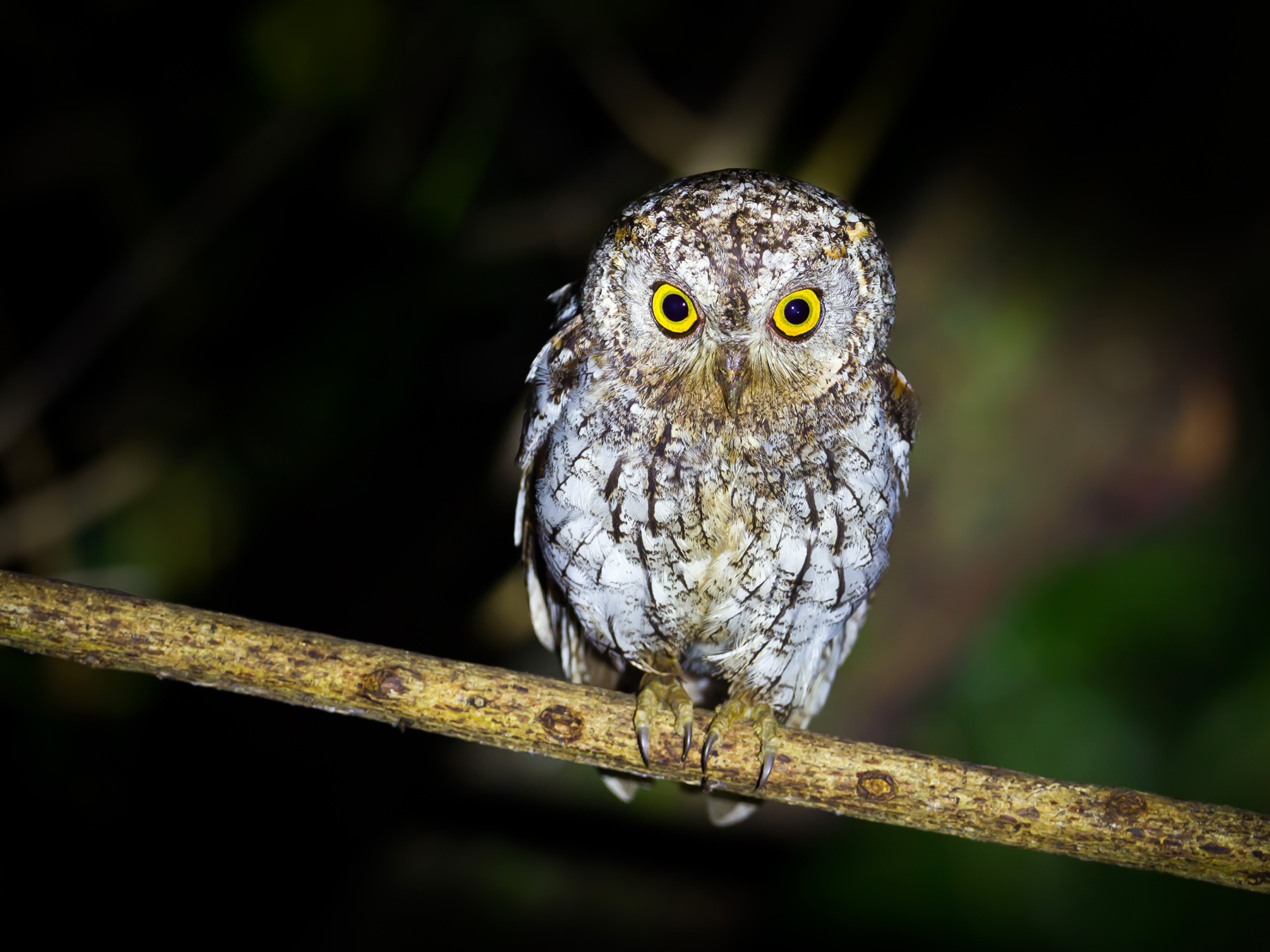
Quick facts
- Length
- 16–20 cm
- Wingspan
- 40–50 cm
- Weight
- 60–95 g
- Lifespan
- 3–10 years
- Family
- Owls
- Migration
- Partial migrant
- Global status (IUCN)
- Least Concern
- World population
- Not quantified, but very abundant regionally
- Population trend
- Stable
- Also called
- Asian Scops-owl
- Scientific name
- Otus sunia
Sources
3- 1BirdLife International. 2021. Otus sunia. The IUCN Red List of Threatened Species 2021: e.T22728969A206482277. Source (opens in a new tab)
- 2BirdLife International. 2021. Otus sunia. The IUCN Red List of Threatened Species 2021: e.T22728969A206482277. Source (opens in a new tab)
- 3del Hoyo et al. (1999)

Checked by
Nathan Cope, founder and editor
Nathan founded Birdfact and leads its writers and contributors in the UK, the US and Canada. He has watched and studied birds for more than ten years, and checks every article and species guide before it’s published.