


Orange-headed Thrush
Geokichla citrina
By the Birdfact teamChecked by Nathan Cope
On this page11 sections
How to recognise it
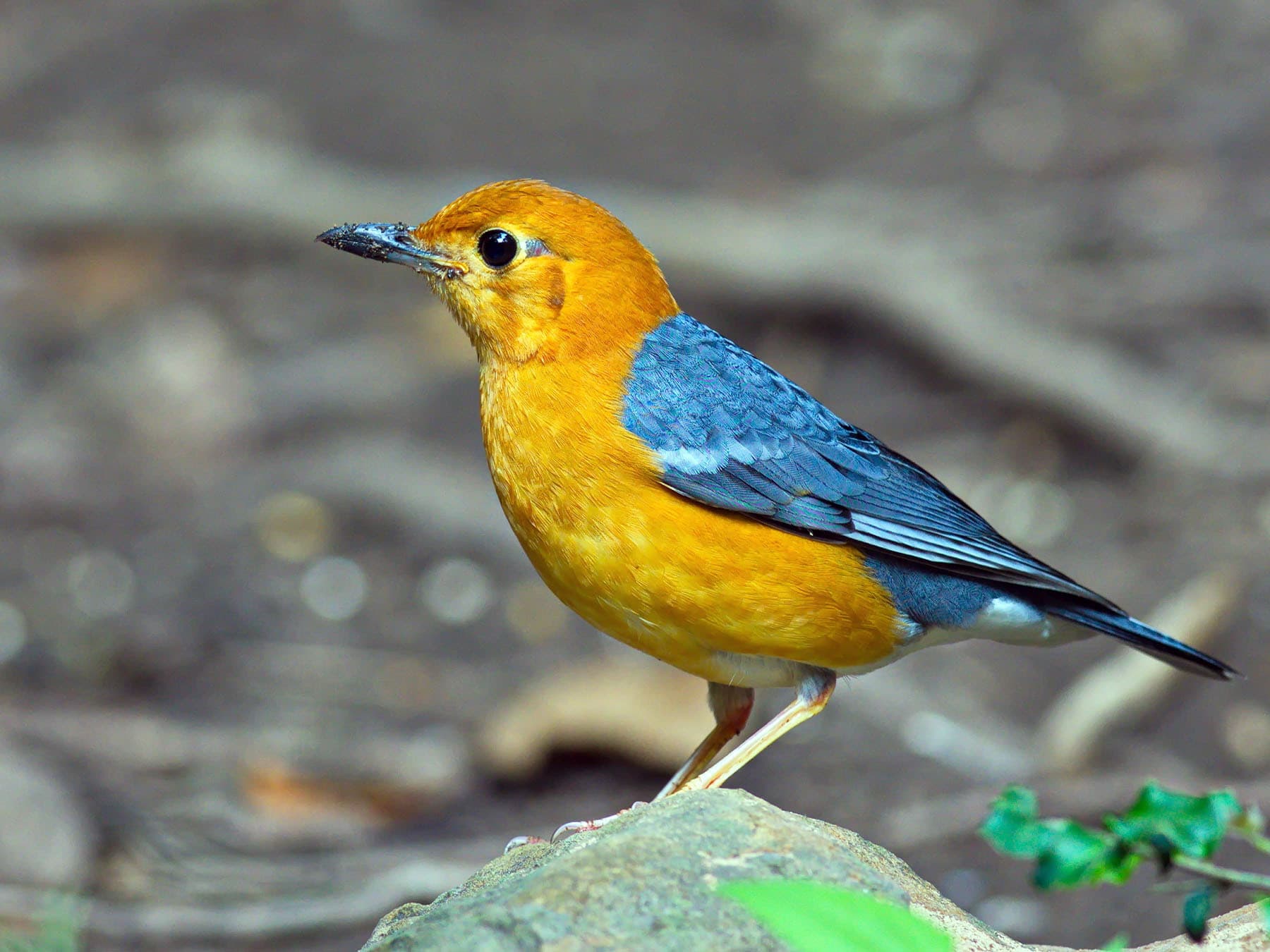
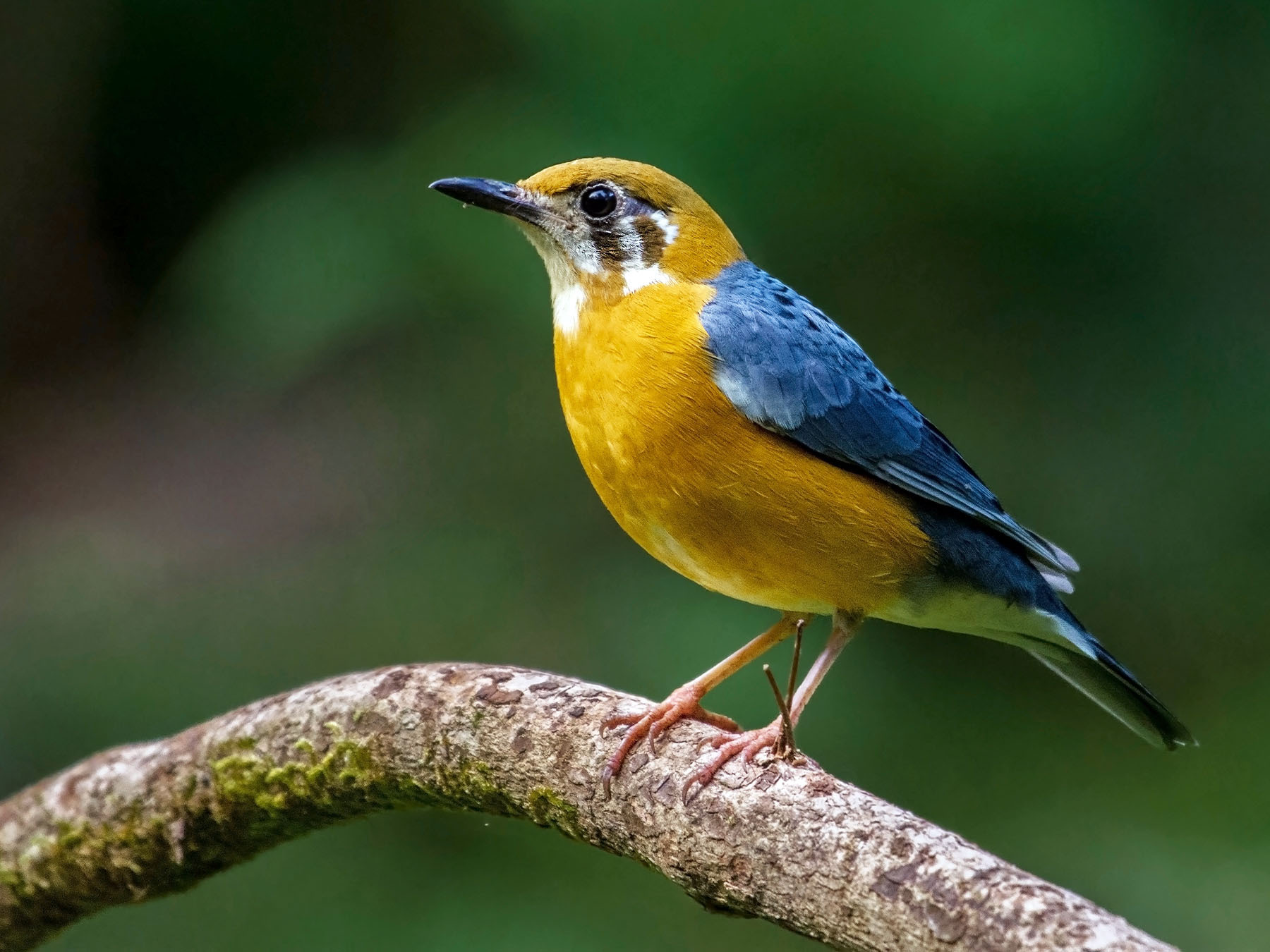
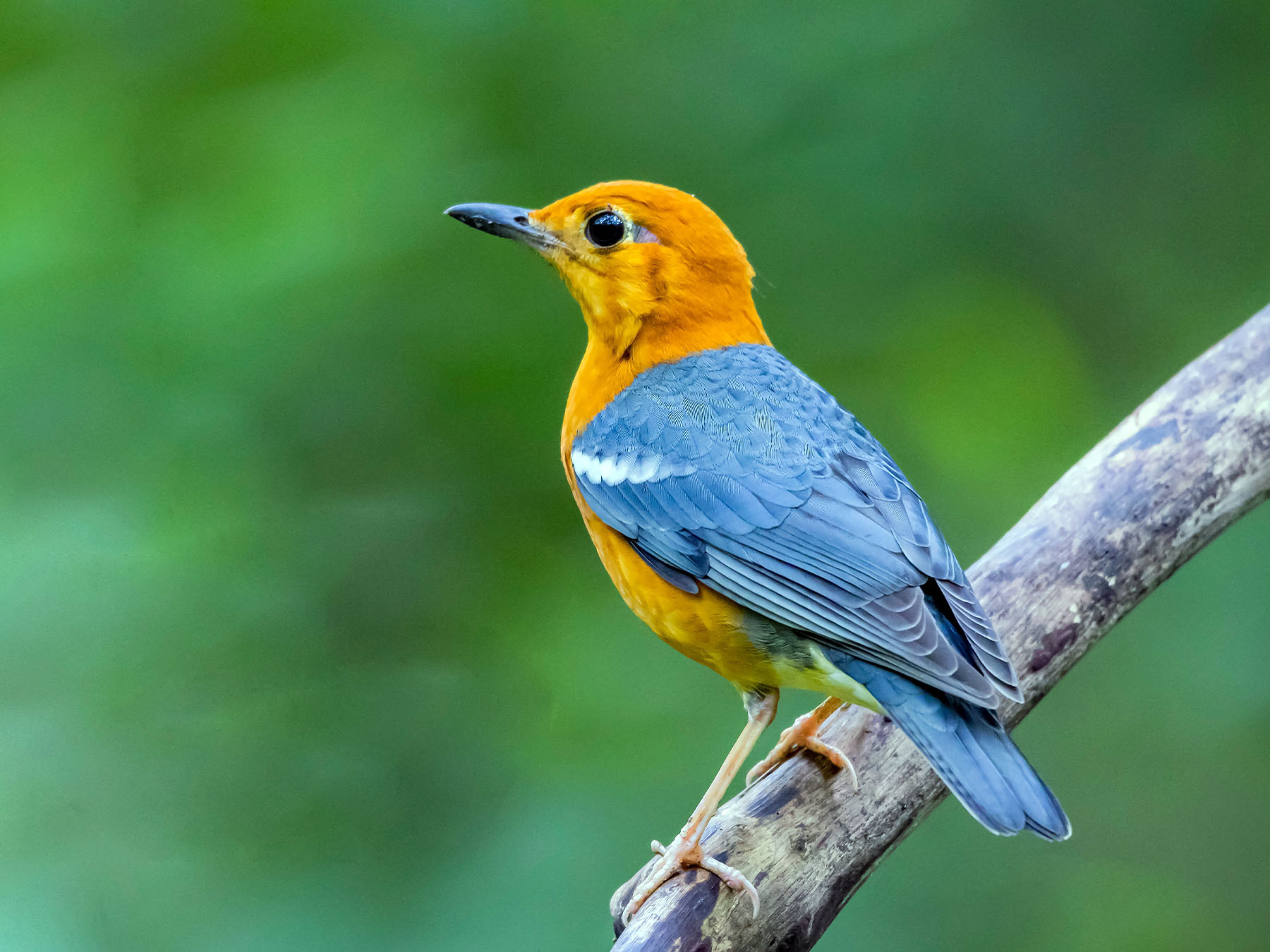
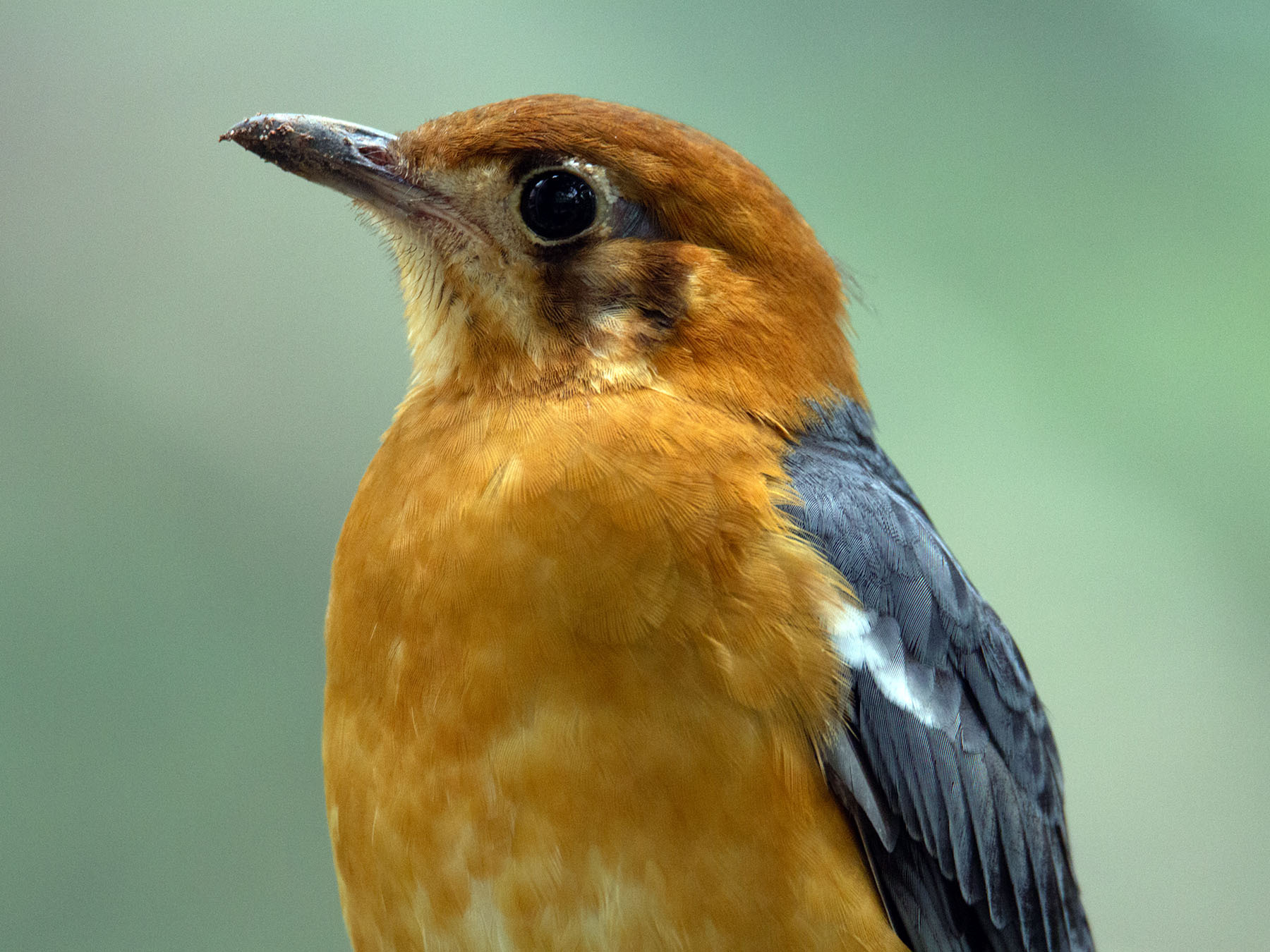
The Orange-headed Thrush has a pale orange head and underparts, contrasting with grey or greenish-brown upperparts. Its wings feature a white patch, and the tail appears dark. The bird has a blackish bill and flesh-coloured legs.
Males and females look noticeably different, with females showing greenish-brown rather than grey on their upperparts. Juveniles have a mottled brown appearance with orange tinges and buff markings, gradually developing adult colouration as they mature.
Its size
Adults- Length
- 20–23 cm
- Wingspan
- 35–40 cm
- Weight
- 47–67 g
Its song and calls
The Orange-headed Thrush has a rich, melodious song consisting of a series of clear, flute-like notes. Their calls include a soft 'chuk-chuk' when alarmed and a high-pitched 'tsee' contact call.
During the breeding season, males sing from exposed perches, often at dawn and dusk, with songs lasting up to 30 seconds.
- Song and calls0:00 / 0:48
- Call0:00 / 0:21
When and where to see it
The Orange-headed Thrush is not recorded regularly in the UK, Ireland, the United States or Canada.
Worldwide: recorded regularly in 14 countries
Countries where it was recorded in at least 3 of the 6 years 2019–2024. Linked countries have their own bird list.
Data: EOD – eBird Observation Dataset (Cornell Lab of Ornithology), accessed via GBIF.org, CC BY 4.0. Records from 2019–2024, aggregated and filtered by Birdfact. How these lists are made
Tips for seeing it
- Look for these thrushes in dense, moist forests with thick undergrowth
- Listen for their melodious song, especially at dawn and dusk
- Watch for quick movements on the forest floor as they forage
- Be patient and quiet, as these birds can be easily startled
What it eats
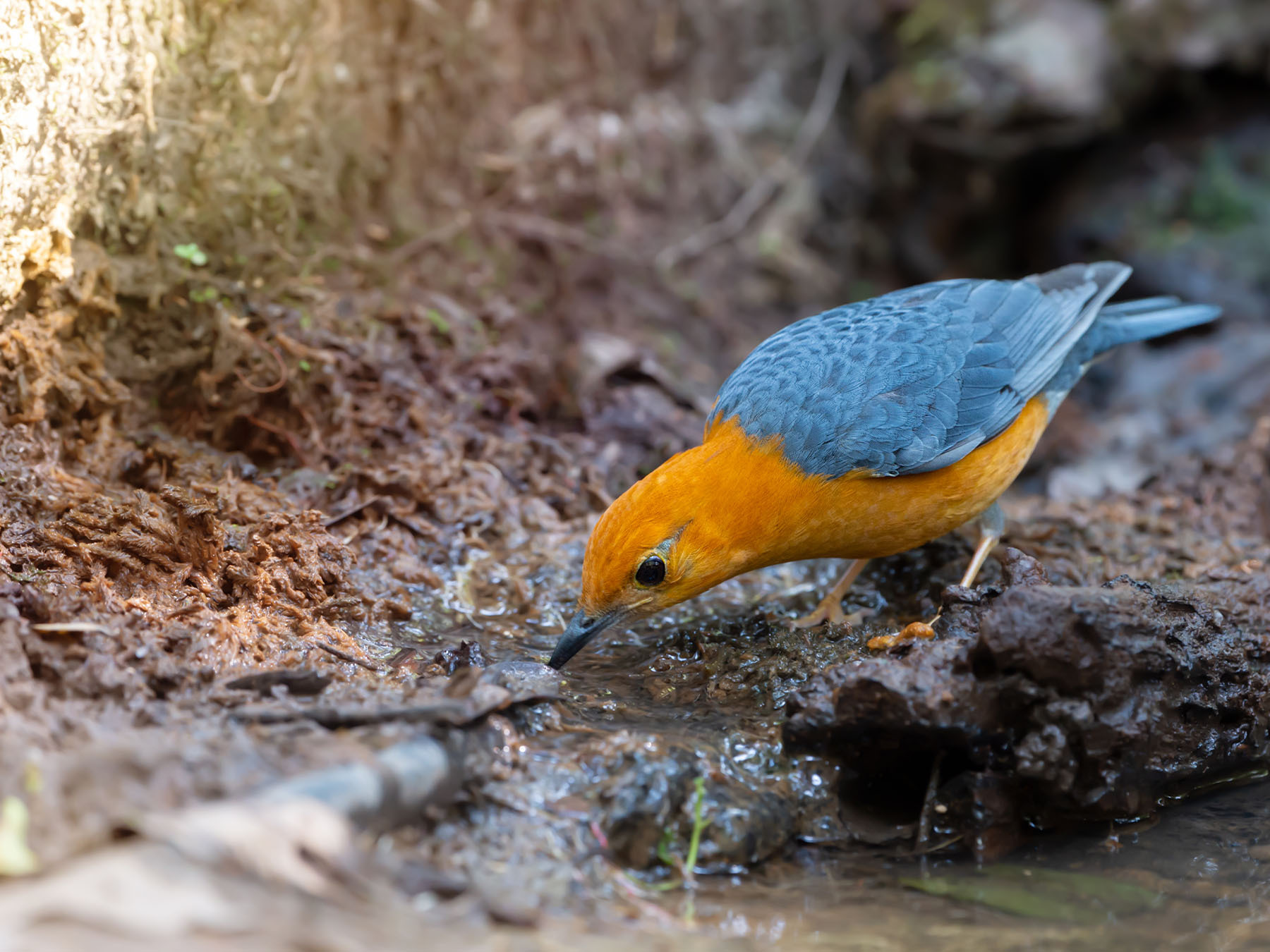
The Orange-headed Thrush primarily feeds on insects, worms, and other invertebrates found on the forest floor. They also consume a variety of fruits, especially during the non-breeding season.
These birds use their strong bills to probe leaf litter and turn over small stones in search of prey.
Nesting and breeding
The breeding season for Orange-headed Thrushes typically occurs from April to August, coinciding with the monsoon season in much of their range. Males attract females with their melodious songs and elaborate courtship displays.
Nests are cup-shaped structures made of twigs, leaves, and moss, often placed in the forks of trees or dense shrubs. Females usually lay 2-4 pale blue eggs with reddish-brown speckles.
Both parents share incubation duties, which last about 13-14 days. Chicks fledge after approximately two weeks but remain dependent on their parents for several more weeks.
Behaviour
Orange-headed Thrushes are generally shy and secretive, often seen foraging on the forest floor. They hop and run quickly, pausing to listen for prey.
These birds are typically solitary or found in pairs, becoming more vocal and visible during the breeding season.
Conservation
While the Orange-headed Thrush is currently listed as Least Concern, it faces threats from habitat loss due to deforestation and fragmentation of its forest habitats.
Conservation efforts focus on protecting and preserving its woodland and rainforest habitats across its range.
More photos
5 photos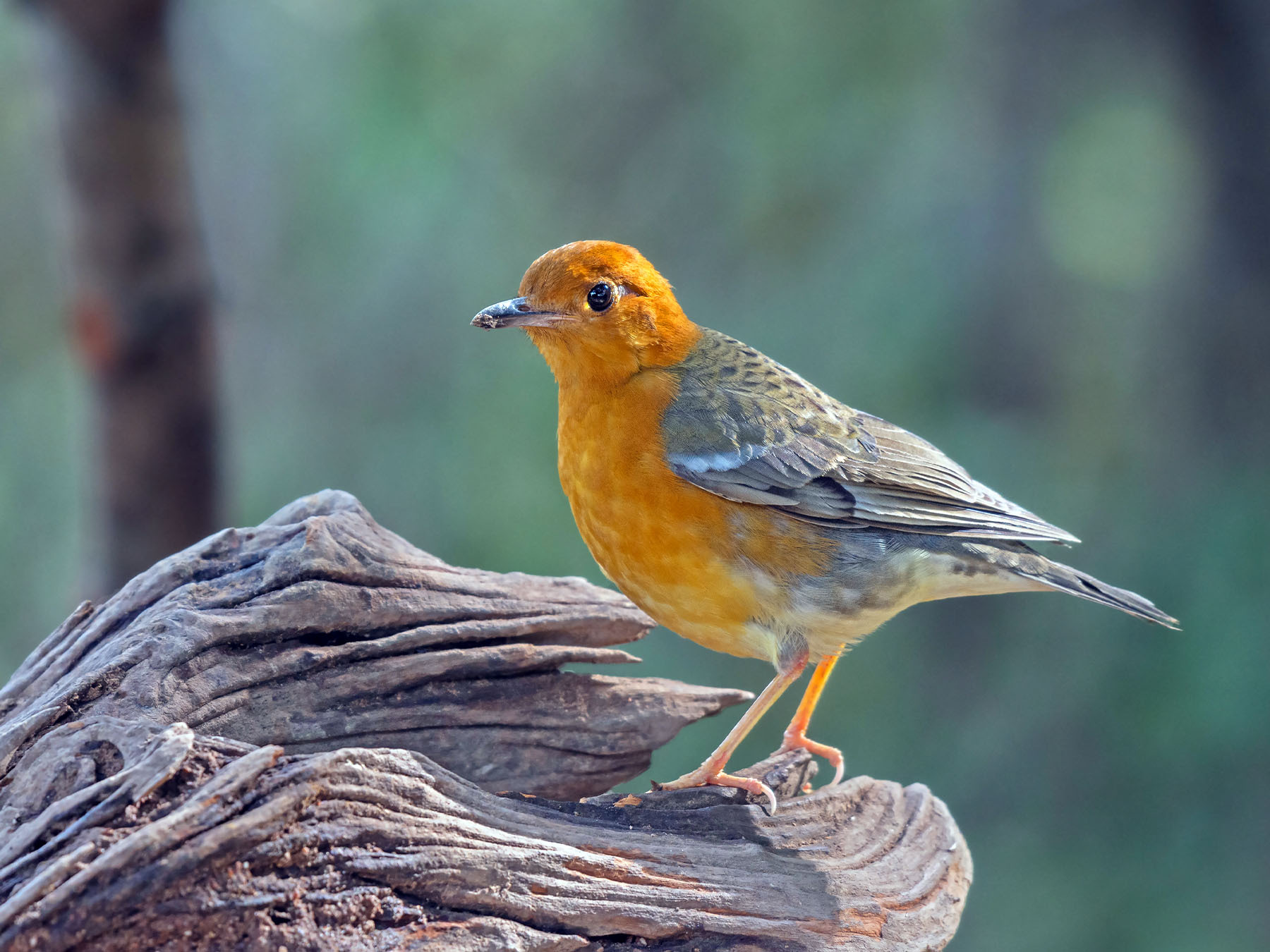
Quick facts
- Length
- 20–23 cm
- Wingspan
- 35–40 cm
- Weight
- 47–67 g
- Family
- Thrushes
- Migration
- Partial migrant
- Global status (IUCN)
- Least Concern
- World population
- Not quantified, but locally common
- Population trend
- Decreasing
- Scientific name
- Geokichla citrina
Sources
3- 1BirdLife International. 2019. Geokichla citrina. The IUCN Red List of Threatened Species 2019: e.T22708375A152676506. Source (opens in a new tab)
- 2del Hoyo et al. (2005)
- 3Clement and Hathway (2000)

Checked by
Nathan Cope, founder and editor
Nathan founded Birdfact and leads its writers and contributors in the UK, the US and Canada. He has watched and studied birds for more than ten years, and checks every article and species guide before it’s published.