


New Holland Honeyeater
White-bearded Honeyeater · Phylidonyris novaehollandiae
By the Birdfact teamChecked by Nathan Cope
On this page11 sections
How to recognise it
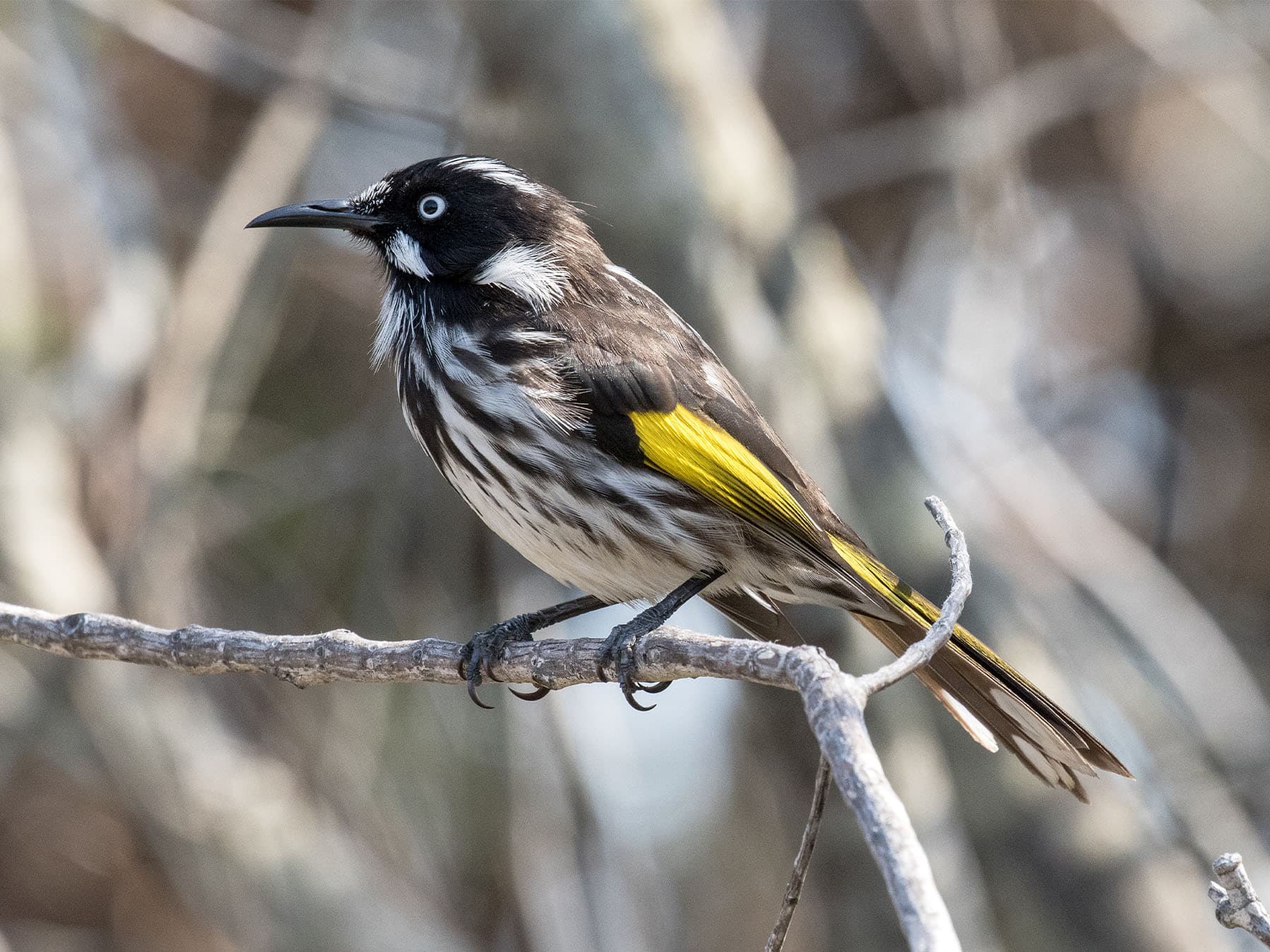
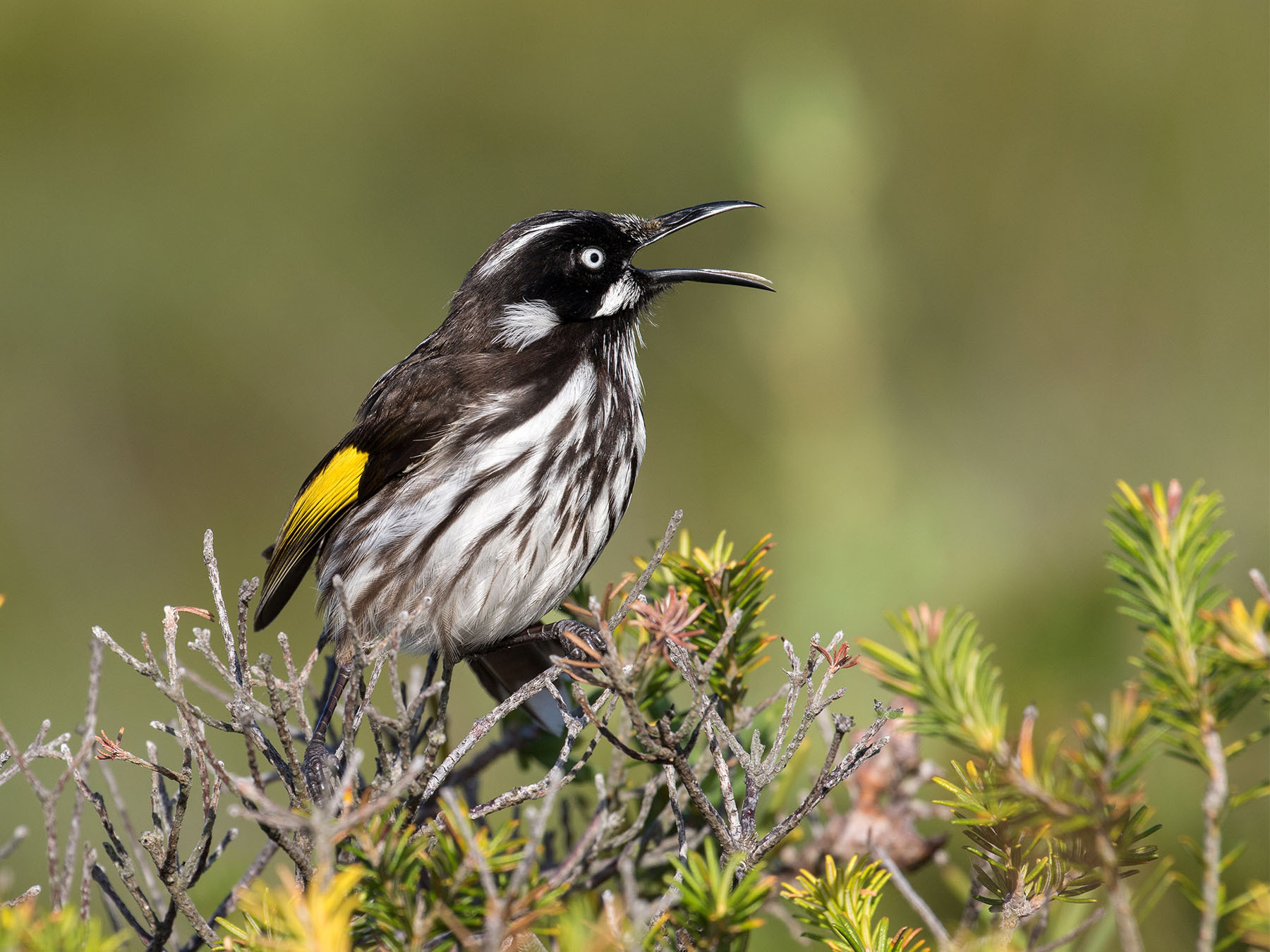
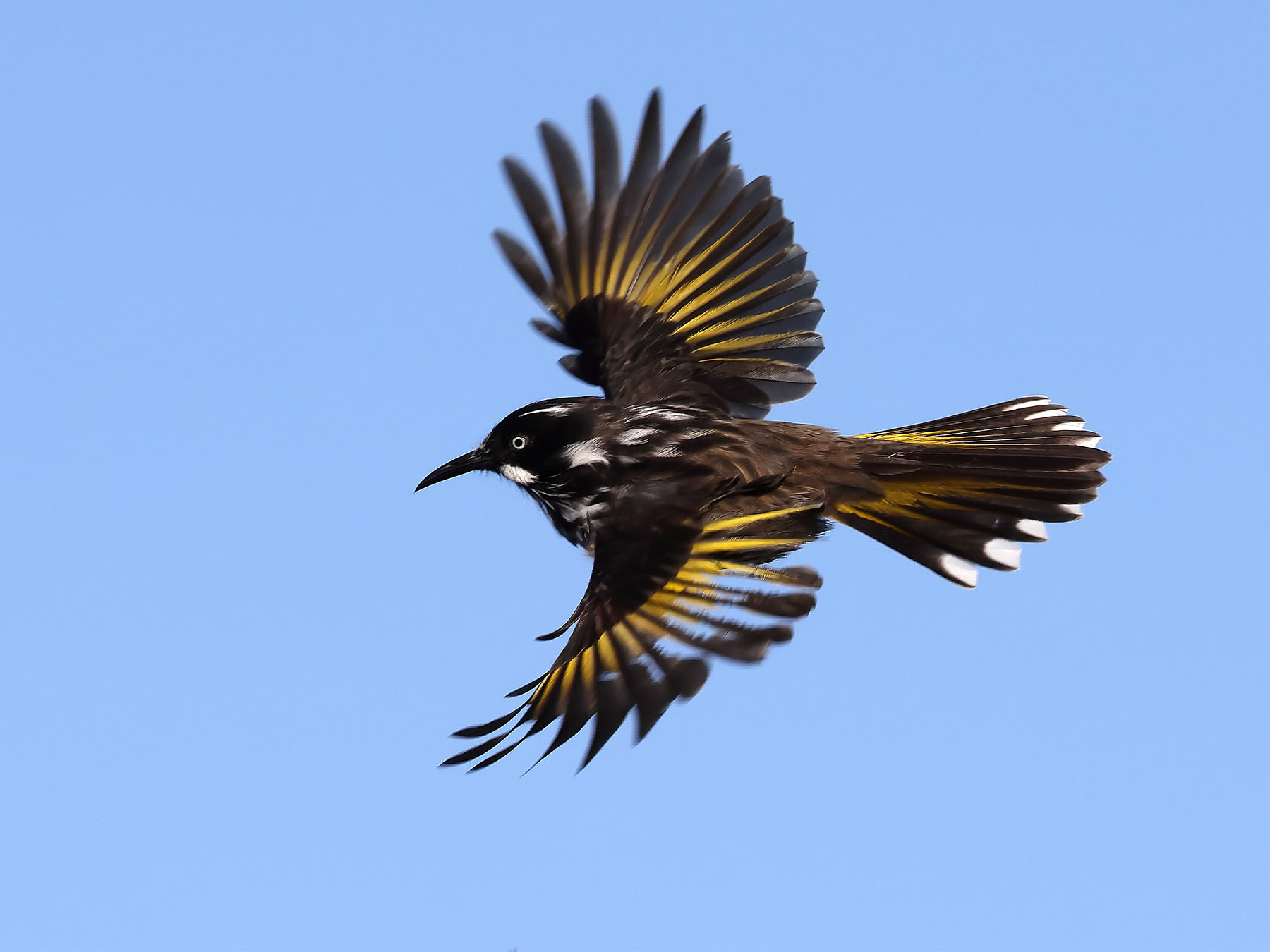
The New Holland Honeyeater is a striking small bird with bold black and white plumage. Its back, wings, and tail are black with white edges, while the underparts are white with fine black streaks. A distinctive yellow patch on the wing and a white iris stand out against the black head.
Both sexes look similar, with juveniles having duller plumage and brown eyes. The bird's slender, slightly curved bill is well-adapted for nectar feeding.
Its size
Adults- Length
- 16–20 cm
- Wingspan
- 22–26 cm
- Weight
- 17–23 g
Its song and calls
New Holland Honeyeaters are vocal birds with a variety of calls. Their most common call is a sharp, metallic 'chik' or 'chik-up', often repeated rapidly.
During territorial disputes, they produce a harsh, scolding 'chwok' sound. When alarmed, they emit a high-pitched, piercing whistle that serves as a warning to other birds.
When and where to see it
The New Holland Honeyeater is not recorded regularly in the UK, Ireland, the United States or Canada.
Worldwide: recorded regularly in 1 country
Countries where it was recorded in at least 3 of the 6 years 2019–2024. Linked countries have their own bird list.
Oceania (1)
Data: EOD – eBird Observation Dataset (Cornell Lab of Ornithology), accessed via GBIF.org, CC BY 4.0. Records from 2019–2024, aggregated and filtered by Birdfact. How these lists are made
Tips for seeing it
- Look for them in flowering native plants, especially grevilleas and banksias
- Listen for their distinctive 'chik-up' call, often repeated rapidly
- Observe their quick, darting flight patterns between flowers
- Set up a nectar feeder in your garden to attract them
- Visit coastal heathlands or woodland edges for the best chances of spotting them
What it eats
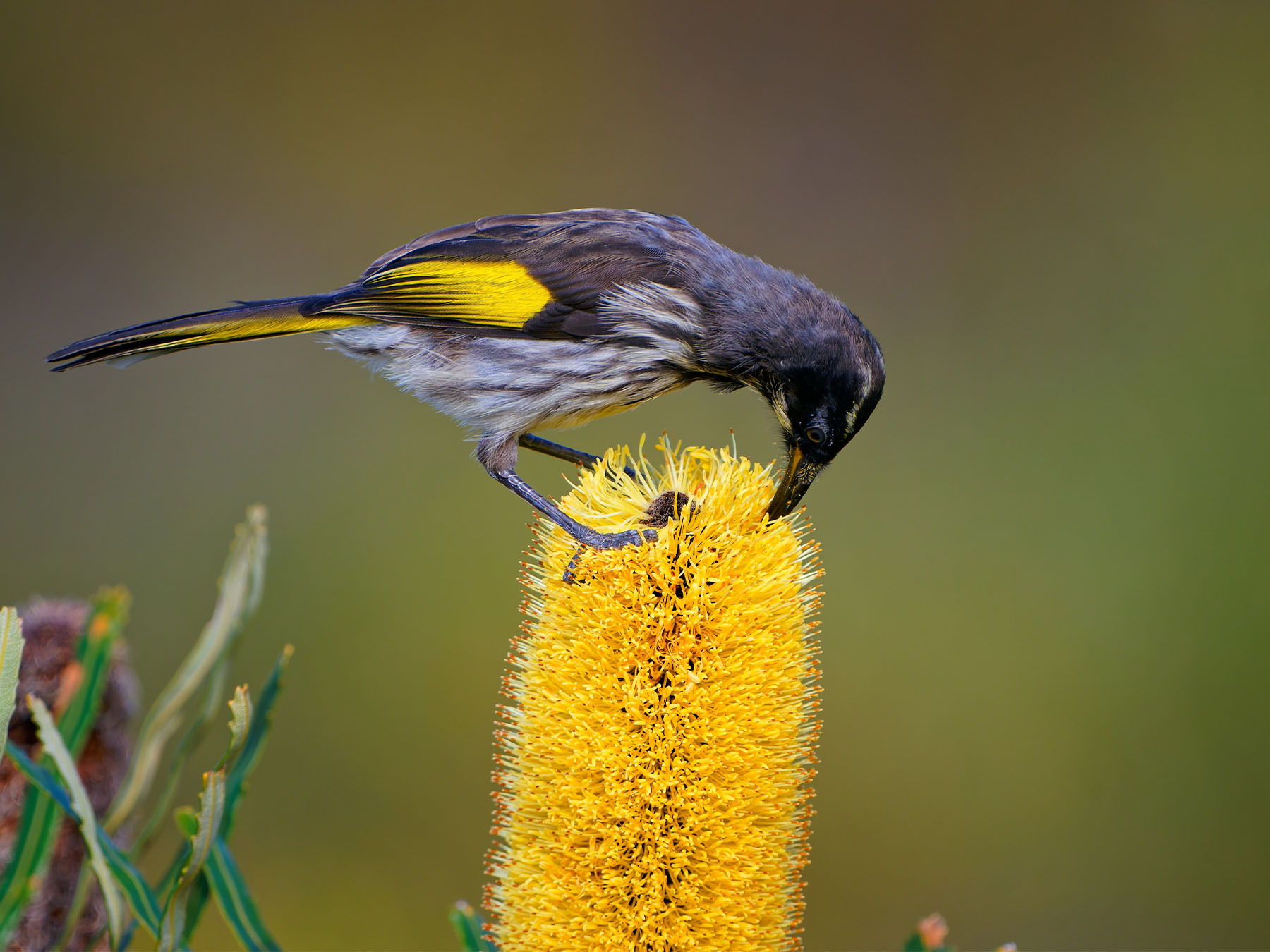
The New Holland Honeyeater primarily feeds on nectar from a variety of native flowers, particularly those of the Proteaceae and Myrtaceae families. They supplement their diet with insects and spiders, which provide essential proteins.
These birds have been observed catching insects on the wing, showcasing their agility.
Nesting and breeding
Breeding occurs mainly from July to November, with some regional variations. New Holland Honeyeaters form monogamous pairs during the breeding season. The female builds a cup-shaped nest using bark, grass, and spider webs, typically placed in dense shrubs or low trees.
The female lays 2-3 pale pink eggs with reddish-brown spots. Both parents share incubation duties, which last about 13-15 days. The eggs are oval-shaped and measure approximately 20 x 14 mm.
Both parents feed nestlings and fledge after 13-15 days. The young birds remain dependent on their parents for several weeks after leaving the nest, gradually learning to forage independently.
Behaviour
New Holland Honeyeaters are active and agile, often seen darting from flower to flower in search of nectar. They are territorial, vigorously defending flowering plants from other nectar-feeding birds.
These birds are also known for their 'anting' behaviour, where they rub insects on their feathers, possibly as a form of self-medication or feather maintenance.
Conservation
While the New Holland Honeyeater is currently listed as Least Concern, it faces threats from habitat loss due to urban development and agriculture.
Conservation efforts focus on preserving native vegetation and encouraging the planting of native flowering species in urban and suburban areas to maintain suitable habitats.
More photos
4 photos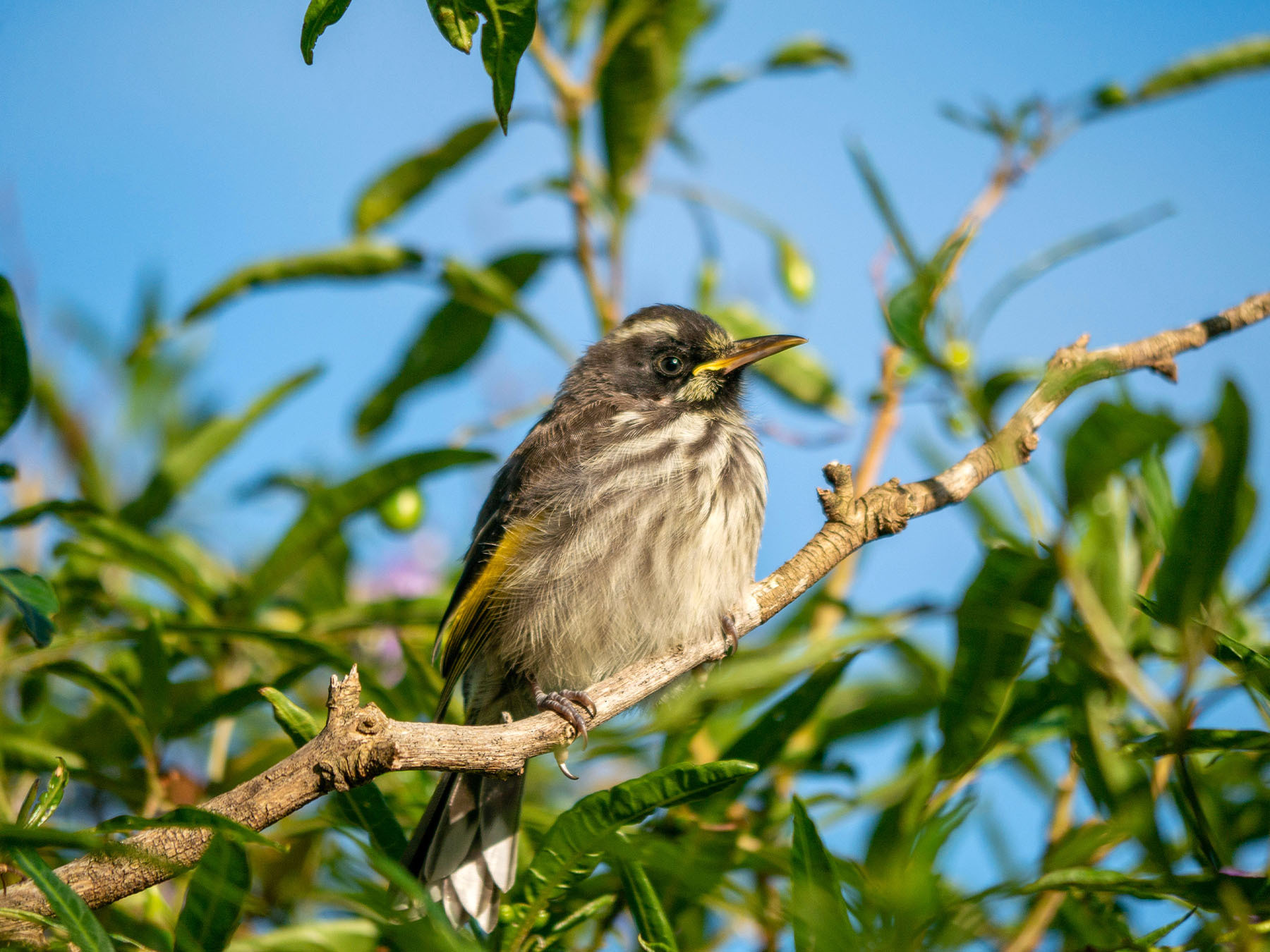
Quick facts
- Length
- 16–20 cm
- Wingspan
- 22–26 cm
- Weight
- 17–23 g
- Lifespan
- 5–10 years · oldest recorded 22.9 years
- Family
- Honeyeaters
- Migration
- Resident
- Global status (IUCN)
- Least Concern
- World population
- Unknown
- Population trend
- Population currently stable, but habitat loss is a concern
- Also called
- White-bearded Honeyeater
- Scientific name
- Phylidonyris novaehollandiae
Sources
4- 1BirdLife International. 2016. Phylidonyris novaehollandiae. The IUCN Red List of Threatened Species 2016: e.T22704361A93964734. Source (opens in a new tab)
- 2BirdLife International. 2016. Phylidonyris novaehollandiae. The IUCN Red List of Threatened Species 2016: e.T22704361A93964734. Source (opens in a new tab)
- 3BirdLife International. 2016. Phylidonyris novaehollandiae. The IUCN Red List of Threatened Species 2016: e.T22704361A93964734. Source (opens in a new tab)
- 4ABBBS - Australian Bird and Bat Banding Scheme Source (opens in a new tab)

Checked by
Nathan Cope, founder and editor
Nathan founded Birdfact and leads its writers and contributors in the UK, the US and Canada. He has watched and studied birds for more than ten years, and checks every article and species guide before it’s published.