


Muscovy Duck
Barbary Duck, Forest Duck · Cairina moschata
By the Birdfact teamChecked by Nathan Cope
On this page12 sections
How to recognise it
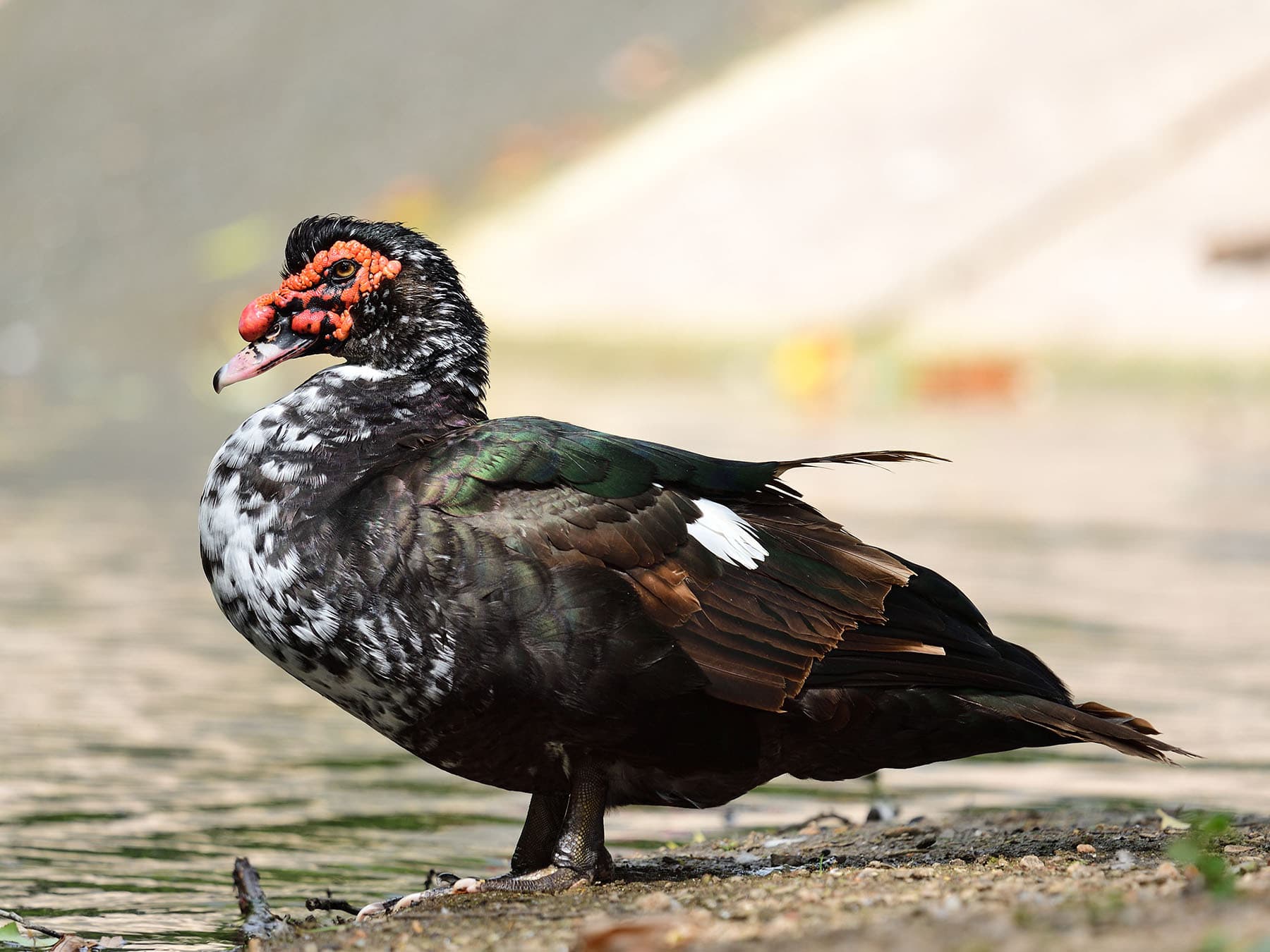
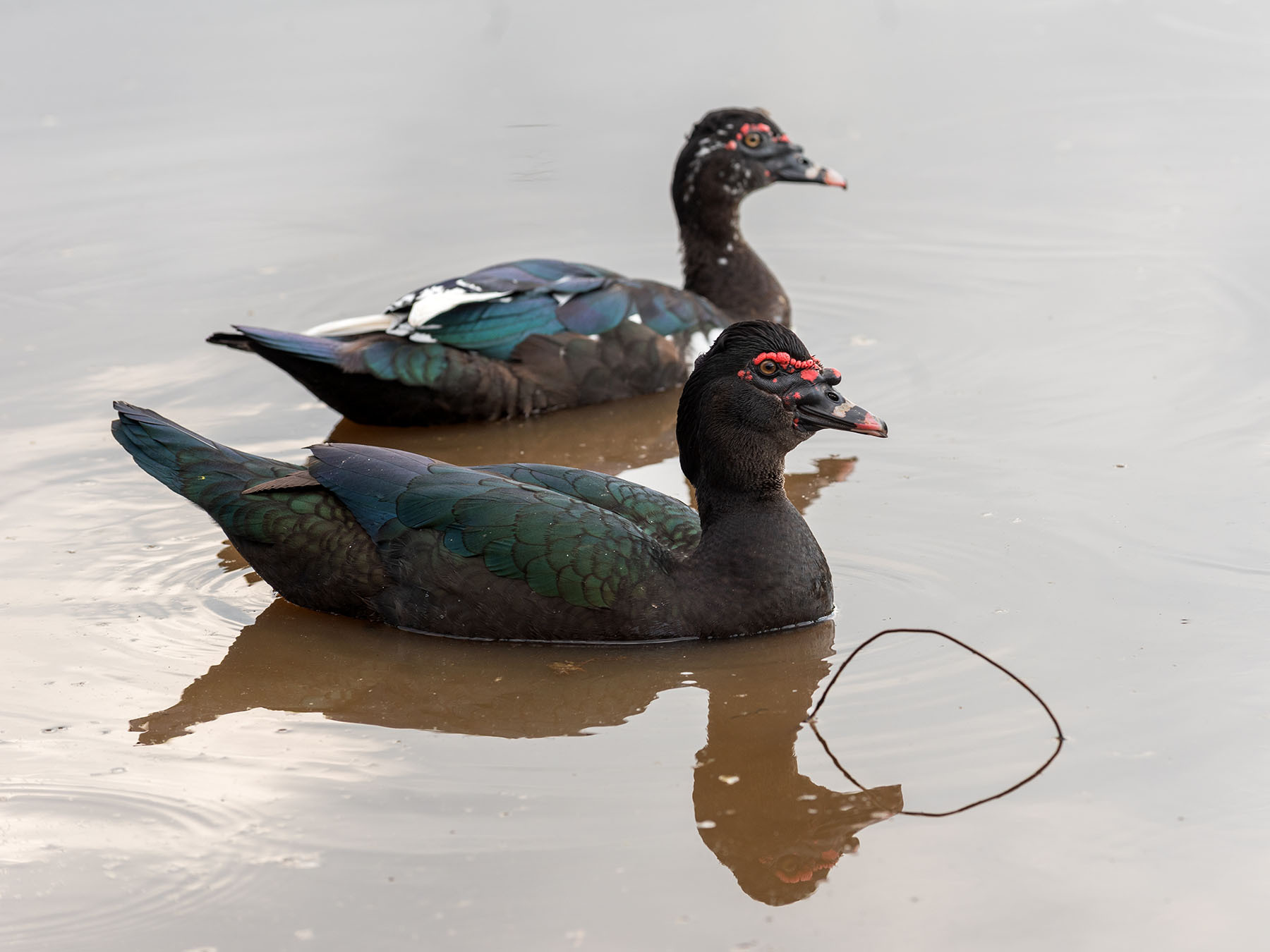
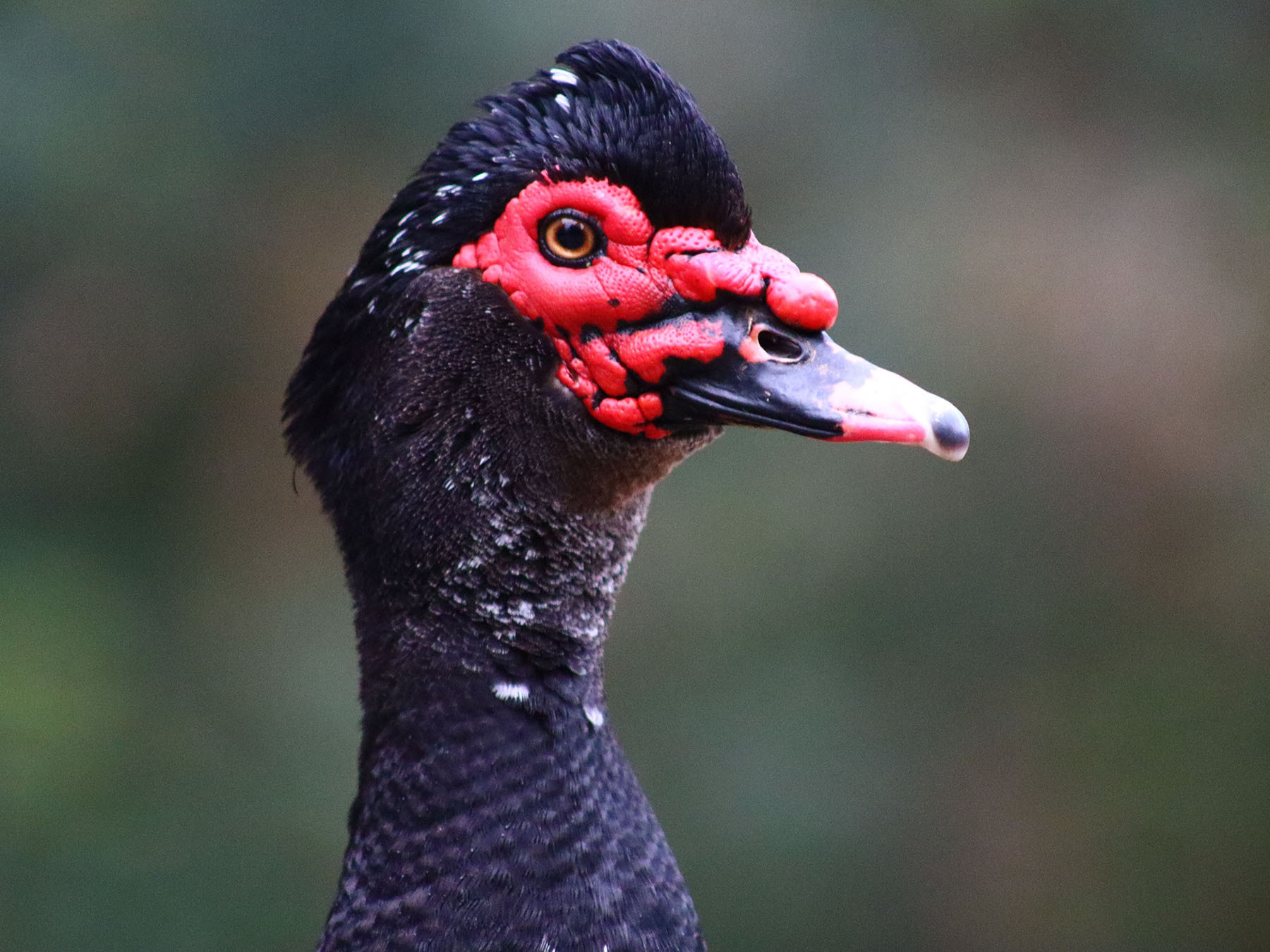
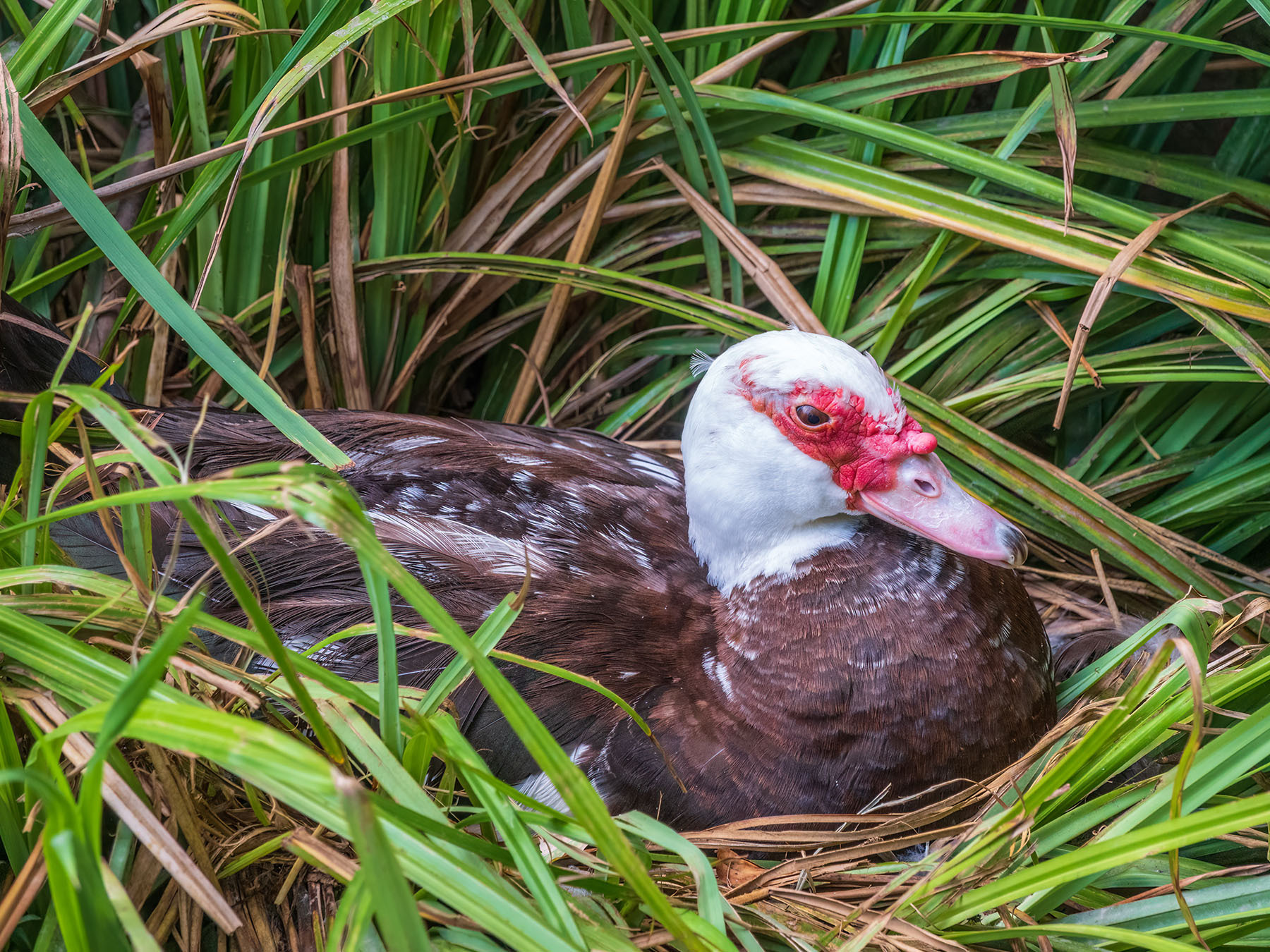
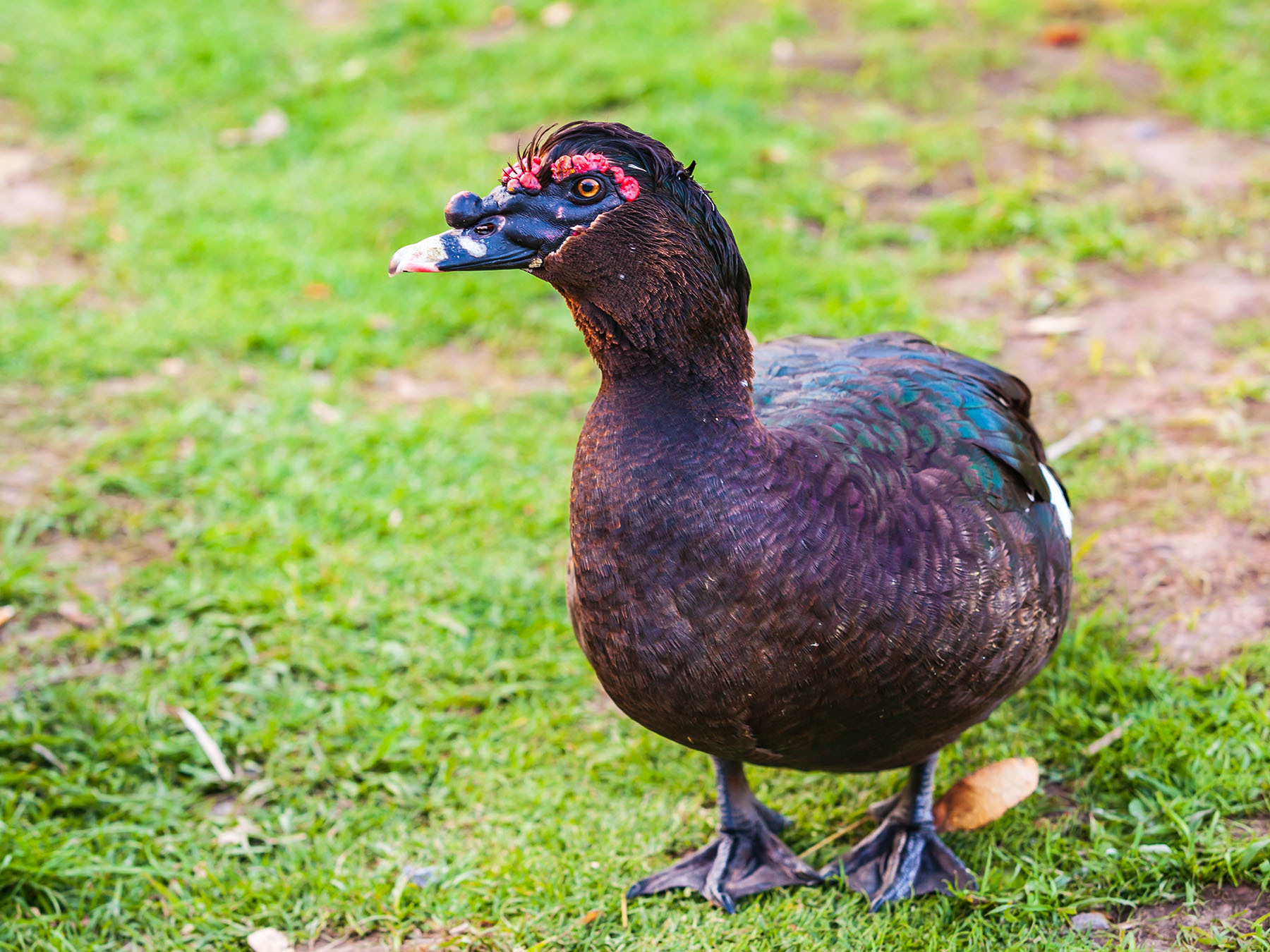
The Muscovy Duck is a large, heavy-bodied waterfowl with a distinctive red, warty face and a low-carried head. Males are predominantly black with white wing patches, while females are smaller (around half the size) and browner.
Both sexes have a crest that can be raised or lowered, and their plumage often shows iridescent green and purple hues in sunlight. Juveniles resemble females but lack the facial caruncles.
Its size
Adults- Length
- 66–84 cm
- Wingspan
- 137–152 cm
- Weight
- 2000–4000 g
Its song and calls
Unlike most ducks, Muscovy Ducks are relatively quiet. Males produce a low, breathy hiss or a soft puffing sound, while females make a quiet trilling call.
During courtship or when alarmed, they may emit a soft whistling noise.
When and where to see it
OctoberIn season
Most recorded in October
- 1. Rhondda, Cynon, Taff0.14%
- 2. Manchesterunder 0.1%
- 3. West Yorkshireunder 0.1%
- 4. West Midlandsunder 0.1%
- 5. Bristolunder 0.1%
Each dot is a county, state or province: the bigger and darker, the larger the bird’s share of that place’s bird records that month. Grey dots: no regular records. The ringed point is the centre of the bird’s records this month; the arrow shows how it moved since last month, and the dashed loop its path through the year. “Arrivals” colours places where it becomes regular this month (orange) or is in its last regular month (grey). GBIF eBird Observation Dataset, 2019–2024. Map data: Natural Earth, US Census Bureau; place centres © OpenStreetMap contributors.
In your area
See when the Muscovy Duck is recorded in your county, state or province.
How often the Muscovy Duck turns up in the UK, the United States and Canada through the year, from birdwatchers' records.
United Kingdom
Resident · all year · most records in February
United States
Resident · all year · most records in January
Canada
Winter visitor · all year · most records in February
Show as a table
| Month | United Kingdom | United States | Canada |
|---|---|---|---|
| January | 0.007% (regular) | 0.074% (regular) | 0.004% (regular) |
| February | 0.008% (regular) | 0.067% (regular) | 0.005% (regular) |
| March | 0.005% (regular) | 0.052% (regular) | 0.002% (regular) |
| April | 0.003% (regular) | 0.031% (regular) | 0.001% (regular) |
| May | 0.003% (regular) | 0.017% (regular) | <0.001% (regular) |
| June | 0.003% (regular) | 0.023% (regular) | <0.001% (regular) |
| July | 0.003% (regular) | 0.028% (regular) | <0.001% (regular) |
| August | 0.004% (regular) | 0.031% (regular) | <0.001% (regular) |
| September | 0.004% (regular) | 0.032% (regular) | <0.001% (regular) |
| October | 0.004% (regular) | 0.042% (regular) | 0.001% (regular) |
| November | 0.005% (regular) | 0.059% (regular) | 0.002% (regular) |
| December | 0.006% (regular) | 0.070% (regular) | 0.004% (regular) |
Recorded regularly in
Worldwide: recorded regularly in 91 countries
Countries where it was recorded in at least 3 of the 6 years 2019–2024. Linked countries have their own bird list.
Europe (23)
Africa (4)
Asia (16)
North America (30)
- Aruba
- Bahamas
- Barbados
- Belize
- Bermuda
- Canada
- Caribbean Netherlands
- Costa Rica
- Cuba
- Curaçao
- Dominica
- Dominican Republic
- El Salvador
- Grenada
- Guadeloupe
- Guatemala
- Honduras
- Jamaica
- Martinique
- Mexico
- Montserrat
- Nicaragua
- Panama
- Puerto Rico
- Sint Maarten
- St Lucia
- St Martin
- Trinidad & Tobago
- United States
- US Virgin Islands
South America (13)
Oceania (5)
- Australia
- French Polynesia
- New Zealand
- Norfolk Island
- Northern Mariana Islands
Data: EOD – eBird Observation Dataset (Cornell Lab of Ornithology), accessed via GBIF.org, CC BY 4.0. Records from 2019–2024, aggregated and filtered by Birdfact. How these lists are made
Tips for seeing it
- Look for Muscovy Ducks near freshwater ponds in urban parks
- Listen for their soft hissing or whistling sounds
- Observe their unique tree-perching behavior
- In the US, focus on areas in Florida and the Rio Grande Valley in Texas
What it eats
Muscovy Ducks have an omnivorous diet, feeding on plant material, small fish, reptiles, crustaceans, and insects.
They use their broad, flat bills to strain food from water and mud and can often be seen grazing on land, consuming grass and other vegetation.
Nesting and breeding
Muscovy Ducks typically breed during the rainy season, with timing varying by location. Males perform elaborate courtship displays, including head bobbing and tail wagging.
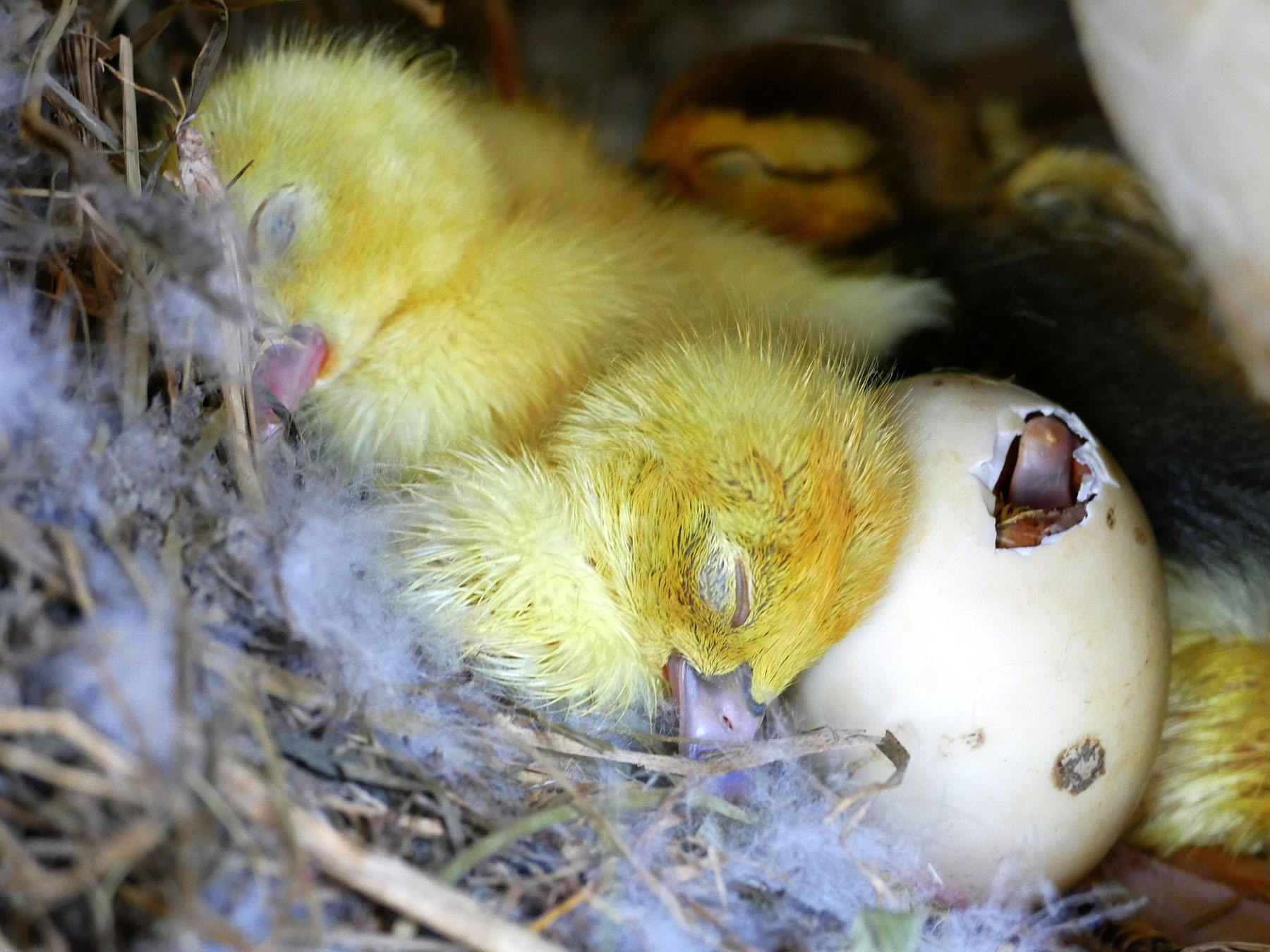
Females nest in tree cavities, on the ground in dense vegetation, or on human structures. They lay 8-16 cream-colored eggs and incubate them for about 35 days.
After hatching, ducklings remain with their mother for 10-12 weeks. They can fly at around 10 weeks of age but often stay with the family group for several months.
Behaviour
Muscovy Ducks are known for their quiet nature, rarely quacking like other ducks. They spend considerable time foraging on land, often seen perching in trees.
These ducks are generally less aquatic than other duck species, preferring to waddle on land or roost in branches.
Conservation
While the Muscovy Duck is not globally threatened, habitat loss and hunting pose localized risks.
In some areas, feral populations of domesticated Muscovy Ducks interbreed with wild birds, potentially affecting the genetic integrity of wild populations.
More photos
6 photos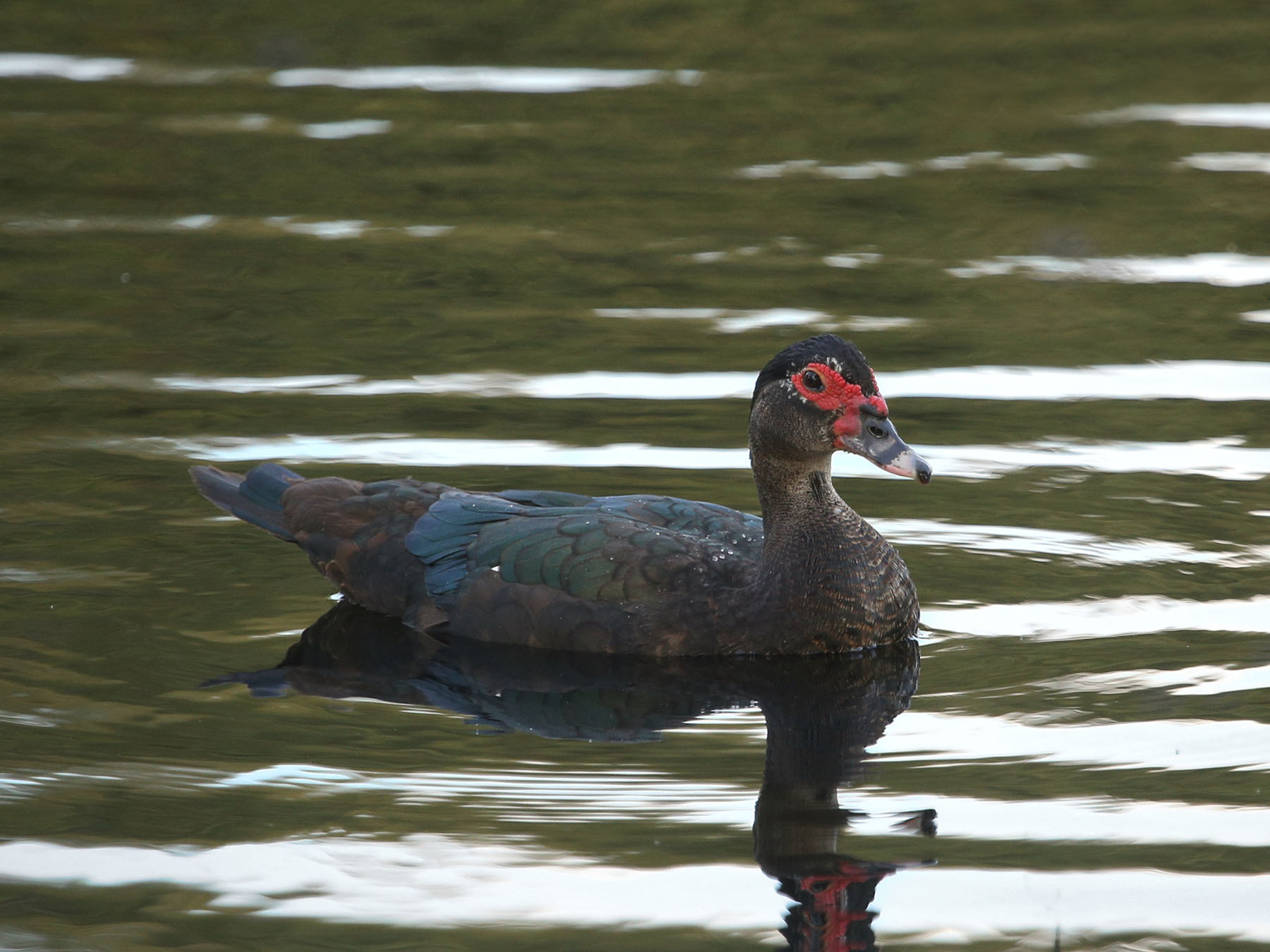
Muscovy Duck guides
1 guidesQuick facts
- Length
- 66–84 cm
- Wingspan
- 137–152 cm
- Weight
- 2000–4000 g
- Lifespan
- 8–10 years
- Family
- Ducks, Geese & Swans
- Migration
- Resident
- Global status (IUCN)
- Least Concern
- World population
- 550,000 mature individuals
- Population trend
- Decreasing
- Also called
- Barbary Duck, Forest Duck
- Scientific name
- Cairina moschata
Sources
3- 1BirdLife International. 2018. Cairina moschata. The IUCN Red List of Threatened Species 2018: e.T22680061A131911211. Source (opens in a new tab)
- 2Wetlands International (2006)
- 3Partners in Flight (2022) Source (opens in a new tab)

Checked by
Nathan Cope, founder and editor
Nathan founded Birdfact and leads its writers and contributors in the UK, the US and Canada. He has watched and studied birds for more than ten years, and checks every article and species guide before it’s published.