


Mulga Parrot
Many-colored Parrot · Psephotellus varius
By the Birdfact teamChecked by Nathan Cope
On this page11 sections
How to recognise it
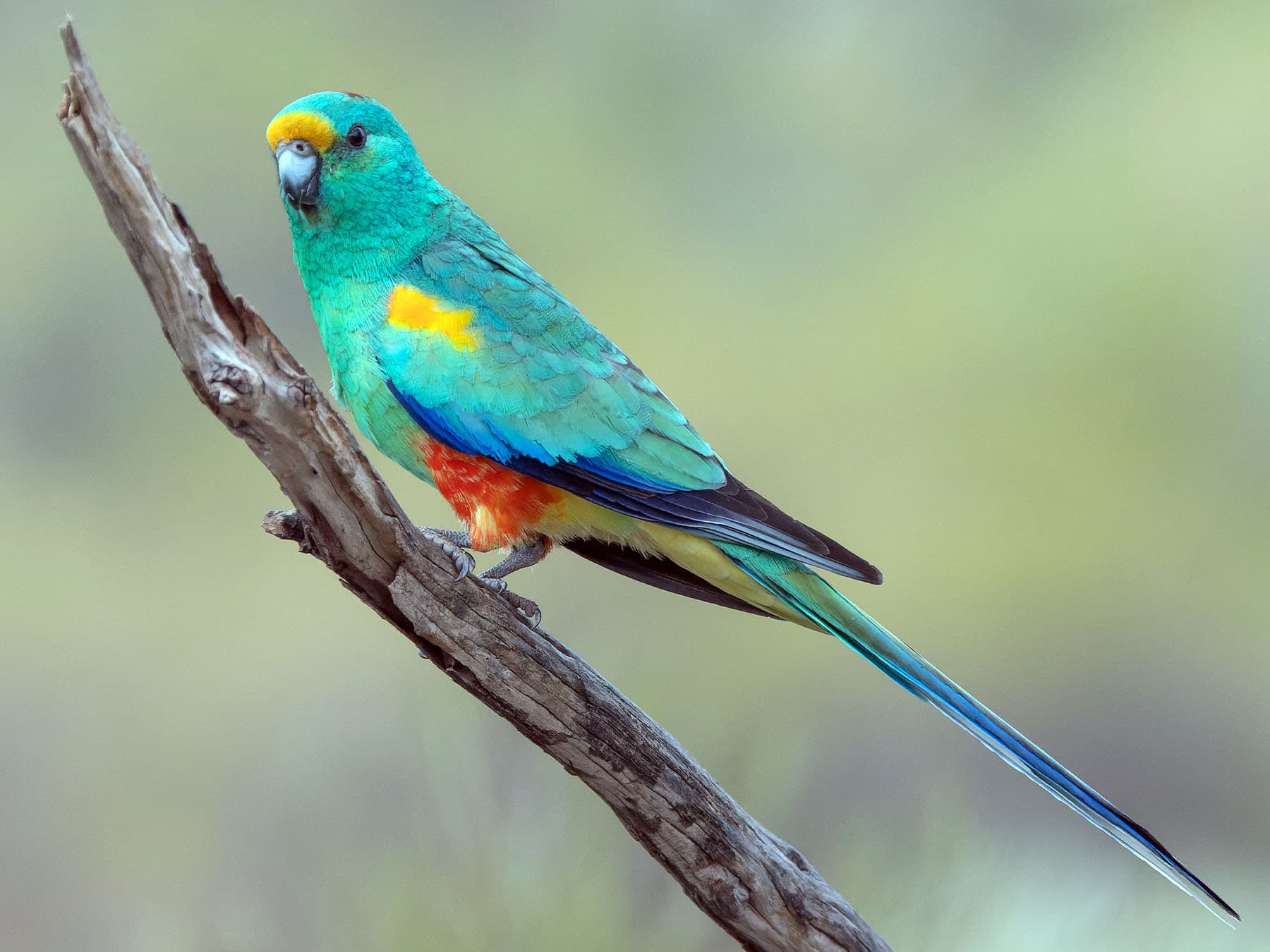
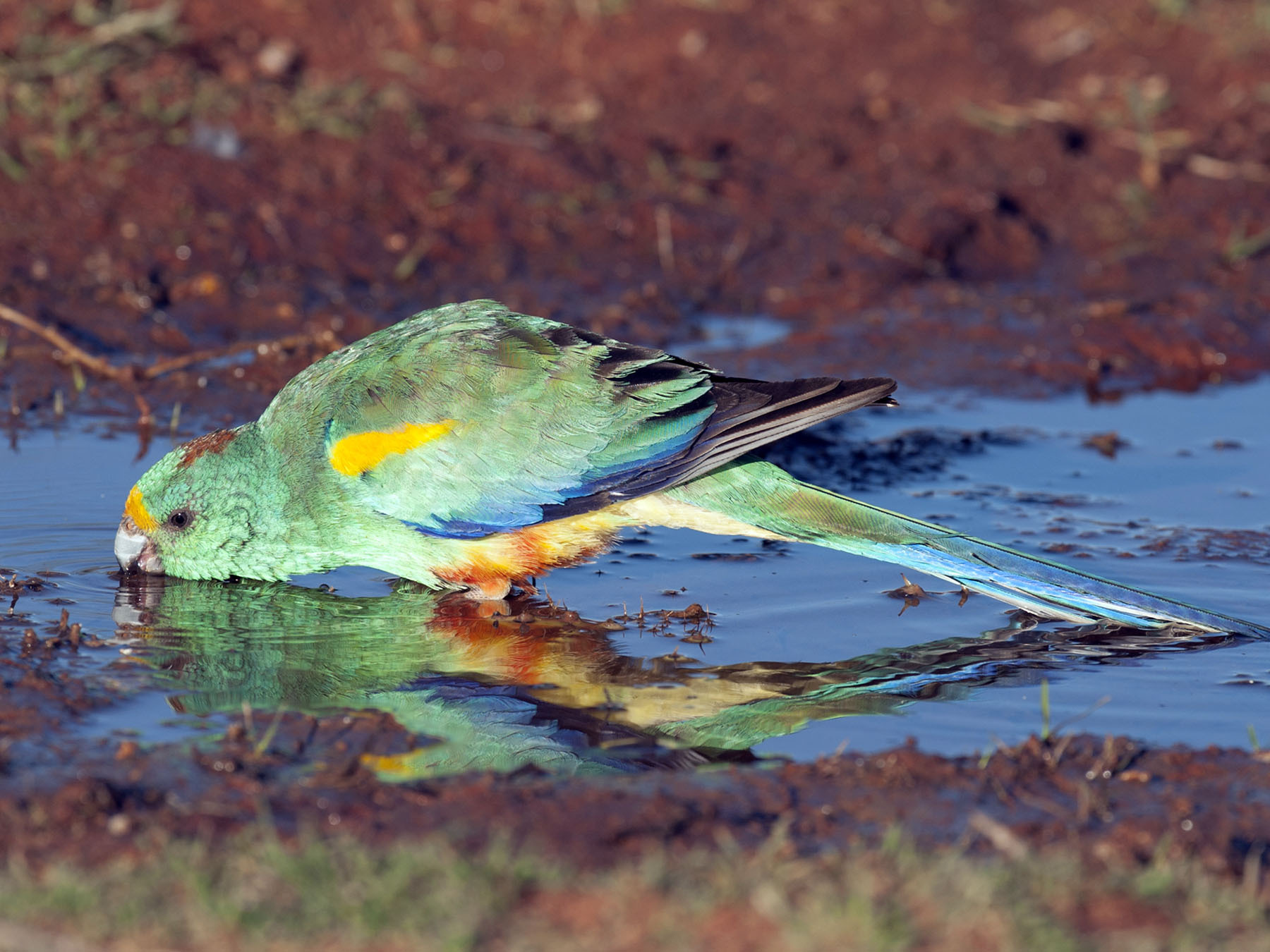
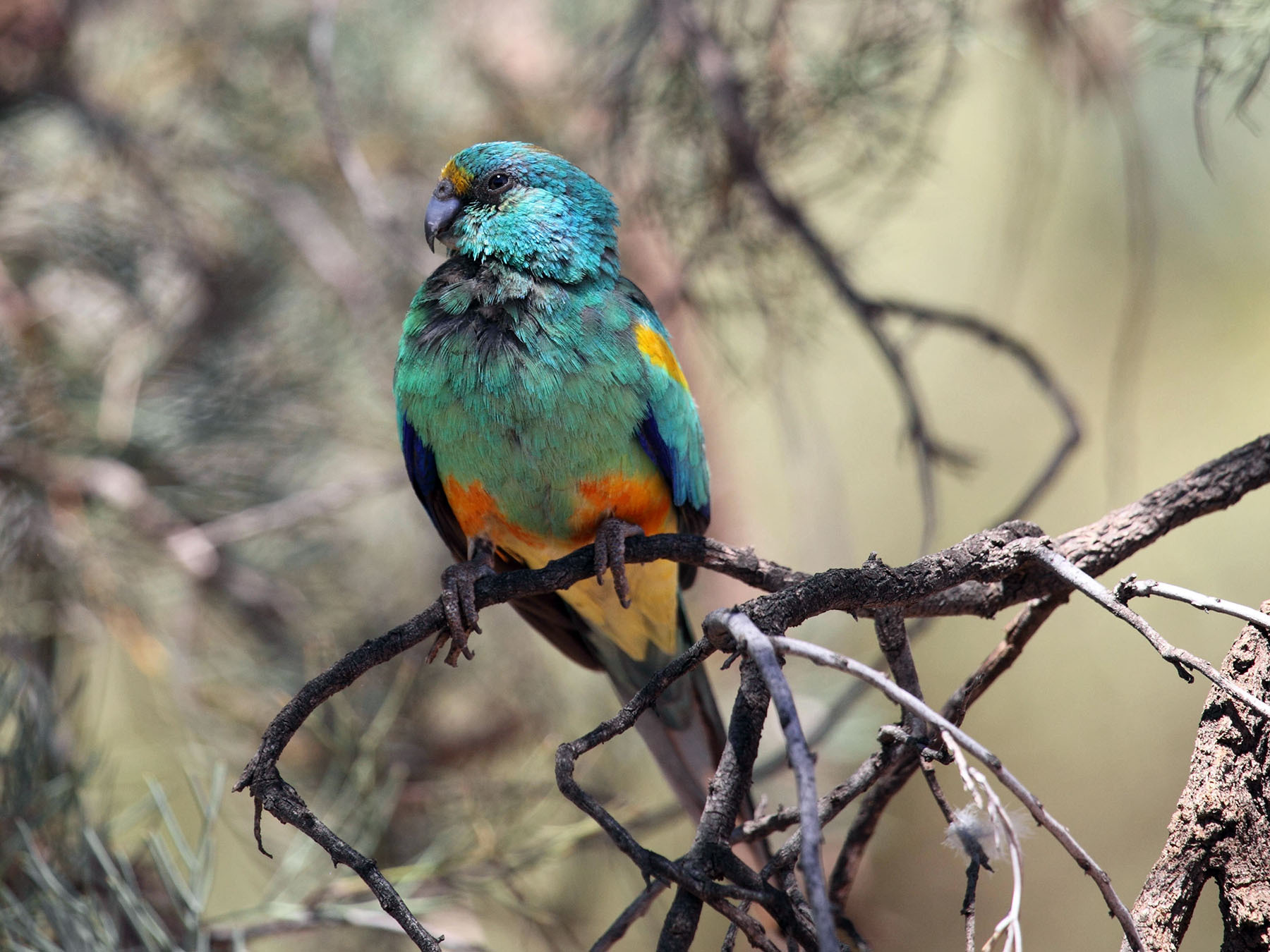
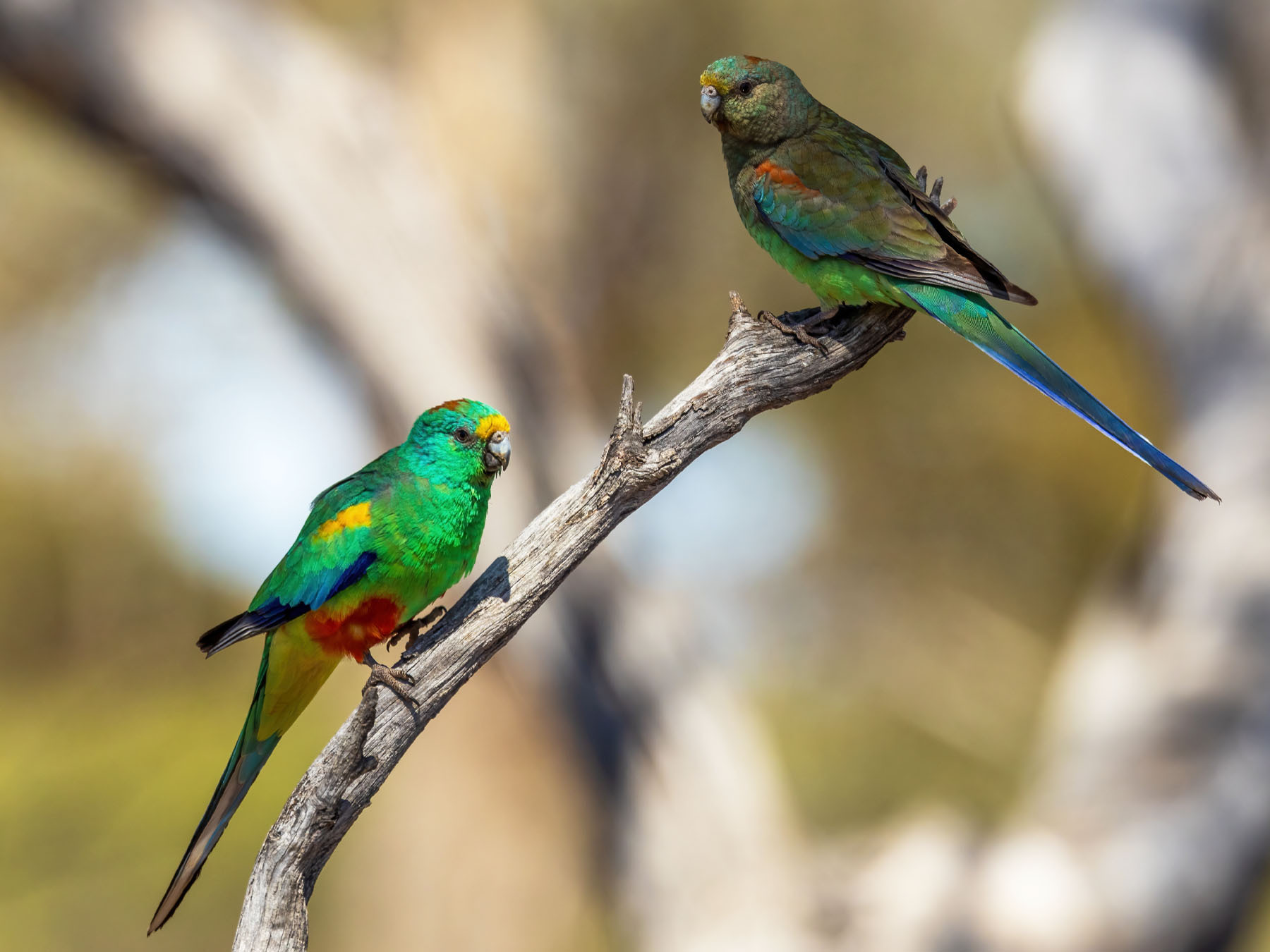
The Mulga Parrot is a small, colourful parrot with a distinctive appearance. Males display vibrant green plumage on their back and wings, with yellow and blue patches on the wings. Their head features a yellow band and red crown, with a bright yellow belly.
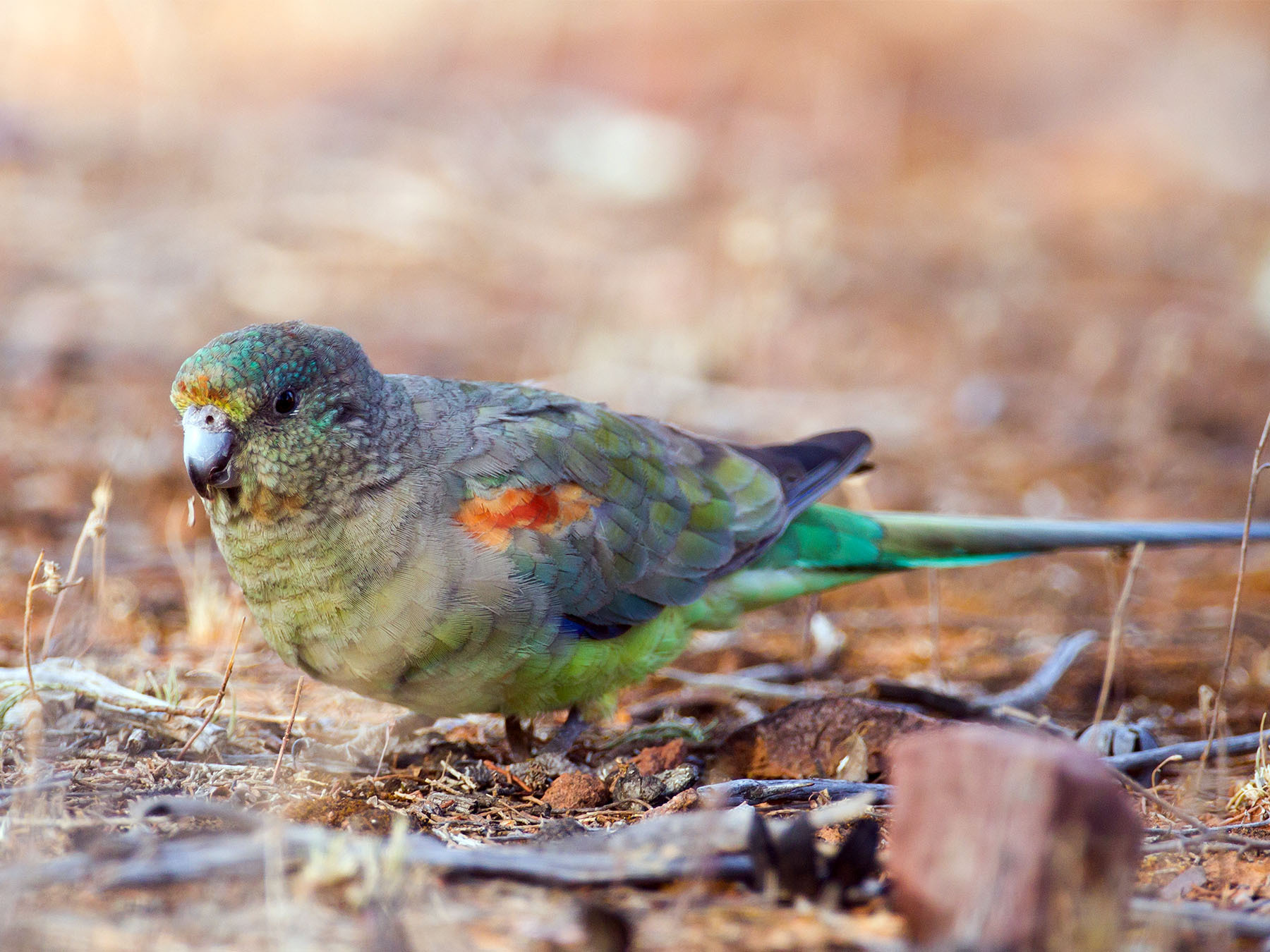
Females are more subdued in colouration, primarily olive-green with red patches on their wings. Both sexes have similar size and build. Juveniles resemble females but with duller overall plumage.
Its size
Adults- Length
- 27–32 cm
- Wingspan
- 36–40 cm
- Weight
- 53–70 g
Its song and calls
Mulga Parrots have a variety of soft, musical calls. Their repertoire includes gentle whistles, warbling notes, and quiet chattering sounds.
During flight, they often emit a distinctive 'zit-zit' call. Males may produce more complex melodies during courtship displays.
When and where to see it
The Mulga Parrot is not recorded regularly in the UK, Ireland, the United States or Canada.
United Kingdom: recorded in 1 of the 6 years. Too few years to count as a regular visitor.
Worldwide: recorded regularly in 1 country
Countries where it was recorded in at least 3 of the 6 years 2019–2024. Linked countries have their own bird list.
Oceania (1)
Data: EOD – eBird Observation Dataset (Cornell Lab of Ornithology), accessed via GBIF.org, CC BY 4.0. Records from 2019–2024, aggregated and filtered by Birdfact. How these lists are made
Tips for seeing it
- Look for Mulga Parrots in open woodlands and grasslands with scattered trees
- Listen for their soft, melodious whistles and chattering calls
- Observe ground areas near mulga and acacia trees, where they often forage
- Visit Australian arid and semi-arid regions, particularly in the southern and central parts of the continent
What it eats
Mulga Parrots primarily feed on seeds from native grasses and herbs. They also consume fruits, berries, and nectar from various plants, including acacias and eucalypts.
During the breeding season, they may supplement their diet with insects and their larvae to meet increased protein needs.
Nesting and breeding
Breeding season for Mulga Parrots typically occurs between August and January, varying slightly depending on local conditions. Pairs form strong, monogamous bonds and often remain together for multiple breeding seasons.
Nests are usually built in tree hollows, often in eucalyptus or mulga trees. The female lays a clutch of 3-6 white, rounded eggs. She alone incubates the eggs while the male provides food.
Incubation lasts about 20 days, and the chicks fledge after approximately 30 days. Both parents care for the young, continuing to feed them for several weeks after they leave the nest.
Behaviour
Mulga Parrots are typically observed in pairs or small family groups. They spend much of their time foraging on the ground, swiftly scurrying between patches of vegetation.
When disturbed, they often fly to nearby trees, displaying a swift, undulating flight pattern characteristic of many parrot species.
Conservation
While currently listed as Least Concern, Mulga Parrots face threats from habitat loss due to land clearing for agriculture.
Conservation efforts focus on preserving their native woodland habitats and monitoring population trends to ensure their continued survival in the wild.
More photos
5 photos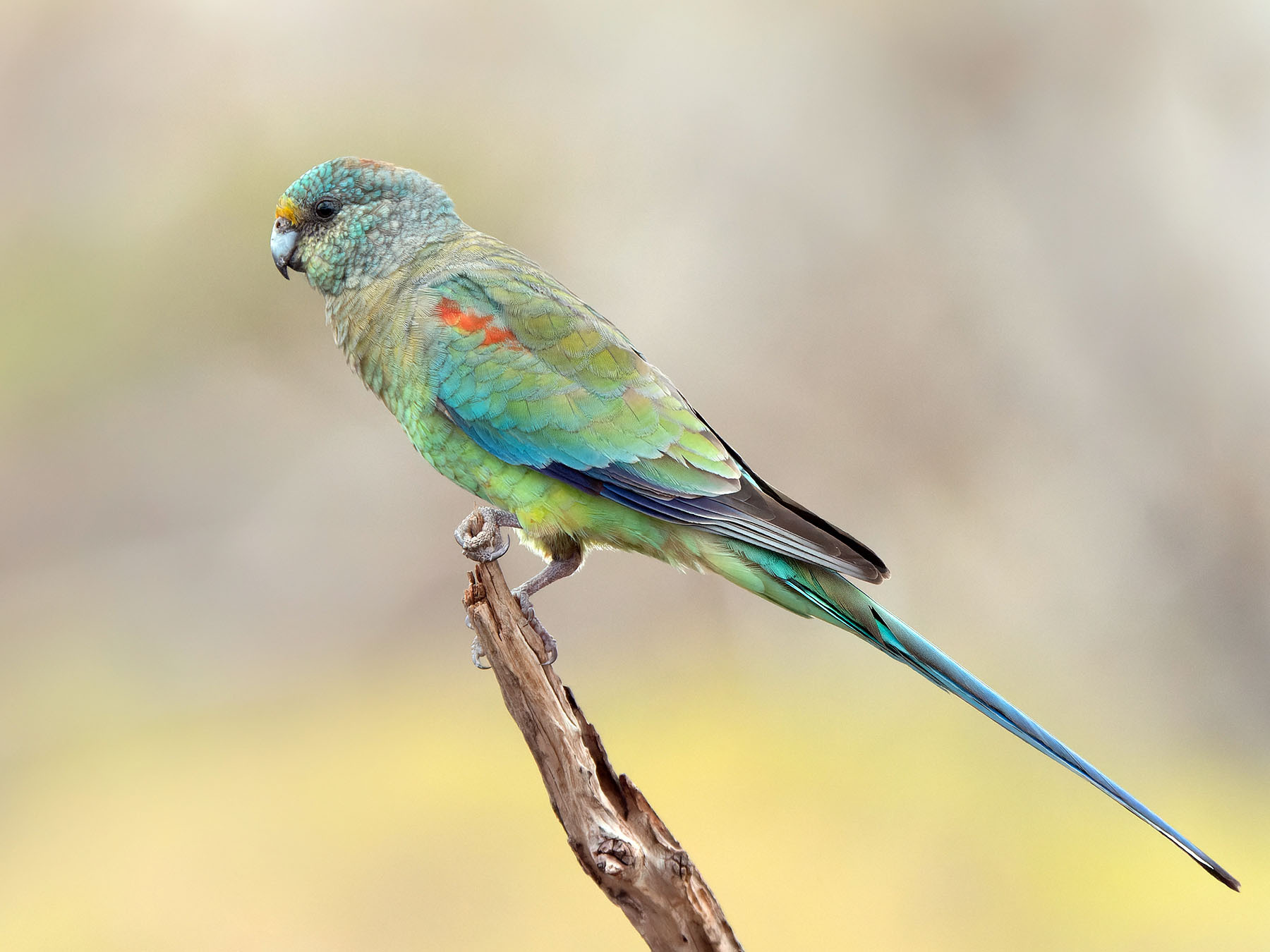
Quick facts
- Length
- 27–32 cm
- Wingspan
- 36–40 cm
- Weight
- 53–70 g
- Lifespan
- 10 years · oldest recorded 11.8 years
- Family
- Parrots
- Migration
- Resident
- Global status (IUCN)
- Least Concern
- World population
- Not quantified, but reported to be common to uncommon
- Population trend
- Decreasing
- Also called
- Many-colored Parrot
- Scientific name
- Psephotellus varius
Sources
4- 1BirdLife International. 2024. Psephotellus varius. The IUCN Red List of Threatened Species 2024: e.T22685142A254012326. Source (opens in a new tab)
- 2BirdLife International. 2024. Psephotellus varius. The IUCN Red List of Threatened Species 2024: e.T22685142A254012326. Source (opens in a new tab)
- 3del Hoyo et al. (1997)
- 4Brouwer et al., Longevity records for Psittaciformes in captivity, nt Zoo Yb, 37:299-316 (2000)

Checked by
Nathan Cope, founder and editor
Nathan founded Birdfact and leads its writers and contributors in the UK, the US and Canada. He has watched and studied birds for more than ten years, and checks every article and species guide before it’s published.