


Moustached Warbler
Moustached Reed Warbler · Acrocephalus melanopogon
By the Birdfact teamChecked by Nathan Cope
On this page12 sections
How to recognise it
What do Moustached Warblers look like?
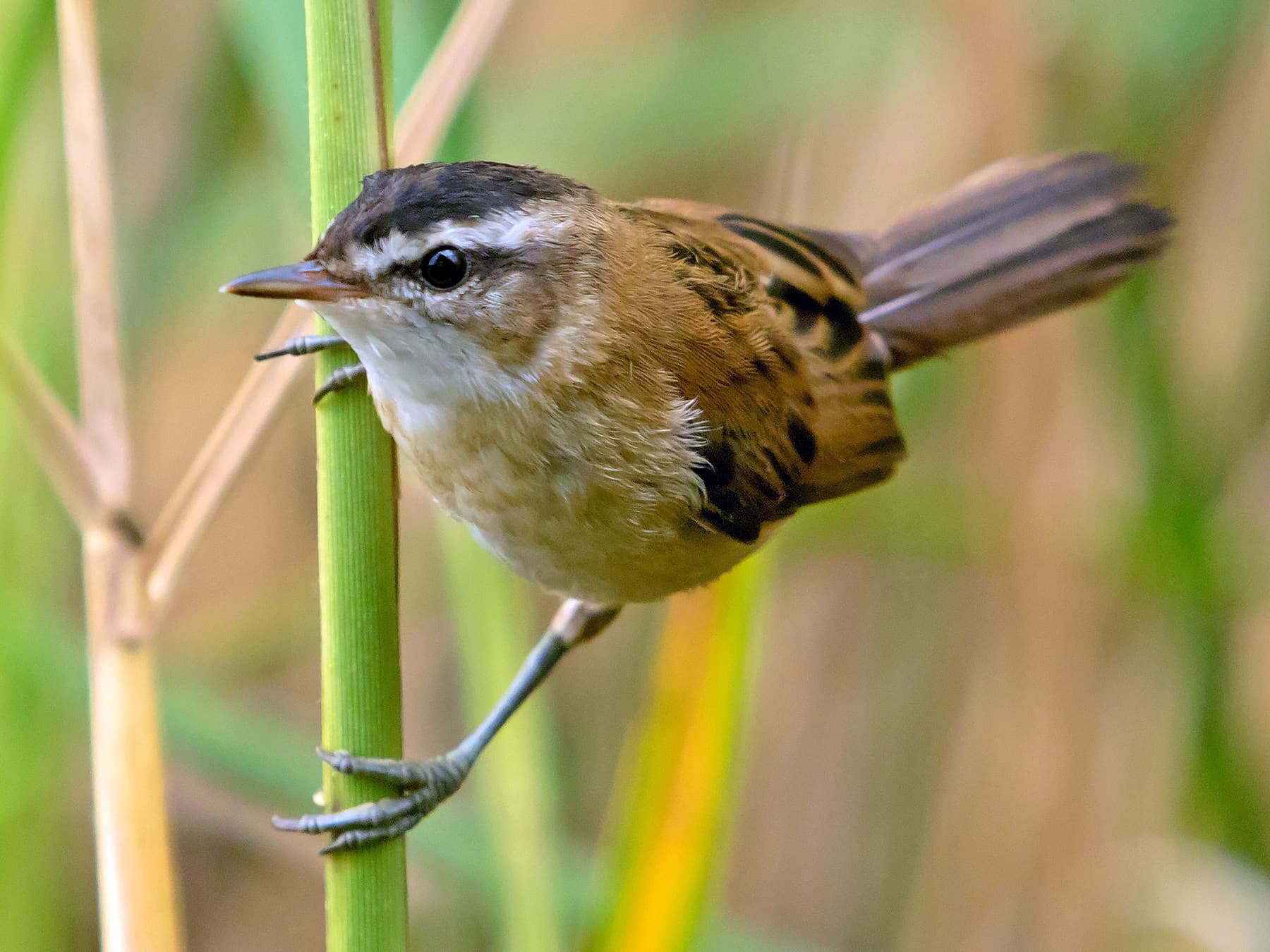
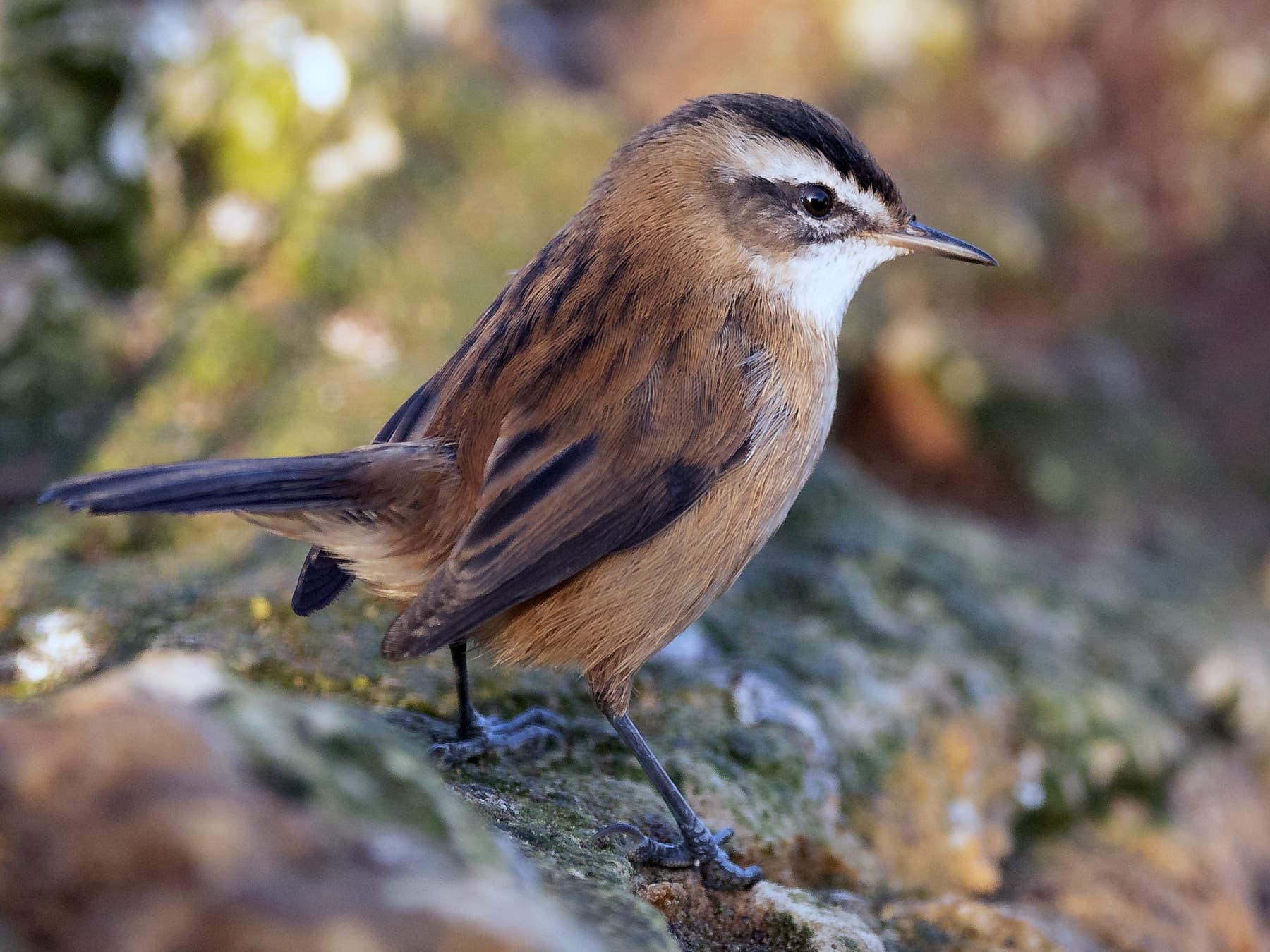
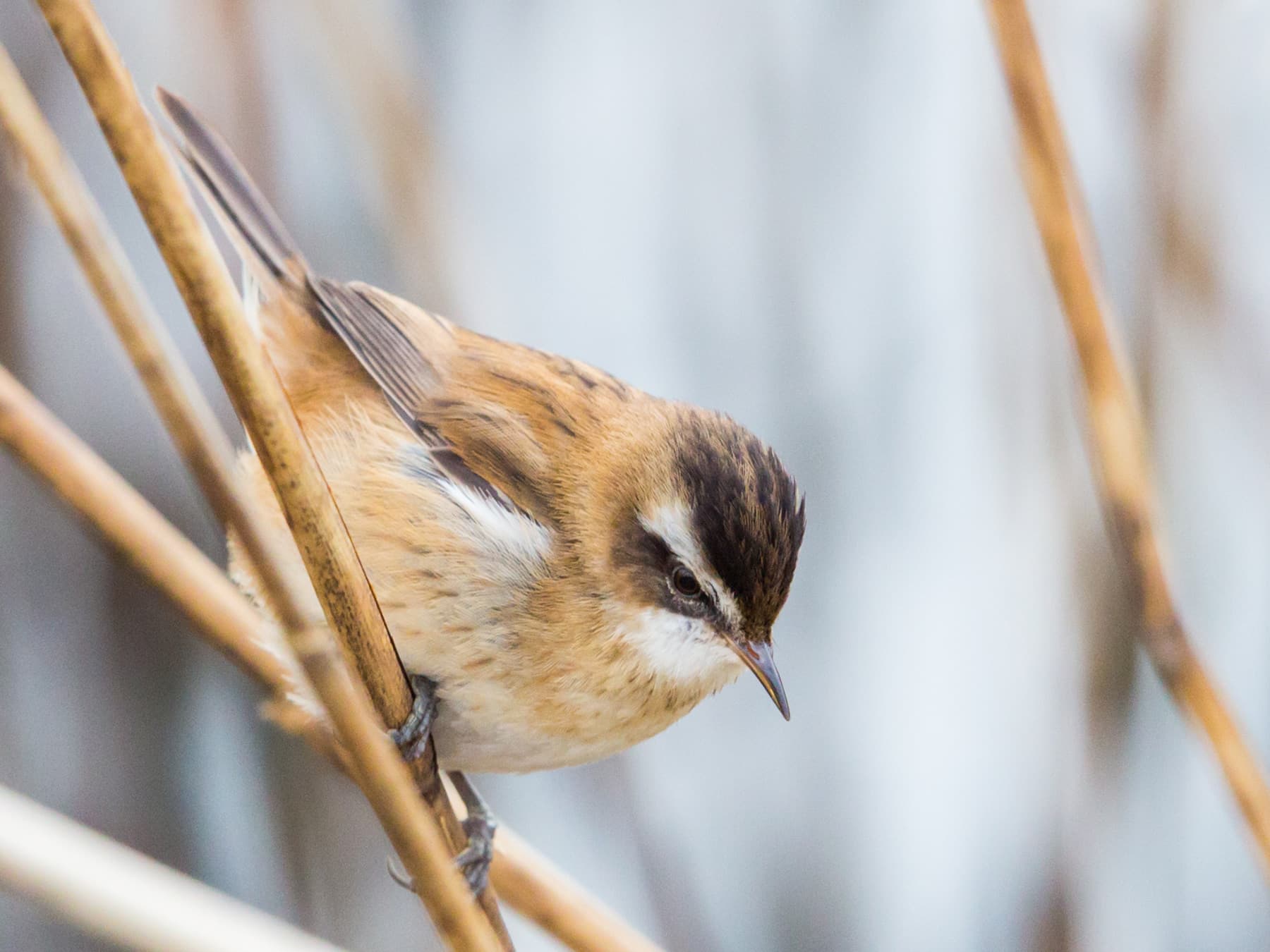
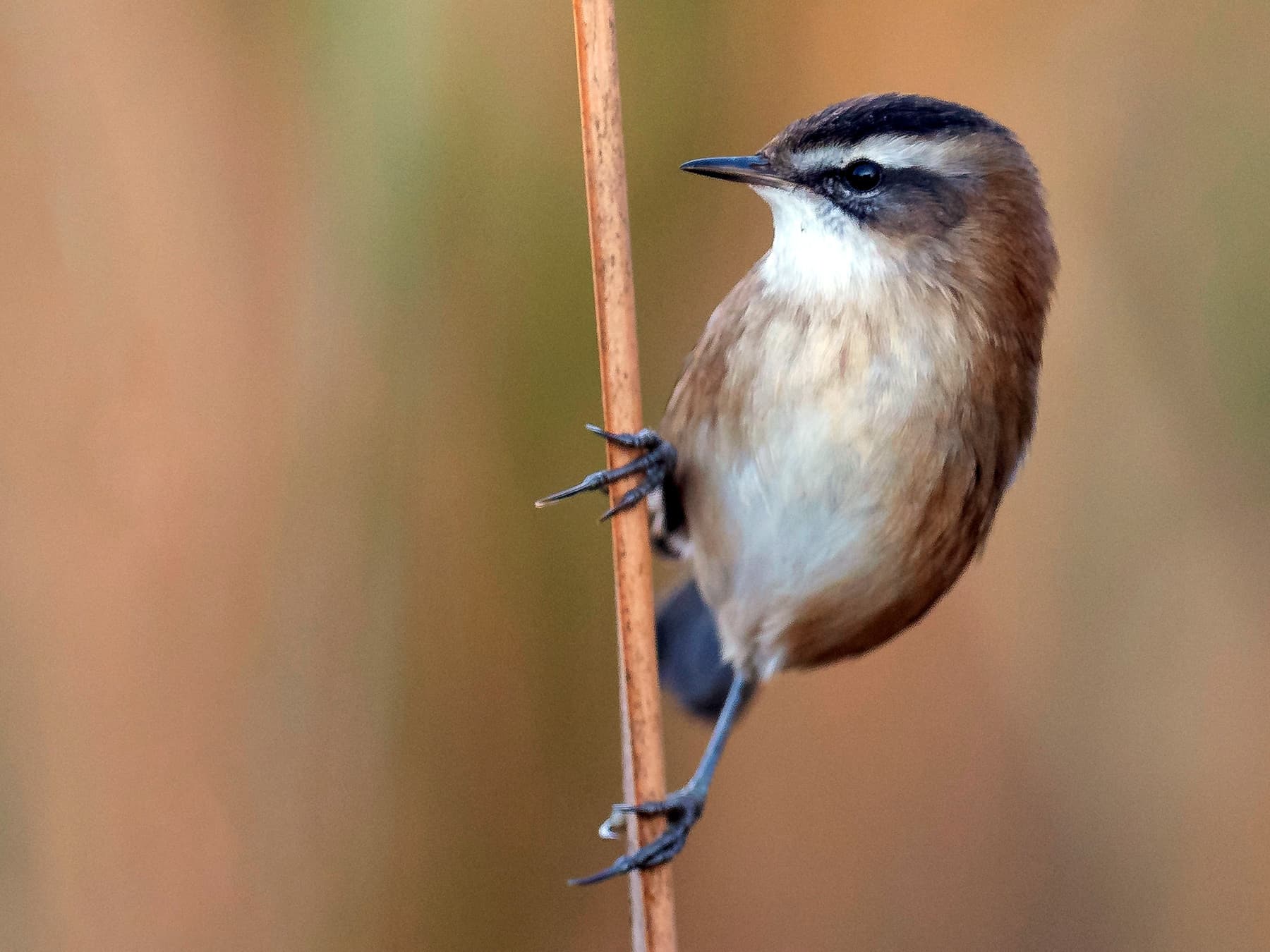
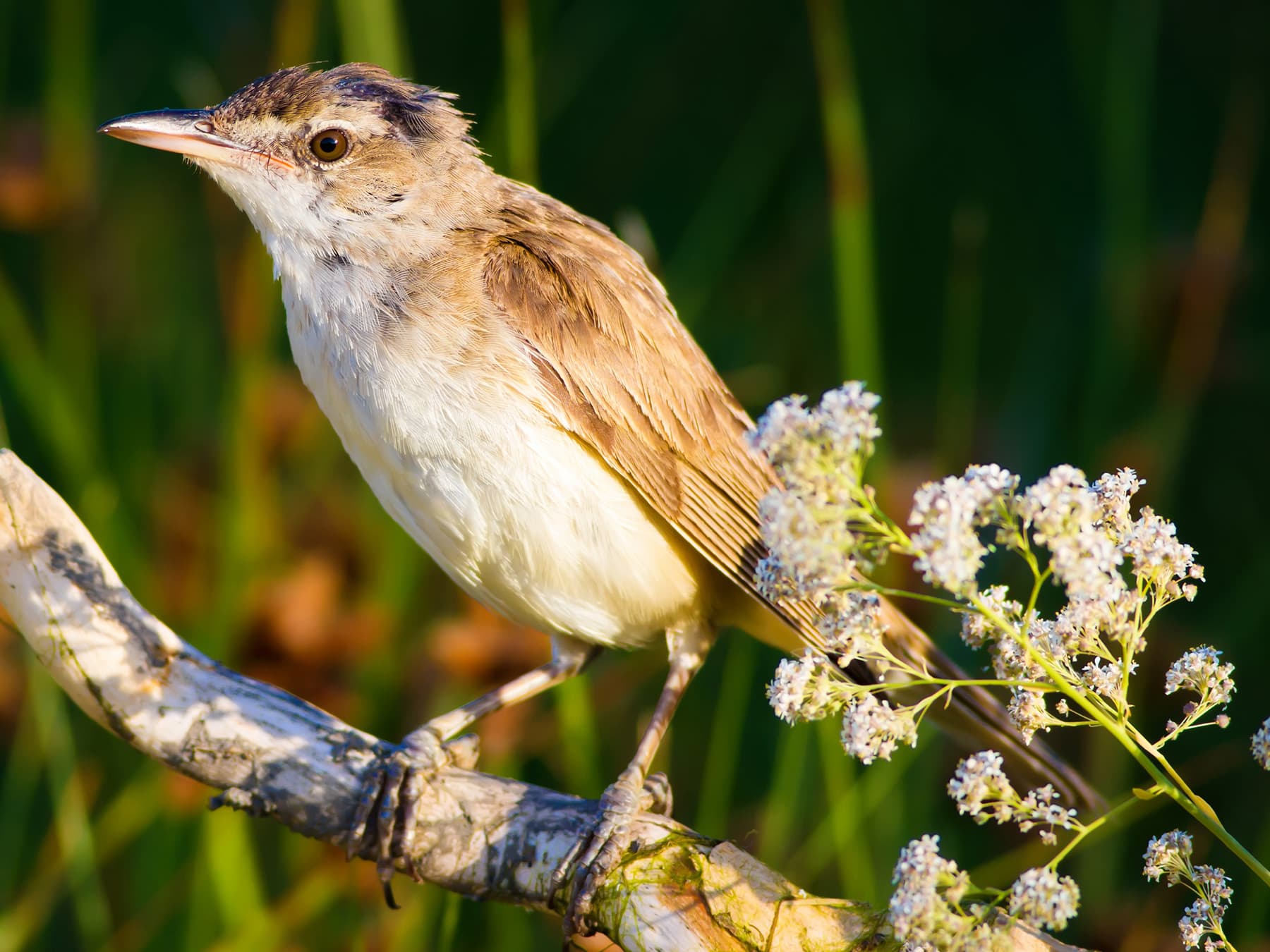
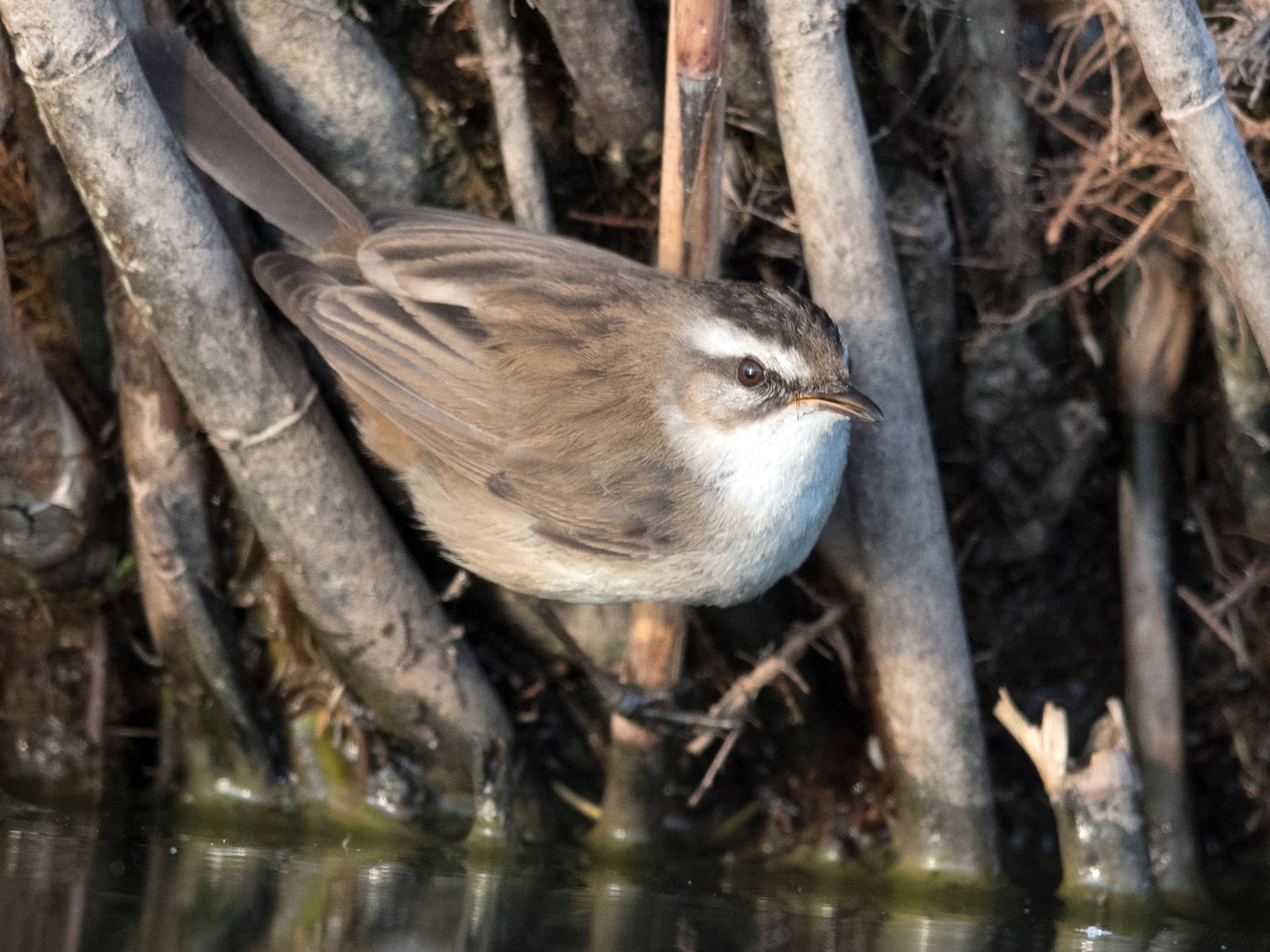
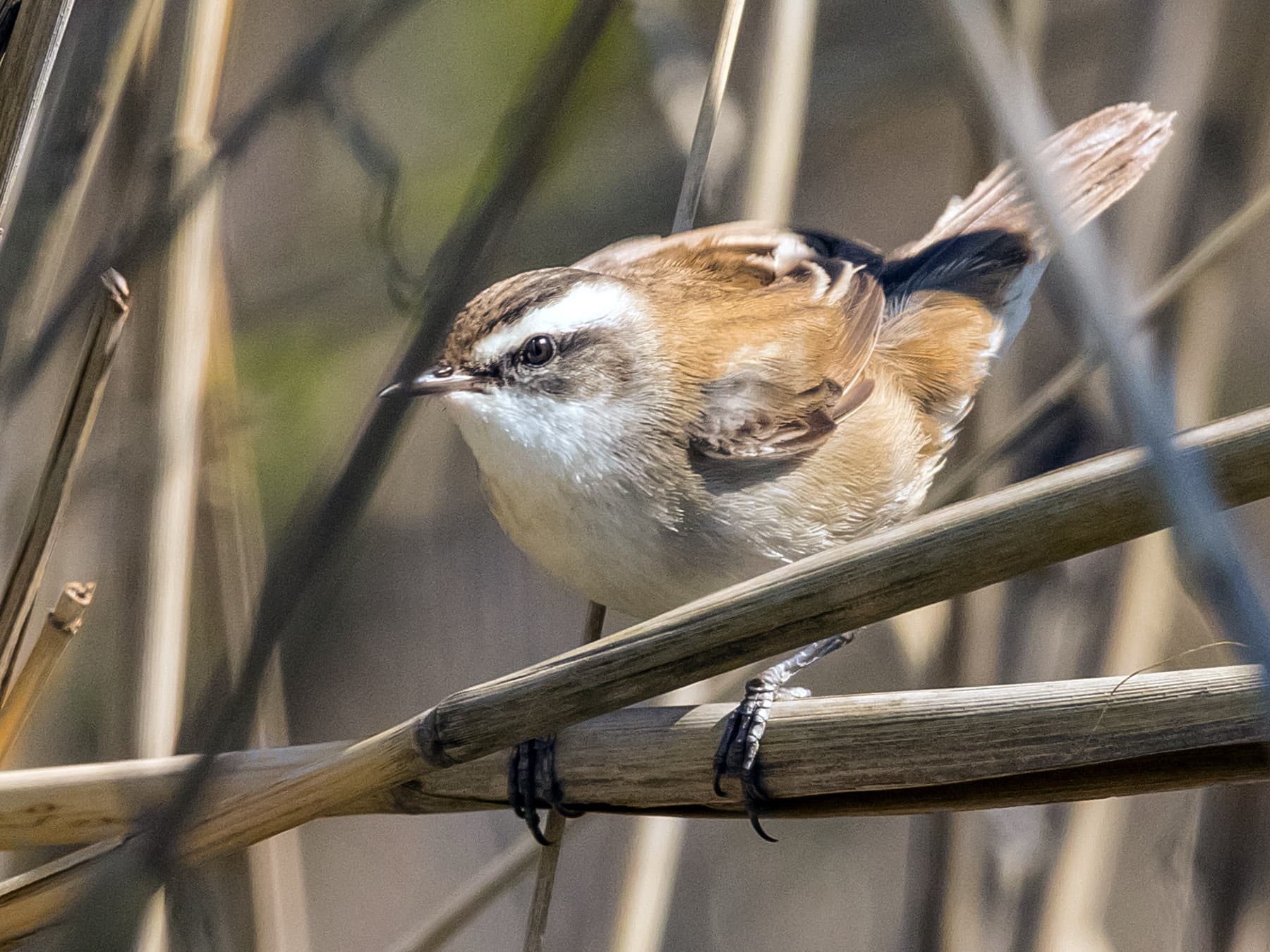
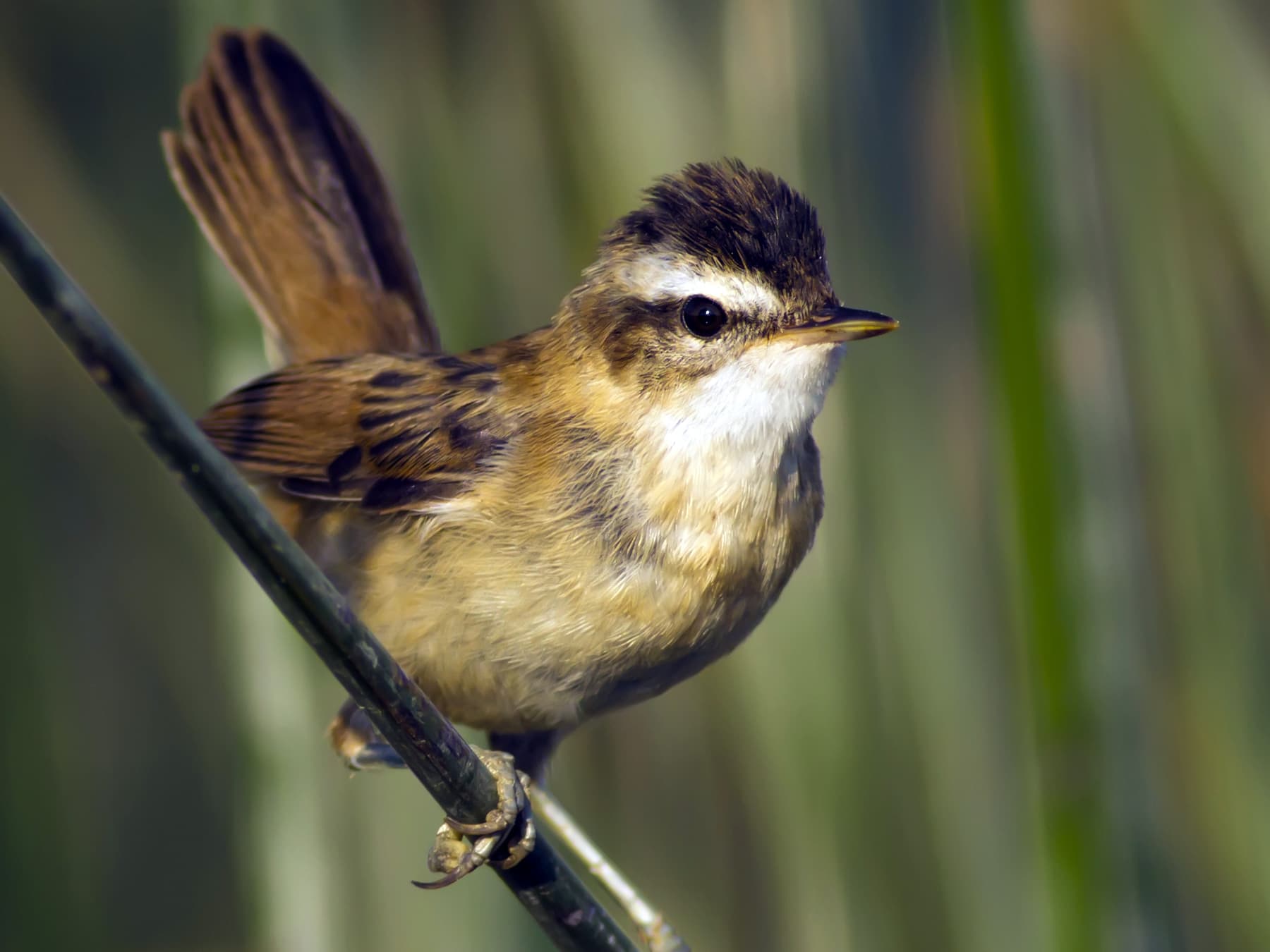
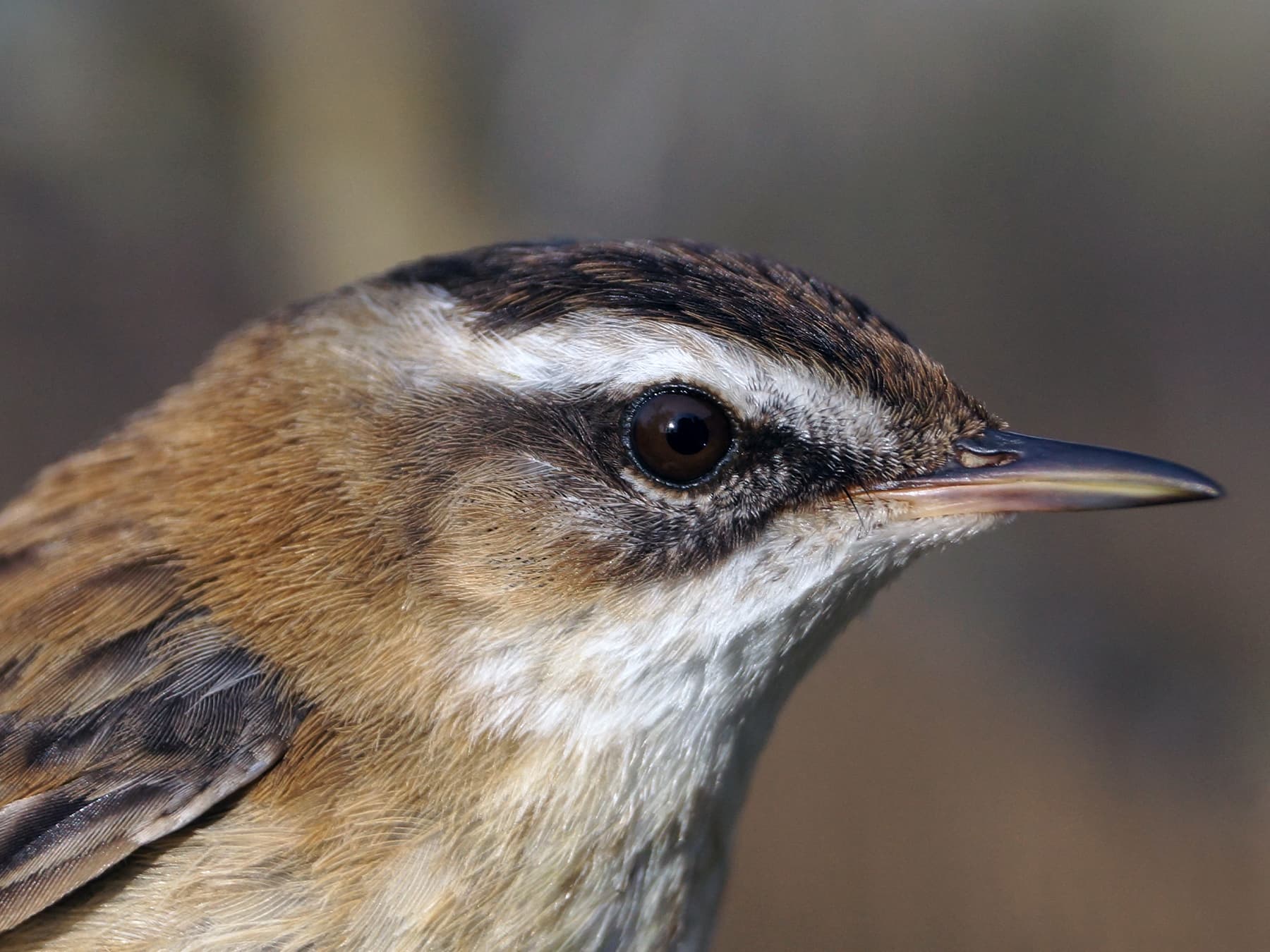
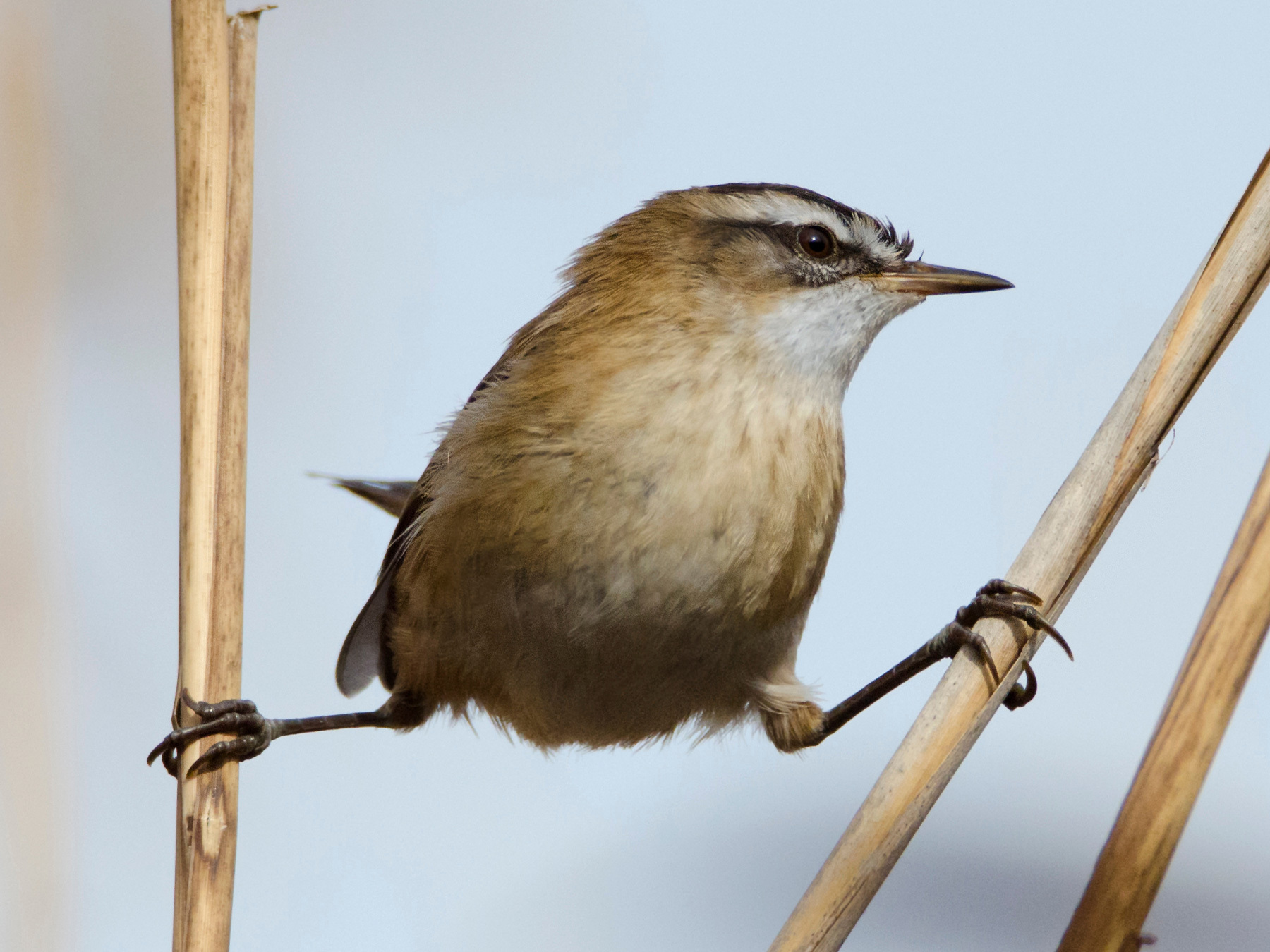
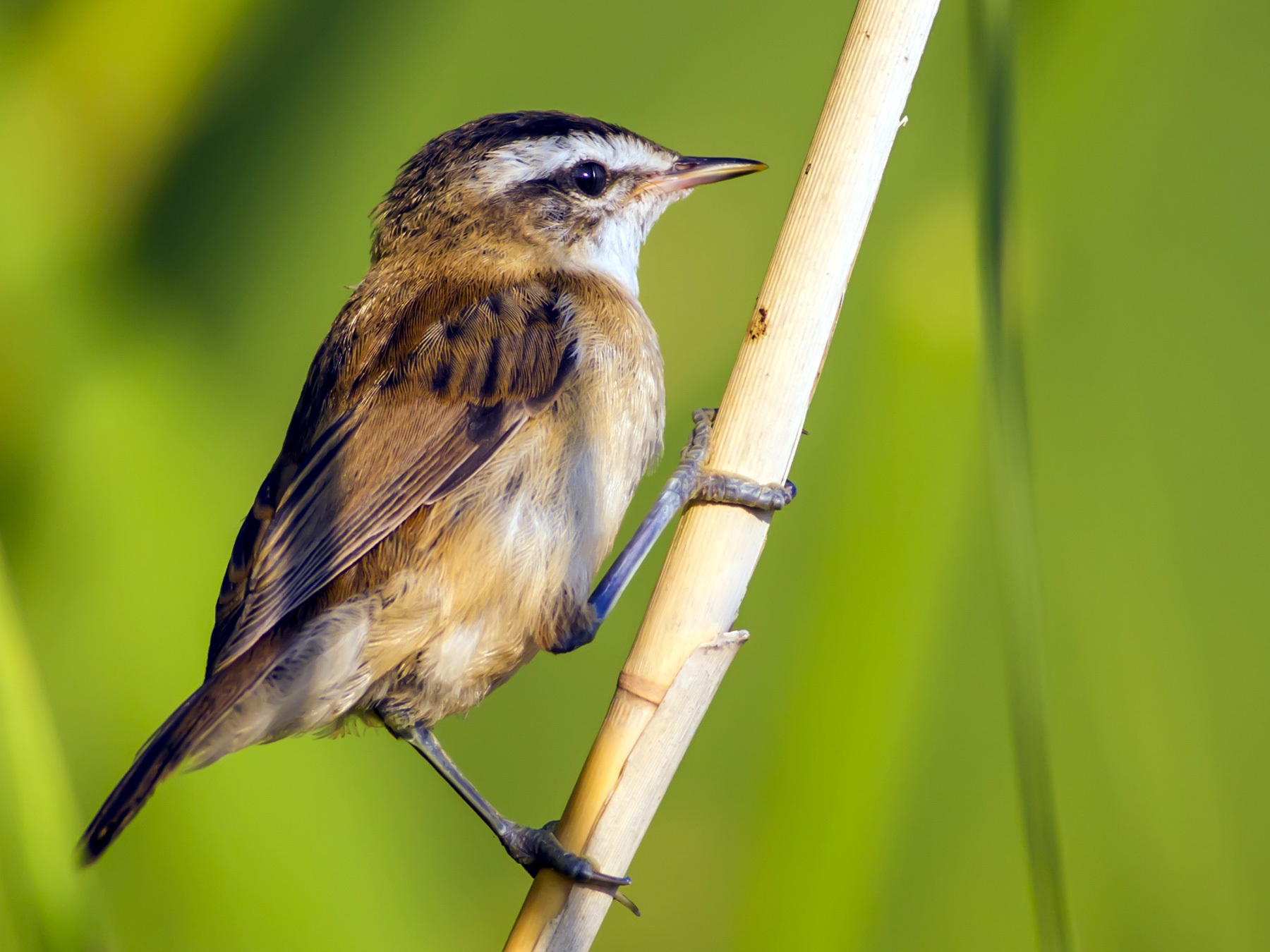
Moustached warblers have a distinctive facial pattern after which the species is named. A dusky, moustache-like cheek stripe widens into a grey patch that extends to the ear coverts. Above this, a wide white eyebrow stripe is topped with a black crown. The chin and throat are white, and the bill is grey-brown and pointed.
The upperparts of a moustached warbler are a rich rufous-brown on the neck, becoming increasingly streaked with black on the back and wings. No streaking is present on the rufous rump, and the tail is a darker shade of brown. The breast is white, darkening on the flanks and belly to a rusty yellow, with some streaking forming a slight band across the upper breast.
There are no visible differences between the plumages of male and female moustached warblers, and the only way to tell the sexes apart is through behaviour, such as courtship and nest-building.
Juvenile moustached warblers are similar in appearance to adult birds, but are more heavily streaked and have some mottled markings on the breast.
How big are Moustached Warblers?
Moustached warblers are medium-sized members of the warbler family and are fractionally larger than the very similar sedge warbler. There is no difference in size or weight between males and females.
- Length: 12 cm to 13.5 cm (4.7 in to 5.3 in)
- Wingspan: 15 cm to 16 cm (5.9 in to 6.3 in)
- Weight: 8·5 g to 13 g (0.3 oz to 0.5 oz)
Its size
Adults- Length
- 12–13 cm
- Wingspan
- 15–18 cm
- Weight
- 9–14 g
Its song and calls
What sound does a Moustached Warbler make?
The moustached warbler’s song begins with a four-note phrase ‘tu-tu-tu-tu’. A scratchy repetitive melody follows, usually sung from the top of tall reeds. A harsh ‘trrrk’ call is frequently heard and serves as a warning call.
- Song0:00 / 0:12
Recorded in Occitanie, France · February 2022
When and where to see it
The Moustached Warbler is not recorded regularly in the UK, Ireland, the United States or Canada.
Worldwide: recorded regularly in 39 countries
Countries where it was recorded in at least 3 of the 6 years 2019–2024. Linked countries have their own bird list.
Europe (20)
Africa (1)
Asia (18)
- Armenia
- Azerbaijan
- China
- Cyprus
- Georgia
- India
- Iran
- Iraq
- Israel
- Jordan
- Kazakhstan
- Kuwait
- Lebanon
- Pakistan
- Saudi Arabia
- Turkey
- United Arab Emirates
- Uzbekistan
Data: EOD – eBird Observation Dataset (Cornell Lab of Ornithology), accessed via GBIF.org, CC BY 4.0. Records from 2019–2024, aggregated and filtered by Birdfact. How these lists are made
What is the habitat of a Moustached Warbler?
Moustached warblers thrive in aquatic locations, such as old reedbeds with sedge, rushes and other relatively tall, upright vegetation. They are also found around the shores of lakes and on the fringes of freshwater and brackish marshlands.
What is the range of a Moustached Warbler?
Moustached warblers are present across southern Europe, from Spain in the west, eastwards to western Turkey.
In the western part of their range, the species is largely non-migratory, while to the east, some migration inwards towards the Mediterranean occurs, with parts of North Africa and Greece welcoming an influx of visiting birds each winter.
A further population of moustached warblers breeds in southern Ukraine and southwest Russia and is thought to winter in the Arabian peninsula. Further west, the species is present in eastern Turkey, Iran, Iraq and Kazakhstan, with large numbers migrating to India and Pakistan after breeding is complete.
Where do Moustached Warblers live?
Between 150,000 and 300,000 pairs of moustached warblers breed in Europe. The highest concentrations can be found around the Danube Delta and in Austria, at Lake Neusiedl.
How rare are Moustached Warblers?
Sightings of moustached warblers are so scarce in the UK that the species has now been removed from the official list of British birds.
The last confirmed breeding record was in the 1940s, and more recent sightings have been cast into doubt, with suggestions that they were, in fact, the very similar sedge warbler or paddy field warbler.
Globally, there are estimated to be between 434,000 and 712,000 moustached warblers, around 35 percent (up to 249,000 mature individuals) breed in Europe.
Where can you see Moustached Warblers in the UK?
As moustached warblers have only ever been reported in the UK on isolated and scarce occasions, a sighting remains a highly unlikely event. The last known breeding pair was recorded in Cambridgeshire in 1946, and a bird trapped at Wendover, in Buckinghamshire in 1965 did not offer conclusive evidence for a positive identification.
Migration
Do Moustached Warblers migrate?
Moustached warblers are partial migrants, depending on their location. Birds that breed in southwest Europe remain in the same territories all year round, while those that breed further east, in south-eastern Europe spend winters in the Mediterranean. Further east, into Central Asia, moustached warblers relocate to India, Pakistan and the Middle East once they have finished breeding.
Are Moustached Warblers native to the UK?
Moustached warblers are among the rarest bird species known to have bred in Britain, with isolated records from the 20th century, the most recently confirmed pair being in Cambridgeshire in 1946. Since then, no verified sightings have occurred and the species has been removed from the official list of British birds.
Tips for seeing it
- Look for movement in dense reedbeds and listen for their distinctive song
- Scan the tops of reeds during the breeding season for singing males
- Pay attention to the bold facial pattern to distinguish from similar reed warblers
- Visit wetland areas with extensive reedbeds for the best chances of spotting
What it eats
What do Moustached Warblers eat?
Moustached warblers are insectivores, with beetles, damselflies, dragonflies, bugs, insect larvae, wasps and cicadas among the chief prey. Water snails, woodlice, caterpillars, butterflies and caddisflies are also eaten. Occasionally fruits will also be eaten, including cherries and elderberries.
What do Moustached Warbler chicks eat?
Nestlings are fed mainly on spiders, flies and insect larvae. As they begin to forage for themselves, more beetles, ants and bugs are introduced.
Nesting and breeding
Where do Moustached Warblers nest?
Deep, cup-shaped nests are made by the female moustached warbler weaving leaves and plant stems together. The nest construction is tethered to reeds at least 30 cm (12 in) above the water surface. A lining of softer plant parts and feathers is added, and bent reeds may be used as a roof shelter.
When do Moustached Warblers nest?
In Europe, egg-laying begins in late March and continues to mid-June. Two broods are raised in a typical year, with incubation lasting for between 13 and 15 days, and shared equally between the sexes.
What do Moustached Warbler eggs look like?
Moustached warblers lay between two and seven eggs (usually three to five), measuring 18 mm by 13 mm (0.7 in by 0.5 in). Eggs are pale and heavily speckled with dark brown markings.
Do Moustached Warblers mate for life?
Moustached warblers form pairs at the beginning of the breeding season, and remain together for the duration of the breeding season, raising two broods together. Occasionally, later in the breeding season, a second male will join a pair, and participate in raising the young.
Behaviour
Are Moustached Warblers aggressive?
Moustached warblers have a reputation as secretive, elusive birds, and no studies have indicated any particularly aggressive or confrontational behaviour. However, some aggressive posturing may be displayed when they are approached by similar-sized birds.
Lifespan and predators
How long do Moustached Warblers live?
Little data is available about the average life expectancy of moustached warblers. Data from ringing records include two individuals in Hungary, which reached 11 years and 3 months and 10 years 11 months. Age at first breeding is unconfirmed but believed to be one year of age.
What are the predators of Moustached Warblers?
Snakes, rats and stoats are among the most common predators of moustached warblers’ eggs and chicks.
Are Moustached Warblers protected?
Moustached warblers are protected as an Annex I species under the EU Birds Directive and as an Annex II species in the Bern Convention. In Italy, the species is listed as Vulnerable in the Italian National Red List of birds.
Are Moustached Warblers endangered?
Globally, moustached warblers are classed as a species of least concern. European populations are stable, and in certain regions, for example, Austria in the 1970s and 1980s, significant increases have been recorded.
Conservation
While currently listed as Least Concern, the Moustached Warbler faces threats from habitat loss due to drainage of wetlands and changes in water management.
Conservation efforts focus on protecting and maintaining suitable wetland habitats, particularly in its breeding range.
More photos
3 photos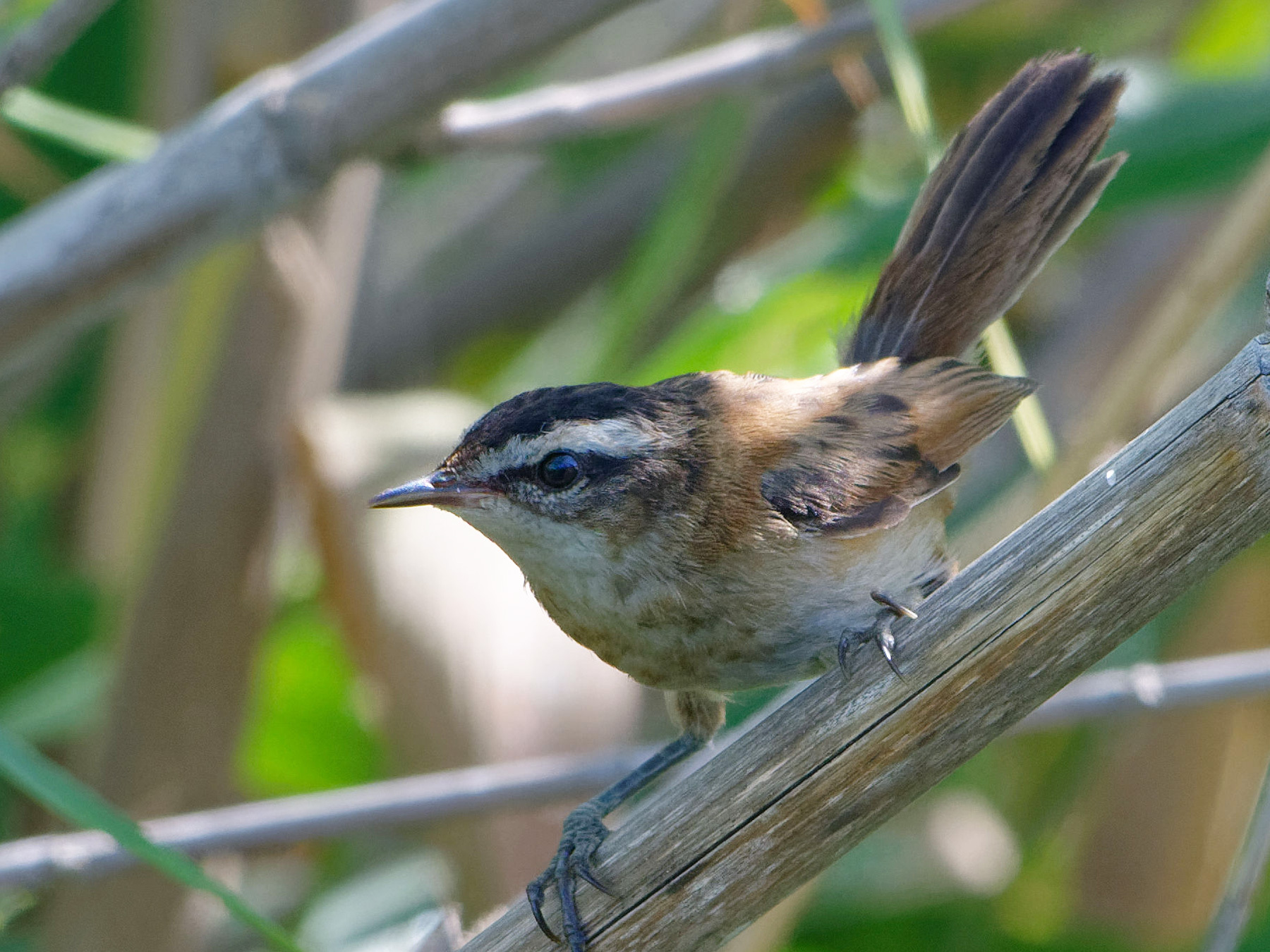
Quick facts
- Length
- 12–13 cm
- Wingspan
- 15–18 cm
- Weight
- 9–14 g
- Lifespan
- 3–5 years · oldest recorded 11.2 years
- Family
- Reed Warblers
- Migration
- Partial migrant
- Global status (IUCN)
- Least Concern
- World population
- 434,000 - 712,000 mature individuals
- Population trend
- Stable
- Also called
- Moustached Reed Warbler
- Scientific name
- Acrocephalus melanopogon
Sources
4- 1BirdLife International. 2018. Acrocephalus melanopogon. The IUCN Red List of Threatened Species 2018: e.T22714693A131328180. Source (opens in a new tab)
- 2del Hoyo et al. (2006)
- 3BirdLife International. 2018. Acrocephalus melanopogon. The IUCN Red List of Threatened Species 2018: e.T22714693A131328180. Source (opens in a new tab)
- 4Fransson et al., EURING list of longevity records for European birds (2010) Source (opens in a new tab)

Checked by
Nathan Cope, founder and editor
Nathan founded Birdfact and leads its writers and contributors in the UK, the US and Canada. He has watched and studied birds for more than ten years, and checks every article and species guide before it’s published.