


Malabar Trogon
Western Ghats Trogon · Harpactes fasciatus
By the Birdfact teamChecked by Nathan Cope
On this page11 sections
How to recognise it
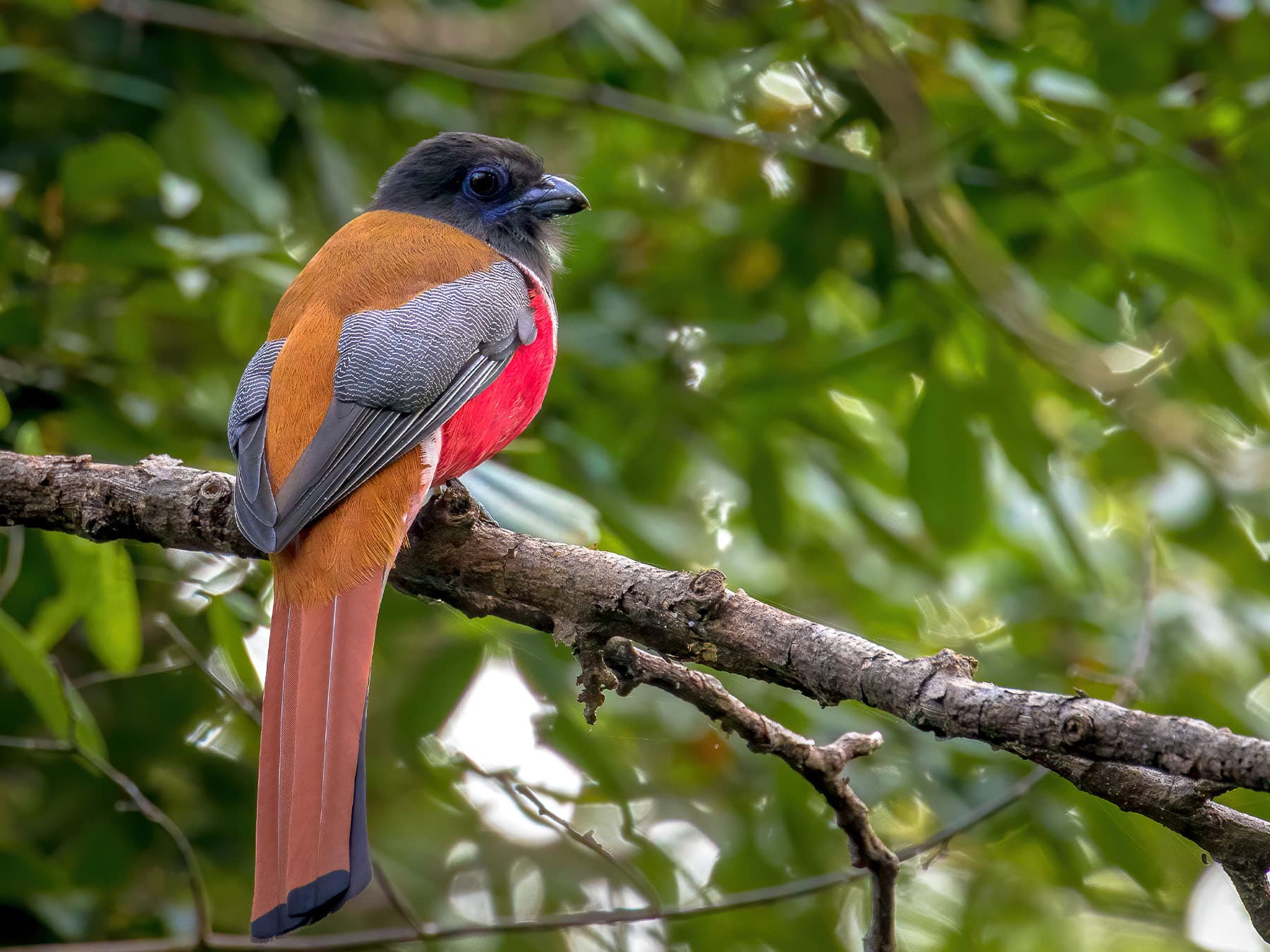
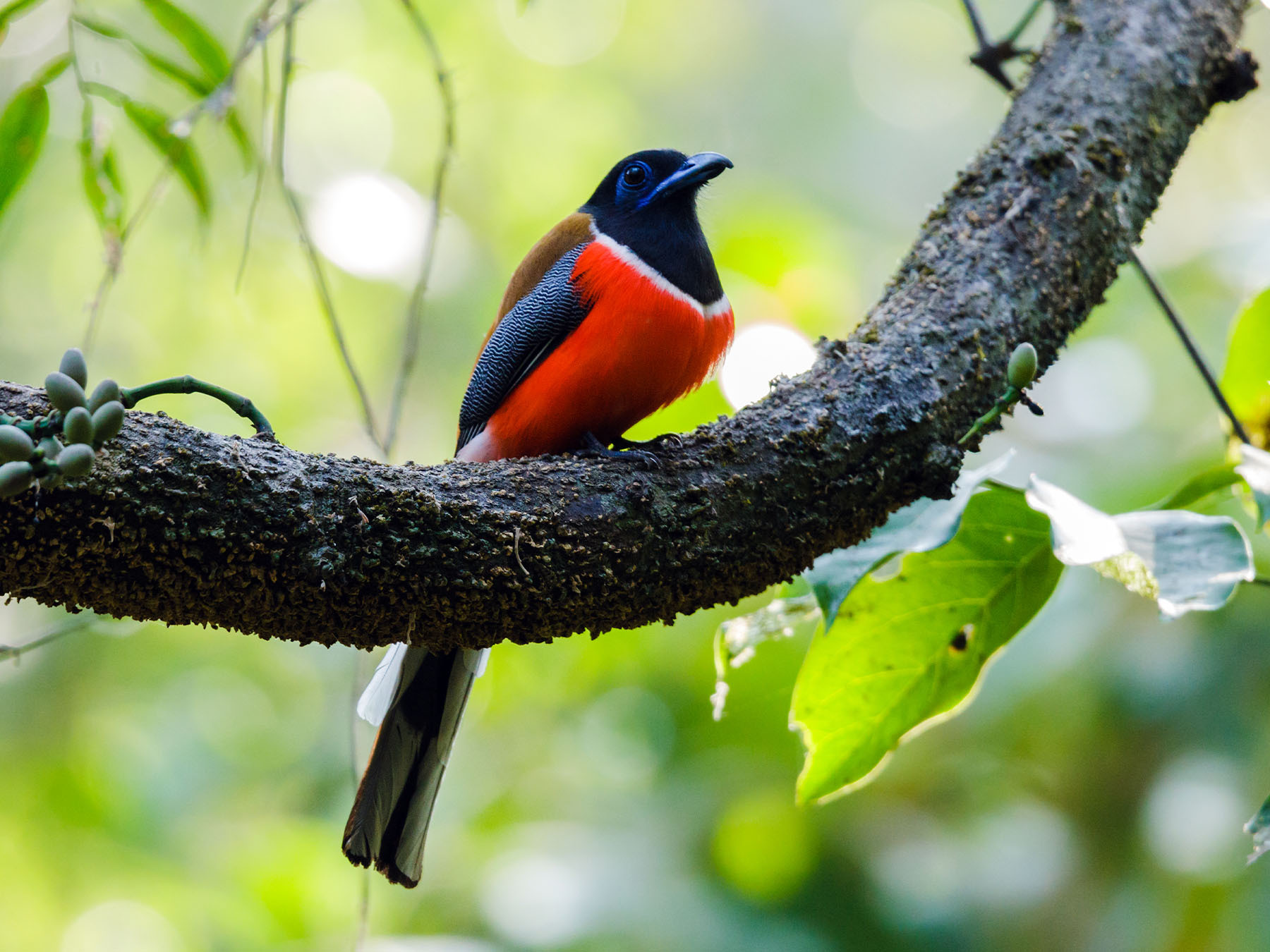
The Malabar Trogon is a striking bird. Males have a black head and upper breast, with pink-red colouring from mid-breast to tail. Their back and wings are yellowish-brown with white barring. They have distinctive blue bills and a blue stripe of bare skin under their eyes. The tail is rufous-brown with a black band at the end.
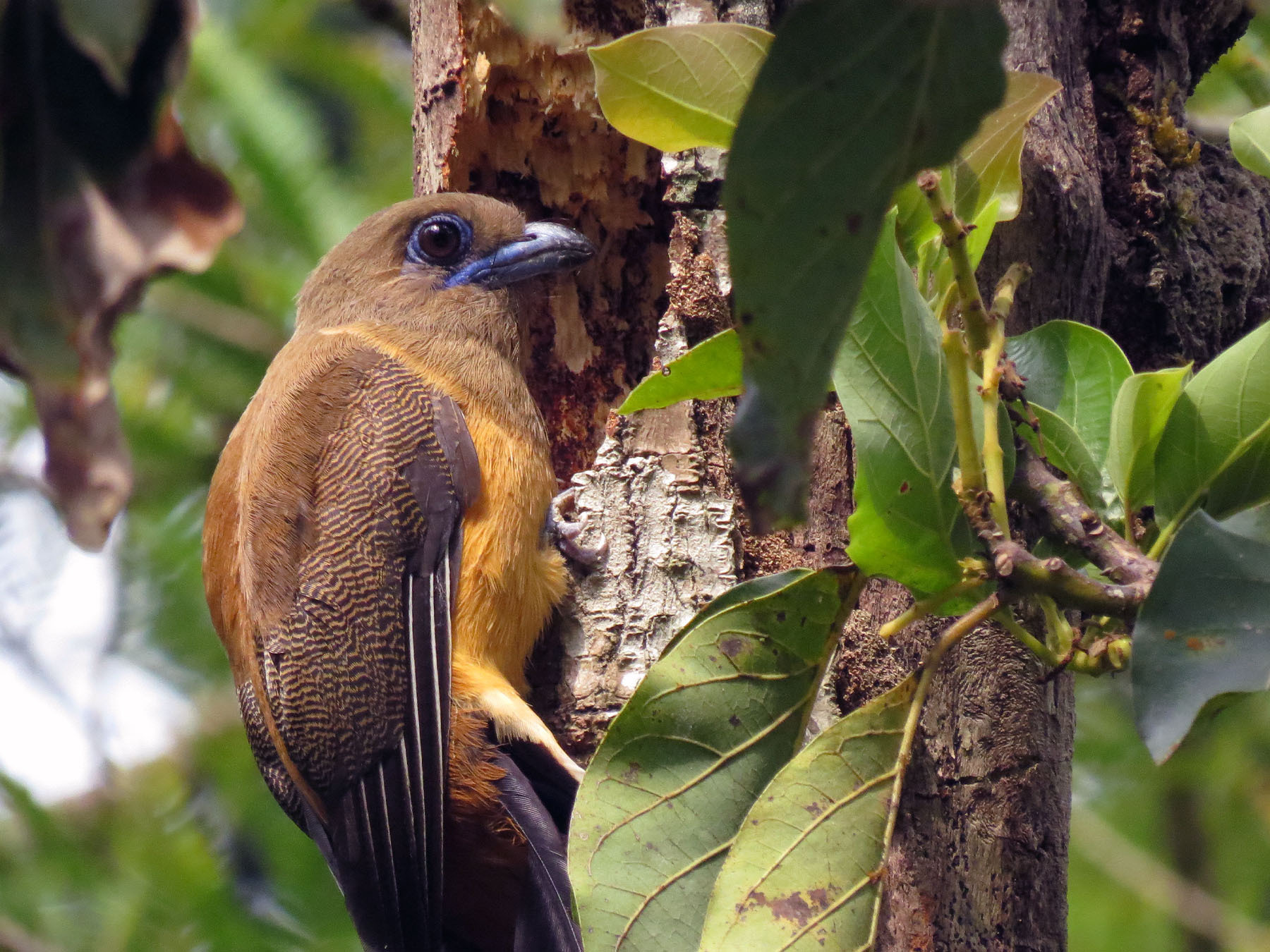
Females are more subdued, with a brown head and breast areas, a subtle buff-coloured breast line, and tawny-yellow colouring from mid-breast to tail. Their wings show buff-coloured barring.
Its size
Adults- Length
- 25–31 cm
- Wingspan
- 40–45 cm
- Weight
- 55–65 g
Its song and calls
The Malabar Trogon's call is a soft, repetitive 'kyow-kyow' or 'coo-coo-coo', often given in series.
During the breeding season, males may produce a more rapid and excited version of this call. They also make a low, churring sound when alarmed or agitated.
- Call0:00 / 2:02
When and where to see it
The Malabar Trogon is not recorded regularly in the UK, Ireland, the United States or Canada.
Worldwide: recorded regularly in 2 countries
Countries where it was recorded in at least 3 of the 6 years 2019–2024. Linked countries have their own bird list.
Data: EOD – eBird Observation Dataset (Cornell Lab of Ornithology), accessed via GBIF.org, CC BY 4.0. Records from 2019–2024, aggregated and filtered by Birdfact. How these lists are made
Tips for seeing it
- Look for Malabar Trogons in dense, moist forests of the Western Ghats
- Listen for their soft, repetitive 'kyow-kyow' calls to locate them
- Scan mid-level branches where they often perch motionless
- Be patient, as they can remain still for long periods
- Visit during early morning or late afternoon when they are most active
What it eats
The Malabar Trogon's diet consists primarily of insects, particularly caterpillars, beetles, and moths. They also consume small lizards and various fruits, especially figs.
Their feeding strategy involves sitting motionless on a perch and making quick, short flights to catch prey or pluck fruit.
Nesting and breeding
Breeding season for Malabar Trogons typically occurs between February and May. Pairs form monogamous bonds and engage in courtship displays that include tail-fanning and soft vocalisations.
Nests are built in tree cavities, often using abandoned woodpecker holes or natural hollows. The female lays 2-3 pale blue or white eggs in the unlined cavity.
Both parents share incubation duties, which last about 16-17 days. After hatching, the chicks remain in the nest for approximately 20 days before fledging, with both parents contributing to their care.
Behaviour
Malabar Trogons are typically solitary or found in pairs. They perch upright on branches, often remaining motionless for long periods while scanning for prey.
When foraging, they make short, quick flights to catch insects or pluck berries, returning to the same or a nearby perch.
Conservation
While currently listed as Least Concern, the Malabar Trogon faces threats from habitat loss due to deforestation and fragmentation of its rainforest home.
Conservation efforts focus on protecting and restoring the Western Ghats' forests to ensure the species' long-term survival.
More photos
3 photos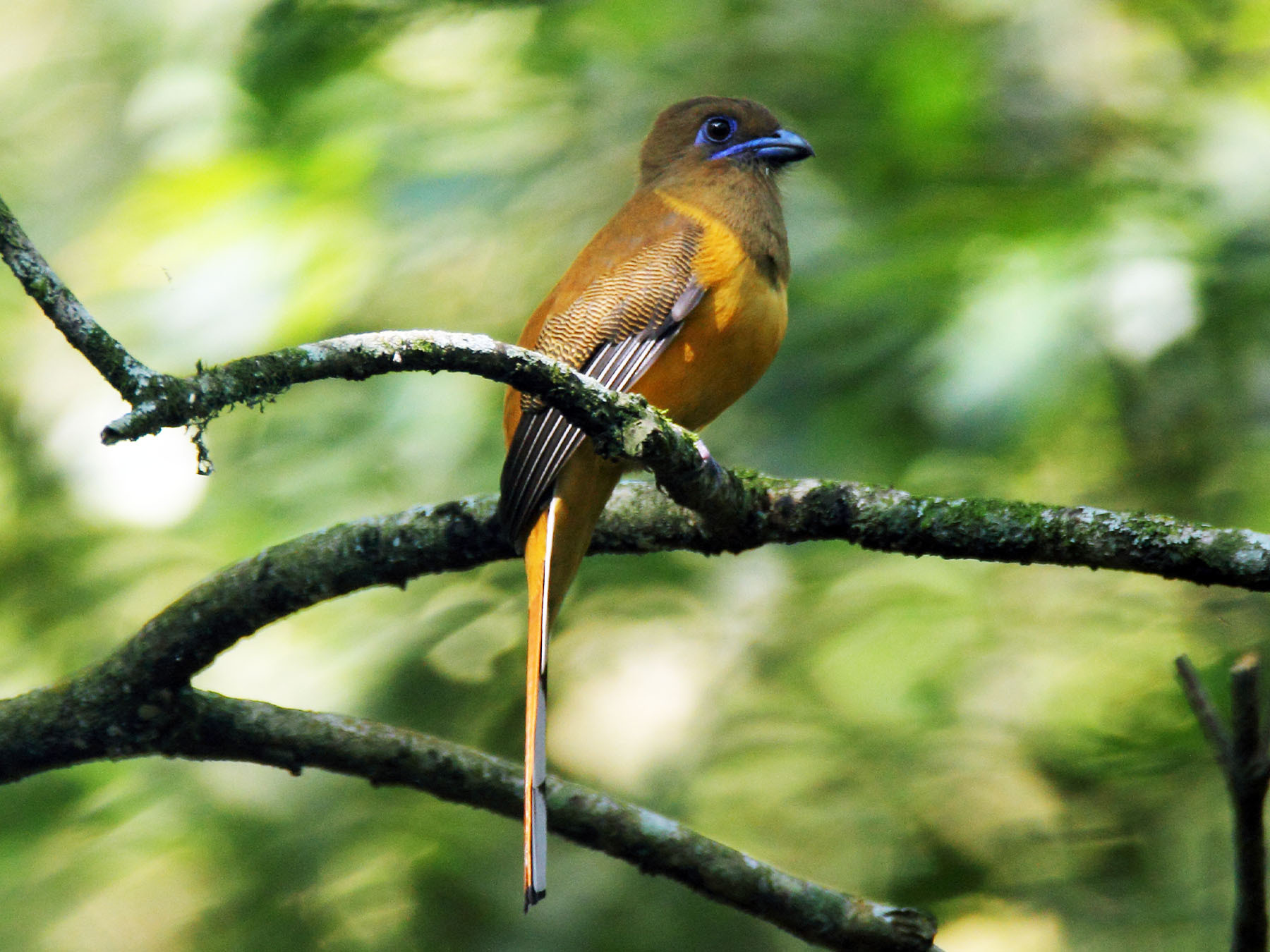
Quick facts
- Length
- 25–31 cm
- Wingspan
- 40–45 cm
- Weight
- 55–65 g
- Family
- Trogons
- Migration
- Resident
- Global status (IUCN)
- Least Concern
- World population
- Unknown
- Population trend
- Stable
- Also called
- Western Ghats Trogon
- Scientific name
- Harpactes fasciatus
Sources
2- 1BirdLife International. 2016. Harpactes fasciatus. The IUCN Red List of Threatened Species 2016: e.T22682830A92962515. Source (opens in a new tab)
- 2BirdLife International. 2016. Harpactes fasciatus. The IUCN Red List of Threatened Species 2016: e.T22682830A92962515. Source (opens in a new tab)

Checked by
Nathan Cope, founder and editor
Nathan founded Birdfact and leads its writers and contributors in the UK, the US and Canada. He has watched and studied birds for more than ten years, and checks every article and species guide before it’s published.