


Magpie Shrike
African Long-tailed Shrike · Urolestes melanoleucus
By the Birdfact teamChecked by Nathan Cope
On this page11 sections
How to recognise it
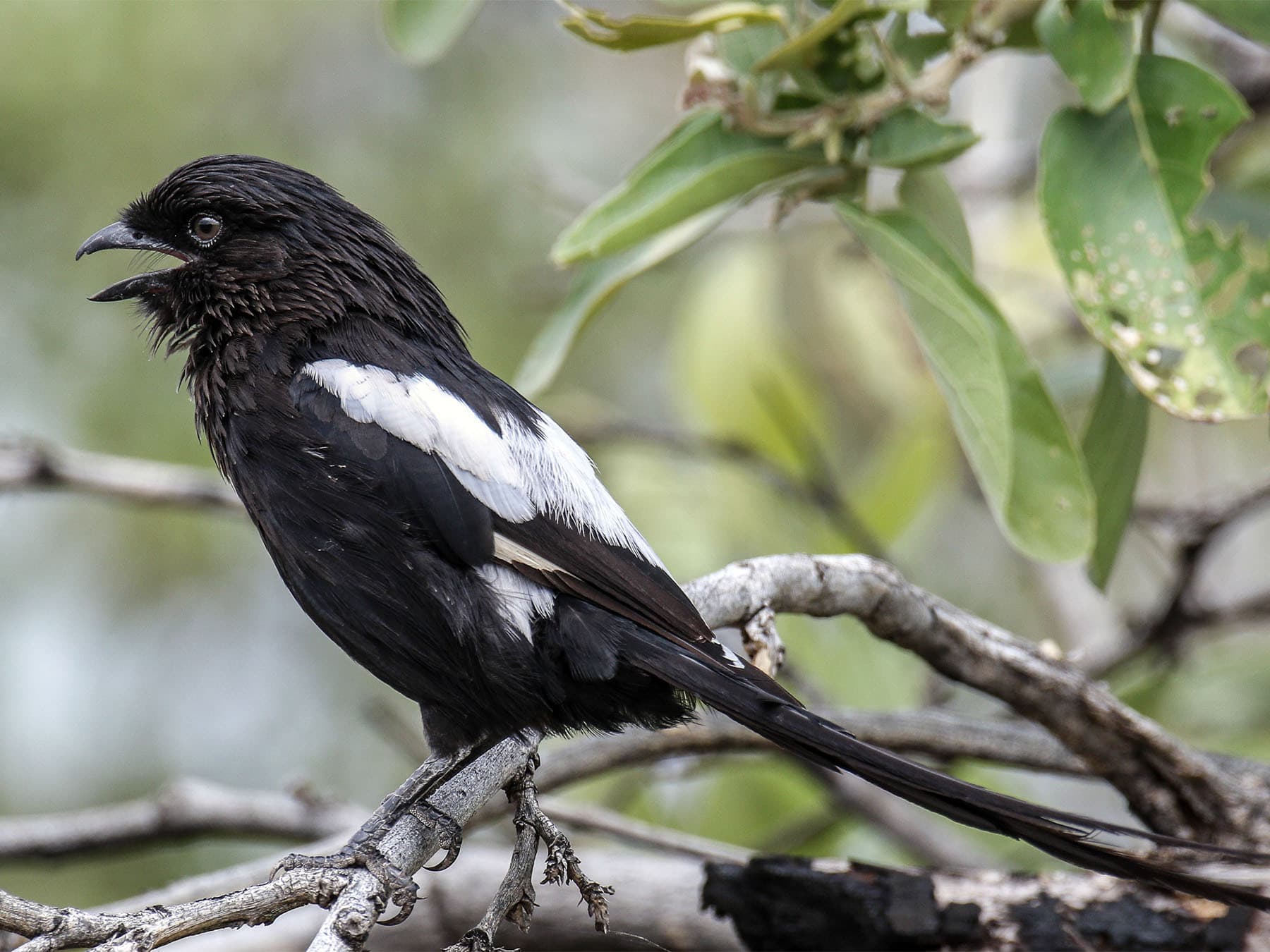
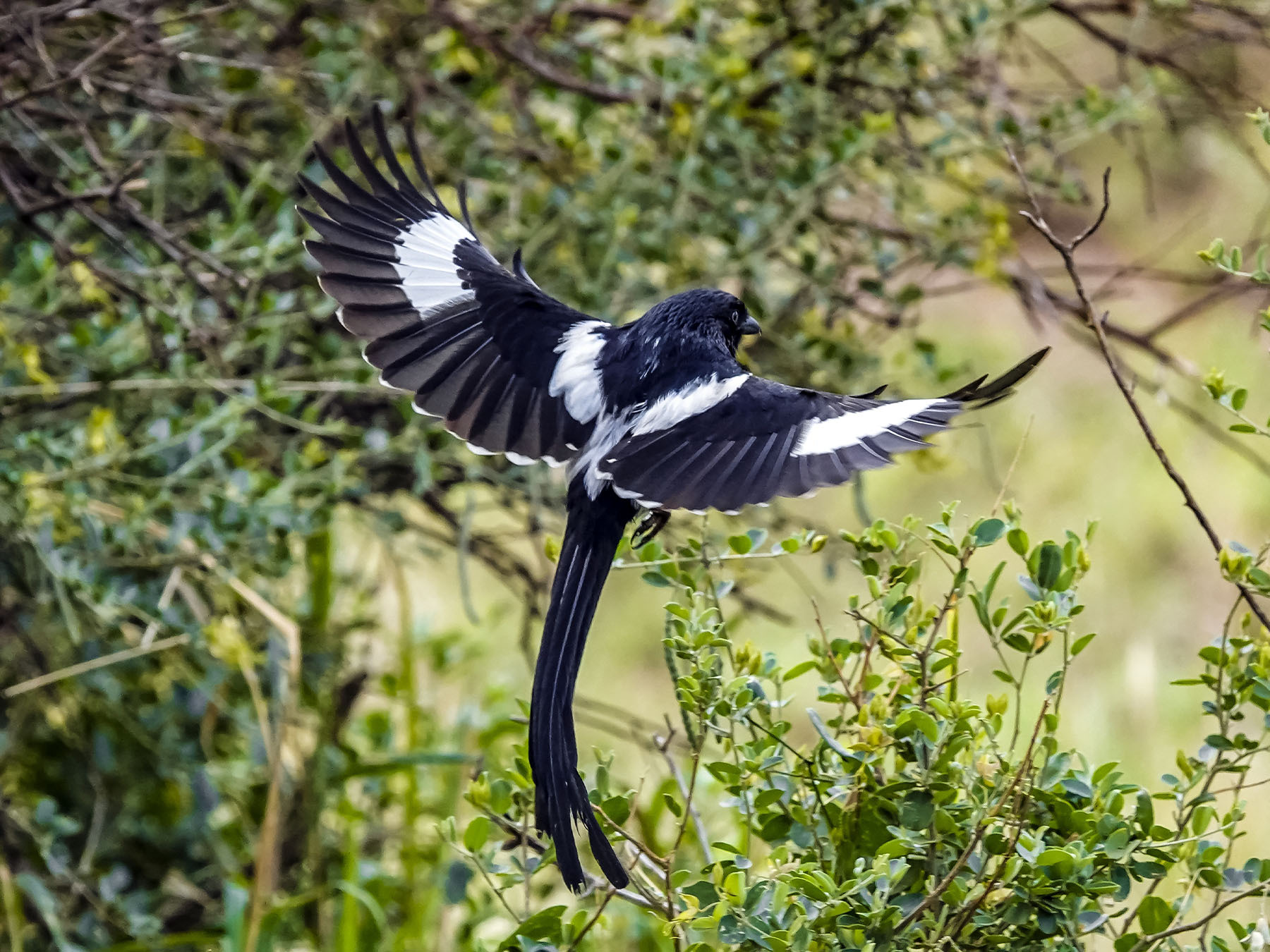
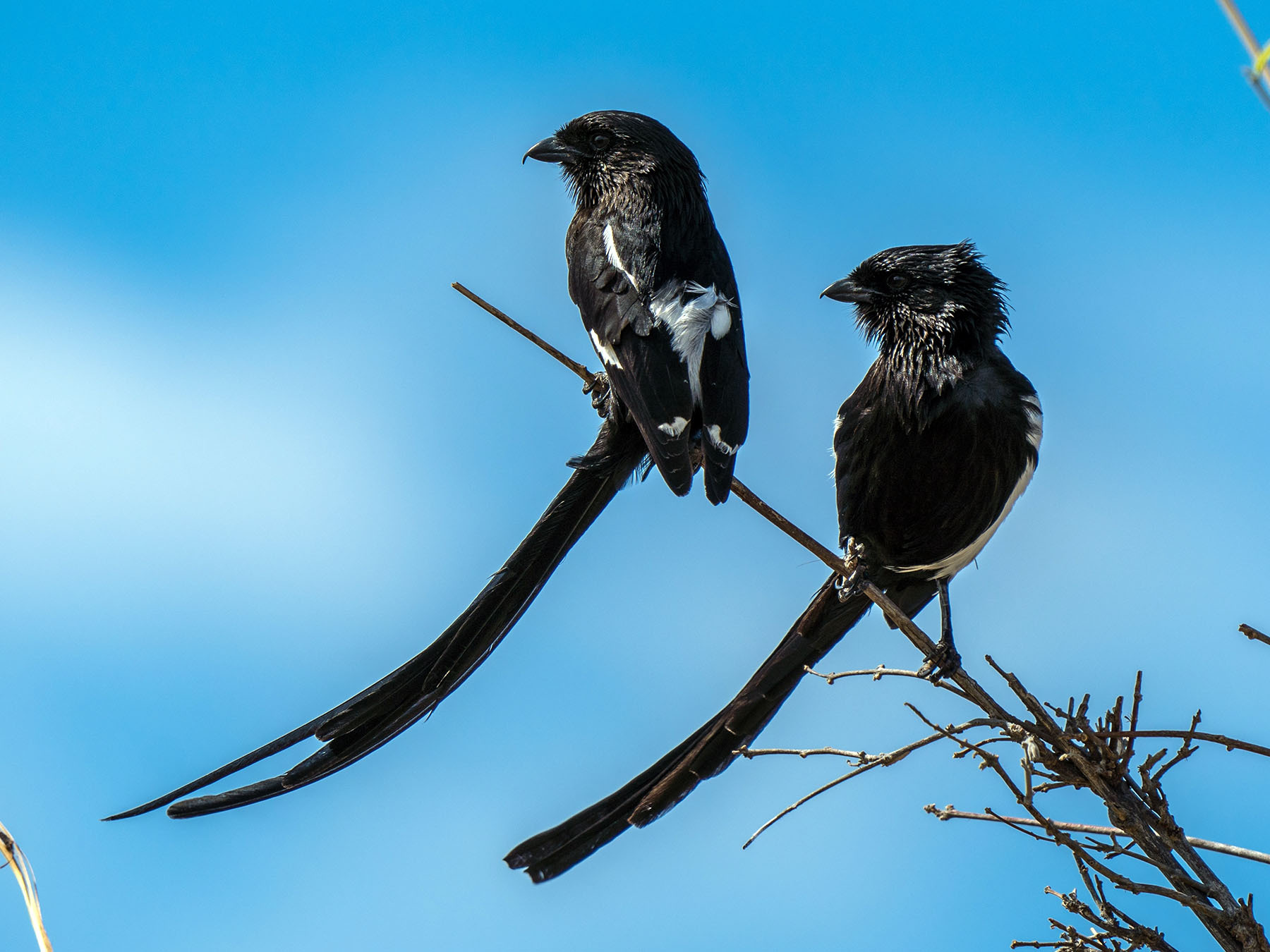
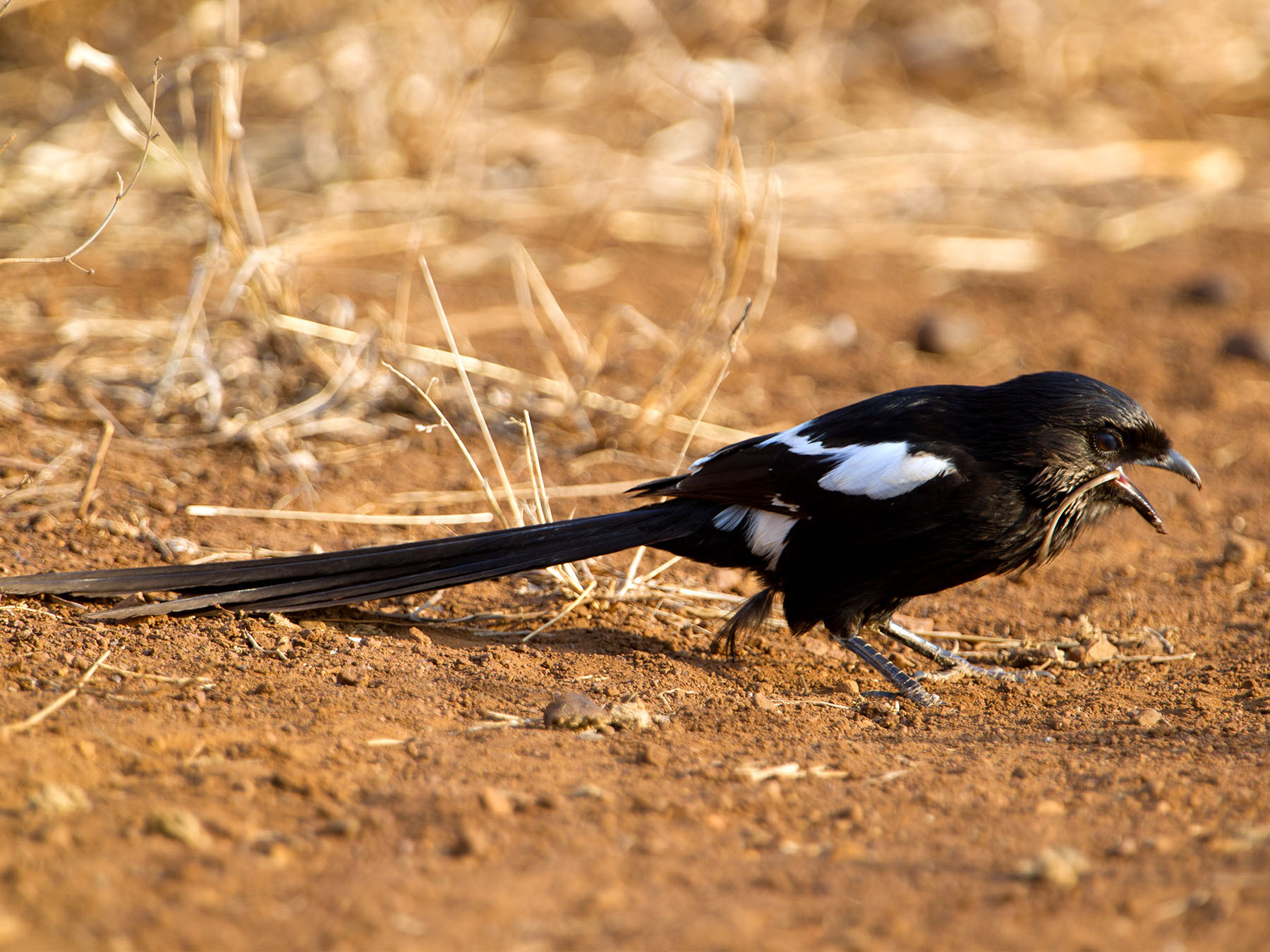
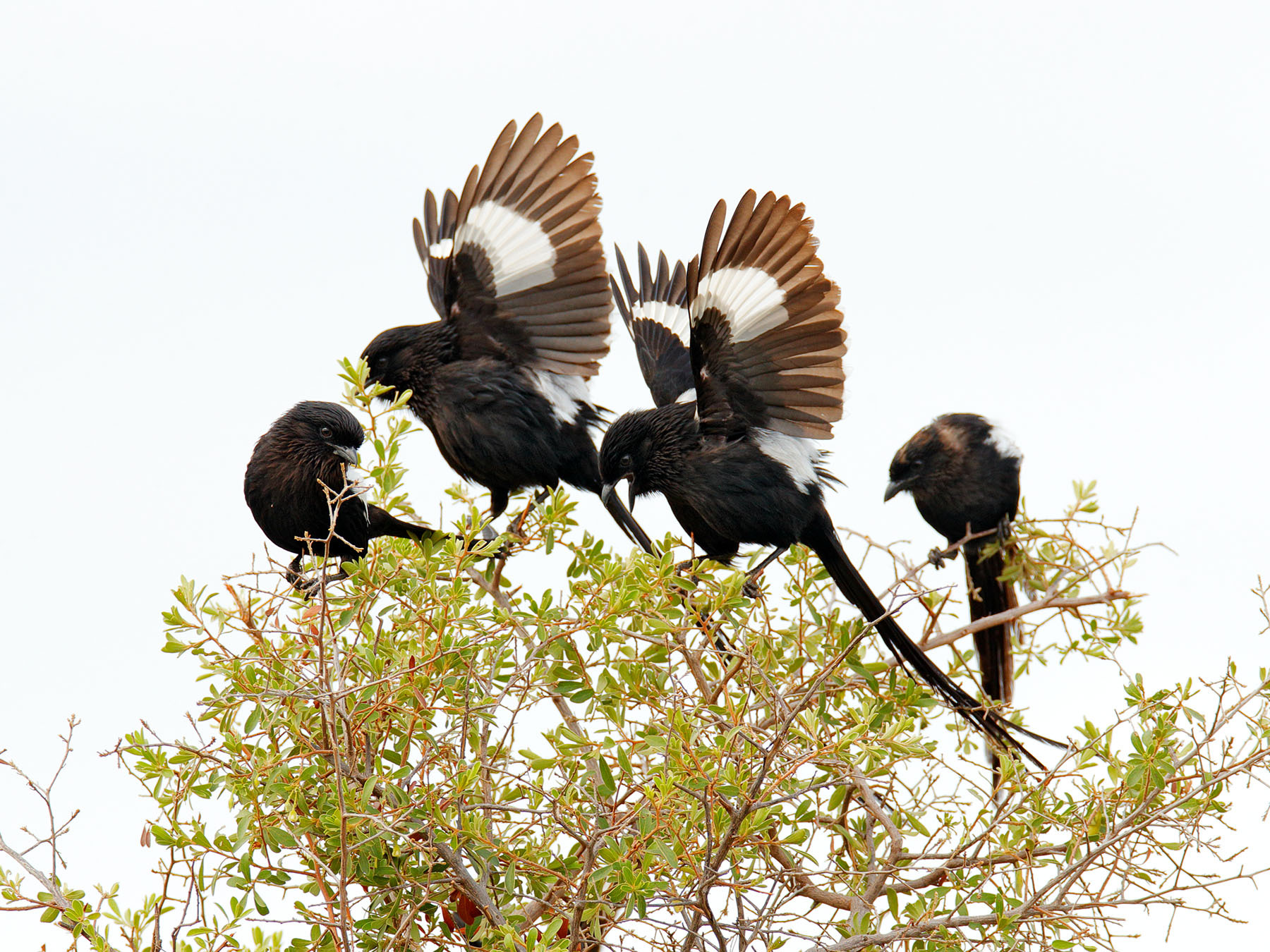
The Magpie Shrike is a striking bird with a distinctive black and white plumage. Its long, graduated tail is particularly notable, often exceeding half the bird's total length. The body is primarily glossy black, with white patches on the shoulders, wings, and a greyish-white rump.
Males and females are similar, though females can be distinguished by large white patches on their flanks. Young birds are browner in colour with buff-tipped feathers, creating a more mottled appearance, and have shorter tails than adults.
Its size
Adults- Length
- 34.5–50 cm
- Wingspan
- 40–45 cm
- Weight
- 55–97 g
Its song and calls
Magpie Shrikes have a variety of loud, harsh calls. Their repertoire includes a sharp, repeated 'chak-chak' alarm call and a more melodious 'kwe-kwe-kwe' contact call.
During territorial displays, they produce a series of grating screeches and whistles, often accompanied by tail-fanning.
- Call0:00 / 0:47
When and where to see it
The Magpie Shrike is not recorded regularly in the UK, Ireland, the United States or Canada.
United States: recorded in 1 of the 6 years. Too few years to count as a regular visitor.
Worldwide: recorded regularly in 10 countries
Countries where it was recorded in at least 3 of the 6 years 2019–2024. Linked countries have their own bird list.
Africa (10)
Data: EOD – eBird Observation Dataset (Cornell Lab of Ornithology), accessed via GBIF.org, CC BY 4.0. Records from 2019–2024, aggregated and filtered by Birdfact. How these lists are made
Tips for seeing it
- Look for their distinctive long tails and black-and-white plumage
- Listen for their loud, harsh calls, which often reveal their presence
- Observe fence lines and isolated trees in savanna habitats
- Watch for their habit of perching conspicuously on high vantage points
What it eats
Magpie Shrikes are carnivorous, primarily feeding on large insects such as grasshoppers and beetles. They also prey on small vertebrates, including lizards, rodents, and occasionally small birds.
These shrikes often impale their prey on thorns or barbed wire, creating 'larders' for later consumption.
Nesting and breeding
Breeding occurs during the wet season, typically from September to March. Magpie Shrikes form monogamous pairs, often assisted by helpers from previous broods.
The nest is a large, sturdy cup made of twigs, grass, and rootlets lined with softer materials. It's usually placed high in a thorny tree or bush. The female lays 3-5 pale blue or greenish eggs with brown spots.
Incubation lasts about 18 days, primarily by the female. Nestlings are fed by both parents and helpers, fledging after approximately 19-20 days but remaining dependent on adults for several more weeks.
Behaviour
Magpie Shrikes are often seen perched prominently on treetops or fence posts, scanning for prey. They are highly social birds, typically found in small family groups of 3-10 individuals.
These groups engage in cooperative breeding, with offspring from previous years helping to raise new chicks.
Conservation
While the Magpie Shrike is currently listed as Least Concern, habitat loss due to agricultural expansion and overgrazing poses a potential threat.
Conservation efforts focus on maintaining suitable savanna and woodland habitats within its range.
More photos
5 photos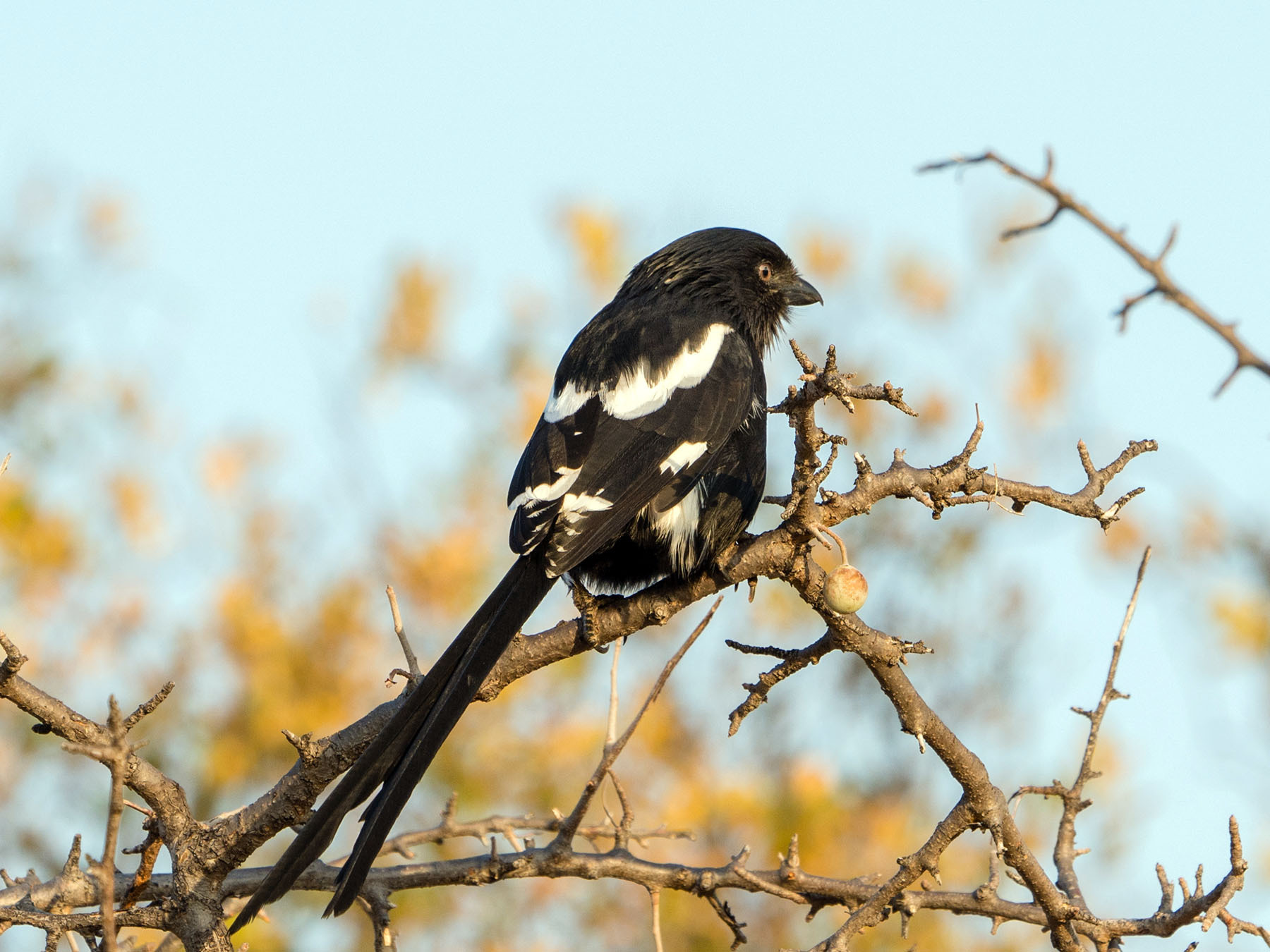
Quick facts
- Length
- 34.5–50 cm
- Wingspan
- 40–45 cm
- Weight
- 55–97 g
- Family
- Shrikes
- Migration
- Resident
- Global status (IUCN)
- Least Concern
- World population
- Unknown
- Population trend
- Declining
- Also called
- African Long-tailed Shrike
- Scientific name
- Urolestes melanoleucus
Sources
2- 1BirdLife International. 2024. Lanius melanoleucus. The IUCN Red List of Threatened Species 2024: e.T22705107A263835282. Source (opens in a new tab)
- 2Harris and Franklin (2000)

Checked by
Nathan Cope, founder and editor
Nathan founded Birdfact and leads its writers and contributors in the UK, the US and Canada. He has watched and studied birds for more than ten years, and checks every article and species guide before it’s published.