


Long-tailed Jaeger
Long-tailed Skua · Stercorarius longicaudus
By the Birdfact teamChecked by Nathan Cope
On this page12 sections
How to recognise it
What do Long-tailed Jaegers look like?
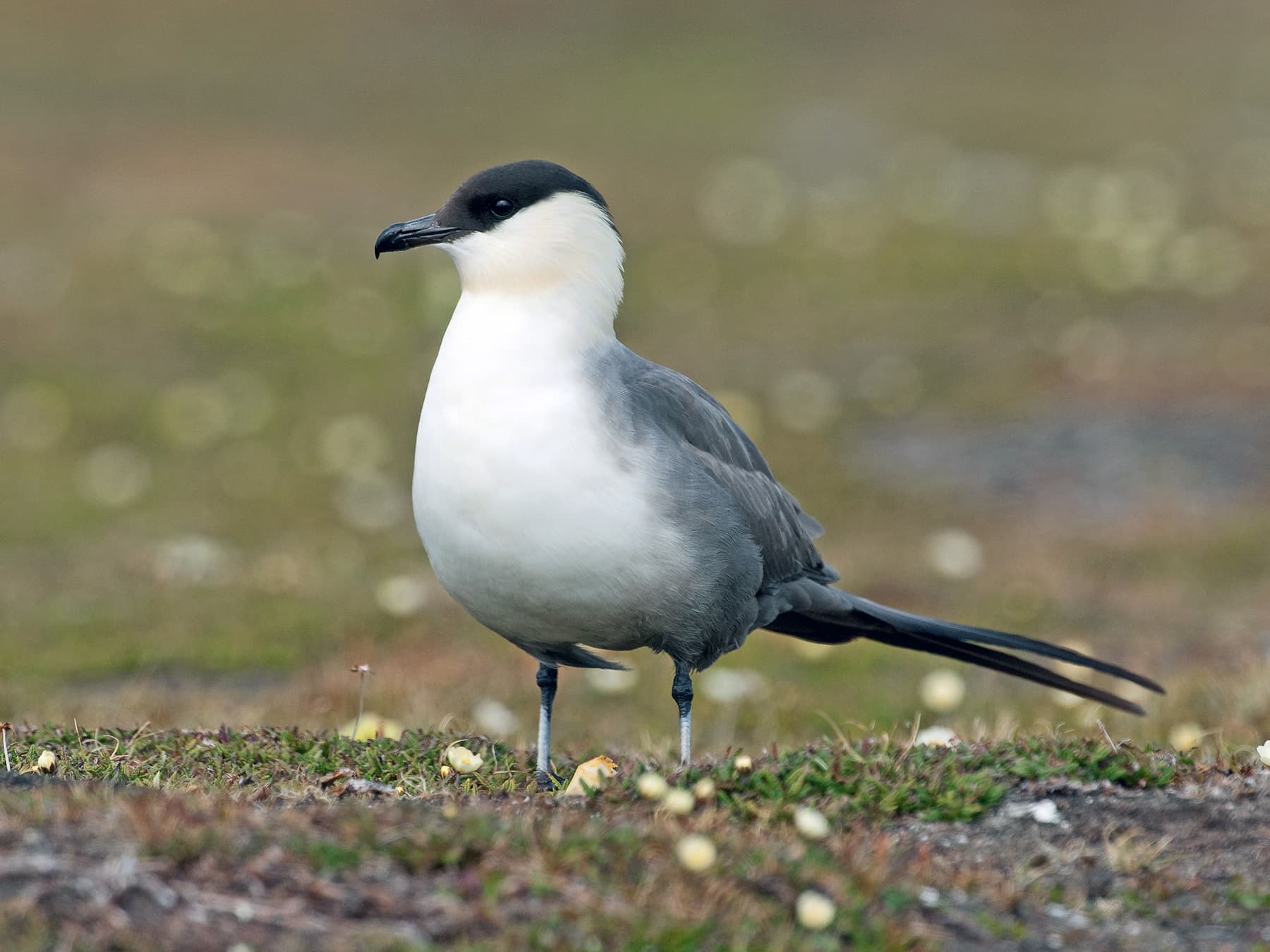
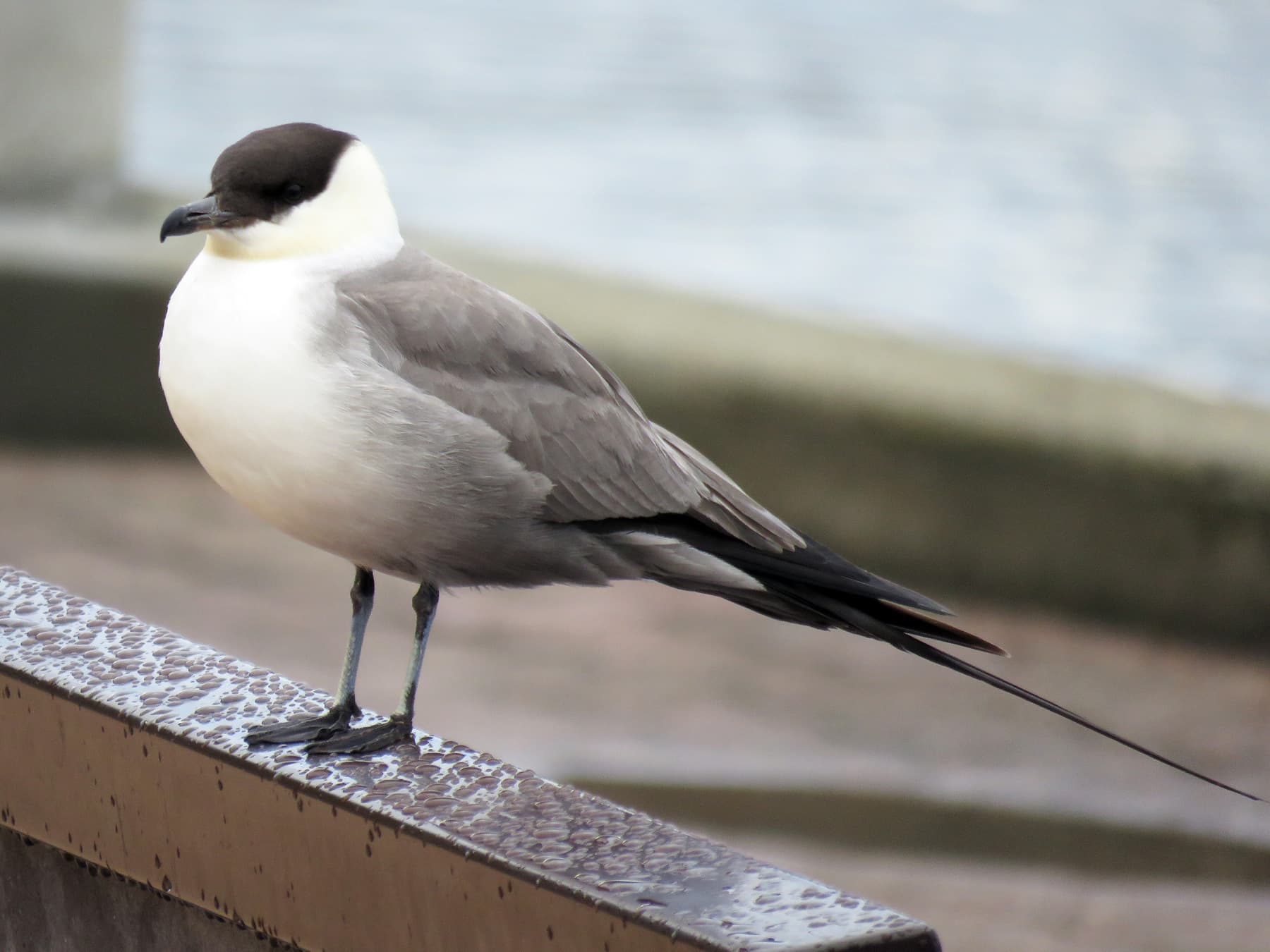
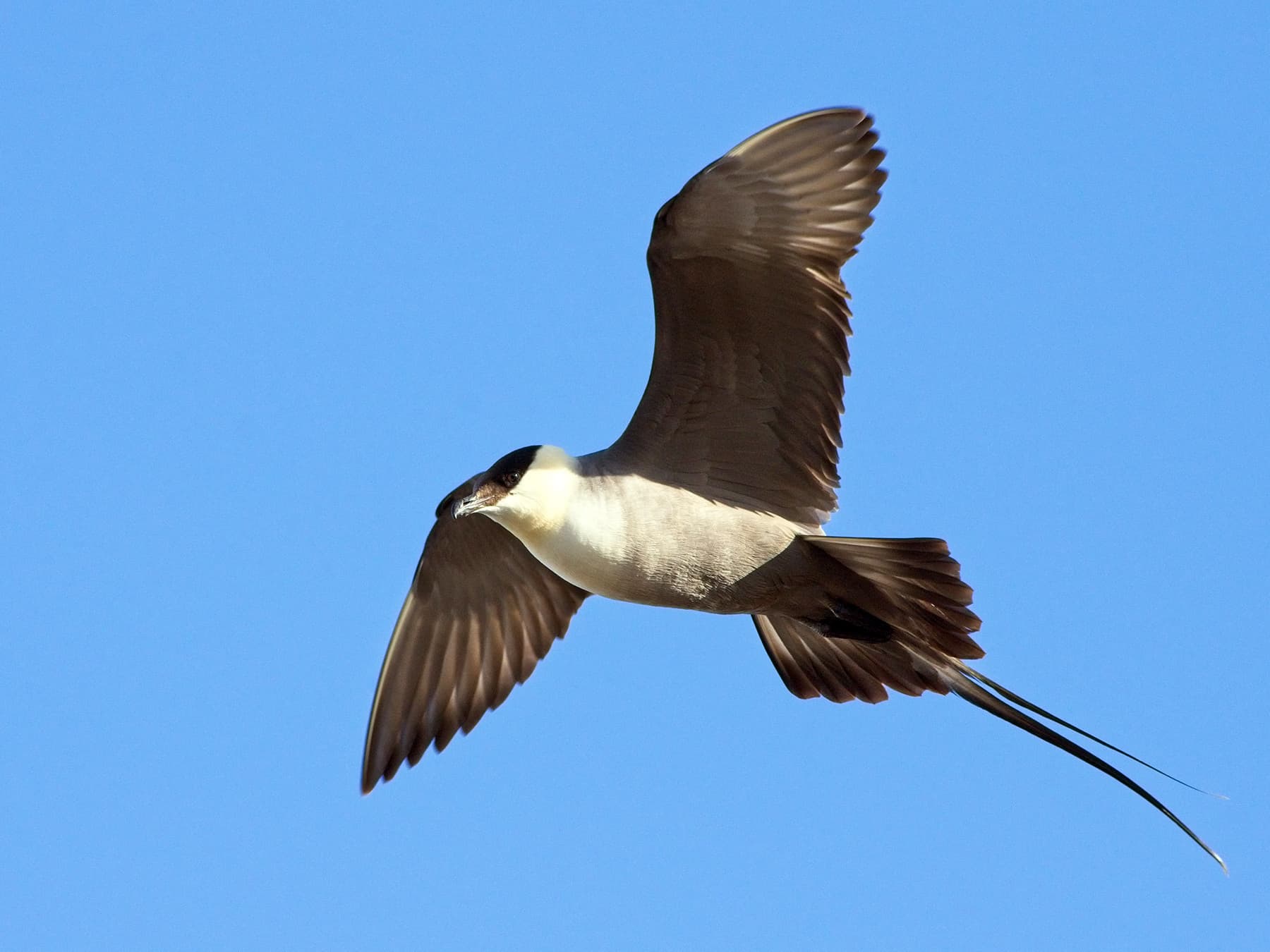
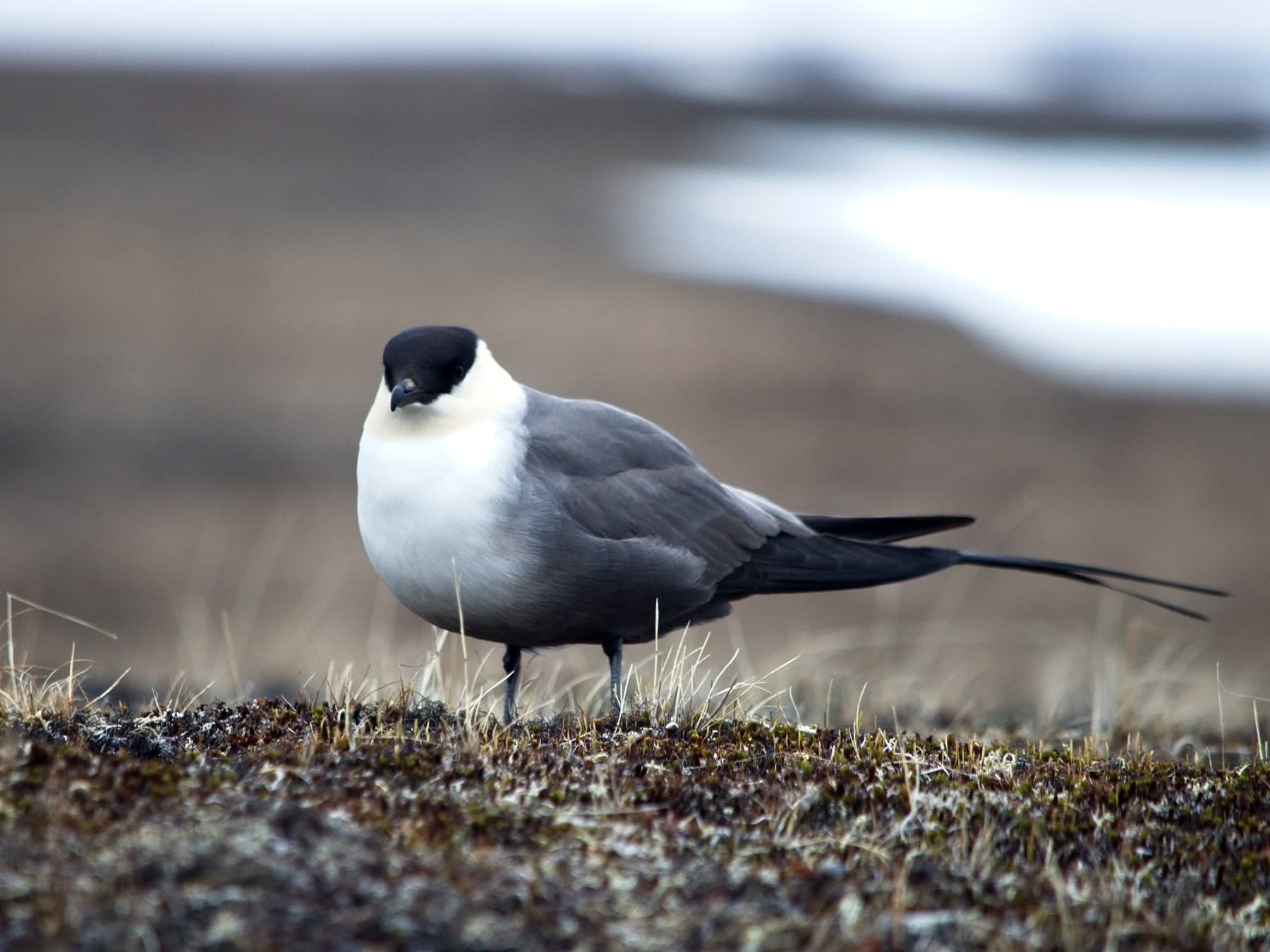
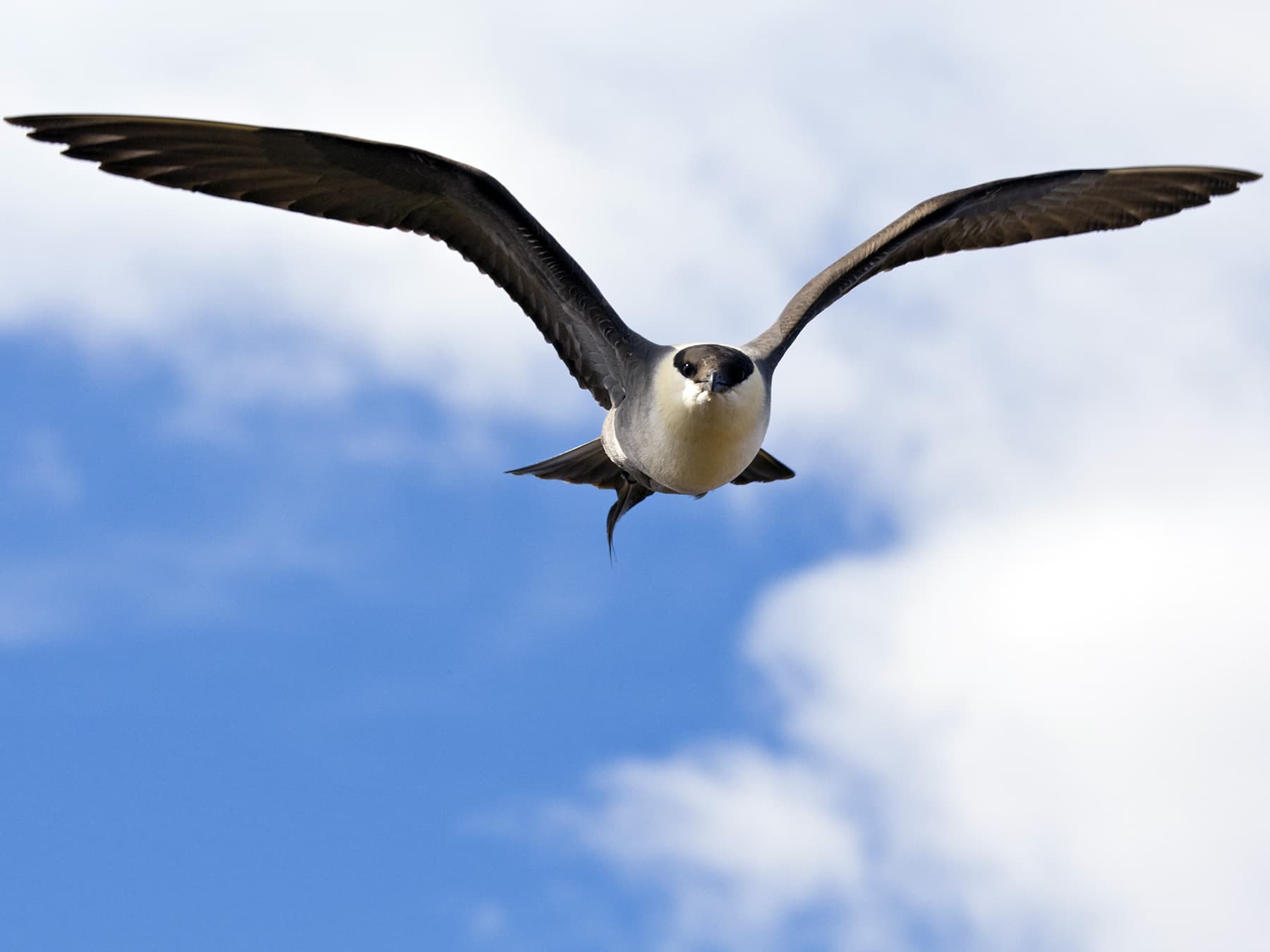
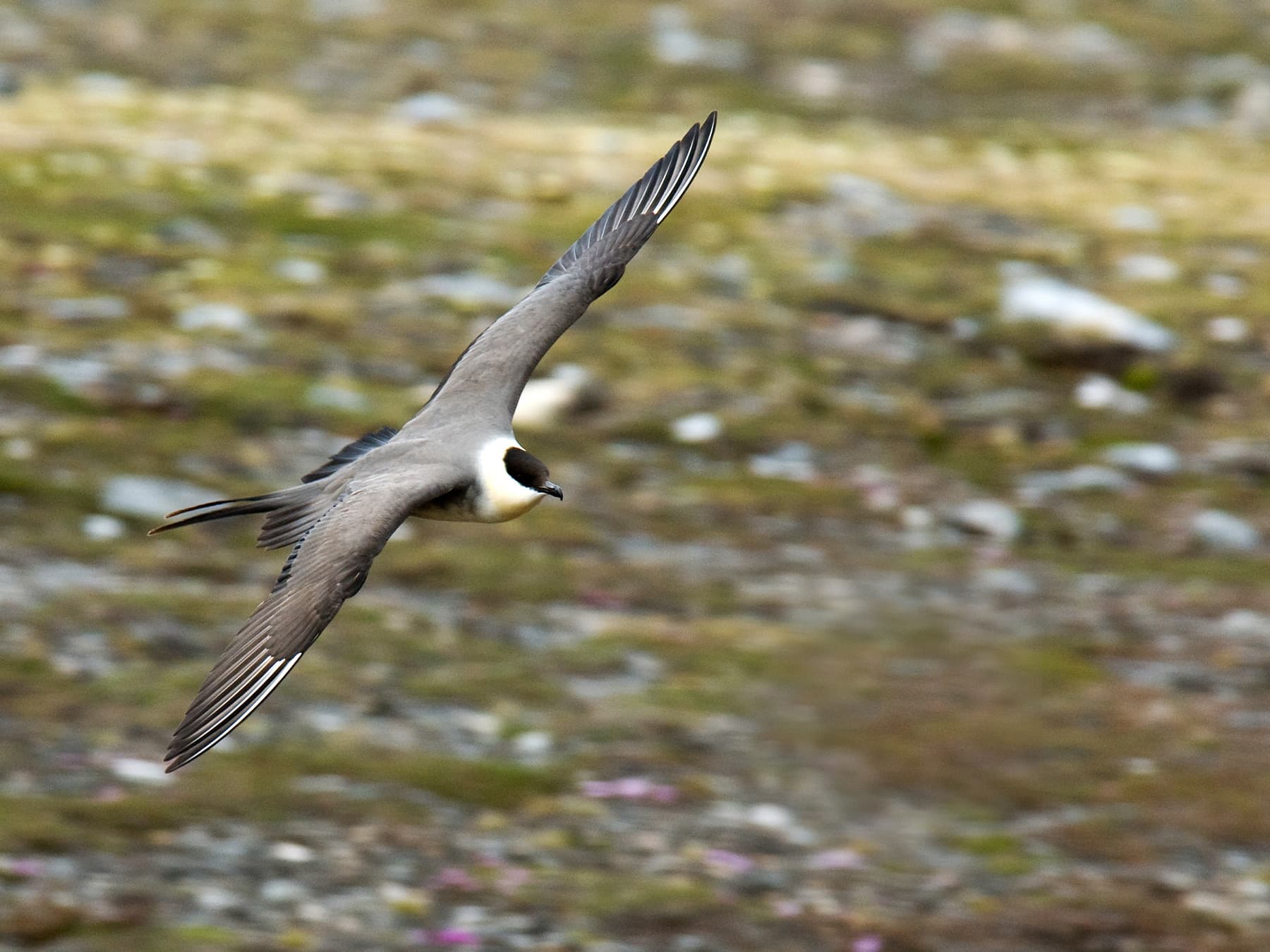
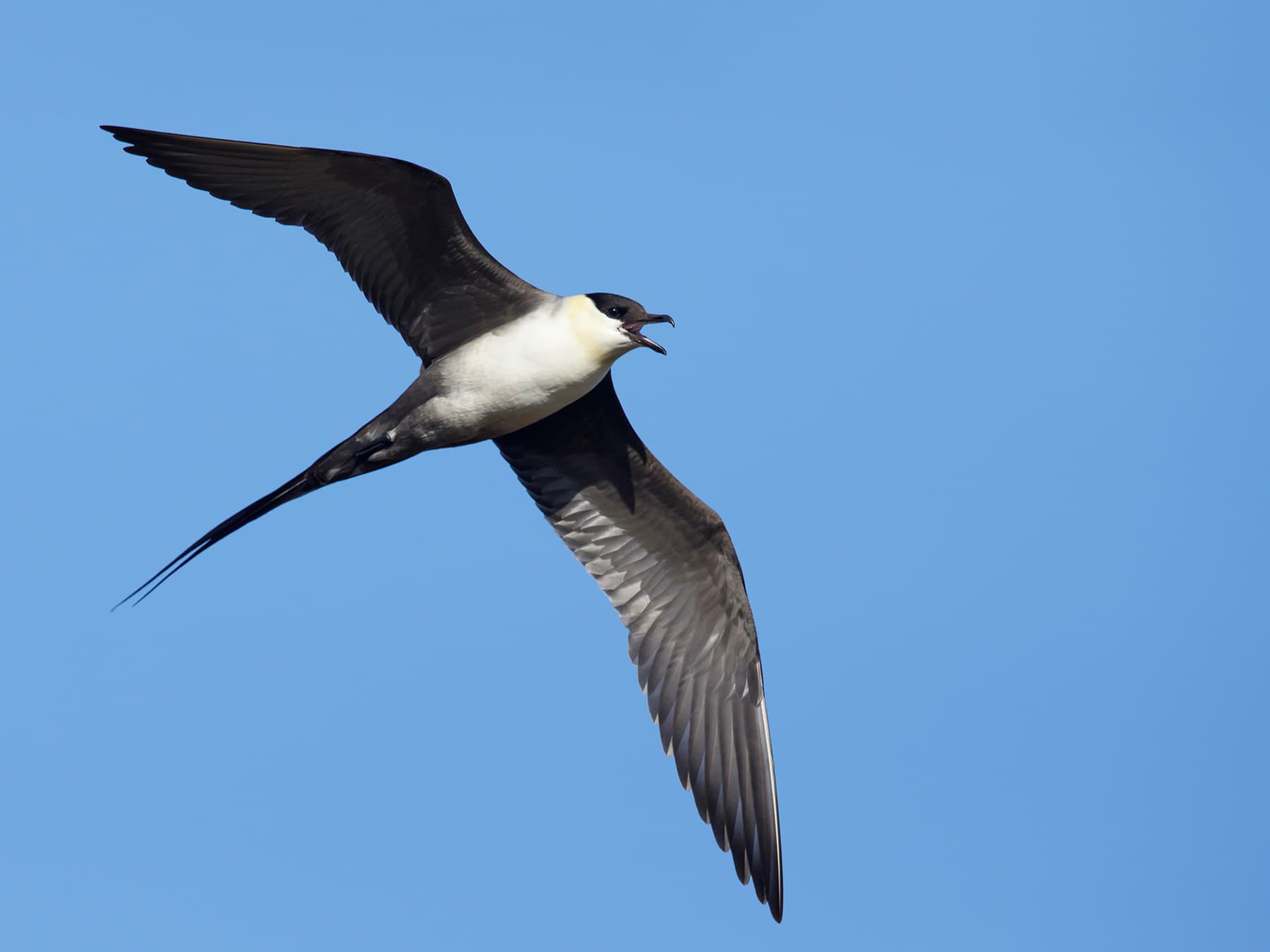
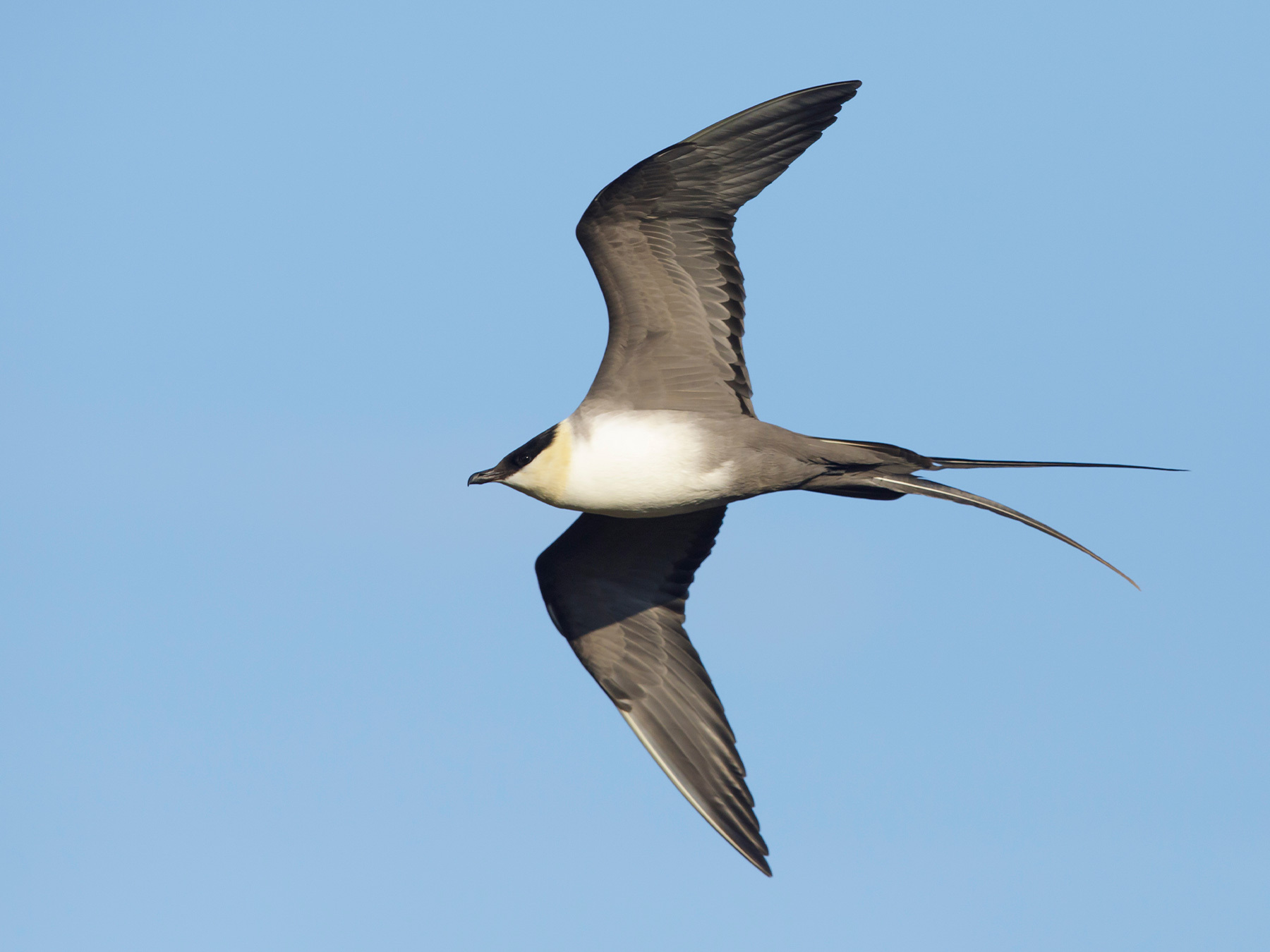
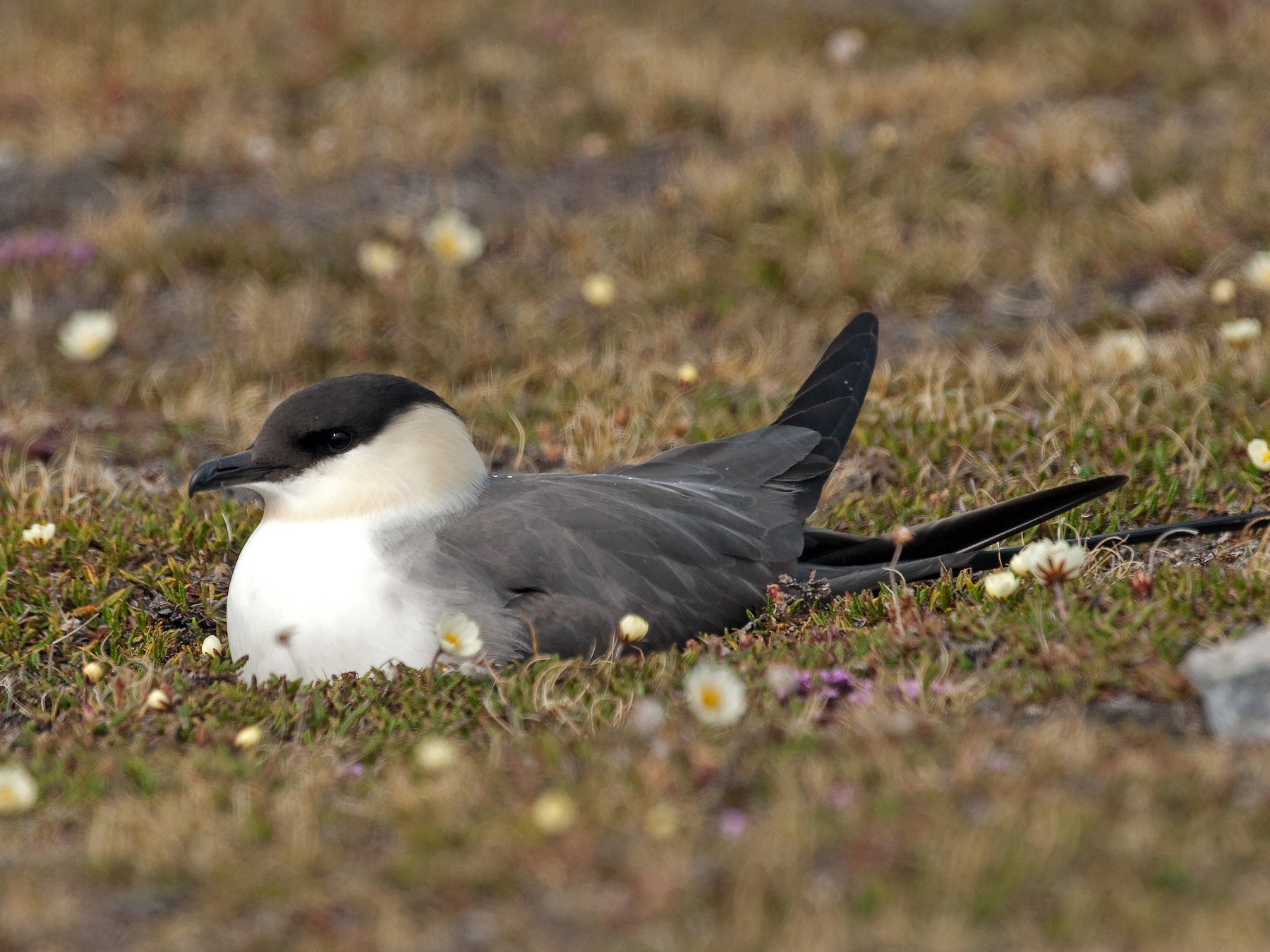
Long-tailed jaegers are small seabirds with narrow wings and dark, flowing tail streamers. During the breeding season, they have gray upperparts, and their gray wings are edged with black. Their underparts are dusky gray, with a white breast, throat and chin, with some yellowish coloring to the sides of the neck. They have a dark black-brown cap that extends past the eyes to the base of the bill. The bill is brown at the base, darkening to a hooked black tip.
Once the breeding season ends, long-tailed jaegers molt into a less distinctive basic plumage, losing their tail streamers and developing a barred brown appearance, similar to a juvenile of the species. Their underwings are dark brown and they have a dark band across the breast.
Females and males are similar in both basic and alternate plumages, although females are slightly darker.
Immature long-tailed jaegers are mostly light brown and white. They have brown upperparts with buff-tipped feathers giving a barred effect. Their underwings are also barred with brown and white. Underparts vary between pale gray, white, and brown, and their long tail streamers are not present.
How big are Long-tailed Jaegers?
Long-tailed jaegers are the smallest member of the jaeger/skua family, with up to half their body length (29 cm/11 in) made up of their long streaming tail feathers. There is no difference in size between males and females for this species.
- Length: 38 cm to 58 cm (15 in to 23 in)
- Wingspan: 105 cm to 117 cm (41 in to 46 in)
- Weight: 240 g to 350 g (8.4 oz to 12.3 oz)
Its size
Adults- Length
- 48–58 cm
- Wingspan
- 105–117 cm
- Weight
- 230–350 g
Its song and calls
What sound does a Long-tailed Jaeger make?
A shrill ‘krii-krii-krii’ call is heard, consisting of around 20 short, long and then short notes, lasting for around 10 seconds. It is usually heard as a contact call around other long-tailed jaegers.
On nesting grounds, and in the air above areas where young birds are waiting to be fed, or as a contact call between mates, females make a ‘kweek’ call, which is also heard when the area around a nest site is being defended against intruders.
- Call0:00 / 2:19
Recorded in AK, United States · July 2022
When and where to see it
OctoberLeaving
Most recorded in October
- 1. Clareunder 0.1%
- 2. Waterfordunder 0.1%
- 3. Pembrokeshireunder 0.1%
- 4. Eilean Siarunder 0.1%
- 5. Fifeunder 0.1%
Each dot is a county, state or province: the bigger and darker, the larger the bird’s share of that place’s bird records that month. Grey dots: no regular records. The ringed point is the centre of the bird’s records this month; the arrow shows how it moved since last month, and the dashed loop its path through the year. “Arrivals” colours places where it becomes regular this month (orange) or is in its last regular month (grey). GBIF eBird Observation Dataset, 2019–2024. Map data: Natural Earth, US Census Bureau; place centres © OpenStreetMap contributors.
In your area
See when the Long-tailed Jaeger is recorded in your county, state or province.
How often the Long-tailed Jaeger turns up in the UK, Ireland, the United States and Canada through the year, from birdwatchers' records.
United Kingdom
Passage migrant · regularly Jul–Oct · most records in September
Ireland
Passage migrant · regularly Jul–Oct · most records in August
United States
Summer visitor · regularly May–Oct · most records in August
Canada
Passage migrant · regularly Jun–Oct · most records in July
Show as a table
| Month | United Kingdom | Ireland | United States | Canada |
|---|---|---|---|---|
| January | – | – | – | – |
| February | <0.001% | – | – | – |
| March | <0.001% | – | <0.001% | – |
| April | – | – | <0.001% | – |
| May | <0.001% | <0.001% | 0.003% (regular) | <0.001% |
| June | <0.001% | <0.001% | 0.016% (regular) | 0.005% (regular) |
| July | 0.003% (regular) | 0.013% (regular) | 0.004% (regular) | 0.009% (regular) |
| August | 0.016% (regular) | 0.079% (regular) | 0.019% (regular) | 0.006% (regular) |
| September | 0.018% (regular) | 0.022% (regular) | 0.019% (regular) | 0.009% (regular) |
| October | 0.004% (regular) | 0.006% (regular) | 0.003% (regular) | <0.001% (regular) |
| November | <0.001% | 0.001% | <0.001% | <0.001% |
| December | – | – | – | – |
Recorded regularly in
Worldwide: recorded regularly in 46 countries
Countries where it was recorded in at least 3 of the 6 years 2019–2024. Linked countries have their own bird list.
Europe (18)
Africa (4)
- Morocco
- Namibia
- Senegal
- South Africa
North America (7)
South America (4)
- Argentina
- Chile
- Falkland Islands
- Peru
Oceania (3)
Data: EOD – eBird Observation Dataset (Cornell Lab of Ornithology), accessed via GBIF.org, CC BY 4.0. Records from 2019–2024, aggregated and filtered by Birdfact. How these lists are made
What is the habitat of a Long-tailed Jaeger?
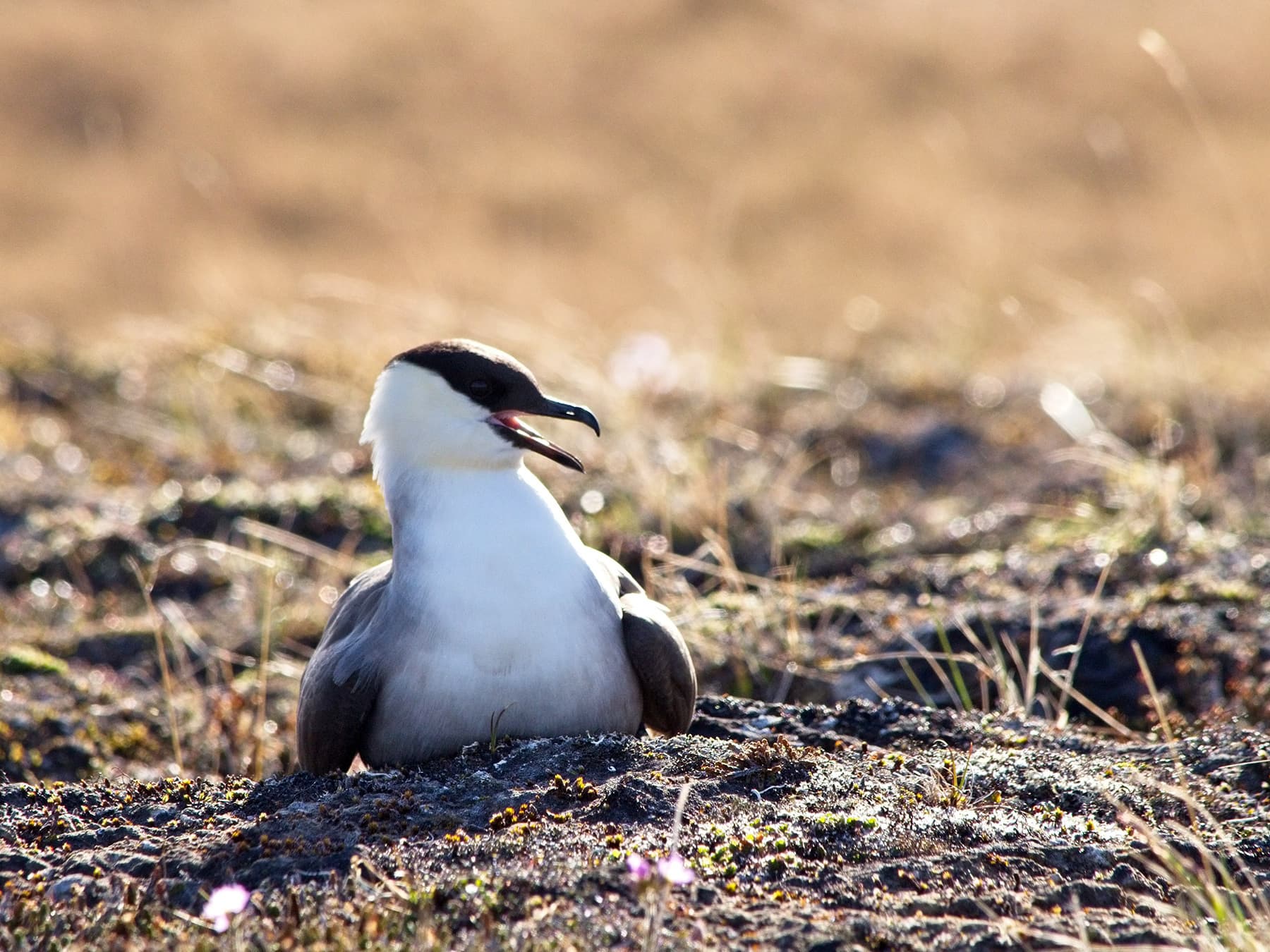
During the breeding season, long-tailed jaegers nest on open Arctic tundra, choosing mountainous landscapes a short distance inland. Dry heathlands with sparse vegetation, including low shrubbery and grassy tussocks offer ideal nesting spots.
In winter, long-tailed jaegers are fully pelagic and do not come into land at all, unless blown off course by particularly intense storms. Observations suggest that they prefer to forage over open water at least 35 km (22 mi) from land.
What is the range of a Long-tailed Jaeger?
Long-tailed jaegers breed across the high Arctic, across the northernmost regions of North America, Europe and Asia. The main populations are concentrated in Alaska, Canada and Russia.
The winter range of long-tailed jaegers stretches across the southernmost regions of the Atlantic and Pacific oceans.
Where do Long-tailed Jaegers live?
Exact population statistics for long-tailed jaegers are hard to obtain, due to their preference for remote Arctic breeding sites and wintering over open ocean waters. The largest populations of long-tailed jaegers are found in Alaska and the High Arctic islands of Canada, where the number of breeding birds is estimated at between 100,000 and 200,000 birds.
Up to 53,000 long-tailed skua pairs breed in Europe, with the majority in European Russia. A further 5,000 pairs breed in the extreme north of Scandinavia.
How rare are Long-tailed Jaegers?
Due to their remote habitats and migratory habits in both breeding and non-breeding seasons, sightings of long-tailed jaegers are fairly rare, despite the relatively large population of the species.
The overall global population of long-tailed jaegers is thought to be between 265,000 and 710,000 birds. This figure is based on the European population estimate of between 39,700 and 106,000 mature individuals, which represents about 15 percent of the global figure.
Where can you see Long-tailed Jaegers in the US?
Alaska is the only US state where long-tailed jaegers breed, and although their colonies are usually on remote Arctic tundra landscapes, the region is the only part of the US where the species ever routinely comes ashore.
In the rest of the US, observations are limited to occasional passage sightings: outside of the breeding season, migration routes rarely pass over land, and journeys to wintering territories in the South Atlantic and South Pacific oceans take place far out at sea.
Where can you see Long-tailed Skuas in the UK?
Sightings of long-tailed skuas are occasionally reported off the coast of the Outer Hebrides off the far north of Scotland during spring migration (May and June) and on their return leg to spend winter in southern ocean waters (August and September).
Migration
Do Long-tailed Jaegers migrate?
Long-tailed jaegers are among the longest-distance migrants of the avian world, breeding in the high Arctic and spending winters in the extreme South Atlantic and South Pacific oceans.
In a period of 12 months, individual birds that were tracked on migrations were recorded to have covered distances of up to 54,200 km (33,700 mi), with breeding grounds and winter territories around 12,800 km (8,000 mi) apart, in a straight line.
Tips for seeing it
- Look for their distinctive long tail streamers during the breeding season
- Observe their graceful flight patterns over open tundra or at sea
- Listen for their harsh, mewing calls during territorial displays
- In North America, watch for them during fall migration along coastal areas
What it eats
What do Long-tailed Jaegers eat?
On breeding grounds in the High Arctic, the collared lemming is by far the most important mammal species eaten by long-tailed jaegers. Other lemmings and voles are among the most common prey further south, across Low Arctic habitats. Young birds and some insects are also eaten.
Less is known about the species’ diet during winter, but long-tailed jaegers eat more fish in the southern hemisphere, and also practice kleptoparasitism, stealing prey off other seabirds. At sea, carrion, offal, and waste from ships may also be eaten.
What do Long-tailed Jaeger chicks eat?
Lemmings and root voles are torn up and fed to young long-tailed jaeger chicks until they are capable of catching their own prey and swallowing it whole. Insects, particularly midges and moth larvae, are also among the main foods eaten by young long-tailed jaegers in their first few days.
Nesting and breeding
Where do Long-tailed Jaegers nest?
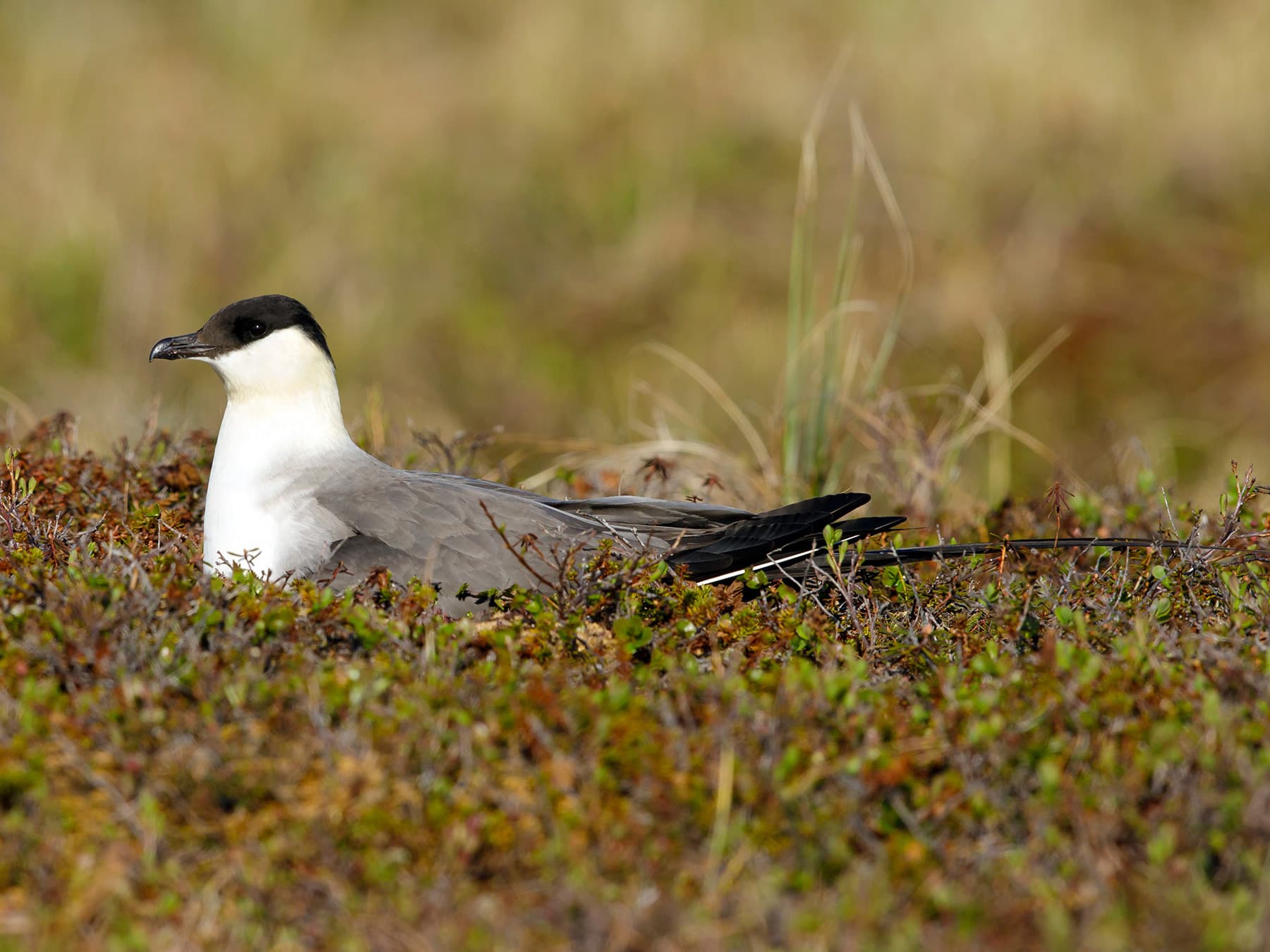
Nest depressions are formed directly on the ground in tundra landscapes, and no additional material is added as a lining, which is believed to lower the risk of predation. Sloping landscapes, with some low-lying vegetation, e.g. tussocks and grassy clumps, are preferred, offering a good all-round view of the immediate environment.
When do Long-tailed Jaegers nest?
Long-tailed jaegers have a particularly short nesting season, due to their lengthy migrations and inhospitable breeding grounds high in the Arctic Circle.
Arrivals on the Arctic tundra begin from late May onwards, with eggs laid in mid-June to mid-July in some locations. Incubation, shared between the sexes with the female taking a slightly larger portion, lasts for between 23 and 25 days.
What do Long-tailed Jaeger eggs look like?
Eggs laid by long-tailed jaegers are olive-gray to pale greenish-blue in color and may be marked with some dark brown spots and swirls. A typical clutch contains just two eggs, which measure 48 mm by 34 mm (1.9 in by 1.3 in), and pairs raise a single brood each year.
Do Long-tailed Jaegers mate for life?
From observations of long-tailed jaegers on breeding grounds, it seems likely that successful pairs reunite at the start of the breeding season and raise young together year after year. Whether they remain together during winter migration is unclear, and birds arrive on breeding grounds individually, but there are many records of previous pairs reforming for a second, third, and even fourth breeding season together.
Behaviour
Are Long-tailed Jaegers aggressive?
Long-tailed jaegers’ aggressive displays are limited to territorial flight displays and posturing at the start of the breeding season when nesting territories are being claimed. Intruders are usually chased away if they approach a nest site too closely both on land and from the air.
When predators do not retreat, physical aerial attacks may follow and have been witnessed on foxes, reindeer, humans, wolves and brown bears.
Lifespan and predators
How long do Long-tailed Jaegers live?
The average lifespan of a long-tailed jaeger is around 9 years. Breeding occurs for the first time at three years of age. Ringing data shows the oldest recorded long-tailed jaeger reached 17 years and 11 months.
What are the predators of Long-tailed Jaegers?
Predators of long-tailed jaeger nestlings include Arctic foxes, gyrfalcons and peregrine falcons. Nests are fiercely defended against potential predators, including Arctic foxes and gray wolves, as well as short-eared owls and common ravens.
Are Long-tailed Jaegers protected?
As wild birds, long-tailed jaegers are protected under the Migratory Birds Convention Act of 1994 in Canada, the Migratory Bird Treaty Act of 1918 in the United States, and the Wildlife and Countryside Act, 1981 in the United Kingdom.
Are Long-tailed Jaegers endangered?
Across their global range, long-tailed jaegers are not endangered and are considered a species of least concern. The population is considered stable and no immediate threats to their long-term survival have been identified.

Conservation
While currently listed as Least Concern, Long-tailed Jaegers face potential threats from climate change affecting their Arctic breeding grounds. Oil spills and marine pollution in their wintering areas also pose risks. Ongoing monitoring is crucial to assess long-term population trends.
More photos
3 photos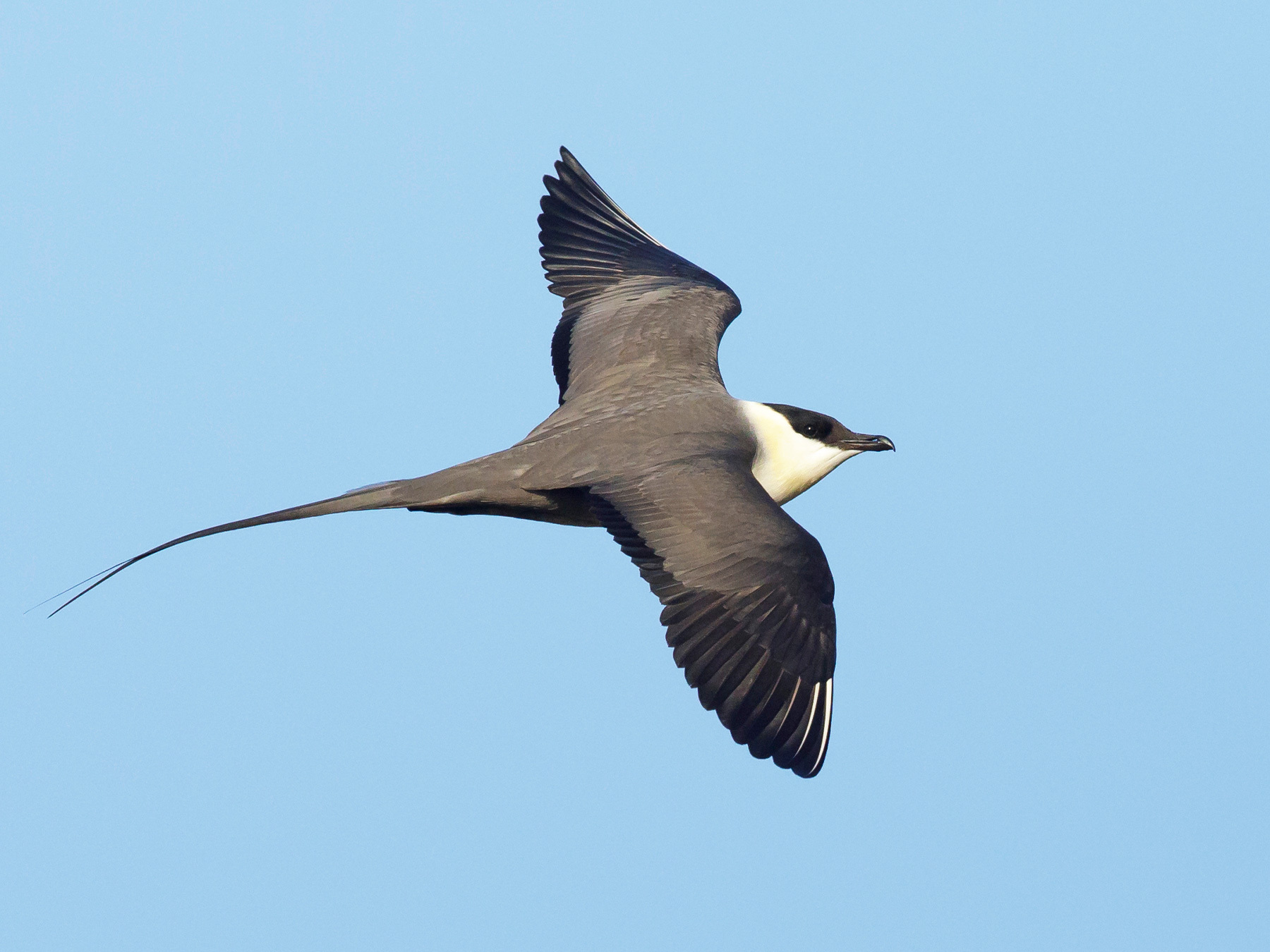
Quick facts
- Length
- 48–58 cm
- Wingspan
- 105–117 cm
- Weight
- 230–350 g
- Lifespan
- 15–20 years
- Family
- Skuas & Jaegers
- Migration
- Long-distance Migrant
- Global status (IUCN)
- Least Concern
- World population
- 250,000 - 750,000 mature individuals
- Population trend
- Stable
- Also called
- Long-tailed Skua
- Scientific name
- Stercorarius longicaudus
Sources
3- 1BirdLife International. 2018. Stercorarius longicaudus. The IUCN Red List of Threatened Species 2018: e.T22694251A132536719. Source (opens in a new tab)
- 2BirdLife International. 2018. Stercorarius longicaudus. The IUCN Red List of Threatened Species 2018: e.T22694251A132536719. Source (opens in a new tab)
- 3BirdLife International. 2018. Stercorarius longicaudus. The IUCN Red List of Threatened Species 2018: e.T22694251A132536719. Source (opens in a new tab)

Checked by
Nathan Cope, founder and editor
Nathan founded Birdfact and leads its writers and contributors in the UK, the US and Canada. He has watched and studied birds for more than ten years, and checks every article and species guide before it’s published.