
Long-tailed Finch
Blackheart Finch, Shaft-tail Finch · Poephila acuticauda
By the Birdfact teamChecked by Nathan Cope
On this page11 sections
How to recognise it
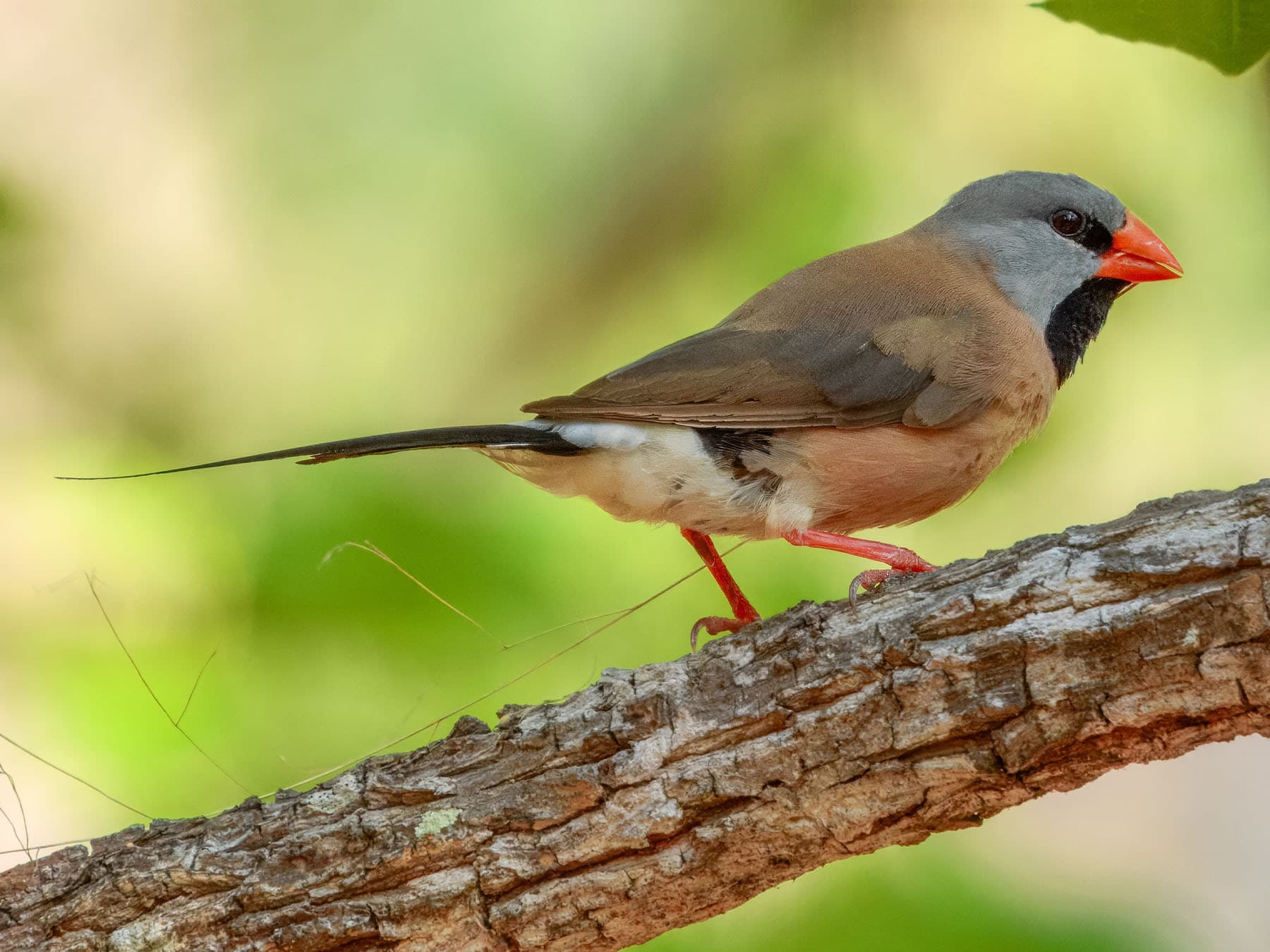
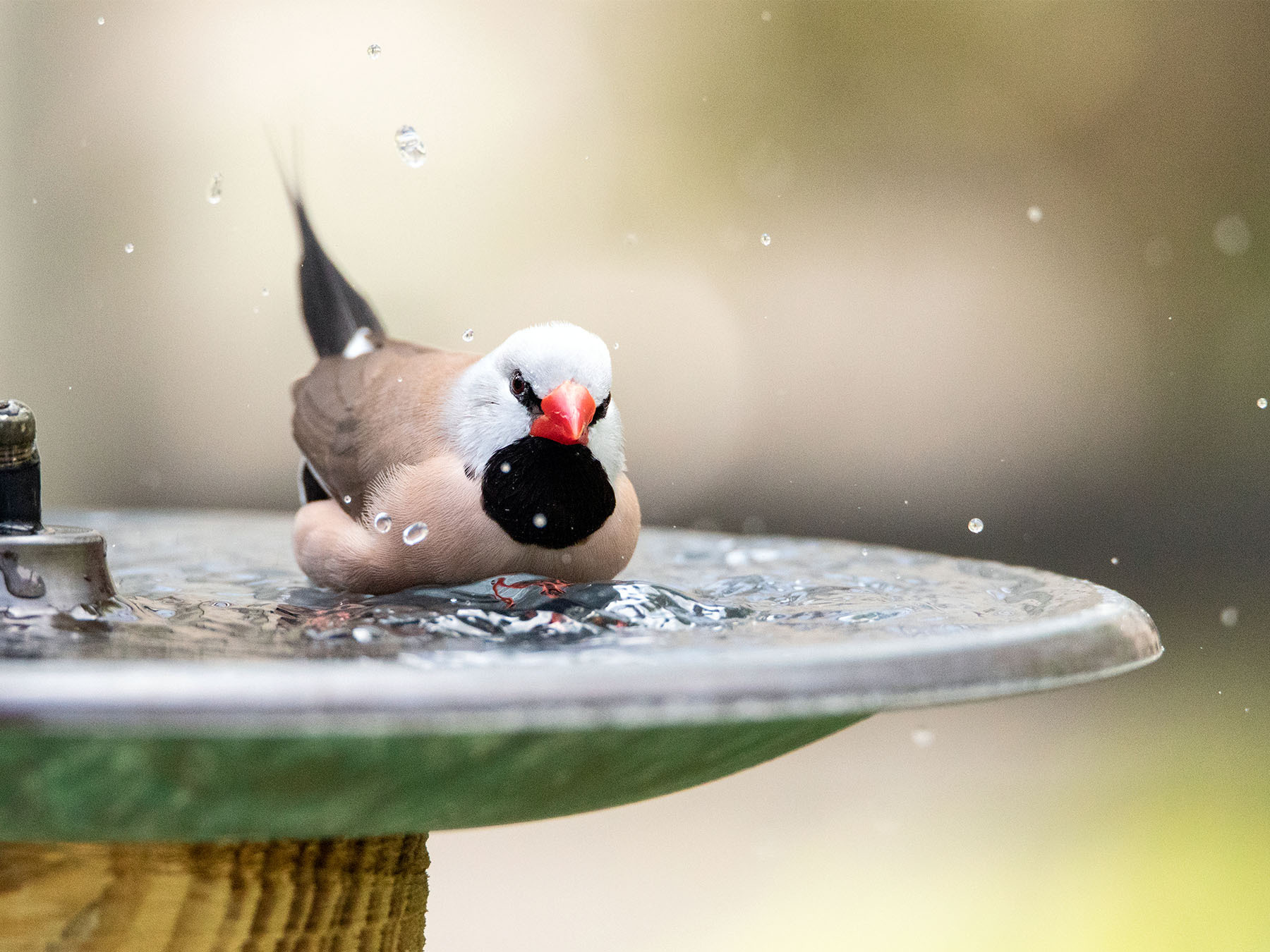
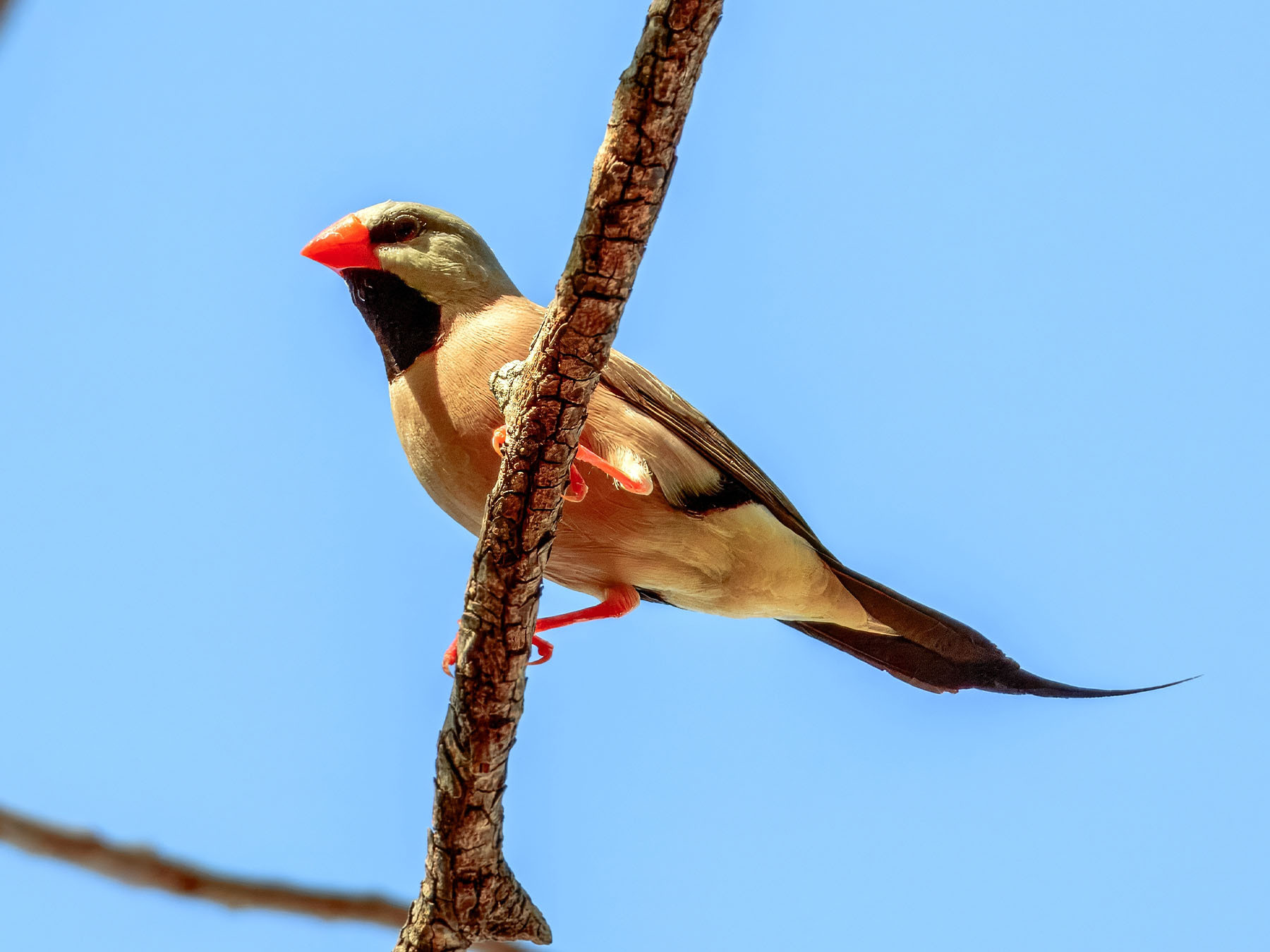
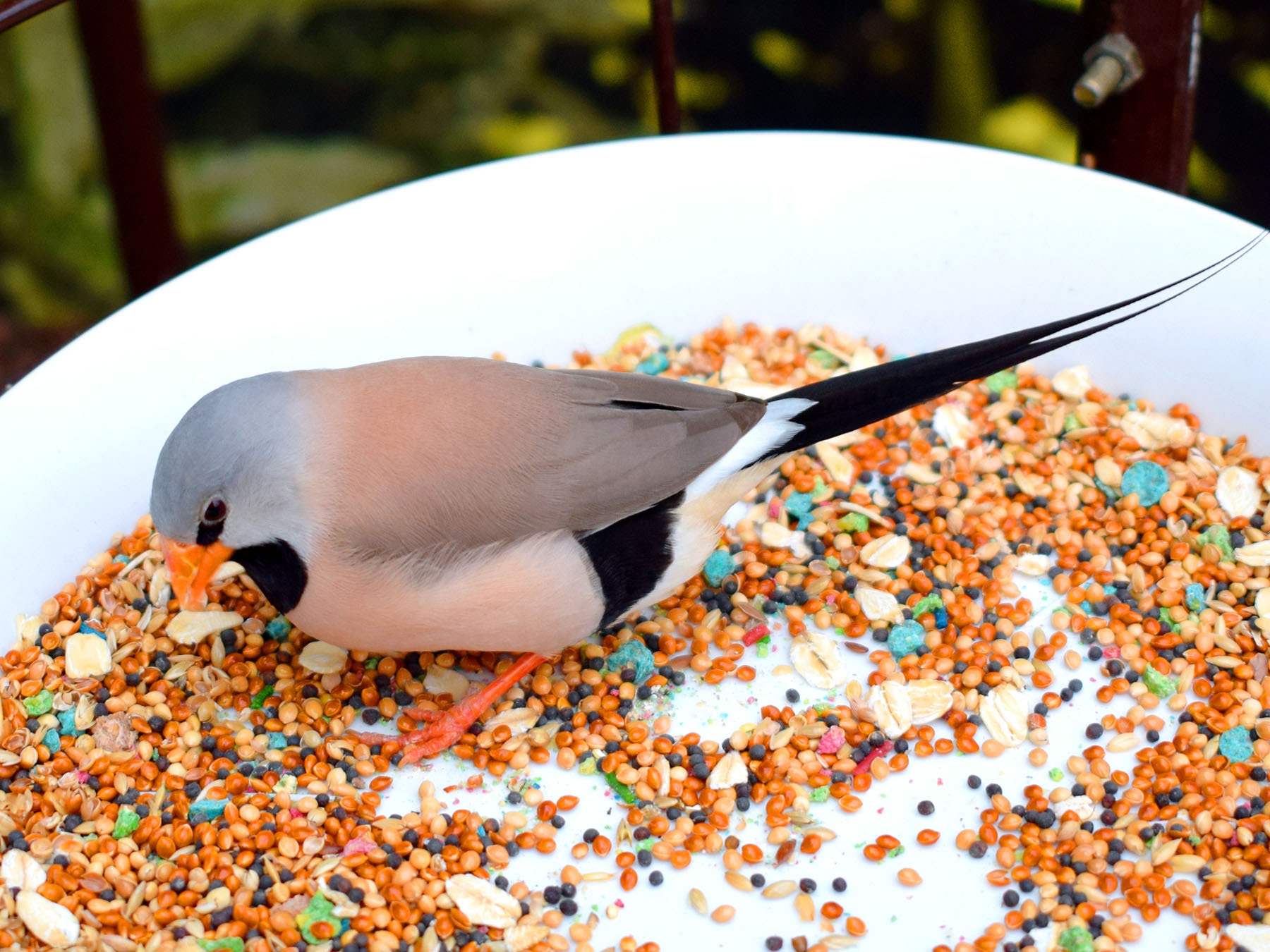
The Long-tailed Finch is a small, elegant bird with a distinctive long, pointed tail. Its body is predominantly pale pinkish grey-brown, with a white rump and underparts. The face features a striking black 'bib' extending from the beak to the chest.
Both sexes look mostly similar, with either a yellow or orange beak, orange legs, and a black tail. Females may sometimes be duller overall with smaller bibs, and have shorter wings and tails.
Juveniles have duller plumage and lack the black bib, which develops as they mature. The varying bill colour distinguishes the subspecies, with the western group having yellow beaks and the eastern having red.
Its size
Adults- Length
- 15–17 cm
- Wingspan
- 18–20 cm
- Weight
- 12–17 g
Its song and calls
The Long-tailed Finch has a variety of soft, musical calls. Their most common vocalisation is a gentle, trilling 'seeee-seeee' or 'tswee-tswee'.
During courtship, males produce a more elaborate song, a series of rapid, high-pitched notes often accompanied by a bouncing dance.
When and where to see it
The Long-tailed Finch is not recorded regularly in the UK, Ireland, the United States or Canada.
Worldwide: recorded regularly in 1 country
Countries where it was recorded in at least 3 of the 6 years 2019–2024. Linked countries have their own bird list.
Oceania (1)
Data: EOD – eBird Observation Dataset (Cornell Lab of Ornithology), accessed via GBIF.org, CC BY 4.0. Records from 2019–2024, aggregated and filtered by Birdfact. How these lists are made
Tips for seeing it
- Look for them near water sources in grasslands and savannahs
- Listen for their soft, trilling calls to locate flocks
- Observe their distinctive long tails and bouncing flight pattern
- In Australia, visit northern regions like the Kimberley or Top End for the best chances of spotting them
What it eats
Long-tailed Finches primarily feed on grass seeds, particularly from sorghum and spinifex grasses.
They forage on the ground or directly from seed heads, occasionally supplementing their diet with small insects, especially during the breeding season when protein demands are higher.
Nesting and breeding
Breeding occurs primarily during the wet season, from December to March. Long-tailed Finches form monogamous pairs and often nest in loose colonies. They construct large, dome-shaped nests using grass stems and seed heads.
Nests are typically built in low shrubs or trees, 1-3 meters above the ground. The female lays 4-6 white eggs, which both parents incubate for about 13-14 days.
Both parents feed nestlings and fledge after approximately 21 days. Young birds may remain with their parents for several weeks after leaving the nest.
Behaviour
Long-tailed Finches are highly social, often seen in small flocks of 10-20 birds. They have a distinctive bouncing flight pattern, alternating between rapid wing beats and brief glides.
When foraging, they hop along the ground, picking seeds with quick, precise movements.
Conservation
While currently listed as Least Concern, Long-tailed Finches face localised threats from habitat loss due to overgrazing and changes in fire regimes.
Conservation efforts focus on maintaining suitable grassland habitats and controlling invasive plant species that may impact their food sources.
More photos
4 photos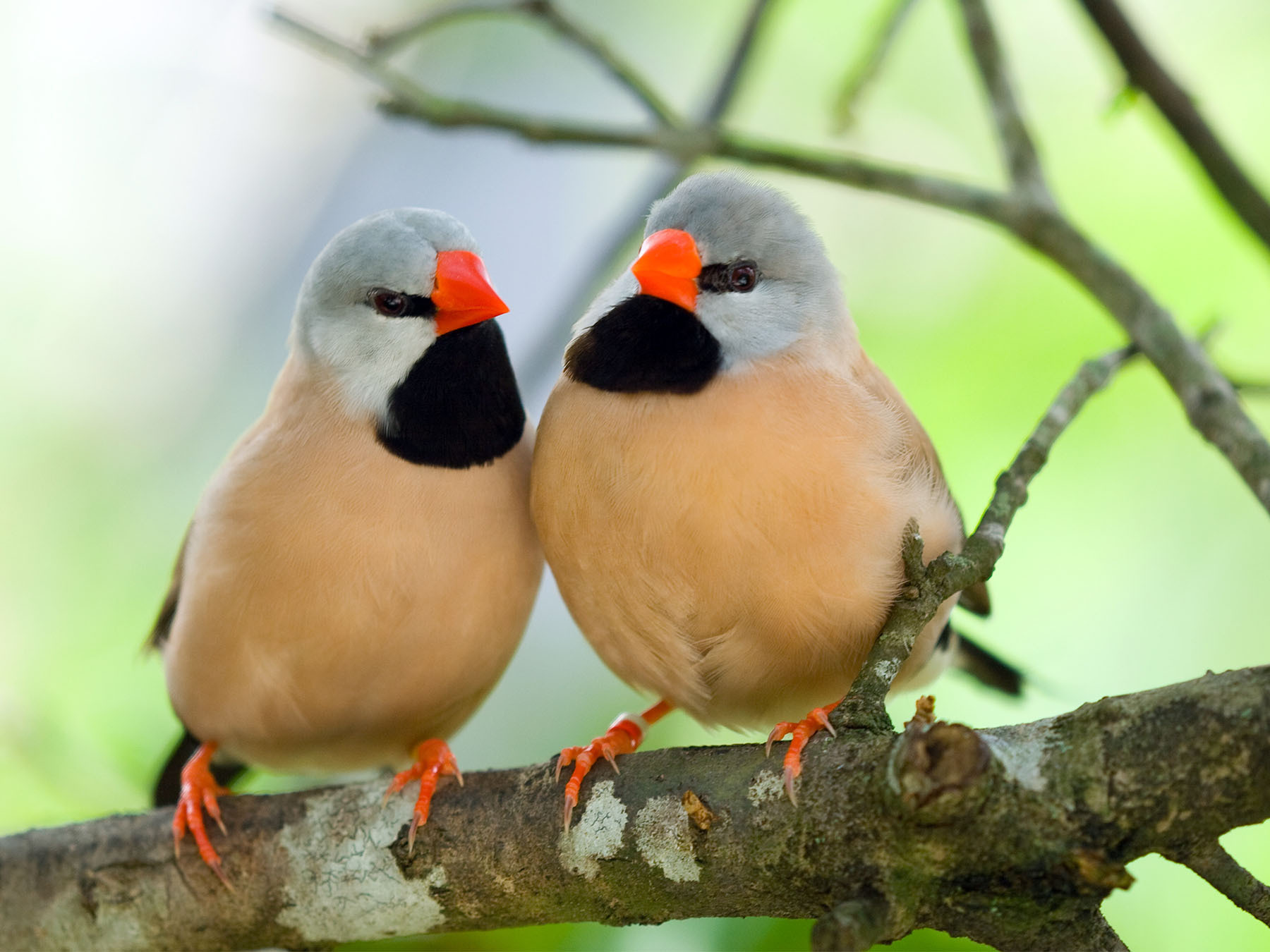
Quick facts
- Length
- 15–17 cm
- Wingspan
- 18–20 cm
- Weight
- 12–17 g
- Lifespan
- 5–8 years
- Family
- Waxbills & Finches
- Migration
- Resident
- Global status (IUCN)
- Least Concern
- World population
- Not quantified, but common
- Population trend
- Stable
- Also called
- Blackheart Finch, Shaft-tail Finch
- Scientific name
- Poephila acuticauda
Sources
3- 1BirdLife International. 2024. Poephila acuticauda. The IUCN Red List of Threatened Species 2024: e.T22719688A253992559. Source (opens in a new tab)
- 2BirdLife International. 2024. Poephila acuticauda. The IUCN Red List of Threatened Species 2024: e.T22719688A253992559. Source (opens in a new tab)
- 3Clement (1999)

Checked by
Nathan Cope, founder and editor
Nathan founded Birdfact and leads its writers and contributors in the UK, the US and Canada. He has watched and studied birds for more than ten years, and checks every article and species guide before it’s published.