


Little Weaver
Ploceus luteolus
By the Birdfact teamChecked by Nathan Cope
On this page11 sections
How to recognise it
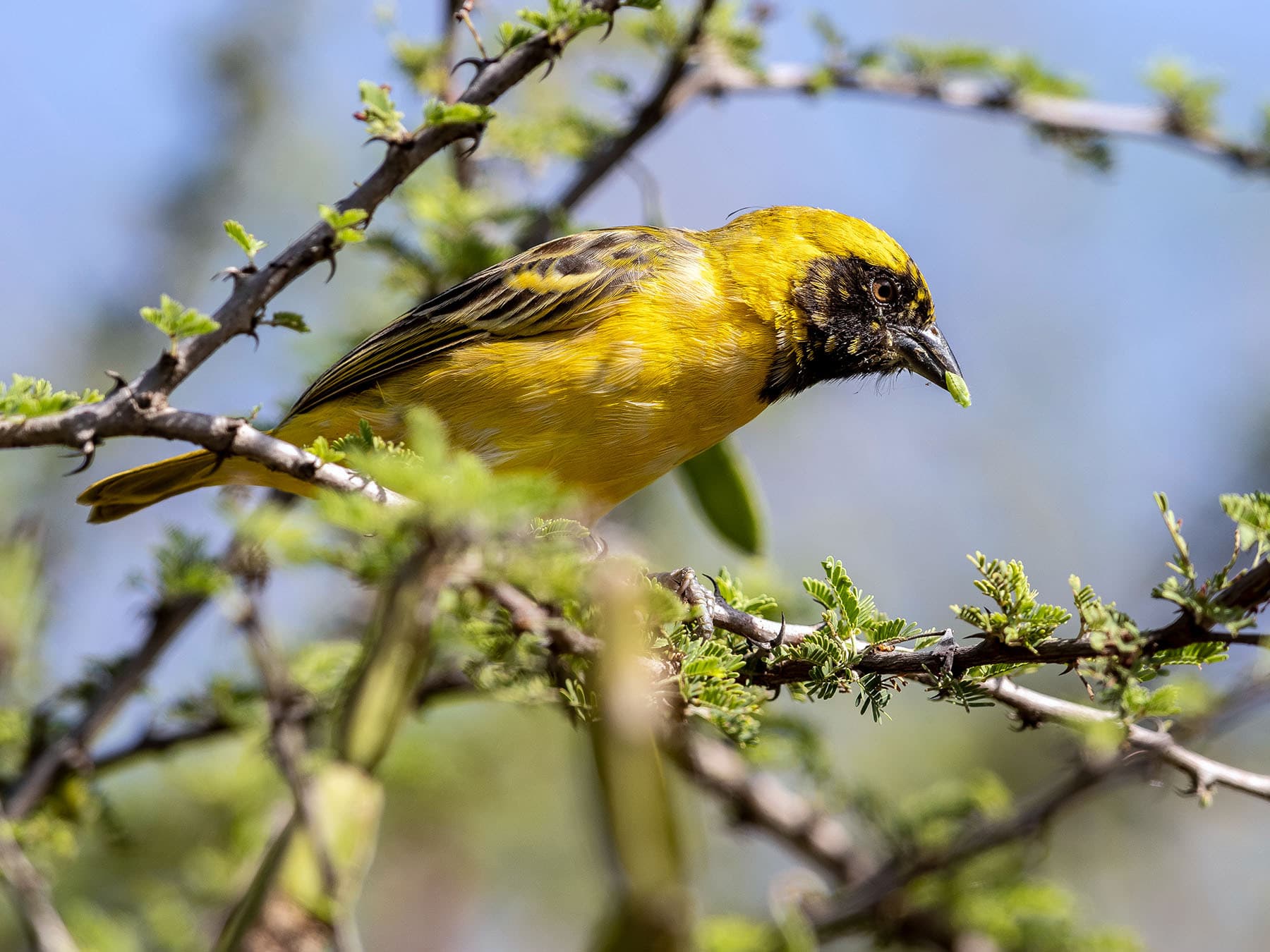
The Little Weaver is a small, vibrant bird. Breeding males have bright yellow plumage with a distinctive black face mask that covers the forehead, cheeks, and extends down to the throat. Their back and wings are olive-brown with yellow edges.
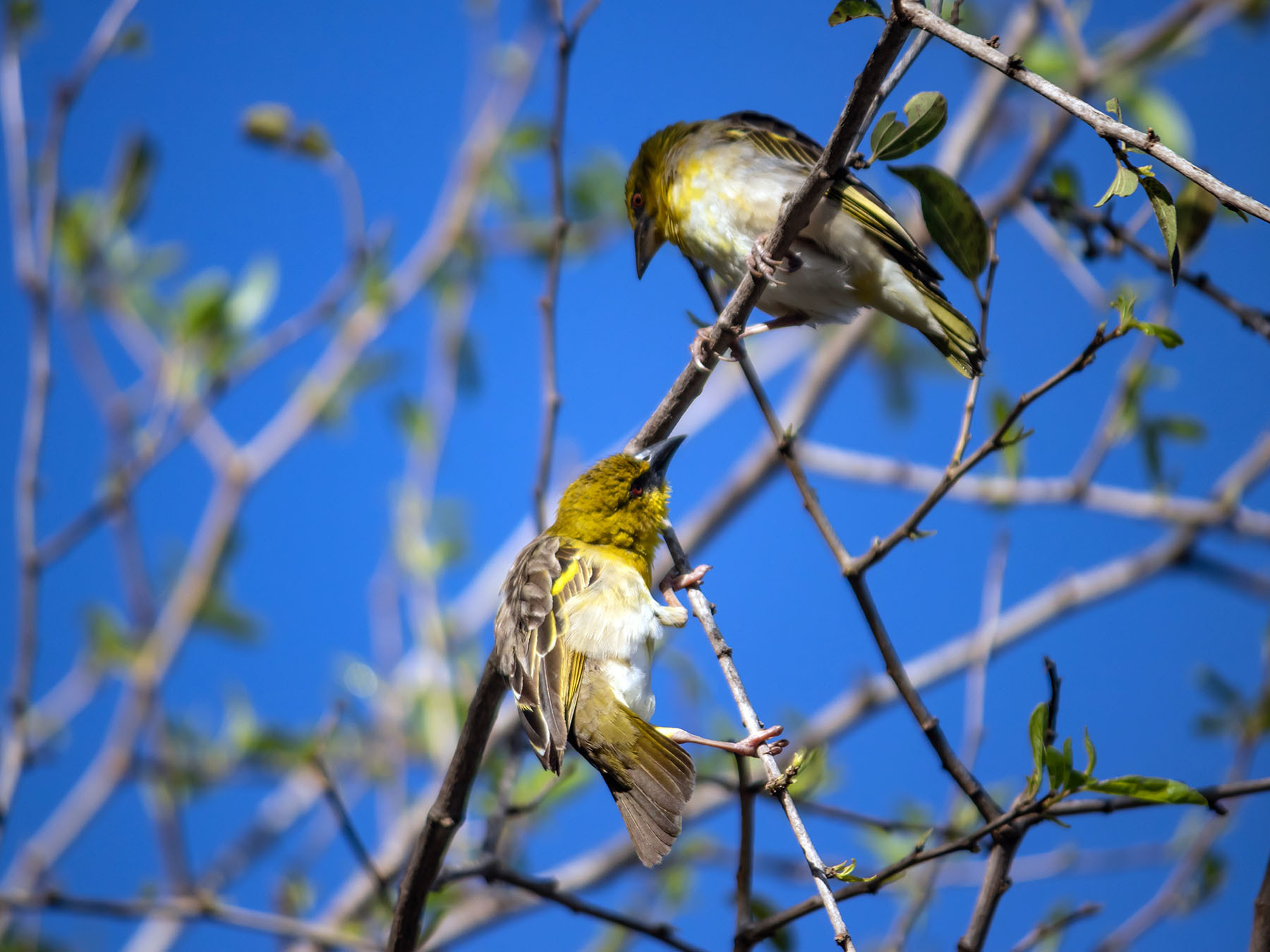
Females and non-breeding males are duller, with yellowish-green upperparts streaked with darker colours, and paler yellow to whitish underparts. Juveniles are similar but more grey-brown in colour.
Its size
Adults- Length
- 11–12 cm
- Wingspan
- 18–20 cm
- Weight
- 13–19 g
Its song and calls
The Little Weaver has a variety of vocalisations, including a rapid, chattering 'chit-chit-chit' call often heard in flocks.
During courtship, males produce a more melodious warbling song, sometimes accompanied by wing-fluttering displays. Their calls can be described as a mix of chirps and buzzes.
When and where to see it
The Little Weaver is not recorded regularly in the UK, Ireland, the United States or Canada.
Worldwide: recorded regularly in 13 countries
Countries where it was recorded in at least 3 of the 6 years 2019–2024. Linked countries have their own bird list.
Data: EOD – eBird Observation Dataset (Cornell Lab of Ornithology), accessed via GBIF.org, CC BY 4.0. Records from 2019–2024, aggregated and filtered by Birdfact. How these lists are made
Tips for seeing it
- Look for their distinctive yellow plumage in open woodlands and savannahs
- Listen for their chattering calls, especially near nesting sites
- Observe their intricate nest-weaving behaviour during the breeding season
- Check acacia trees, where they often build their nests
What it eats
Little Weavers primarily feed on seeds, particularly those of grasses and cereals. They supplement their diet with insects, especially during the breeding season when protein-rich food is crucial for nestling development. They often forage on the ground or in low vegetation.
Nesting and breeding
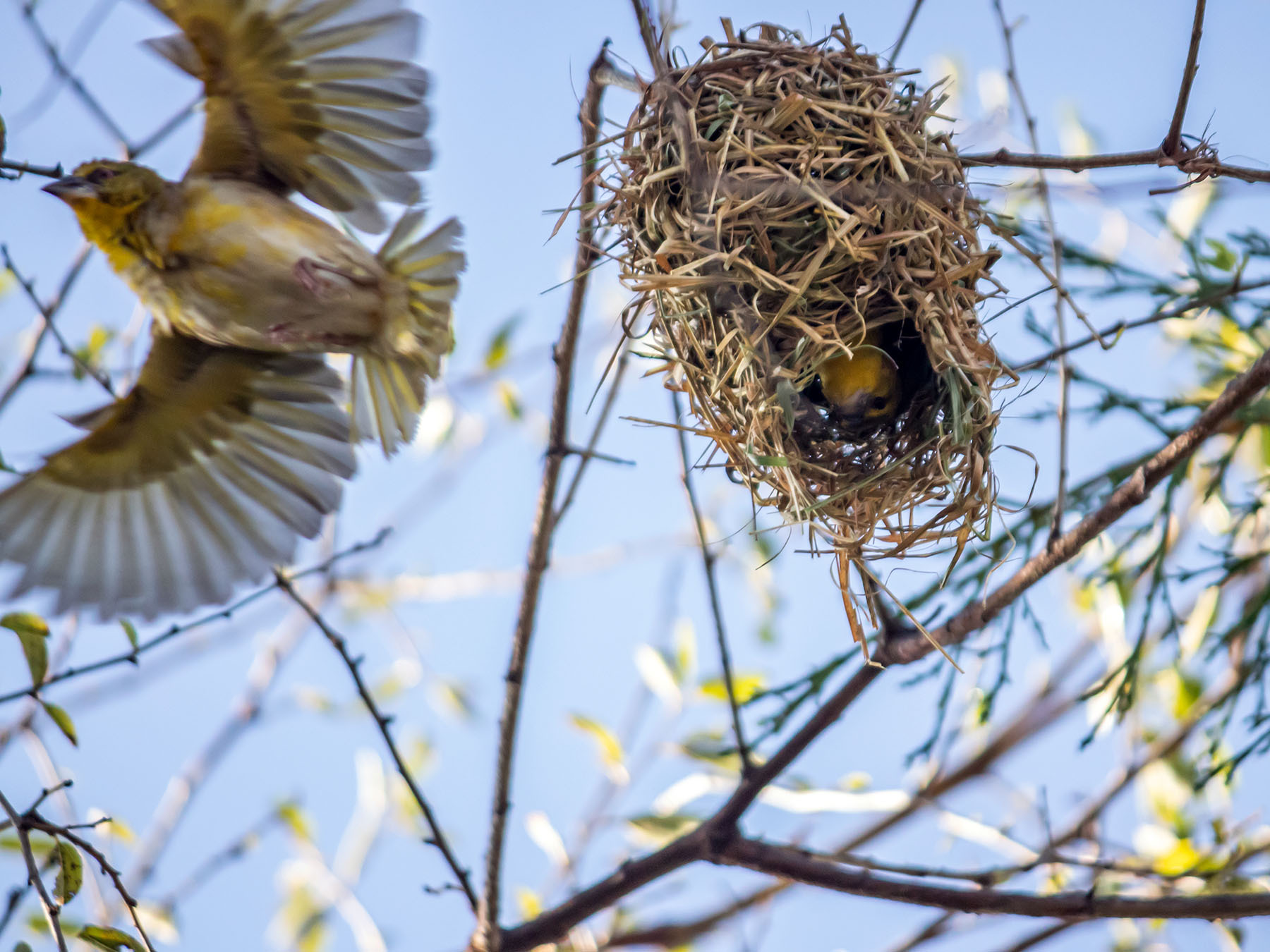
Breeding occurs during the rainy season, typically from July to September. Males construct intricate, oval-shaped nests by weaving grass and palm fronds, often in acacia trees.
Females lay 2-3 pale blue or greenish eggs with brown speckles. The nest has a downward-facing entrance, providing protection from predators.
Incubation lasts about 12-14 days, primarily done by the female. Both parents feed the nestlings, which fledge after approximately 14-16 days.
Behaviour
Little Weavers are highly social birds, often seen in small flocks outside the breeding season. They are agile climbers, moving swiftly through vegetation while foraging.
During breeding, males become territorial and engage in elaborate nest-building displays to attract females.
Conservation
The Little Weaver is currently listed as Least Concern by the IUCN. Its wide distribution and adaptability to various habitats contribute to its stable population.
However, local threats include habitat loss due to agricultural expansion and pesticide use in some areas.
More photos
3 photos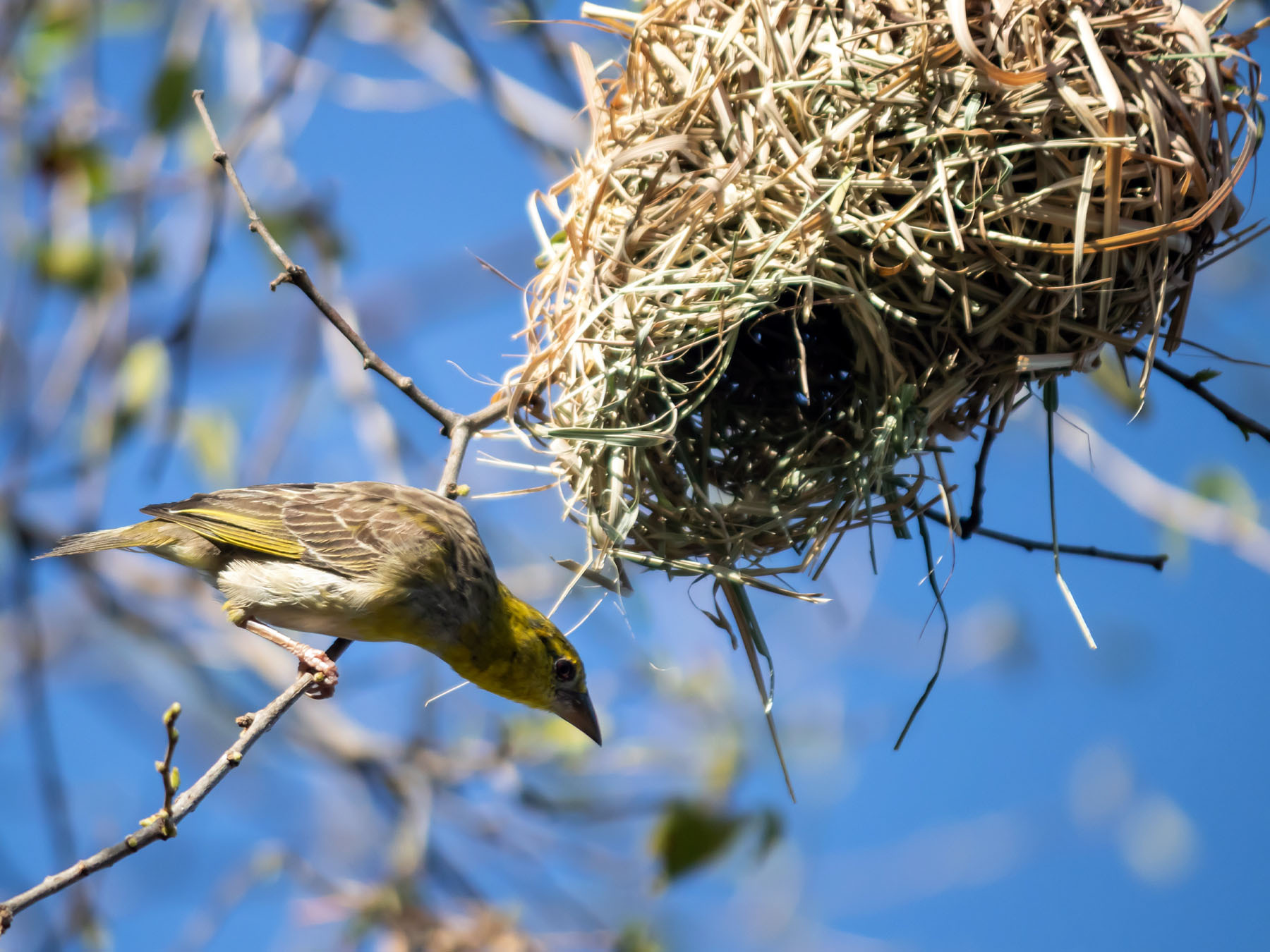
Quick facts
- Length
- 11–12 cm
- Wingspan
- 18–20 cm
- Weight
- 13–19 g
- Lifespan
- 5–8 years
- Family
- Weavers
- Migration
- Resident
- Global status (IUCN)
- Least Concern
- World population
- Unknown
- Population trend
- Stable
- Scientific name
- Ploceus luteolus
Sources
2- 1BirdLife International. 2018. Ploceus luteolus. The IUCN Red List of Threatened Species 2018: e.T22718779A132120496. Source (opens in a new tab)
- 2BirdLife International. 2018. Ploceus luteolus. The IUCN Red List of Threatened Species 2018: e.T22718779A132120496. Source (opens in a new tab)

Checked by
Nathan Cope, founder and editor
Nathan founded Birdfact and leads its writers and contributors in the UK, the US and Canada. He has watched and studied birds for more than ten years, and checks every article and species guide before it’s published.