


Little Bittern
Common Little Bittern · Ixobrychus minutus
By the Birdfact teamChecked by Nathan Cope
On this page13 sections
How to recognise it
What do Little Bitterns look like?
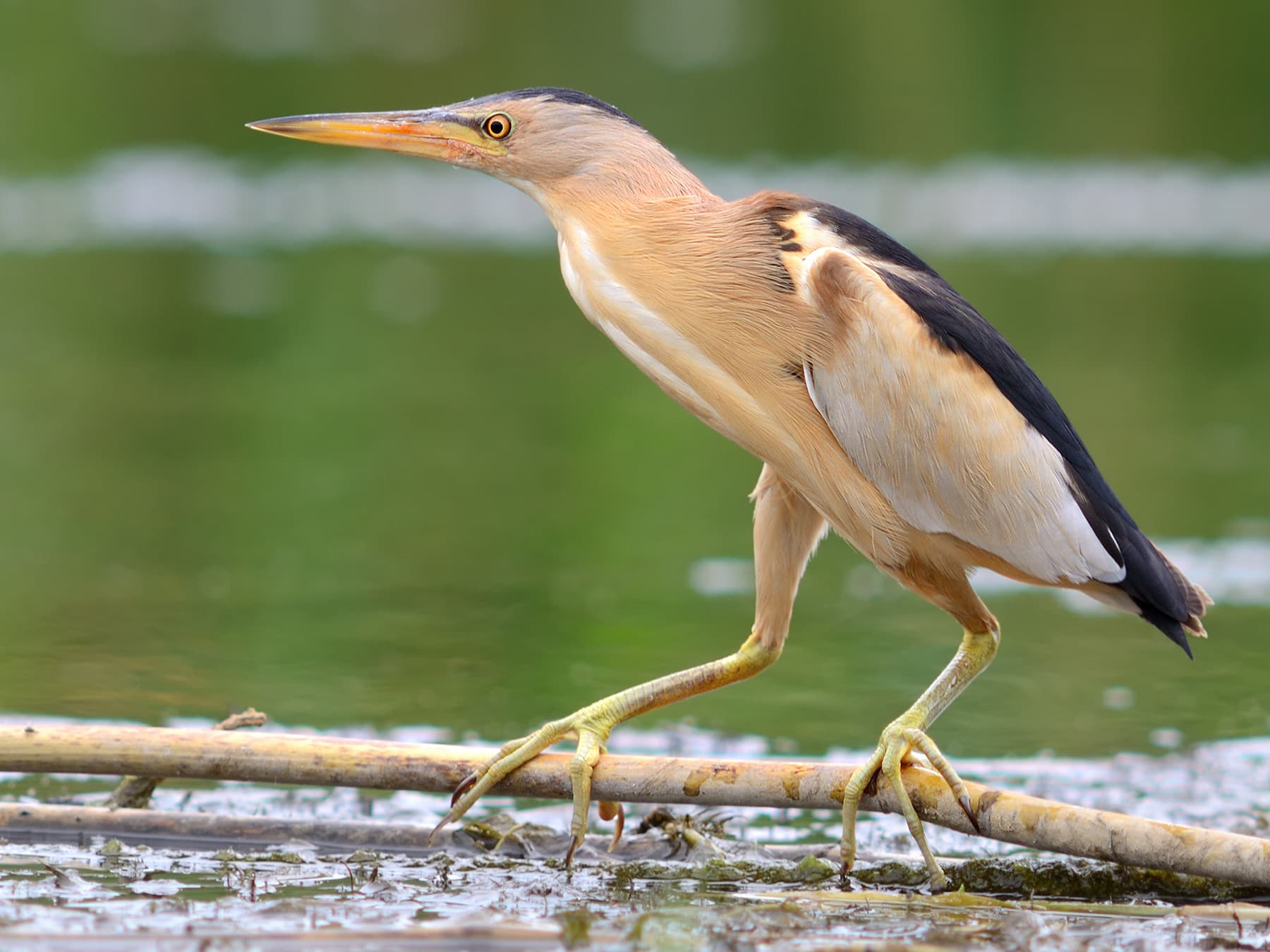
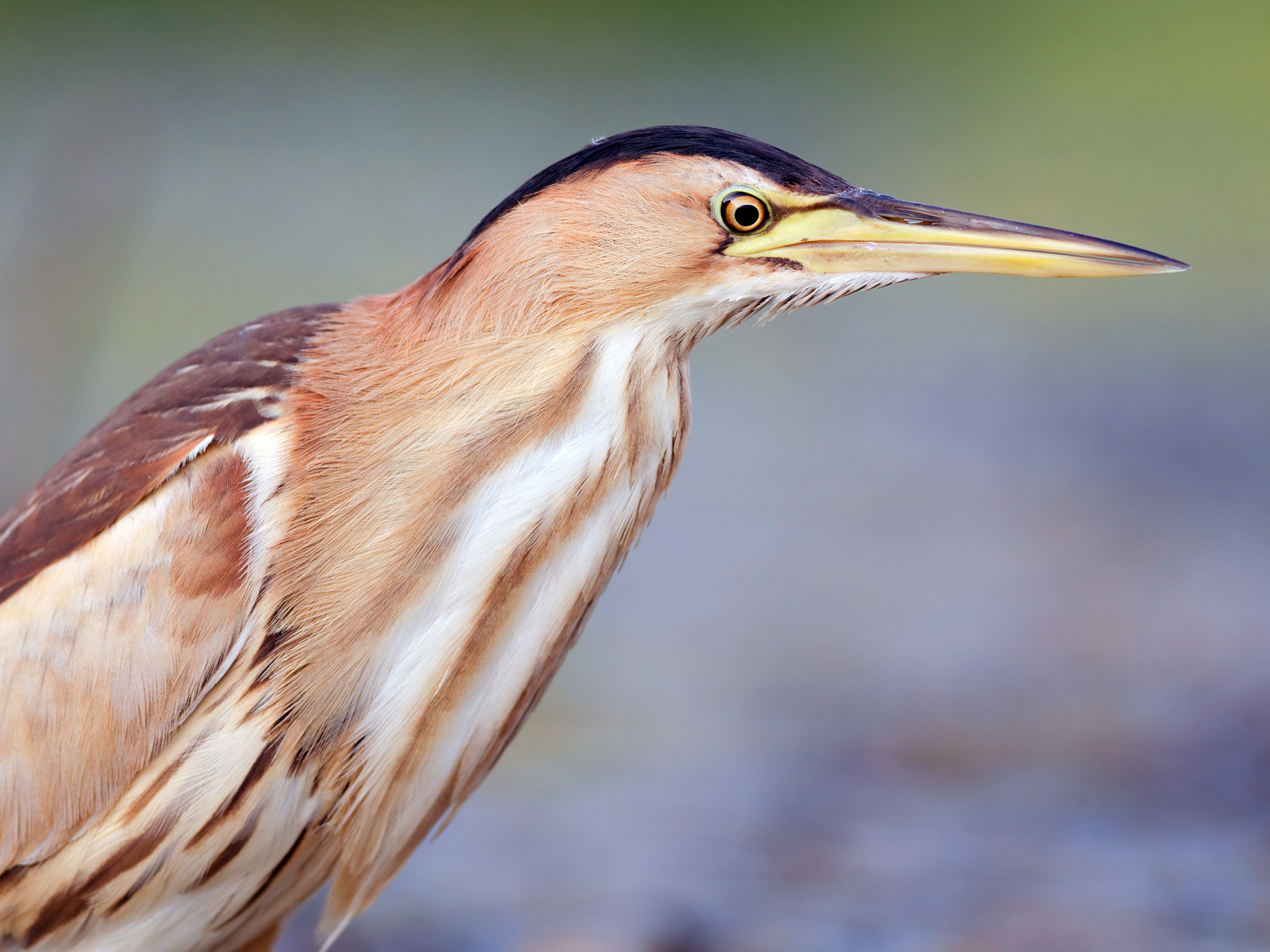
Little bitterns are tiny in size and have distinctive thick necks and long, sharp bills.
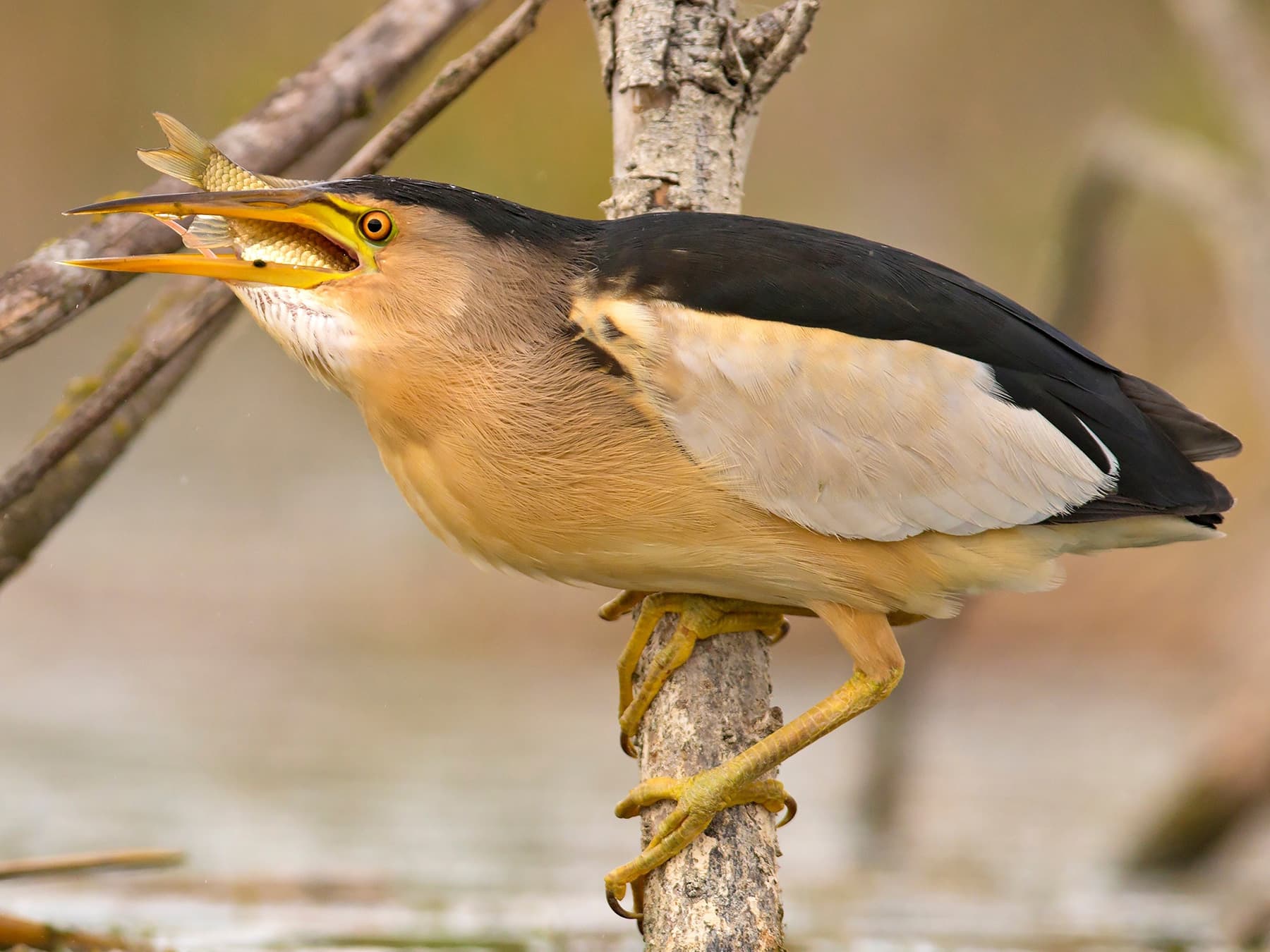
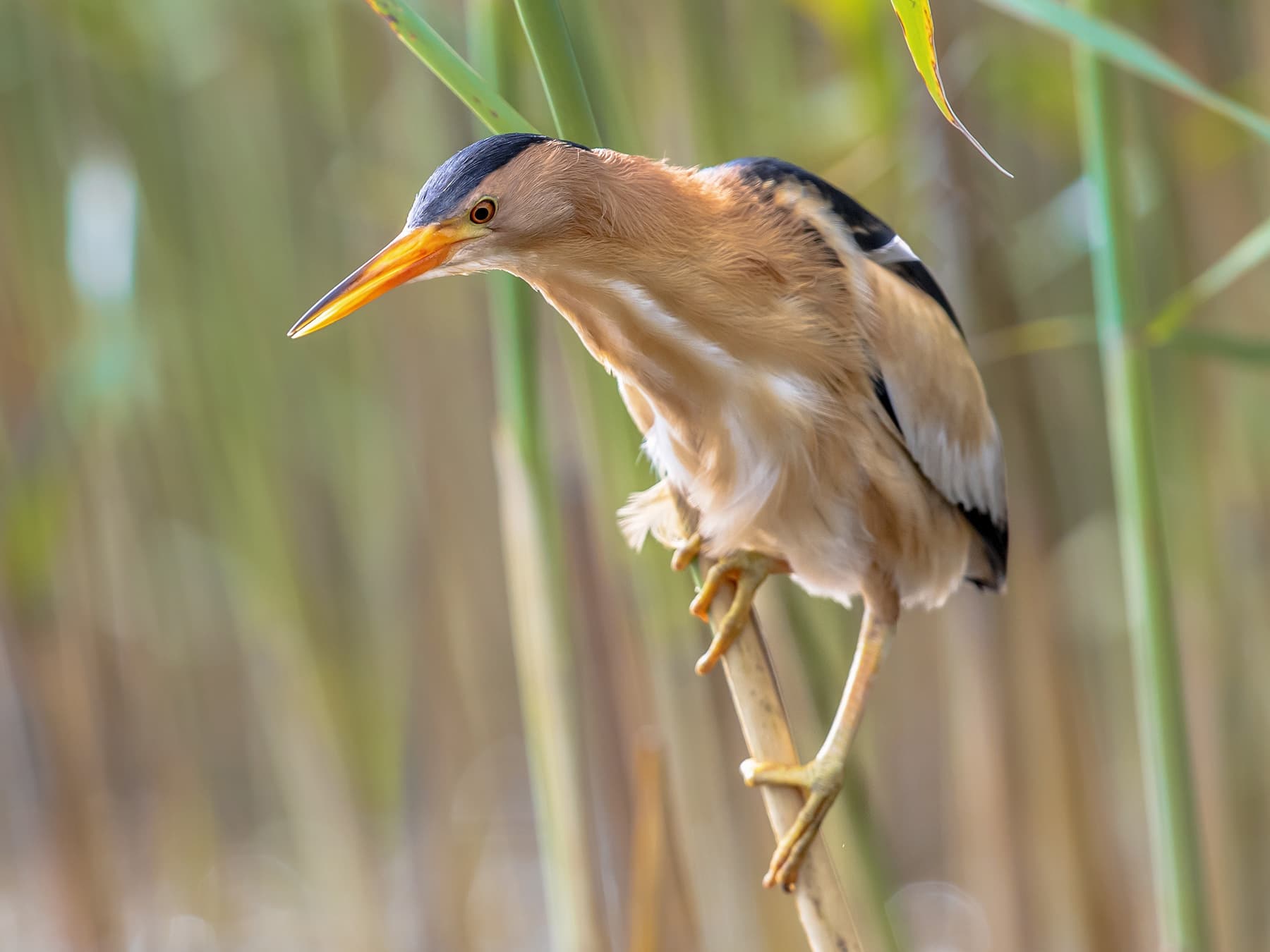
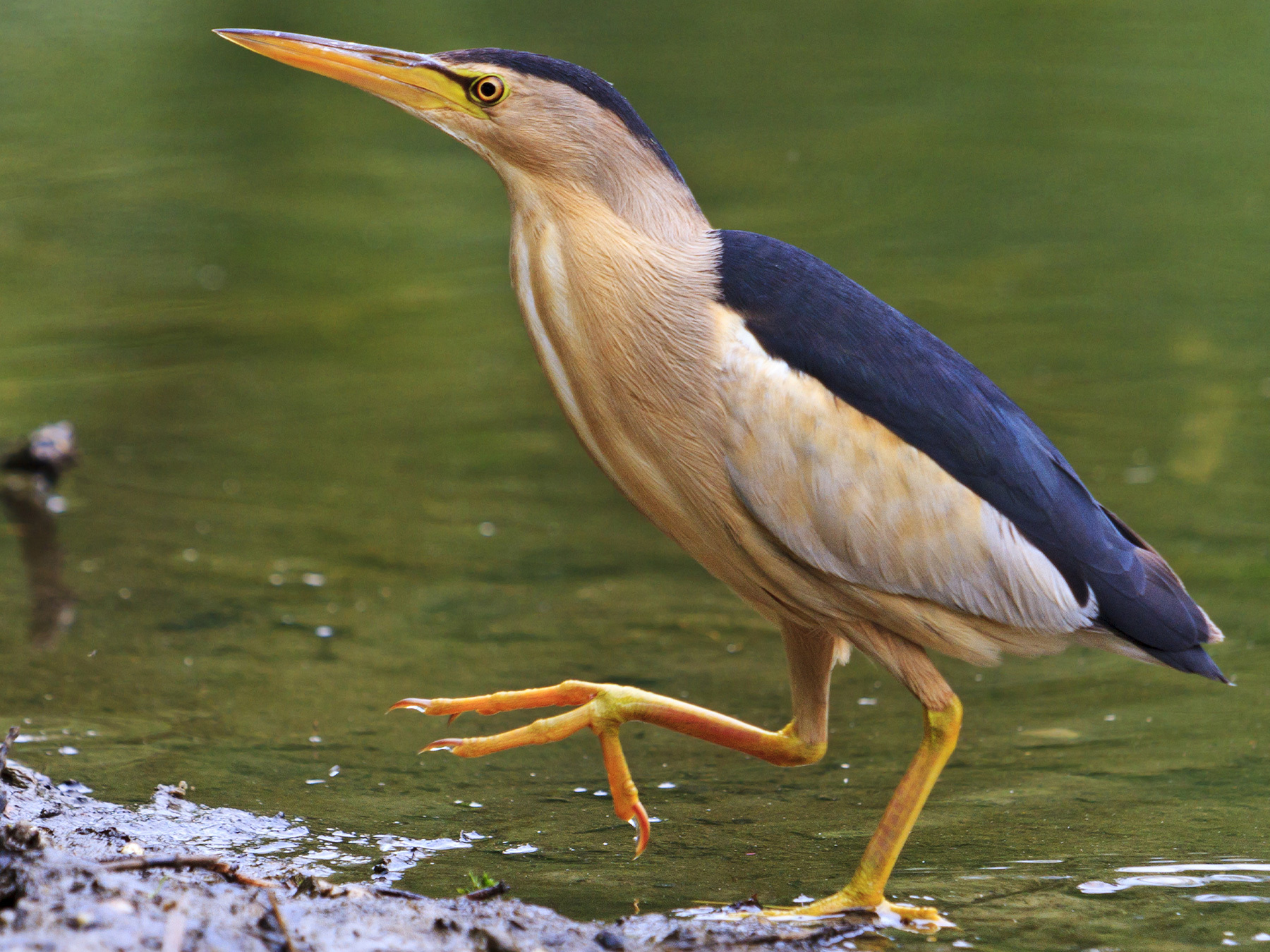
Males and females are unalike, with males having a striking black crown, nape, shoulders, upper wings, back and tail, which has a clear greenish-iridescent tinge. The throat and breast are buff-pink, and heavily patterned with light streaking. Their forewings have a distinctive and large pinkish oval-shaped patch, while their underwings are off-white.
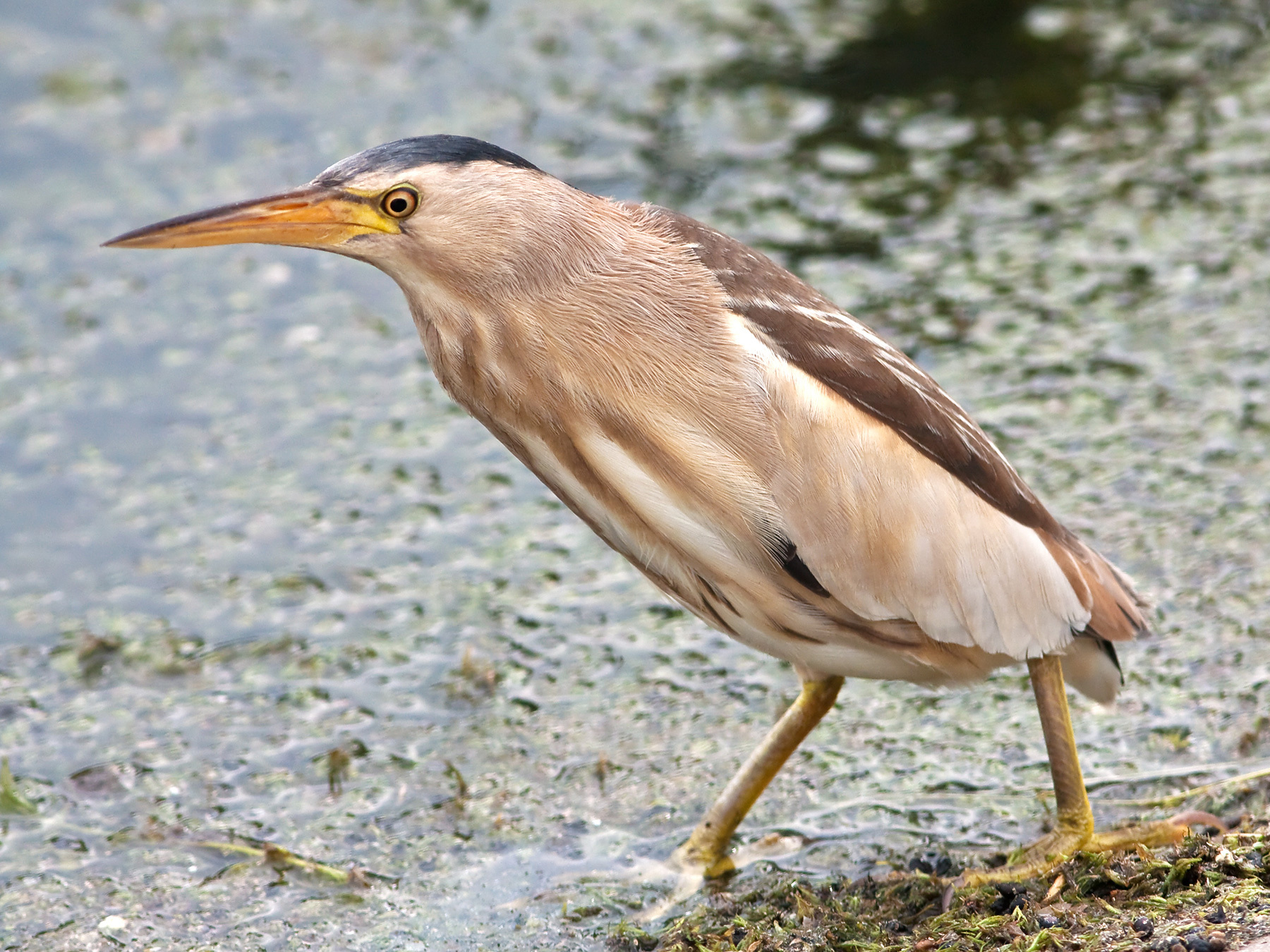
Adult birds have yellow or green legs that are more yellow on the rear. Their eyes are yellow and their bill can be either yellow or yellowish-green.
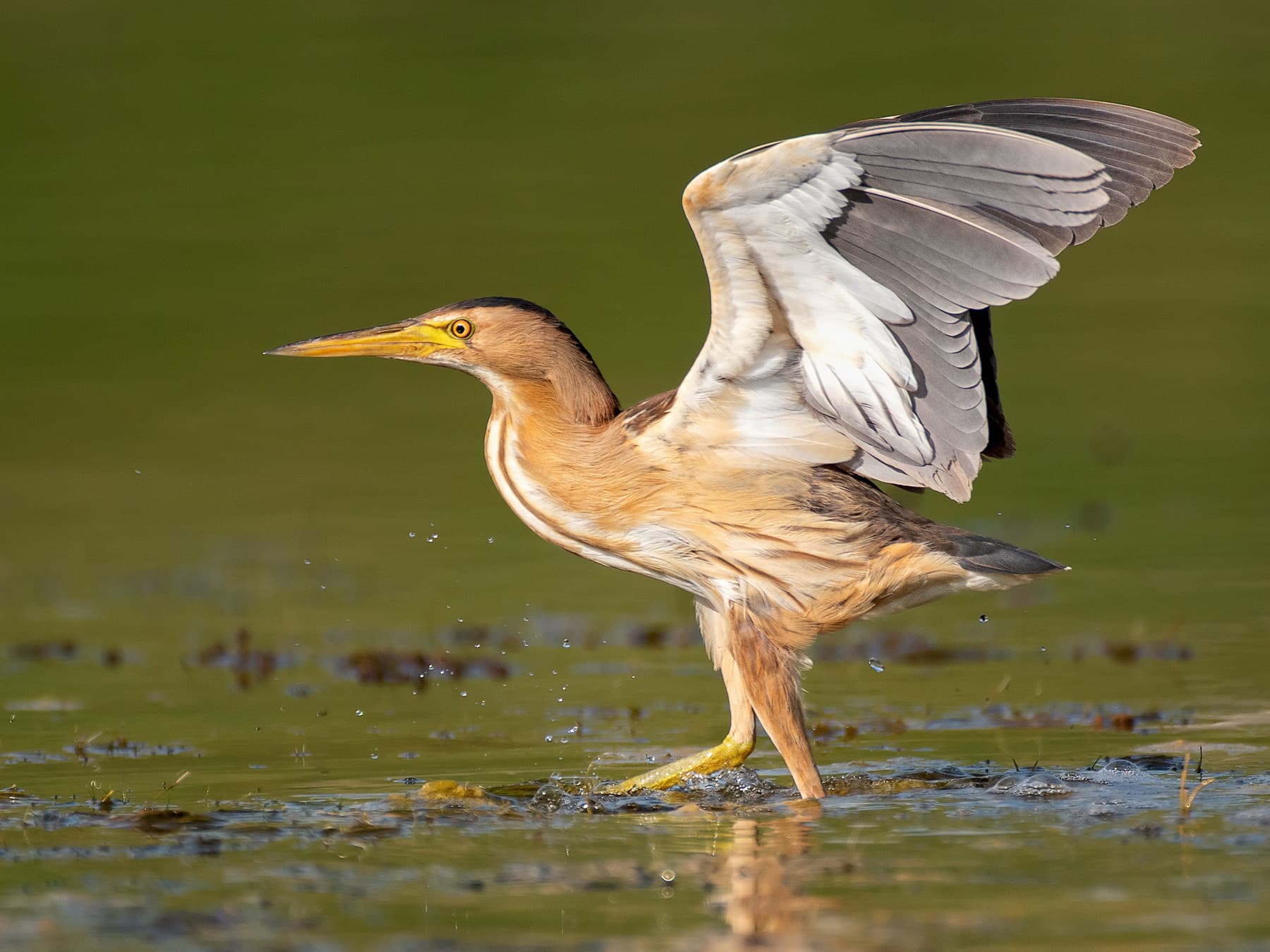
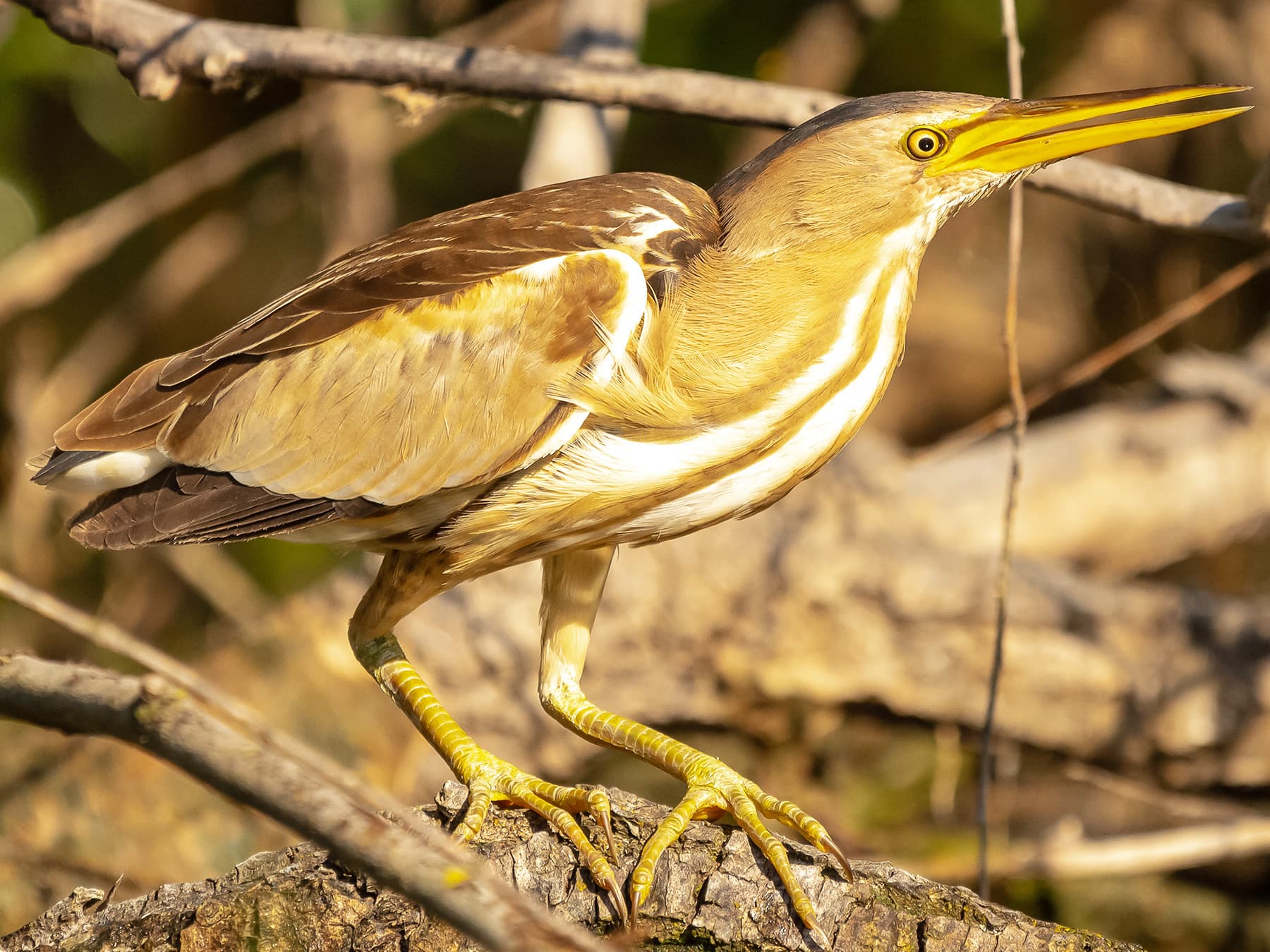
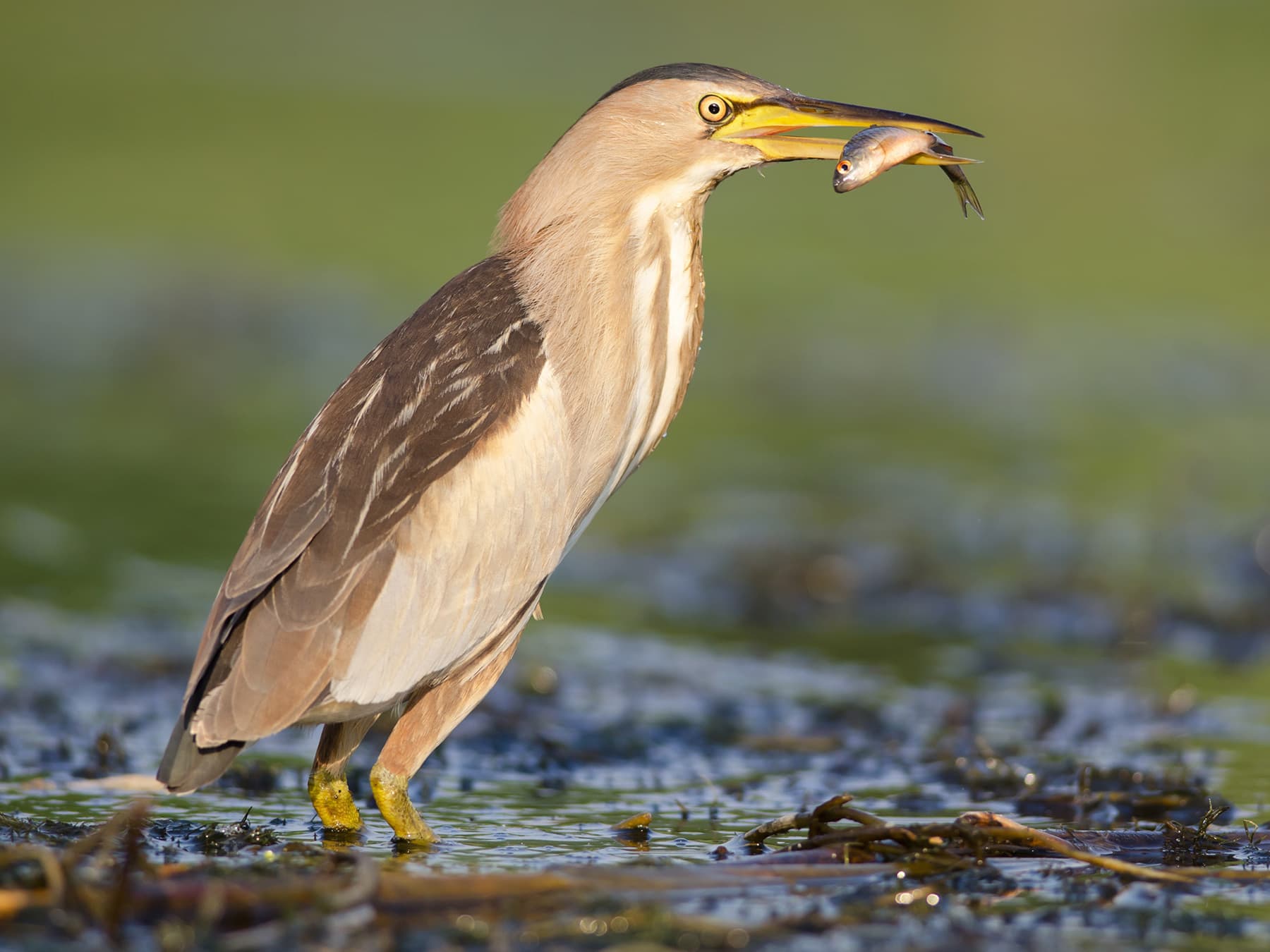
Female little bitterns are duller in appearance, with a brownish crown, darker streaked markings to the throat and breast, and brown patterning to the upper wings. The same oval-shaped pale wing patch is present but may be slightly streaked.
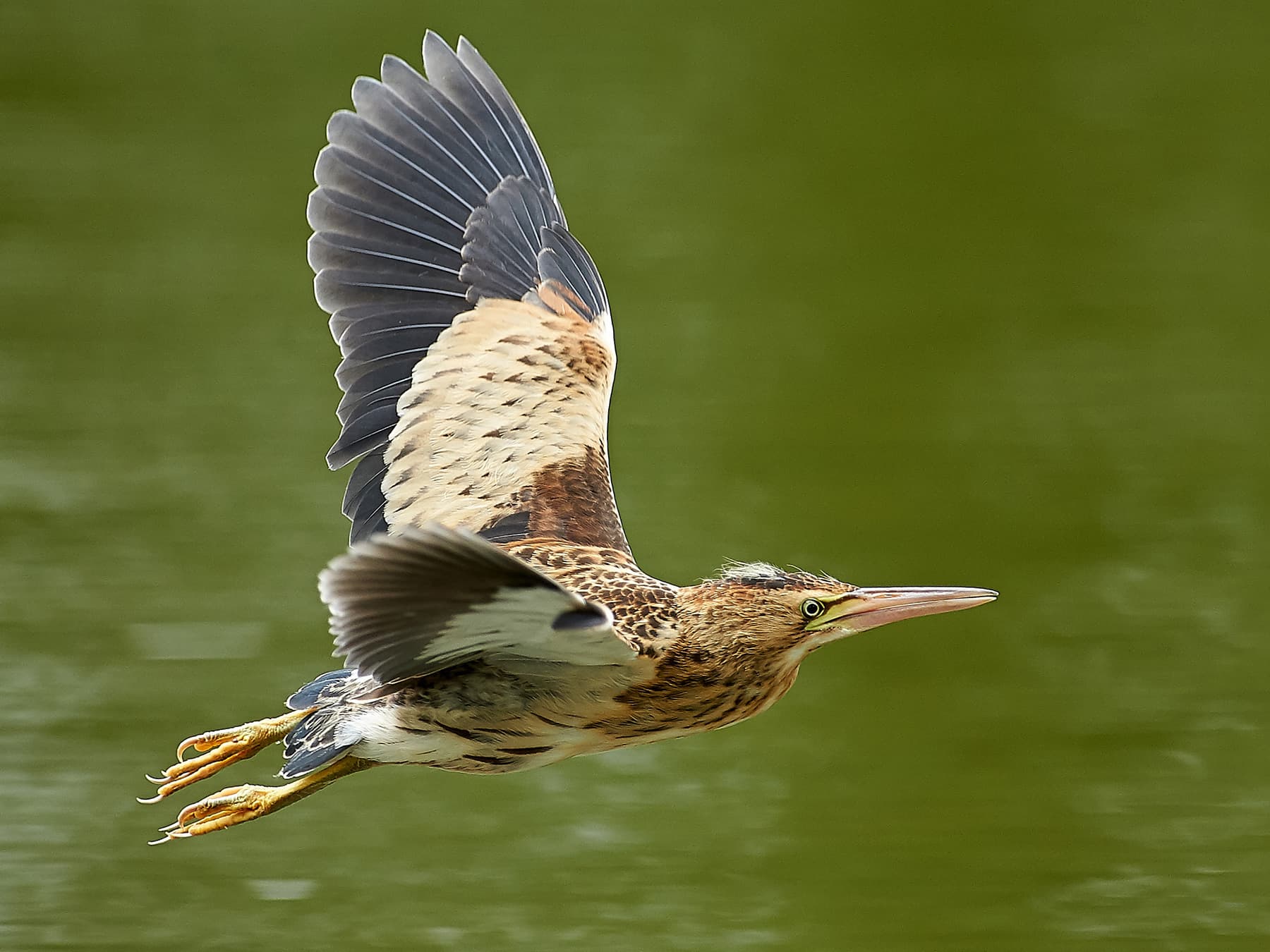
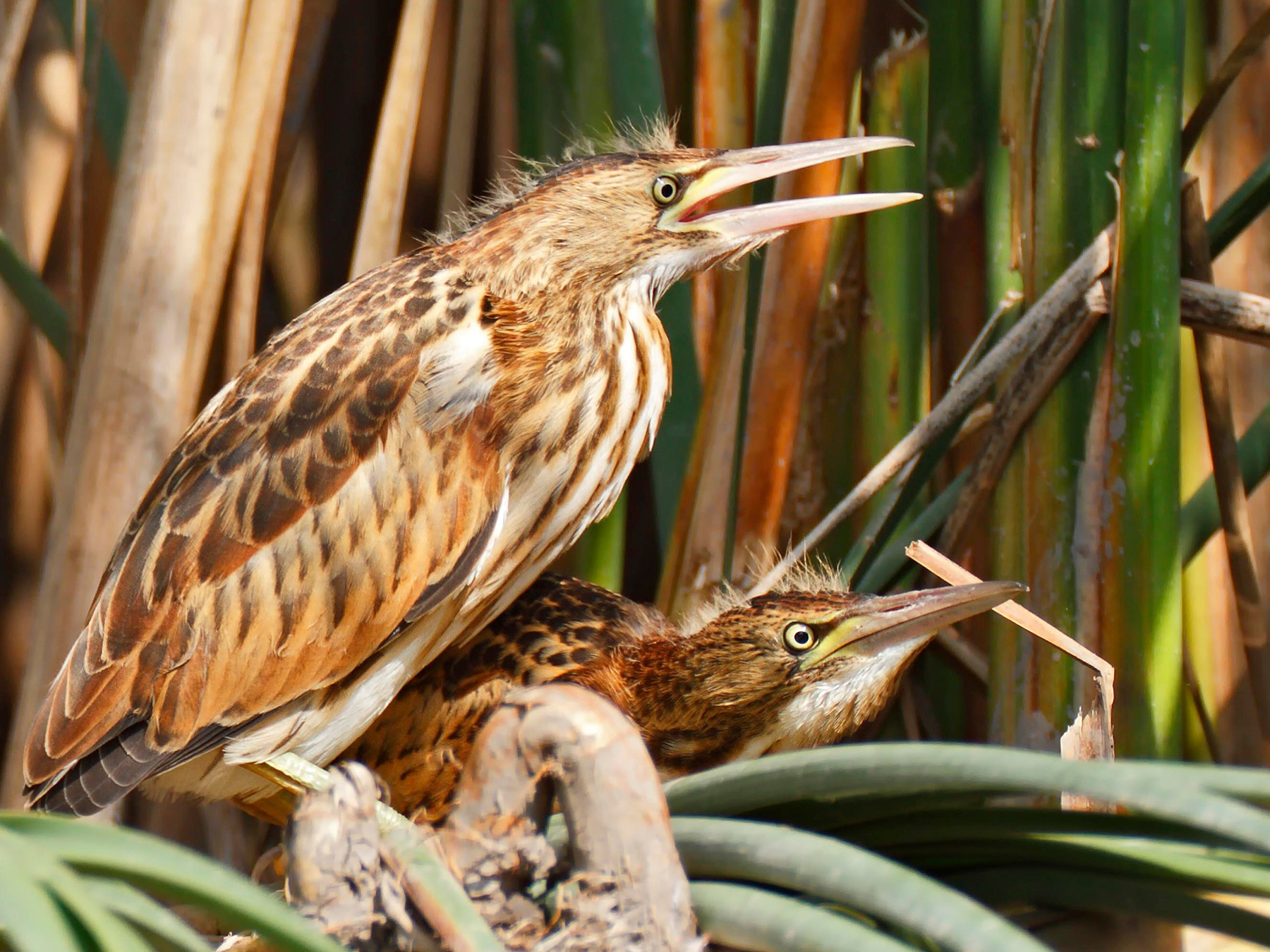
Juvenile little bitterns resemble adult females but are more heavily streaked, with a brown crown and mottled brown and buff wings.
How big are Little Bitterns?
Similar in stature to other small bittern and heron species, the little bittern is the smallest heron species to breed in Europe. Females are slightly smaller and lighter in weight than males.
- Length: 27 cm to 38 cm (10.6 in to 15 in)
- Weight: 59 g to 150 g (2.1 oz to 5.3 oz)
- Wingspan: 40 cm to 58 cm (15.7 in to 22.8 in)
Its size
Adults- Length
- 33–38 cm
- Wingspan
- 49–58 cm
- Weight
- 59–150 g
Its song and calls
What sound does a Little Bittern make?
Outside of the breeding season, little bitterns are relatively non-vocal birds, with their deep barking, frog-like call heard when males begin advertising for mates and claiming territories early each spring.
- Song0:00 / 0:21
Recorded in Brandenburg, Germany · June 2025
- Call0:00 / 1:05
Recorded in Sachsen, Germany · May 2019
When and where to see it
The Little Bittern is not recorded regularly in the UK, Ireland, the United States or Canada.
United Kingdom: recorded in 5 of the 6 years; Ireland: recorded in 1 of the 6 years. Too few years to count as a regular visitor.
Worldwide: recorded regularly in 83 countries
Countries where it was recorded in at least 3 of the 6 years 2019–2024. Linked countries have their own bird list.
Europe (32)
Africa (27)
Asia (24)
- Armenia
- Azerbaijan
- Bahrain
- China
- Cyprus
- Georgia
- India
- Iran
- Iraq
- Israel
- Jordan
- Kazakhstan
- Kuwait
- Kyrgyzstan
- Lebanon
- Mongolia
- Oman
- Pakistan
- Palestinian Territories
- Qatar
- Saudi Arabia
- Turkey
- United Arab Emirates
- Uzbekistan
Data: EOD – eBird Observation Dataset (Cornell Lab of Ornithology), accessed via GBIF.org, CC BY 4.0. Records from 2019–2024, aggregated and filtered by Birdfact. How these lists are made
What is the habitat of a Little Bittern?
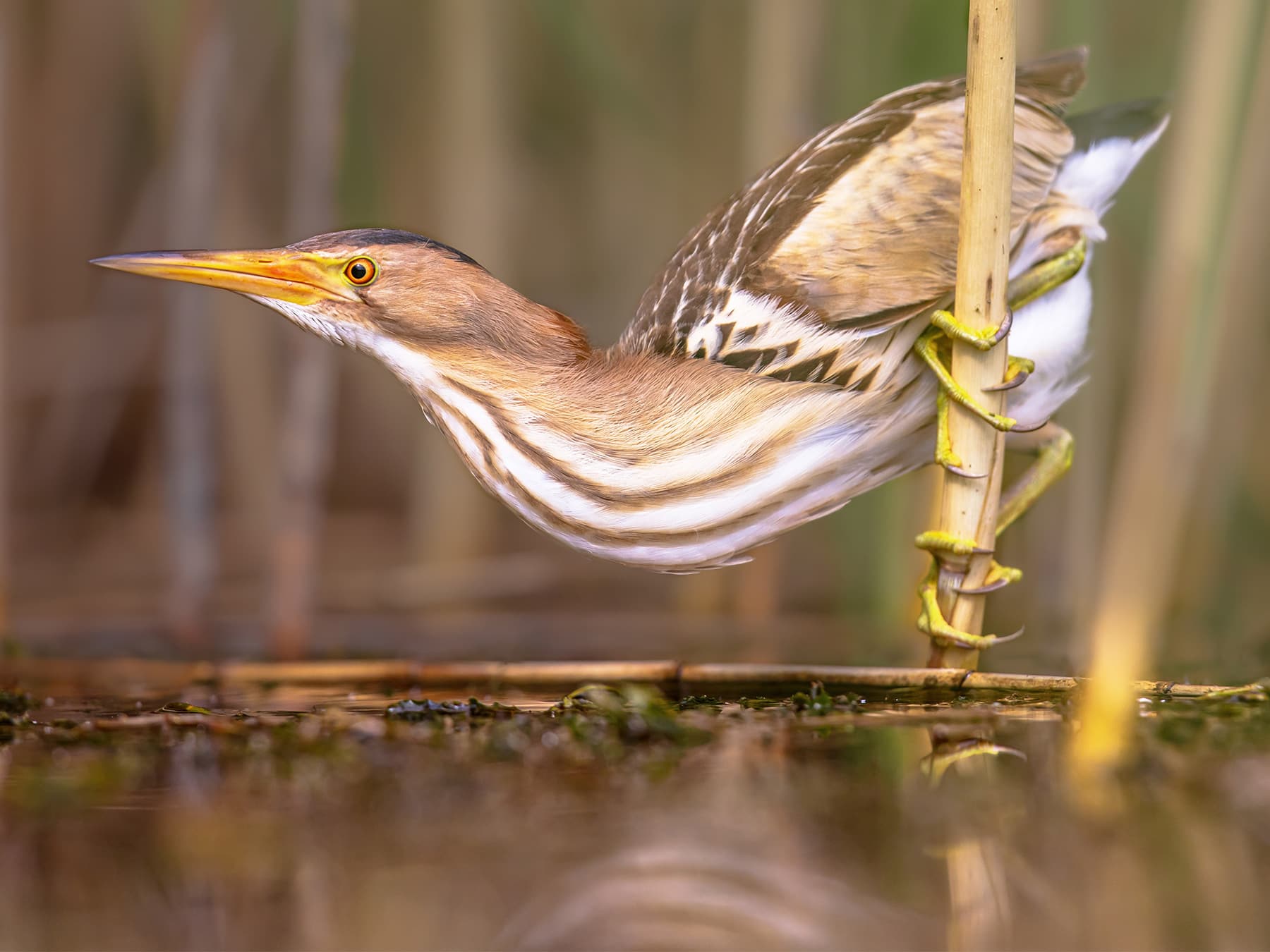
Freshwater marshes, flooded ditches, swampland, and lakes with dense vegetation offer an ideal habitat for breeding little bitterns, where they can feed and nest among the waterside rushes and reeds without being detected.
On wintering grounds, habitats become more diverse and open, including cultivated fields, lake shores with sparse vegetation cover, riverbanks and mangroves.
What is the range of a Little Bittern?
Little bitterns are summer visitors to Europe and Central Asia, breeding throughout central, southern and eastern Europe. Their range extends from parts of Spain, Portugal and France in the west, central Germany, Poland and the Baltic States in the north, western Russia and Kazakhstan in the east, and Iran and north-western India in the south.
Little bitterns are absent from Scandinavia and Britain and Ireland, except for rare and occasional reports of isolated breeding pairs. Europe’s temporary population heads to sub-Saharan Africa once the breeding season finishes and is particularly widespread on wintering grounds in eastern and southern regions of the continent.
Sub-Saharan Africa is home to resident populations of little bitterns that breed across the continent, and remain there all year round, with some local dispersal at the end of the breeding season.
Where do Little Bitterns live?
An estimated 37,000 pairs of little bitterns breed in Europe, with Russia, Hungary, Spain, Ukraine, Italy and Romania being home to the largest populations.
How rare are Little Bitterns?
In the UK little bitterns are highly rare as a breeding species, with the first records dating from 1984, and then subsequent reports of continued breeding for several years in Somerset from 2009 to 2017. Their elusive and secretive nature makes them hard to spot and even harder to accurately monitor.
Where can you see Little Bitterns in the UK?
The first record of breeding little bitterns was observed in South Yorkshire in 1984. Prior to this, almost 150 anecdotal reports exist, with sightings in Kent, Essex, Cambridgeshire and East Anglia. In recent years, breeding has been regularly reported in Somerset between 2009 and 2017, and although no reports were made in 2018, a male was heard at the same site in 2019.
Migration
Do Little Bitterns migrate?
Europe’s population of little bitterns is fully migratory, leaving their breeding grounds for wintering sites in southern and eastern Africa in late summer.
Peak migration across North Africa is seen between August and October and each spring from March until May, with breeding little bitterns reaching their European nesting areas from April onwards.
Are Little Bitterns native to the UK?
Little bitterns are only very rarely recorded in the UK, and sightings are limited to the breeding season, between May and July. By August, return migration is underway to their African wintering territories.
Tips for seeing it
- Look for Little Bitterns in dense reedbeds and marshy areas
- Listen for their distinctive 'woof-woof' call, especially at dawn and dusk
- Watch for movement in reeds, as they often freeze when spotted
- Use a spotting scope to observe their behaviour from a distance
What it eats
What do Little Bitterns eat?
Fish, amphibians, and insects caught at the edges of wetland habitats are the main diet of little bitterns. Crustaceans, molluscs, worms, frogs, tadpoles and small reptiles are also eaten. Little bitterns are crepuscular, with their most active feeding periods at dusk and dawn.
What do Little Bittern chicks eat?
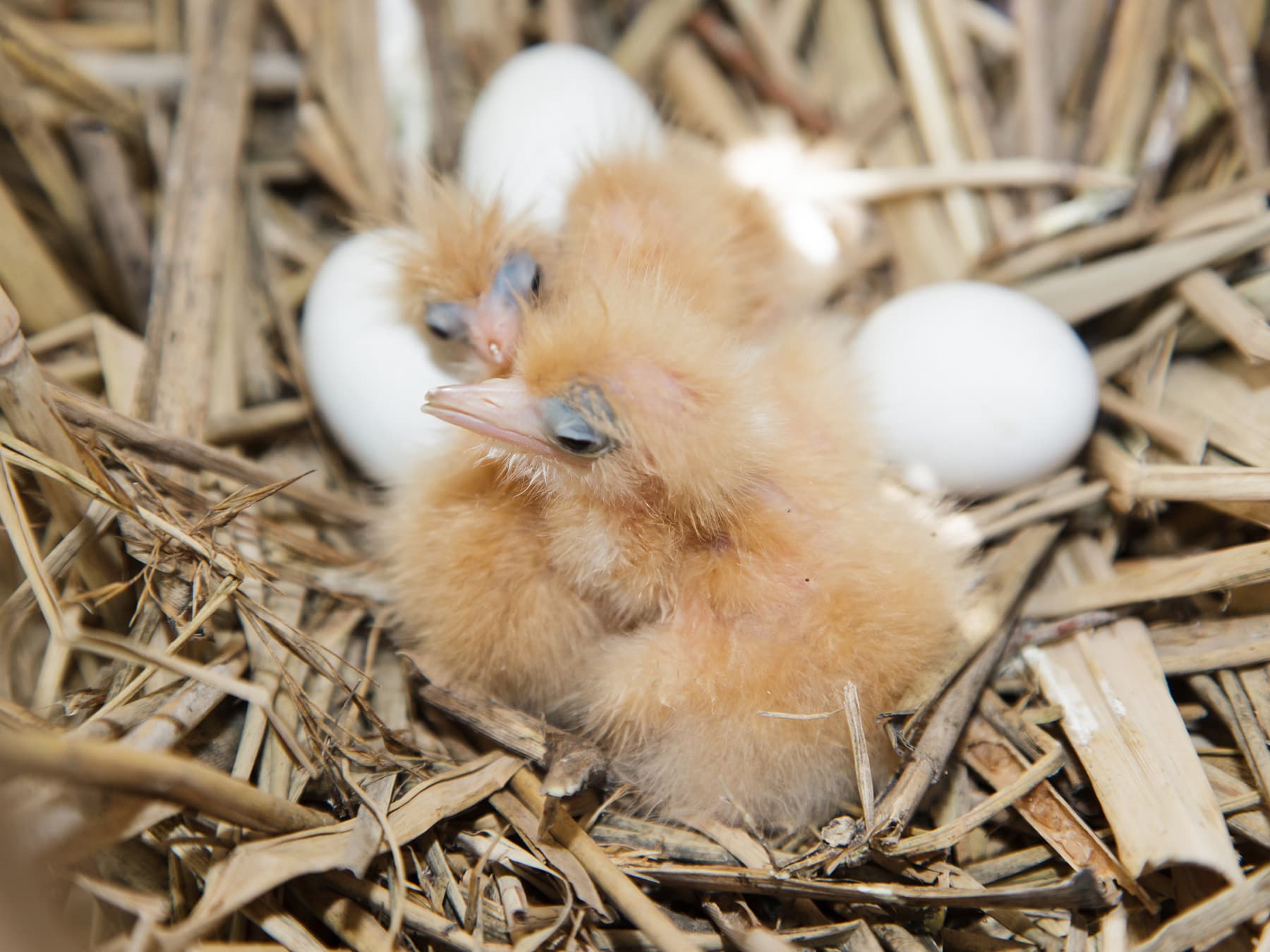
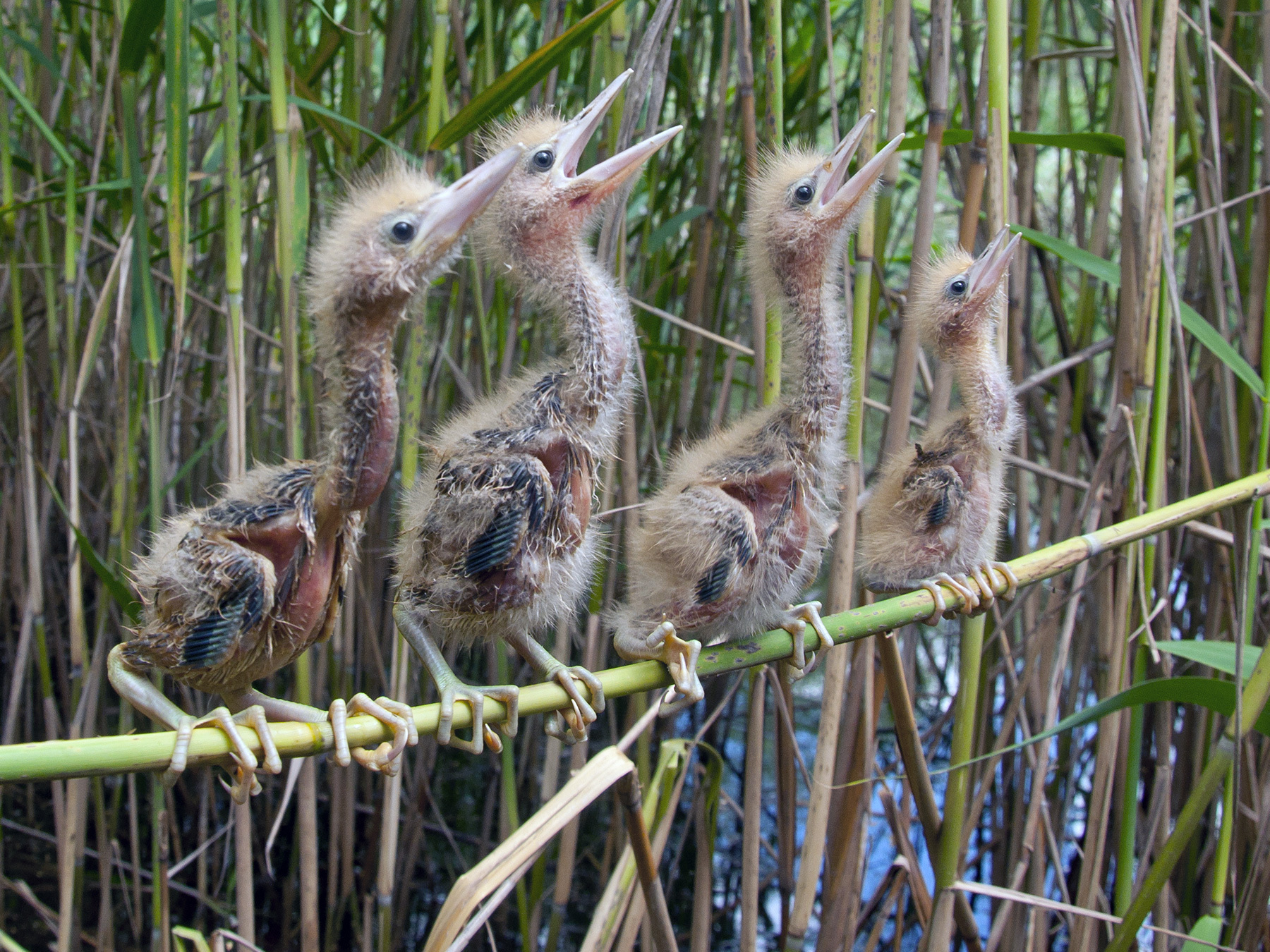
Little bitterns feed their young by regurgitating food directly into their bills, especially fish and aquatic insects and their larvae.
Nesting and breeding
Where do Little Bitterns nest?
Male little bitterns construct their nests in dense aquatic vegetation, including grasses, reeds, rushes and papyrus, slightly raised above the water level.
Occasionally, the species may nest in the lower branches of waterside trees. Their nests feature a conical base, with a loose platform of twigs and reeds, which is then lined with leaves and softer plant stems.
When do Little Bitterns nest?
Europe’s little bitterns typically nest between May and June, with breeding usually complete by late July.
The nesting season of little bitterns that are resident in Africa all year round varies according to region and can extend from June to February in the extreme southern regions of South Africa.
What do Little Bittern eggs look like?
Eggs laid by little bitterns are pure white with no markings or blotches, and measure 35 mm by 26 mm (1.4 in by 1 in). Normally 5 to 6 eggs are laid, which are then incubated by both the male and female for 17 to 19 days.
Do Little Bitterns mate for life?
Little bitterns are monogamous for the duration of a breeding season, usually raising one brood together in Europe, while two broods in the same season is not unusual for little bitterns resident in Africa.
Behaviour
Are Little Bitterns aggressive?
Little bitterns are solitary nesters although occasionally may tolerate other birds of the same species nearby. They are particularly territorial about their feeding sites and will noisily and aggressively defend an area that is particularly well stocked.
Lifespan and predators
How long do Little Bitterns live?
No data is available for the average or maximum life expectancy of little bitterns, due to a lack of records from ringing schemes. Age at first breeding is thought to be two years.
What are the predators of Little Bitterns?
Martens and American mink are among the leading predators of little bitterns’ eggs and their nests.
Are Little Bitterns protected?
The Wildlife and Countryside Act, of 1981 makes it a criminal offence to knowingly kill, injure or take a wild little bittern into captivity. The species is also included in the Agreement on the Conservation of African-Eurasian Migratory Waterbirds, and their wetland habitats are identified for conservation efforts in both breeding and non-breeding areas.
Are Little Bitterns endangered?
Little bitterns are not endangered and are classified as a species of least concern across their global range.
In the UK, little bitterns have Amber status on the British Birds of Conservation Concern list. Across Europe, declines have been noted in Belgium, France, Germany, Estonia, Lithuania and Poland.
Conservation
While listed as Least Concern globally, Little Bittern populations are declining in parts of Europe due to wetland habitat loss and degradation.
Conservation efforts focus on protecting and restoring suitable wetland habitats, particularly in their breeding range.
More photos
6 photos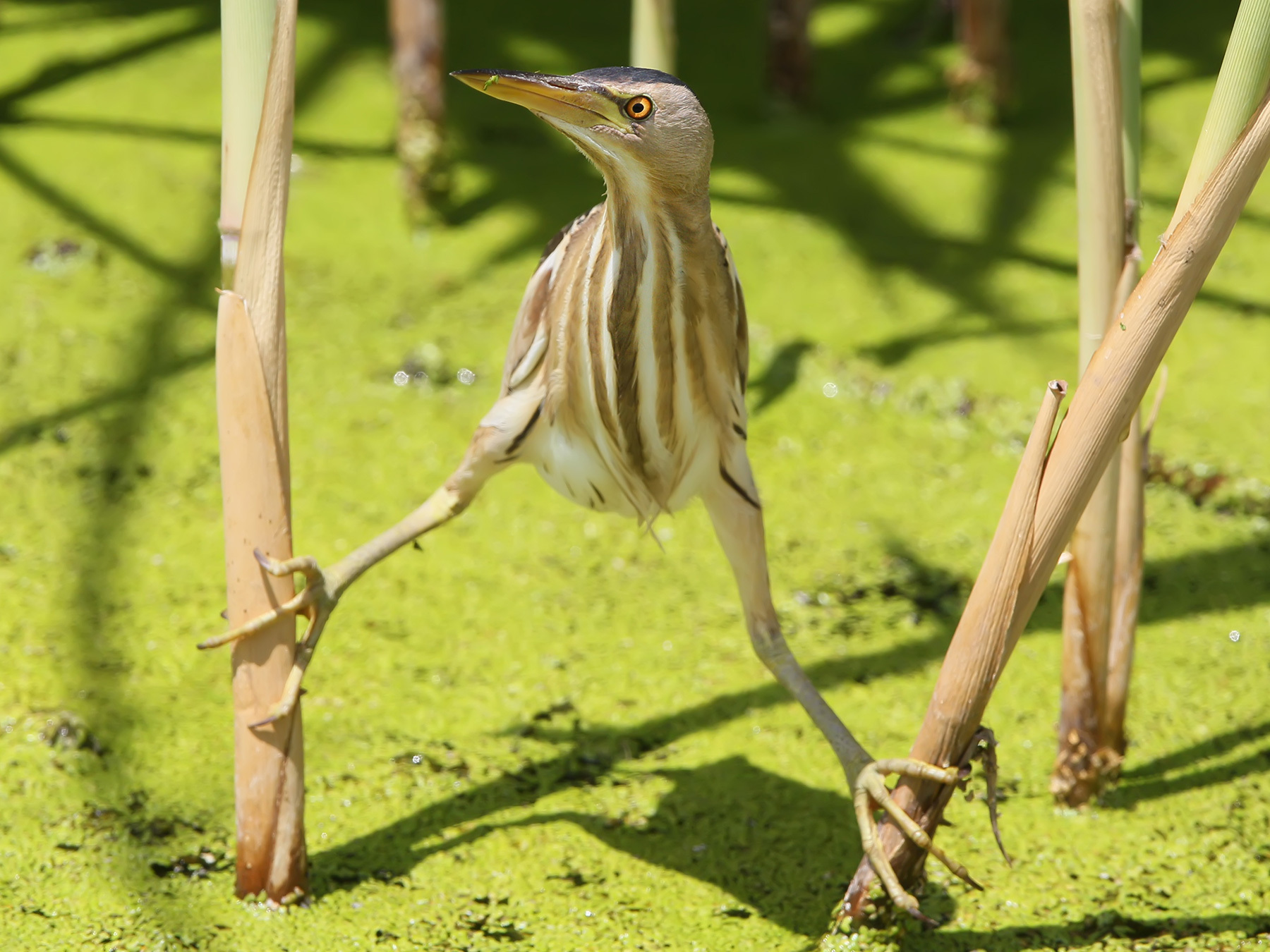
Little Bittern guides
1 guidesQuick facts
- Length
- 33–38 cm
- Wingspan
- 49–58 cm
- Weight
- 59–150 g
- Lifespan
- 5–10 years
- Family
- Herons & Egrets
- Migration
- Long-distance Migrant
- Global status (IUCN)
- Least Concern
- World population
- 600,000 - 1,200,000 mature individuals
- Population trend
- Decreasing
- Also called
- Common Little Bittern
- Scientific name
- Ixobrychus minutus
Sources
3- 1BirdLife International. 2019. Ixobrychus minutus (amended version of 2018 assessment). The IUCN Red List of Threatened Species 2019: e.T22735766A155511258. Source (opens in a new tab)
- 2Wetlands International (2015)
- 3BirdLife International. 2019. Ixobrychus minutus (amended version of 2018 assessment). The IUCN Red List of Threatened Species 2019: e.T22735766A155511258. Source (opens in a new tab)

Checked by
Nathan Cope, founder and editor
Nathan founded Birdfact and leads its writers and contributors in the UK, the US and Canada. He has watched and studied birds for more than ten years, and checks every article and species guide before it’s published.