


Lesser Striped Swallow
Cecropis abyssinica
By the Birdfact teamChecked by Nathan Cope
On this page11 sections
How to recognise it
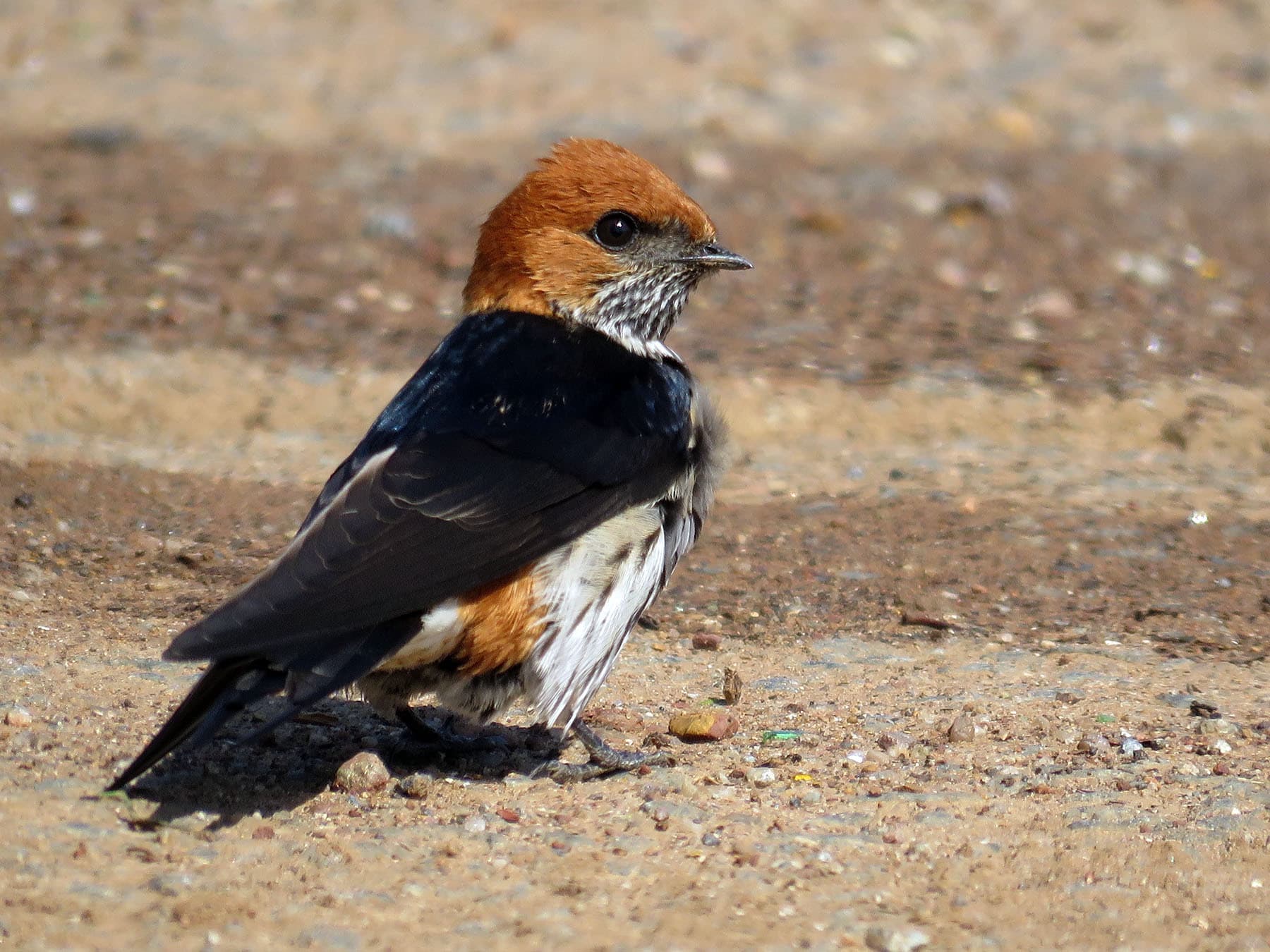
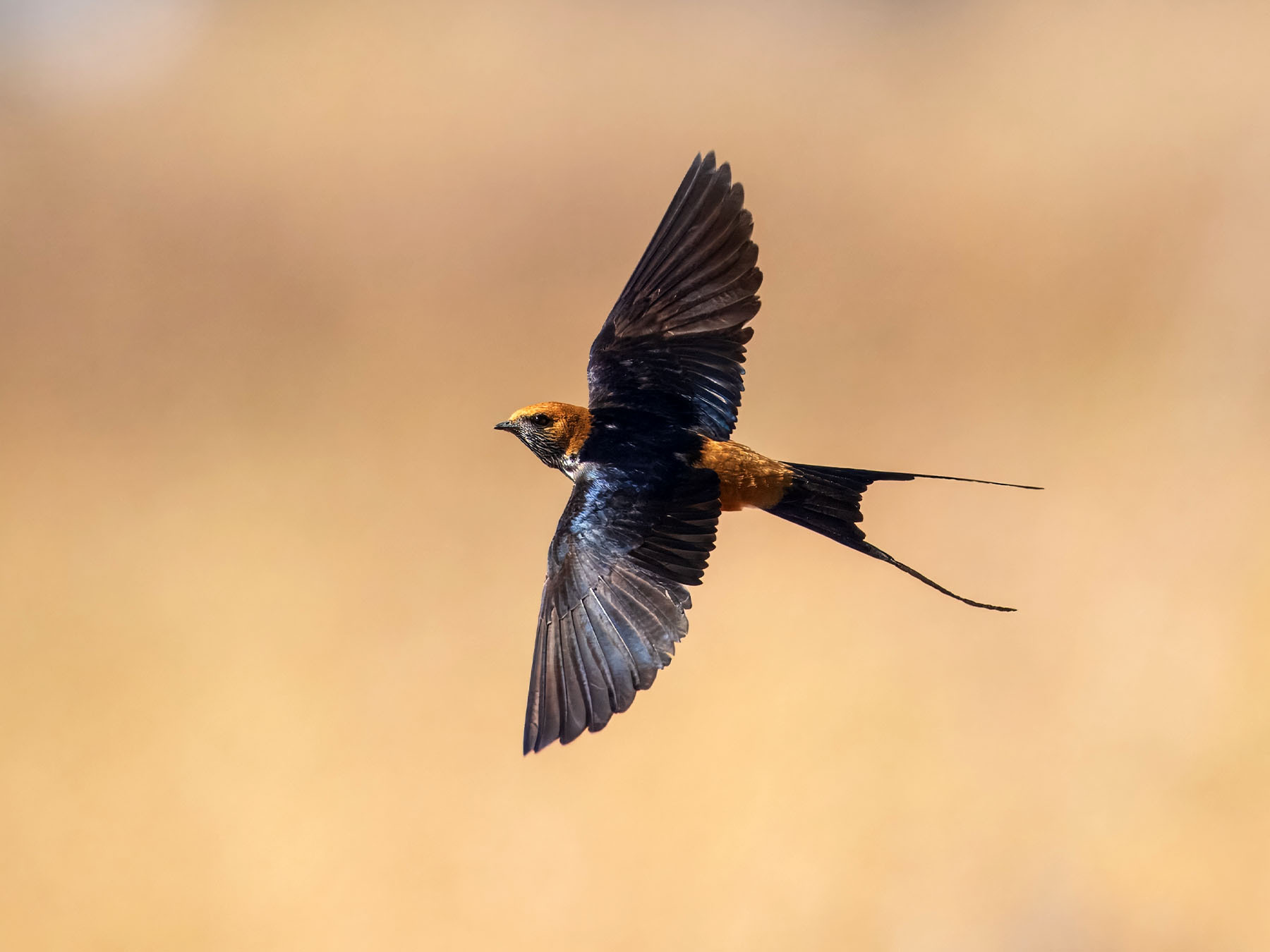
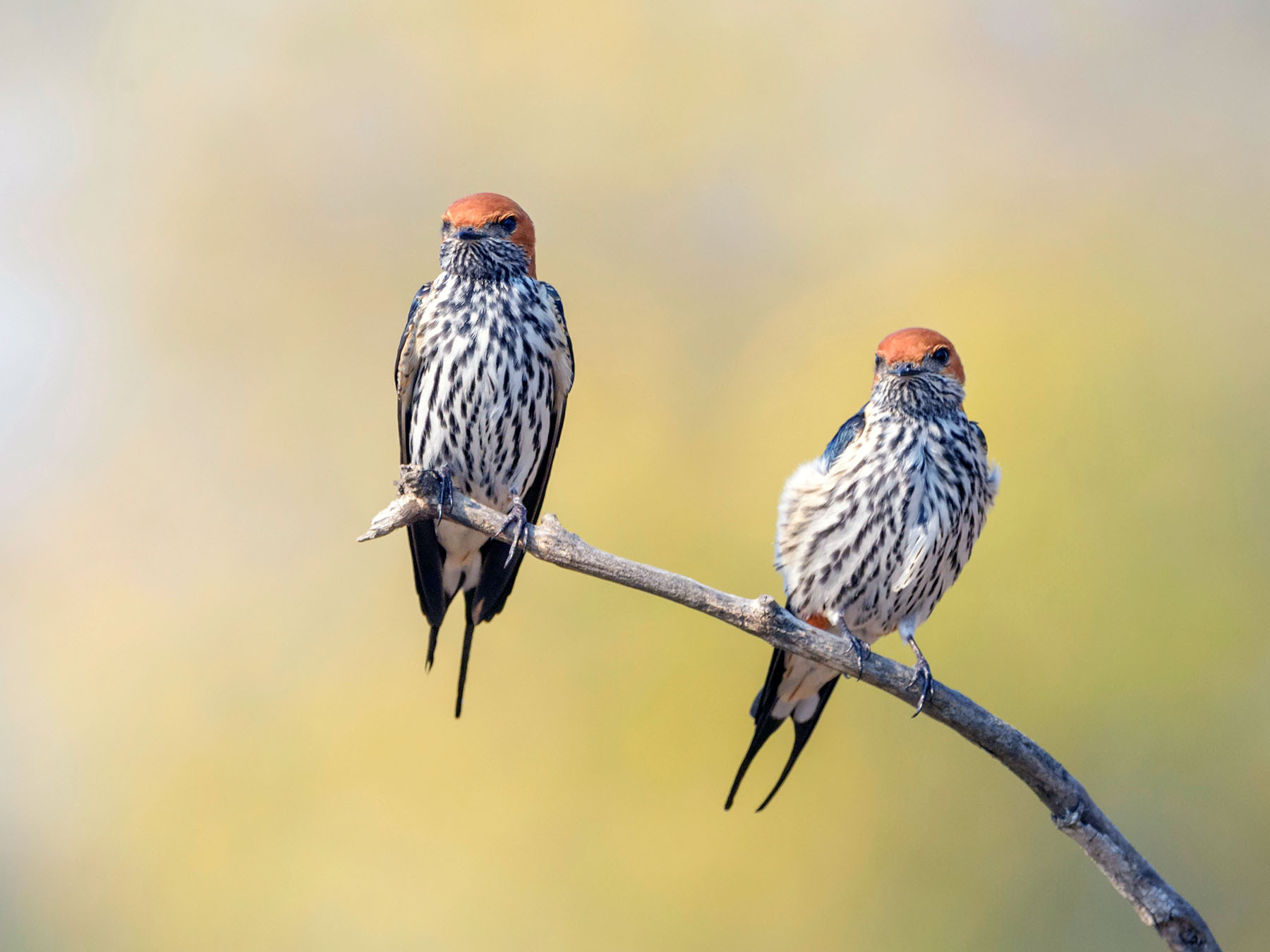
The Lesser Striped Swallow is a small, striking bird with a distinctive appearance. It has a rufous-chestnut head and nape, with a glossy deep blue back. The wings and tail are blackish-brown, with the tail featuring long outer streamers. The underparts are white with dark streaks, most prominent on the throat and upper breast.
Both sexes look similar, though females have shorter tails. Juveniles show duller colouring overall, with a darker crown and paler rump.
Its size
Adults- Length
- 15–19 cm
- Wingspan
- 28–30 cm
- Weight
- 15–25 g
Its song and calls
The Lesser Striped Swallow has a soft, musical voice. Its call is a gentle, twittering 'tswee-tswee' or 'trit-trit', often given in flight.
During the breeding season, males may produce a more elaborate warbling song, typically delivered from a perch.
- Alarm call0:00 / 0:21
Recorded in Limpopo, South Africa · December 2018
When and where to see it
The Lesser Striped Swallow is not recorded regularly in the UK, Ireland, the United States or Canada.
Worldwide: recorded regularly in 27 countries
Countries where it was recorded in at least 3 of the 6 years 2019–2024. Linked countries have their own bird list.
Data: EOD – eBird Observation Dataset (Cornell Lab of Ornithology), accessed via GBIF.org, CC BY 4.0. Records from 2019–2024, aggregated and filtered by Birdfact. How these lists are made
Tips for seeing it
- Look for them near open areas with nearby structures for nesting
- Observe their distinctive flight pattern: swift and graceful with quick turns
- Listen for their soft, twittering calls, especially when in flight
- Check eaves of buildings or bridges for their mud nests
What it eats
Lesser Striped Swallows are insectivores, primarily feeding on flying insects caught in mid-air. Their diet includes flies, beetles, and flying ants.
They often feed in groups, swooping and gliding to catch prey, and may follow large animals or farm machinery to catch disturbed insects.
Nesting and breeding
Breeding typically occurs during the rainy season when insects are abundant. Lesser Striped Swallows form monogamous pairs and often breed in loose colonies.
Nests are constructed from mud pellets mixed with grass, forming a closed cup with a tubular entrance. These are usually attached to vertical surfaces under eaves or bridges.
Females lay 2-4 white eggs with brown speckles. Both parents incubate the eggs for about 14-16 days and care for the chicks, which fledge after approximately 20-23 days.
Behaviour
Lesser Striped Swallows are highly social birds, often seen in large flocks during non-breeding seasons. They are aerial insectivores, skilfully catching insects mid-flight with acrobatic manoeuvres.
These swallows frequently perch on wires or branches, especially when gathering nesting material or resting.
Conservation
The Lesser Striped Swallow is currently listed as Least Concern by the IUCN. Its adaptability to human-modified environments has helped maintain stable populations.
However, like many aerial insectivores, it may face challenges from pesticide use and climate change affecting insect abundance.
More photos
3 photos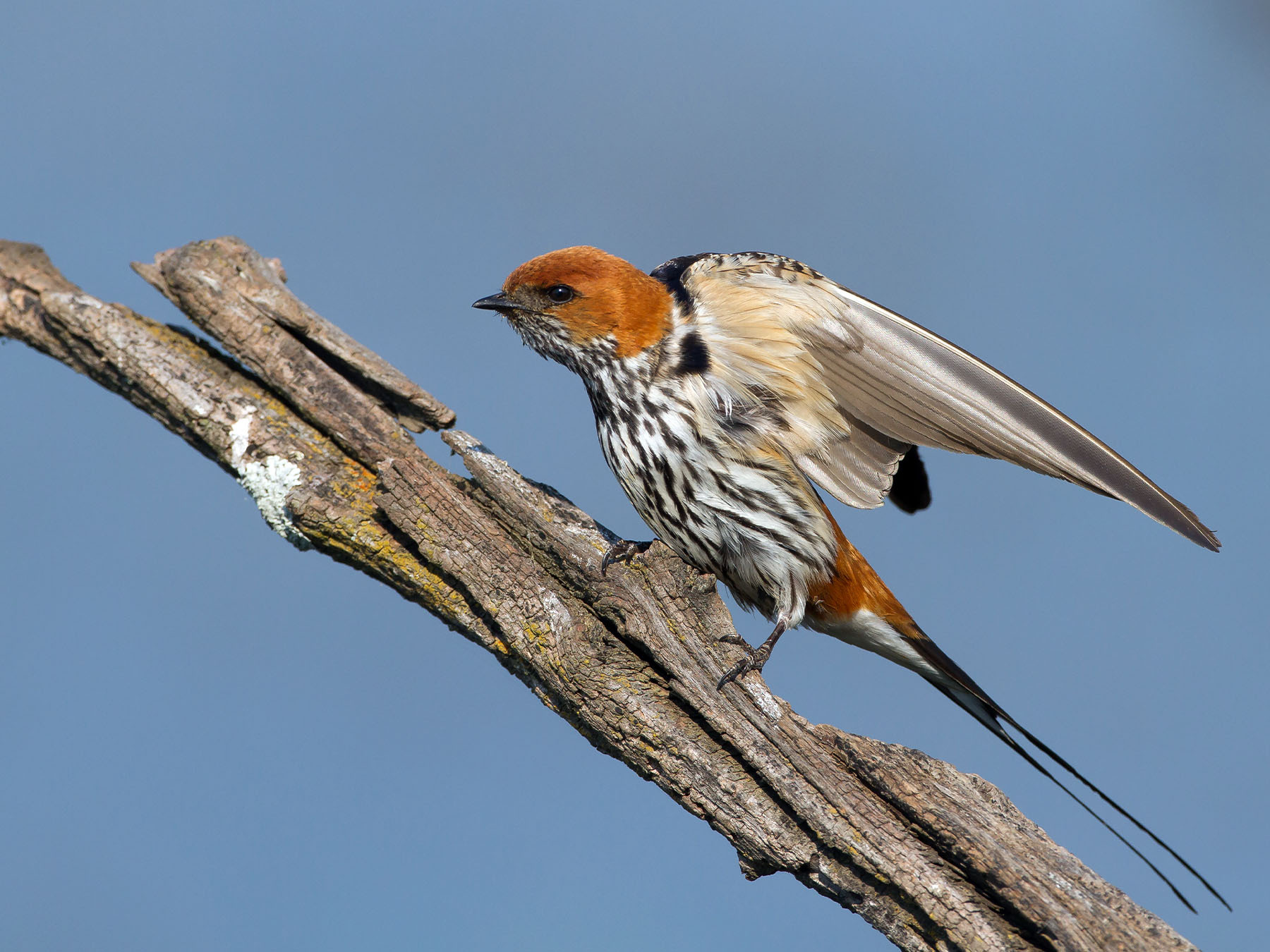
Quick facts
- Length
- 15–19 cm
- Wingspan
- 28–30 cm
- Weight
- 15–25 g
- Lifespan
- 2–4 years
- Family
- Swallows & Martins
- Migration
- Partial migrant
- Global status (IUCN)
- Least Concern
- World population
- Not quantified, but common throughout its range
- Population trend
- Increasing
- Scientific name
- Cecropis abyssinica
Sources
4- 1BirdLife International. 2024. Cecropis abyssinica. The IUCN Red List of Threatened Species 2024: e.T22712350A263839246. Source (opens in a new tab)
- 2del Hoyo et al. (2004)
- 3del Hoyo et al. (2004)
- 4Lifespan estimated based on similar species

Checked by
Nathan Cope, founder and editor
Nathan founded Birdfact and leads its writers and contributors in the UK, the US and Canada. He has watched and studied birds for more than ten years, and checks every article and species guide before it’s published.