
Lesser Noddy
Sooty Noddy · Anous tenuirostris
By the Birdfact teamChecked by Nathan Cope
On this page11 sections
How to recognise it
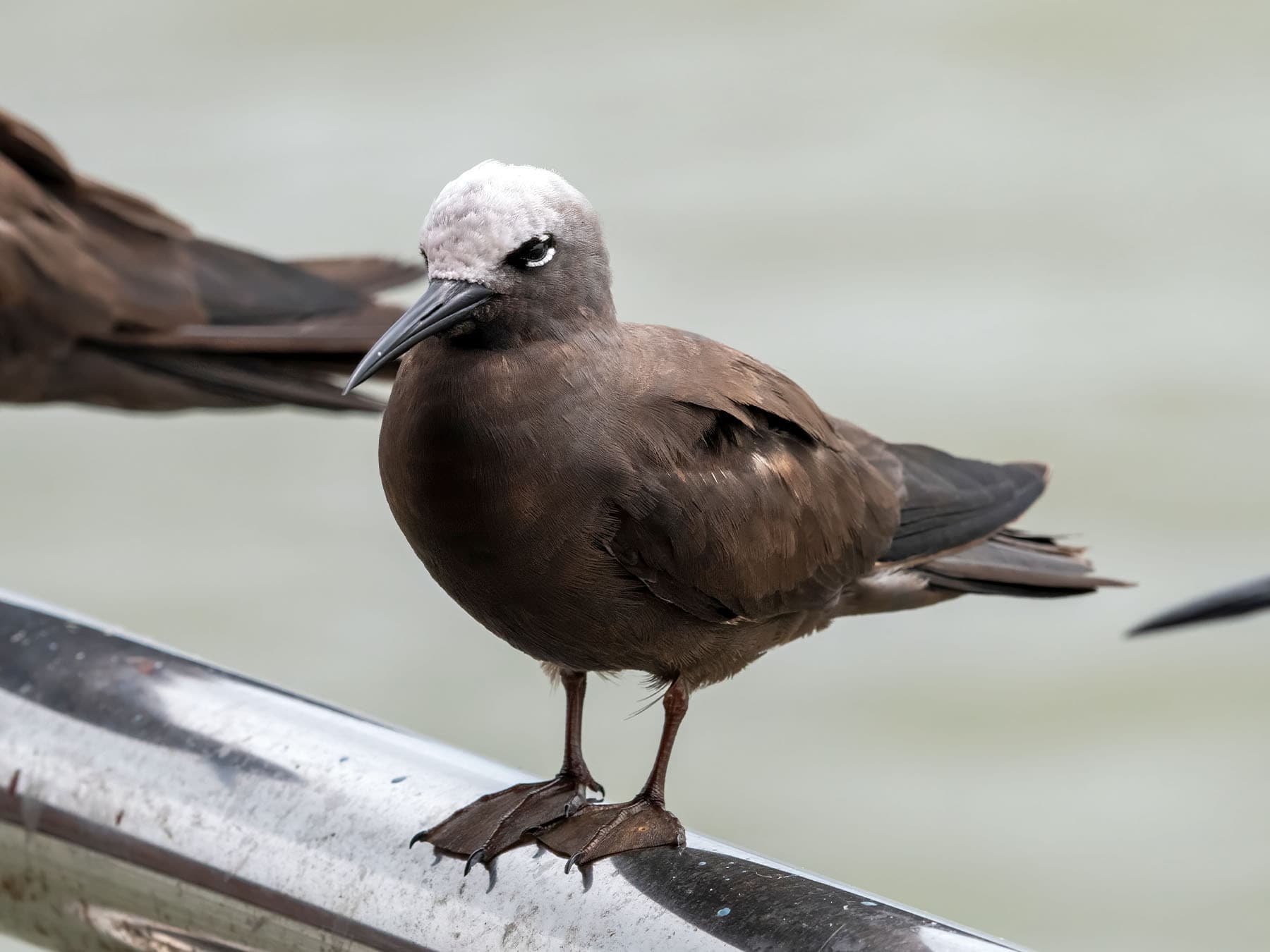
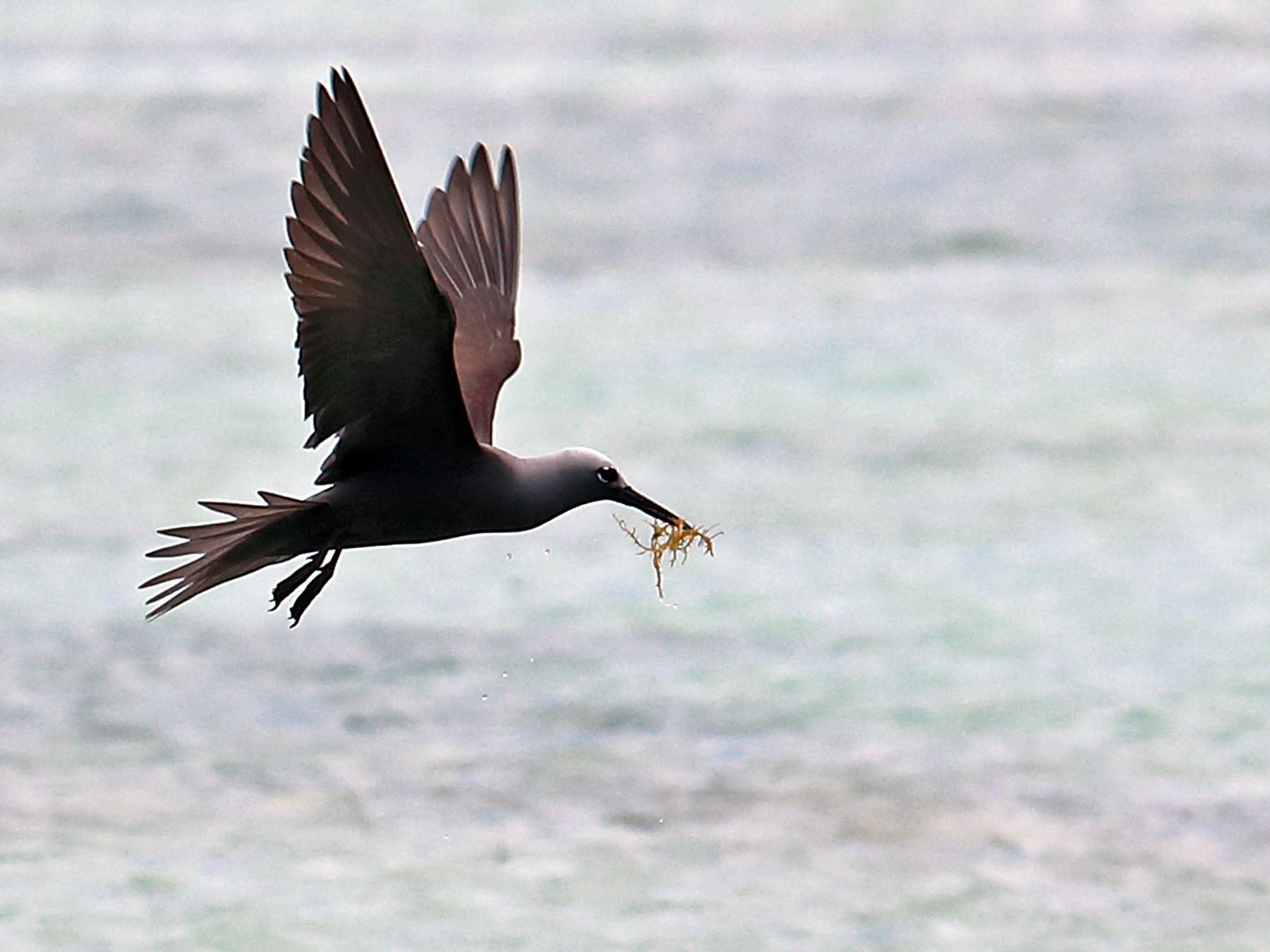
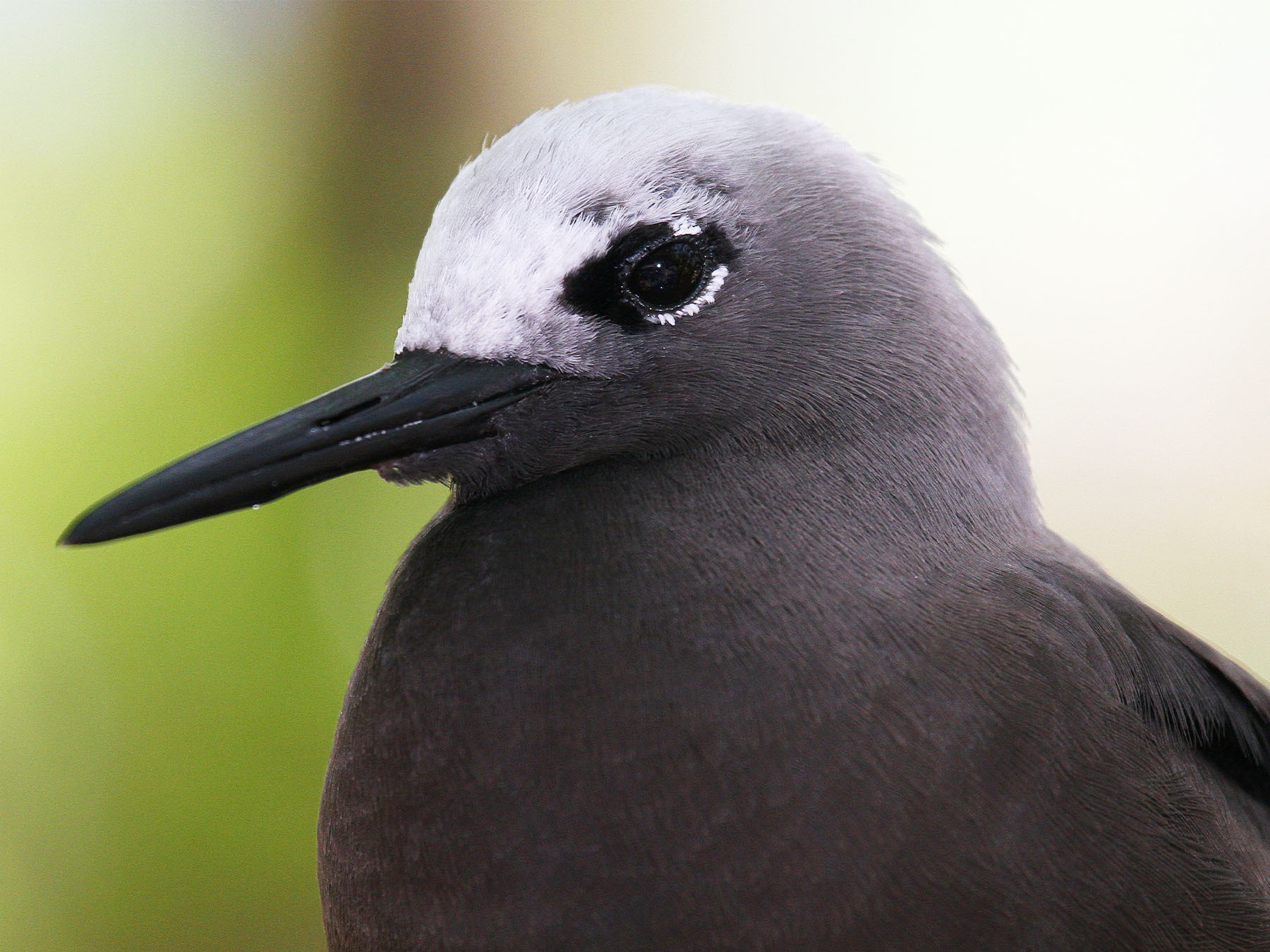
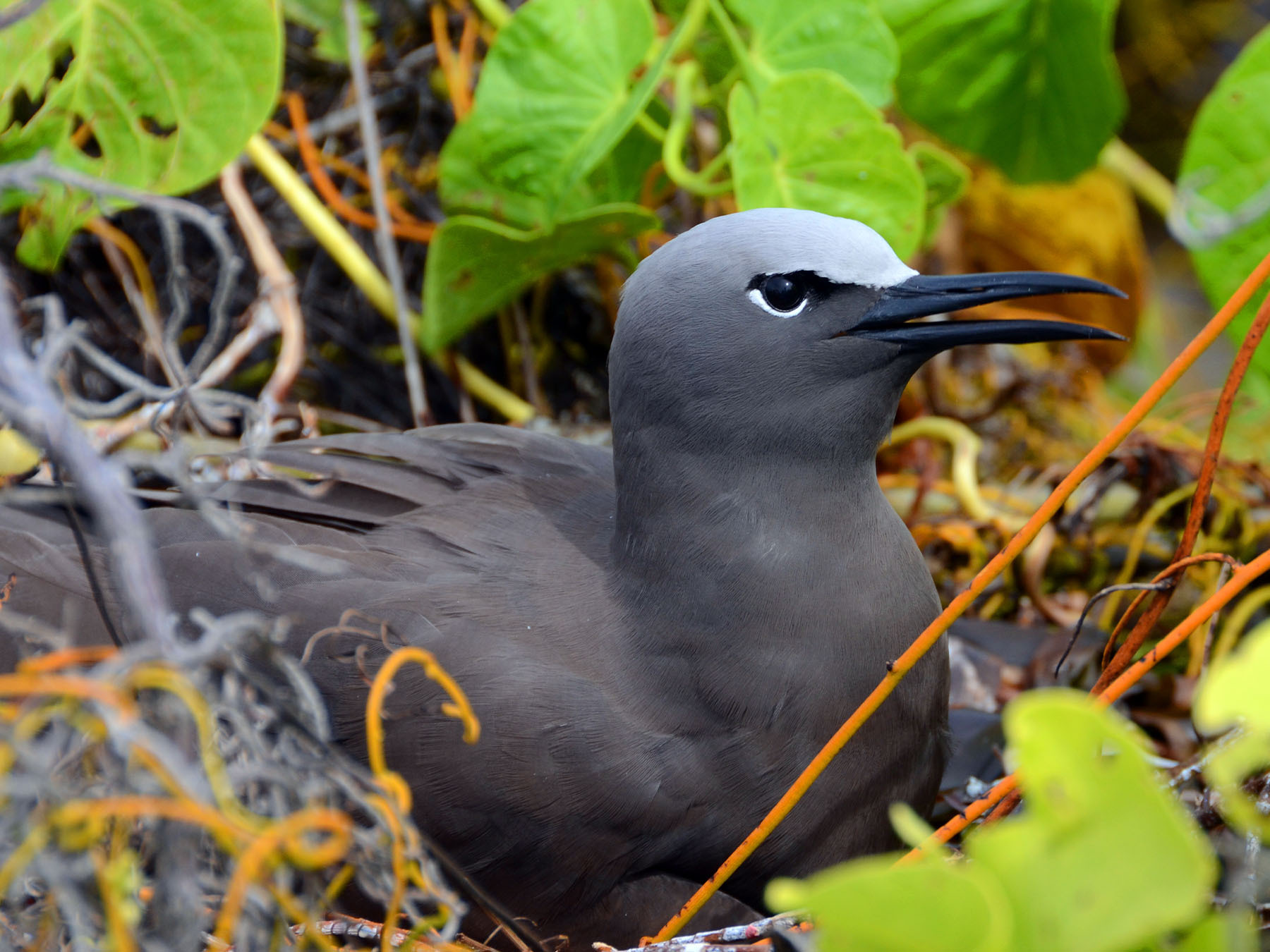
The Lesser Noddy is a small, dark seabird with a distinctive appearance. Its plumage is predominantly blackish-brown, with a contrasting whitish cap that fades to ashy grey toward the back of the head. The bird has a black bill, dark brown eyes, and brownish-black legs.
There is little variation between males and females, and juveniles are similar but have a paler brown body color while maintaining the white cap pattern.
Its size
Adults- Length
- 30–34 cm
- Wingspan
- 58–63 cm
- Weight
- 97–120 g
Its song and calls
The Lesser Noddy has a distinctive vocalisation characterised by harsh, guttural croaks and rattles. Their calls are often described as a repeated 'krrr-krrr-krrr' or 'kar-kar-kar'.
These vocalisations are particularly noticeable in breeding colonies, where the combined noise of many birds can be quite loud and persistent.
When and where to see it
The Lesser Noddy is not recorded regularly in the UK, Ireland, the United States or Canada.
Worldwide: recorded regularly in 11 countries
Countries where it was recorded in at least 3 of the 6 years 2019–2024. Linked countries have their own bird list.
Data: EOD – eBird Observation Dataset (Cornell Lab of Ornithology), accessed via GBIF.org, CC BY 4.0. Records from 2019–2024, aggregated and filtered by Birdfact. How these lists are made
Tips for seeing it
- Look for Lesser Noddies near tropical and subtropical coasts, especially around coral reefs and atolls.
- Observe their distinctive flight pattern: graceful and buoyant, with frequent gliding.
- Listen for their harsh, croaking calls, which are often heard in large breeding colonies.
- Watch for their unique 'nodding' behaviour during courtship displays.
What it eats
Lesser Noddies primarily feed on small fish and squid, which they catch by plunge-diving or snatching prey from the water's surface. They often forage in large, mixed-species flocks, following schools of predatory fish that drive smaller prey to the surface.
When available, these birds may also consume planktonic crustaceans.
Nesting and breeding
Lesser Noddies typically breed in large, dense colonies on remote islands and atolls. Pair formation begins with elaborate courtship displays, including the characteristic 'nodding' behaviour. The breeding season varies by location but often coincides with periods of high food availability.
Nests are usually built in trees or bushes, constructed from seaweed, feathers, and other plant material cemented together with guano. Females lay a single egg, which is pale cream with dark spots.
Both parents share incubation duties for about 35 days. After hatching, chicks are cared for by both adults and fledge after approximately 6-7 weeks. Young birds may remain dependent on their parents for several more weeks after fledging.
Behaviour
Lesser Noddies are highly social birds, often seen in large flocks both at sea and on their breeding grounds. They are graceful flyers, capable of long periods of gliding and hovering over the water's surface.
These birds are known for their unique 'nodding' courtship displays, where pairs bow and dip their heads in synchronisation.
Conservation
While the Lesser Noddy is currently listed as Least Concern by the IUCN, it faces threats from climate change and habitat loss. Rising sea levels and increased storm frequency could impact their breeding sites on low-lying islands.
Conservation efforts focus on protecting their nesting habitats and monitoring population trends.
More photos
4 photos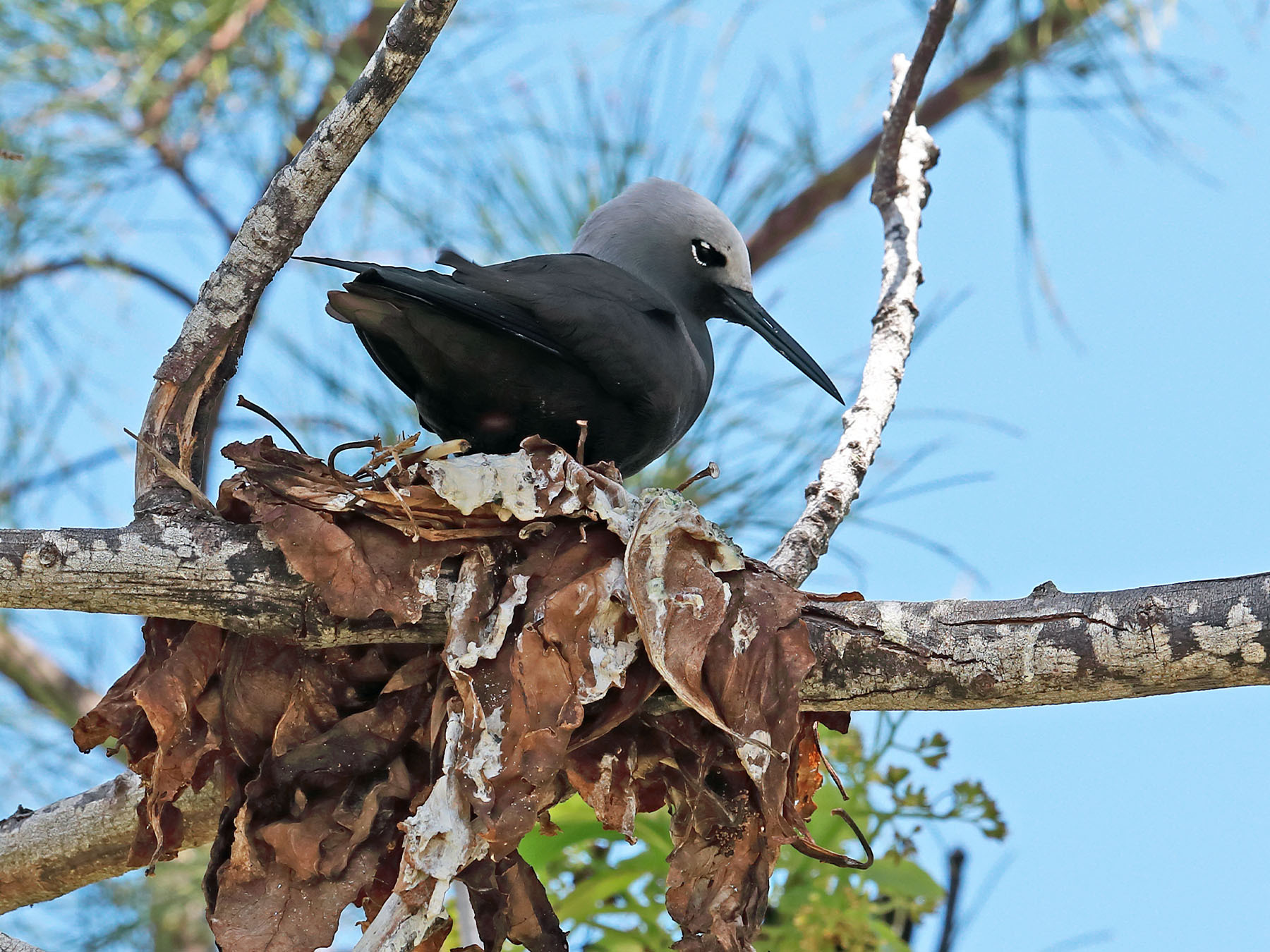
Quick facts
- Length
- 30–34 cm
- Wingspan
- 58–63 cm
- Weight
- 97–120 g
- Lifespan
- 8 years · oldest recorded 15 years
- Family
- Gulls & Terns
- Migration
- Partial migrant
- Global status (IUCN)
- Least Concern
- World population
- 1,200,000 mature individuals
- Population trend
- Stable
- Also called
- Sooty Noddy
- Scientific name
- Anous tenuirostris
Sources
4- 1BirdLife International. 2018. Anous tenuirostris. The IUCN Red List of Threatened Species 2018: e.T22694805A132575736. Source (opens in a new tab)
- 2Delany and Scott (2006)
- 3Delany and Scott (2006)
- 4ABBBS - Australian Bird and Bat Banding Scheme Source (opens in a new tab)

Checked by
Nathan Cope, founder and editor
Nathan founded Birdfact and leads its writers and contributors in the UK, the US and Canada. He has watched and studied birds for more than ten years, and checks every article and species guide before it’s published.